Traversing the Millennia-Old Shu Road: Measuring the Vicissitudes and Grandeur of Jianmen Pass on Foot During the Qingming Festival
Meta Description: Experience the legendary Shu Road hike during Qingming Festival 2025. Walk the Jianzhao Ancient Shu Road from Lanma Wall to Jianmen Pass—a 75km journey through history, poetry, and breathtaking scenery.
Prologue: When Li Bai's Poetry Becomes Reality
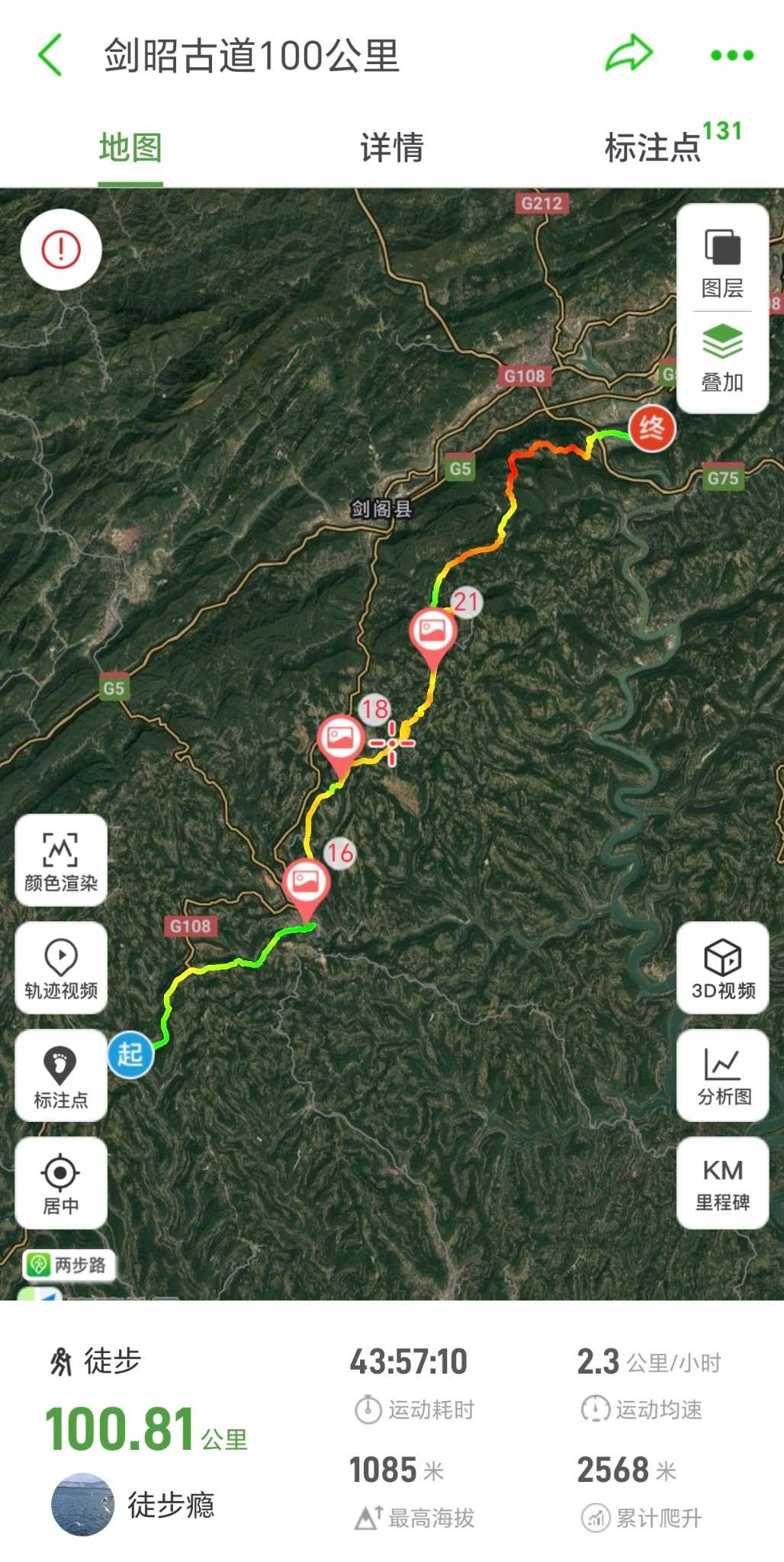
"The road to Shu is harder than the road to Heaven." Every Chinese person knows this famous line by Li Bai, but how many have actually walked this millennia-old path? During the 2025 Qingming Festival, I decided to trade imagination for experience. With a few close friends, packed bags, and a burning curiosity, we set out to measure the Shu Road with our own feet.
Our chosen route: the Jianzhao Ancient Shu Road—the most exquisite and best-preserved section of the Golden Ox Road (Jinniu Dao). Starting from Lanma Wall in Qingchuan, Guangyuan, passing through Chaoshou Post and Cuivun Corridor, and culminating at Jianmen Pass. This four-day, 75-kilometer trek was less an outdoor adventure and more a deep, soulful dialogue with Chinese history.
Chapter One: Knocking on the Gate of the Ancient Shu Road—The Whispered Tales of Lanma Wall
Falling Through a Crack in Time from the High-Speed Rail Era
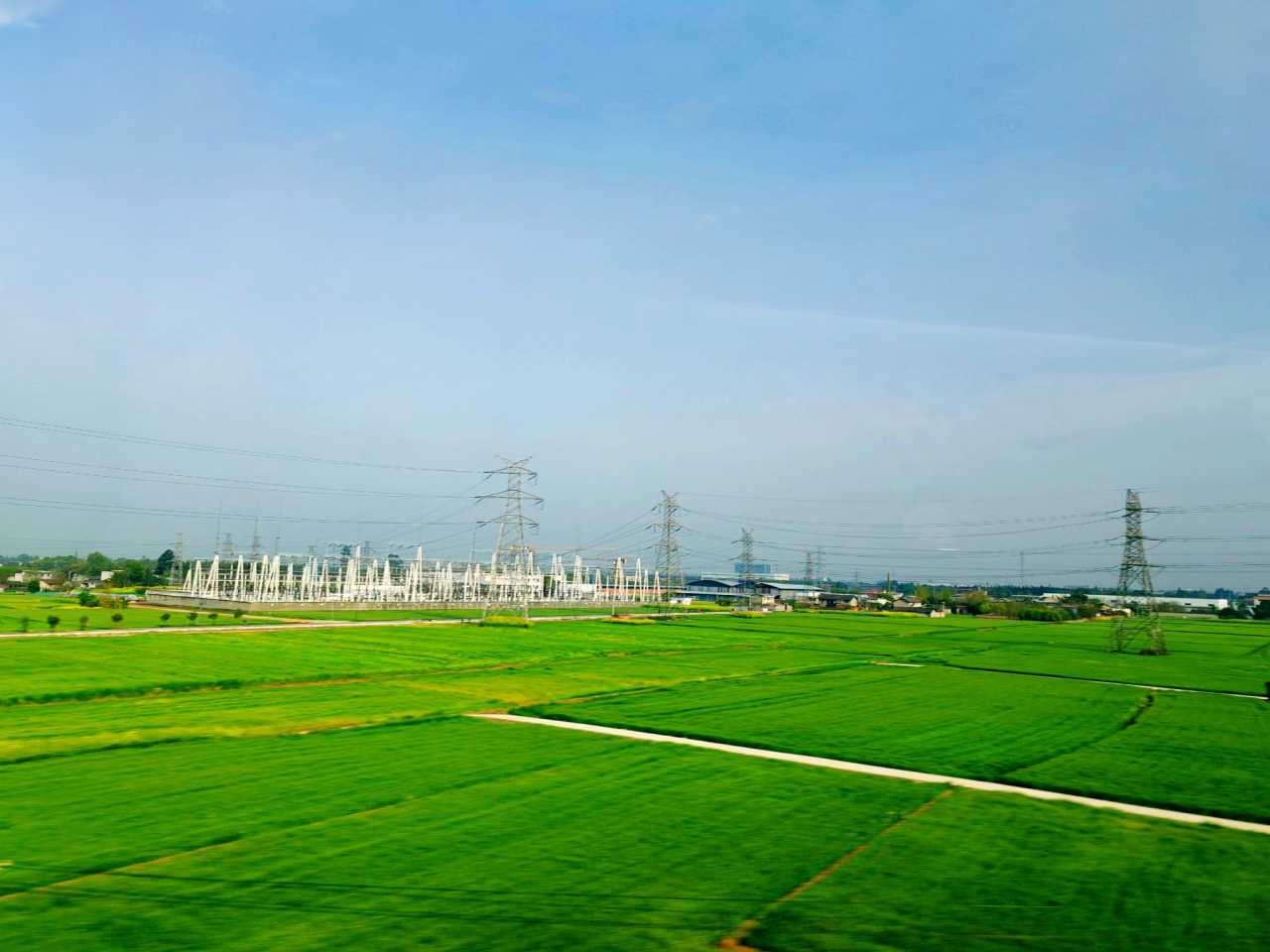
At 7 a.m., the G3294 from Luzhou to Shanghai Hongqiao departed punctually. Inside the speeding bullet train, green wheat fields painted a serene picture outside the window. After just three cups of tea, we arrived at Qingchuan Station.
Qingchuan High-Speed Rail Station was surprisingly small—a quiet square with only two taxis and two little yellow mini-buses. Our group of eight initially thought we'd be hot commodities, allowing us to haggle. Reality delivered a harsh slap: taxi drivers demanded 200 yuan without negotiation, and the mini-bus drivers didn't even know where "Liangshan Township Lanma Wall" was. We obediently climbed into a taxi.
Fortunately, the driver was talkative, regaling us with anecdotes about Qingchuan and Jiange. He told us that Jinshan Village, where Qingchuan Station sits, has only three taxis in total. Having two show up today was our good luck.
Lanma Wall: The "Guardrail" of the Ancient Shu Road
From Qingchuan Station to Liangshan Township was less than 40 kilometers—about an hour's drive. During the Ancient Shu Road era, Liangshan Township was called "Liangshan Post." The town features a famous eatery called "Gong Beef," but pressed for time, we reluctantly skipped it.
The sign for Lanma Wall stands one kilometer east of Liangshan Township. Despite its name, Lanma Wall is not a place name but a critical functional facility on the Ancient Shu Road—equivalent to modern highway guardrails. Legend says that when Zhang Fei served as governor of Langzhong, he discovered messengers and horses falling to their deaths off the cliffs of the Golden Ox Road. He ordered walls built at dangerous points to stop horses and prevent tragedies.
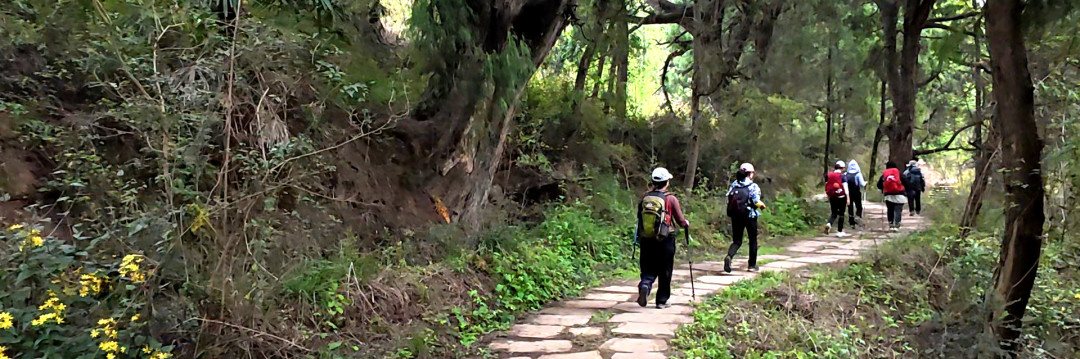
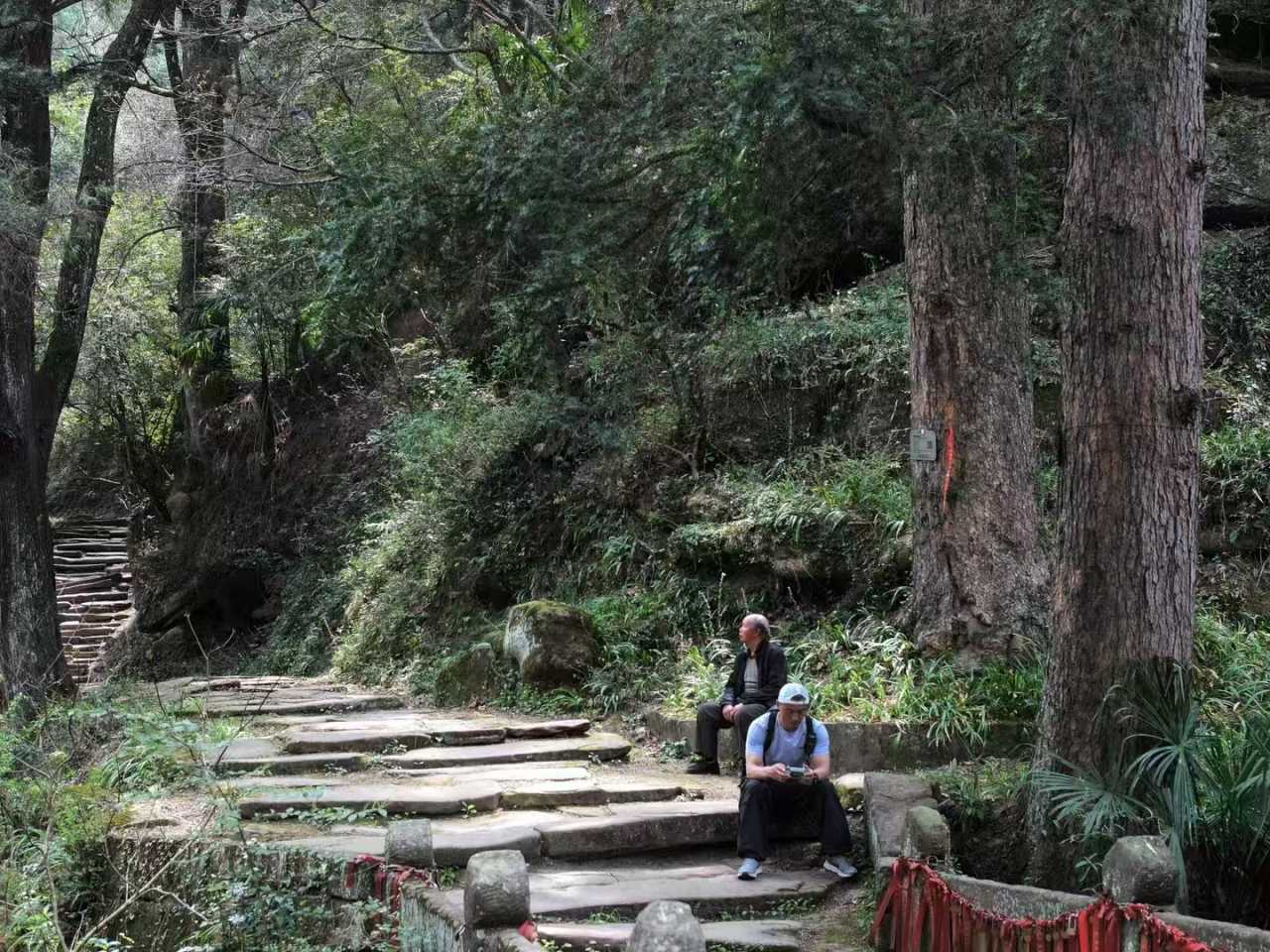
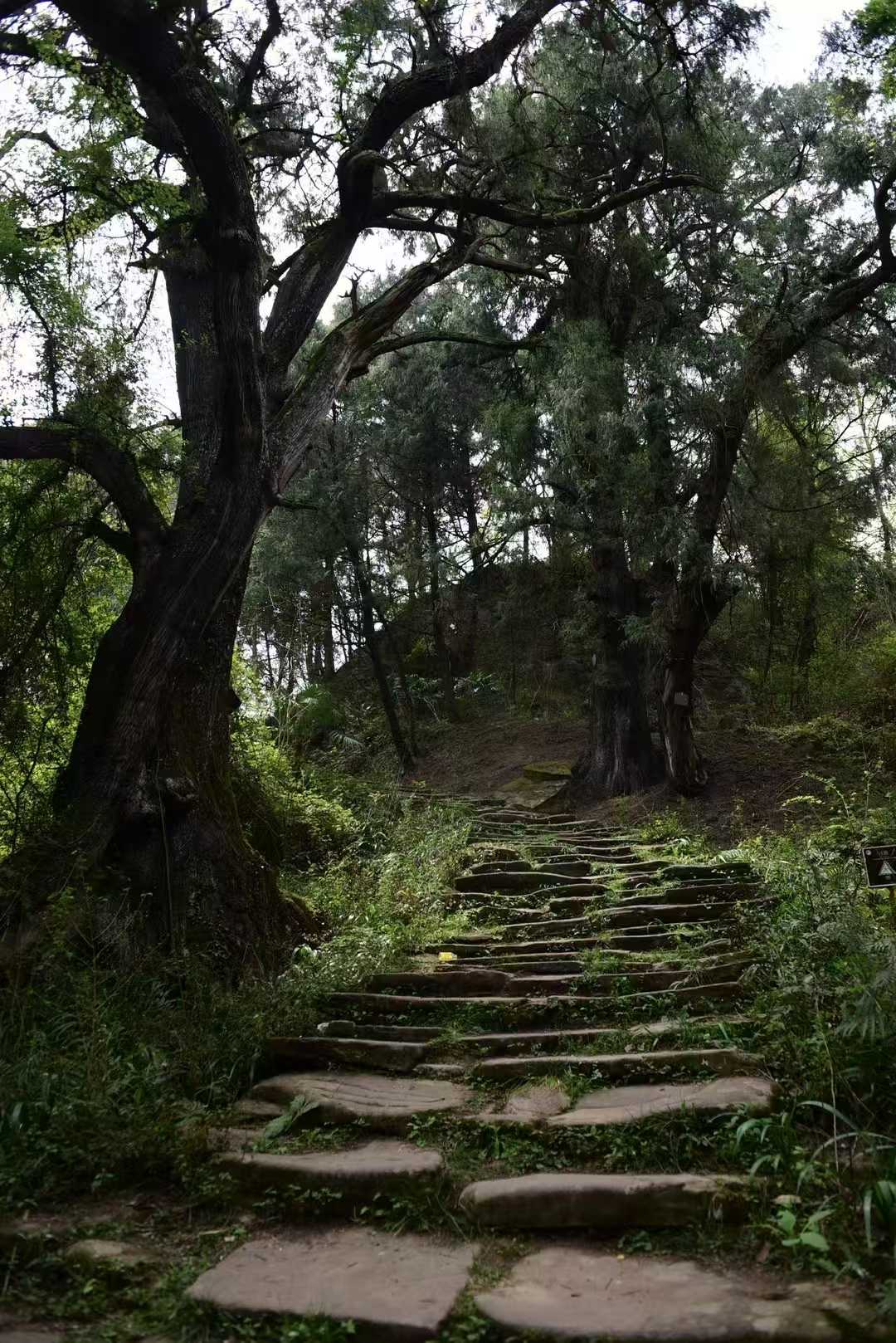
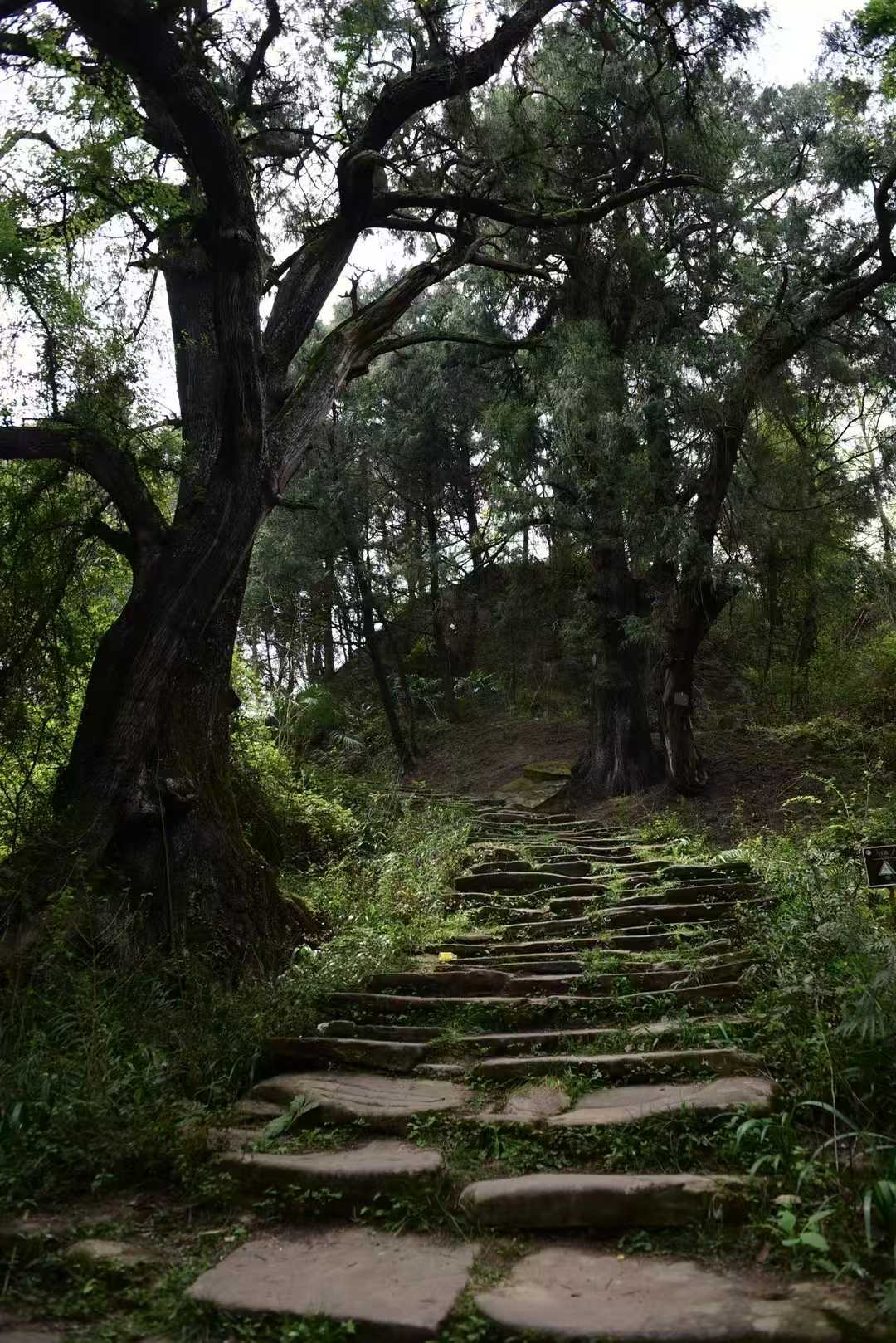
Standing before Lanma Wall felt like knocking on a heavy wooden door sealed by thousands of years of history. The Ancient Shu Road wound before us, with towering ancient cypress trees standing like armed guards. Their mottled bark inscribed with the winds and smoke of the Qin and Han dynasties. Every groove on the bluestone slabs was an inscription written by horse hooves and straw sandals through the ages. Walking on the ancient road felt like stepping on the backbone of time, brushing past merchants and soldiers from a thousand years ago.
The Wisdom of the Ancients: From Threshold Stones to Chisel Mark Lines
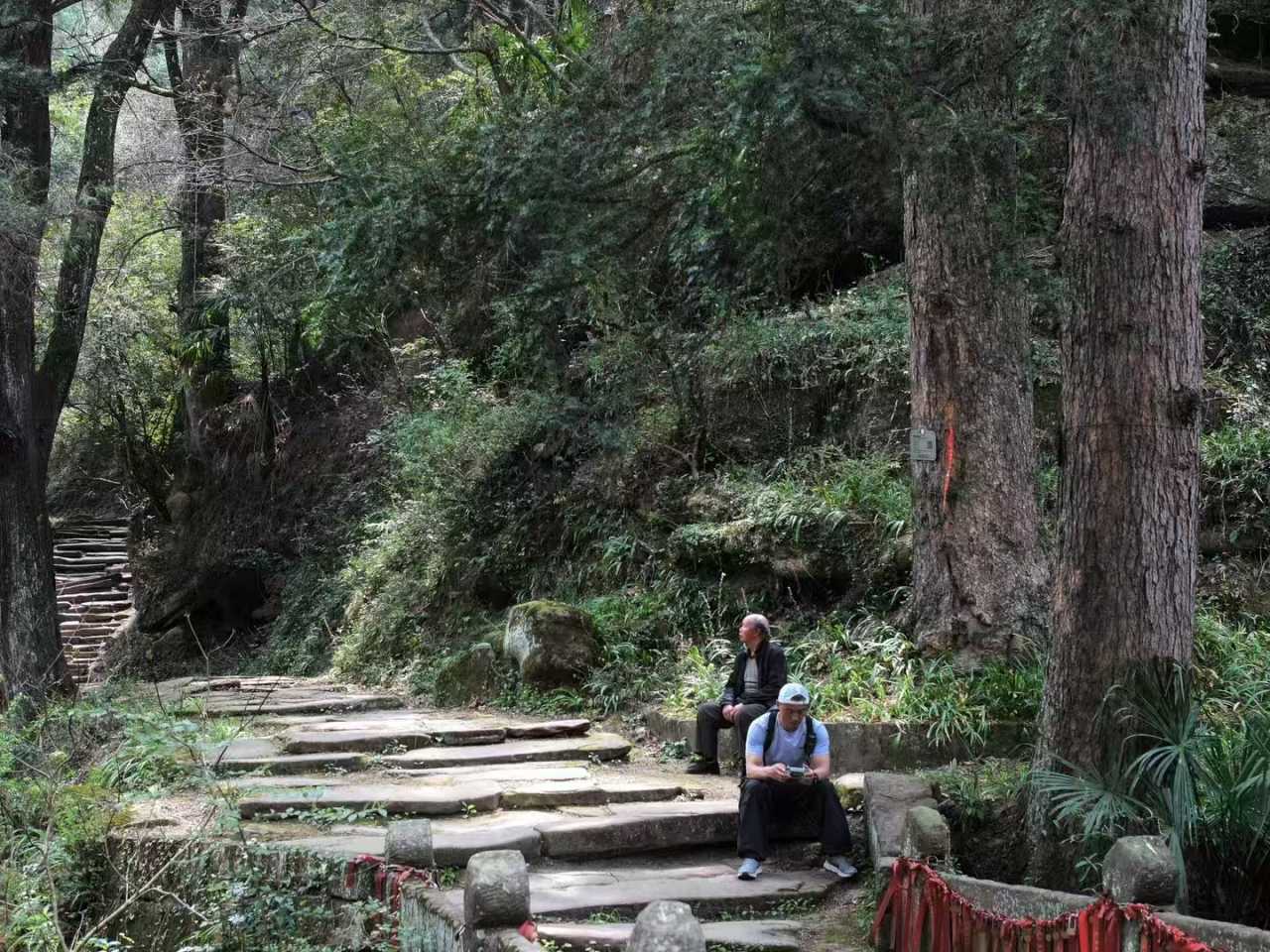
This approximately 5-kilometer bluestone ancient road from Liangshan Post to Qingliang Bridge is the best-preserved section of the original Ancient Shu Road. The road surface is about 2 to 3 meters wide, reaching up to 5 meters at its widest, flat and sturdy, with little collapse. Thousands of years of trampling have left ruts from carts, marks from horse hooves, and footprints from travelers on the bluestone surface—recording the vicissitudes of history.
What astonishes is the road-building wisdom of the ancients. On sections with a certain slope, vertical stone slabs embedded in the middle of the road are called "threshold stones." They fix the upper and lower paving stones relative to each other, ensuring these slabs haven't shifted or deformed over millennia. The seemingly random chisel marks on the road surface are called "chisel mark lines" —on many sections of the Ancient Shu Road that utilized the natural rock of the mountain itself, with ancient trees on both sides blocking out the sky, the stone surface was slippery and could easily cause people and animals to fall. The ancients chiseled dense lines on the stone surface to increase friction—a technique strikingly similar to the anti-skid lines on modern highways.
By the roadside were also watering troughs —stone basins carved specifically to provide water for the donkeys and horses traveling the Shu Road. Some were movable, others fixed. They are important physical evidence for studying the traffic support system of the Ancient Shu Road.
[Link: Ancient Shu Road engineering techniques and their modern parallels]
Chapter Two: From Qingliang Bridge to Wangxiang Terrace—Joys and Sorrows on the Ancient Road
Qingliang Bridge: Three Lifetimes of a Bridge

At the western end of Qingliang Bridge lies Wangxiang Terrace, which holds a poignant love story. Legend has it that a newlywed man from this area was conscripted into the army. Before leaving, the couple planted a cypress tree here as a token of their fidelity. Afterwards, the bride came here daily to climb the terrace and look north, hoping for her husband's early return. But the cypress tree grew tall while her husband never came back. The wife died of lovesickness and resentment.
Below Wangxiang Terrace is Qingliang Bridge, anciently named Pingji Bridge. Because the cool air here is chilling even in midsummer, it came to be called "Qingliang Bridge" (Cool and Clear Bridge). This is a three-arched stone flat bridge running north-south, spanning the Dianzi River. On the bridge piers remain two spirited stone water-defeating beasts—stone Chiwen (hornless dragon heads). According to historical records, the bridge was first built in the fifth year of the Jianxing era of Shu Han (227 AD), damaged by floods in the thirteenth year of the Chongzhen era of the Ming Dynasty (1640 AD), and rebuilt in the twenty-third year of the Kangxi era of the Qing Dynasty (1684 AD).
After crossing Qingliang Bridge and climbing the steps, one reaches the newly renovated Qingliang Temple. In front of the temple stands a huge square stone pillar fitted with an official's hat, with all four sides carved with marks unique to that era. Many such relics can be found along the way—another unique historical imprint of the thousand-year-old Ancient Shu Road.
Zhouyazi: Where the Red Army Once Fought
Following the cement road in front of Qingliang Temple, it's not far to Qingliang Post. A small village with dozens of households lining the road, it has nothing particularly special, nor any farmhouse inns offering food and lodging. But a solitary, strikingly beautiful peach tree at the village entrance suddenly caught our attention—from afar, she stood alone on an earthen slope by the roadside, a full canopy of blossoms burning fiercely in the April sun.
This was a boring stretch of nearly two kilometers of cement road, interspersed with two or three sections of ancient road that hadn't been destroyed. We tried leaving the road to find rural paths, but with poor results, we eventually had to return to the cement road. Only when we reached Zhouyazi did we get back onto the surviving ancient road.
This small mountain pass, located atop Pucui Mountain seven li west of Jianzhou Ancient City, guards the strategic point of the Golden Ox Road. In March 1935, the Red 30th Army, led by Xu Xiangqian and Li Xiannian, fought a fierce battle here against the local warlord forces. Bullet holes still scar the stone walls, and the local villagers still tell stories of that bloody spring.
[Link: Historical battles along the Shu Road and their significance]
Chapter Three: The Grandeur of Jianmen Pass—Where Heaven Meets Earth
The Final Ascent: From Cuivun Corridor to the Pass
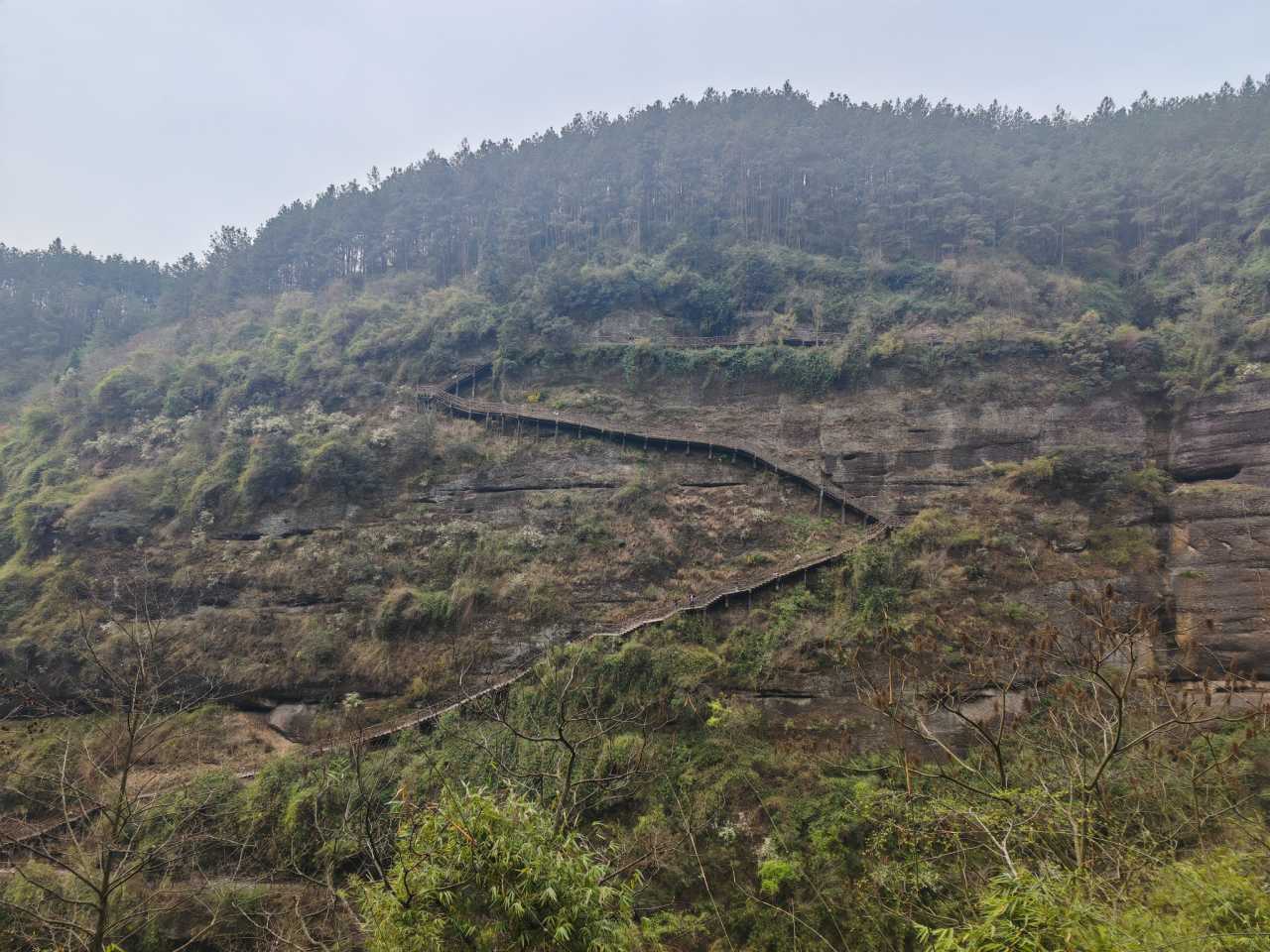
The third day brought us to the most anticipated section: Cuivun Corridor to Jianmen Pass. This is the crown jewel of the Jianzhao Ancient Shu Road—a 10-kilometer stretch lined with over 8,000 ancient cypress trees, some over 2,000 years old. The corridor gets its name from the emerald-green canopy that forms a natural tunnel, filtering sunlight into dappled patterns on the ancient stone path.
Walking through Cuivun Corridor felt like entering a living museum. Each cypress tree has a name and a story. The "Zhang Fei Cypress" is said to have been planted by the legendary general himself during his tenure as governor of Langzhong. The "Huang Zhong Cypress" marks a spot where the elderly general rested during his campaigns. The trees stand as silent witnesses to two millennia of Chinese history—from the Three Kingdoms to the Tang Dynasty, from the Song to the Ming and Qing.
Jianmen Pass: The Unconquerable Fortress
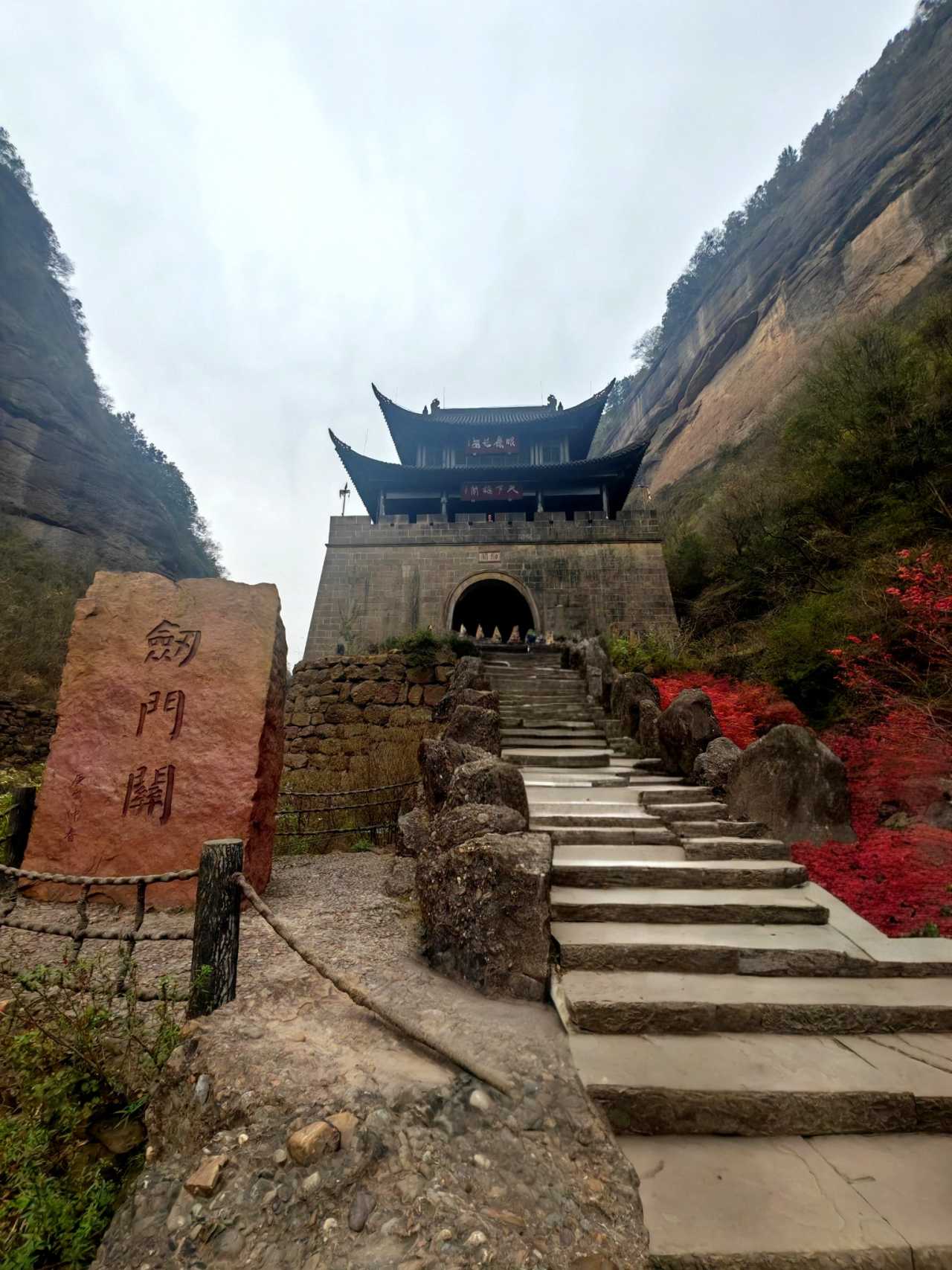
After three and a half days of walking, we finally saw it: Jianmen Pass. The pass sits atop a natural mountain fortress, with cliffs on three sides and only one narrow path leading up. This is the most famous strategic point on the entire Shu Road—the "one man guards the pass, ten thousand cannot open" location celebrated in Chinese military history.
The current pass structure was rebuilt during the Ming Dynasty and restored in recent years. The stone archway bears the inscription "Jianmen Pass" in bold characters. Standing at the top, the view is breathtaking: the Sichuan Basin stretches to the south, while the Qinling Mountains rise to the north. This is the exact spot where countless armies, merchants, and poets have stood over the past 2,000 years.
Li Bai's poem came alive here: "The road to Shu is harder than the road to Heaven. I hear you are going west—alas, when will you return?" Standing at Jianmen Pass, I understood why he wrote those words. The pass is not just a physical barrier—it's a psychological one, a gateway between two worlds.
[Link: Best times to visit Jianmen Pass and nearby attractions]
Practical Tips for Your Shu Road Hike
Best Time to Visit
The Qingming Festival (early April) is ideal for hiking the Shu Road. The weather is mild, the cypress trees are in fresh green, and wildflowers bloom along the path. Avoid summer (rainy and humid) and winter (cold and potentially icy).
What to Pack
- Sturdy hiking boots with good grip—the bluestone can be slippery
- Water bottles (at least 2 liters per person per day)
- Sun protection (hat, sunscreen, sunglasses)
- Light snacks (nuts, dried fruit, energy bars)
- Camera (the scenery is spectacular)
- Cash (many villages don't accept mobile payments)
Accommodation Options
- Qingchuan County: Several hotels near the train station
- Liangshan Township: Basic guesthouses (no online booking—call ahead)
- Jianmen Pass: Hotels and guesthouses near the scenic area
Getting There
- By High-Speed Rail: Take G-series trains to Qingchuan Station (from Chengdu: ~1.5 hours; from Xi'an: ~2 hours)
- By Bus: From Guangyuan or Jiange to Qingchuan
Frequently Asked Questions
1. How difficult is the Shu Road hike?
The 75-kilometer route is moderately difficult. It's not technical climbing, but the uneven stone paths and some steep sections require good physical fitness. Most people with regular hiking experience can complete it in 3-4 days.
2. Is it safe to hike alone?
We recommend hiking in groups of at least 3-4 people. Some sections are remote with limited mobile signal. Hiring a local guide is advisable for first-time visitors.
3. Can I do the hike in a shorter time?
Yes, many people do the highlights in 2 days: start from Qingliang Bridge, walk to Jianmen Pass, and take a bus back. But you'll miss the full experience of the ancient road.
4. What's the best section for photography?
Cuivun Corridor is the most photogenic, especially in early morning or late afternoon light. Jianmen Pass offers panoramic views of the surrounding mountains.
5. Are there food options along the route?
Limited. Most villages have small shops selling snacks and water. We recommend bringing your own lunch for each day. Jianmen Pass has restaurants serving local cuisine.
Conclusion: Walk the Path of Poets and Warriors
The Shu Road is more than a hiking trail—it's a time machine. Every step you take on those ancient bluestones connects you to the millions who walked before you: merchants carrying silk and tea, soldiers marching to war, poets seeking inspiration, and ordinary people just trying to survive.
Walking the Shu Road during Qingming Festival—a time when Chinese traditionally honor their ancestors—added another layer of meaning. We were honoring not just our own ancestors, but the collective ancestors of Chinese civilization who built, maintained, and traveled this incredible road.
Li Bai wrote that the road to Shu is harder than the road to Heaven. But standing at Jianmen Pass, watching the clouds roll over the mountains, I realized something: the road to Shu is not harder than Heaven—it is Heaven. The beauty, the history, the stories—they're all there, waiting for you to walk them.
Are you ready to measure the Shu Road with your own feet? Plan your trip for next Qingming Festival. Book your high-speed rail tickets early, gather your friends, and prepare for a journey that will change how you see Chinese history forever.
[Link: Complete guide to hiking the Jianzhao Ancient Shu Road] [Link: Best hiking trails in Sichuan for history lovers] [Link: Qingming Festival travel guide to Guangyuan and Jiange]
Have you walked the Shu Road? Share your experience in the comments below. If you have questions about planning your hike, ask away—we're happy to help!
You may also like