The "8" Cycle: When I Passed Through Shangri-La in Full Bloom (Shangri-La + Daocheng Yading)
Meta Description: Discover the ultimate Shangri-La and Daocheng Yading itinerary in this SEO-optimized travel guide. Hike the "8" cycle route through snow-capped peaks, Five-Color Lake, and sacred monasteries. Plan your dream trip now.
Introduction: A Journey Through Shangri-La and Daocheng Yading
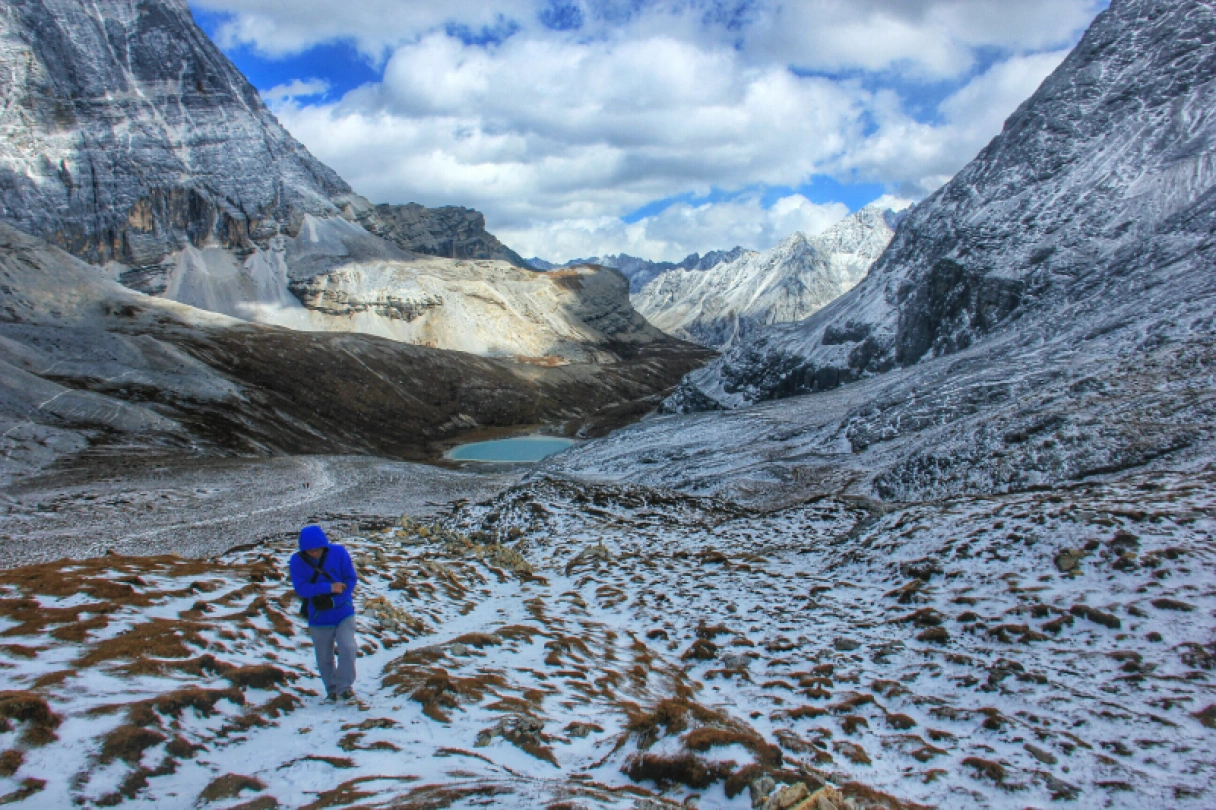
October 22, 2014. The early morning ice in Yading was just beginning to melt. I walked alone across the snow, the majestic snow-capped peaks towering ahead as snowflakes gently brushed against my face. When I turned back, there was only a single set of footprints behind me—lonely, yet full of hope.
That day, I hiked for eight hours until I stood utterly exhausted beside Five-Color Lake (Wuse Hai). The bright, sunny afternoon was suddenly blurred by a heavy snowstorm. Looking back a year later, those memories remain as vivid as ever. I've been reluctant to write about it, partly out of laziness, but more so from a kind of emotional disorientation. Shangri-La was too beautiful, and I happened to have the time. The encounters along the way crystallized into a long-lost sense of wonder. But within that wonder also lay regret—I never managed to bring her along to that not-so-distant horizon, to bring back a story that was ours.
This is the story of the "8" cycle—a figure-eight route that naturally connected Shangri-La and Daocheng Yading at their most breathtaking. Whether you're a solo traveler, a photography enthusiast, or a spiritual seeker, this guide will help you plan your own unforgettable journey.
Trip Overview: The Figure-Eight Cycle Route
This route naturally traced the shape of an "8." When I first planned it, I didn't think too much—the goal was simply to catch Daocheng Yading at its most beautiful. But with nine days to spare, I impulsively added Shangri-La. Here's the complete itinerary:

- Day 1: Luzhou → Chengdu → Shangri-La (Zhongdian)
- Day 2: Dukezong Old Town + Songzanlin Monastery
- Day 3: Zhongdian → Deqin (Meili Snow Mountain)
- Day 4: Deqin (Golden Sunrise on the Peaks) → Zhongdian
- Day 5: Zhongdian → Daocheng (11.5-hour drive)
- Day 6: Daocheng surroundings (Sela, Banghe)
- Day 7: Daocheng → Yading (Chonggu Monastery + Pearl Lake)
- Day 8: Yading trek (Chonggu Monastery → Luorong Pasture → Milk Lake + Five-Color Lake)
- Day 9: Rest day in Daocheng
- Day 10: Yading → Luzhou (direct flight, then back to work)
Why the "8" Cycle Works: This route maximizes scenic diversity—from Tibetan monasteries and ancient towns in Shangri-La to the alpine lakes and glaciers of Daocheng Yading. It's a loop that minimizes backtracking while hitting all the highlights.
Transportation & Accommodation: Practical Travel Tips

How to Get Around
After National Day, the travel market cools down fast, and flight prices become very friendly. A direct flight from Chengdu to Shangri-La takes about an hour and a half, costing around 400 RMB. The return flight from Daocheng Yading Airport to Luzhou was about 800 RMB.

Shangri-La to Meili Snow Mountain: The final stop is usually Feilai Temple (Feilai Si). Carpooling is the most common option, and along the way you can photograph Baima Snow Mountain. On the return trip, we managed to capture the clearest view of Kawagebo Peak. Alternatively, there are buses from the station to Deqin, where you can transfer to a local minivan to reach Feilai Temple.
Shangri-La to Daocheng: There's only one daily bus, costing 120 RMB (prices from over a year ago), taking about 11 hours. That road is perpetually under construction, and detours make the journey even longer—but it's still better than no service at all. Note: tickets can only be purchased one day in advance.
Daocheng to Yading Scenic Area: From Daocheng county town to the Yading scenic area is another hour-plus drive, usually by private car for about 50 RMB per person—just ask your hostel owner. Inside the scenic area, there are sightseeing buses included in the ticket price, similar to Jiuzhaigou Valley's system. The stops are far apart, with three stations total, and you can hop on and off freely.
[Link: Best time to visit Daocheng Yading for autumn colors]
Where to Stay
I stayed in hostels throughout the trip. Here are my top recommendations:
Shangri-La: "Chudengshuo International Youth Hostel" is a must-recommend. Its courtyard is filled with flowers, and when the sun pours in, you simply don't want to move. The common area has a fireplace where you can chat, and the rooms are clean and tidy. The owner, a handsome local guy, is incredibly helpful. When I was in Deqin and couldn't buy a bus ticket to Daocheng, he handled the purchase for me.

Feilai Temple: "Juesexiang International Youth Hostel" has a strong Tibetan character. The courtyard is full of blooming Gesang flowers (a type of wild aster), and from the doorstep you can see the thirteen peaks of Meili. The only downside is the poor soundproofing on the second floor—conversations from next door sound like they're right in your ear.
Daocheng County Town: There are plenty of hostels, including two international ones. I stayed at "Fanhegu," which was clean, tidy, and had hot water. The owners were a couple from Shandong Province who return home at the end of October and don't come back until April. In winter, heavy snow closes off Daocheng Yading, and many lodgings shut down—apparently from November to March, the entire town might have only one or two hotels left, and those are government-subsidized.
Inside Yading Scenic Area: Don't expect much from accommodation. In late autumn through winter, the voltage is unstable, water won't boil properly (instant noodles never cook through), and the lighting is dim. When I visited, it was still peak season, so finding any room was lucky, and getting a four-person dorm was a stroke of pure luck—which is why I honestly can't remember its name.
[Link: Best hostels in Shangri-La for budget travelers]
Shangri-La Chapter: A Matter of Fate
Two years later, I set off alone again. There was less novelty and fear, replaced by more maturity and reflection, but the loneliness and unexpected events still followed me closely.
First came the flight delay. I waited over two hours at Chengdu Shuangliu Airport, eating a bland airport boxed lunch, thinking I'd rather have had instant noodles. That thought became prophetic—nine days later at Yading Airport, instant noodles were all there was.
The delay was minor. What hit harder was the news that the bus from Shangri-La to Daocheng had stopped running! That's precisely why I hadn't booked my return flight. When I arrived in Shangri-La at 11 PM, the owner of Chudengshuo picked me up and mentioned that the road was indeed under repair—a few days earlier, some travelers had asked at the station and were told service was temporarily suspended. It was a thunderbolt. I couldn't sleep that night.
Scarred Dukezong, Faith at Songzanlin
At 1 AM on January 11, 2014, a fire caused by improper use of a heater by a guesthouse operator consumed nearly a third of Dukezong Old Town.
The owner of a breakfast shop talked about the fire as if it had happened yesterday. Sleeping residents were awakened by flames illuminating the entire night sky. The fire spread relentlessly, the air thick with the smell of burning wood, as crowds stood helplessly watching it all unfold. Reports said about 336 shops were destroyed, mostly commercial properties, but fortunately no one died. When I visited, water and electricity had been restored, and reconstruction was underway, though it was expected to take at least three years just for initial completion.
After the fire, fewer tourists came to the old town, and many shops closed. The ancient city regained its tranquility but lost its vitality. Still, the locals carried on with their lives, greeting visitors with smiles as always.

Not far away, Turtle Mountain Park (Guishan Gongyuan) was buzzing with activity. Tourist buses arrived one after another, and the square was packed with people. In the middle sat two seemingly fierce Tibetan mastiffs, leashed and glaring at every passerby—photos, of course, came with a fee.
The park's most famous feature is the world's largest prayer wheel. It supposedly takes four people to turn it, and from experience, those four need to be strong. Getting the wheel moving from a standstill is exhausting; once it's in motion, it becomes much easier. But when you return to the starting point, you have to dig in your heels all over again. It's like life—after the relief of finishing, everything starts from scratch.
During this time, I met a monk. He lived in a village an hour's drive from the Great Buddha Temple and came here every day to turn the prayer wheel. In his worldview, life was simple—no strange new things, no flashy decorations. Having one thing you commit to every day was enough.
[Link: How to visit Songzanlin Monastery like a local]
Daocheng Yading Trekking Guide: Lakes, Glaciers, and Snow Peaks

The heart of this journey is the Daocheng Yading trek. Here's what you need to know:
Day 7: Chonggu Monastery + Pearl Lake

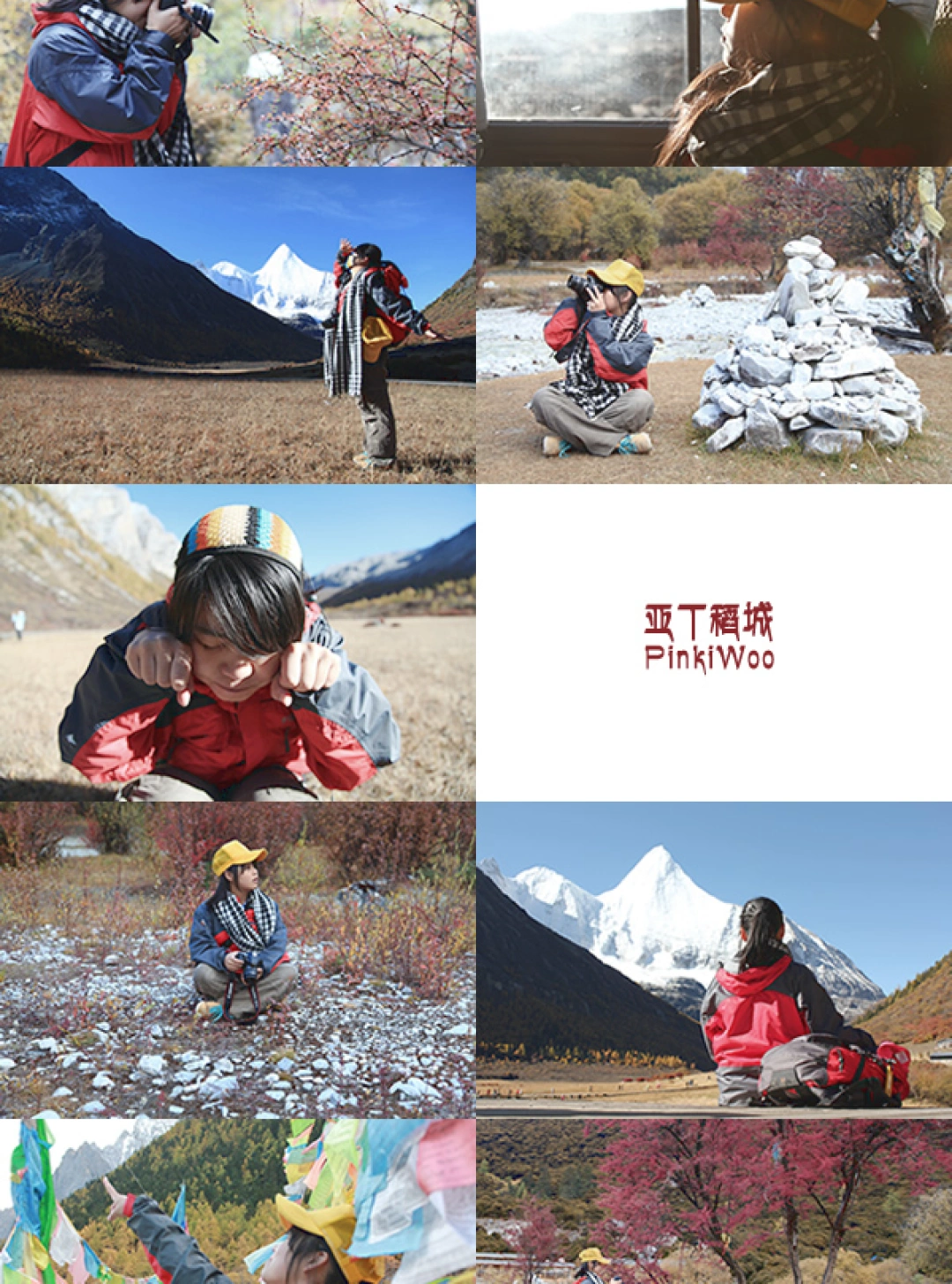
This is a gentle introduction to the Yading landscape. Chonggu Monastery sits at the base of the sacred peaks, offering stunning views of the Three Holy Mountains: Chenresig (Guanyin), Chana Dorje (Vajrapani), and Jambeyang (Manjushri). From there, a short hike leads to Pearl Lake (Zhenzhu Hai), a turquoise alpine lake reflecting the snow-capped peaks.
Day 8: The Big Trek – Milk Lake + Five-Color Lake
This is the main event. Start at Chonggu Monastery, hike through Luorong Pasture (a vast alpine meadow with grazing yaks), then ascend to Milk Lake (Niu Nai Hai) and finally Five-Color Lake (Wuse Hai). The total hike takes about 8 hours.

Tips for the trek: - Start early (before 7 AM) to avoid afternoon storms - Bring waterproof gear – weather changes rapidly - Carry high-energy snacks and plenty of water - Altitude sickness is real – acclimatize in Daocheng for at least a day
When I reached Five-Color Lake, the bright, sunny afternoon was suddenly blurred by a heavy snowstorm. It was surreal—one moment, the lake shimmered in five distinct colors; the next, whiteout conditions forced me to huddle behind a boulder. That's Yading for you: unpredictable, raw, and unforgettable.
[Link: Complete Daocheng Yading trekking itinerary]
FAQ: Shangri-La and Daocheng Yading Travel Tips

1. What is the best time to visit Shangri-La and Daocheng Yading?
The ideal time is mid-October to early November for autumn colors. The golden larch forests and clear skies make for stunning photography. Spring (April-May) offers blooming rhododendrons, while summer (June-August) is lush but rainy. Winter (November-March) is harsh—many lodgings close, and roads may be impassable.
2. How do I get from Shangri-La to Daocheng?

The only direct bus departs daily from Shangri-La bus station, costing around 120 RMB and taking approximately 11 hours. Tickets can only be purchased one day in advance. Note that road construction is common, so expect detours and delays. Alternatively, you can hire a private car (more expensive but flexible).
3. Is altitude sickness a concern in Daocheng Yading?

Yes. Daocheng sits at 3,700 meters (12,100 feet), and Yading's highest points exceed 4,700 meters (15,400 feet). Acclimatize in Daocheng for at least 24 hours before trekking. Stay hydrated, avoid alcohol, and consider bringing altitude sickness medication (e.g., Diamox). If symptoms worsen, descend immediately.
4. Can I visit Shangri-La and Daocheng Yading on a budget?

Absolutely. Hostels cost 50-100 RMB per night, local buses are affordable (120 RMB for the Shangri-La to Daocheng bus), and food is inexpensive. The biggest expense is flights—book early for the best deals. The Yading scenic area entrance fee is around 150 RMB, plus sightseeing bus fees.
5. What should I pack for a Shangri-La and Daocheng Yading trip?

Essentials include: warm layers (temperatures can drop below freezing), waterproof jacket and pants, sturdy hiking boots, sunscreen (UV is intense at high altitude), sunglasses, a headlamp, snacks, a reusable water bottle, and altitude sickness medication. Don't forget your camera—the landscapes are breathtaking.
Final Thoughts: Your "8" Cycle Awaits
The "8" cycle through Shangri-La and Daocheng Yading is more than a travel route—it's a pilgrimage through some of China's most sacred and stunning landscapes. From the scarred but resilient streets of Dukezong to the snow-dusted peaks of Yading, every step offers a story waiting to be written.
Whether you're chasing golden sunrises over Meili Snow Mountain, turning the world's largest prayer wheel, or standing breathless beside Five-Color Lake, this journey will change you. It changed me.
Ready to plan your own adventure? Start by booking your flights to Chengdu, then map out your "8" cycle. Don't wait for the perfect moment—the mountains are calling, and they won't wait forever.
[Link: Book your Shangri-La and Daocheng Yading tour package]
Share your own "8" cycle story in the comments below. What was your most unforgettable moment in Shangri-La or Daocheng Yading?
You may also like