Traces of Time in the Mountains of Sichuan and Chongqing: A Long-Overdue Encounter with Anyue's Stone Carvings During the May Day Holiday
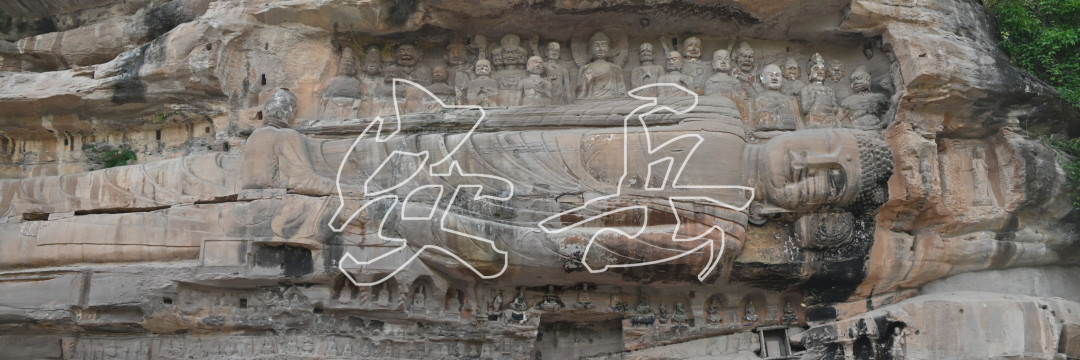
Meta Description: Discover Anyue's ancient stone carvings in Sichuan—a hidden gem of Song Dynasty Buddhist art. Explore Pilu Cave, Huayan Cave, and Mingshan Temple in this SEO-optimized travel guide.
Prologue: A Pilgrimage Years in the Making
Some places plant a seed in your heart, waiting for the right moment to sprout.
Anyue County (Sichuan Province) was exactly that for me.
During the years my son studied in Mianyang City, the Sichuan-Chongqing economic loop hadn't yet been completed. From our small, obscure county-level city, the only route was the Nei-Sui Expressway (now the Sui-Yi-Bi Expressway). Countless times, our tires rolled across Anyue's territory. The road sign flashed by, but I never took that exit. It wasn't that I didn't want to—it was that I knew the truth: Anyue's stone carvings are scattered across the mountains and forests, too fragmented to explore without a full day of unhurried time.
Until this May Day holiday, when that long-suppressed longing finally found its way out.
The mountains gather the years; the wild corners hide treasures. In Anyue's deep forests, civilization uses silence as its blade, carving forms through the endless flow of time. The mountains and rivers speak not, yet they knead the vastness of the ages into their very texture. Time is no longer an abstract word but a tangible remnant of civilization. Ordinary eyes cannot see the core of time—only by quieting the heart can one read the grand, silent solitude of eternity.
Time is an invisible chisel, carving a worldly treasure in the deep abyss of Sichuan and Chongqing's wild mountains.
Route Planning: The Wisdom of Choosing Between North and South
Anyue's stone carvings can be roughly divided into two routes:
Southern Route (Shiyang Town Area) – The Essence of Song Dynasty Carvings
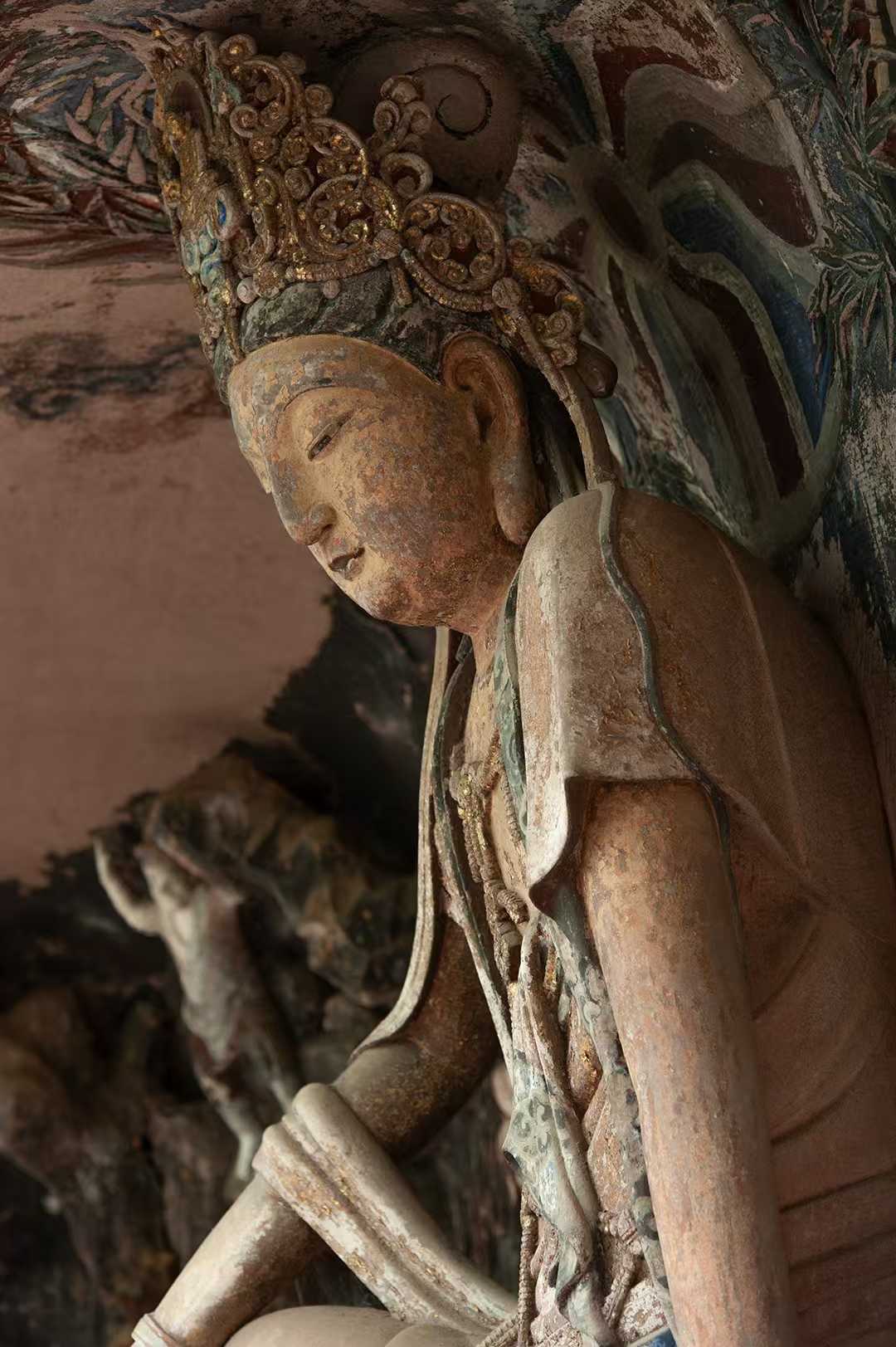
This route showcases the delicate and meticulous aesthetics of the Northern Song Dynasty (960-1127). Key sites include: - Peacock Cave (Kongque Dong) - Pilu Cave (Pilu Dong) - Huayan Cave (Huayan Dong) - Mingshan Temple (Mingshan Si) - Tapon (Banshan Si)
Northern Route (Around the County Seat) – Tang to Five Dynasties Grandeur
Primarily Tang Dynasty (618-907) to Five Dynasties (907-960) style, grand and imposing. Key sites include: - Reclining Buddha Temple (Wofo Yuan) - Yuanjue Cave (Yuanjue Dong) - Thousand Buddha Stockade (Qianfo Zhai) - Mumen Temple (Mumen Si)
To visit all these sites would take at least two days. I had only one, so I had to make choices.
My final decision: On the southern route, I locked in Pilu Cave, Huayan Cave, and Mingshan Temple. On the northern route, I chose Yuanjue Cave, Mumen Temple, and the Reclining Buddha Temple. Six sites in one day—a tight schedule, but not rushed.
Pilu Cave: The Stunning Beauty of the "Oriental Venus"
Don't think Pilu Cave is just a single cave—it's a complex comprising Pilu Cave, Youju Cave, Thousand Buddha Cave, and Guanyin Hall. The carving area stretches over a hundred meters, with 20 grottoes housing 465 cliff-side Buddha statues, plus over 30 scattered inscriptions, cliff tombs, and pagodas. The layout is orderly, hiding countless details worth examining.
The statues here center on Esoteric Buddhism, while incorporating elements from Confucianism and Daoism. There's both the solemnity of the Buddhist realm and the everyday breath of ordinary life, breaking down the distance between gods and people, carving faith and the myriad forms of life into the red rock. In style, it inherits the majestic grandeur of the Yungang and Longmen Grottoes, while initiating Anyue's unique blend of agility and delicacy. With fine technique and vivid expressions, it showcases the Song Dynasty's aesthetic preference for both artistic conception and realistic detail.
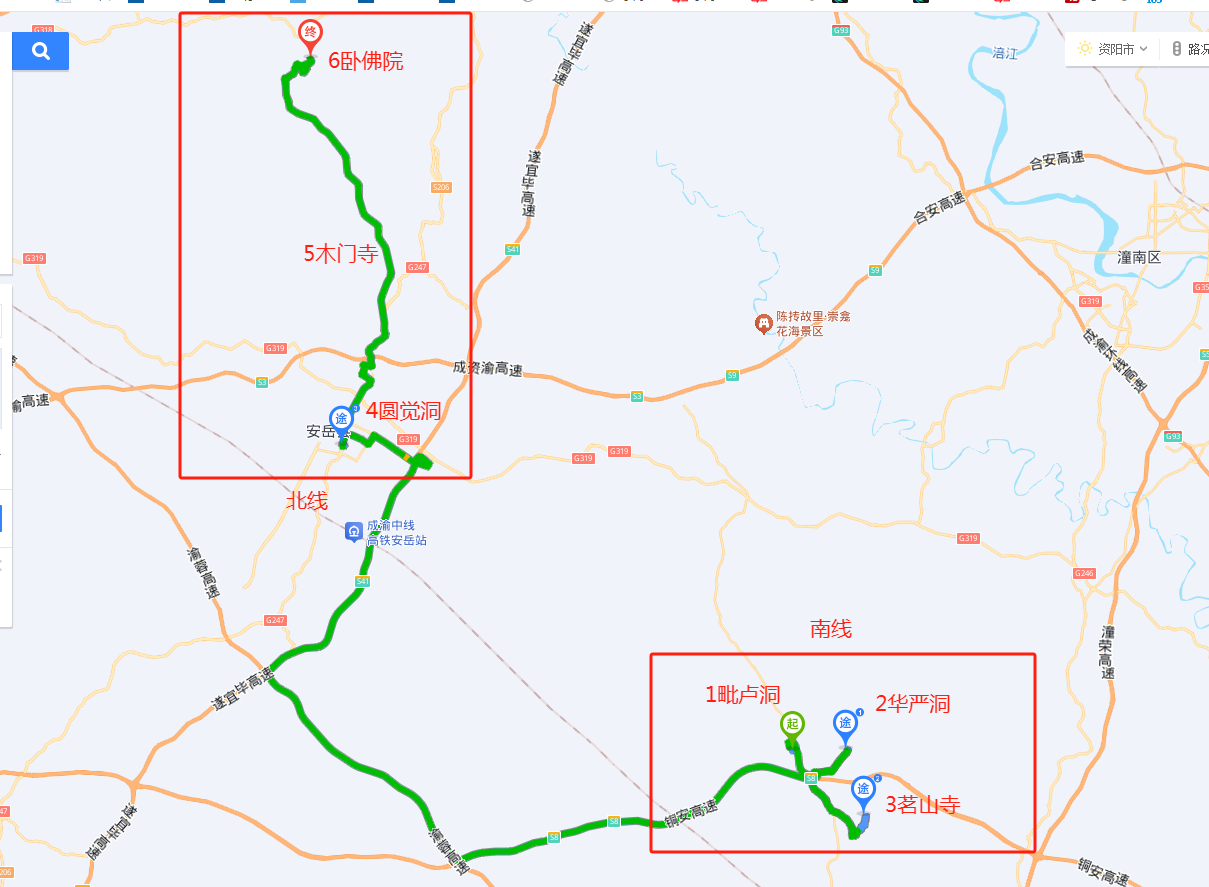
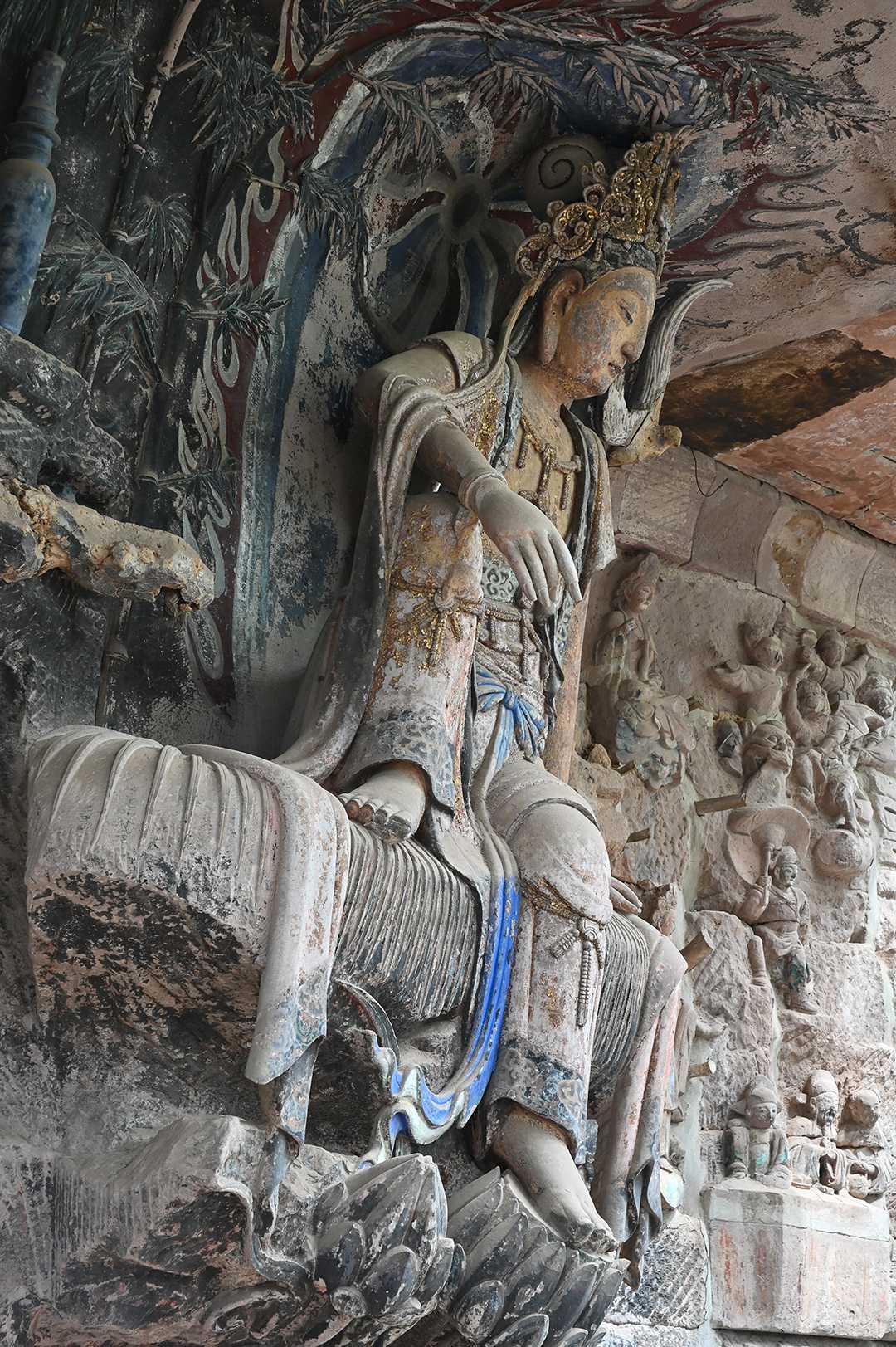
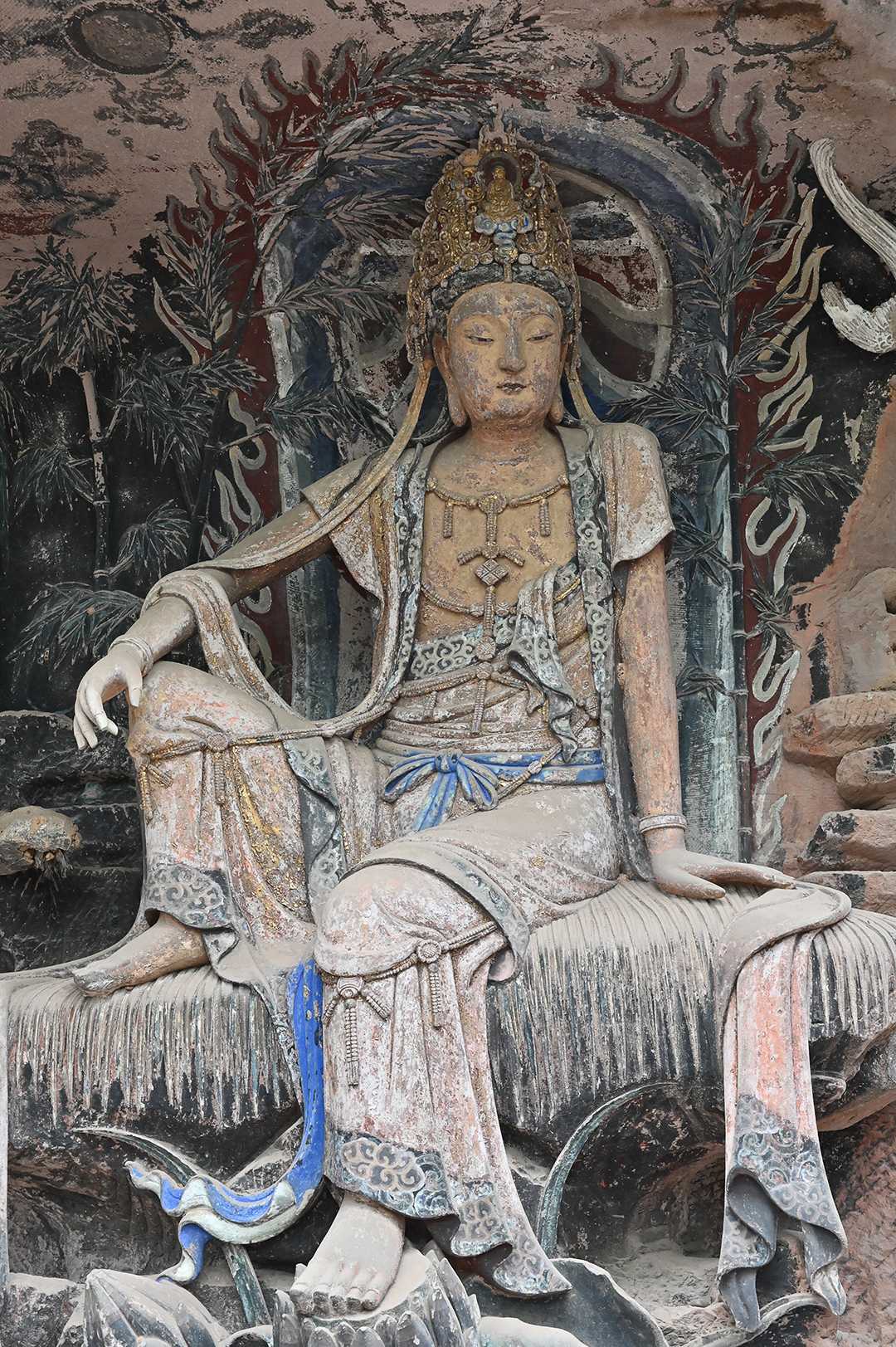
But the most dazzling presence in all of Pilu Cave is the Bamboo Grove Guanyin (Zizhu Guanyin) in Guanyin Hall—more commonly called the "Cross-Legged Guanyin." British-Chinese writer Han Suyin once called it the "Oriental Venus," a pinnacle of Northern Song stone carving art.
Because my expectations for the Bamboo Grove Guanyin were so high, I walked straight to it the moment I entered. Seeing it with my own eyes left me speechless.
It was too beautiful.
Her face is ethereally elegant, skin like congealed fat with an ancient luster, eyebrows like distant mountains tinged with dark green. Phoenix eyes slightly lowered, hiding compassion; vermilion lips gently closed, containing a merciful light. The gilded crown is exquisitely delicate, with a small Buddha hidden within. Necklaces hang down to her chest, pearls and jade scattered in disarray. Her chest and arms are bared, showing purity; a shawl drapes over her shoulders, flowing with grace. Her long skirt is thin as cicada wings, clinging to her waist and legs, the folds of fabric flowing like a long wind brushing silk, pleats like currents, as if stirred by a breeze. Her right leg is raised high like a leisurely cloud unfurling; her left leg hangs gently like spring water slowly sinking. Bare feet step on a lotus, the stamens holding sweet dew. She turns her body, gazes intently, with an expression of universal salvation.
She has both the solemnity of a goddess and the charm of a young woman. The beauty of divinity and humanity is carved to perfection. As a Ming Dynasty (1368-1644) stele records: "Solemn and wondrous, with the vitality of movement and stillness, words and silence; the bamboo grove, with the姿态 of wind, clear skies, rain, and dew."
It's said that photographing the Bamboo Grove Guanyin from different angles reveals different forms—from an 18-year-old girl to a 40-year-old woman. Sadly, one of her hands is a later replacement—the original was stolen, and its whereabouts remain unknown. Everything in the world carries regrets; even the Buddha is not spared, let alone mortals.
Another site worth seeing in Pilu Cave is the Ten Ordeals Cave of Li Benzun (Li Benzun Shi Lian Ku), depicting the Esoteric Buddhist master Li Benzun's ten ascetic practices, such as burning his fingers, standing in the snow, and gouging out his eyes. After the Tang Dynasty, Esoteric Buddhism gradually declined in central China, but here, a complete system from the Five Dynasties to the Song Dynasty is preserved—extremely rare.
However, one statue here is rather "comical"—it stands out awkwardly among the exquisite Song Dynasty carvings in the same cave. It's said to be a Qing Dynasty (1644-1912) carving of the Jade Emperor (Yu Huang Da Di), so crude it's laughable. If the Jade Emperor saw it, he'd probably be furious.
Huayan Cave: The Largest Song Dynasty Carving Site
Huayan Cave is not far from Pilu Cave, connected by a country road. It is the largest and best-preserved Song Dynasty grotto in Anyue, centered on the Huayan Triad (Huayan San Sheng) and the Fifty-Three Visits of Sudhana (Shancai Wushisan Can) reliefs. It's a key relic for studying Sichuan Esoteric Buddhism and Song Dynasty stone carving art, and a Major Historical and Cultural Site Protected at the National Level.
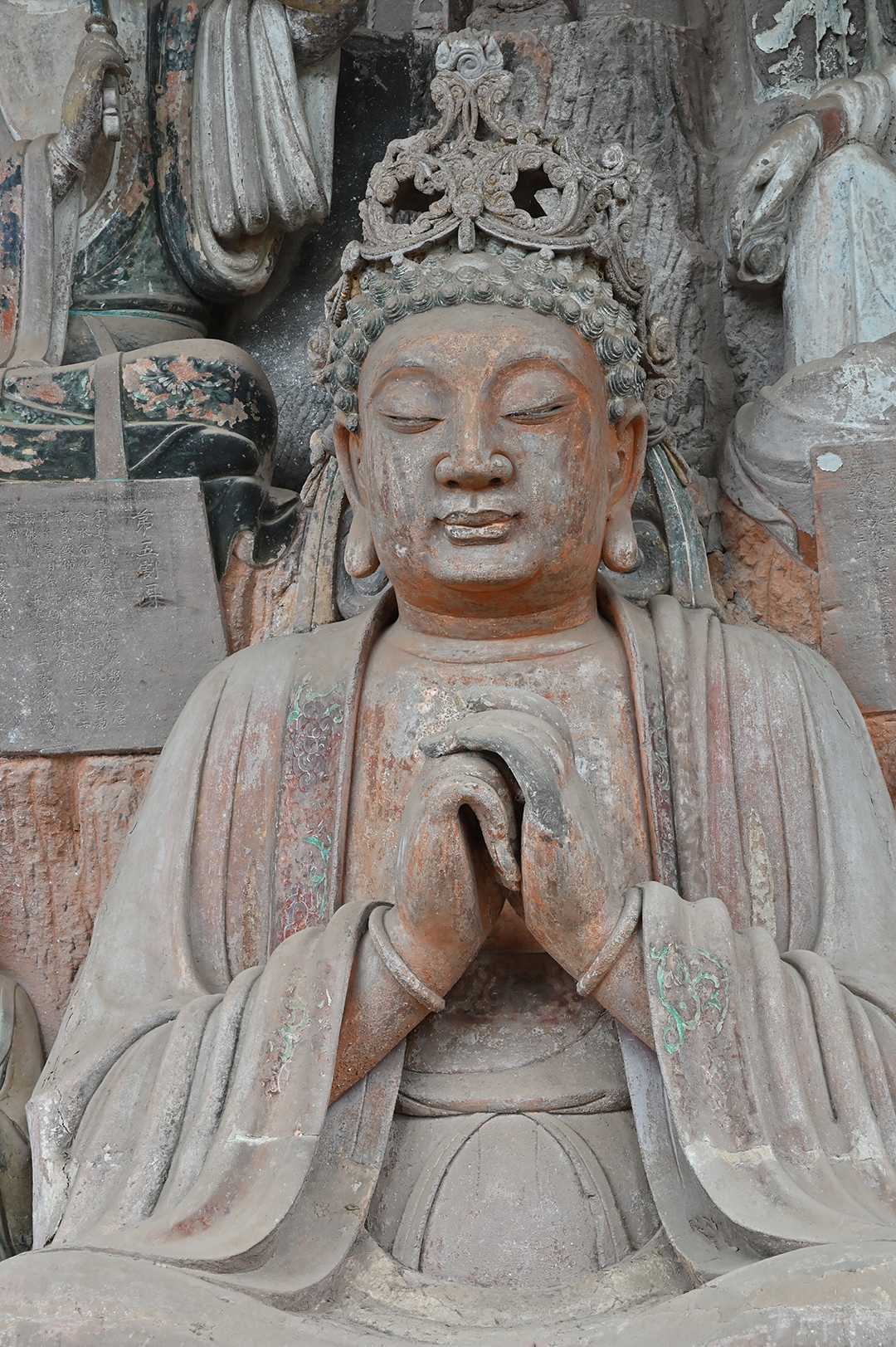
The central figure is Vairocana Buddha (Da Ri Ru Lai), flanked by Manjushri Bodhisattva (Wenshu Pusa, riding a blue lion) and Samantabhadra Bodhisattva (Puxian Pusa, riding a white elephant), each 4.1 meters tall. Their jeweled crowns, necklaces, and flowing robes showcase the极致 precision and order of Song Dynasty carving craftsmanship.
Standing before these statues, you can feel that Song Dynasty calm and restraint—not showy, not flashy, but in every detail, a relentless pursuit of perfection.
Mingshan Temple: The Beauty of Wind Erosion—Time Is the Best Sculptor
Mingshan Temple is well worth the trip—but I'm talking about the larger area, not the temple itself. The statues inside the temple are not worth seeing; they're all modern, amateur work. The real treasures are on the circular trail below the temple.
This Northern Song cliff-side statue group is famous for four features: - Towering grandeur - Millennia of wind erosion - A marvel of mechanical precision - Intricate narrative reliefs
The wind has carved these statues for over a thousand years, smoothing edges and softening features. The result is a haunting beauty that feels both ancient and alive. Unlike the polished perfection of Pilu Cave, Mingshan Temple's carvings wear their age like a badge of honor. Time has become the final sculptor, and the result is breathtaking.
Yuanjue Cave & Mumen Temple: Northern Route Gems
Yuanjue Cave (Yuanjue Dong)
 This Tang Dynasty cave features a massive seated Buddha with serene, compassionate eyes. The proportions are monumental, and the carving technique is bold and confident—typical of Tang aesthetics. It's less crowded than the southern sites, offering a more intimate encounter with history.
Mumen Temple (Mumen Si)
A smaller but equally impressive site, Mumen Temple houses Five Dynasties carvings that bridge the gap between Tang grandeur and Song refinement. The statues here are more weathered, but their spiritual intensity remains undimmed.
Reclining Buddha Temple (Wofo Yuan)
This site features a 23-meter-long reclining Buddha, one of the largest in Sichuan. The Buddha's peaceful expression and the surrounding disciples' mourning poses create a powerful narrative of the Buddha's entry into Nirvana.
FAQ: Everything You Need to Know About Anyue's Stone Carvings
1. When is the best time to visit Anyue's stone carvings?
Spring (March-May) and autumn (September-November) are ideal. The weather is mild, and the mountain scenery is at its most beautiful. Avoid summer heat and winter fog.
2. How many days do I need to explore Anyue's stone carvings?
 At least two full days to cover both the southern and northern routes thoroughly. With one day, prioritize either route based on your interest: Song Dynasty art (southern) or Tang Dynasty grandeur (northern).
3. Are the stone carvings accessible by public transport?
Yes, but it's challenging. Buses run from Anyue county seat to Shiyang Town, but many sites require additional taxi or private car hires. Renting a car or hiring a driver is highly recommended for flexibility.
4. Can I take photographs inside the caves?
Generally yes, but flash photography is prohibited to protect the pigments and carvings. Some caves may have restrictions—always follow local signage.
5. What should I bring for the visit?
Comfortable walking shoes, water, sunscreen, and a flashlight (some caves are dimly lit). A zoom lens is helpful for capturing details without touching the carvings.

Internal Linking Suggestions
[Link: Best Sichuan Buddhist grottoes to visit] [Link: Song Dynasty art and architecture guide] [Link: Sichuan travel itinerary for history lovers] [Link: Esoteric Buddhism in China explained]
Conclusion: A Long-Overdue Encounter Worth Every Step
Anyue's stone carvings are not just relics—they are living conversations with time. Each chisel mark, each weathered edge, each serene face tells a story of faith, artistry, and endurance. The "Oriental Venus" at Pilu Cave, the majestic Huayan Triad, the wind-sculpted beauty of Mingshan Temple—they all await those willing to venture off the beaten path.
This May Day holiday, I finally took that exit I had passed so many times. And I'm glad I did. The mountains of Sichuan and Chongqing hold treasures that no photograph can capture—you must stand before them, feel their silence, and let time speak.
Plan your visit to Anyue's stone carvings today. Discover why these ancient masterpieces are among China's best-kept cultural secrets. Whether you're a history buff, an art lover, or a spiritual seeker, Anyue offers an encounter you'll never forget.
Book your trip now and experience the traces of time carved into stone.
You may also like


