Through Ruins and Rebirth: A Weekend Journey of Remembrance to Wenchuan and Beichuan
Meta Description: Explore the Wenchuan earthquake ruins and witness the remarkable rebirth of Sichuan. A personal weekend journey through Yingxiu, Beichuan, and Shuimo Ancient Town—where memory meets resilience.
Introduction: The Earthquake That Changed Everything
On a quiet morning in Xiamen, a sudden tremor shook my hotel room. For a few terrifying seconds, I felt the ground sway beneath me—a sensation I would never forget. When I mentioned it to local friends, they shrugged with practiced calm. "Earthquakes happen often here," they said. That casual acceptance struck me deeply, and it reignited a long-held desire: to visit the places that had been shattered by the 2008 Wenchuan earthquake and see what had become of them.
Months later, work brought me repeatedly to Sichuan. Each time I passed those familiar mountains and rivers, the memory of those few seconds in Xiamen returned. Finally, I decided to stop imagining and go. This is the story of that weekend journey—a pilgrimage through ruins and rebirth.
Day One: Yingxiu Town – Scars and Rebirth at the Epicenter

How to Get to Yingxiu from Chengdu: A Practical Guide
My journey began with a lesson in public transit. I assumed I could easily book a day tour from Chengdu to Yingxiu, but after searching every major travel platform, I found either small-group tours requiring a minimum of two people or outright replies like "No tours available on Sunday." Solo travel was my only option.
I turned to AI for help, which suggested taking a bus from Chengdu's Chadianzi Bus Station to Wenchuan County and getting off halfway at Yingxiu Town. Sounds simple, right? Not quite.
At the ticket window, the attendant told me, "We don't sell tickets to Yingxiu Town." I was dumbfounded. Eventually, with staff guidance, I bought a full-price ticket to Wenchuan County (60 yuan) and got off at Yingxiu along the way. It cost more than expected, but time was tight.
Only after returning did I discover the WeChat service account "Sichuan Provincial Bus Ticket Network" offers direct routes from Chengdu East Station to Yingxiu (Wenchuan Earthquake Ruins) and Shuimo Ancient Town for 80 yuan. Information gaps are the biggest pitfalls in travel.
Pro tip: Book directly via the WeChat mini-program for the most reliable route.
Xuankou Middle School Ruins: Time Frozen at 2:28 PM
The bus dropped me at the Zhongtanbao Tunnel exit. I walked along empty streets, barely seeing a soul. The earthquake experience center was locked, and the parking lot held only a few electric cars. For a moment, I wondered if I'd come to the wrong place—was this really the epicenter that had gripped the entire nation's attention?
Then I crossed the Yuzixi Bridge. The roar of rushing water brought to mind images of rescue efforts—soldiers and civilians braving the torrents, their figures vivid before my eyes.
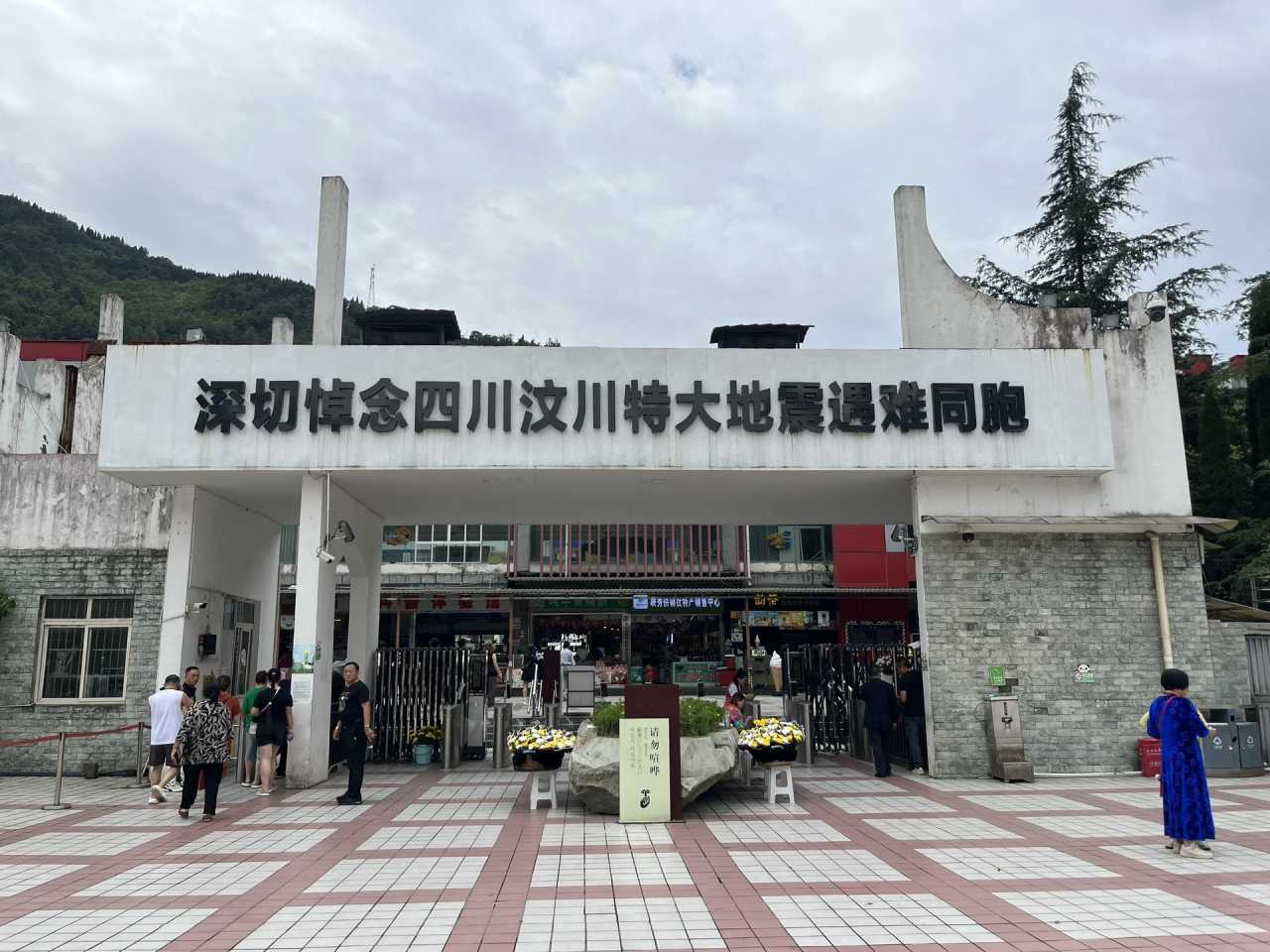
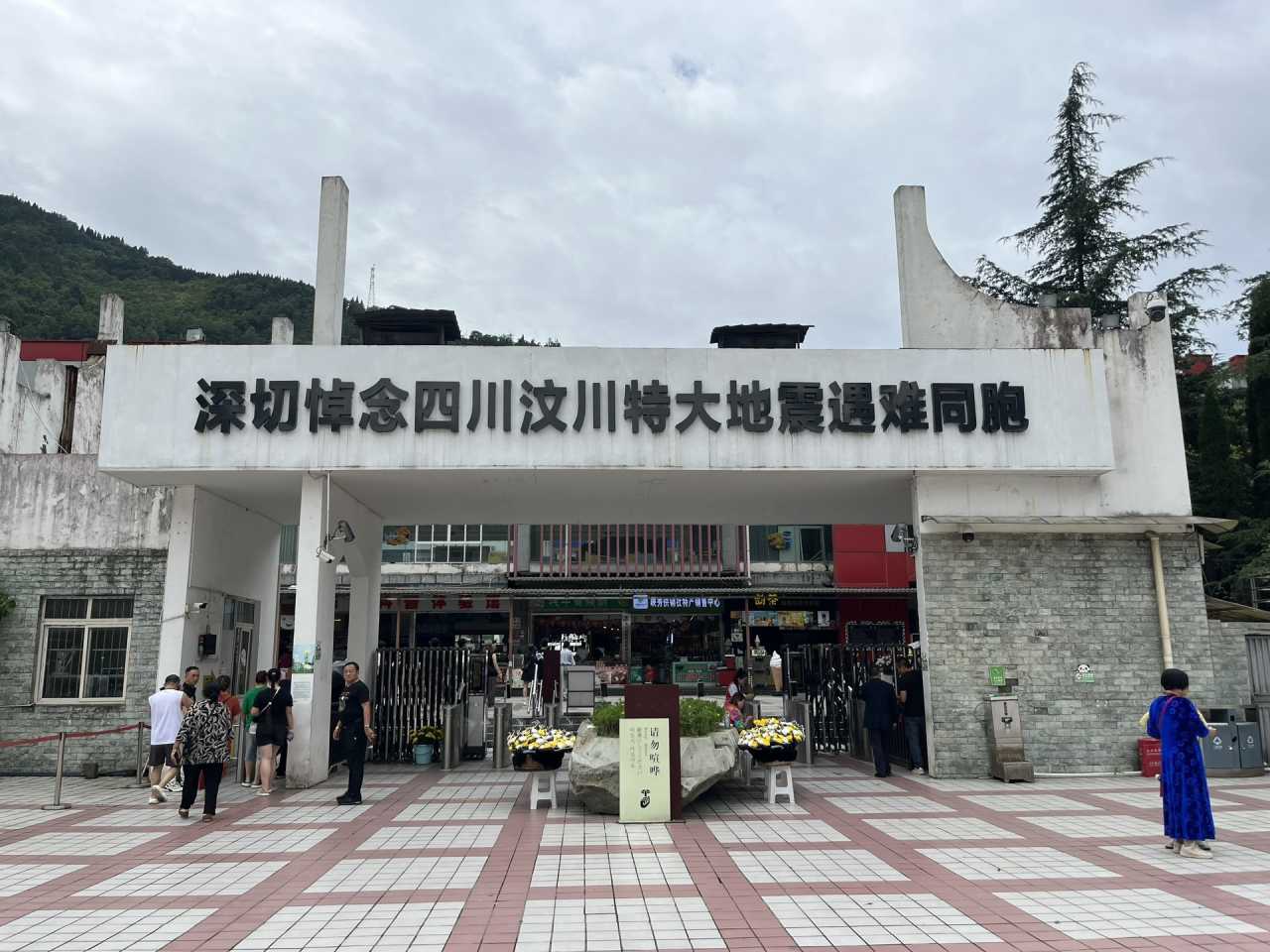
Passing through Yingxiu's orderly streets, I arrived at the Xuankou Middle School Ruins. When the "Home and Country Sentiments · Oath Square" came into view, I realized instantly—it wasn't that few people were here; everyone was gathered right here.
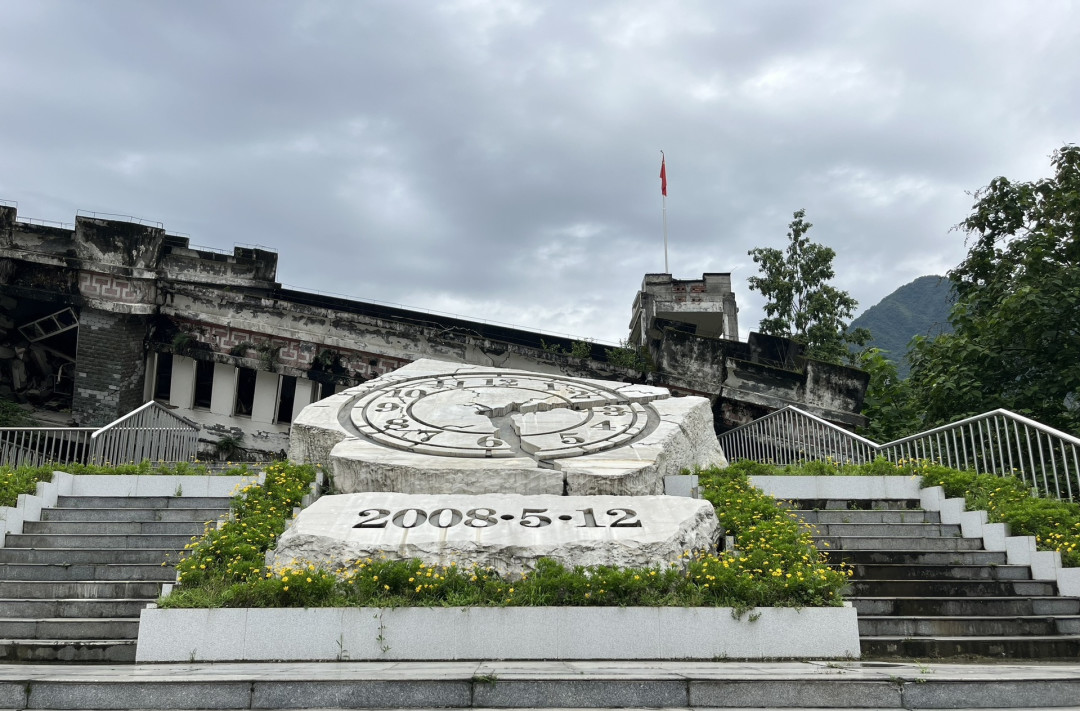
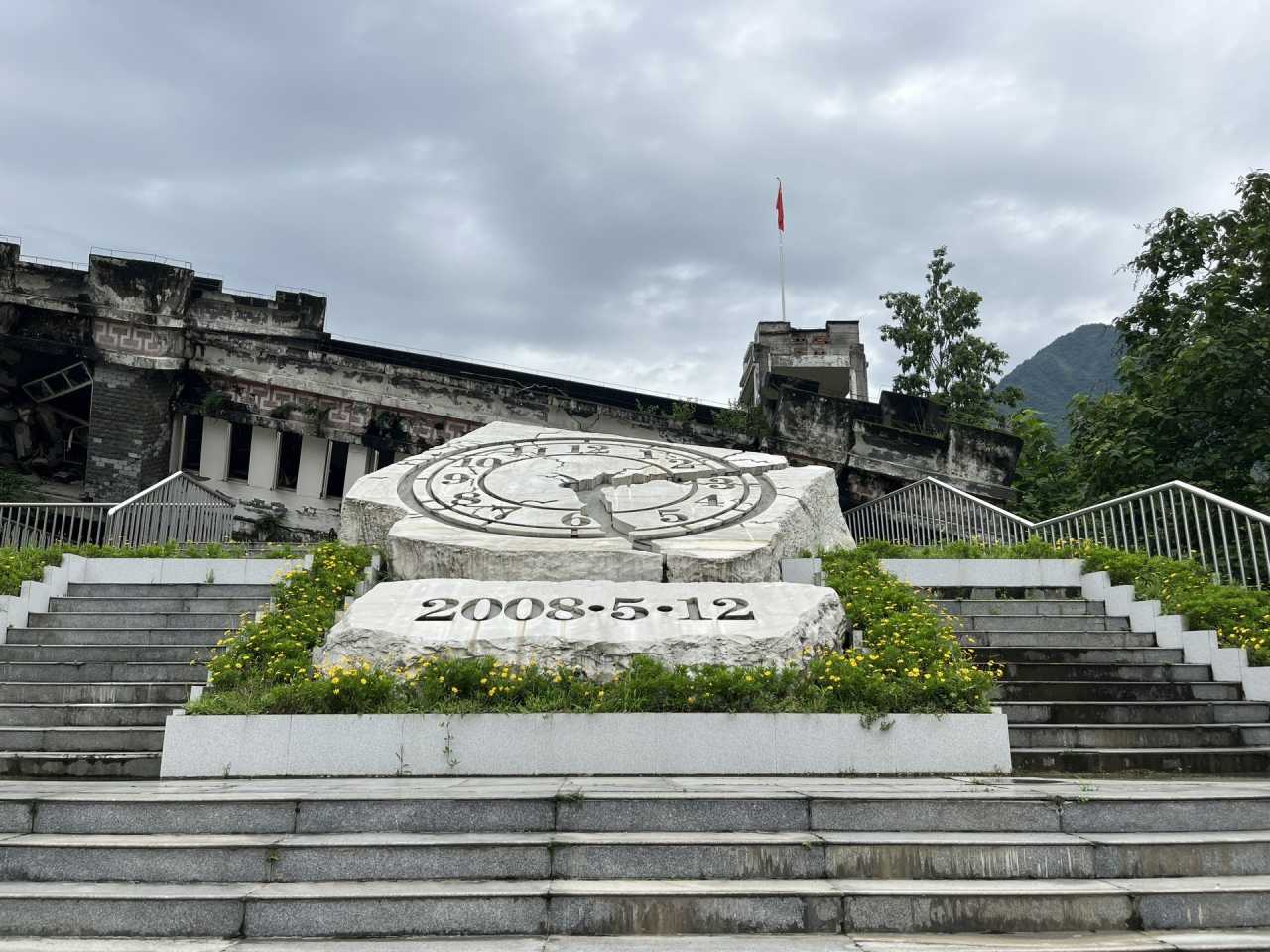
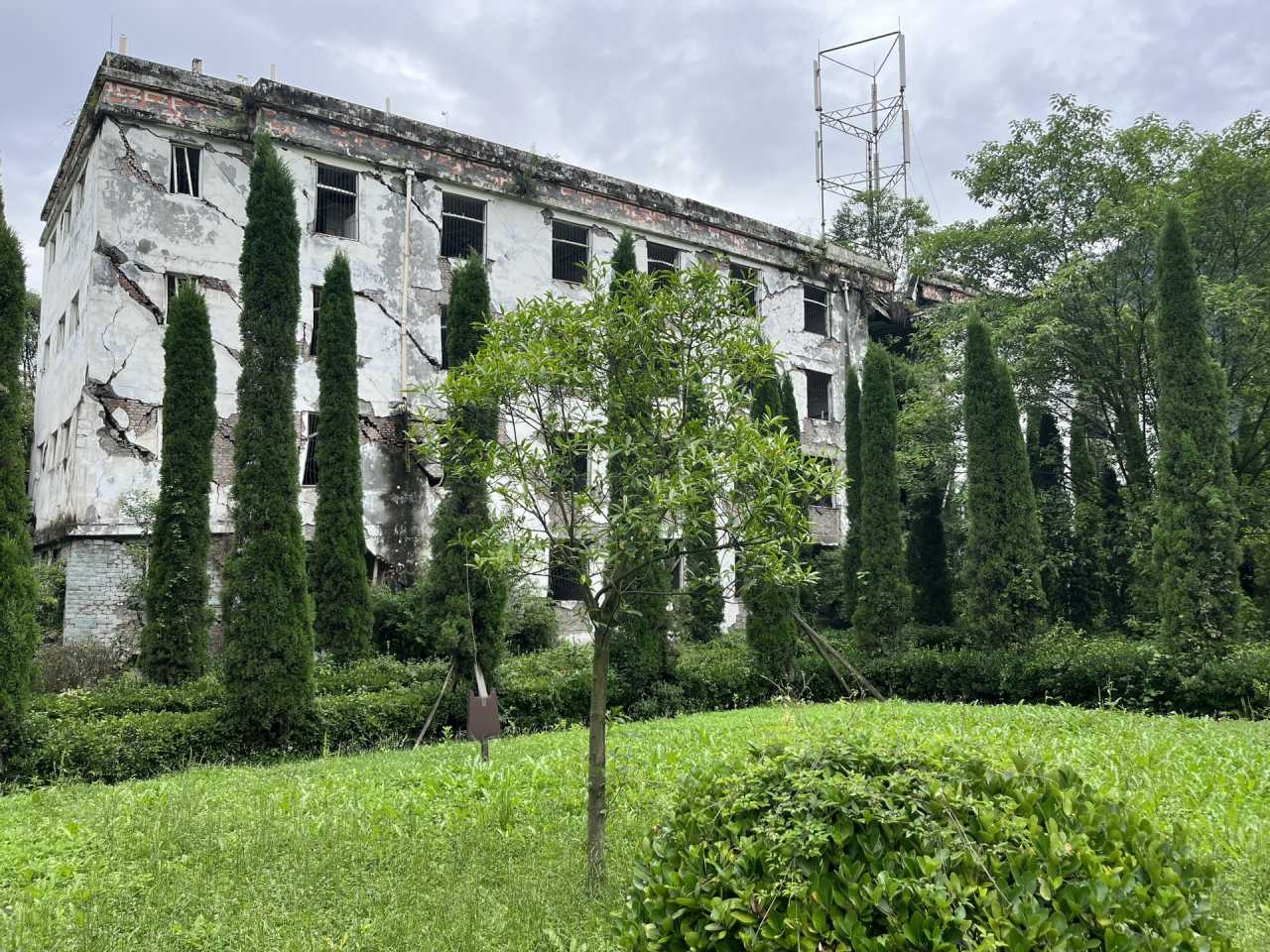
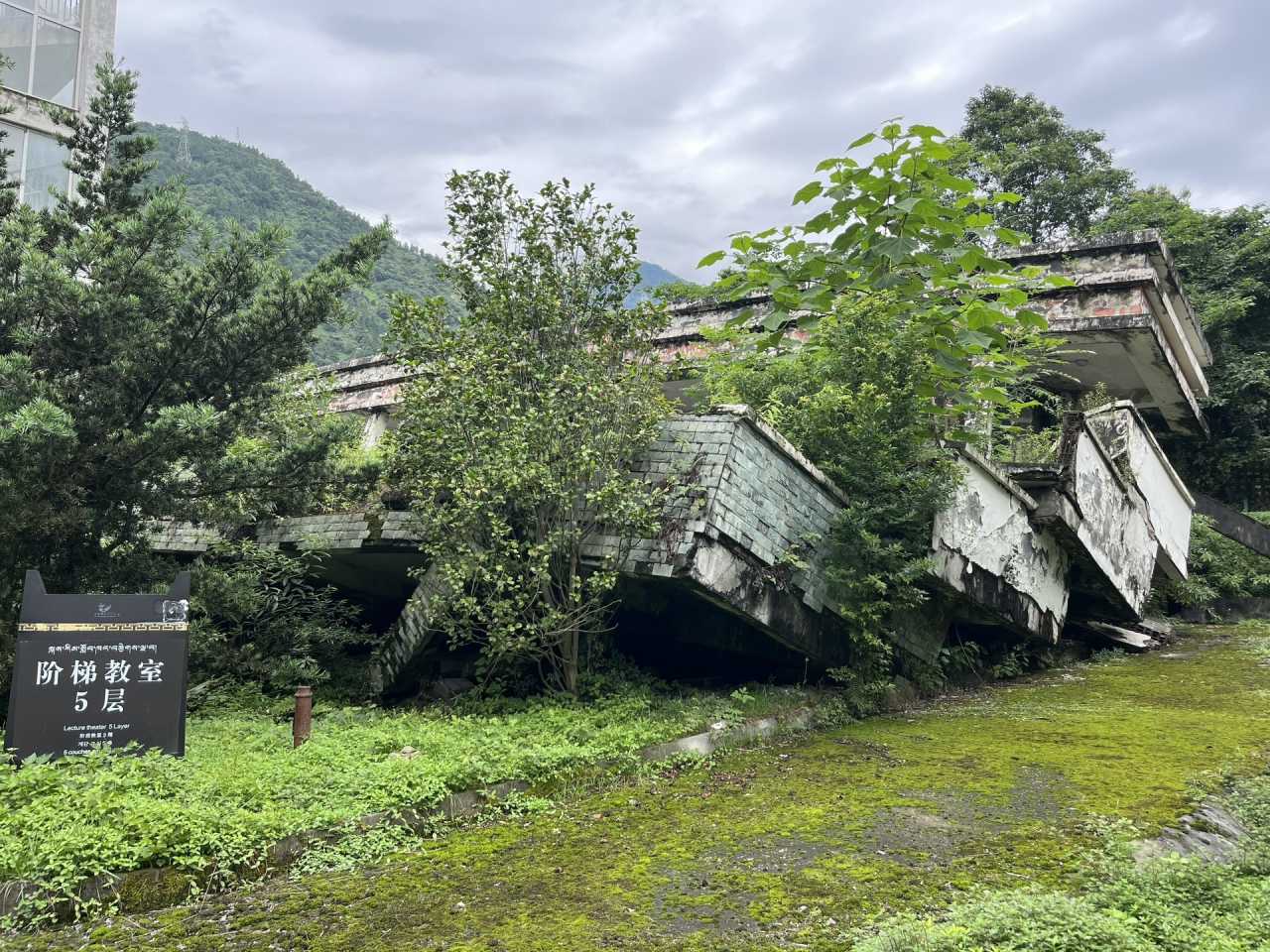
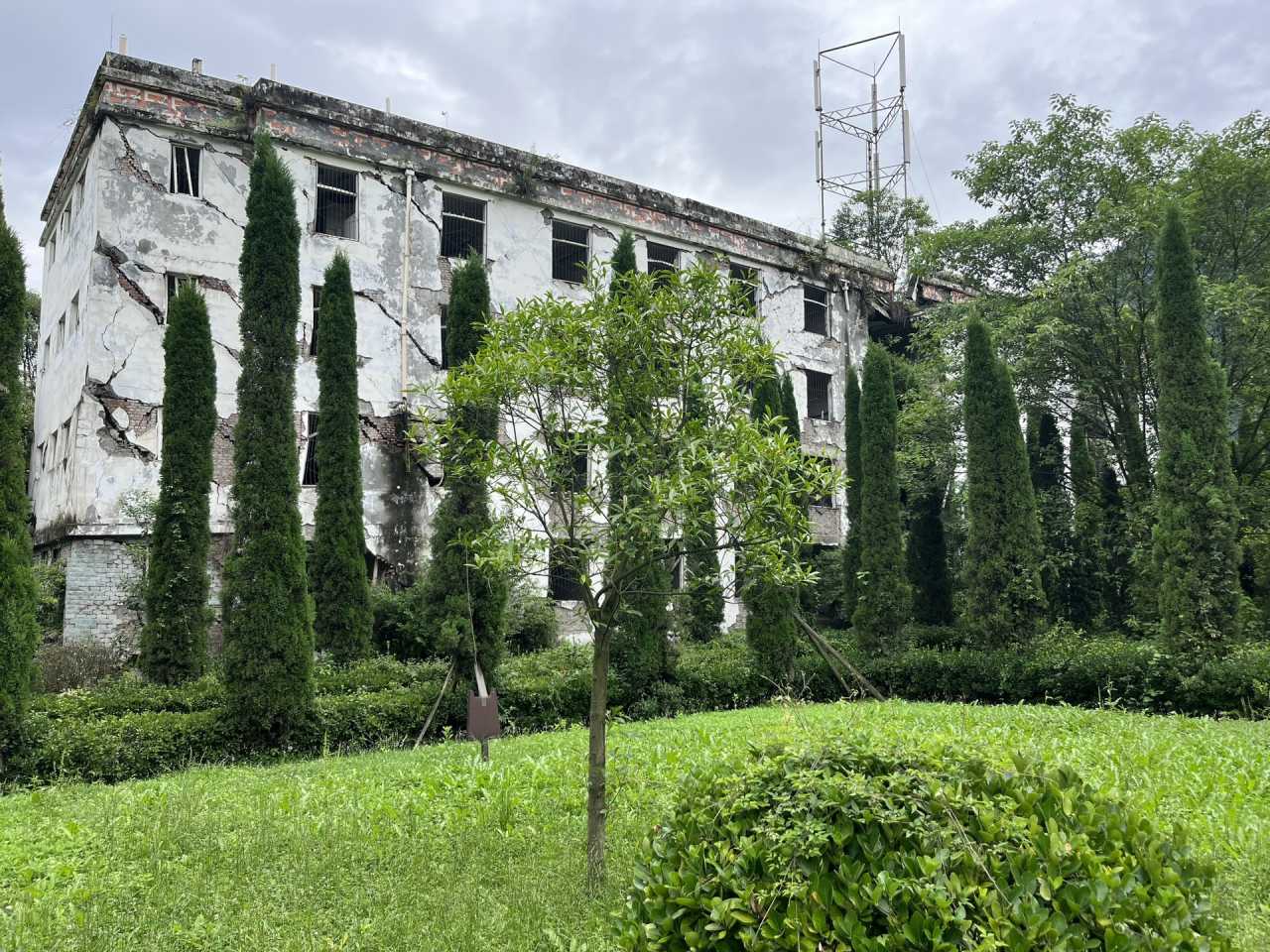
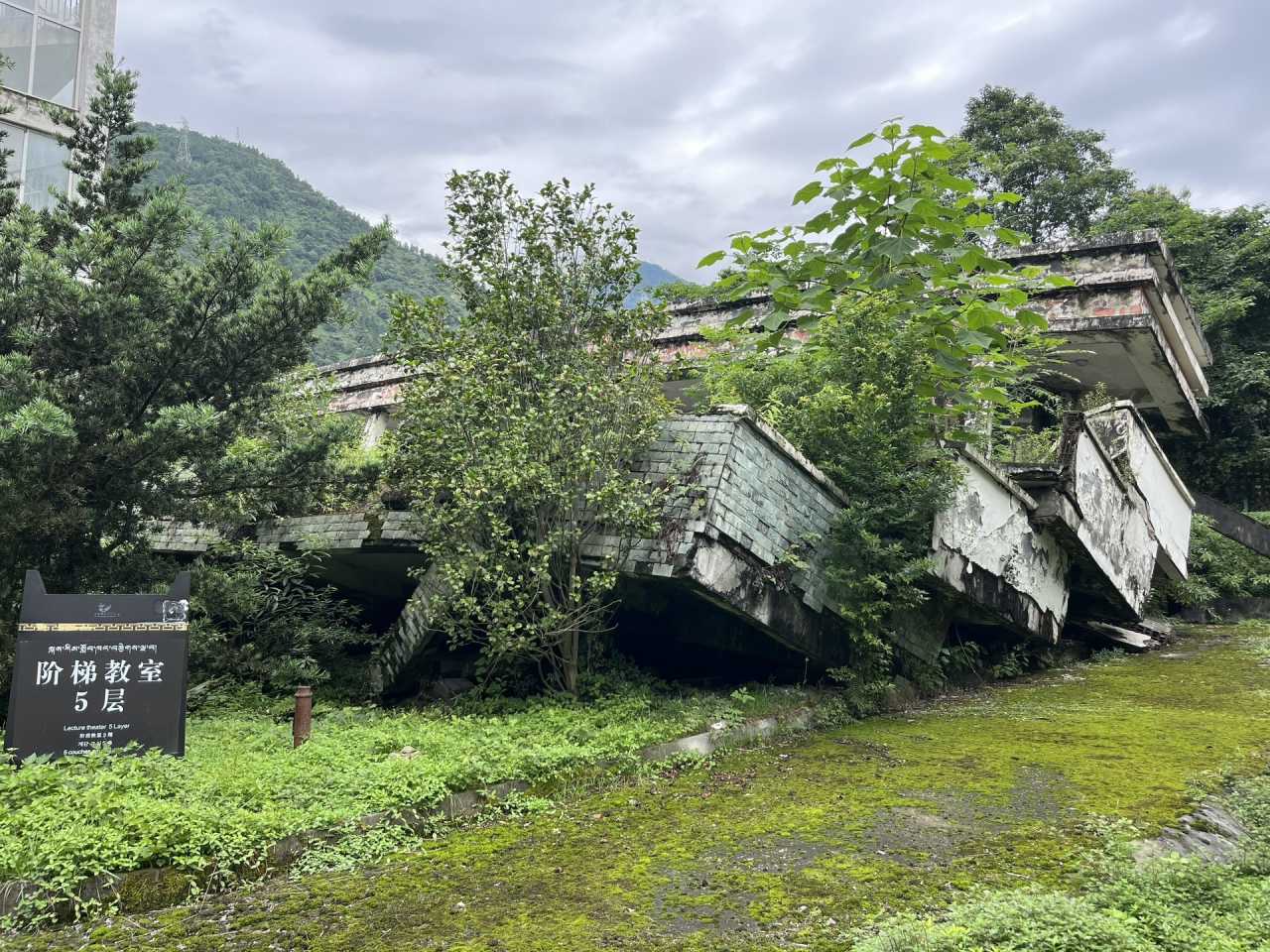
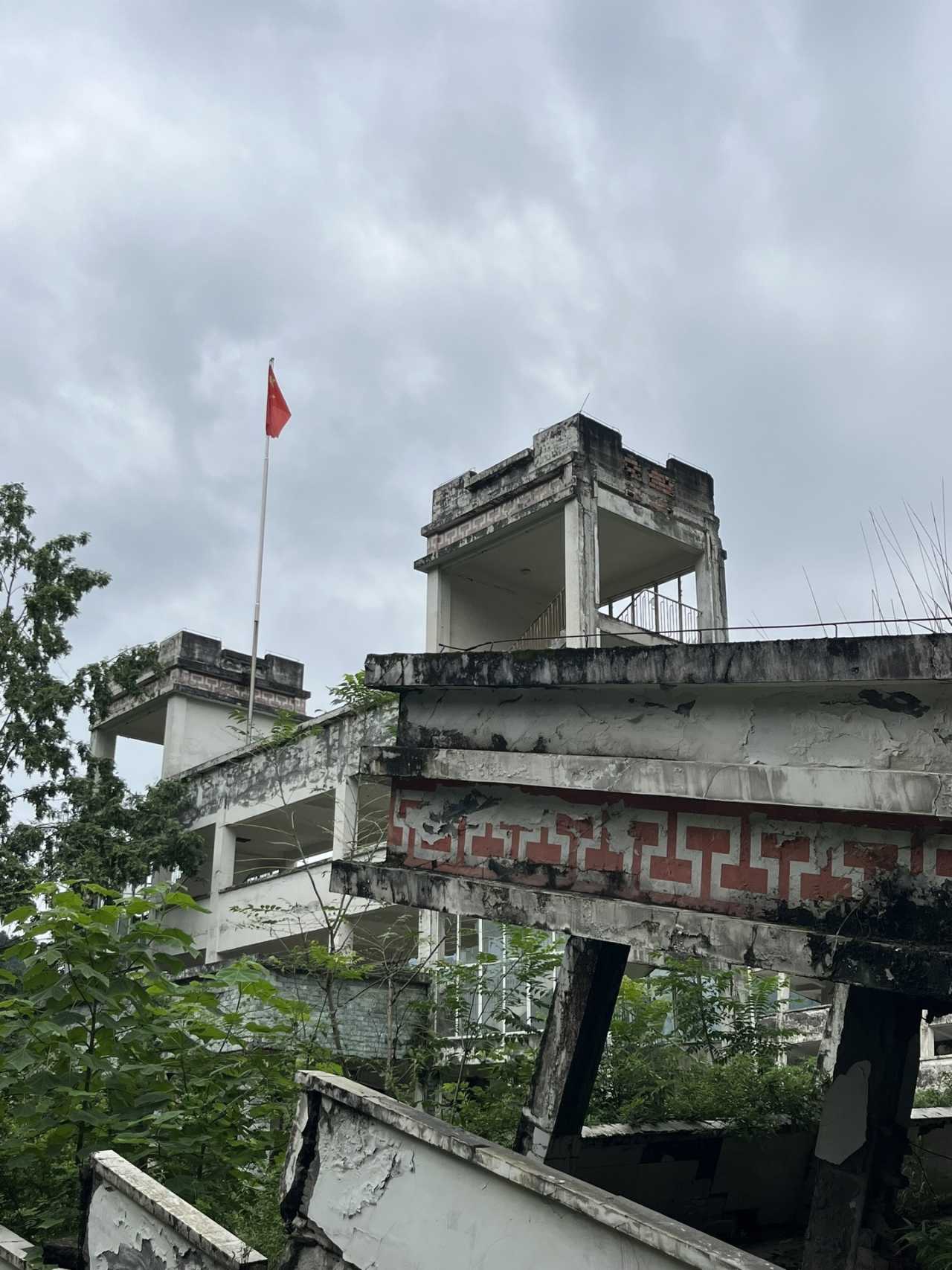
The moment I stepped through the school gate, the visual impact hit me like a punch. Twisted classroom buildings, collapsed floors, exposed rebar—everything remained exactly as it was when the earthquake struck. Most striking was the fractured white marble clock sculpture, its hands forever frozen at 2:28 PM.
The guide's voice echoed in my ears: On May 12, 2008, at 2:28 PM, among the 1,500-plus teachers and students in class, 55 students, 8 teachers, 2 staff members, and 2 family members were forever left behind here. The classroom building had completely collapsed, the dormitory building tilted at a precarious angle, the experimental building's ground floor was crushed—every pile of rubble silently narrated that terrifying moment.
There were student groups on-site, brought by their schools for patriotic education. Some self-driving tourists and tour groups passed through, mostly stopping by on their way to Jiuzhaigou or Siguniang Mountain. Solo travelers like me, coming specifically for the earthquake ruins, were indeed rare.
[Link: How to visit Wenchuan earthquake memorial sites]
Yingxiu Epicenter Memorial Hall: Finding Hope in the Cracks
Leaving Xuankou Middle School, I climbed the steps toward the Yingxiu Epicenter Memorial Hall. Rain from previous days had formed little streams on the stairs; I carefully dodged the puddles, climbing step by step.
The memorial's design was rich with symbolism—the building resembled a massive crack in the earth, torn open from the ground. Its sunken structure evoked a sense of stillness and reflection as you entered. And the ribbon of light guiding visitors forward signified hope that still exists in darkness.
The exhibits unfolded chronologically: from the shock of the disaster's first moments, to the moving stories of rescue and relief, to the miracle of post-disaster reconstruction. What moved me most were the rescue tools and relics of fallen heroes—each one bore witness to the resilience of life and the brilliance of humanity.
Outside the memorial, the commemorative wall was engraved with the names of those lost in the earthquake. A light drizzle fell as I stood there silently, whispering to myself: Cherish life. Live well. Do meaningful things.
Shuimo Ancient Town: New Life Blooming from the Ruins
Coming down from the memorial, the sky remained overcast. I decided to visit Shuimo Ancient Town, to feel the vitality of post-earthquake reconstruction.
At the service center in front of Xuankou Middle School, a guide handed me a bus schedule. She said only rural buses ran from Yingxiu to Shuimo, roughly one per hour. I stood at the intersection, scanning the road anxiously, terrified of missing a bus and waiting another hour. Finally, a bus that looked like the right one approached. I dashed across the road, the driver gave a perfunctory shout, and off we went.
The ride took about an hour and cost 10 yuan. The mountain roads were bumpy, and I dozed off until the driver called out, "Shuimo has arrived."
My first impression of Shuimo Ancient Town was one of tranquility. The Shouxi River wound through the town, and the Chunfeng Pavilion on its bank was a landmark blending the architectural artistry of the Qiang, Tibetan, and Han ethnic groups. Unfortunately, I couldn't climb up that day, or I'd have had a panoramic view of the entire town.
Walking along Zen Shou Old Street, it was hard to imagine this place had ever been devastated by an earthquake. The rebuilt streets drew inspiration from Lijiang Ancient Town in Yunnan, with Ming and Qing-style buildings sprinkled throughout, where Qiang, Tibetan, and Han cultures merged. But the "Foshan Aid" signs everywhere somewhat stripped the word "ancient" of its historical weight.
Without before-and-after photos of the earthquake, I couldn't imagine what Shuimo Ancient Town once looked like. But judging by the scale of reconstruction, it had essentially been leveled and rebuilt from scratch. Cherish the peaceful, comfortable life of the present; respect nature—that was my takeaway as I left Shuimo.
Day Two: Beichuan – The Silence and Rebirth of an Entire County
From Chengdu to Beichuan: Another Public Transit Adventure
Armed with the lessons from Day One, I decided to use another weekend to visit Beichuan—the county that was completely destroyed and later rebuilt at a new location. The old Beichuan county town has been preserved as a memorial site, and it offers a different, more somber perspective than Yingxiu.
From Chengdu, you can take a bus from Chadianzi Bus Station to Beichuan New County (about 2.5 hours), then transfer to a local bus to the old town ruins. Alternatively, many tour operators offer day trips combining Beichuan and Yingxiu.
Tip: If you're short on time, consider a guided tour—the logistics of visiting both sites independently can be challenging.
[Link: Best time to visit Sichuan earthquake memorials]
Beichuan Old Town: A City Frozen in Time
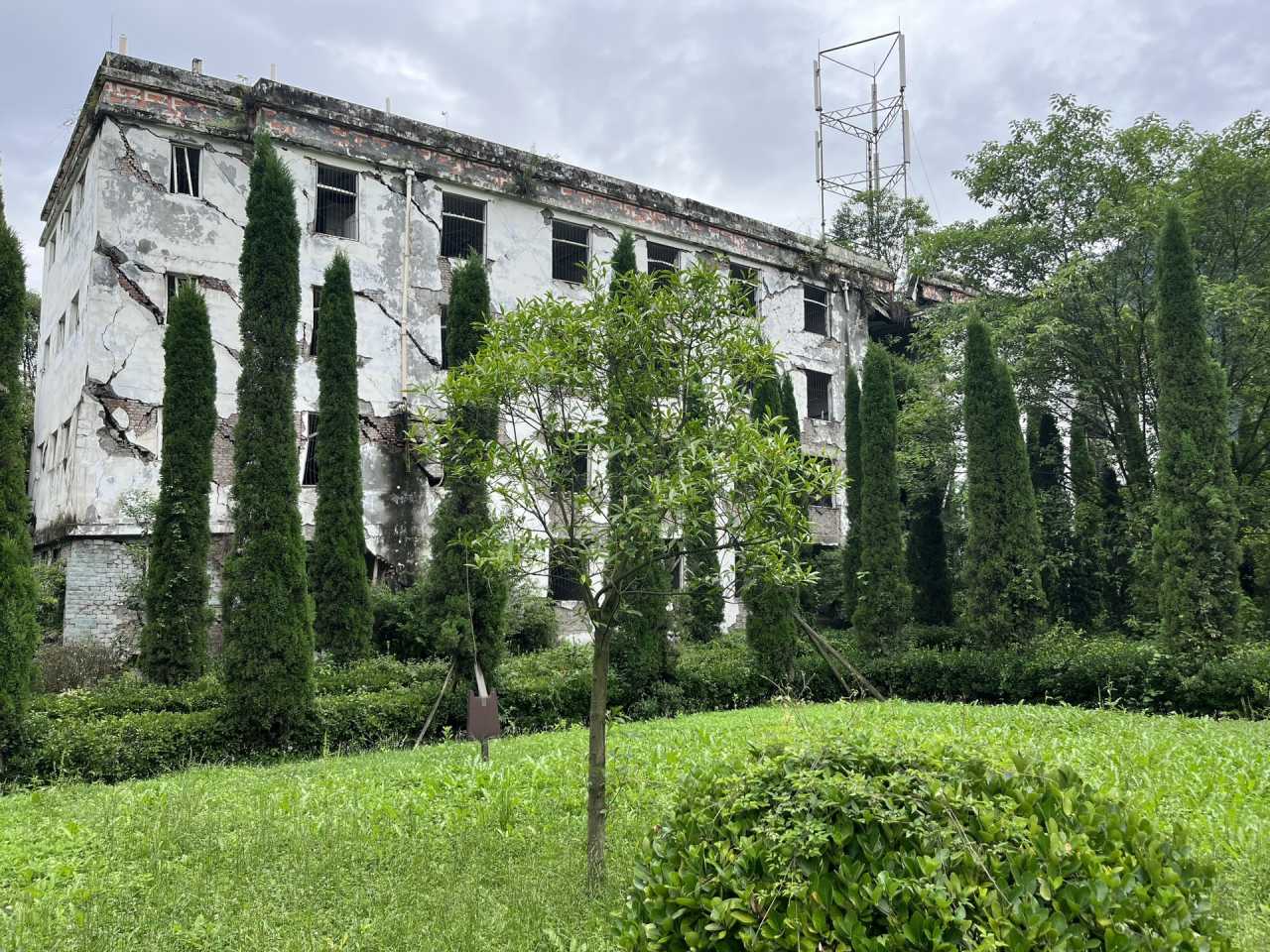
Unlike Yingxiu, which has been partially rebuilt and integrated into modern life, Beichuan's old town remains largely as it was left—a ghost city preserved for remembrance. The scale of destruction here is staggering: entire residential blocks collapsed, buildings pancaked into rubble, and the landscape reshaped by landslides.
Walking through the silent streets, you feel the weight of loss more acutely. This was not just a school or a town—it was an entire county seat, home to tens of thousands of people. The memorial at Beichuan includes a dedicated area for the victims, with names inscribed on stone walls.
What struck me most was the contrast: the new Beichuan county, rebuilt miles away, is a modern, thriving town. But here, in the old town, time stands still. It's a powerful reminder of what was lost—and what was rebuilt.
The New Beichuan: A Symbol of Resilience
After visiting the old town, I took a bus to the new Beichuan county. The contrast was jarring: wide streets, modern buildings, schools, hospitals, and parks. The new town was designed with seismic safety in mind, and it's a testament to the speed and scale of China's post-disaster reconstruction.
The new Beichuan is not just a relocation site—it's a community that has rebuilt its identity. There are schools, markets, and cultural centers. The Qiang and Tibetan heritage is celebrated in architecture and festivals. It's a living, breathing place that proves life can flourish even after devastation.
FAQ: Visiting Wenchuan and Beichuan Earthquake Sites
1. Is it safe to visit the Wenchuan earthquake ruins?
Yes, the memorial sites are fully stabilized and safe for visitors. The ruins are preserved as they were, but pathways and viewing platforms are secure. Always follow posted signs and stay on designated paths.
2. How long should I spend at each site?
 For Yingxiu (including Xuankou Middle School and the memorial hall), plan 2–3 hours. For Beichuan old town, allow at least 3 hours to walk through the preserved ruins. Shuimo Ancient Town can be explored in 1–2 hours. A full weekend is ideal for both.
3. What is the best time of year to visit?
 Spring (April–May) and autumn (September–October) offer mild weather and clear skies. Summer can be rainy, and winter is cold in the mountains. Avoid national holidays when crowds are heavy.
4. Are there guided tours available?
Yes, both day tours from Chengdu and multi-day packages are available. For independent travelers, public buses connect Chengdu to Yingxiu and Beichuan, but schedules can be irregular. [Link: Best Sichuan earthquake memorial tours]
5. Can I take photos at the memorial sites?
Photography is generally allowed, but be respectful—avoid selfies in somber areas like the commemorative wall or mass graves. Some indoor exhibits may prohibit flash photography.
Conclusion: Why You Should Visit the Wenchuan Earthquake Sites
A weekend journey to Wenchuan and Beichuan is not a typical vacation. It's a pilgrimage—a chance to witness the raw power of nature, the fragility of life, and the extraordinary resilience of the human spirit.
I came away with three lessons that have stayed with me:
- Cherish every moment. The earthquake struck in an instant, changing lives forever.
- Respect nature. We cannot control the earth, but we can prepare and rebuild.
- Hope endures. From the ruins, new towns, new lives, and new memories have grown.
If you're planning a trip to Sichuan, consider adding these sites to your itinerary. They are not just tourist attractions—they are classrooms for the soul.
Your turn: Have you visited the Wenchuan earthquake memorials? What was your experience? Share your thoughts in the comments below, or [subscribe to our newsletter] for more travel stories that matter.
Planning a trip to Sichuan? Download our free guide: "Sichuan Beyond Chengdu: 7 Underrated Destinations" [Link: Free Sichuan travel guide]
You may also like


