Three Pilgrimages to Mount Gongga: The Ultimate Guide to Seeing the King of Shu Mountains in Western Sichuan
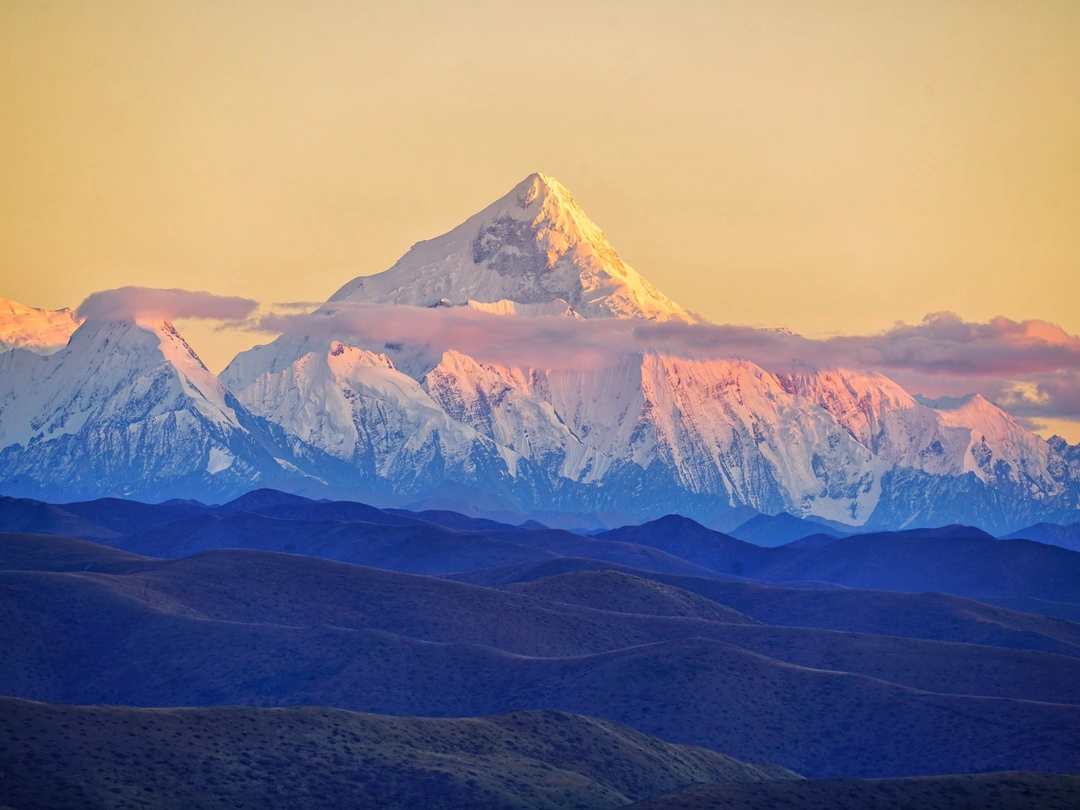
Meta Description: Planning a Mount Gongga pilgrimage? Discover the best viewpoints at Lenggacuo Lake, Xinduqiao, and Yuzixi. Learn how to see the King of Shu Mountains, plus tips for Western Sichuan road trips, altitude sickness, and hidden gems.
Introduction: Why Seeing Mount Gongga Is a Test of Patience and Luck
Some encounters are destined to require crossing mountains and rivers, traveling thousands of miles, and enduring several near misses before a true meeting can finally take place. That's the story of my three pilgrimages to Mount Gongga (Minya Konka) —the 7,556-meter (24,790-foot) giant known as the "King of Shu Mountains" in Western Sichuan.
In 2020, my partner and I embarked on this sacred journey. From the eastern side at Hailuogou Glacier to the western side along National Highway 318, from Lenggacuo Lake to Xinduqiao Town and Yuzixi, we paid homage three times. On the final night, we were rewarded with the breathtaking sight of the entire mountain range revealed in all its glory.
If you're planning your own Gongga pilgrimage or a Western Sichuan road trip, this guide will show you exactly where to go, what to expect, and how to maximize your chances of witnessing the King of Shu Mountains in all its majesty.
Lenggacuo Lake: The First Near Miss (and Why You Should Still Go)
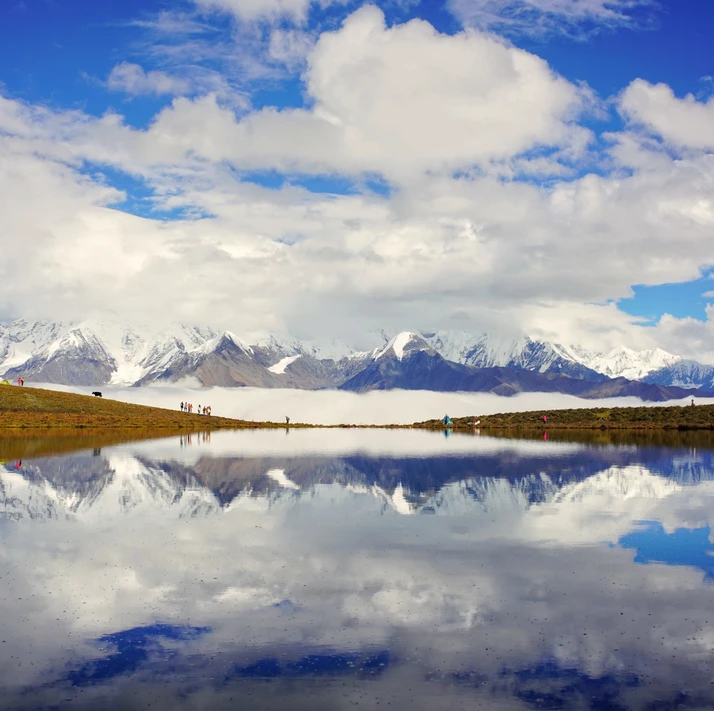
Why Lenggacuo Lake Is on Every Photographer's Bucket List
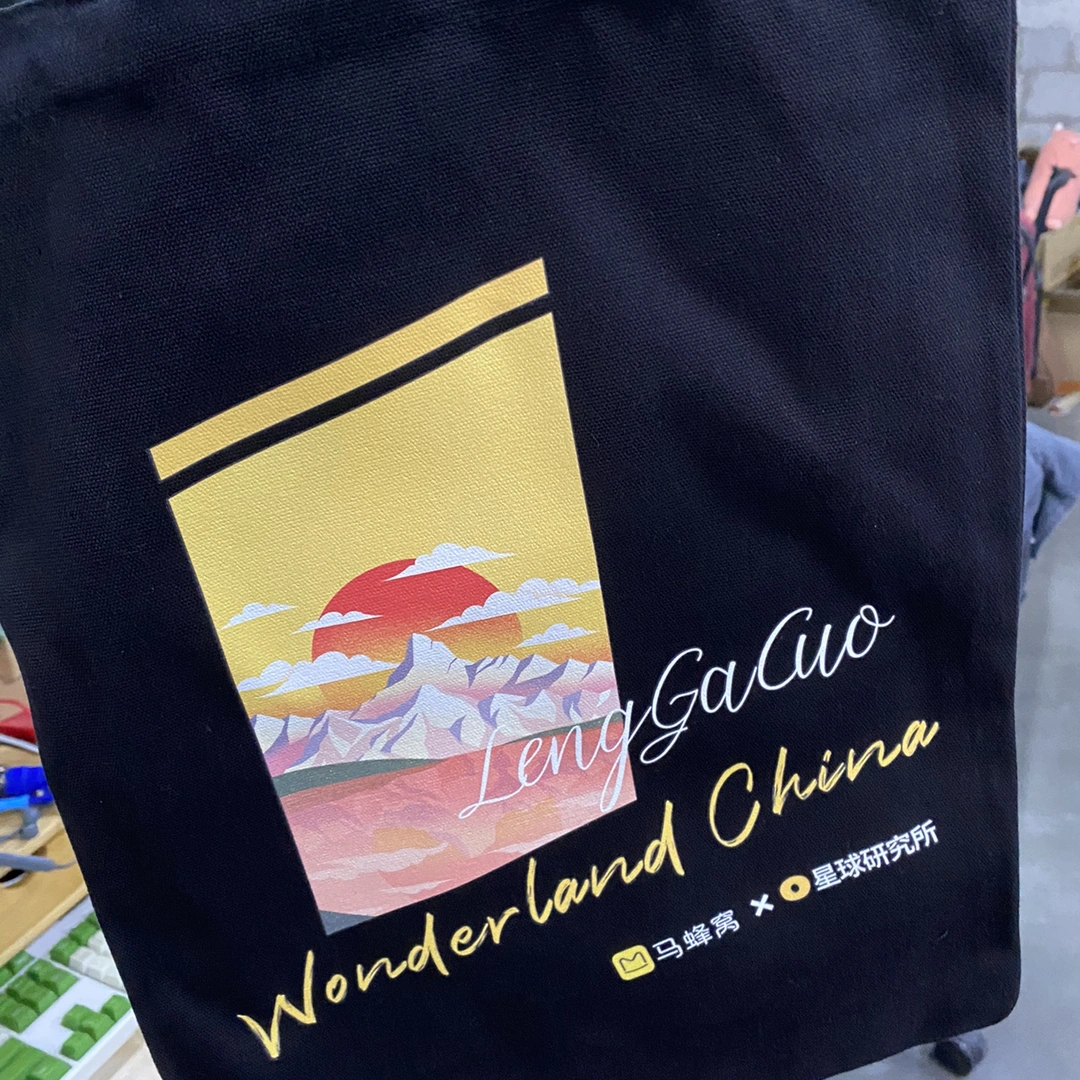
Lenggacuo Lake—a name not particularly well-known in travel circles—quietly found its way onto our radar thanks to a list of "China's Top Ten Hidden Gems." Located on the western side of Gongga, this alpine lake sits at an elevation of 4,700 meters (15,420 feet) and is rumored to be one of the best spots to witness the reflection of Mount Gongga.
Our Experience: Clouded Out but Not Defeated
We set out from Chengdu, heading west, winding through serpentine mountain roads until we reached the pass above Lenggacuo. The moment we stepped onto the shore at 4,700 meters, our breathing became labored, and every step carried the characteristic heaviness of high altitude.
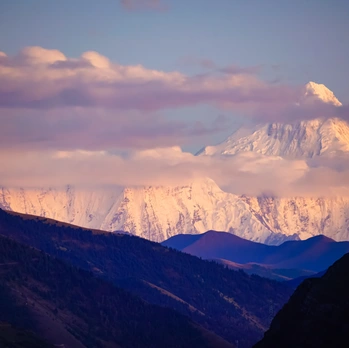
But what truly disappointed us was the thick layer of clouds overhead—they hung like a gray woolen blanket, completely obscuring the silhouette of the snow mountain. We waited by the lake for a long time. Occasionally, a crack would appear in the clouds, revealing a sliver of the snowy peak, only to be quickly swallowed by new cloud masses.
Key Takeaways for Your Visit
- Best time to visit: October–November for clearer skies
- Altitude preparation: Spend 2–3 days acclimatizing in Kangding or Xinduqiao
- Photography tip: Bring a polarizing filter for lake reflections
- Expectation management: Even in peak season, clouds can obscure the view—consider it part of the pilgrimage
[Link: How to prepare for high-altitude travel in Western Sichuan]
Xinduqiao: A Glimpse After Sunset at Gongga Zong Manor
The "Photographer's Paradise" That Delivered a Miracle

Descending from Lenggacuo, we drove to Xinduqiao—often called the "Photographer's Paradise." For us, it was more of a transit point. Our real destination was the Gongga Zong Manor, a Tibetan-style hotel perched halfway up the mountainside with terraces facing directly toward Mount Gongga.
The Moment the Clouds Parted
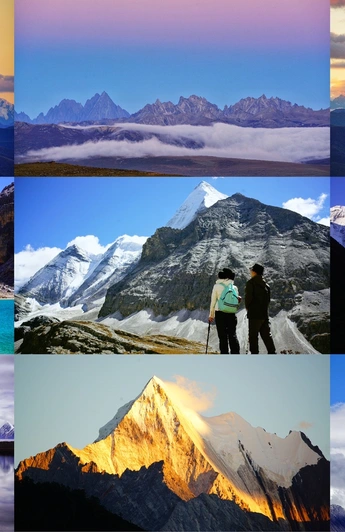
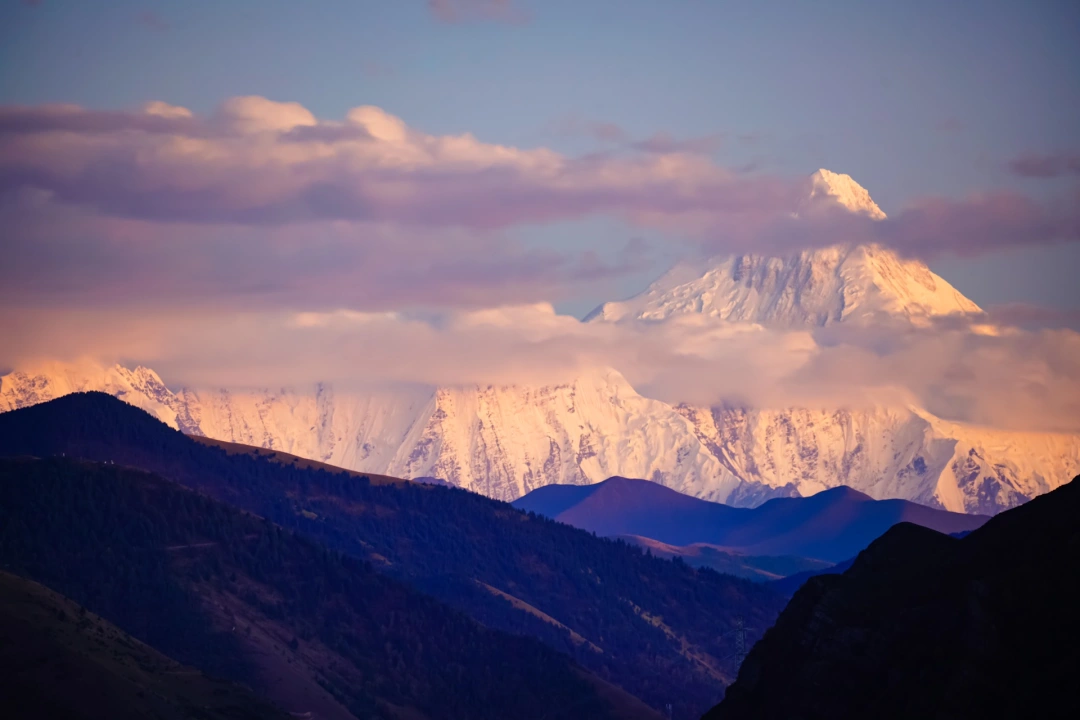
On the evening we checked in, the sky remained overcast. We held almost no hope. But just after sunset, a miracle happened—the clouds parted as if pushed aside by an invisible hand, and the summit of Gongga finally revealed itself.
At that moment, the last rays of sunset had just faded, and the mountain's silhouette stood out sharply in the twilight. For the first time, I saw this sacred mountain so clearly. There was no golden light crowning the peak, no surging sea of clouds—just the purest mountain shape against the sky. Yet it was enough to take your breath away.
Why Xinduqiao Should Be on Your Itinerary
- Gongga Zong Manor offers direct mountain views from private terraces
- Best for: Sunset photography and relaxed viewing
- Altitude: ~3,500 meters (11,480 feet)—easier to handle than Lenggacuo
- Pro tip: Book a room with a west-facing terrace for sunset views
[Link: Best hotels in Xinduqiao for Mount Gongga views]
Yuzixi: Golden Sunrise and a Frozen Night—The Ultimate Gongga Viewpoint

The 360-Degree Observation Platform That Tests Your Resolve
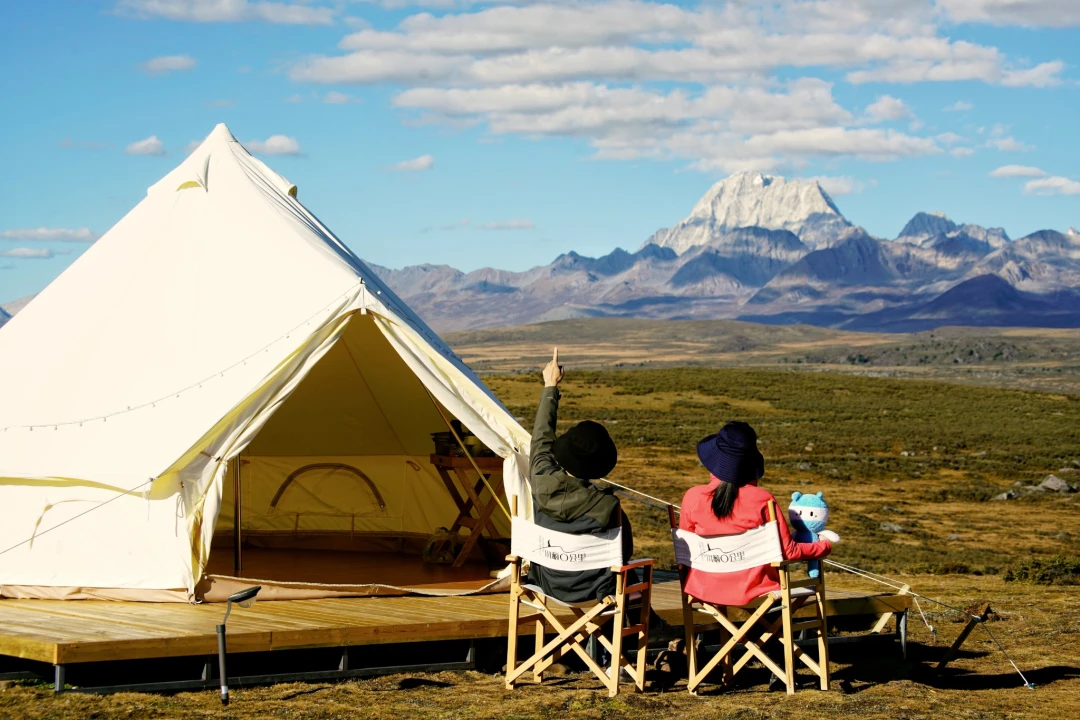
If the first two encounters were preludes, then the Yuzixi Stargazing Camp was where we truly met Mount Gongga. This is a 360-degree observation platform offering panoramic views of the mountains of central Shu, from Gongga to Yaha.
When we arrived, it was still early in the day, but the temperature had already dropped below freezing. That night of camping was bone-chilling—our bodies shivered uncontrollably, and the wind howled outside the tent as if trying to tear the entire camp apart.
The Sunrise That Made It All Worthwhile
But all of this was rewarded at sunrise.
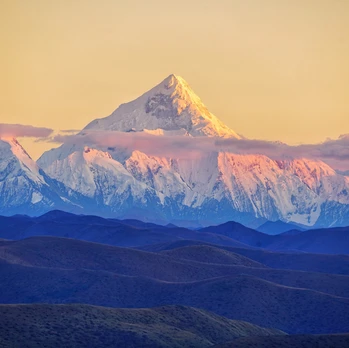
When the first rays of sunlight crossed the mountain ridge and touched Gongga's summit, the entire snow peak began to burn—shifting from gold to pink to deep purple, colors dancing across the sky as if the sacred mountain was showing off its most magnificent robe. In that moment, all the cold, exhaustion, and complaints vanished into thin air.
We stood on the observation deck, watching the golden sunrise from beginning to end. It lasted only a few minutes, but it felt like witnessing a grand ceremony. The King of Shu Mountains had finally revealed its full form to us.
Practical Tips for Yuzixi
- Altitude: 4,200 meters (13,780 feet)—prepare for severe cold
- Accommodation: Camping only; bring a -20°C sleeping bag
- Best time: Late October for clear skies and golden foliage
- Photography: Arrive 45 minutes before sunrise for the best position
- Essential gear: Thermal layers, windproof jacket, hand warmers, headlamp
[Link: Essential gear checklist for Western Sichuan camping]
The Road Through Western Sichuan: Traffic Jams, Hiking, and Altitude Sickness
The 12-Hour Ordeal Over Jiajin Mountain
Of course, this journey wasn't just about beautiful scenery. The traffic jams on National Highway 318, the 8-hour hike at Yading Nature Reserve in Daocheng County, camping at 4,200 meters, and various road closures formed the other side of our Western Sichuan adventure.
The most unforgettable stretch was the road from Mount Siguniang (Four Sisters Mountain) to Danba County. What should have been a 3-hour drive turned into a 12-hour ordeal because the road from Xiaojin County to Danba had been destroyed by a mudslide, forcing us to take a detour over Jiajin Mountain.
We set out at 6 a.m., before dawn. This route is known as the "Long March Road of the Red Army"—the very path the Communist soldiers took when crossing the snow mountains. The pass sits at over 4,000 meters (13,120 feet), and the road conditions were terrible. Some sections had no roadbed at all, with mud and water flowing across the surface.
How to Prepare for Western Sichuan Road Conditions
- Vehicle choice: A high-clearance 4WD is strongly recommended
- Seasonal risks: July–September has the highest risk of mudslides
- Navigation: Download offline maps—cell service is unreliable
- Emergency kit: Bring food, water, warm blankets, and a first-aid kit
- Realistic timing: Always budget 50% more time than Google Maps suggests
[Link: Western Sichuan road trip itinerary for 7–10 days]
Danba Tibetan Village: A 12-Hour Journey Rewarded with Fire Clouds
Arriving at Kapama Manor
We arrived at Jiaju Tibetan Village in Danba around 8 p.m. The guesthouse we had booked was called Kapama Manor, nestled halfway up the mountain, facing the surrounding peaks. The owner, a warm-hearted Tibetan man, was amazed when we told him we had come via the Jiajin Mountain detour. "That road is incredibly tough," he kept saying. "You really have courage."
The Morning Fire Clouds That Made the Drive Worthwhile
The next morning, just after 6 a.m., I pulled open the curtains and saw clouds layered with distinct colors in the sky. I had a feeling that today would bring something special. I quickly set up my camera and ran out to the courtyard to wait.
The most "Instagram-worthy" feature of Kapama Manor is a small pond in the yard that reflects the mountains opposite. When the morning fire clouds were mirrored in the water, the scene looked almost unreal—the clouds blazed like flames, from deep red to orange-yellow, layered across the sky. The reflection in the pond was perfectly symmetrical with the real scene.
We spent over an hour in the yard, shooting until the sun had fully risen. At that moment, I felt that the 12-hour marathon drive, the sleepless night from altitude sickness, and all the exhaustion were worth every penny.
Why Danba Should Be on Your Western Sichuan Itinerary
- Jiaju Tibetan Village is a UNESCO World Heritage candidate
- Best for: Traditional Tibetan architecture and morning photography
- Altitude: ~2,000 meters (6,560 feet)—a welcome relief from higher elevations
- Pro tip: Stay at Kapama Manor and request a room facing the mountains
[Link: Top Tibetan villages to visit in Western Sichuan]
Sanxingdui: A Cultural Detour Before the Mountains
Before our Western Sichuan trip, we also visited the Sanxingdui Ruins near Chengdu. While not directly related to Mount Gongga, this archaeological site offers a fascinating glimpse into the ancient Shu civilization—the same culture that named the King of Shu Mountains.
The bronze masks, gold foil, and mysterious artifacts date back 3,000–5,000 years and are considered one of the most important archaeological discoveries of the 20th century. If you're flying into Chengdu for your Gongga pilgrimage, consider adding a day for Sanxingdui.
[Link: Complete guide to Sanxingdui Museum]
FAQ: Your Mount Gongga Pilgrimage Questions Answered

Q1: What is the best time of year to see Mount Gongga?
A: The best time is October to November when autumn brings clear skies, golden foliage, and stable weather. Spring (April–May) can also be good but is more prone to rain and clouds. Summer (June–August) has the highest chance of clouds and rain, while winter (December–March) offers clear skies but extreme cold and potential road closures.
Q2: Which viewpoint offers the best chance of seeing Mount Gongga?

A: Yuzixi Stargazing Camp offers the most reliable views due to its 360-degree platform and higher elevation. However, Gongga Zong Manor in Xinduqiao is more comfortable and still offers excellent sunset views. For the famous reflection shots, Lenggacuo Lake is ideal but requires good weather.
Q3: How do I prevent altitude sickness during a Gongga pilgrimage?
A: Acclimatize gradually. Spend 1–2 days in Kangding (2,600m) or Xinduqiao (3,500m) before attempting higher elevations. Drink plenty of water, avoid alcohol, and consider taking Diamox (acetazolamide) after consulting your doctor. If symptoms become severe (confusion, difficulty breathing), descend immediately.
Q4: Can I visit Mount Gongga without camping?
A: Yes. Gongga Zong Manor in Xinduqiao and Kapama Manor in Danba offer comfortable accommodations with mountain views. For a day trip, you can visit Hailuogou Glacier on the eastern side, which has cable cars and boardwalks. However, the best sunrise views at Yuzixi require camping.
Q5: How long should I plan for a Mount Gongga pilgrimage?
A: A minimum of 7–10 days is recommended to include multiple viewpoints and buffer time for weather. A typical itinerary: Chengdu (1 day) → Kangding (1 day) → Xinduqiao (2 days) → Yuzixi (2 days) → Danba (2 days) → Chengdu (1 day). Add extra days for flexibility.
Conclusion: Your Gongga Pilgrimage Awaits
Three pilgrimages to Mount Gongga taught me that the King of Shu Mountains doesn't reveal itself to the impatient. It rewards those who persist through traffic jams, altitude sickness, frozen nights, and clouded skies. But when it finally shows its full form—whether in golden sunrise at Yuzixi or fire clouds at Danba—the experience is nothing short of transformative.
Ready to plan your own pilgrimage? Start by checking weather forecasts for October–November, book your accommodations early (especially Gongga Zong Manor and Yuzixi camping spots), and prepare your gear for high-altitude conditions.
Share your own Mount Gongga story in the comments below—or ask questions if you're planning your first trip. The King of Shu Mountains is waiting.
Have you seen Mount Gongga? What was your experience? Let me know in the comments!
For more Western Sichuan travel guides, check out: - [Link: Ultimate Western Sichuan road trip itinerary] - [Link: Best photography spots in Western Sichuan] - [Link: High-altitude camping gear guide]
Internal Linking Suggestions: - [Link: How to prepare for high-altitude travel in Western Sichuan] - [Link: Best hotels in Xinduqiao for Mount Gongga views] - [Link: Essential gear checklist for Western Sichuan camping] - [Link: Western Sichuan road trip itinerary for 7–10 days] - [Link: Top Tibetan villages to visit in Western Sichuan] - [Link: Complete guide to Sanxingdui Museum]
External Resources: - China Meteorological Administration for Gongga region forecasts - Sichuan Tourism Board for road condition updates - Local travel forums for real-time weather reports
You may also like


