Three Days Through the Sichuan-Qinghai Secret Realm: Into the Alien Space-Time of a Magical Planet
Meta Description: Discover the ultimate Sichuan-Qinghai border road trip through Lianbao Yeze, Jiangwei Fortress, and Buwa Village. This 3-day itinerary reveals alien landscapes, ancient Qiang watchtowers, and Tang Dynasty history. Perfect for weekend warriors.
Introduction: Why This Sichuan-Qinghai Road Trip is a Must-Do
As a post-85s professional who refuses to be trapped in a cubicle, I've always wandered between city and wilderness, using my camera to document the paths I've walked. When June's breezes swept across the Chengdu Plain, I knew the plateau's flower meadows could no longer contain their urge to bloom. Despite having only three days off, we resolutely embarked on a road trip spanning over a thousand kilometers round trip through the Sichuan-Qinghai secret realm.
This isn't just another Western Sichuan itinerary—it's a journey into an alien space-time where ancient Three Kingdoms fortresses, yellow earth watchtowers, and the "Middle-earth of The Lord of the Rings" converge. Whether you're a history buff, a landscape photographer, or a weekend adventurer, this route delivers unmatched diversity.
Why Western Sichuan? The Poetry and Distance of the Plateau
Some say Western Sichuan is the poetry and distant horizon in the hearts of Chengdu locals. Though only a few hundred kilometers away, the towering mountain ranges make every departure require immense courage. Yet in June, the Western Sichuan Plateau transforms into an irresistible canvas of flower-covered slopes, emerald meadows, and snow-white peaks.
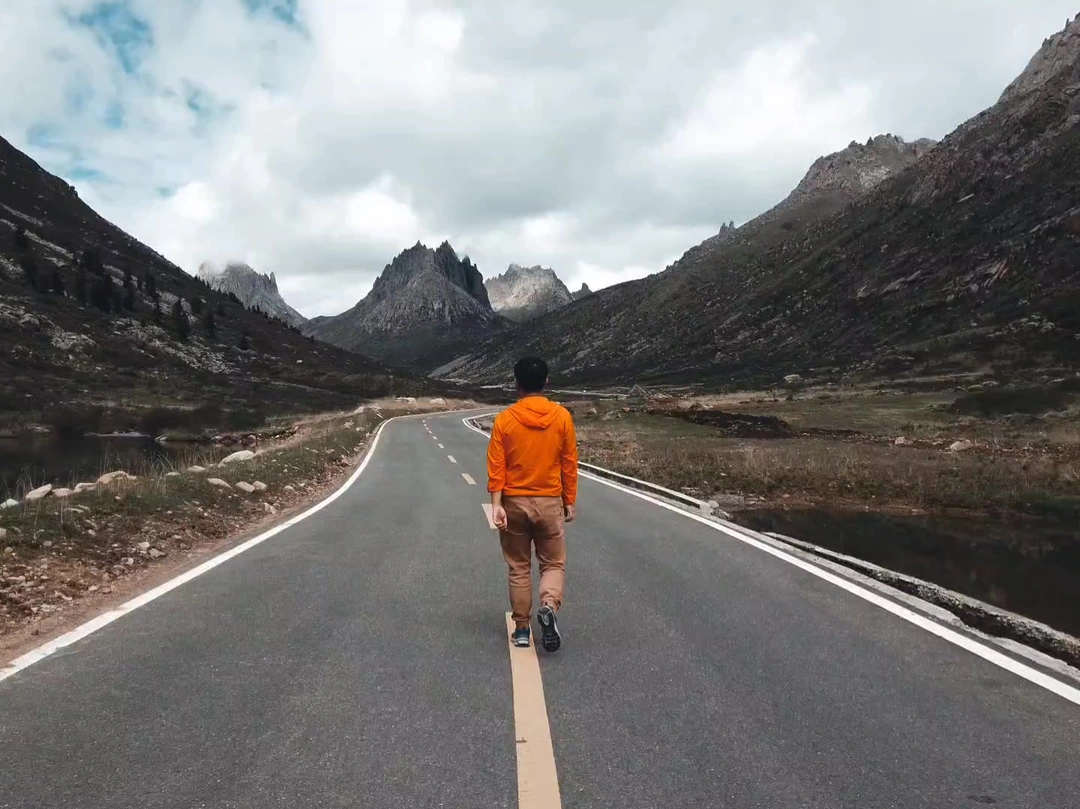
The biggest motivation for this journey was Lianbao Yeze (Lotus Treasure Gem Mountain), located at the Sichuan-Qinghai border. This hidden realm, often called the "Middle-earth of The Lord of the Rings," creates a dreamlike alien world with its austere snow mountains, jagged rock formations, and crystal-clear alpine lakes. I'd call it the "ceiling" of mountain viewing in Sichuan.
Of course, it's the niche historical and cultural elements woven along the route that truly keep me on the road. No matter how stunning the scenery, it's merely a fleeting impression—only real life holds the meaning we endlessly seek.
Itinerary Overview: 3-Day Sichuan-Qinghai Border Road Trip
- DAY 1: Chengdu → Wenchuan
- DAY 2: Wenchuan → Jiangwei Fortress → Buwa Village → Choubian Tower → Emutang → Longridam → Aba County
- DAY 3: Aba County → Lianbao Yeze → Gemo Monastery → Gerdeng Monastery → Aba County
- DAY 4: Aba County → Shenzuo Village → Chengdu
Wenchuan: An Underrated Historic City on the Min River
Jiangwei Fortress: Echoes of the Three Kingdoms on the Mountain Peak
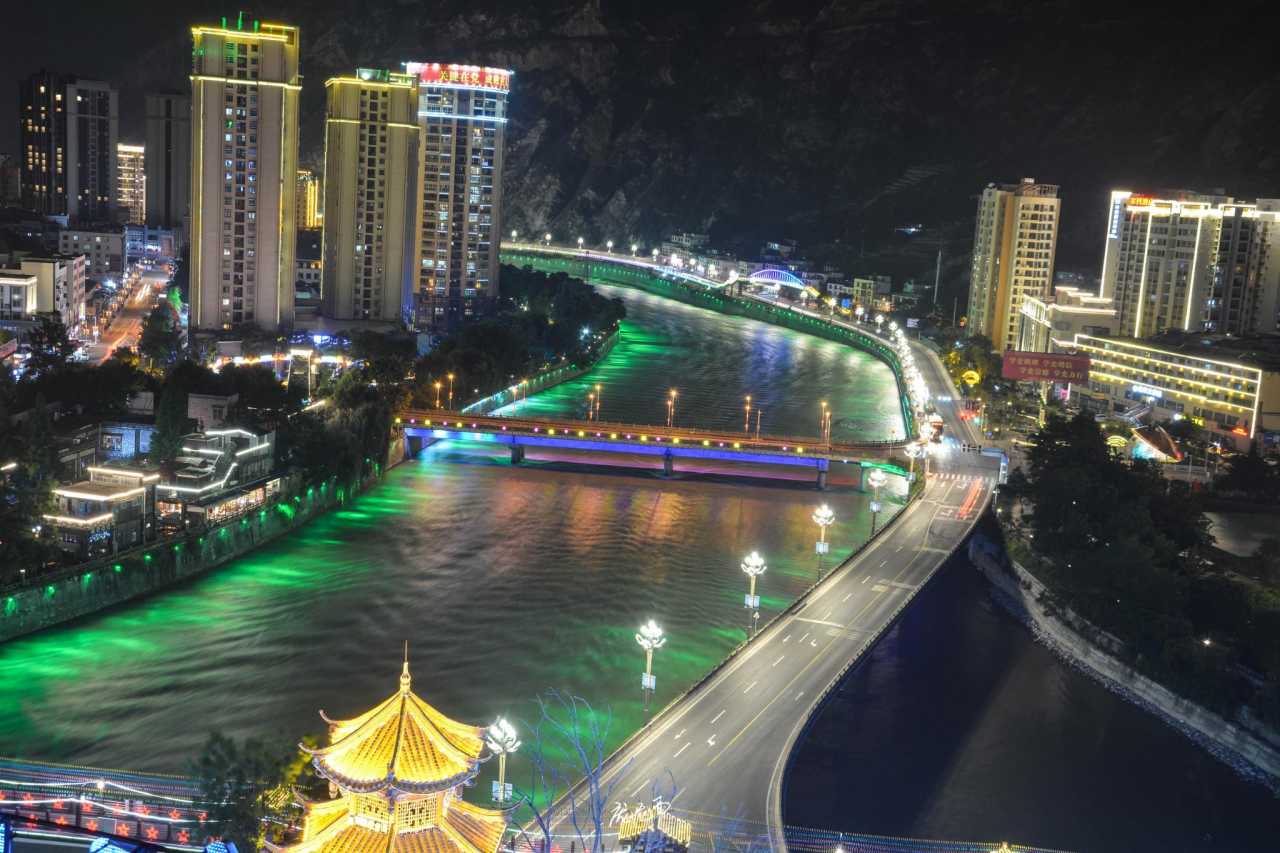
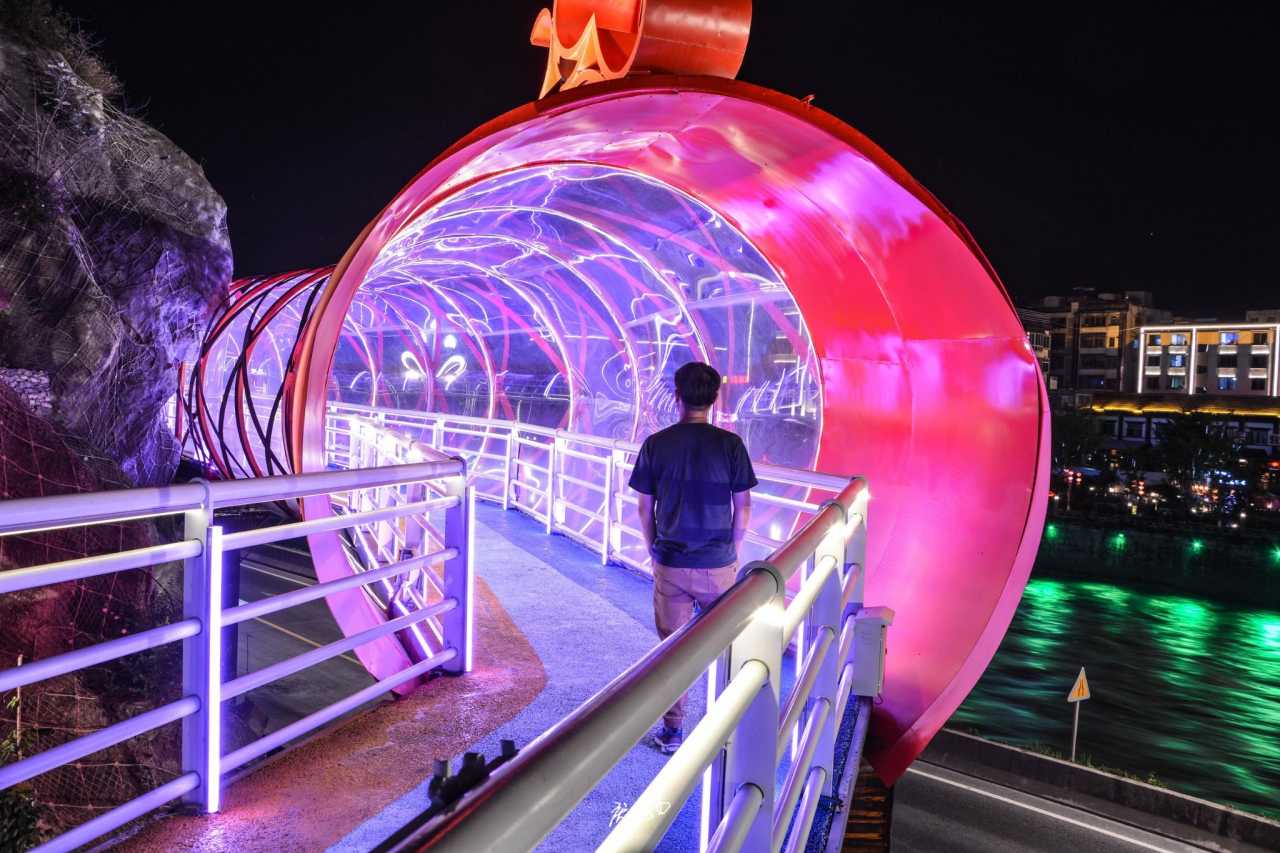
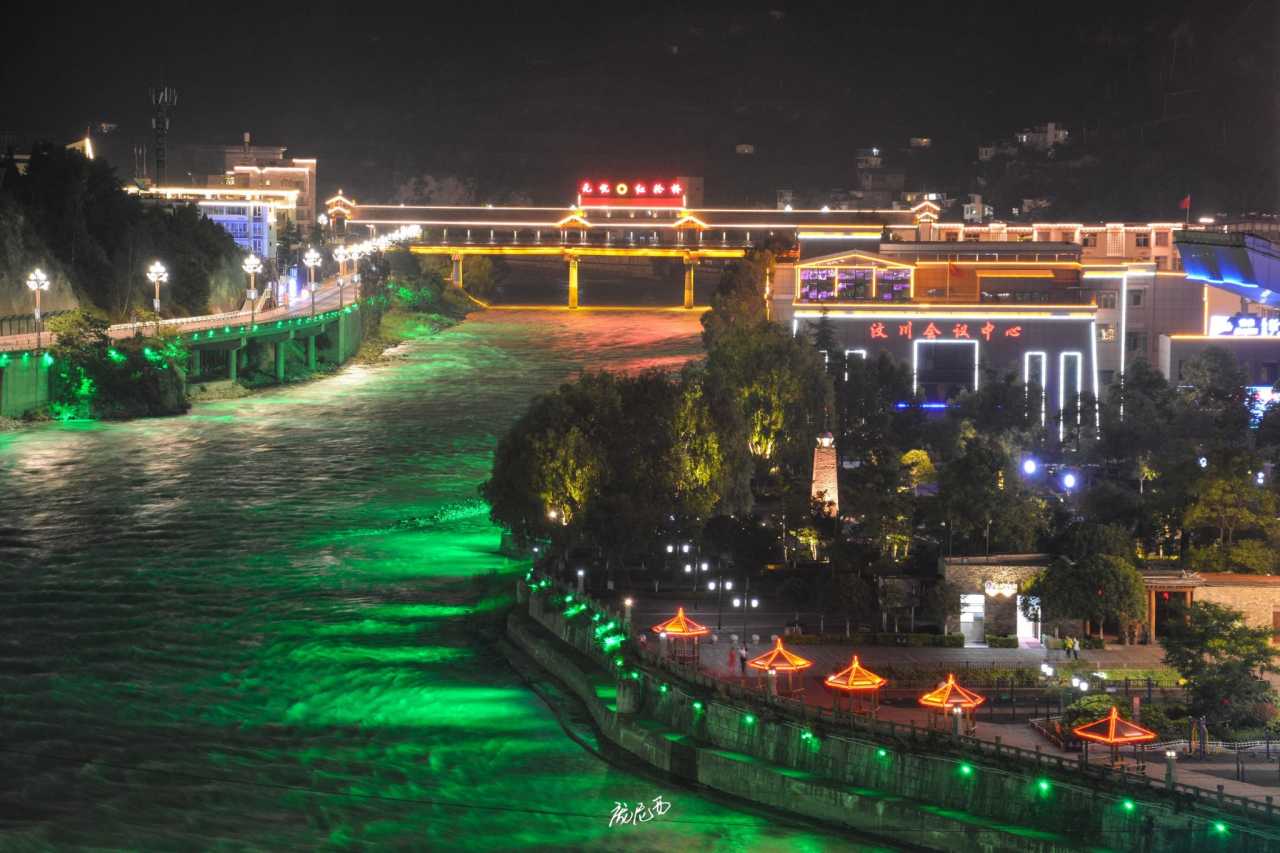
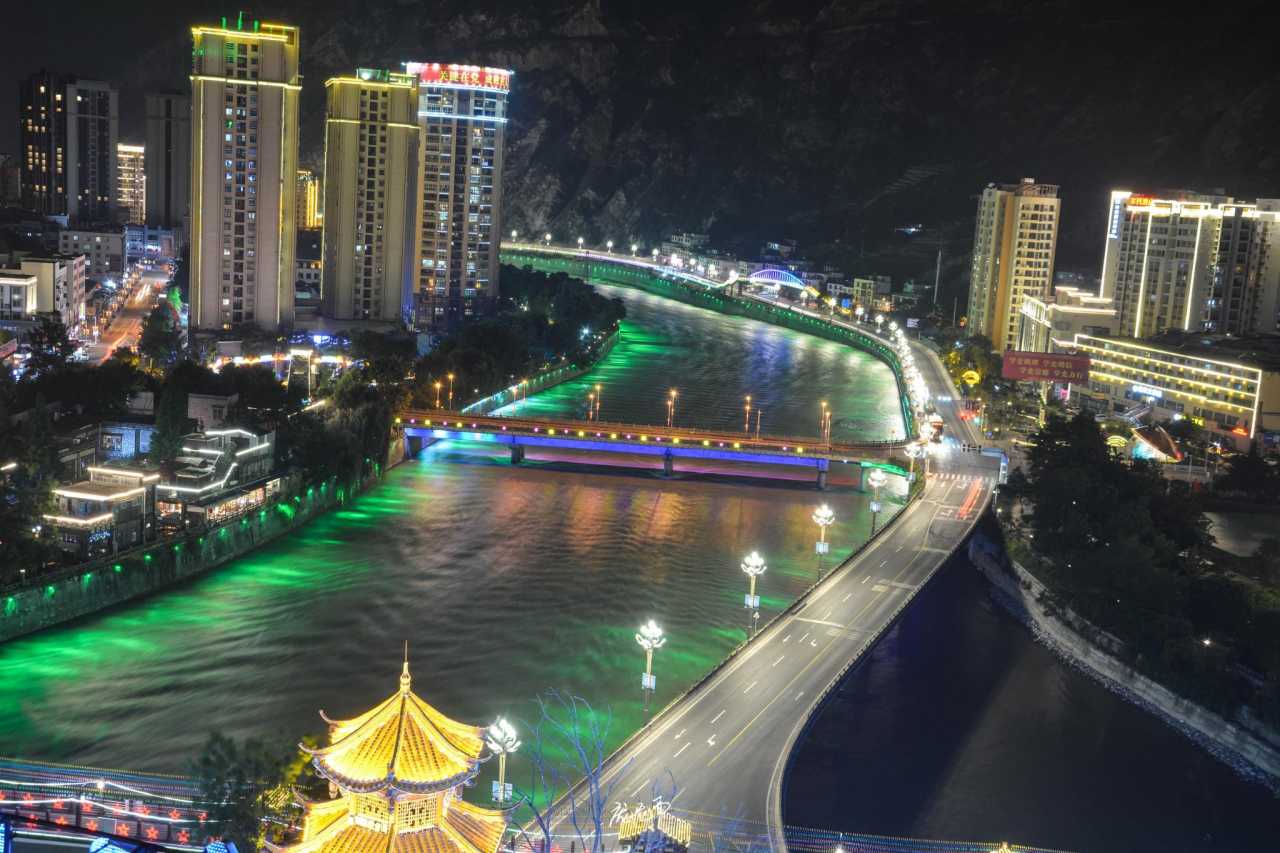
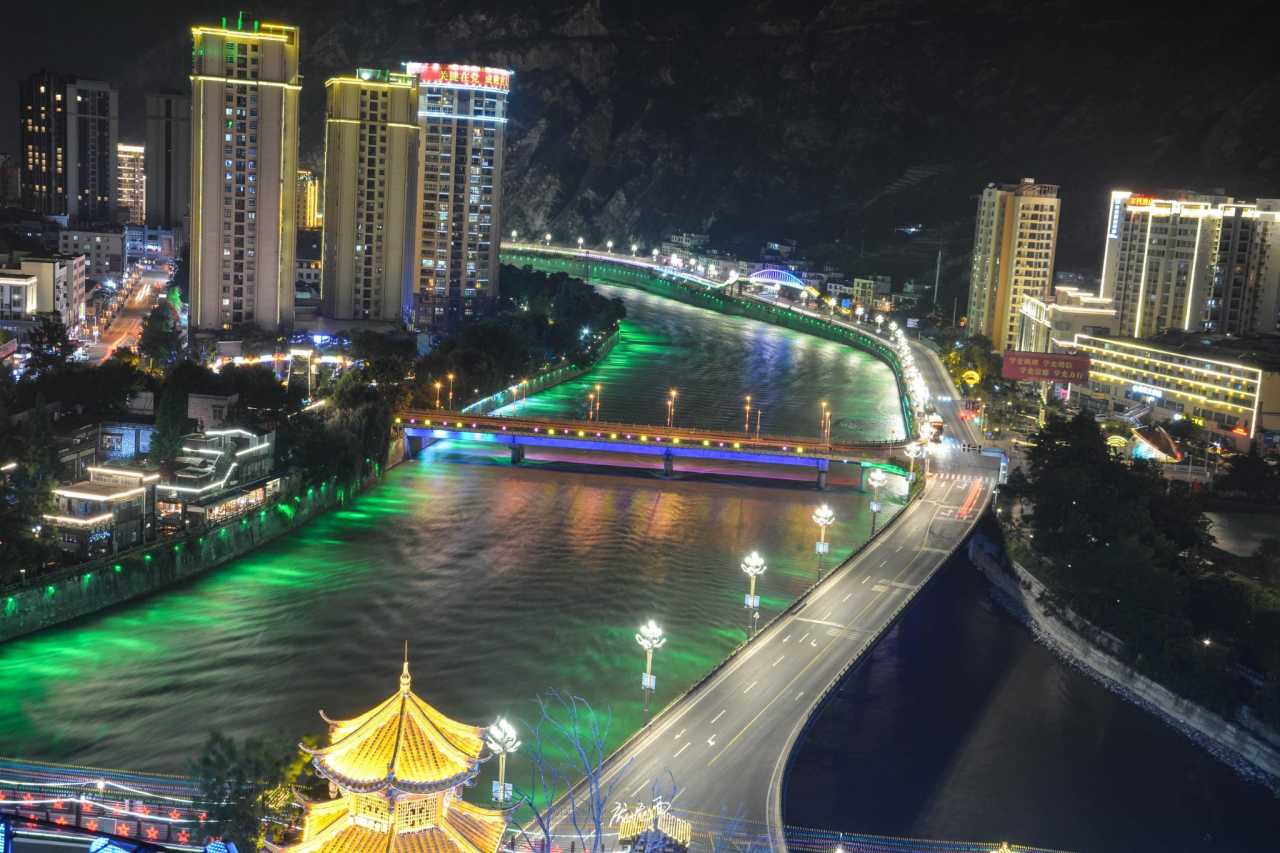
To avoid holiday traffic, we set off a day early in the afternoon, heading straight for Wenchuan. Stepping onto this land again, even the familiar Wenchuan felt brand new—hotels with trendy panda plushies, cyberpunk neon lights after dark—it all felt surreal.
But while cities can change, history cannot. The next morning, we followed the terraced slopes on the east bank of the Min River to begin our exploration of Jiangwei Fortress.

As a die-hard fan of the Three Kingdoms period, I never miss any relics connected to that era. According to the Old Book of Tang, in 231 AD, an uprising broke out in Wenshan. General Jiang Wei, along with Ma Zhong and Zhang Yi, led troops to suppress it, stationing soldiers and building fortifications in Wenshan and Li County. Jiangwei Fortress was built during this time—legend says it was once so grand and prosperous that it rivaled Chengdu itself.
Today, the ruins of Jiangwei Fortress sit on a terrace near the county seat. You can hike up from the small path beside Weizhou Normal School or drive up the winding mountain road near the Xin Guo Lü Hotel. We chose to drive. Midway up the mountain, two sections of remnant walls appeared by the roadside, protected by newly built enclosures. The walls were rammed earth mixed with wooden sticks or logs for reinforcement. Climbing onto them, we glimpsed a rammed-earth platform in the distance—said to be Jiang Wei's command post. Below, the entire Wenchuan city lay spread out before us.
The Jiangwei Fortress site actually encompasses Neolithic painted pottery culture, Han Dynasty Wenshan County ruins, a Three Kingdoms command post, Ming and Qing dynasty city walls, and Qin-Han stone coffin burials—spanning over five thousand years. It's the earliest discovered, thickest, and most representative site in the upper Min River region. Imagining the banners waving and battle cries of ancient times, now reduced to silent wilderness, made us deeply feel the vicissitudes of history.
[Link: Best Three Kingdoms sites in Sichuan]
Buwa Village: Yellow Earth Watchtowers in the Clouds
Looking up from Wenchuan city, you can see Buwa Village hidden high in the mountains. But getting there is no easy feat—the winding mountain road is narrow and steep, and passing oncoming cars is a hair-raising experience, even more thrilling than the road to Luobo Village.
"Buwa" means "people living on the clouds" in the Qiang language. With a vertical drop of over 1,000 meters from Wenchuan county seat, it truly deserves the name "Sky City."

Unlike the famous Taoping Qiang Village, Buwa Village's watchtowers are made of yellow rammed earth, while most towers in the Sichuan-Tibet Qiang region are stone. That's why it's called "China's last group of yellow earth watchtowers." Five surviving towers date back to the late Ming and early Qing dynasties, nearly 400 years old. Unfortunately, after the 2008 Wenchuan earthquake, the remaining five towers were severely damaged, and only two have been restored.
Tower No. 8 is one of the restored ones and is open to visitors. It's a four-cornered yellow earth tower, wider at the base and tapering upward, with no exterior decoration—each side as straight as if cut by a knife. Inside, a simple wooden ladder leads to the top; climbing it leaves you breathless due to the altitude. The tower has five floors separated by wooden frames, each with a small "T"-shaped window in the center of each wall for lookout or firing. The top is decorated with white stones at each corner, reflecting the Qiang people's worship of white stones. From the top, the entire Wenchuan city and the Min River spread out below.
Tower No. 14 is the other restored tower, still inhabited today, its main door locked. While we couldn't enter, at least it wasn't abandoned—buildings are best preserved through use.
[Link: Qiang culture and architecture guide]
Xuecheng: A Lonely Border Tower, Made Famous by a Female Poet
From Wenchuan to Li County, we drove through deep mountain valleys. Few notice Xuecheng Town at the confluence of the Zagunao River and the Mengtun River. Historically, Xuecheng was a mixed settlement of Tibetan, Qiang, and Han peoples, surrounded by steep mountains and guarding the Sichuan-Tibet Tea Horse Road—a true border stronghold.
The town preserves a national protected site—Choubian Tower (Tower for Border Planning). During the Tang-Tibet standoff, Li Deyu, the military governor of Jiannan Xichuan, built this tower to strengthen defenses and boost morale. Rather than making it a purely military fortress, he turned it into a social venue for building ties with minority tribal leaders. Thanks to the tower's protection, the area around Xuecheng saw no warfare during Li Deyu's three-year tenure.
The tower we see today was rebuilt during the Qianlong reign of the Qing Dynasty, after the original was destroyed by flooding in 1708. Even the rebuilt version is over 200 years old. Choubian Tower stands on a massive,突兀 rock in the town center—a square, two-story wooden structure with a double-eaved hip-and-gable roof, green tiles, and red pillars, like a gem set atop a perilous cliff.
What truly etched Choubian Tower into history was a woman from Shu—the famous Tang Dynasty poetess Xue Tao. In 832 AD, Li Deyu was transferred away from Shu, and Tang-Tibet conflicts reignited. Xue Tao climbed the tower and wrote these immortal lines: "Level with clouds and birds, eight windows in autumn, / Magnificently pressing down on Sichuan's forty prefectures. / Generals, do not covet the Qiang tribes' horses— / From the highest floor, you can see the border." This poem not only captured the tower's height and strategic position but also sternly condemned the generals' greed and plundering, which threatened even Chengdu. Xue Tao's courage and insight are truly admirable. And because of this poem, Choubian Tower became famous across the land.
[Link: Tang Dynasty poetry and historical sites]
Prairie Flower Meadows: Early Summer Like a Windows Desktop
After crossing the Zhegu Mountain, the valley began to widen from Shuajingsi Town onward. The long-missed plateau grasslands unfolded before us like a Windows desktop wallpaper come to life. Wildflowers in purple, yellow, and white dotted the emerald meadows, while yaks grazed lazily under the vast blue sky. This is the Sichuan-Qinghai border prairie at its most photogenic—a landscape that feels both surreal and deeply peaceful.
Lianbao Yeze: The Alien World at the Sichuan-Qinghai Border
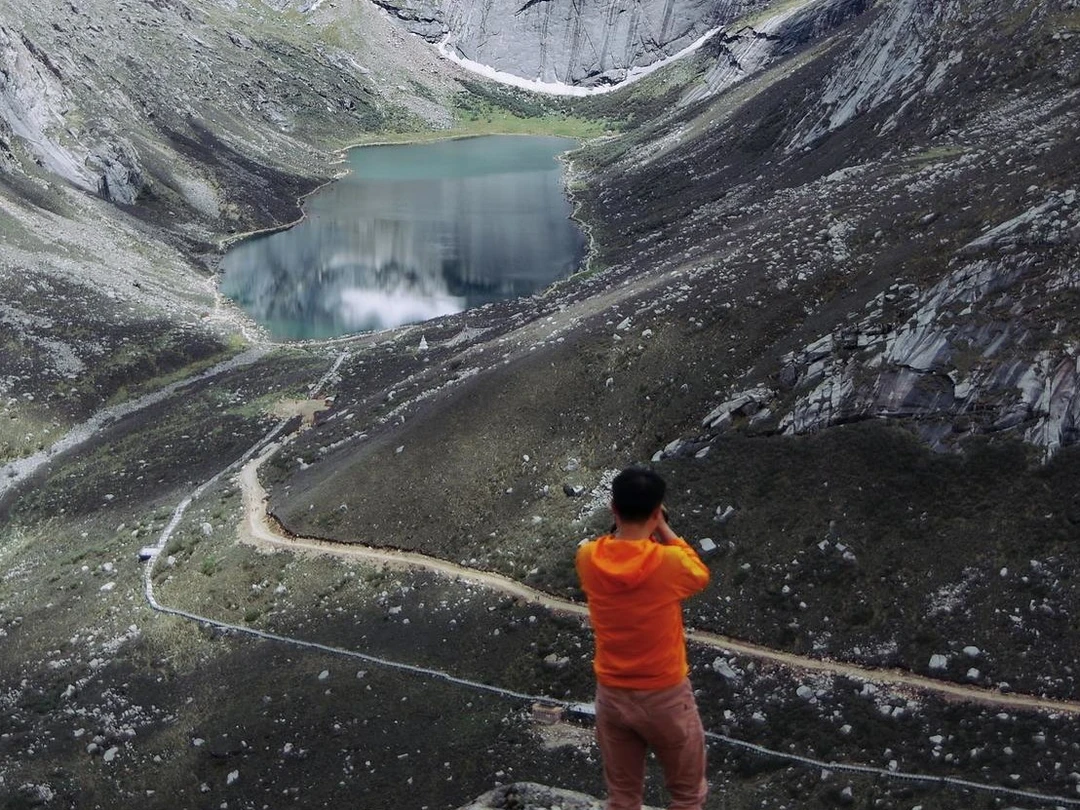
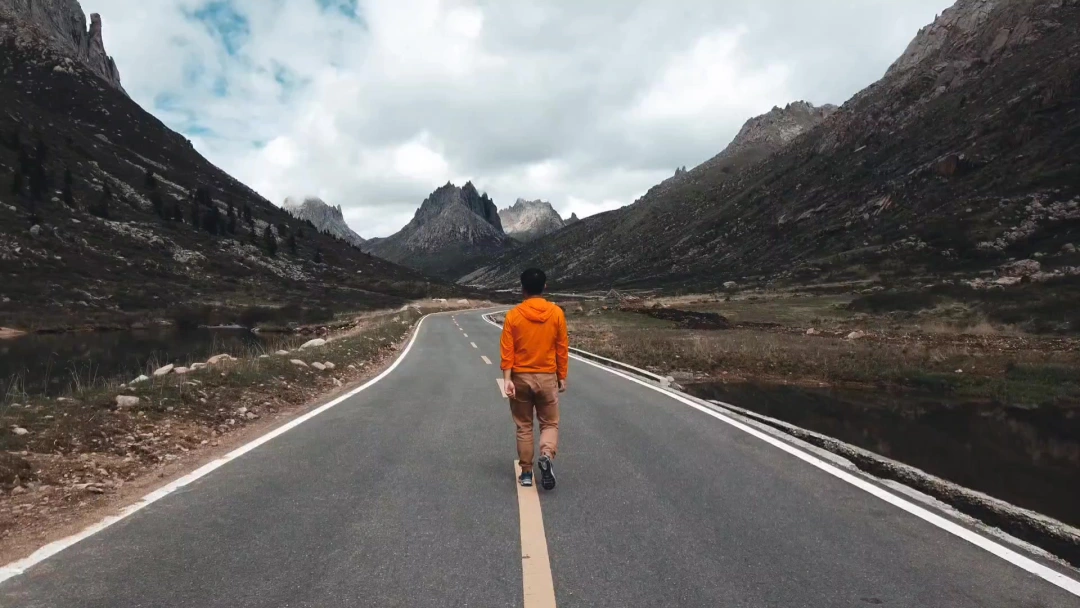
Lianbao Yeze (also known as Nyainbo Yuzê) is the crown jewel of this road trip. Located at the junction of Sichuan's Aba Prefecture and Qinghai's Golog Prefecture, this protected area features jagged granite peaks, turquoise alpine lakes, and dramatic rock formations that truly resemble an alien planet. The area is often compared to Middle-earth from The Lord of the Rings, and for good reason—the raw, unearthly beauty is unmatched.
We spent a full day exploring the core area, hiking around the main lake while snow-capped peaks reflected in the crystal-clear water. The silence here is profound, broken only by the wind and the occasional call of a bird. If you're seeking solitude and otherworldly landscapes, Lianbao Yeze delivers.
[Link: Lianbao Yeze travel guide and permits]
Gemo Monastery & Gerdeng Monastery: Spiritual Stops on the Plateau
Before heading back, we visited Gemo Monastery and Gerdeng Monastery, both perched on hillsides overlooking the vast grasslands. These active Tibetan Buddhist monasteries offer a glimpse into local spiritual life. The colorful prayer flags, intricate murals, and chanting monks create a serene atmosphere that contrasts beautifully with the wild landscapes outside. Even if you're not religious, the architecture and setting are worth the detour.
FAQ: Planning Your Sichuan-Qinghai Border Road Trip
Q: Is 3 days enough for this Sichuan-Qinghai border route?
A: Yes, but it's tight. Day 1 is mostly driving to Wenchuan. Days 2-3 pack in the highlights: Jiangwei Fortress, Buwa Village, Choubian Tower, Lianbao Yeze, and monasteries. If you have 4-5 days, add Shenzuo Village and more time at Lianbao Yeze.
Q: What's the best time to visit Lianbao Yeze?
A: June to September offers the best weather and wildflower blooms. July-August is peak season. Avoid winter (November-March) when roads may be closed due to snow.
Q: Do I need a 4WD vehicle?
A: A standard sedan can handle most paved roads, but a high-clearance vehicle (SUV) is recommended for the mountain roads to Buwa Village and some sections near Lianbao Yeze. Check road conditions before departure.
Q: Are there altitude concerns on this route?
A: Yes. Aba County sits at ~3,300m, and Lianbao Yeze reaches over 4,000m. Acclimatize in Wenchuan (1,300m) first. Carry altitude sickness medication, drink plenty of water, and avoid strenuous activity on Day 1.
Q: Do I need permits for Lianbao Yeze?
A: Currently, Lianbao Yeze is open to visitors without special permits, but regulations can change. Check with local authorities or travel agencies in Aba County before your trip.
Ready to Explore the Sichuan-Qinghai Secret Realm?
This 3-day road trip through the Sichuan-Qinghai border offers an incredible blend of history, culture, and alien landscapes. From the Three Kingdoms echoes at Jiangwei Fortress to the yellow earth watchtowers of Buwa Village, the Tang Dynasty poetry of Choubian Tower, and the otherworldly beauty of Lianbao Yeze—every stop is a discovery.
Don't let the short weekend hold you back. Pack your camera, fill the tank, and hit the road. The plateau's flower meadows are waiting, and the alien space-time of this magical planet is just a drive away.
Start planning your Western Sichuan road trip today! Share your itinerary questions in the comments below, or check out our [full Western Sichuan travel guide] for more routes and tips.
Disclaimer: Road conditions, opening hours, and permit requirements may change. Always verify with local authorities before traveling. This article is based on personal experience and historical research.
You may also like