The Wind-Swept Journey to Niubei Mountain: A Visual Feast Above the Clouds
Meta Description: Discover Niubei Mountain, China's largest viewing platform in Sichuan. Plan your trip with our guide to the sea of clouds, Gongga views, hiking routes, and essential tips for this hidden sanctuary.
Introduction: One Mountain, One Dream
In November 2011, I shouldered my backpack and set off on a journey to Niubei Mountain. At that time, this peak was still just a name quietly circulating among outdoor enthusiasts—no overwhelming travel guides, no crowds of tourists flooding in. But it was precisely this rawness and mystery that drove me to set out without hesitation.
Niubei Mountain—the name sounds simple, even a bit rustic. It only began to enter the视野 of outdoor lovers in late 2009, yet within just two years, it had become a pilgrimage site for countless people. Some say you might climb Niubei three times and still not catch a glimpse of its true face; others say that once you see it, you'll have no regrets in life. And I was one of the lucky ones.
[Link: Best time to visit Niubei Mountain]
Niubei Mountain: A Hidden Sanctuary for Spectacular Views
Location and Unique Terrain

Niubei Mountain sits in Yingjing County, Sichuan Province. It's a branch of the Erlang Mountains and serves as the watershed between the Qingyi River and the Dadu River. The summit stands at an elevation of about 3,600 meters. Its name comes from a massive rock protruding from a cliff that resembles an ox's head, while the ridge stretches long and slender like an ox's back. The mountain falls within the jurisdiction of Luding County, which itself boasts the highest number of peaks over 5,000 meters in all of China. Niubei Mountain is arguably the finest viewing platform among them.
[Link: Top 10 viewing platforms in Sichuan]
Why It's Called "China's Largest Viewing Platform"
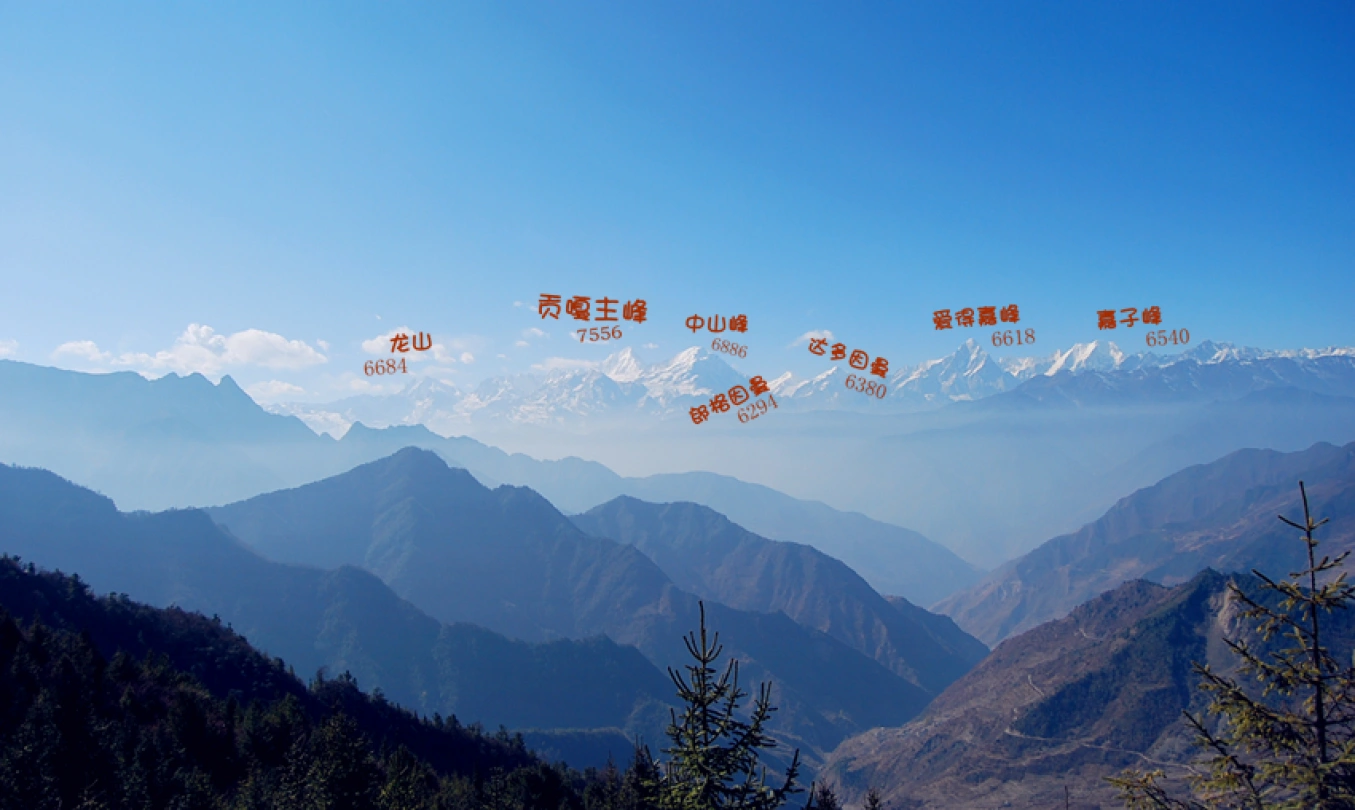
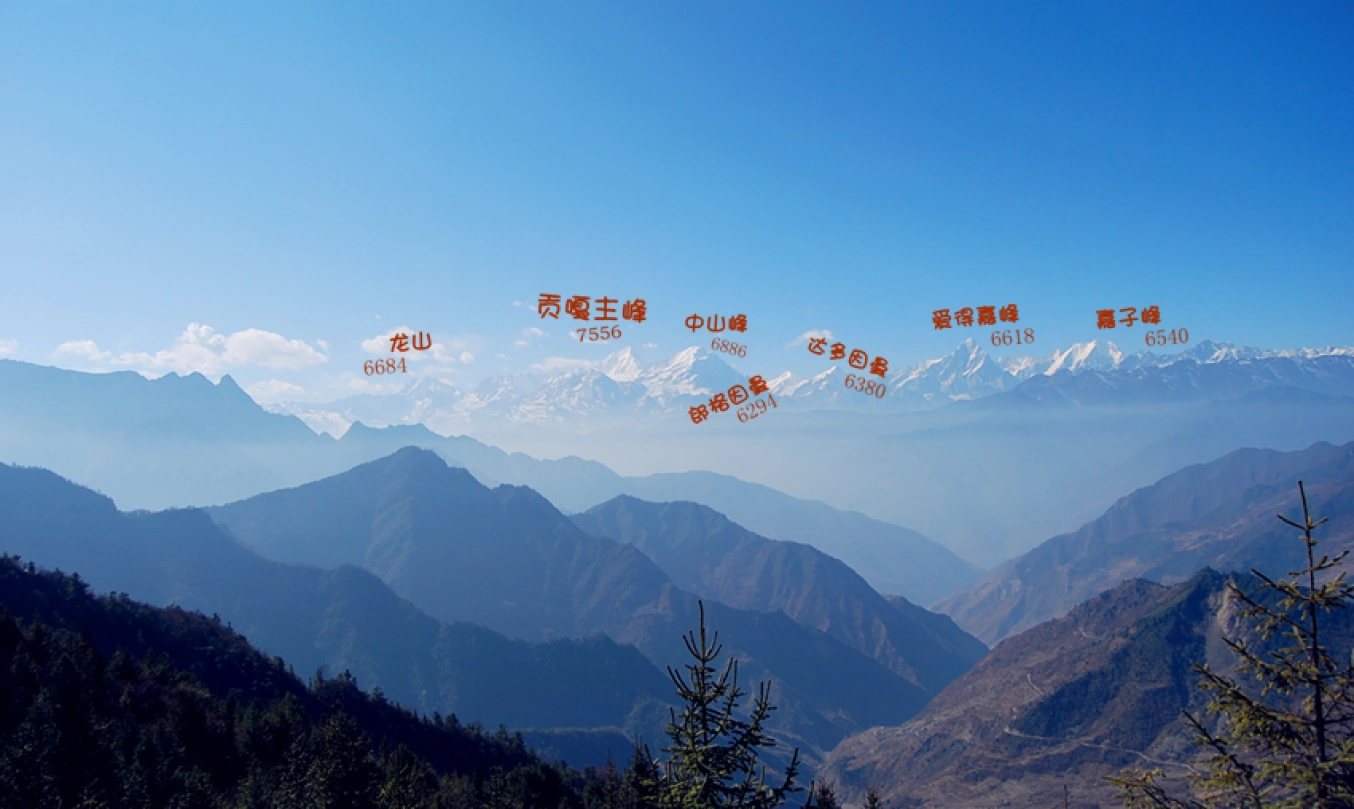
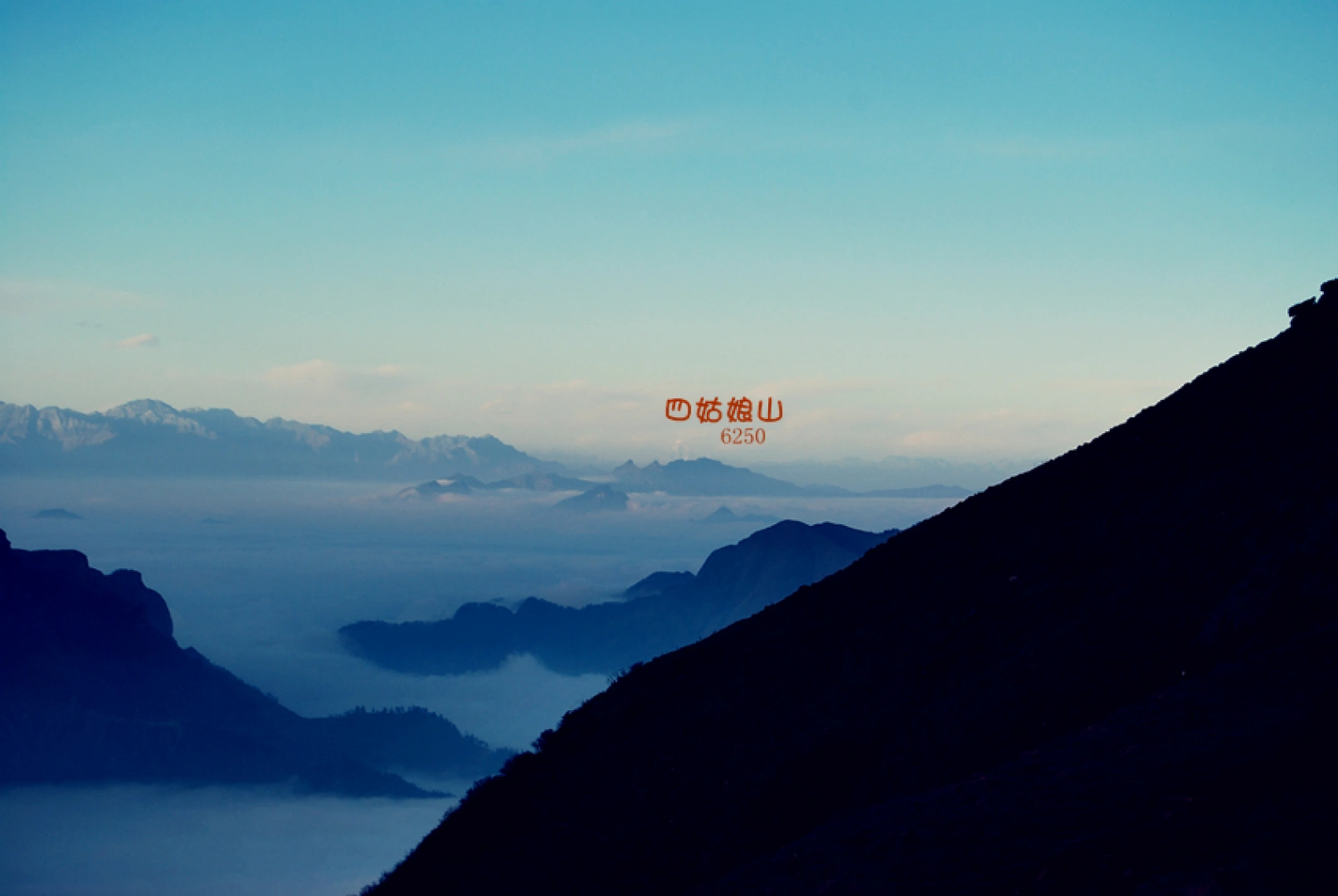
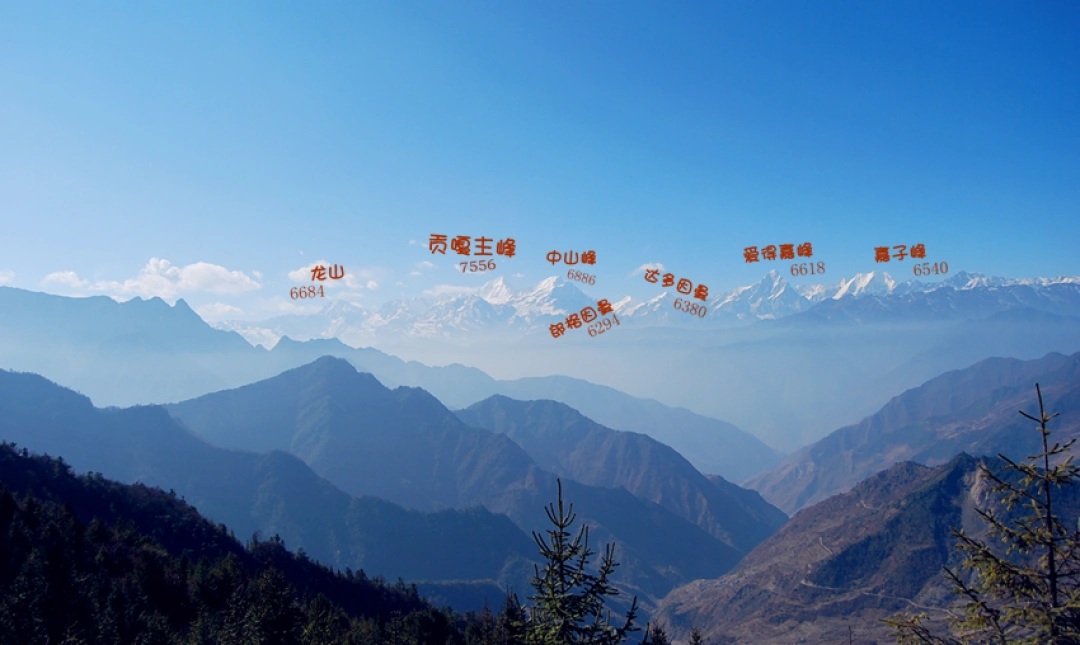
Standing atop Niubei Mountain, your视野 opens up dramatically. The sea of clouds is thick and even—grand yet gentle. Waterfall clouds cascade everywhere, evoking the fantastical scenes of "Hallelujah Mountain" from Avatar, making you feel as if you're walking on air. Look around, and the rolling mountains stretch in orderly layers—the king of Sichuan peaks, Gongga Snow Mountain, stands tallest; Niba Mountain, Niangniang Mountain, Wawu Mountain, Mount Emei, Jiajin Mountain, Siguniang Mountain, and Erlang Mountain line up before you in sequence, while the Dadu River Grand Canyon lies quietly behind. Almost all the famous peaks of the Land of Abundance become delicate bonsai in this moment. Beneath the churning clouds, the hills and valleys descend step by step, gently merging into the rice-waving plains of the Tianfu region.
[Link: Gongga Snow Mountain trekking guide]
Our Journey: From City to Clouds
Day 1: Departing Chengdu, Overnight in Yingjing
After work on Friday, I rushed to Jinsha Station. Every weekend, Yangxi Road is jam-packed, but luckily the bus was fast enough. At 6:30 PM, I finally arrived at Jinsha, carrying my heavy bags, jogging all the way to the Metro parking lot just in time to catch the group departure.
At around 7:10 PM, we set off on time from Metro. The route from Chengdu to Yingjing was all highway, taking about three hours to reach our booked hotel. Accommodation cost 35 yuan per person, with TV and a water heater. The only minor letdown was that the air conditioner didn't heat, but the value for money was still pretty decent.
Since it was only a little past 9 PM, we still had time, so we hit the streets looking for a barbecue joint. Every household on the street was burning incense. At first, I wondered if some important figure had passed away. But the shop owner explained that it was the first day of the lunar month, so people were burning incense for blessings.
The barbecue here was indeed cheap—3 mao (cents) per skewer of potatoes, 1 yuan per skewer of meat, and the taste was excellent. The three of us ate our fill, spending 108 yuan total, then headed back to the hotel content and ready for rest.
[Link: Where to stay in Yingjing]
Day 2: Yingjing → Sanhe Township → Niubei Mountain—The Most Exhilarating Day
At 8 AM, after eating the local specialty, "dada noodles" (a type of hand-pulled noodle), we switched to a small minibus for the ascent. The distance from Yingjing to Sanhe Township was about 50 kilometers. The minibus driver said that National Road 108 was the worst in the country—and he wasn't exaggerating. It was even worse than National Road 318, with endless heavy trucks rumbling past. The cement road from Siping to Sanhe was mostly shattered by the weight of quarry trucks. This stretch took about an hour, assuming no traffic jams.
From Sanhe to Meiping, there were at least another 50 kilometers, and after that, it was almost all winding mountain roads. If it rained or snowed, the minibus couldn't make it up at all. From Meiping to the summit, there were at least another 20-plus kilometers of switchbacks, with several spots where we had to get out and walk. The little Chang'an minibus had limited power, and legend had it that minibuses hired from Sanhe only went as far as Meiping.
At the border between Luding and Yingjing, the road conditions worsened. Deep ruts carved by heavy trucks made it nearly impossible for small vehicles to pass. We started hiking from the pass at the border to "Cloud Sea Homestay," which took about an hour and a half. The road was narrow to begin with, and we kept encountering large trucks, making passing a real headache. The whole ride was a bone-rattling ordeal—I'd never been on such a terrible road in my life. But at least the scenery along the way was beautiful.
We had rented six minibuses in total; ours was the fourth in line. The first time we had to get out and walk was because the road was too rough and the slope too steep—the minibus couldn't muster enough power. But that was the only time our vehicle needed us to disembark. If the car ahead hadn't blocked us, we might not have had to get out at all. I have to admire our driver's skill—he drove that minibus like an off-road vehicle!
After crossing several valleys, blue skies and white clouds were already waving at us. After about 30 minutes of hiking, we saw the minibus had caught up, so we climbed back in and continued the bumpy ride. Along the way, we spotted several brave cyclists pedaling up Niubei Mountain. The two minibuses behind us had drivers with less skill, and we ended up waiting nearly half an hour for them.
On this stretch of wild cotton road, we took plenty of photos. Four people per car, enjoying ourselves. When we finally saw the minibuses behind us, we were relieved they wouldn't get lost—only to discover that their vehicle had broken down further down the mountain. Poor passengers had to get out and push. Meanwhile, we kept bouncing our way toward the pass.
[Link: Sichuan mountain road driving tips]
Crossing the Pass: A Turning Point in Scenery
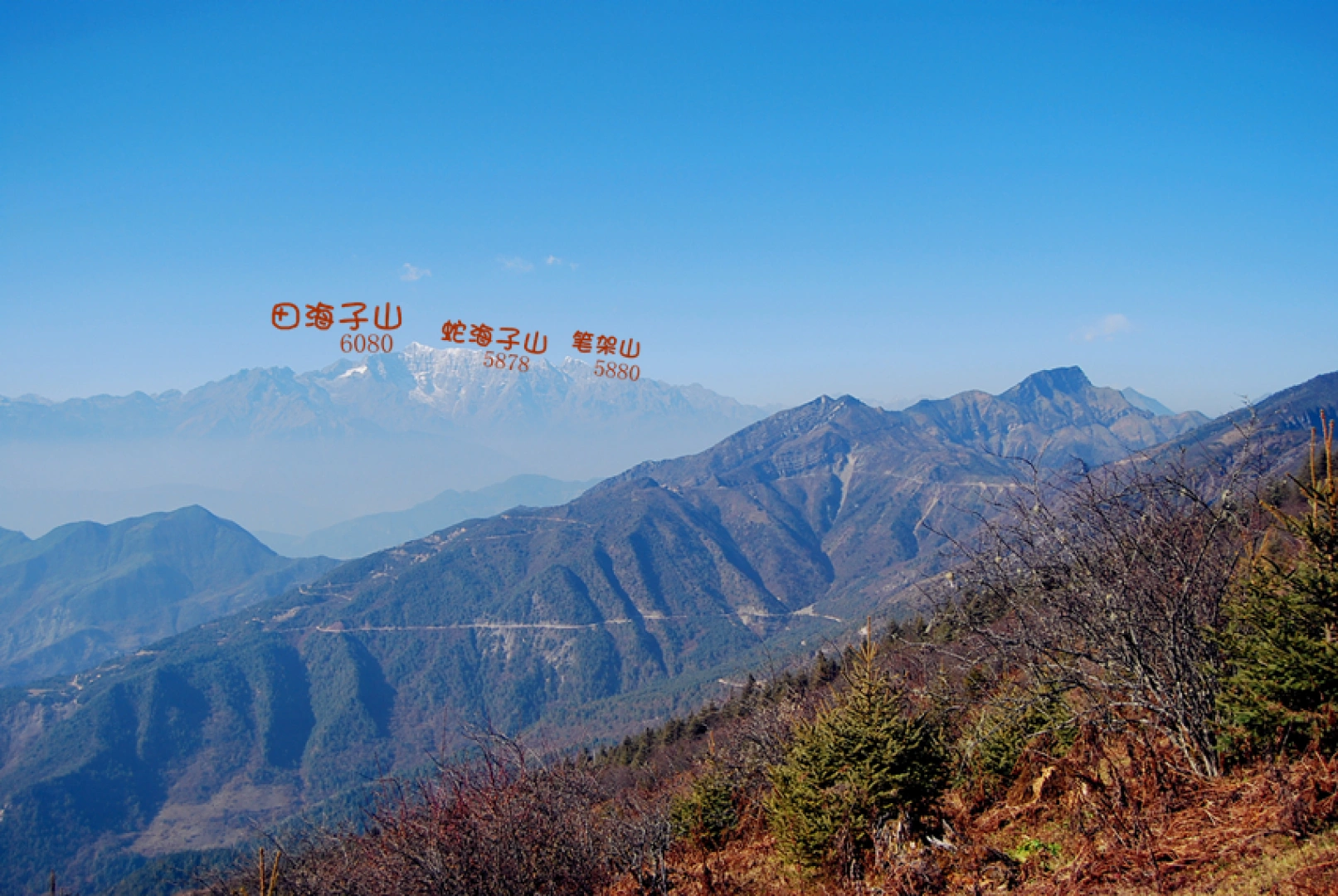
As soon as our minibus crossed the pass, the landscape changed instantly! The first thing to appear before us was Haizi Mountain, standing at 6,080 meters. The car erupted with excitement... As we drove on, more and more snow-capped peaks emerged, with the Gongga range spreading out in a line right in front of us. At that point, no one could contain themselves—we all jumped out to take pictures.
When I went to Yulongxi to see Gongga in summer, it was shy, showing its face for only a few minutes before hiding behind the clouds. But today, it stood there, letting me gaze to my heart's content!
[Link: Photography tips for Niubei Mountain]
Hiking Up: Hell on the Body, Heaven for the Eyes
From the pass, we hiked all the way to Cloud Sea Homestay, taking about an hour. There were many wild fruits along the mountain path, resembling goji berries but not quite—red wild berries that turned the entire trail crimson.
As I walked, I didn't forget to pay homage to the sacred mountain, praying for safety and blessings. Sometimes, when you're capturing beautiful scenery, you yourself become part of the beautiful landscape. Blue sky, white clouds, snow-capped peaks, sunlight—this was a place that burned through camera memory.
We passed through a pine forest, then climbed through a stretch of dead trees. I don't know why, but many trees on the mountain had withered away, leaving only stumps. A lone pine stood there, as if telling a silent story of resilience. The trail was steep and rocky in sections, demanding careful footing, but every step was rewarded with a new perspective of the unfolding panorama.
The final push to the summit was the most challenging. The altitude began to take its toll—shortness of breath, a pounding heart, and legs that felt like lead. But the promise of the sea of clouds and the golden light of sunset kept us moving. When we finally reached the top, the sight was beyond words: a sea of clouds stretching to the horizon, the peaks of Gongga and Siguniang rising like islands in a white ocean, and the sky painted in shades of orange and pink as the sun dipped below the horizon.
That night, we stayed at Cloud Sea Homestay, a simple but warm shelter. The stars above were so bright and close they seemed within reach. The next morning, we woke before dawn to catch the sunrise—a spectacle of light and shadow that transformed the landscape into a living painting. No photograph could do it justice.
[Link: Altitude sickness prevention tips]
FAQ: Planning Your Niubei Mountain Adventure
1. What is the best time to visit Niubei Mountain?
The best time is from October to May, when the weather is stable and the sea of clouds is most consistent. Summer (June–September) brings rain and fog, reducing visibility. Winter offers the clearest skies but extreme cold—temperatures can drop to -10°C or lower at the summit.
2. How do I get to Niubei Mountain from Chengdu?
 Take a bus from Chengdu to Yingjing (about 3 hours). From Yingjing, hire a minibus to Sanhe Township, then to Meiping, and finally to the hiking start point at the pass. The entire drive can take 4–5 hours depending on road conditions. Alternatively, join a guided tour that handles transportation.
3. Is the hike suitable for beginners?
The hike from the pass to the summit is about 2–3 hours and is moderately challenging. The altitude (3,600 meters) and steep sections require reasonable fitness. Beginners should acclimatize in Yingjing or Sanhe for a day before attempting the hike.
4. What should I pack for a Niubei Mountain trip?
Essentials include: warm clothing (down jacket, thermal layers), waterproof hiking boots, headlamp, sunscreen, sunglasses, snacks and water, a first-aid kit, and a camera. In winter, add crampons and a sleeping bag if staying at a homestay.
5. Can I see the sea of clouds and sunrise in one day?
It's possible but tight. Most visitors stay overnight at Cloud Sea Homestay to catch both sunset and sunrise. Day trips are risky due to weather changes and the long drive. A 2-day itinerary is recommended for the best experience.
Internal Linking Suggestions
- [Link: Best time to visit Niubei Mountain]
- [Link: Top 10 viewing platforms in Sichuan]
- [Link: Gongga Snow Mountain trekking guide]
- [Link: Where to stay in Yingjing]
- [Link: Sichuan mountain road driving tips]
- [Link: Photography tips for Niubei Mountain]
- [Link: Altitude sickness prevention tips]
- [Link: Sichuan outdoor adventure itineraries]
- [Link: Chinese mountain pilgrimage destinations]
Conclusion: Your Turn to Chase the Clouds
Niubei Mountain is more than a destination—it's a pilgrimage for the soul. The journey is tough, the road is brutal, and the altitude demands respect. But the reward is a visual feast that stays with you forever: a sea of clouds that feels like walking in heaven, peaks that humble you with their majesty, and a sunrise that paints the world in gold.
If you're ready to trade the city's noise for the mountain's silence, to push your limits and discover a view that words cannot capture, then Niubei Mountain is calling. Plan your trip, pack your gear, and set out on the wind-swept journey above the clouds. The mountain is waiting.
Start planning your Niubei Mountain adventure today. Book your transportation, reserve your homestay, and prepare for an experience that will change how you see the world.
[Link: Sichuan outdoor adventure itineraries]
You may also like


