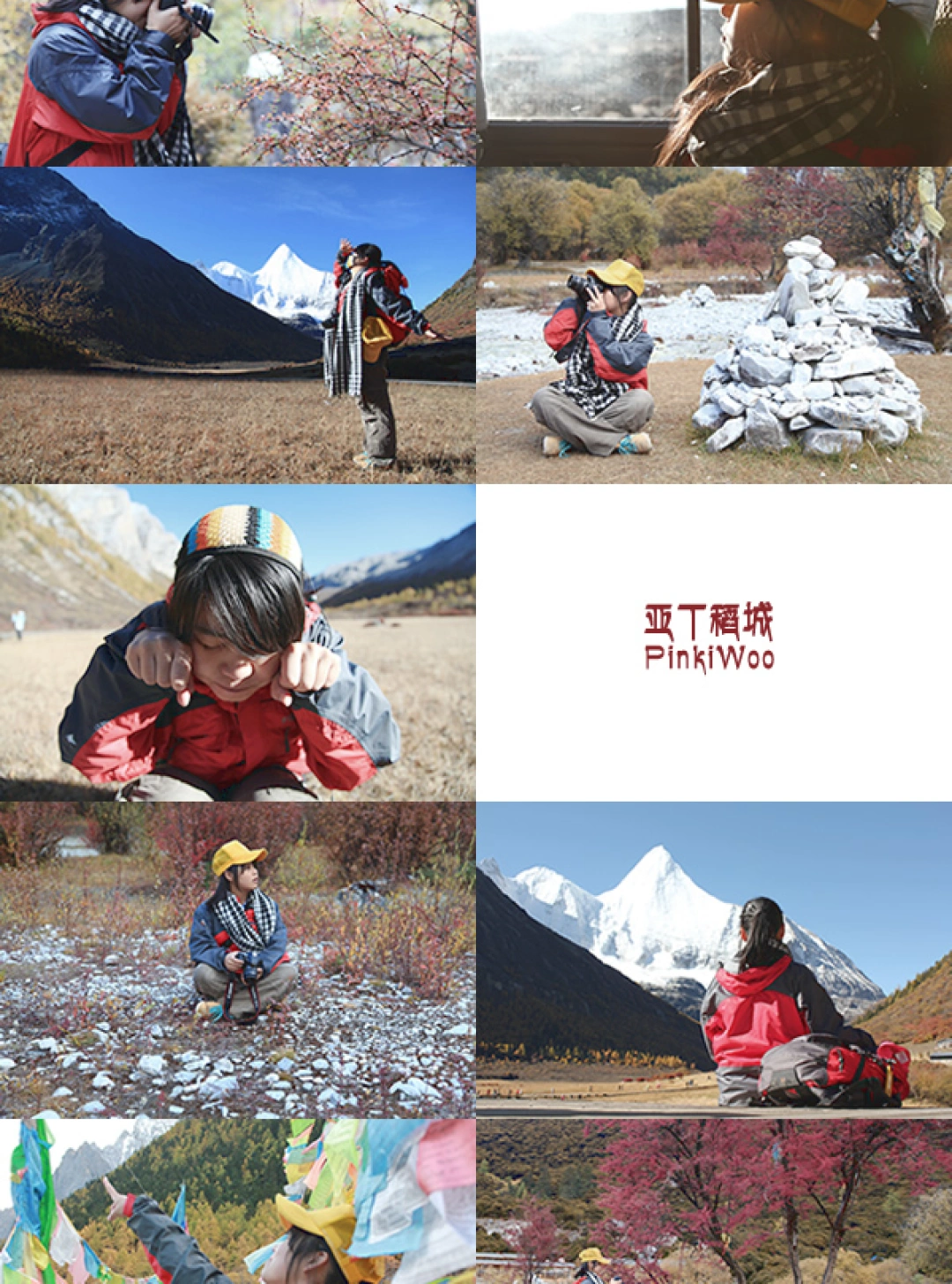
The Truth Behind the Romantic Halo: The Real Daocheng Yading – Beautiful to Look At, Exhausting to Hike!
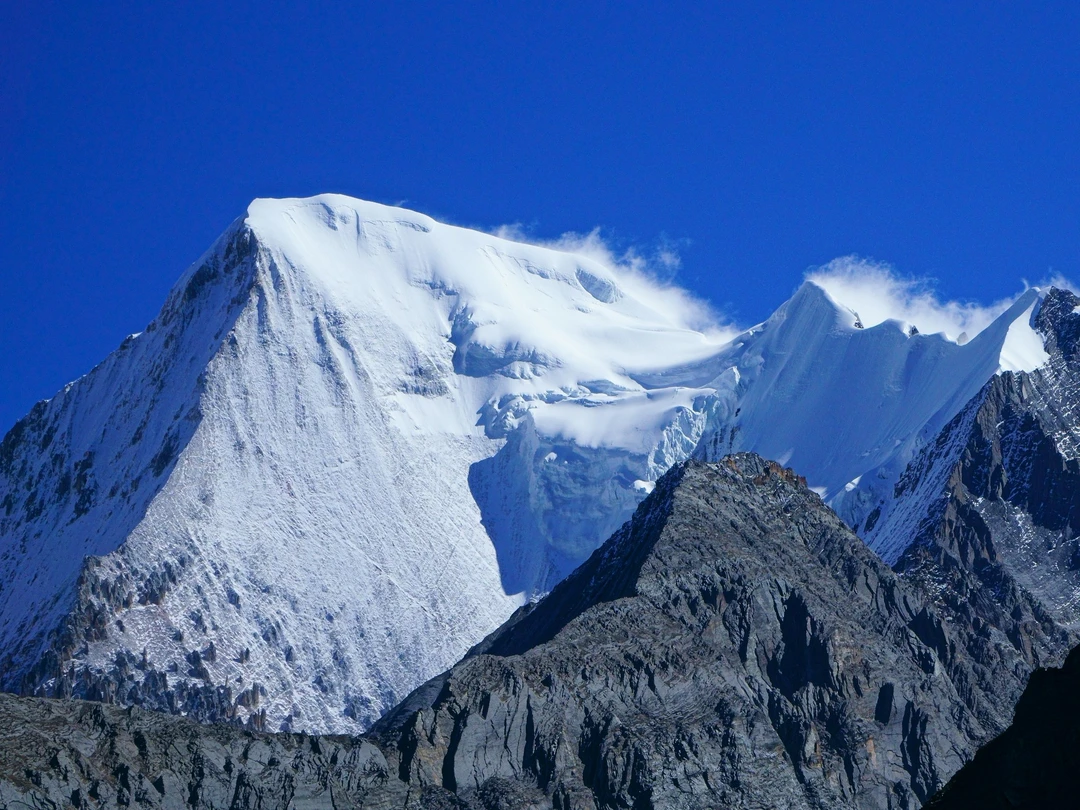
Meta Description: Planning a Daocheng Yading trip? Discover the raw truth behind the "last Shangri-La." From altitude sickness survival tips to a 5-day itinerary, this guide reveals why it's breathtakingly beautiful but soul-crushingly exhausting.
Preface: An Obsession with "Shangri-La"
If you, like me, were ever stunned by that golden meadow, those azure lakes, and the towering snow-capped mountains in the movie I Belonged to You (从你的全世界路过), then you've probably etched the name Daocheng Yading at the very top of your travel bucket list.
In October 2017, I finally set foot on this long-yearned-for land. Before leaving, I scoured countless travel guides, only to be overwhelmed by a flood of conflicting information. Some called it "the last Shangri-La," others hailed it as "the last pure land on the blue planet," while still others warned that "altitude sickness will make you wish you were dead." So which version is the real one?
After returning, I decided to cast aside all the flowery language and exaggerated hype, and paint a true, unfiltered picture of Daocheng Yading. Yes, it is breathtakingly beautiful, but it is also soul-crushingly exhausting. If you're planning a trip there, I hope this article helps you avoid some of the pitfalls.
1. First, Get These Place Names Straight, or You'll Get Lost

Before I set out, I was thoroughly confused by the terms "Shangri-La," "Daocheng," and "Yading." What exactly is the relationship between them? How did a fictional utopia become two real, distinct places? Let's break it down.
Shangri-La: A Real-World Battle for a Fictional Paradise
The word "Shangri-La" first appeared in the 1933 novel Lost Horizon by British author James Hilton. The book depicts a hidden utopia deep in the Tibetan region, surrounded by snow-capped mountains and deep valleys, where humans and nature coexist in harmony. Hilton's inspiration came from articles about southwestern China published in National Geographic by the American explorer Joseph Rock.
After China's reform and opening-up, tourism boomed, and foreign backpackers flooded into Yunnan and Sichuan in search of Shangri-La. Local governments quickly realized this was a priceless tourism brand. Thus, a fierce "battle for the ownership of Shangri-La" erupted.
Yunnan province was the fastest: In 1997, it declared that Zhongdian County in the Diqing Tibetan Autonomous Prefecture was Shangri-La. In 2001, the State Council officially approved the renaming of Zhongdian County to Shangri-La County, and in 2014, it was upgraded to a county-level city. The "Shangri-La City" you find on your map today is this place.
Sichuan province was not to be outdone: In 2002, Sichuan renamed Riwa Township in Daocheng County, Garze Tibetan Autonomous Prefecture, to Shangri-La Township, and in 2009, it was upgraded to a town. This "Shangri-La Town" is precisely the gateway to the Daocheng Yading Scenic Area!
So, today China has two officially recognized "Shangri-Las": Shangri-La City in Yunnan and Shangri-La Town in Sichuan, about 300 kilometers apart. It wasn't until recent years, when the central government stepped in to plan a "Greater Shangri-La Tourism Zone," requiring Yunnan, Sichuan, Tibet, and Qinghai to break down barriers, that the dispute gradually subsided. [Link: Best time to visit Greater Shangri-La region]
Daocheng: It's a County, Not a City
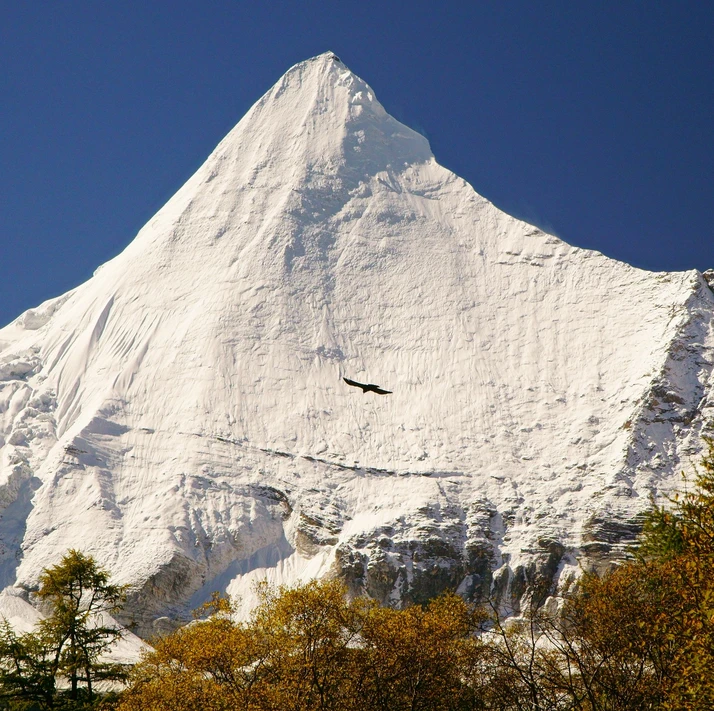
Daocheng, officially Daocheng County, is located on the southwestern edge of Sichuan Province, under the jurisdiction of the Garze Tibetan Autonomous Prefecture. Over 96% of its population is Tibetan. It is not a "city" but a county. Many travelers mistakenly think "Daocheng" is the scenic area—it's actually the gateway town.
Yading: A Village That Became the Core Scenic Area
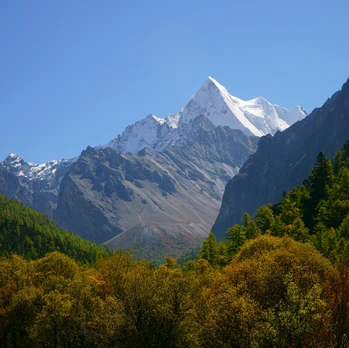
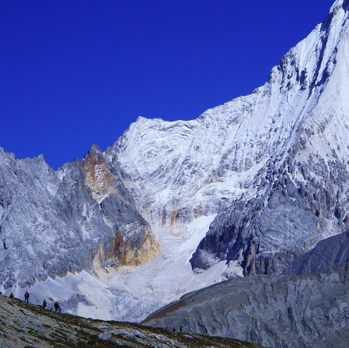
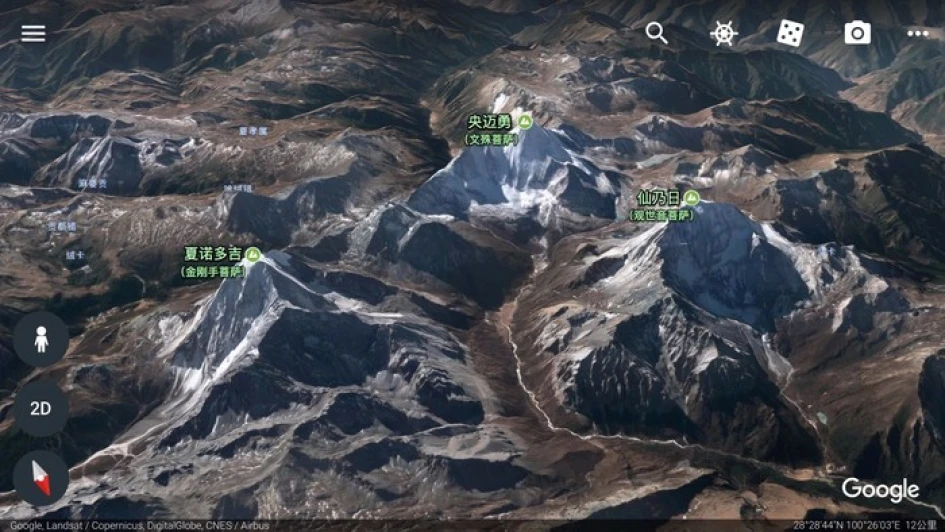
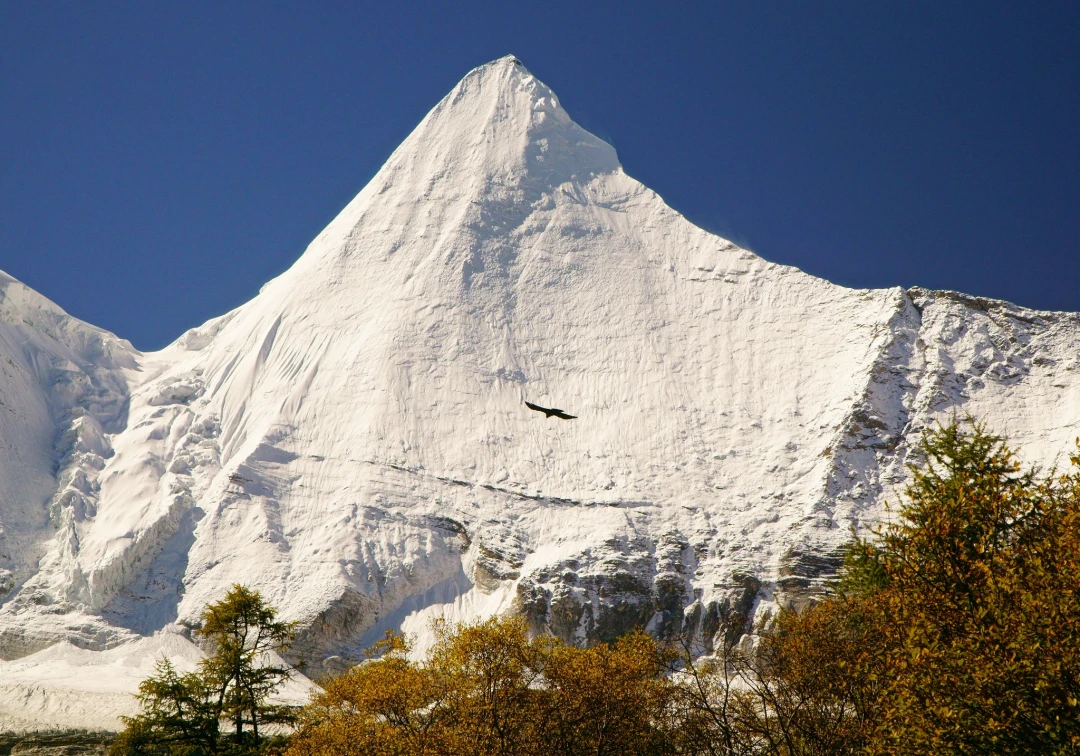
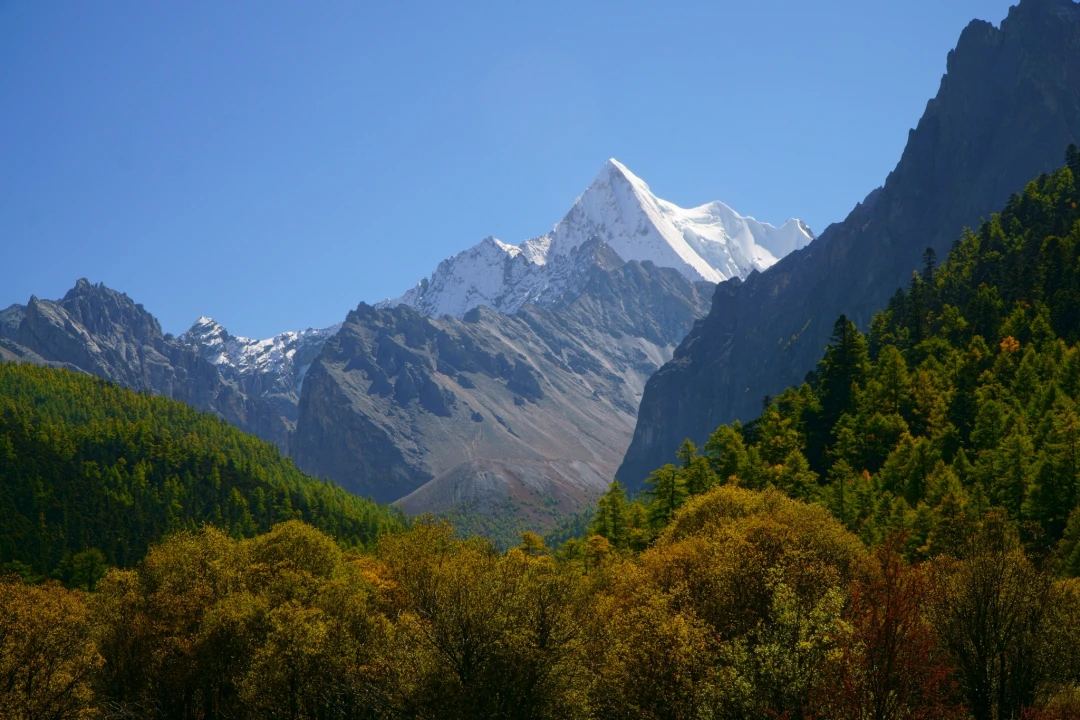
Yading is a village under the administration of Shangri-La Town in Daocheng County. The famous Daocheng Yading Scenic Area gets its name because it is located around Yading Village. The three sacred mountains—Chenresig (仙乃日), Chana Dorje (夏诺多吉), and Jambeyang (央迈勇)—dominate the skyline here.
Daocheng Yading Scenic Area: Where Exactly Is It?
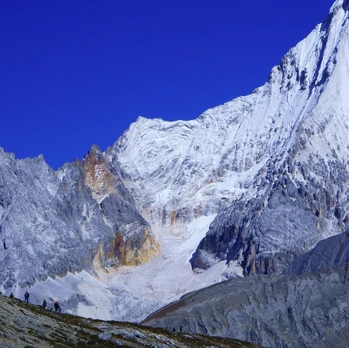
This is the most confusing part. The main entrance and ticket office are located in Shangri-La Town (formerly Riwa Township), about 80 kilometers and a 1.5-hour drive from Daocheng County town. But note – from the scenic area entrance to the actual core attractions, there are still over 30 kilometers of mountain roads! You must take the scenic area shuttle bus, which winds its way for nearly an hour before you even catch a glimpse of the snow-capped mountains.
In other words, at the scenic area entrance, you can't even see a "hair" of the three sacred mountains.
Daocheng Yading Airport: Another Misnomer
This airport sits at an altitude of 4,400 meters, making it the highest civilian airport in the world (higher than any airport in Tibet). But it's located on Haizi Mountain, 50 kilometers north of Daocheng County town. From the airport to the core scenic area, it's still over 160 kilometers and nearly a 4-hour drive.
So, most tourists choose to stay either in Shangri-La Town (elevation 2,900 meters, relatively comfortable) or in Yading Village (elevation 3,700 meters, which saves the daily commute in and out of the scenic area). [Link: Accommodation options in Shangri-La Town vs Yading Village]
2. My Itinerary: 5 Days, 4 Nights, Starting from Chengdu
I signed up for a small-group tour (5 people sharing a car) through a travel platform, departing from Chengdu on October 17th:
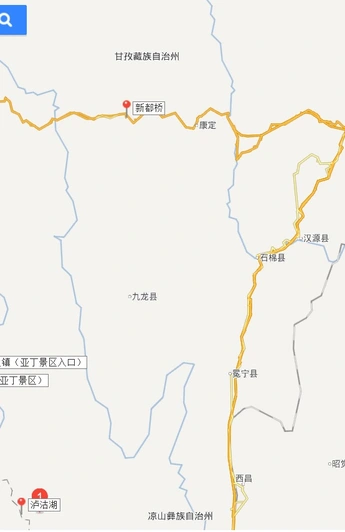
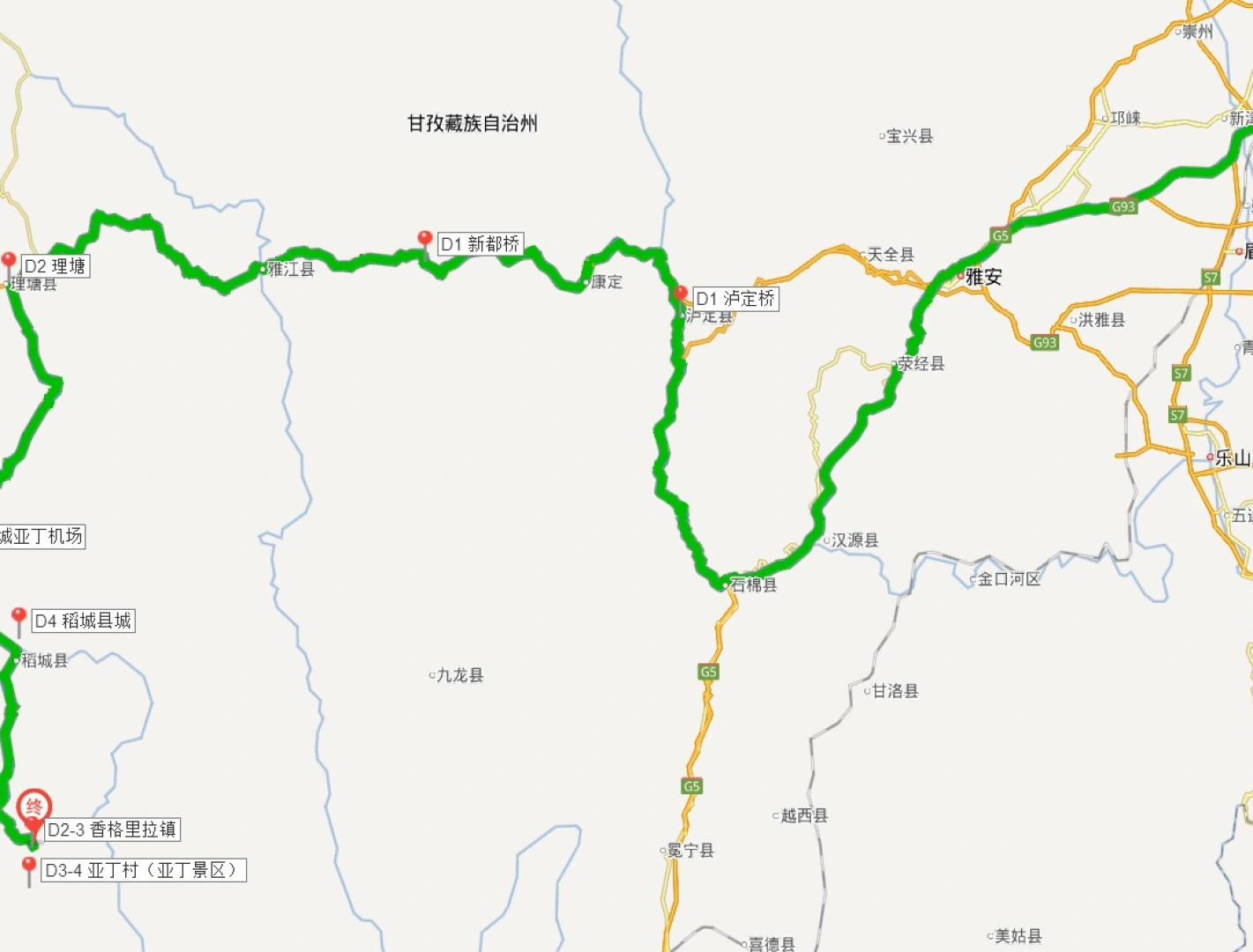
- Day 1: Chengdu → Luding → Xinduqiao (Overnight in Xinduqiao, elevation 3,400 m)
- Day 2: Xinduqiao → Litang → Shangri-La Town (Overnight in Shangri-La Town, elevation 2,900 m)
- Day 3: Full day exploring the Daocheng Yading Scenic Area (Overnight in Shangri-La Town)
- Day 4: Half day in the scenic area → Daocheng County town (Overnight in Daocheng County town, elevation 3,700 m)
- Day 5: Fly out from Daocheng Yading Airport
Note: The total distance from Chengdu to Daocheng is over 900 kilometers, with a drive time of more than 16 hours. Splitting it over two days is both safer and allows you to enjoy the scenery along the way. Also, all departing flights from Daocheng Yading Airport leave before 10:00 AM, so you must return to Daocheng County town to stay overnight on Day 4.
Pro Tip: If you're short on time, consider flying directly into Daocheng Yading Airport from Chengdu or Chongqing. But be warned—the sudden altitude jump from 500 meters to 4,400 meters is brutal. Most travelers will need at least a day to acclimatize before attempting the hiking trails.
3. What to Pack: You'll Regret Not Bringing These
On a high-altitude trip, being well-prepared is being responsible to yourself. Here are the most important items in my opinion:
1. Sun Protection Trio: Hat, Sunglasses, Sunscreen
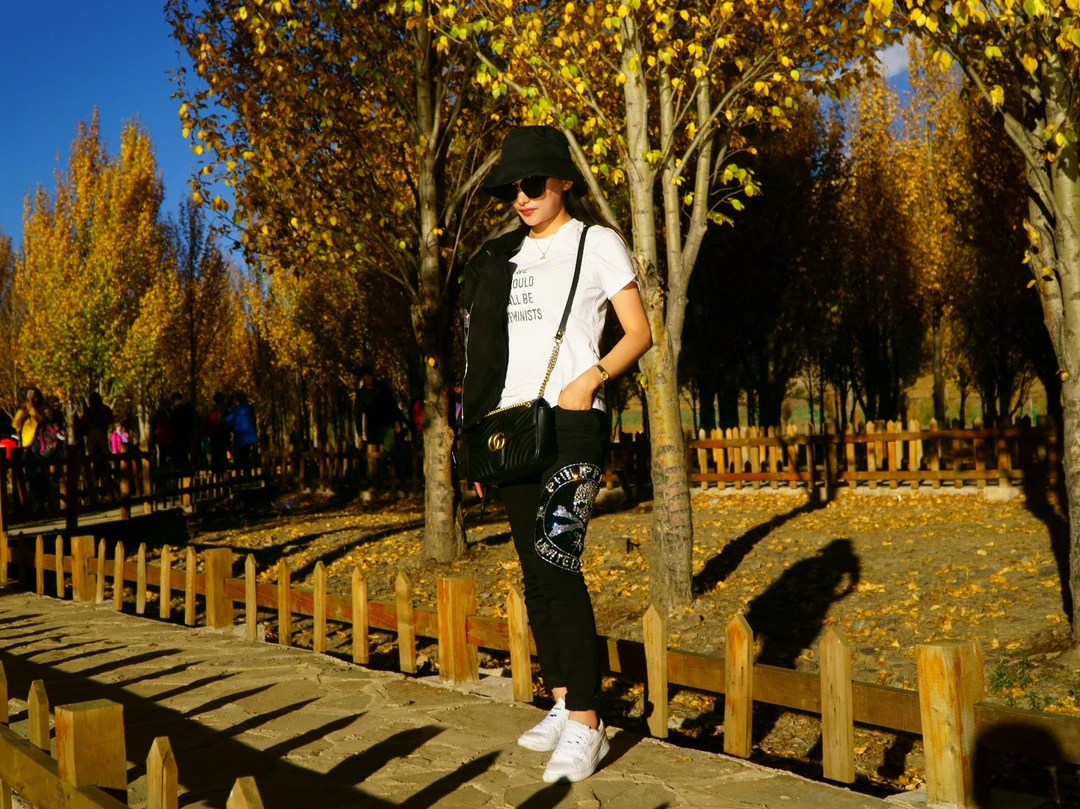
The sun and UV rays on the plateau are no joke. Just look at the complexion of the local Tibetans, and you'll know how "enthusiastic" the sun is here. No matter the season, these three items must be with you at all times. SPF 50+ is non-negotiable, and reapply every two hours.
2. Layered, Easily Removable Cold-Weather Clothing
By mid-October, the temperature on the plateau is already quite low. The winds at the mountain passes in the Yading area are fierce, so a windbreaker or shell jacket is essential. But the temperature difference is extreme – experiencing all four seasons in one day is no exaggeration. You'll be hot enough to strip down while hiking, but the moment you stop to rest, a cold wind will have you shivering. Therefore, it's best to wear multiple layers that you can easily add or remove. [Link: Best clothing layers for high-altitude hiking]
3. Waterproof Hiking Boots
I cannot stress this enough. There's a 5-kilometer mountain trail in the scenic area where water flows across the path. Ordinary shoes simply won't cut it. A pair of hiking boots that can handle light water crossings will dramatically improve your travel experience – and this section is precisely the most spectacular part of the entire journey. It would be a terrible waste to have it ruined by bad footwear.
4. Oxygen Canisters and Medication
I had been to Tibet in 2015 without any altitude sickness, so I got complacent this time. But experience proves that altitude sickness has nothing to do with your fitness level, age, or gender – it's purely a matter of luck. If it's your first time on the plateau, you must bring enough oxygen canisters, Rhodiola rosea (红景天), ibuprofen, and other medications. Travel is for enjoyment, not for risking your life.
5. Snacks and Hydration
The hiking trails in Daocheng Yading are long and demanding. There are limited food options inside the scenic area, and what's available is overpriced. Pack high-energy snacks like nuts, chocolate, energy bars, and dried fruit. Also, carry at least 1.5 liters of water per person—dehydration worsens altitude sickness.
4. The First Two Days: Over Mountains and Through Valleys, Forever on the Road
When we left Chengdu, the sky was gloomy and a light rain was falling. I thought, "Great, what scenery can I possibly see?" But as we climbed higher into the mountains, the weather shifted dramatically. By the time we reached Xinduqiao, the clouds parted, revealing a stunning panorama of snow-capped peaks.
Day 1 highlights: The drive from Chengdu to Xinduqiao takes about 6-7 hours, passing through the Luding Bridge (a historic site from the Long March) and the stunning Tagong Grassland. Xinduqiao itself is famous as "the photographer's paradise" for its golden autumn light.
Day 2 highlights: The route from Xinduqiao to Litang takes you over the 4,700-meter high Kading Snow Mountain pass. Litang, at 4,000 meters, is one of the highest towns in the world. From there, it's another 3 hours to Shangri-La Town. By the time we arrived, I was exhausted but exhilarated.
Altitude acclimatization tip: Spend your first two nights at progressively higher elevations. Sleeping at 2,900 meters in Shangri-La Town is much safer than jumping straight to 3,700 meters in Yading Village. Your body needs time to adjust.
5. The Big Day: Daocheng Yading Scenic Area – Beautiful to Look At, Exhausting to Hike!
On Day 3, we entered the scenic area at 7:00 AM. After a 45-minute shuttle bus ride, we arrived at the first stop: Zhubazi (冲古寺). From there, we had two main hiking options:
Option A: Short Hike to Luorong Pasture (洛绒牛场)
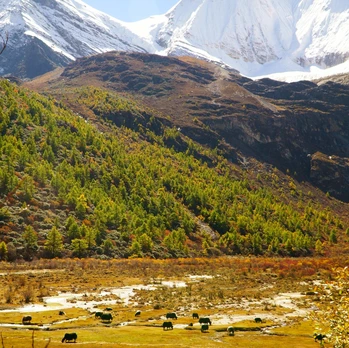
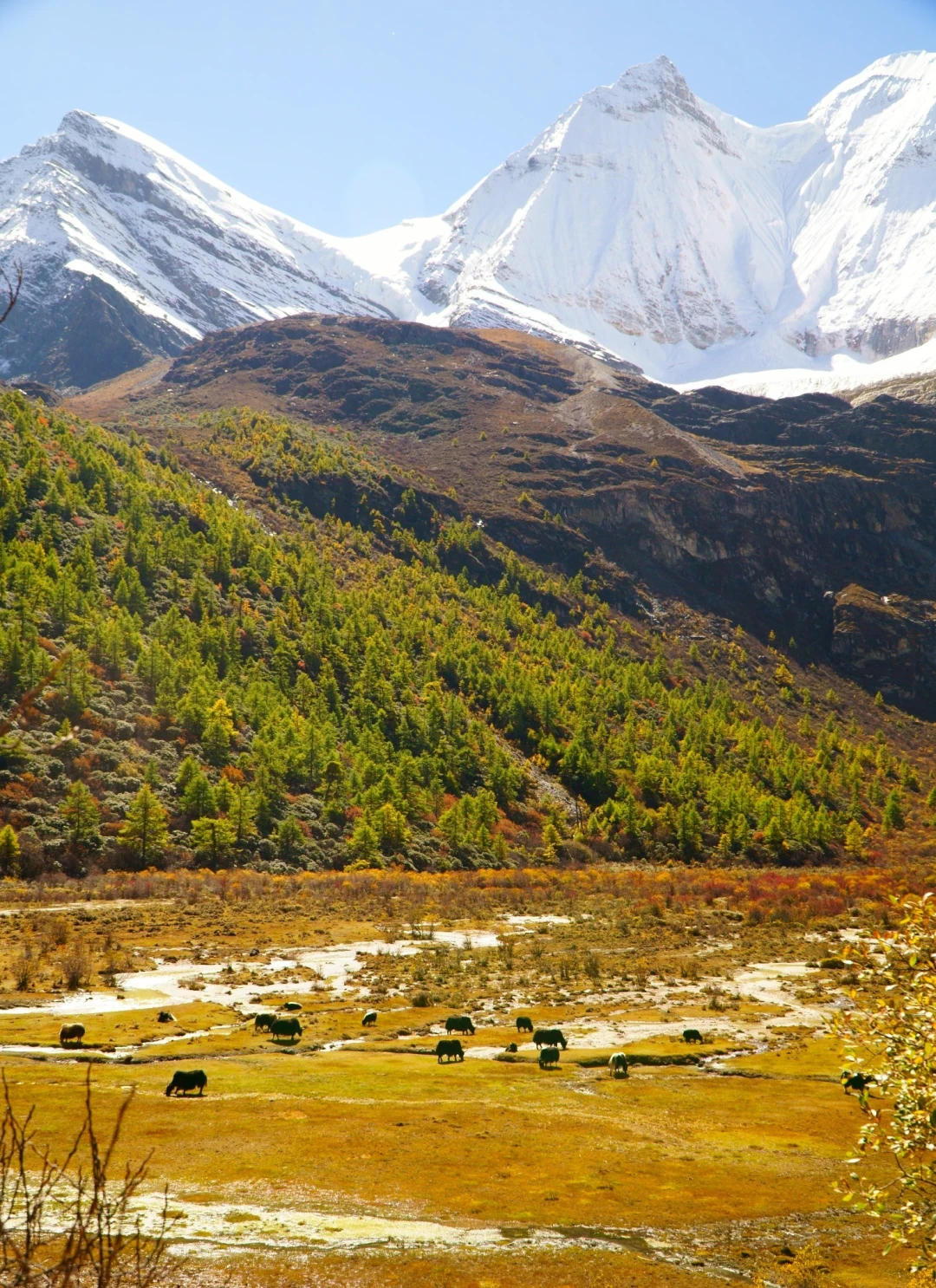
A 6-kilometer walk from Zhubazi to Luorong Pasture, taking about 1.5-2 hours. This is the easiest section, with gentle terrain and stunning views of the three sacred mountains. The pasture itself is a golden meadow in autumn, dotted with yaks and wildflowers.
Option B: The Killer Hike to Milk Lake (牛奶海) and Five-Color Lake (五色海)
From Luorong Pasture, you can continue to the two most famous alpine lakes. But here's the brutal truth: it's a 5-kilometer hike from the pasture, with an elevation gain of 500 meters, all at over 4,000 meters altitude. The trail is rocky, steep, and often covered in mud or snow.
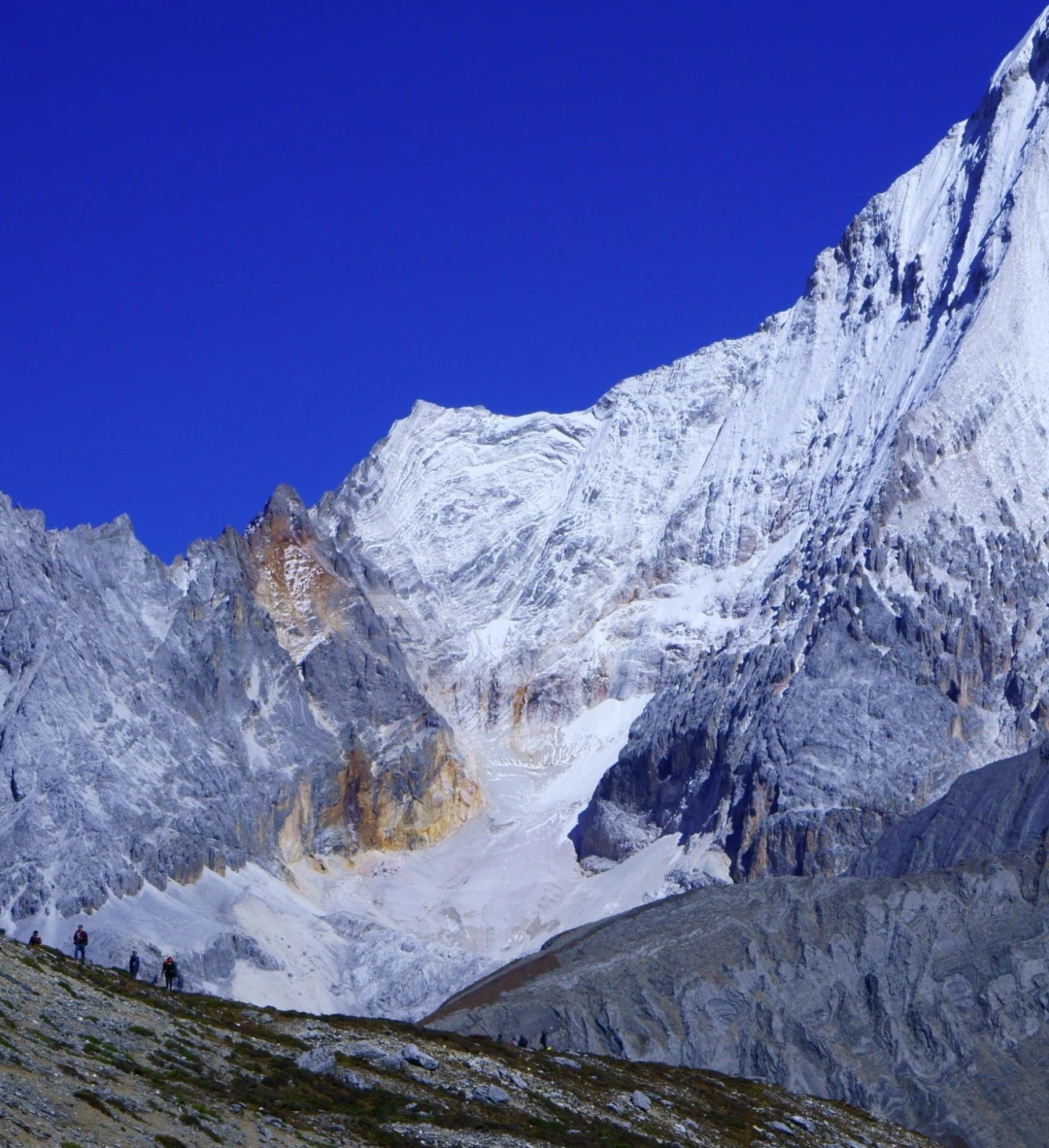
I made it to Milk Lake (elevation 4,600 meters) after 3 hours of grueling hiking. The view was absolutely worth it—a turquoise gem nestled beneath the sheer face of Jambeyang peak. But the final ascent to Five-Color Lake (4,700 meters) nearly broke me. Every step felt like I was carrying a mountain on my back.
Survival tips for the big hike: - Start early (before 8:00 AM) to avoid afternoon thunderstorms - Bring at least 2 oxygen canisters per person - Take frequent breaks—every 20-30 minutes - Don't push yourself if you feel dizzy or nauseous - Consider hiring a horse for the first 3 kilometers (but the last 2 kilometers must be walked)
6. The Aftermath: Why It's Exhausting but Worth It
After 8 hours of hiking, I staggered back to the shuttle bus. My legs were jelly, my lungs were burning, and I had a splitting headache from the altitude. But as I looked back at the golden evening light on the snow-capped peaks, I knew it was worth every painful step.
Why it's beautiful: The contrast of azure lakes, golden meadows, and snow-capped peaks is unlike anything else in China. The three sacred mountains—Chenresig (Buddha of Compassion), Chana Dorje (Vajra Holder), and Jambeyang (Buddha of Wisdom)—are genuinely awe-inspiring.
Why it's exhausting: The altitude (3,700-4,700 meters), the steep terrain, the unpredictable weather, and the sheer distance of the hikes (12-15 kilometers total) make this one of the most physically demanding scenic areas in China.
Who should go: Adventure travelers, photographers, and nature lovers who are physically fit and mentally prepared for a challenge.
Who should skip: Those with pre-existing health conditions, people who struggle with altitude, and anyone looking for a relaxing vacation.
7. Frequently Asked Questions (FAQ)
Q1: Is Daocheng Yading suitable for beginners?
A: Not really. The combination of high altitude (3,700-4,700 meters) and long, steep hikes makes it challenging even for experienced hikers. If you're a beginner, consider a shorter visit to the Luorong Pasture area only, and skip the lakes.
Q2: What's the best time to visit Daocheng Yading?
A: The best time is October for autumn colors (golden meadows, clear skies) and May-June for spring flowers. July-August is the rainy season, while November-March is extremely cold and snowy. Avoid the Chinese National Day holiday (October 1-7) when crowds are insane.
Q3: Do I need a guide for the hike?
A: Not necessarily. The trails are well-marked, and there are signs in Chinese and English. However, if you're not confident about your navigation skills or want to learn about local culture, hiring a guide is a good idea.
Q4: How much does the trip cost?
A: Budget around 3,000-5,000 RMB per person for a 5-day trip from Chengdu, including transportation, accommodation, meals, and entrance fees (ticket: 146 RMB + shuttle bus: 120 RMB). Flights from major cities add another 1,000-2,000 RMB.
Q5: What should I do if I get altitude sickness?
A: Stop ascending immediately, rest, and use oxygen. Drink plenty of water and take ibuprofen for headaches. If symptoms worsen (vomiting, confusion, difficulty breathing), descend immediately to a lower altitude. The scenic area has a medical station near Zhubazi.
8. Final Verdict: Should You Go?
If you're looking for a comfortable, easy vacation, Daocheng Yading is not for you. But if you're willing to suffer a little (or a lot) for some of the most breathtaking scenery in China, then yes—go. Just go prepared.
My honest rating: - Scenery: 10/10 - Difficulty: 8/10 - Crowds: 6/10 (busy but manageable outside holidays) - Overall value: 9/10
Pro tip: Combine Daocheng Yading with a visit to Litang (the "City of Sky") and Xinduqiao for a complete western Sichuan experience. [Link: Western Sichuan road trip itinerary]
Ready to Plan Your Daocheng Yading Adventure?
Don't let the difficulty scare you away—just prepare properly. Start by booking your flights to Chengdu or directly into Daocheng Yading Airport. Then, choose your accommodation wisely (Shangri-La Town for comfort, Yading Village for convenience). And most importantly, pack that oxygen!
Share your own Daocheng Yading story in the comments below—did you find it as beautiful and exhausting as I did? Or did you discover a hidden gem that made it all worthwhile?
Last updated: October 2023. Prices and conditions may vary. Always check official sources before traveling.
You may also like