The Midlife Crisis That Needs a Solo Trip to Fix! (Longchuanbi Trek + Jiuzhaigou Self-Guided Tour + Chengdu Citywalk)
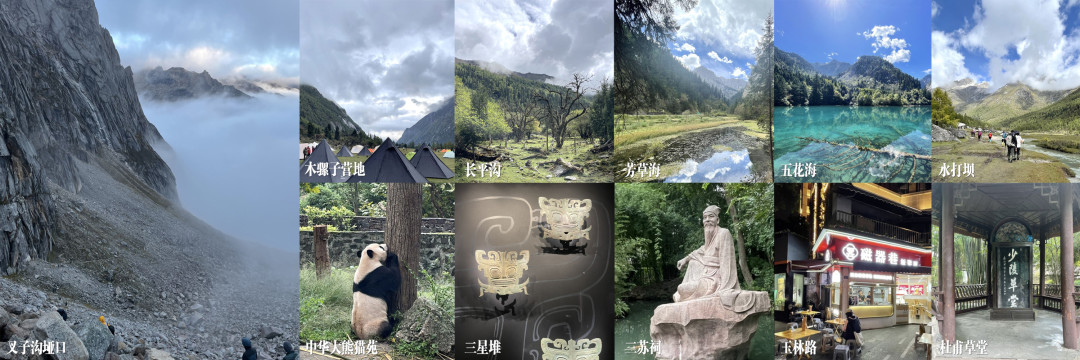
Meta Description: Stuck in the grind? Discover how a 10-day solo trip through Western Sichuan—Longchuanbi trek, Jiuzhaigou self-guided tour, and Chengdu citywalk—can reset your soul. Your midlife adventure starts here.
When Life Crushes You, It's Time to Hit the Road
Have you ever had that moment? Work, family, mortgage, your kids' education—everything comes at you like a tidal wave, and you feel like you're drowning. The breaking point for a middle-aged person isn't usually the dramatic, heart-wrenching sobs you see in movies. It's those few minutes of silence after a late night at the office, sitting in your car, unable to bring yourself to go upstairs.
That's exactly where I was when I fought for this solo trip.
On September 23, 2024, I set off on a journey through Western Sichuan. Ten days, from Chengdu to Jiuzhaigou, then to Mount Siguniang, and finally back to Chengdu. This wasn't just a vacation; it was a pilgrimage to make peace with myself. Destination: Chengdu, Jiuzhaigou, Mount Siguniang. Duration: 10 days. Cost: one person, one determined heart, and a one-way ticket.
If you're searching for a midlife crisis solo trip that actually works, this itinerary is your blueprint.
Why Western Sichuan? A Haven for Lost Middle-Agers
Before leaving, I did my homework. Tiger Leaping Gorge, Yubeng, the Southern Taihang Mountains, Mount Wugong—I'd looked into all the classic hiking routes. But in the end, I chose Western Sichuan. Why? Maybe because it's a place that has gathered many lost souls in their middle years.
The challenges here are no joke: altitude sickness, intense physical demands, high elevations. On paper, it's hardly the ideal choice. But it was precisely that "discomfort" that drew me in. I needed a place to completely step out of my daily comfort zone and face my true self.
My travel goals were simple: complete the Longchuanbi trek (4 days) and a self-guided tour of Jiuzhaigou (2 days), with the remaining time spent wandering Chengdu at your own pace.
[Link: Best solo travel destinations for midlife crisis recovery]
Preparation: How a "Non-Exerciser" Tackles High Altitude
To be honest, I'm someone who never exercises. Two weeks before departure, I started walking 10,000 steps a day and jogging 1 kilometer. Sounds inspiring? It was really just to make sure I wouldn't collapse on the first day of the hike. More importantly, I mentally prepared myself: if it gets too tough, I'll turn back. There's no shame in that.
This decision turned out to be absolutely right. Although the Longchuanbi is classified as a beginner-level route, it's far from "just show up and walk." On the first two days of the trek, I constantly saw companions heading back down on horseback. On the final day, when we crossed the mountain pass, every step felt like negotiating with my own body.
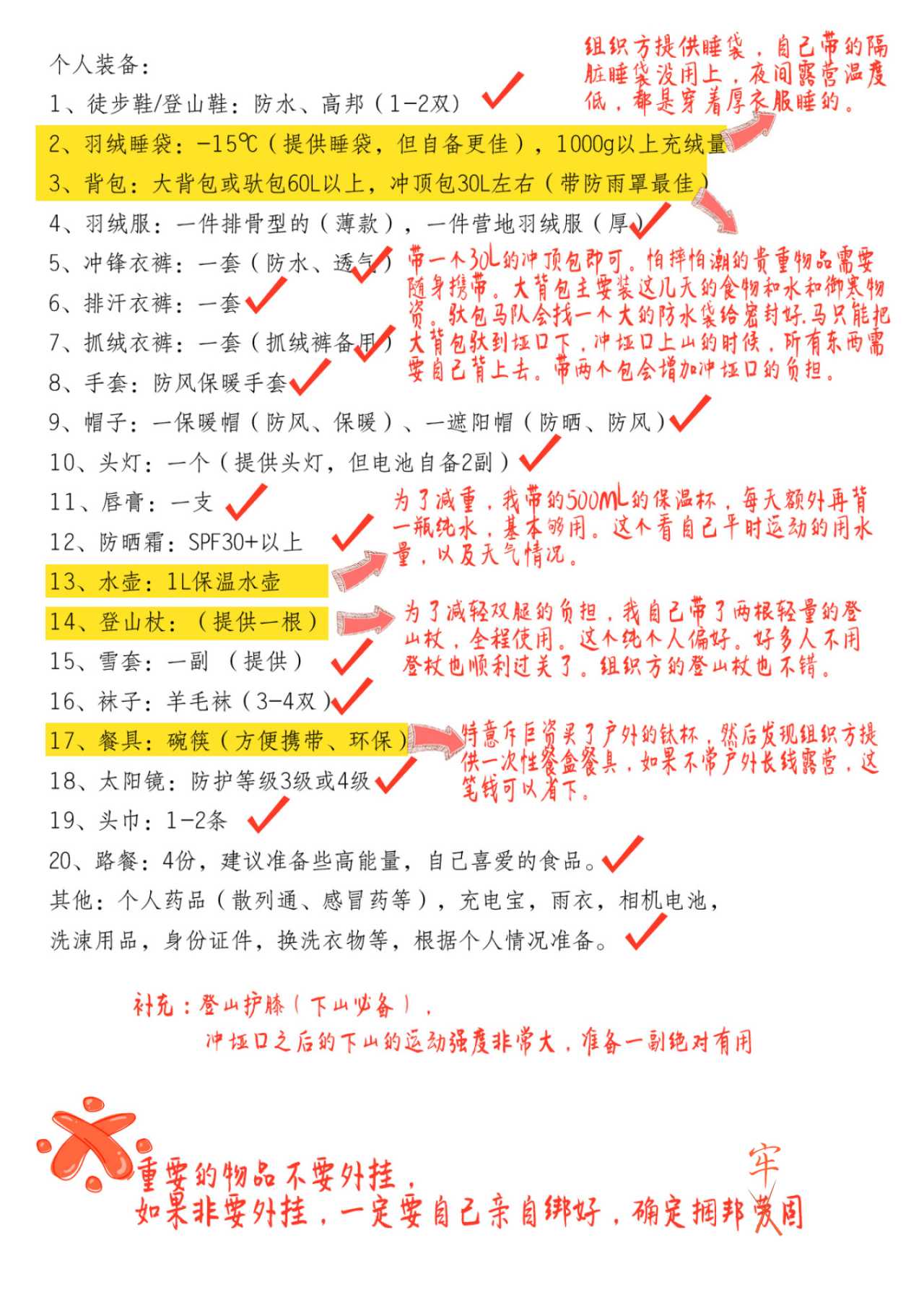
Key prep tips for non-hikers: - Start walking 10,000 steps daily at least 2 weeks before - Practice short jogs to build cardiovascular endurance - Accept that turning back is a valid option—no shame in self-care
The Longchuanbi Trek: Finding Yourself in the Wilderness
Day One: From Boardwalks to Horse Trails
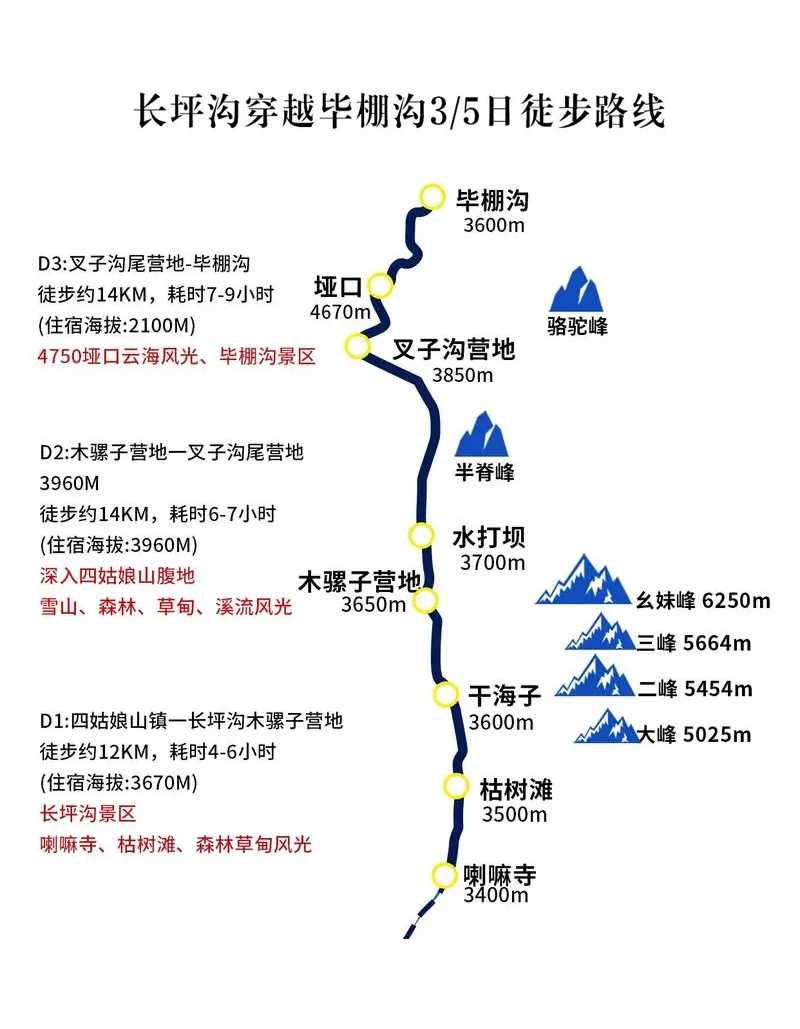
Day one started from Longpinggou, with most of the route on scenic boardwalks. The pine trees along the way were draped in pale green, thread-like growths that the guide called "tree noodles." I initially thought they were parasitic and harmful to the trees, but I later learned they're called "old man's beard" (Usnea), a type of lichen that requires exceptionally clean air. In other words, I was breathing top-tier air for those days.
As the boardwalks gradually faded, we moved onto horse trails. The large packs and camping gear were carried by horses, so we only had to hike light. The "Red Rock Formation" had stones with a reddish surface—not from iron, but from a microorganism called Trentepohlia jolithus, which is rich in astaxanthin, helping it resist the intense UV rays at high altitude.
Around 3 PM, we reached the Munaozi campsite. The guide urged us to set up tents quickly because the weather was about to turn. Sure enough, it started drizzling at 4 PM. The only toilet at the campsite was a pit latrine at the foot of the mountain. There was no running water, only hot water provided by the team. I brushed my teeth with bottled water and wiped my face and feet with wet wipes. My phone had intermittent signal, but after we ventured deeper into the valley the next day, it was completely cut off from the world.
[Link: Essential gear for high-altitude solo trekking]
Day Two: The Real Journey Begins
At dawn, the sky began to clear. Mount Siguniang's "Youngest Sister" peak lifted a corner of its veil, revealing the snowline at its summit. The valley was shrouded in mist, like a scene from a fairy tale. We had breakfast at 6:30 AM and set off again around 7 AM. As noon approached, the weather cleared, and the clouds dispersed. The scenery on day two was even more pristine than the first, and the feeling of isolation was stronger.
Words and photos can't capture the state of mind you experience out there. I think this qualifies as a true journey.
Day Three: Crossing the Mountain Pass, a World Away
The toughest day had arrived. We got up at 1:30 AM and set off at 2 AM. Looking up at the mountain pass, the wind was fierce. I changed into gear suited for the descent. That's when I realized I'd lost my knee pads on the way up. Mixed emotions—a lesson learned: never attach important items to the outside of your pack unless absolutely necessary, and if you do, always double-check they're securely fastened.
On October 1, 2024, at 7:28 AM, I reached the top of the pass.
The moment I crested the ridge, the contrast between the interior and exterior views was visually stunning. My phone, which had been without signal, suddenly buzzed with notifications. The view opened up before me, and reconnecting with the outside world felt like waking up from a dream.
I thought climbing the pass would be the hardest part, but the descent proved equally challenging. Wet, slippery scree slopes, with loose rocks tumbling down from above, and few places to rest. Without my knee pads, I didn't dare stop for long and took very few photos.
Halfway down the mountain, the sun broke through, dispersing the clouds and revealing a rainbow. Despite the bumps and bruises, I safely reached the meeting point at the entrance of Bipenggou at 1 PM. By 4 PM, I was back at the starting point on Tianhe Road in Chengdu.
Jiuzhaigou: Finding Yourself in a Fairy Tale World

Why Jiuzhaigou First?
Before heading to the Longchuanbi trek, I went to Jiuzhaigou first. There were two reasons: first, to acclimatize to the altitude (Jiuzhaigou's average elevation is around 2,500 meters), providing a buffer for the 3,500-meter elevation hike at Mount Siguniang a few days later; second, outdoor activities come with risks. If I got injured, the Jiuzhaigou leg of the trip might have to be canceled.
Transportation: Surprisingly Efficient
From Chengdu East Station, a 2-hour high-speed train ride took me to Huanglong Jiuzhai Station. I booked a bus ticket through the WeChat mini-program "九旅游悦行" (Jiulv Youxing). A few hours before departure, the bus license plate number and driver's phone number are sent via text message. The mini-program also shows the bus's real-time location, making it easy to find. I booked the last bus of the day, scheduled between 8:30 and 9 PM. If you arrive later, you'd have to spend several hundred yuan on a taxi to get near the scenic area.
Day One: 30,000 Steps
To save energy, I bought a VIP minibus ticket (490 RMB per person). Although it cost nearly double the regular ticket plus shuttle bus, it allowed me to avoid the crowds and see all the highlights in a shorter time. For travelers with limited time who want to save their energy, it's worth the money.
Day one's route focused on the Rize Valley, starting from the Primeval Forest and descending through Grass Lake, Swan Lake, Arrow Bamboo Lake, and Panda Lake. My step count exceeded 30,000, and my ankles were pretty tired by evening. So on day two, instead of another marathon walk, I took it easy and savored the water scenery at the spots I'd missed the first day.
Day Two: Quietly Enjoying the Views
On the second day, I just wanted to quietly take in the scenery. I was taken to the Zechawa Valley, on the side of Long Lake, early in the morning. If I had to pick which lake opens up your heart, it's Long Lake. The still water reflects the surrounding peaks like a mirror. No crowds, no noise—just me and the mountains.
The Five-Color Pond nearby is smaller but more vivid, with turquoise and emerald hues that seem almost unreal. I sat there for an hour, watching the light shift across the water. This is the kind of Jiuzhaigou self-guided tour that rewards patience and solitude.
[Link: How to plan a Jiuzhaigou self-guided tour without a guide]
Chengdu Citywalk: Slow Down and Breathe
After the intensity of the Longchuanbi trek and the visual feast of Jiuzhaigou, I needed a day to decompress. My Chengdu citywalk was deliberately unstructured.
I started at Kuanzhai Alley in the morning, sipping soy milk and watching locals play mahjong. Then I wandered to Jinli Ancient Street, where the smell of Sichuan peppercorns and tea hung in the air. I ended the day at People's Park, sitting by the lake and observing the elderly couples dancing and practicing calligraphy on the ground with water brushes.
There's something profoundly grounding about a city that moves at its own pace. No rush, no deadlines, just the hum of everyday life.
FAQ: Your Midlife Solo Trip Questions Answered
Q1: Is the Longchuanbi trek suitable for beginners? Yes, it's classified as a beginner-level route, but don't underestimate it. You need basic fitness and mental preparation. Altitude sickness is real, so acclimatize for at least a day before attempting the pass.
Q2: How much does a 10-day Western Sichuan solo trip cost? Budget around 5,000–8,000 RMB (700–1,100 USD) including transport, accommodation, park fees, and food. The VIP bus ticket for Jiuzhaigou is an extra 490 RMB but saves time and energy.
Q3: Do I need a guide for the Longchuanbi trek? Highly recommended for first-timers. The terrain can be confusing, and weather changes rapidly. A guide also handles logistics like camping gear and permits.
Q4: What's the best time of year for this trip? Late September to early October offers stable weather, fewer crowds, and stunning autumn colors. Avoid July–August (rainy season) and December–February (heavy snow).
Q5: Can I do this trip if I don't speak Chinese? Yes, but it helps to have a translation app. Major scenic areas like Jiuzhaigou have English signage. For the trek, a bilingual guide is advisable.
[Link: Solo travel tips for non-Chinese speakers in Sichuan]
Your Midlife Reset Awaits
This isn't just a travel itinerary—it's a prescription for the soul. The Longchuanbi trek tests your limits, the Jiuzhaigou self-guided tour restores your wonder, and the Chengdu citywalk reminds you to slow down.
You don't need to be a fitness guru or a seasoned hiker. You just need the courage to buy that one-way ticket and the willingness to feel uncomfortable for a few days. The transformation happens in the silence between steps, in the cold air at the pass, and in the quiet lakes that reflect your own face back at you.
Ready to fix your midlife crisis the right way? [Book your Western Sichuan solo trip today] and start writing your own story.
P.S. Pack extra knee pads. Trust me on this one.


