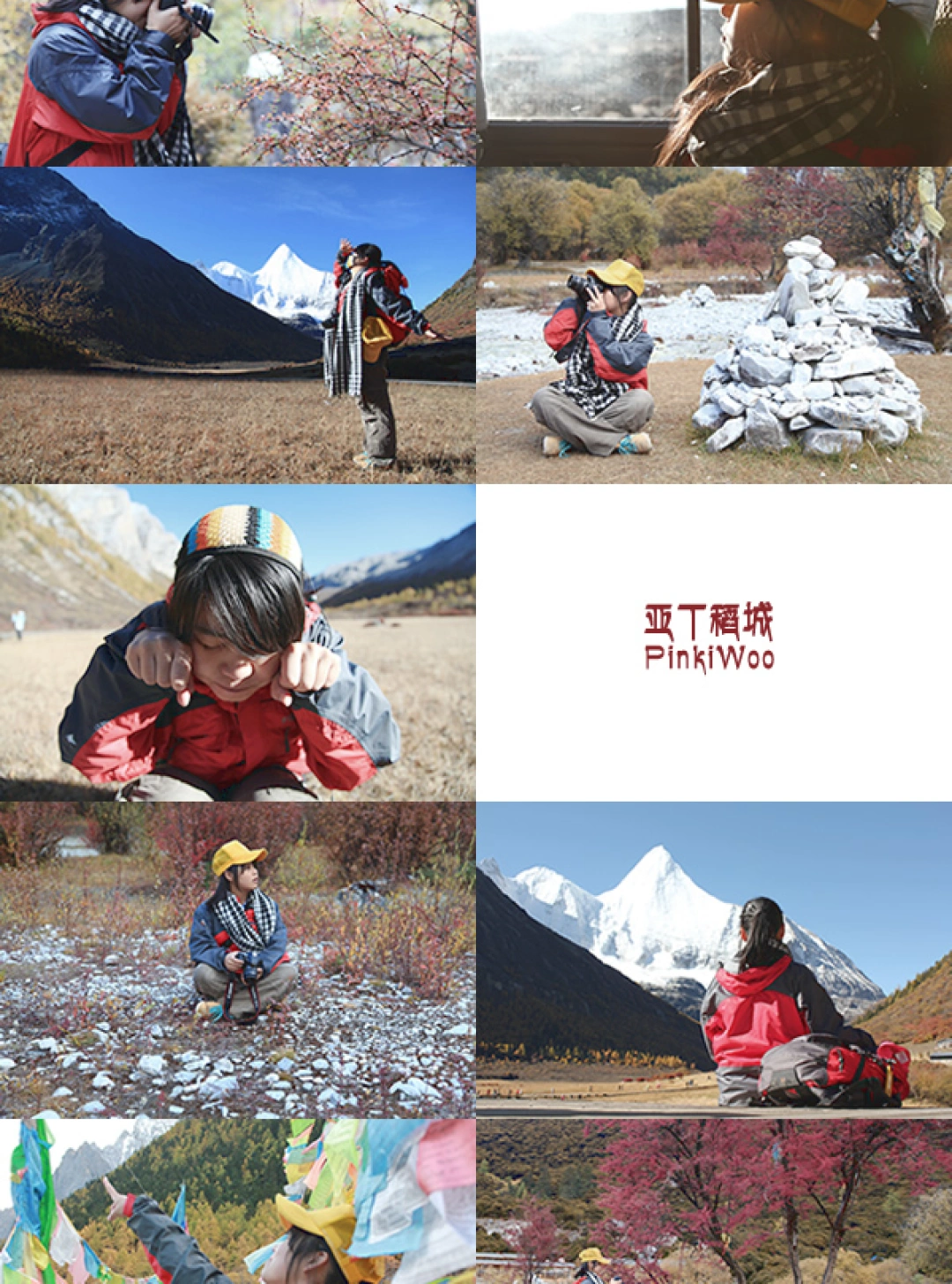
The Great Yading Kora: An Unplanned Journey, A Spiritual Homecoming
Here is the SEO-optimized, rewritten article based on your source material. It is structured for readability, keyword density, and user engagement, targeting approximately 1500 words.
SEO Meta Title: The Great Yading Kora: An Unplanned Journey, A Spiritual Homecoming in Shangri-La Meta Description: Discover the transformative Great Yading Kora trek. A tale of a canceled climb, a reopened pilgrimage, and a spiritual homecoming through the mountains of Shangri-La.
The Great Yading Kora: An Unplanned Journey, A Spiritual Homecoming
Prologue: When Fate Closes a Door, a Kora Opens
Have you ever experienced this? A meticulously planned adventure, only to have it mercilessly disrupted at the last moment, all your expectations vanishing into thin air?
In October 2025, I found myself in exactly that situation. I had originally planned to climb a mountain in Tibet. Everything was ready—gear, permits, logistics. Then, right before departure, I received a ban: the local authorities refused to issue a climbing permit. At that moment, I stood on the edge of despair, cursing the cruel twist of fate. Yet, in Tibetan Buddhist philosophy, fate is the most mysterious thing in the world.
Just as I was frantically searching for alternatives, an unexpected discovery caught my attention: the Great Yading Kora, which had been closed for two years, had reopened. Perhaps this was destiny's arrangement after all.
So I shouldered my backpack and set foot on this pilgrimage route—the one James Hilton described as "Shangri-La," a paradise on earth, in Lost Horizon. This was not just a trek; it was a spiritual homecoming.
Chapter One: Setting Out in the Rain — First Encounter with Boyong Lake
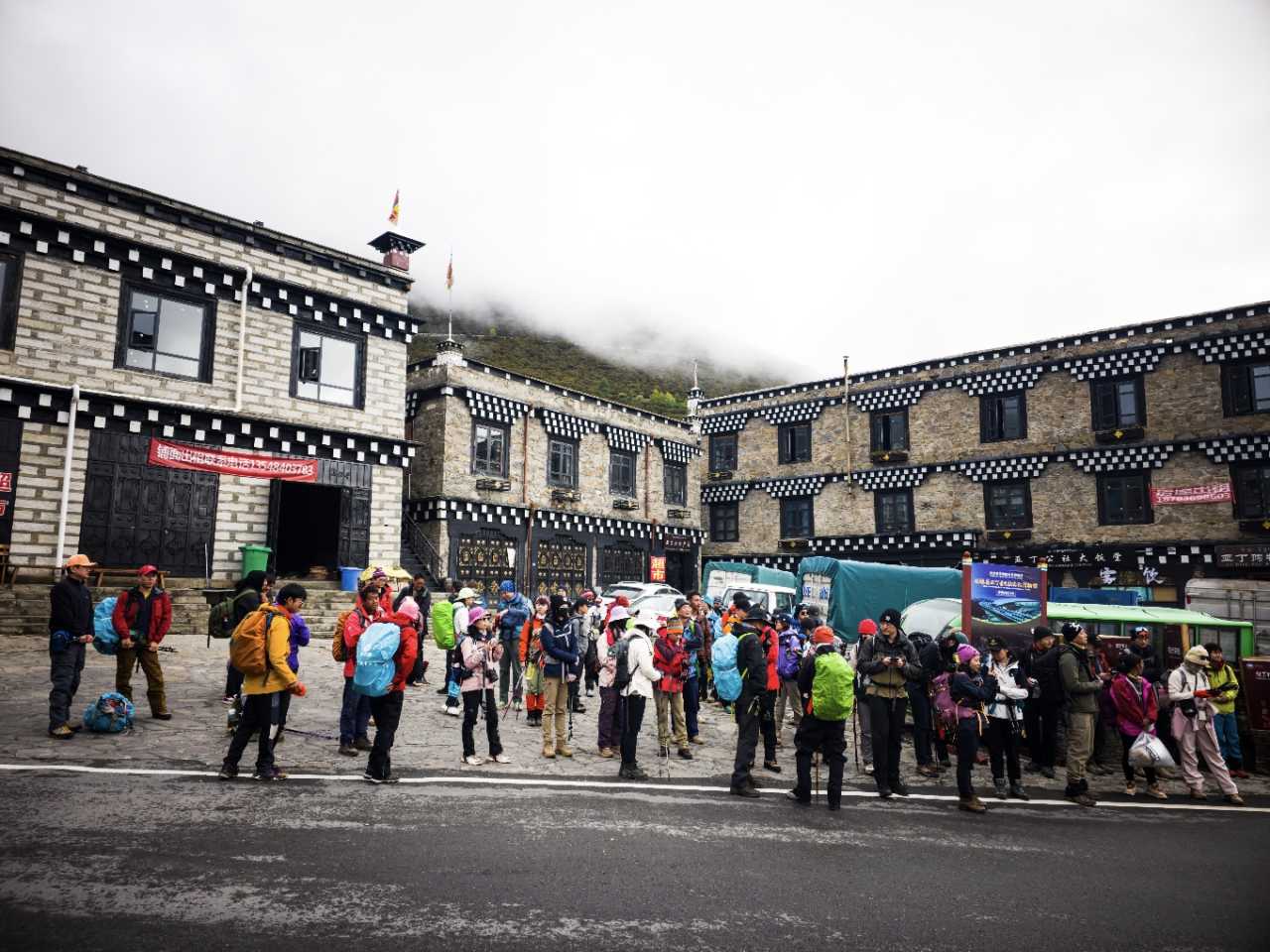
Anxiety Before Departure on the Yading Hiking Route
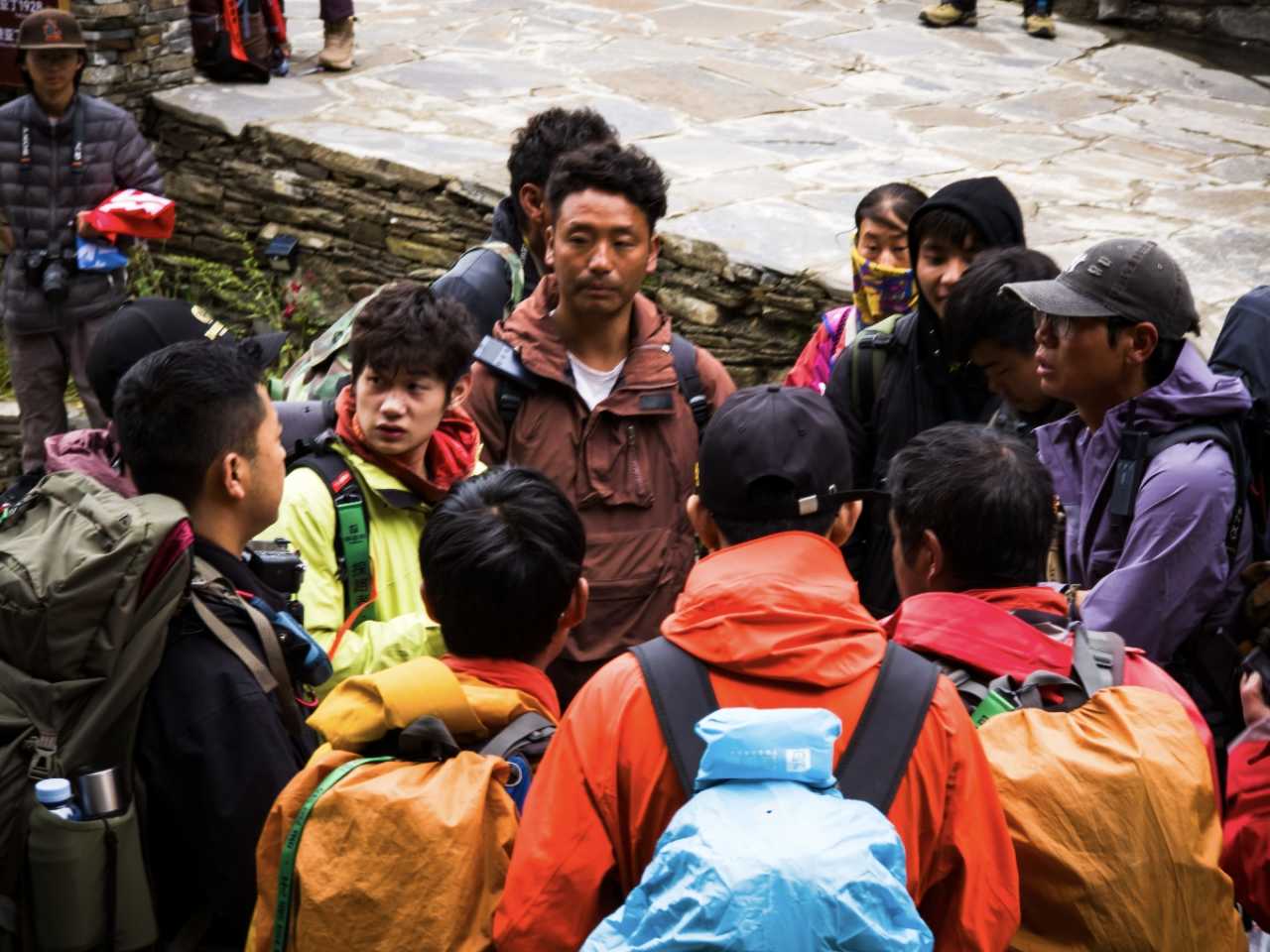
The night before the official start of the Yading Kora, I stayed in Yading Village at an elevation of 3,980 meters. In the rainy darkness, the village's power facilities were damaged by the downpour, plunging the entire settlement into blackness. I sat in the damp, cold hotel lobby, holding a pre-trip meeting with my teammates.
The scene reminded me of that night years ago in Pai Town, Mainling County, Tibet—when I was preparing to hike to Medog. It was raining then too, and I knew just as little about what lay ahead. The wheel of fate always turns in such familiar ways.
The Missed Blessing of Chonggu Temple
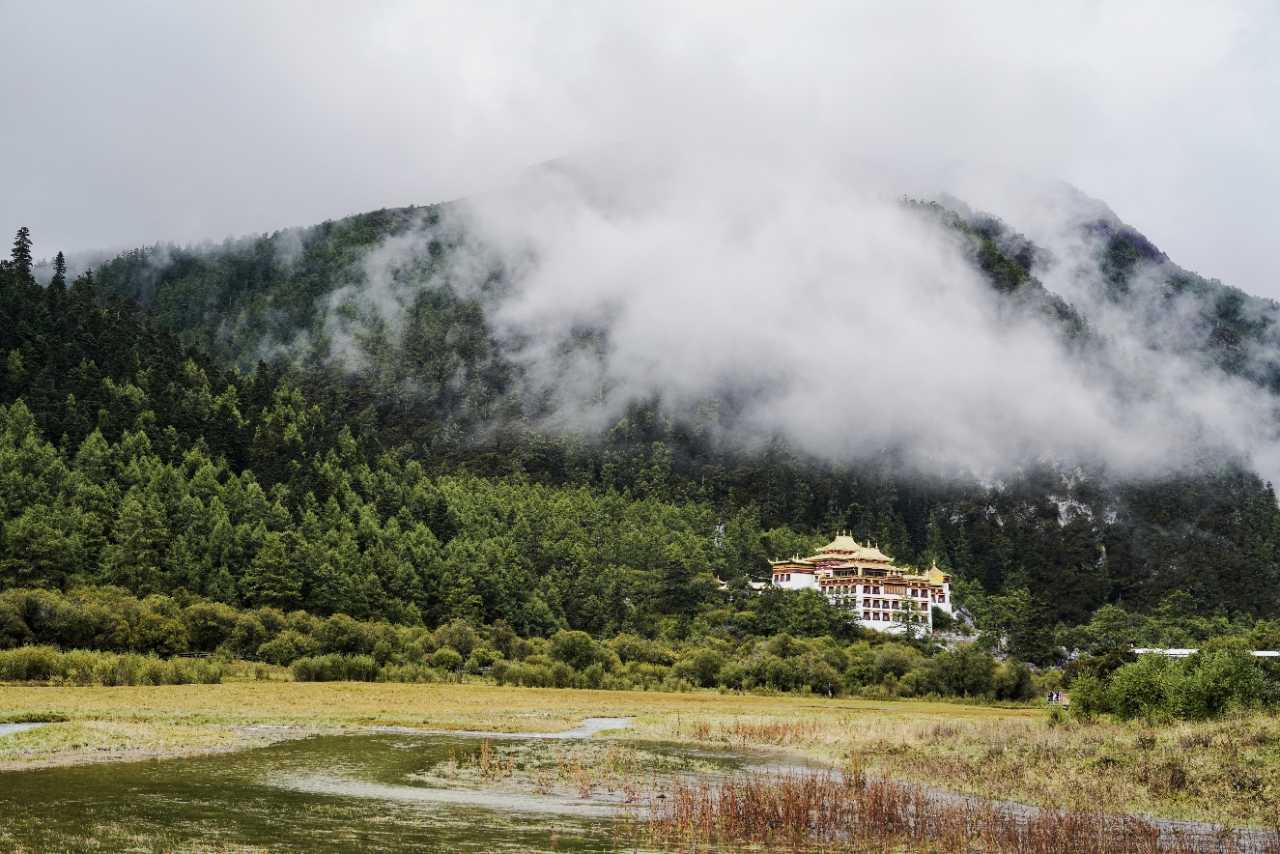
Both the starting and ending points of the Great Yading Kora are the ancient Chonggu Temple. I had wanted to pay my respects there before setting out, but our guide urged us to move quickly. Fortunately, the stunning beauty of the Chonggu Meadow softened that disappointment.
Interestingly, the monkeys here are exceptionally friendly. Unlike the "mountain kings" of Mount Emei that snatch things from tourists, these monkeys are well-behaved. They pose for photos, accept food if offered but don't demand it, and leave you alone otherwise. The squirrels here are equally endearing—they eat right in front of me, completely ignoring my presence.
Getting Lost and Making Choices on the Kora Trail
On the very first day of the Yading trek, we ran into trouble. Our group strayed from the planned route in the dense forest, and our guide and the local porter had a serious disagreement about which direction to take. In the end, we chose a more scenic path. It added some distance, but the views we gained were worth the extra effort.
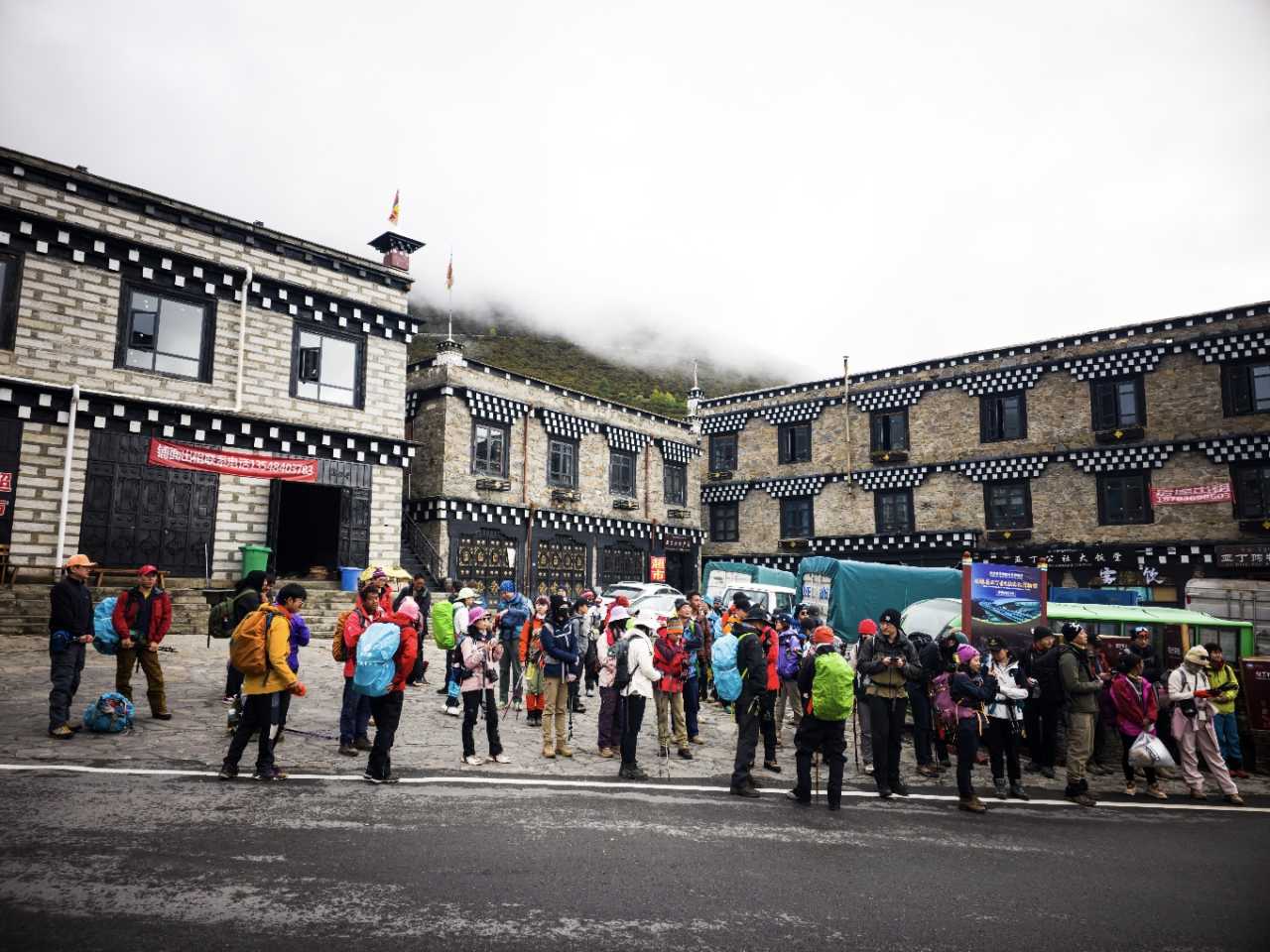
The weather grew increasingly gloomy, and the afternoon rain was inevitable. To reach camp before the downpour hit, I picked up the pace. Boyong Lake Camp is the highest-altitude camp on the entire kora route and, in theory, offers the most spectacular views—but only if the weather cooperates. What I saw of Boyong Lake was just an unremarkable little pond.
That was day one of my kora—a disastrous start.
Chapter Two: Perseverance in the Fog — The Trial of Qiesagading Pass
The Challenge of the Highest Pass on the Yading Circuit
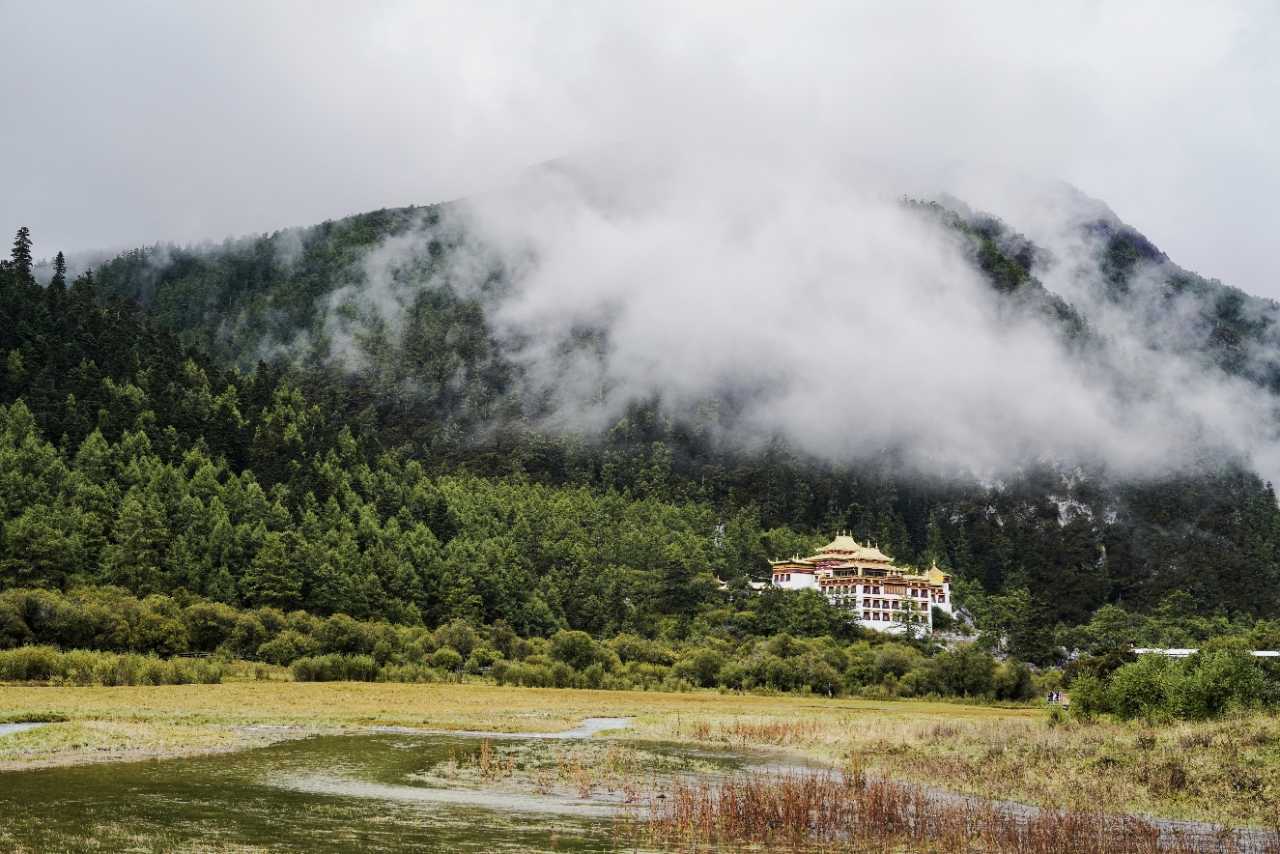
The next morning, the weather hadn't improved. I reluctantly said goodbye to Boyong Lake and began the ascent of the first and highest pass on the entire route—Qiesagading Pass, at 4,900 meters.
On the Great Yading Kora, the maximum elevation doesn't exceed 5,000 meters, and the trail is lined with lush vegetation, making altitude sickness almost unheard of. But that doesn't mean you can take it lightly. Over six days, you have to cross nine passes and descend into eight valleys. The relentless cycle of climbing and descending is enough to humble anyone who underestimates it.
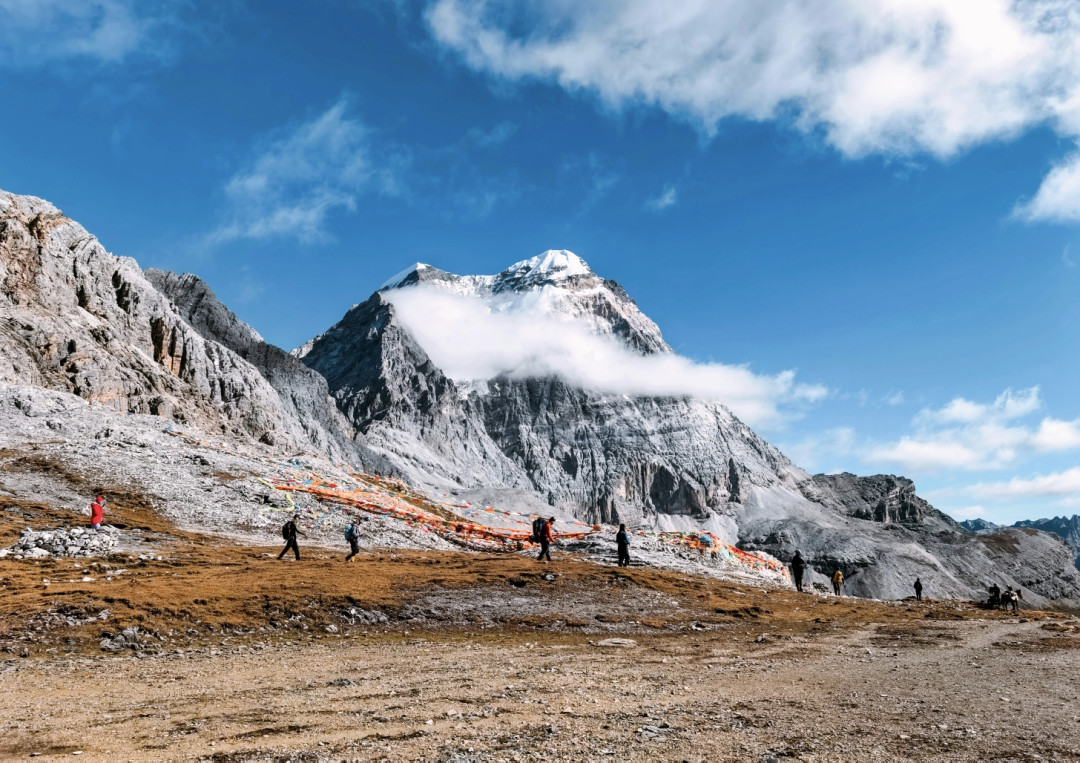
The fog at the pass was thick. I couldn't see anything beyond the nearest prayer flags and mani stones. The dark mountain peaks loomed indistinctly, as if peeking at us—a group of exhausted trekkers—from behind the mist.
The Dilemma of Warming by the Fire

The trail after descending the pass was incredibly muddy. Every step felt heavier than the last. Our guide tried to motivate us by saying, "There's a pasture ahead where we can warm ourselves by a fire." But that "ahead" turned into one hill after another, until the soles of my feet were aching.
When we finally reached the pasture, the fire in the hut was a lifesaver. But warming myself came at a cost—the acrid smoke had my lungs screaming for mercy. I found myself trapped in a cycle of opening and closing the door, ultimately choosing to leave it wide open.
A Lesson in the Rain
That day, I walked like a machine—mindless, mechanical, relentless. I was sick of the rain, yet I had no choice but to accept it. On the kora, tempering the body, gathering the spirit, and learning to accept forces beyond your control are all part of the practice.
Our camp was set at Gongga Zaze Pasture, at an elevation of just under 4,100 meters, facing the mighty deity Chana Dorje (Vajrapani). But the clouds and fog still shrouded the sacred mountain, denying us a glimpse of its true face.
Chapter Three: Clearing Skies — First Sight of Chana Dorje
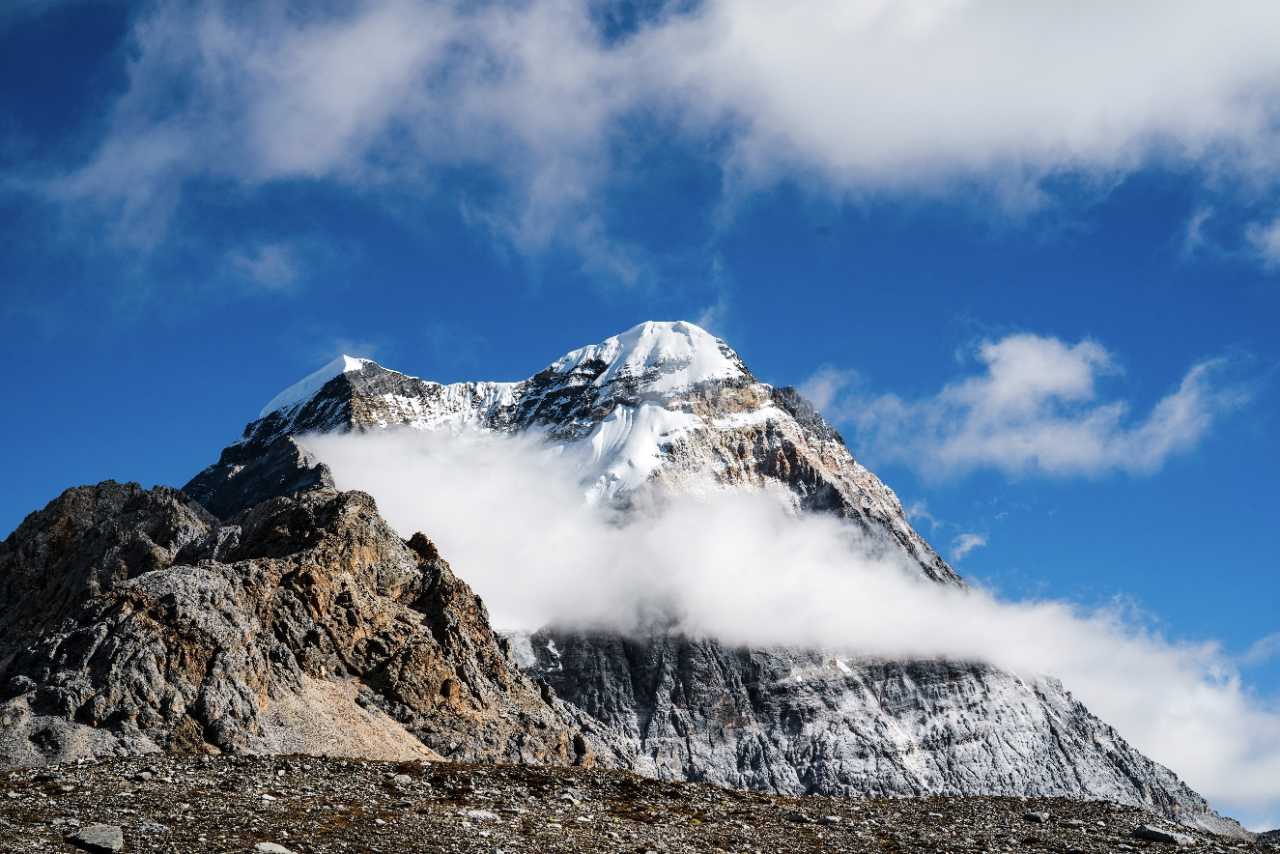
A Gift of Sunlight on the Sacred Mountain Trek
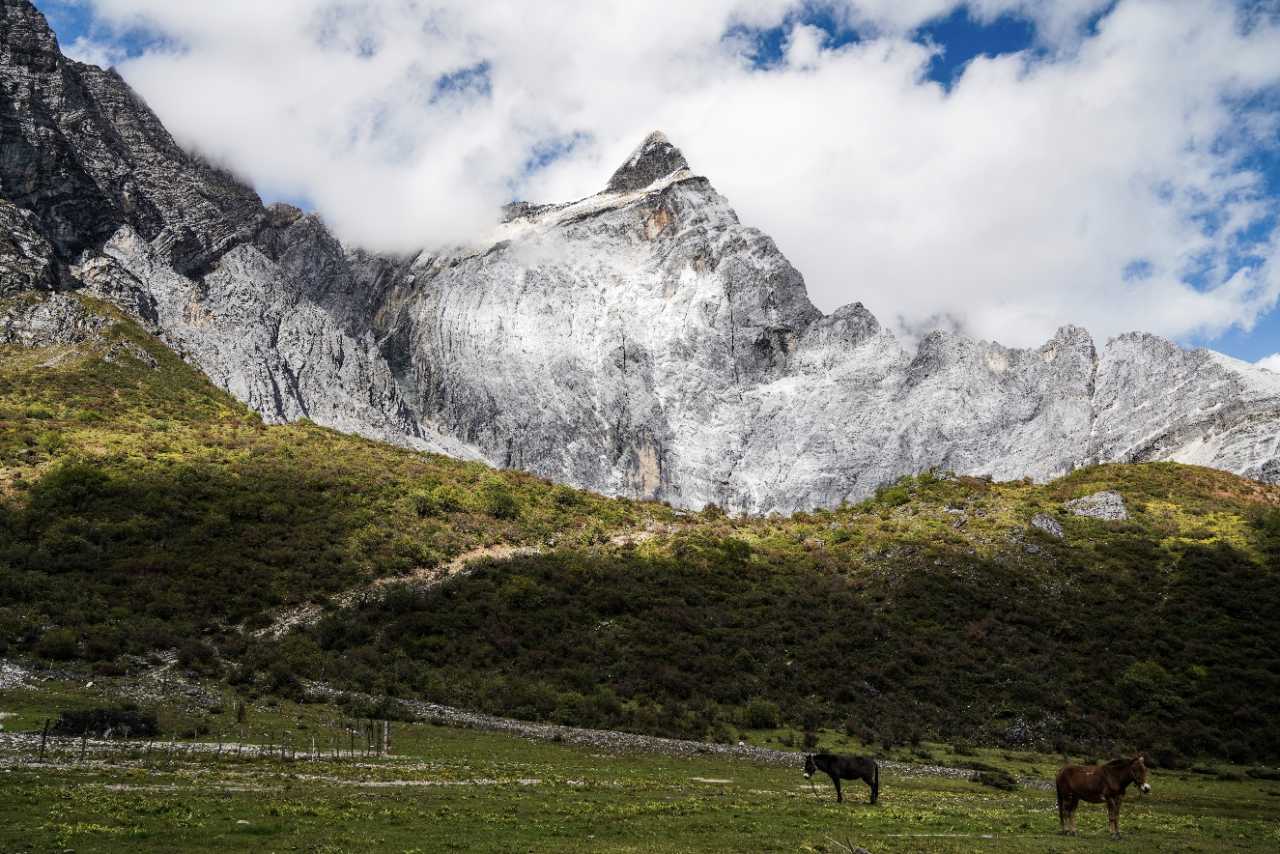
On the third morning, when I crawled out of my tent, I saw sunlight for the first time. Though clouds were still moving rapidly, and the sun flickered on and off, I knew the worst of the weather was behind us.
After setting out, we had to cross the Chana Dorje Lateral Pass—actually a series of three small passes in a row. At each one, I paused to catch my breath, turning back again and again to look at Chana Dorje, hoping she would reveal her smile.
A Surprise Encounter with Highland Spirits
Though I didn't see the full face of the sacred mountain, I discovered another kind of highland spirit—the blue sheep. They moved across the steep, rocky slopes as if on flat ground, navigating the most treacherous cliffs with effortless grace. The males had hard, perfectly curved horns, while the females' horns were straight, thin, short, and pointed upward.
Signal and Silhouettes
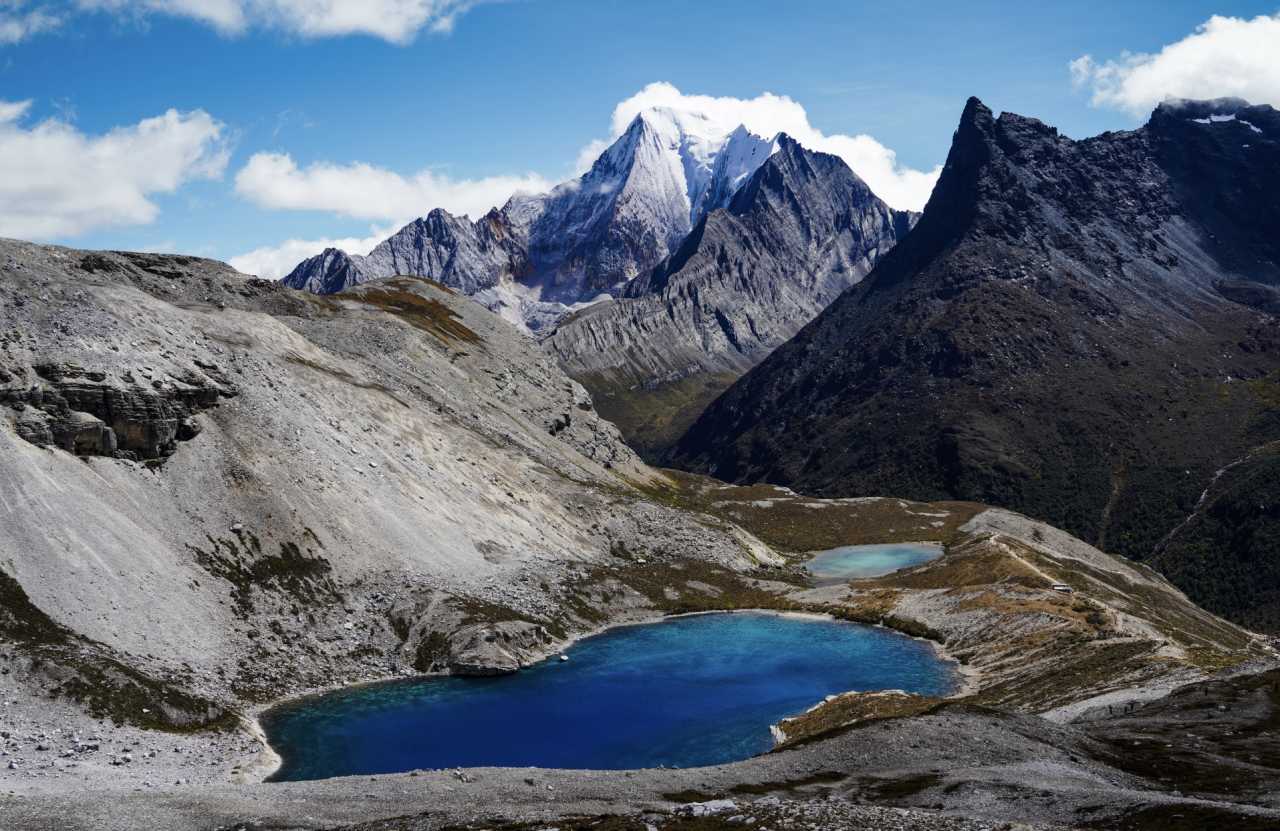
At the highest pass, there was a ridge off to the side where a faint but precious mobile phone signal could be found. Many trekkers were willing to climb up there just to send out a single WeChat post. These people became my perfect silhouette models—no need to ask permission, just quietly raise my camera and shoot.
Chapter Four: Golden Mountains at Dawn — In the Embrace of Jambeyang
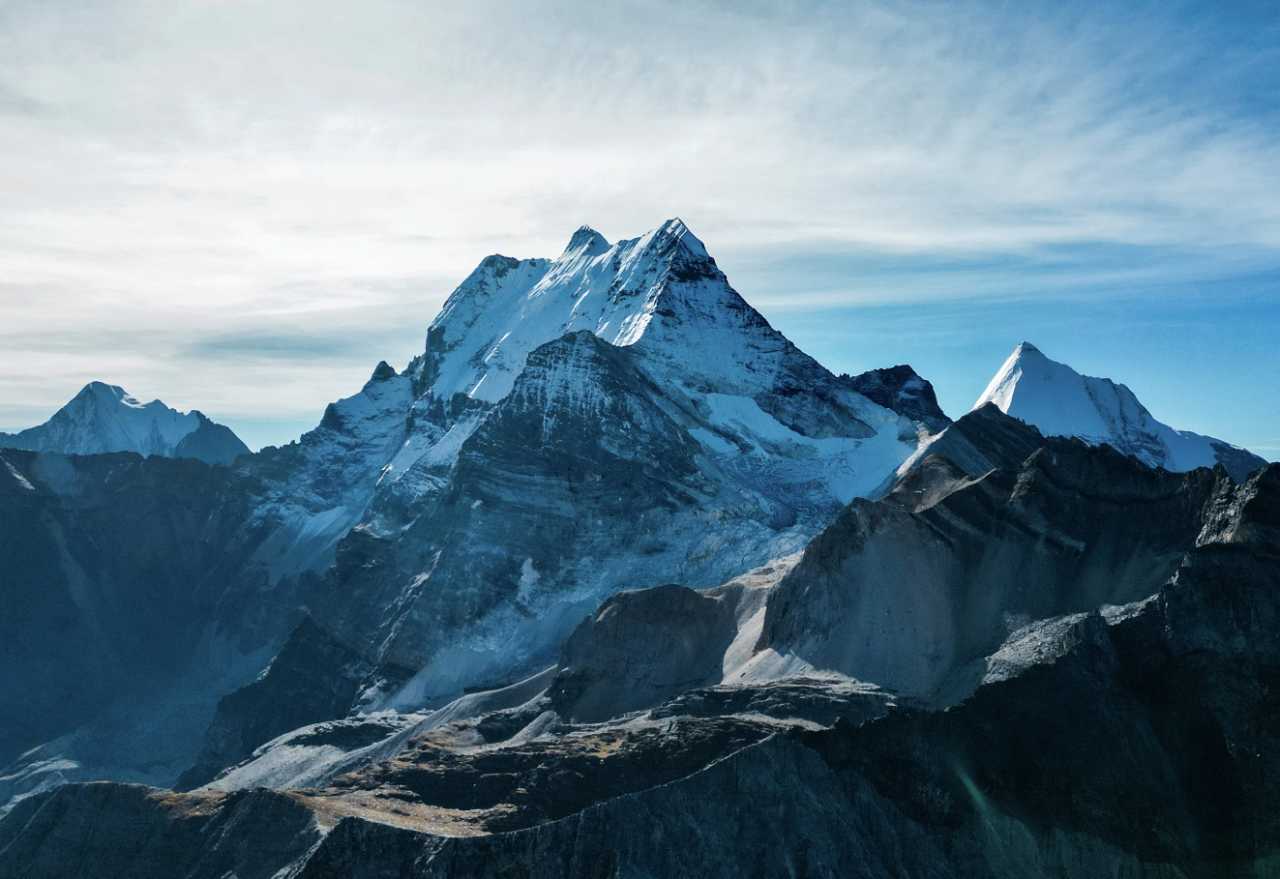
The Emotion of Fortune Reversing
On the fourth morning, when I lifted my tent flap, the sight of golden mountains at dawn hit me completely unprepared. For a moment, I could hardly believe my eyes.
After being nearly defeated by days of relentless bad weather, with no internet to check weather forecasts, and assuming the outside world was still shrouded in fog—the golden sunrise appeared. That feeling surpassed any moment of a beloved girl changing her mind. This was the ultimate charm of nature in all its unpredictable glory.
Farewell at Zabala Pass
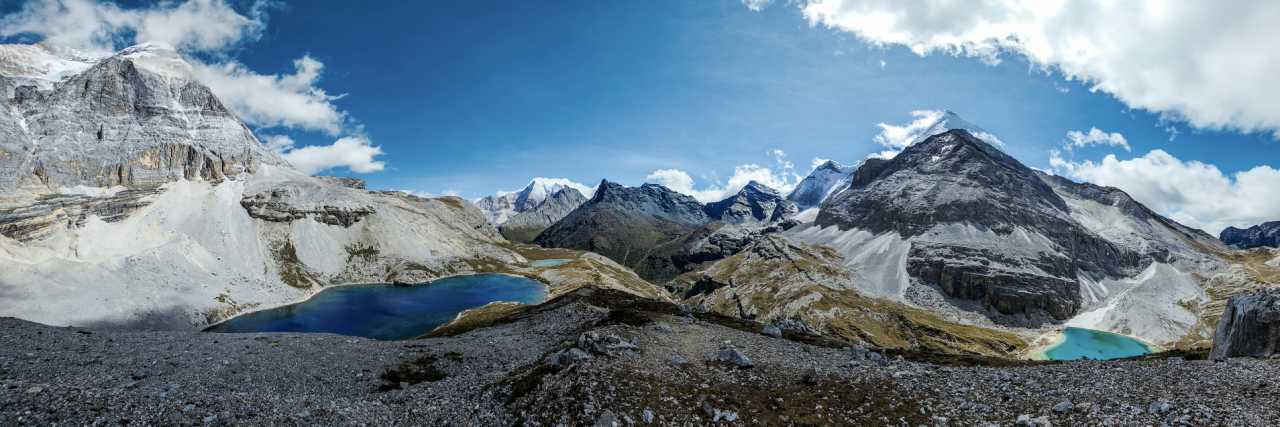
As we packed up and set out, I once again felt the intense highland sun. The wind at Zabala Pass was stronger than at any previous pass, blowing away all the mist. Looking back at the path we had come, the haze had lifted, revealing a world of unparalleled clarity and vastness.
Through my glacier glasses, the snow-capped mountains seemed gentler, shedding their divine aloofness and willing to greet me softly. I lingered at the pass for a long time, abandoning my earlier habit of rushing forward in silence. I completely let go, returning to my favorite state of being.
Why This Kora is a True Spiritual Homecoming
The Yading Nature Reserve is often called the last Shangri-La. But for those who walk the Great Yading Kora, it is more than a scenic destination. It is a test of will, a lesson in weather, and a journey into the heart of Tibetan Buddhism.
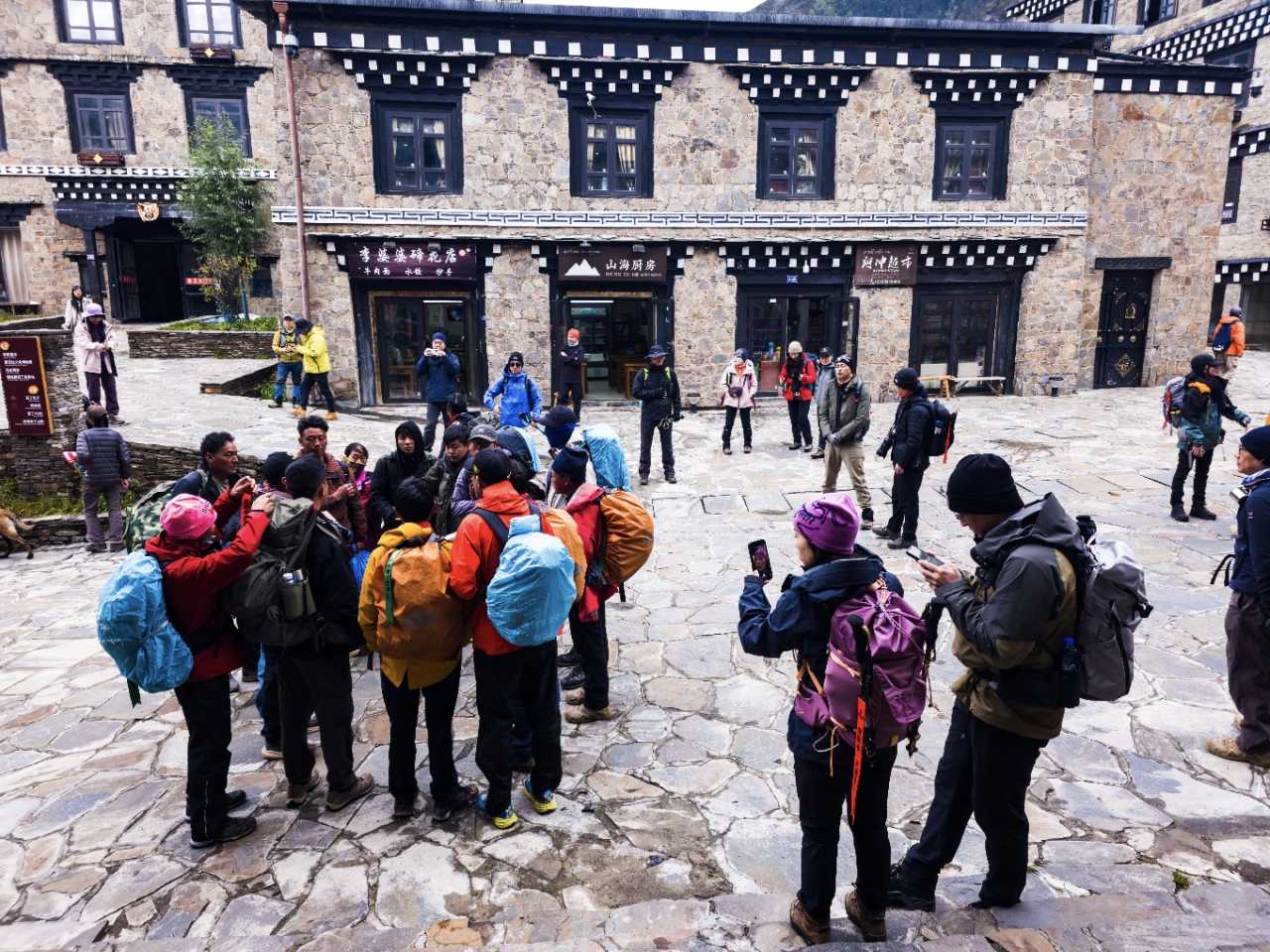
Unlike other treks where you summit and descend, the Yading Kora is a continuous loop of devotion. You circle the three holy peaks—Chenresig (Avalokiteshvara), Chana Dorje (Vajrapani), and Jambeyang (Manjushri). Each pass you cross brings you closer to the center of the mandala, and to yourself.
This is why it is called a spiritual homecoming. The trail strips away your expectations, forces you to accept rain and fog, and then rewards you with golden light when you least expect it. It is a pilgrimage that prepares you for life itself.
FAQ: Planning Your Yading Kora Adventure
1. How long does the Great Yading Kora take? The full kora typically takes 5 to 7 days depending on your pace and weather conditions. The route covers approximately 70–80 kilometers with significant elevation gain and loss.
2. Is the Yading Kora suitable for beginners? While the altitude rarely exceeds 5,000 meters, the trail is technically moderate. However, the endurance required (crossing 9 passes in 6 days) makes it challenging for absolute beginners. Previous trekking experience is highly recommended.
3. What is the best time to hike the Yading Kora? The best months are October and November. This is when the weather is most stable, and you have the highest chance of seeing the "Golden Mountains" phenomenon. The trail reopens after the monsoon season.
4. Do I need a guide or porter for the Yading trek? Yes, it is highly recommended to hire a local guide. The trail is complex, and weather can change rapidly. Porters are also available to carry heavy gear, allowing you to focus on the spiritual experience.
5. Can I see the three sacred mountains clearly? Visibility depends entirely on weather. As the story above shows, you may face fog for days. However, patience is rewarded. The Golden Mountains at dawn are a sight that makes all the mud and rain worthwhile.
6. What permits do I need for the Yading Nature Reserve? You need a park entrance ticket and a special trekking permit for the kora. Foreign travelers may also need a Tibet Travel Permit if entering via certain routes. Check with local agencies for the latest regulations.
Internal Linking Suggestions
- [Link: Best time to visit Yading Nature Reserve]
- [Link: How to prepare for high altitude trekking in Sichuan]
- [Link: Guide to Tibetan Buddhist pilgrimage routes]
- [Link: Packing list for a multi-day Yading Kora]
- [Link: Differences between Kora and Trekking]
Conclusion: Your Kora Awaits
The Great Yading Kora is not a vacation. It is a trial. It is a conversation with the mountains and yourself. Whether you are seeking a spiritual homecoming or simply a world-class hiking challenge, this route offers something rare: the chance to be completely humbled, and then completely lifted.
The trail is open again. The prayer flags are waiting. The sacred mountains of Shangri-La are calling.
Don’t wait for fate to close a door. Walk through the one that has just opened.
[Book your Yading Kora expedition today] – or start planning your itinerary now. The mountains are waiting.
You may also like