The Complete 3-Day Leshan & Mount Emei Hiking Guide: A Deep Dialogue with Landscapes and Monkeys
Meta Description: Plan your perfect Sichuan adventure with our comprehensive 3-day Leshan and Mount Emei hiking guide. Includes monkey safety tips, route maps, accommodation advice, and insider tricks to avoid crowds.
Introduction: Why Leshan and Mount Emei Should Be on Your Bucket List
During the Mid-Autumn Festival and National Day holidays, I could have done what many people do—stitch together a long vacation and head somewhere far away for a proper adventure. But there's always a hint of laziness in us all. I only took a few days off around the Mid-Autumn Festival, pieced together about eight or nine days, and set off on the Sichuan trip I had been dreaming about. After wandering around Chengdu for a day, I felt something was missing. Then a thought struck me: go to Leshan to see the Giant Buddha, then hike up Mount Emei, measuring this spiritual land with my own two feet.
Before leaving, I scoured the internet for guides, but they all felt scattered and unsystematic. So I decided to record my actual itinerary, the pitfalls I encountered, and all the details only a firsthand traveler would know. If you're planning a trip to Leshan and Mount Emei, this guide might save you a lot of detours.
[Link: Best time to visit Sichuan for hiking]
Pre-Trip Preparation: Mindset and Gear for Your Mount Emei Hiking Adventure
Before setting out, there are a few things worth thinking through. First, hiking Mount Emei is no casual stroll. The entire route is about 60 kilometers (37 miles) of stone steps—a serious test for your knees and willpower. I recommend bringing a comfortable pair of hiking boots, a trekking pole (or buy a bamboo stick at the foot of the mountain for just a few yuan—it's a lifesaver), a headlamp or flashlight (useful for getting up early to watch the sunrise), and enough water and dry food. Prices on the mountain are steep, especially the higher you go—a bottle of water can cost over 10 yuan.
Also, the monkeys on Mount Emei are notorious "bandits." I'll go into detail later. In short: don't hold food in your hands, don't wear bright colors, and absolutely don't make eye contact with them—they see it as a challenge.
Essential packing list for Leshan and Mount Emei: - Hiking boots with good ankle support - Trekking pole or bamboo stick (buy at the base) - Headlamp or flashlight - Knee braces (stone steps are brutal on joints) - Water bottle (refill at guesthouses to save money) - High-energy snacks (nuts, chocolate, energy bars) - Light rain jacket (weather changes fast above 2000m) - Sunscreen and hat (UV is intense at high altitude)
[Link: Best hiking gear for Chinese mountains]
Day 1: From Chengdu to Leshan, Then to the Foot of Mount Emei
How to Get from Chengdu to Leshan: Bus vs. Train
Around 7 a.m., the Xinnanmen Bus Station in Chengdu was already bustling. Buses to Leshan run on a rolling schedule, tickets cost 45 yuan, and the ride takes about two hours. I caught the 8 a.m. bus and arrived at Leshan's Xiaoba Bus Station right at 10 a.m. Outside the window, the city's noise gradually gave way to distant mountains and river views, and my mood lifted with the scenery.
Alternative option: High-speed trains from Chengdu East Station to Leshan take just 1 hour and cost around 54 yuan. However, they arrive at Leshan Railway Station, which is farther from the Giant Buddha than Xiaoba Bus Station. Factor in an extra 30 minutes by local bus.
Leshan Giant Buddha: 90 Yuan Well Spent
From Xiaoba Bus Station, follow the signs for about a minute, and you'll find the starting point of Bus No. 13. The fare is 1 yuan, and the ride takes about 40 minutes—get off at Dafosi (Giant Buddha Temple) Station. A word of caution: when you get off the long-distance bus, people might enthusiastically call out, "Take Bus No. 13 to the Giant Buddha!" But those could be "knockoff" buses with who-knows-what tricks. Follow the signs at the station, and the real Bus No. 13 will be waiting for you.
The ticket for the Leshan Giant Buddha is 90 yuan, which includes the Giant Buddha itself, the Mahao Cliff Tomb Museum, and Wuyou Temple. If you buy a combo ticket with the Eastern Buddhist Capital, it's 160 yuan. Personally, I think the 90-yuan ticket is enough.
Recommended Leshan Giant Buddha route: 1. See the Giant Buddha – Feel the awe of that colossal statue carved into the cliff. Allow 1-2 hours for the queue to descend the plank road. 2. Dongpo Tower (Dongpo Lou) – Imagine Su Dongpo composing poetry in this very spot. 3. Mahao Cliff Tomb Museum – Learn about ancient burial culture carved into the cliffs. 4. Wuyou Temple – Cross a rainbow bridge and climb the steps to this peaceful monastery. 5. Return to main road – Take the mountain path on your right-hand side downhill, naturally veering left, cross a large bridge, and you'll be back on the main road. The Bus No. 13 stop is diagonally across the road to the left.
[Link: Leshan Giant Buddha history and architecture]
Getting from Leshan to Mount Emei: Timing Your Transfer
Around 2:30 p.m., I returned to Xiaoba Bus Station. There's a bus to Mount Emei City at 3 p.m., but to save hassle, I bought a ticket for the 3:30 p.m. direct bus to Baoguo Temple at the Mount Emei scenic area entrance. The fare was 11 yuan, and the ride took about 40 minutes.
Where to Stay at the Foot of Mount Emei: Qingyin Pavilion vs. Baoguo Temple
At Baoguo Temple, you can explore this ancient monastery or choose to stay at the foot of the mountain. There are plenty of restaurants and inns nearby. I originally planned to stay at "Caogen Renjia" (Grassroots Inn), but I couldn't find it after getting off the bus, so I headed to Baoguo Temple first. That's when Boss Wang, who runs the "Qingshui Pavilion" (Qingshui Ge) guesthouse, "picked me up." He talked my ear off, personally walked me from Baoguo Temple to Qingyin Pavilion, acting as a guide the whole way, and eventually convinced me to stay at his place.
As it turned out, staying at Qingyin Pavilion was a very smart choice. Starting out early the next morning, I could easily make it to Taiziping (Crown Prince Flat) without rushing. Boss Wang is a straightforward guy, and the accommodation wasn't expensive. His "Qingyin Pavilion Youth Holiday Resort" (Qingyin Ge Qingchun Dujia Shanzhuang) is near Qingyin Pavilion, and you can even soak in hot springs for just a few dozen yuan.
Contact: Wang Bao, phone 13408333190 or 18990680033
That evening, I set out from Baoguo Temple, passing through Chunyang Hall, Zhongfeng Temple, and Wuxiangang (Five Manifestations Ridge), finally arriving at Qingyin Pavilion at 7:35 p.m. The walk wasn't long, but as darkness fell, the sounds of mountain insects and flowing streams mingled together, creating a unique atmosphere.
[Link: Best guesthouses near Mount Emei base]
Day 2: Hiking Up the Mountain, "Close Encounters" with Monkeys

Early Morning Departure: Taking the Left Route, the Challenge Begins
At 8:15 a.m. the next day, I set out from Qingyin Pavilion, choosing the left route—up through Hongchunping (Hongchun Flat). This path offers stunning scenery but is also the most physically demanding stretch. Just past "Yixiantian" (A Thread of Sky), you reach the famous monkey area.
Mount Emei Monkey Zone: How to Survive the "Bandits"
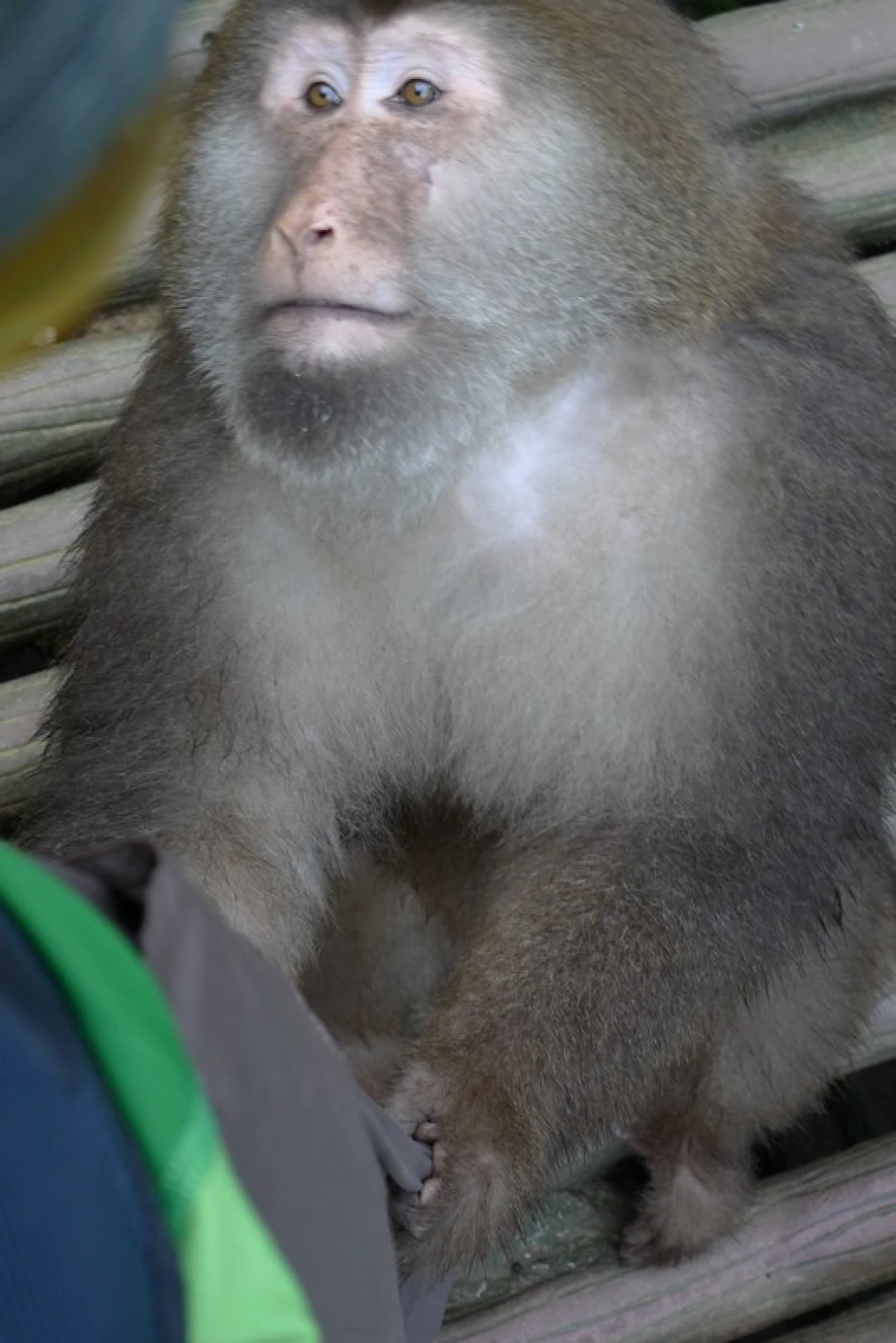
I need to say more about the monkey zone. The monkeys here are completely unafraid of people—in fact, they're downright "arrogant." You should stick to the stone steps on the right side, unless you want to dive into the monkey crowd. Unfortunately, I ended up on a small wooden bridge, and because I didn't have any food for a second monkey, it bit me hard. When I counted later, it was four bites. Ten minutes later, I ran to a restroom to check—my left thigh was already black and blue, like a spilled paint palette, spectacularly colorful.
Monkey safety tips: - Carry a trekking pole or bamboo stick—a slingshot is ideal - If a monkey charges and you have nothing, pretend to pick up a stone - Never keep food in plain sight (use zippered pockets) - Absolutely avoid eye contact—they see it as a provocation - Don't wear bright colors or dangling jewelry - Stay on the right side of the stone steps
Climbing Higher: From Hongchunping to Taiziping
After leaving the monkey zone, I continued climbing along the left route. I reached Hongchunping at 10:18 a.m., and at 11:18 a.m. I began the famous "99 Bends" (Jiushijiu Dao Wan). This section is full of twists and steep slopes, a real test of endurance.
Elevation and timing breakdown: | Location | Arrival Time | Elevation (approx.) | Notes | |----------|--------------|---------------------|-------| | Qingyin Pavilion | 8:15 AM | 710m | Start point | | Hongchunping | 10:18 AM | 1,100m | Rest and refuel | | 99 Bends start | 11:18 AM | 1,300m | Most challenging section | | Xianfeng Temple | 1:11 PM | 1,750m | Good lunch spot | | Xixiang Pond | 4:00 PM | 2,070m | Beautiful scenery | | Leidongping | 5:30 PM | 2,430m | Last major stop before Taiziping | | Taiziping | 6:50 PM | 2,800m | Overnight stay |
Official data says this stretch is about 60.5 kilometers (37.6 miles), but it didn't feel that long in practice. However, the entire route is stone steps, which puts a lot of strain on your knees—I recommend wearing knee braces.
Where to Stay on Mount Emei: Taiziping vs. Leidongping vs. Golden Summit
Taiziping is an excellent accommodation choice. It's only about 20 minutes from the Golden Summit (Jinding), so if you arrive early enough, you can drop your bags and still catch the sunset. Prices at Taiziping are significantly cheaper than Golden Summit (about 150-200 yuan per night vs. 400-600 yuan), yet you're close enough to make the sunrise hike easily.
Accommodation comparison: - Taiziping – Best value, 20 min from summit, ~200 yuan/night - Leidongping – More options, 1.5 hours from summit, ~250 yuan/night - Golden Summit – Most expensive, right at the top, ~500 yuan/night
[Link: Mount Emei accommodation guide]
Day 3: Golden Summit Sunrise and Descent
Catching the Sunrise at Golden Summit
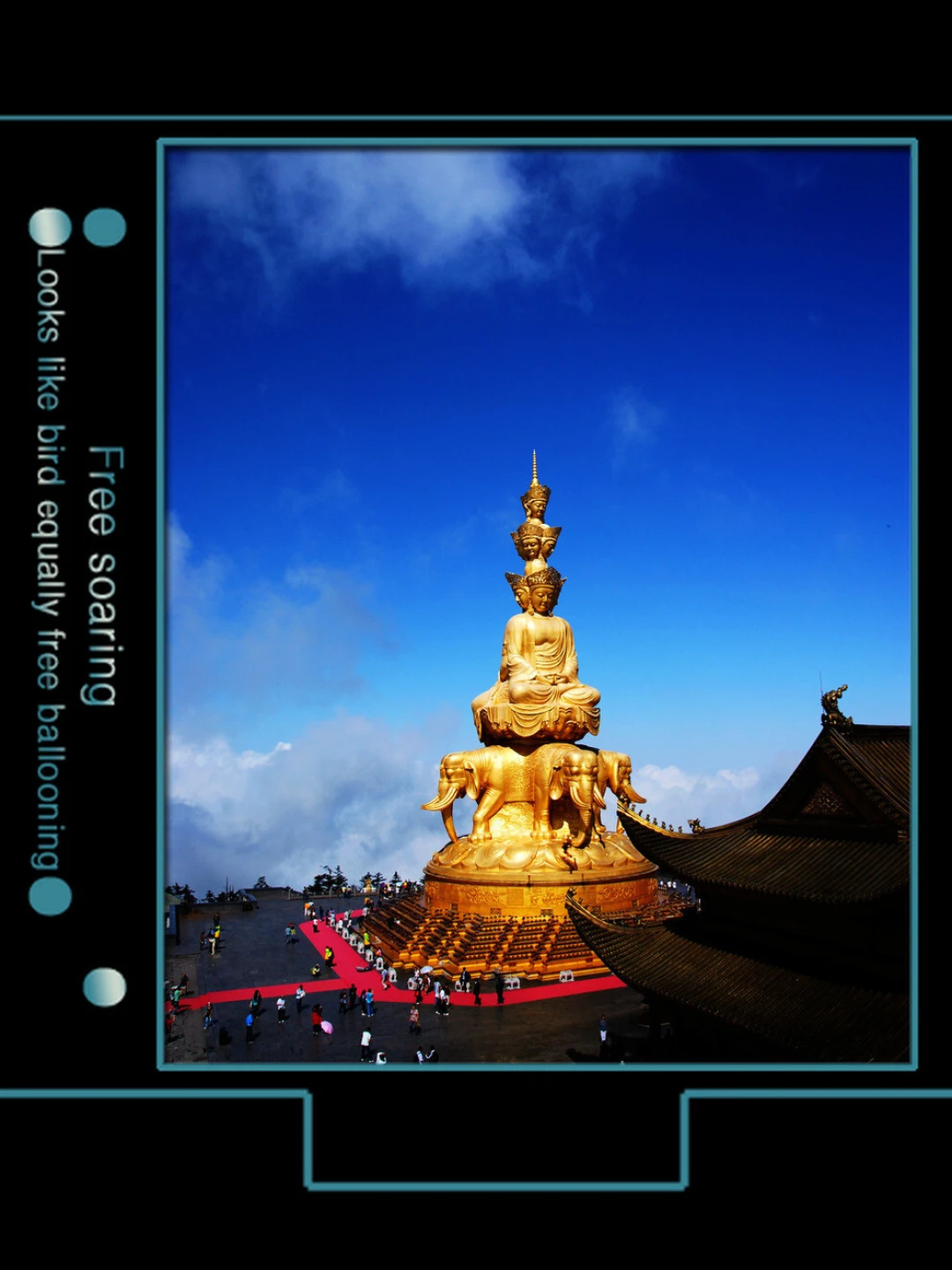
Wake up at 5:30 AM, leave your bags at Taiziping, and make the 20-minute hike to Golden Summit. The sunrise at 3,099 meters is spectacular—clouds roll beneath you like an ocean, and if you're lucky, you'll see the "Buddha's Light" (a rainbow-like halo around your shadow).
Sunrise timing by season: - Spring (March-May): 6:00-6:30 AM - Summer (June-August): 5:30-6:00 AM - Autumn (September-November): 6:00-6:30 AM - Winter (December-February): 6:30-7:00 AM
Descent Options: Cable Car vs. Walking
After sunrise, you have two options: 1. Cable car down – 55 yuan, 5 minutes to Jieyin Hall, then bus to base (50 yuan) 2. Walk down – Free but takes 4-6 hours, easier on knees if you use trekking poles
I recommend taking the cable car down if you're tired—your knees will thank you.
Frequently Asked Questions (FAQ)
1. Is it safe to hike Mount Emei alone?
Yes, thousands of solo hikers do it every year. The trail is well-marked, and there are guesthouses every 1-2 hours. Just be extra cautious with monkeys and carry a trekking pole.
2. How much does a 3-day Leshan and Mount Emei trip cost?
Budget approximately 800-1,200 yuan per person including: - Transport: 150 yuan (Chengdu-Leshan-Emei) - Leshan ticket: 90 yuan - Mount Emei ticket: 160 yuan - Accommodation: 200-400 yuan (2 nights) - Food: 150-300 yuan - Cable car (optional): 55 yuan
3. Can I see the Leshan Giant Buddha and hike Mount Emei in 2 days?
Technically yes, but it's extremely rushed. You'd need to see the Giant Buddha in the morning, bus to Mount Emei by afternoon, and hike quickly. I strongly recommend 3 days for a comfortable experience.
4. What should I do if a monkey attacks?
Stay calm. Don't run—they're faster than you. Make yourself look bigger by raising your arms (with trekking pole). If you have food, toss it away from you. Never hit the monkey, as it may escalate.
5. Do I need to book accommodation in advance?
Yes, especially during Chinese holidays (National Day, Labor Day, Spring Festival). Guesthouses at Taiziping and Golden Summit fill up quickly. Book at least 2-3 weeks ahead.
Final Tips for Your Leshan and Mount Emei Adventure
- Start early – Leave your accommodation by 7 AM to avoid crowds and afternoon rain
- Hydrate smart – Buy water at guesthouses (5-10 yuan) rather than from vendors on the trail (15-20 yuan)
- Respect the monkeys – They're wild animals, not pets. Keep your distance.
- Pack light – You'll carry everything on your back for 2 days. Every extra kilogram hurts.
- Check weather – Golden Summit can be 10°C colder than the base. Bring layers.
Your Next Step: Start Planning Your Sichuan Hiking Trip
This Leshan and Mount Emei hiking guide is based on real experience—the good, the bad, and the monkey bites. Whether you're a seasoned hiker or a first-time visitor to China's sacred mountains, this 3-day itinerary gives you the perfect balance of culture, nature, and adventure.
Ready to book your trip? Start by checking train schedules from Chengdu to Leshan, then reserve your Mount Emei guesthouse. Remember: the early bird catches the sunrise—and avoids the worst of the monkey crowds.
[Link: Sichuan travel insurance recommendations]
Have questions about your Leshan and Mount Emei trip? Drop them in the comments below, and I'll help you plan the perfect itinerary. Happy hiking!
You may also like


