Stars and Faith: My Brother Xiaohua and I Journey Through Western Sichuan’s Hidden Realms
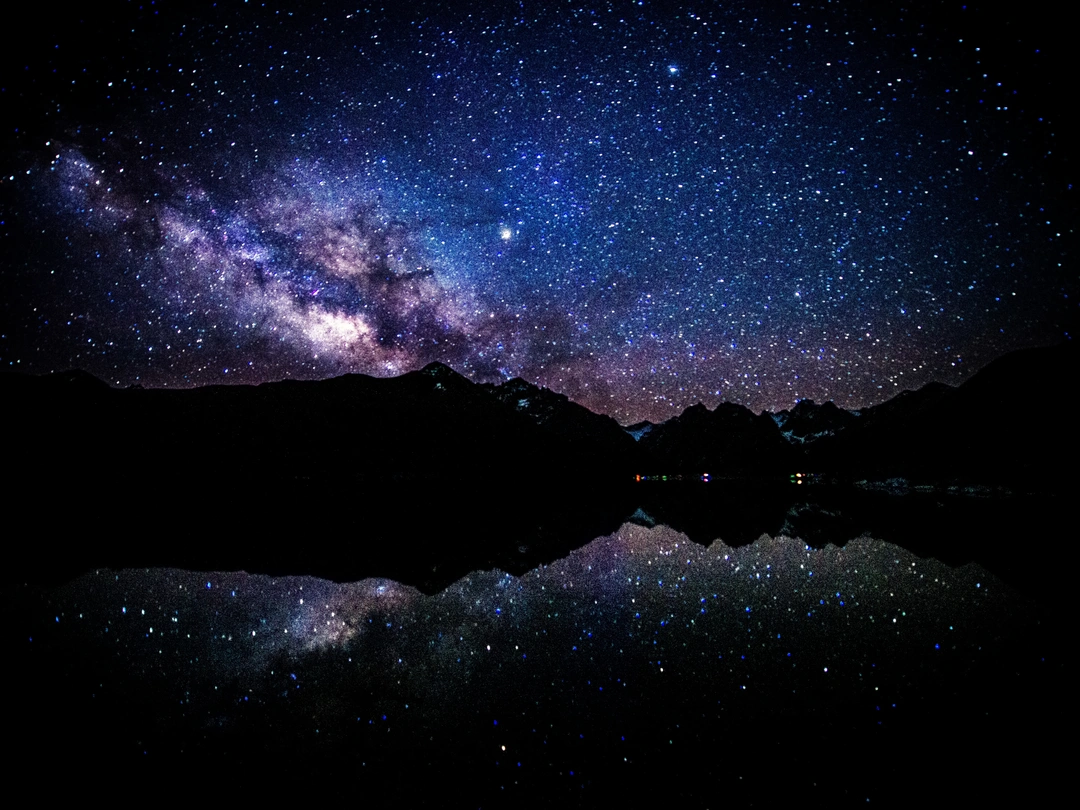
Meta Description: Explore Western Sichuan's hidden realms with this SEO-optimized travel guide. From Mugecuo's frozen lakes to Zheduo Mountain's starry skies, discover winter travel tips, altitude sickness advice, and photography secrets.
Prologue: A Spontaneous Winter Adventure in Western Sichuan
In February 2015, while most people were still basking in the warmth of the Spring Festival, my good friend Xiaohua and I had already set out on our journey to Western Sichuan. At that time, Western Sichuan was in the depths of winter—desolate and uninhabited—yet it was precisely the kind of "hidden Tibetan realm" we had always dreamed of. There, we found the purest human spirituality, the most breathtaking natural landscapes, and the starry skies we longed to chase.

Western Sichuan travel is often called the "essence of Sichuan," stretching along National Highway 318, forming the most moving chapter of China’s scenic thoroughfare. Here lies the last Shangri-La—Daocheng Yading; the king of Sichuan’s mountains—Gongga Snow Mountain; the lowest-altitude glacier—Hailuogou; and Niubei Mountain, Litang, Tagong, and Bamei Grasslands. Each destination is a masterpiece of nature. However, due to poor transportation, tourism development in Western Sichuan remains limited. Many places offer only basic accommodation and meals, and the roads are arduous. But it was precisely this raw, untouched quality that drew our wandering souls.
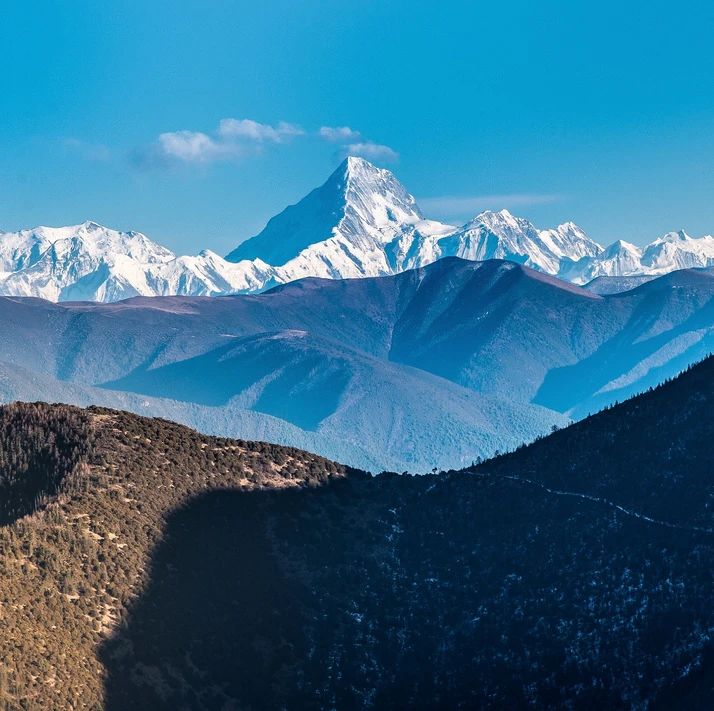
Before departure, we prepared thoroughly: waterproof jackets and pants, high-top hiking boots, sun hats, sunscreen, gloves, headscarves, polarized sunglasses, insulated water bottles, garbage bags, and a full range of common medicines. In high-altitude areas, the temperature difference between day and night is extreme, so staying warm in Western Sichuan was our top priority. I took altitude sickness pills and rhodiola rosea in advance, and also brought headache powder and cold medicine as a backup. The UV rays are intense, so sunglasses, long-sleeved clothing, sun hats, and sunscreen were absolutely essential. Staying hydrated on the road and drinking glucose oral solutions also helped ease discomfort.
[Link: Best time to visit Western Sichuan]
Departure: The Long Road from Chongqing to Kangding
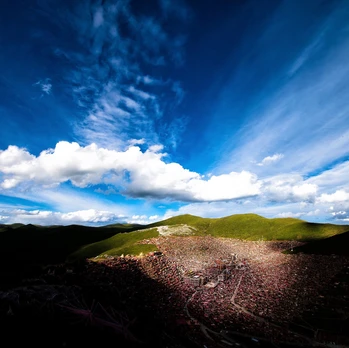
As we left Chongqing, we checked our destination on our phones while seeking advice from fellow travelers. Guiyuan and Woniu, two four-color photographers, were on a road trip in Aba Prefecture. Their suggestions only strengthened our resolve for this Western Sichuan road trip.
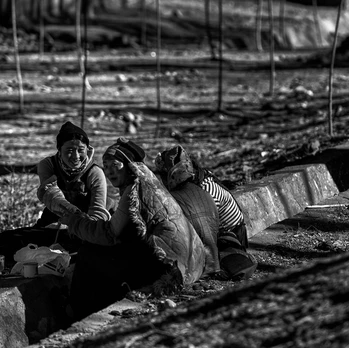
On the road from Chengdu to Kangding, I listened to music and dozed off. Those who know me well understand that I don’t talk much when I’m half-asleep in a car—I prefer to sleep. Once awake, I chatted idly with Xiaohua. When we started talking about photography, Xiaohua suddenly blurted out, "Actually, I want to buy a lens that costs over 30,000 yuan." I was taken aback—another "money pit" was coming.
I told him about my own painful history of obsessing over camera gear. Even though my current equipment was professional-grade, I still advised him: "Gear is a bottomless pit. There’s no need to chase after a bit of sharpness or resolution. The real meaning of a photo lies in its concept, its soul—even basic things like composition and lighting." Since Xiaohua was new to DSLRs and photography, I explained it simply: "Think of photography as your eyes. It’s just a simple combination of aperture and shutter speed. But you need to use photography to compose, to express the language you see." He seemed to half-understand and dropped the idea of buying various lenses. I breathed a sigh of relief.
[Link: Photography tips for high-altitude landscapes]
First Encounter with Kangding: Altitude Sickness and a Midnight Obsession
In winter, there are too many hidden icy patches on the roads, making it unsafe for drivers unfamiliar with the terrain. We decided to find a local driver after arriving in Kangding from Chengdu. As soon as we got off the bus in Kangding, an older woman "caught" us and recommended her family driver, Dorje, claiming he had driven in Western Sichuan professionally for over a decade. That sounded safe enough, so without hesitation, we booked him.
That night, I suffered from altitude sickness in Kangding and couldn’t sleep. Seeing Xiaohua fast asleep, I did something foolish—I woke up Dorje, dragged Xiaohua along, and arrived at the scenic area gate at 4 a.m. There wasn’t much to see around us, so we could only take a "been there, done that" photo at the entrance. It was too cold, and there was nothing worthwhile, so we couldn’t enter the park. We ended up sitting in the car for a full four hours. The night temperature was so low that the car’s heater wasn’t enough, and Dorje, who hadn’t brought enough clothes, shivered in the cold.
At 8 a.m., the gate opened. I rushed to the ticket booth to collect our tickets and catch the first bus into the park. Just then, Xiaohua saw sunlight hitting the mountain peaks and exclaimed, "Wow, look—the mountain turned golden!" He kept fiddling with his camera. I thought to myself that this trip had to make an impression on him, to make him fall in love with travel and see more of the world.
[Link: Kangding travel guide]
Mugecuo: Frozen Lake, Hurry, and Regret
Mugecuo Scenic Area consists of Fangcaoping, Qisehai, Dujuan Gorge, Yaochi Feiquan, Mugecuo (Wild Man Lake), Honghai, Heihai, and other attractions. The area features alpine lakes, primeval forests, hot springs, snow-capped peaks, strange rocks, and the 8-kilometer-long Qianpu Gorge, forming a beautiful and diverse landscape. Mugecuo is surrounded by mountains, forests, and grasslands, with dozens of smaller lakes like Honghai, Heihai, and Baihai encircling it like stars around the moon.
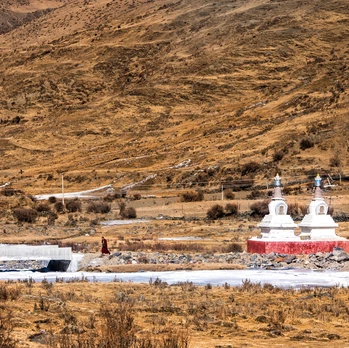
When the driver mentioned a time limit, I felt frustrated. On one hand, this was Xiaohua’s first trip with me, and the first scenic spot couldn’t give him a proper experience—I was unwilling to accept that. On the other hand, I had no time to explore the area or take photos. Xiaohua, however, didn’t seem to mind.
The lake was completely frozen. I suggested taking a photo of Xiaohua. He rarely had his picture taken and initially refused shyly. I said, "I’ll try to make you look handsome. Walk over to the lake and stand on the ice, but don’t go where the water is deep, and be careful the ice doesn’t crack." He finally agreed and, surprisingly, had a professional touch, immediately slipping into the role of a model. Since he had never liked being photographed before, he lacked experience, and his expressions and poses could easily become awkward. To get a good shot in one go, I set the camera to high-speed continuous shooting, asking him to simply walk along the lake. That way, I could capture natural expressions.
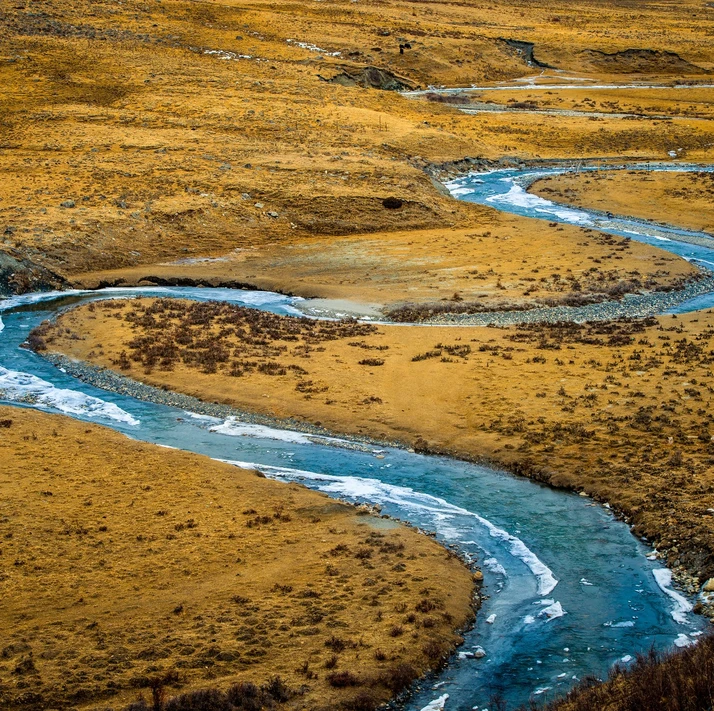
The sightseeing bus was the green one in the photo. With almost no tourists in the entire park, the driver started honking to hurry us along. We had to return to the car, feeling annoyed with the place. This was the only scenic spot we visited on the entire trip. Later, we went to Daocheng Yading, but after waiting a day, it remained closed due to heavy snow—reportedly for a week already.
At Mugecuo’s second stop, I got off the bus, walked to a small stream, and took a long-exposure photo. The driver honked again. Frustrated, I got back in the car and stormed out of the park.
[Link: Mugecuo winter travel tips]
Zheduo Mountain: Cold and Faith Under the Stars
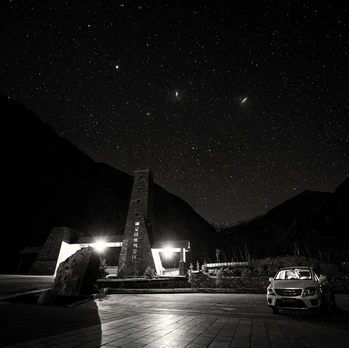
After visiting Mugecuo, we returned to the hotel to rest, planning to leave before dawn the next day and capture the starry sky along the way. By 4 or 5 a.m., we had reached the Zheduo Mountain pass.
Zheduo Mountain, at 4,298 meters above sea level, is the first major pass in Kham and an important geographical dividing line. To the west lies the uplifted plateau region with the Yalong River; to the east, the high mountain valley region with the Dadu River. "Zheduo" means "bent" in Tibetan, and the winding mountain road lives up to its name—twisting and turning like the character "多" (many). No wonder locals say, "The terrifying Erlang Mountain, the deadly Zheduo Mountain."
When photographing the stars at Zheduo Mountain, the winter night on the plateau was bitterly cold. Even though we were dressed warmly, the wind cut through like knives. In Northeast China, I had once photographed stars in -30°C conditions, but this high-altitude cold was different—it seeped into your bones. Xiaohua’s hands were shaking as he tried to adjust his camera settings. I showed him how to use a remote shutter release to avoid camera shake and how to set a manual focus to infinity for sharp star shots.
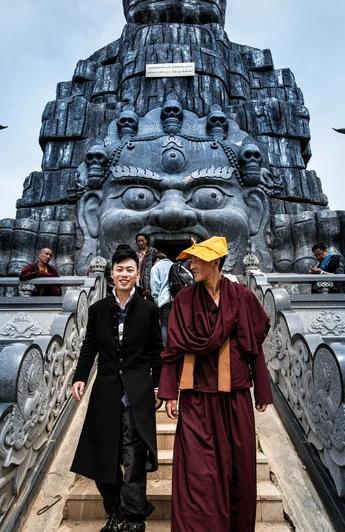
Despite the cold, we managed to capture some incredible images of the Milky Way arching over the snow-covered peaks. Xiaohua was amazed—he had never seen so many stars in his life. "This is why I love travel," I told him. "It reminds us how small we are, and how vast the universe is."
[Link: Best places for astrophotography in Sichuan]
FAQ Section
Q1: When is the best time to visit Western Sichuan?
A: The best time is from May to October, when the weather is mild and roads are clear. However, winter (December–February) offers fewer crowds and stunning snowscapes, though roads can be icy and some attractions may close.
Q2: How do I prevent altitude sickness in Western Sichuan?
A: Acclimatize gradually, stay hydrated, avoid alcohol, and consider taking rhodiola rosea or altitude sickness medication. If symptoms worsen, descend immediately.
Q3: Is it safe to drive in Western Sichuan in winter?
A: Not recommended for inexperienced drivers. Local drivers familiar with icy mountain roads are safer. Always check road conditions before heading out.
Q4: What camera gear is best for astrophotography in cold climates?
A: A DSLR or mirrorless camera with a fast wide-angle lens (f/2.8 or faster), a sturdy tripod, and a remote shutter release. Keep spare batteries warm, as cold drains them quickly.
Q5: Can I visit Daocheng Yading in winter?
A: Yes, but it may close temporarily due to heavy snow. Check the official website or call ahead. Winter visits offer fewer tourists and pristine snow views.
Conclusion: The Hidden Realms Await
Our journey through Western Sichuan was not just about landscapes—it was about faith, friendship, and the stars that connect us all. Despite the altitude sickness, the freezing cold, and the frustrating time limits, Xiaohua and I came away with something far more valuable: memories that will last a lifetime.
If you’re planning your own Western Sichuan adventure, remember to prepare for the elements, respect the local culture, and most importantly, keep your eyes on the stars. The hidden realms of Western Sichuan are waiting to reveal their secrets to those who dare to seek them.
Ready to chase the stars? Start planning your trip today. Book a local driver, pack your warmest gear, and don’t forget your camera. The universe is calling.
[Link: Western Sichuan travel packages]
[Link: Photography workshops in Sichuan]
[Link: Altitude sickness prevention guide]
This article was originally published on Mafengwo and has been optimized for SEO. All facts and experiences are based on the author’s personal journey in February 2015.
You may also like


