So Splendid is Our Land: Three Enchanting Realms I Discovered in Ya’an in Early Summer 2026
Meta Description: Explore Ya’an's hidden gems in early summer 2026—from Shenmulei's alpine meadows to Dawa Gengza's snowy peaks and bullet train tea plantations. Your ultimate travel guide to western Sichuan's "Rain City."
As the first breaths of early summer swept across the Chengdu Plain, I packed my bags and set out westward toward western Sichuan. My destination: Ya’an, a place known as the "Rain City," yet home to breathtaking snow-capped mountains, alpine meadows, rhododendron blossoms, and endless seas of tea plantations. Three days—not long, but long enough to pull me away from the concrete and steel of the city and let me rediscover a long-lost tranquility in the highlands' rhythm.
This wasn't a spur-of-the-moment whim, but a long-planned pilgrimage. I knew that some landscapes can only be truly appreciated in a particular season, with a particular state of mind. Here are three enchanting realms I discovered in Ya’an during early summer 2026.
Why Ya’an in Early Summer? The Perfect Season for Western Sichuan Travel
Early summer (late May to early June) is arguably the best time to visit Ya’an. The rainy season hasn't fully arrived, temperatures are mild (15–25°C in lower elevations), and alpine rhododendrons blanket the highlands in vibrant pinks and reds. Unlike the peak summer crowds, early summer offers a quieter, more intimate experience—perfect for photographers, hikers, and anyone seeking solitude in nature.
[Link: Best time to visit western Sichuan]
I. Shenmulei: Gazing at Cattle and Sheep in the "Land Where Immortals Dwell"
How to Get to Shenmulei from Chengdu
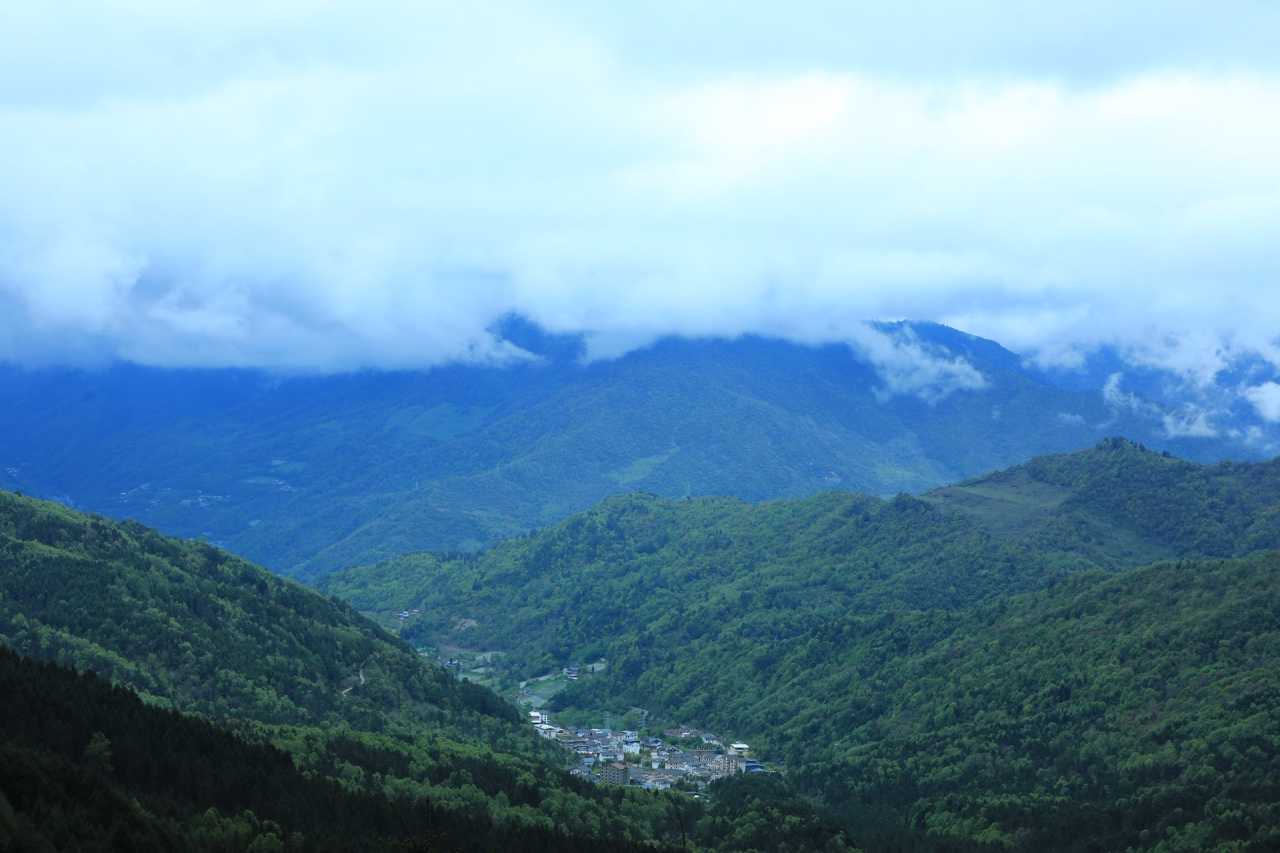
The first day was overcast, with occasional drizzles. After a five-hour drive from Chengdu, we arrived at the Shenmulei Scenic Area in Baoxing County, Ya’an. As the high-rises outside the window gradually gave way to green mountains, and the air filled with the scent of earth and grass, I knew we were drawing closer to the "land where immortals dwell."
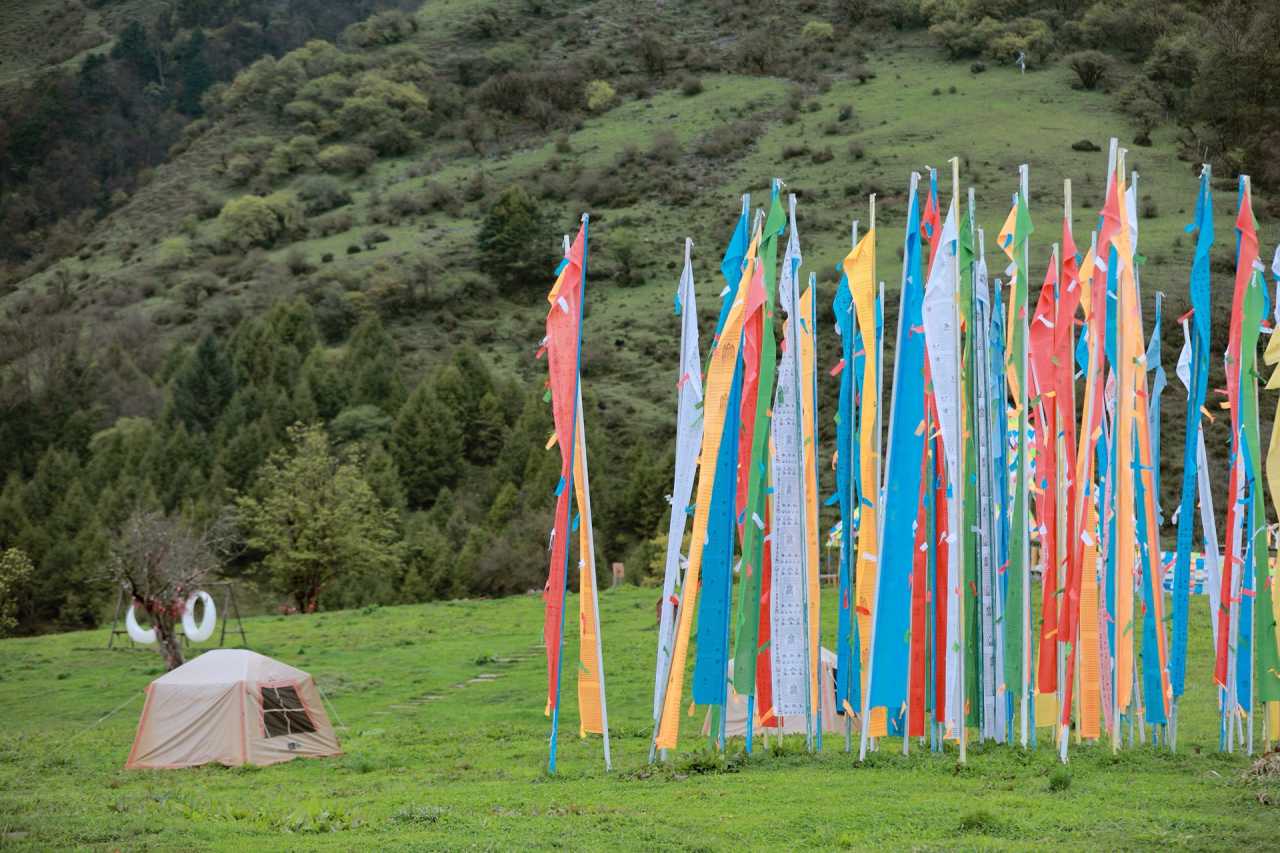
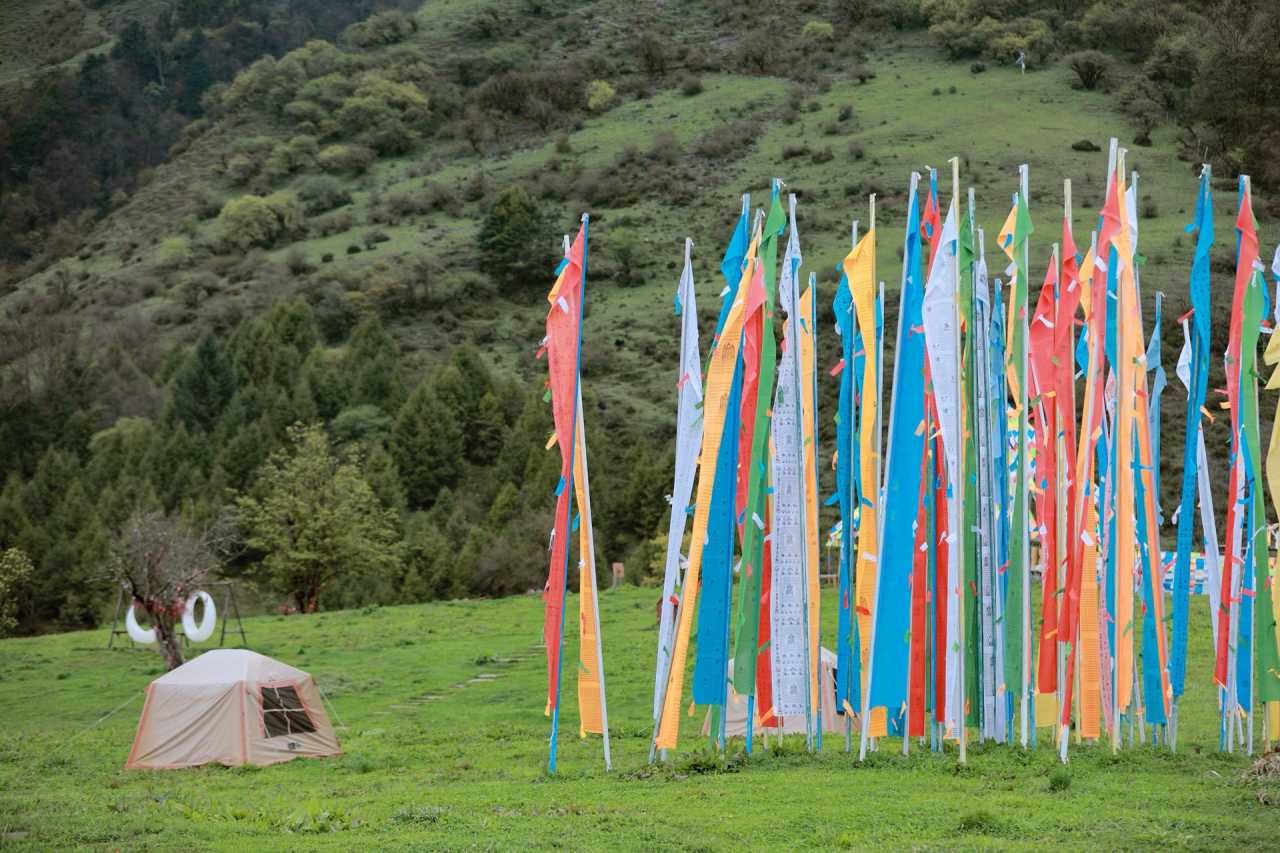
The name Shenmulei itself carries a mysterious allure. Located in Qiaoqi Tibetan Township, Baoxing County, its altitude climbs from 2,300 meters to 4,300 meters, forming part of the Jiajin Mountain National Forest Park. It's often called the "Little Switzerland of Western Sichuan," but I'd argue that Switzerland's refinement can't match the wildness and purity found here. Primeval forests, alpine meadows, Tibetan culture, and prayer flags fluttering in the wind all tell tales of this land's antiquity and devotion.
The Historical Significance of Shenmulei and Baoxing County
What deepened my respect was the weight of history this land carries. Jiajin Mountain was the first major snow mountain the Red Army crossed during the Long March. Here, the First Front Army and the Fourth Front Army triumphantly joined forces, with soldiers crossing the mountain three times, measuring the heights of revolution with their footsteps. Baoxing County is also where the world's first giant panda was discovered, a core area of the Giant Panda Habitat World Heritage Site. A single land that nurtured the nation's beloved panda and witnessed the heroism of revolution—this remarkable intertwining lends every inch of Shenmulei a profound significance.
What to Expect at Shenmulei: Alpine Meadows and Wildlife
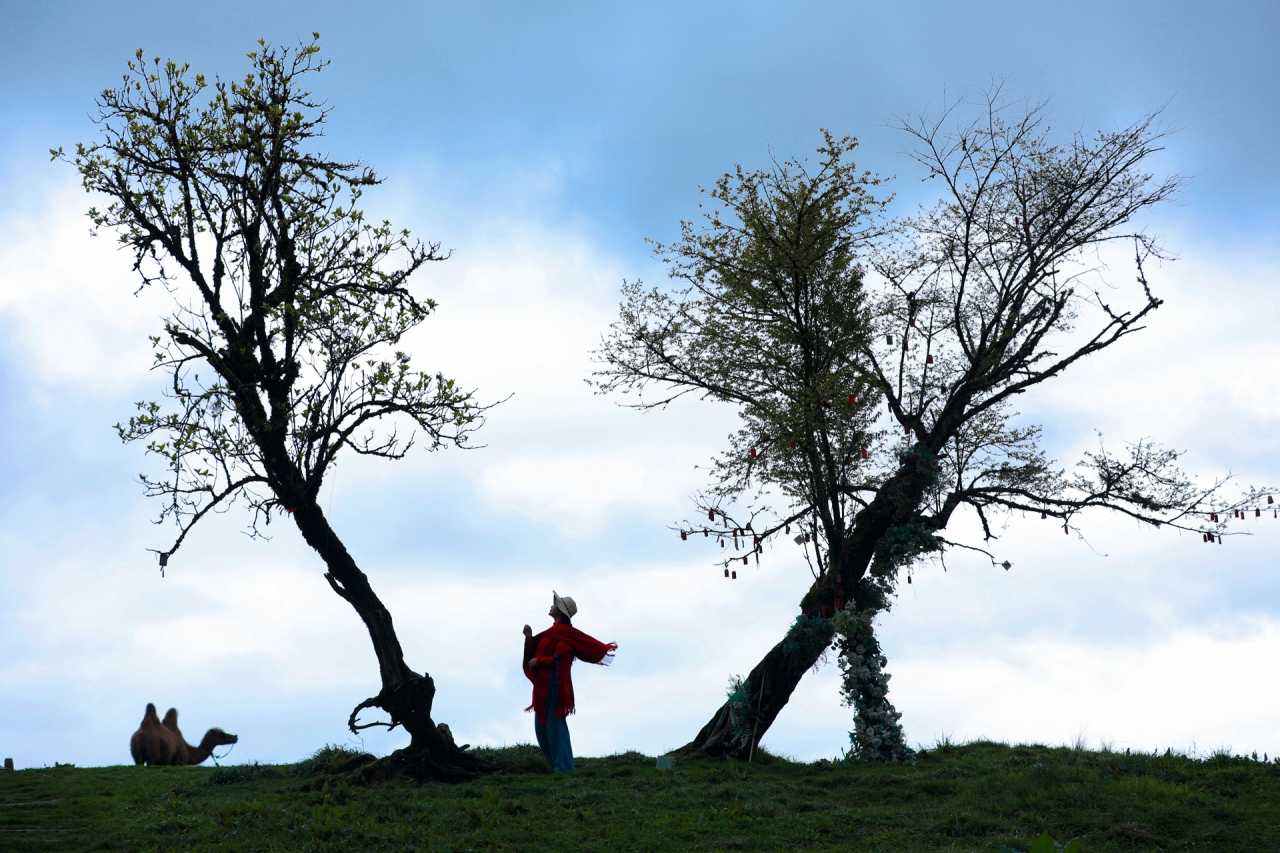
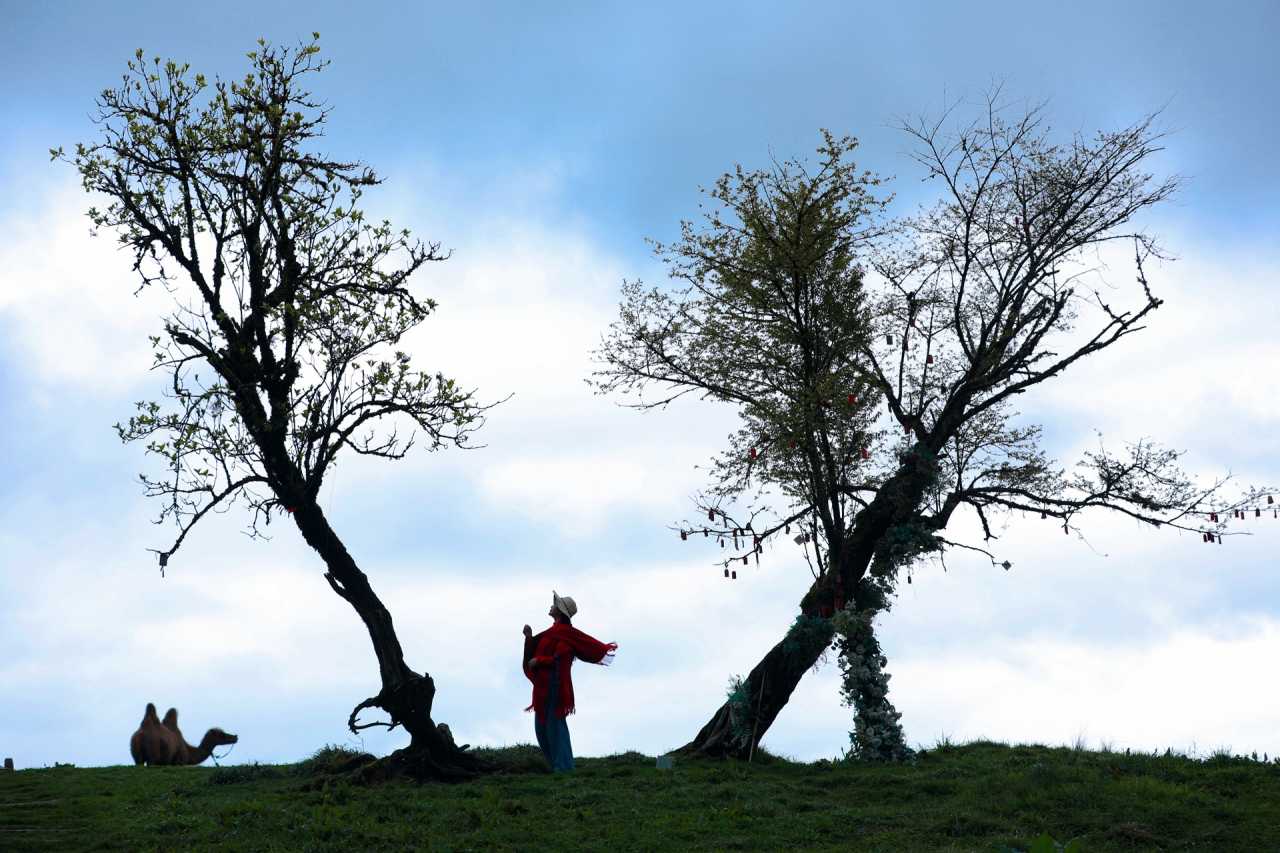
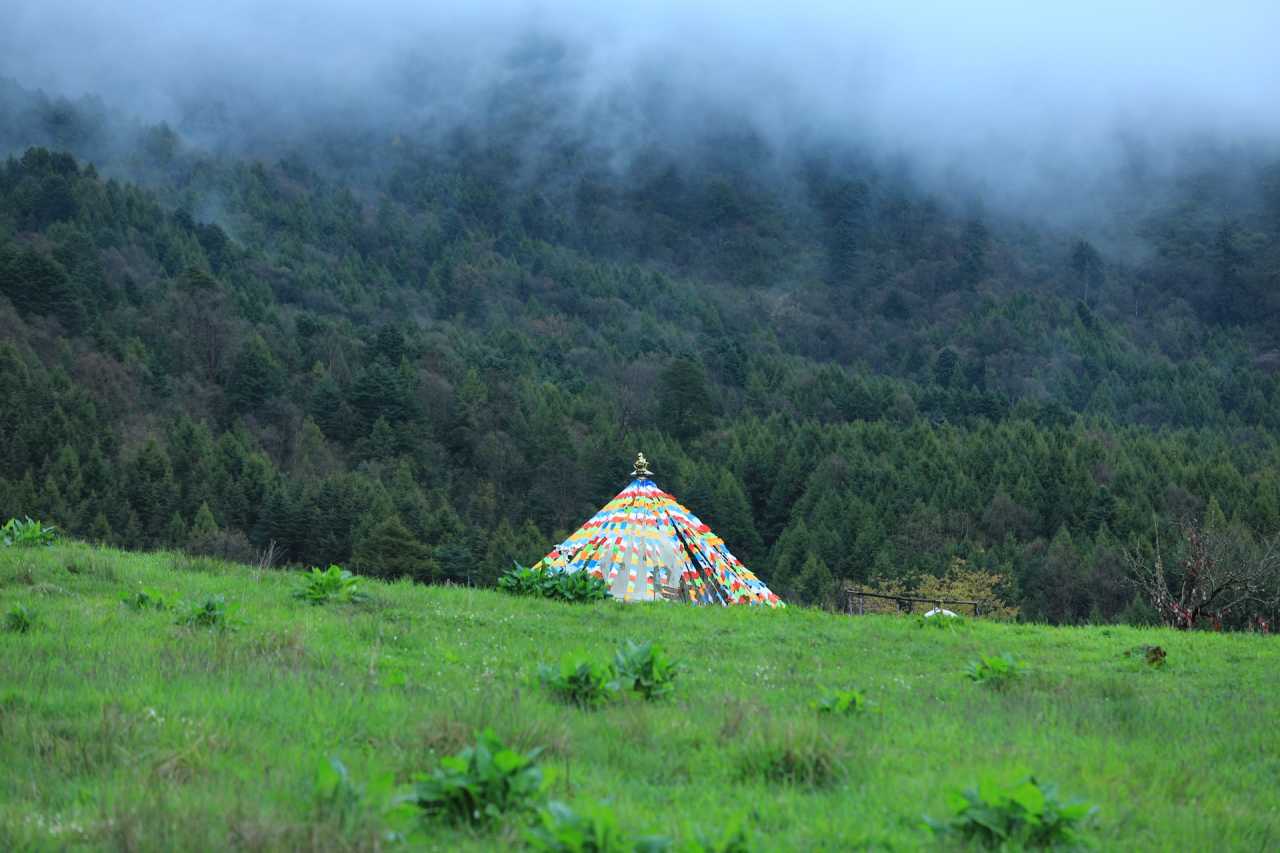
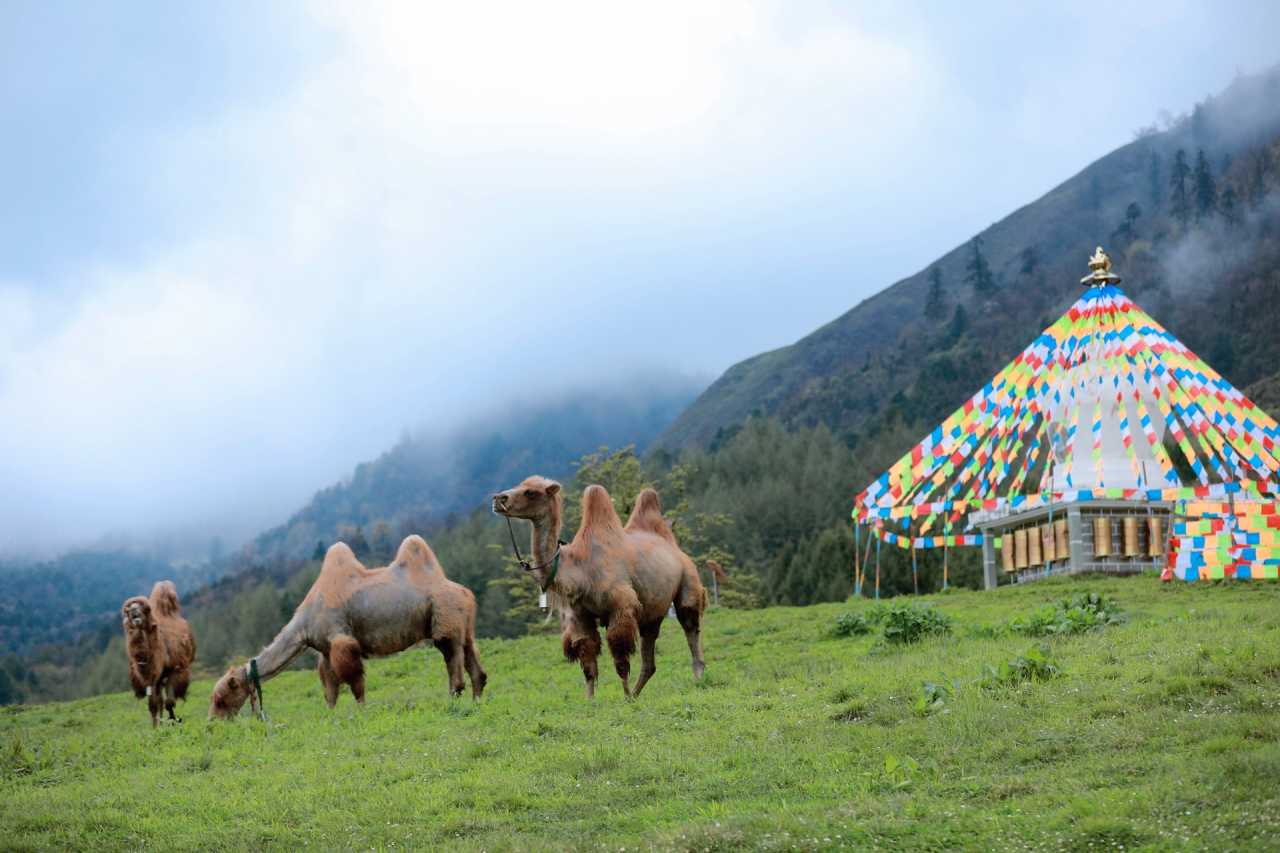
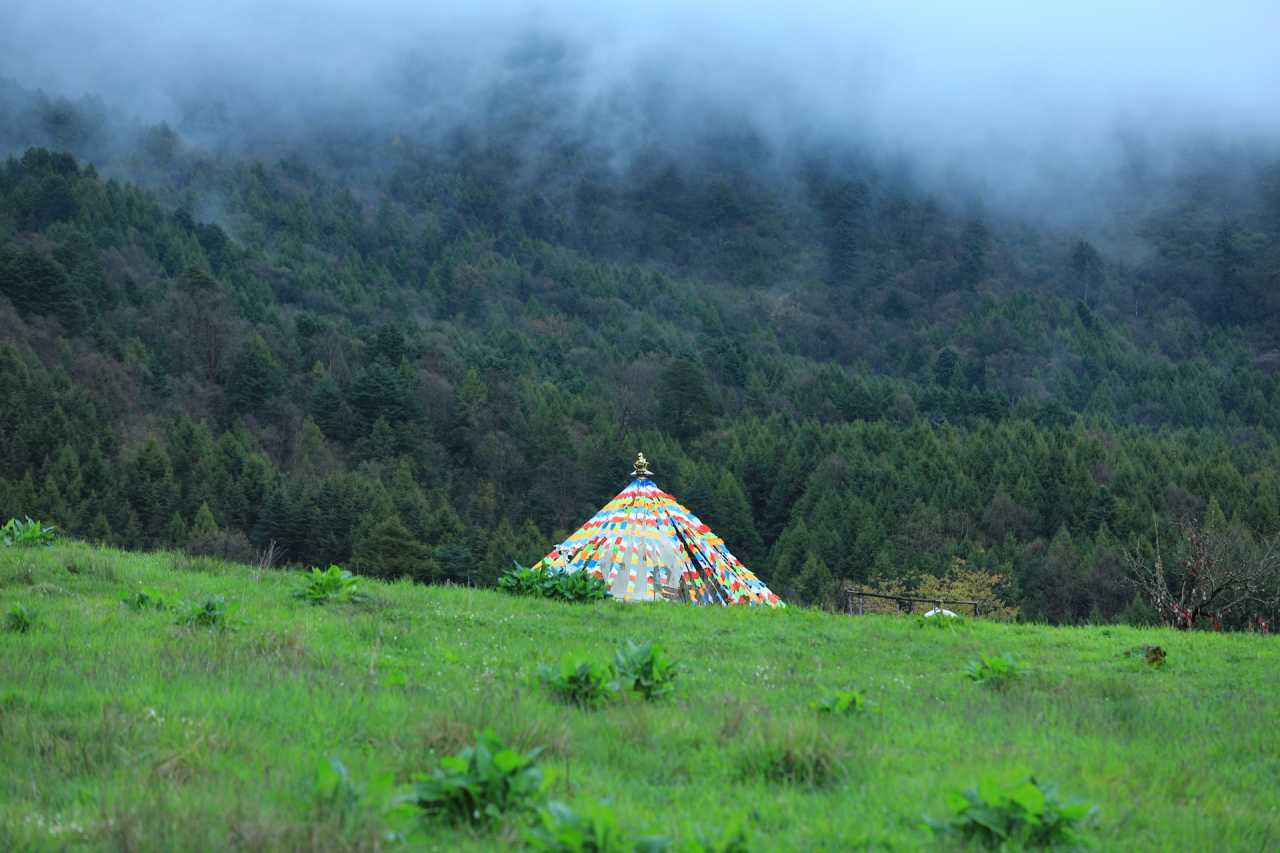
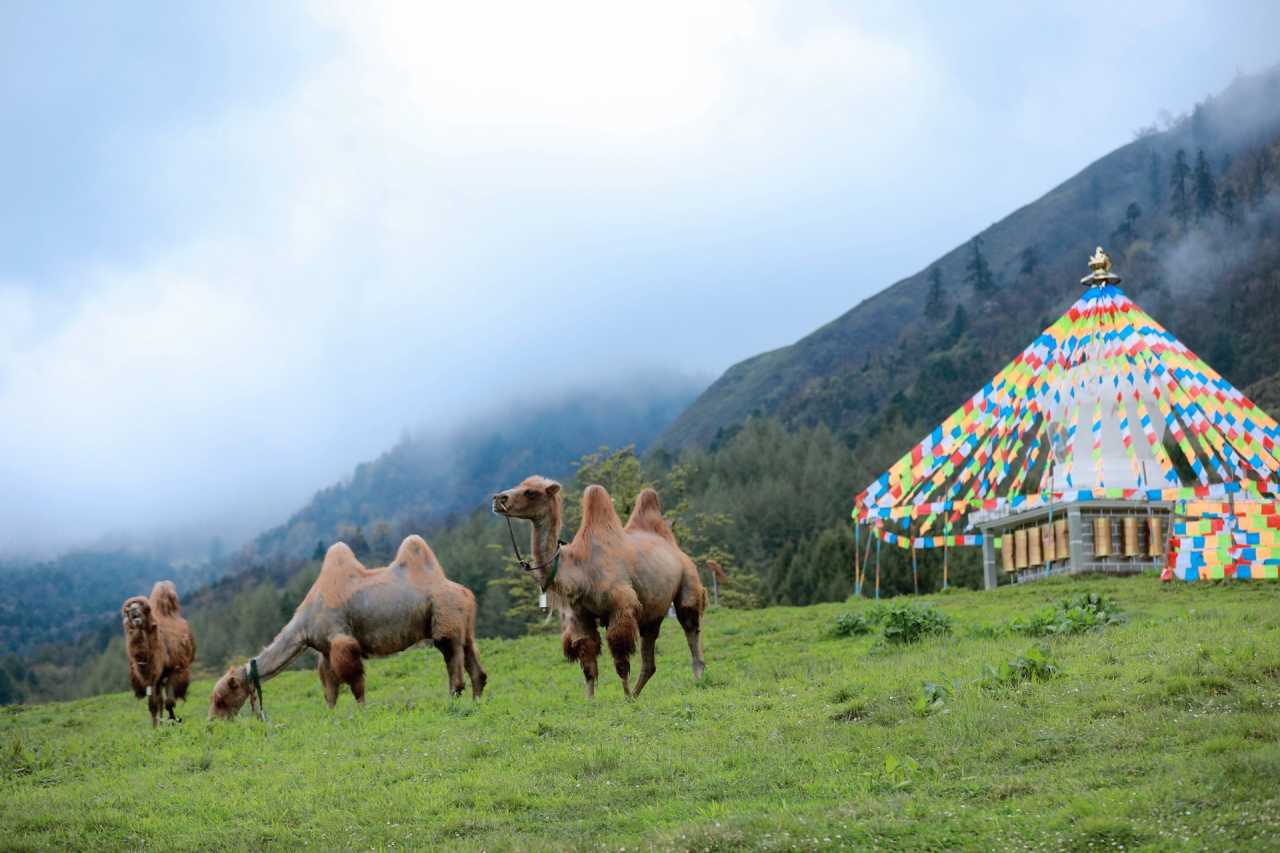
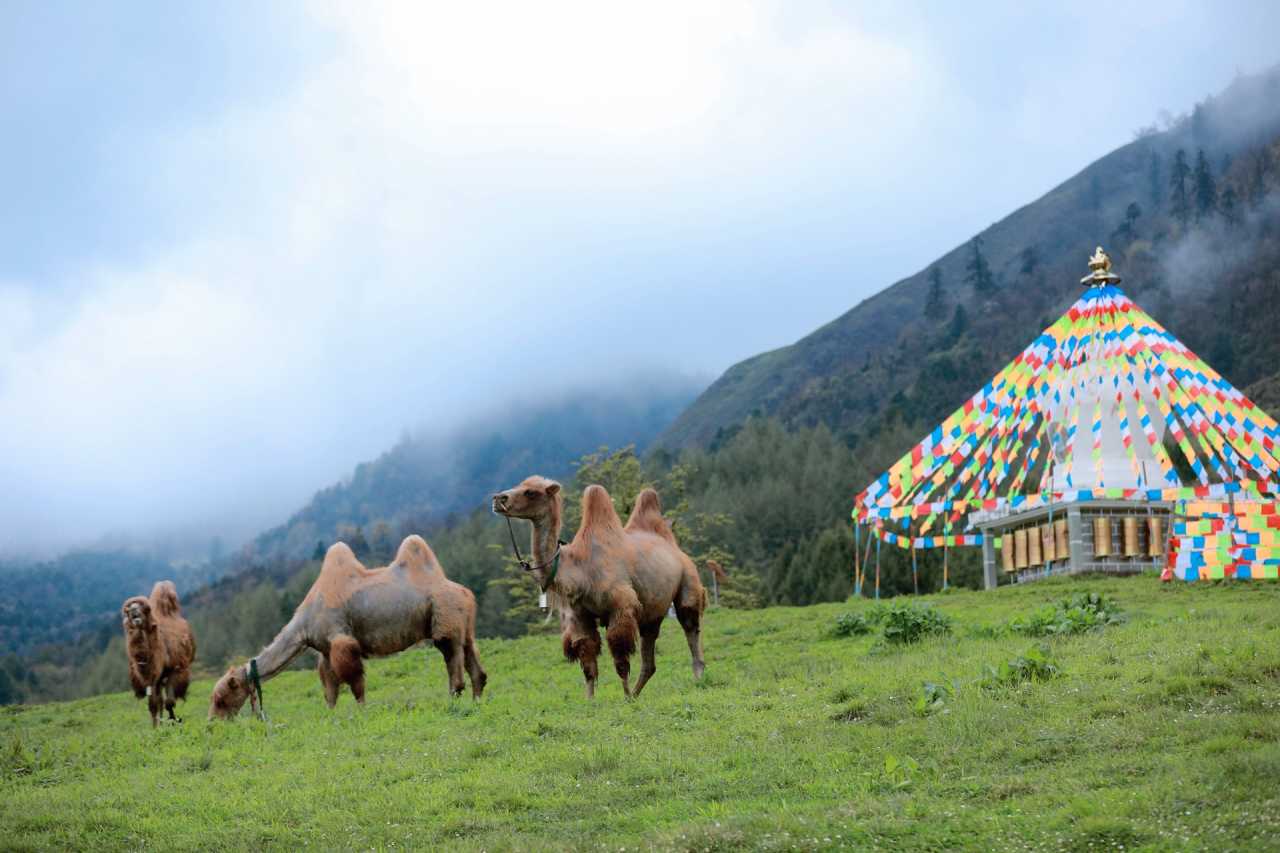
The scenic area is minimally developed, with few artificial "modern facilities," which actually preserves its raw character. We climbed along the boardwalk as alpine meadows spread out before us. Herds of cattle, sheep, and a few camels strolled leisurely across the grassland. They seemed accustomed to visitors, their eyes showing no wariness, only the innate composure of highland creatures.
The rhododendrons had bloomed and faded, then bloomed again. I sat on the grass, watching petals drift in the wind, and recalled Wang Anshi's lines: "I sit long, counting fallen blooms; I search slowly for fragrant grass, returning late." The leisurely spirit the ancient poet described felt so real here in the early summer highlands. In the distance, a camel quietly approached, tilting its head to look at me. I turned and met its gaze—and in that moment, we both seemed to smile: it at my curiosity, I at its charm.
Where to Stay Near Shenmulei
As evening descended, we returned to our guesthouse for a steaming hotpot dinner. Outside, the highland night stretched dark; inside, the warmth of the pot filled the room. That comfort, from body to soul, made me momentarily forget the city's clamor. This, I thought, is the essence of travel: finding a familiar warmth in an unfamiliar place.
[Link: Best guesthouses in Baoxing County]
II. Dawa Gengza: The Snowy Peaks at 4 AM—A Love Letter to the Brave
What is Dawa Gengza? Asia's Best 360-Degree Viewing Platform

The second day was the highlight of our trip: Dawa Gengza.
In Tibetan, Dawa Gengza means "Beautiful Sacred Mountain." Located in Gari Village, Qiaoqi Tibetan Township, Baoxing County, its summit reaches an elevation of 3,866 meters, part of the Qionglai Mountain Range. It's hailed as "Asia's best 360-degree viewing platform." From the top, you can gaze upon Mount Siguniang, the Gongga peaks, Mount Emei, and other famous mountains. Sea of clouds, sunrise, Buddha's light, rime, meadows, alpine rhododendrons—every frame here takes your breath away.
The 4 AM Wake-Up Call: Chasing Sunrise at Dawa Gengza
To catch the sunrise, we woke up at 4 AM. For someone used to late nights and late mornings, this was nothing short of an extreme challenge. But as I boarded the vehicle to the viewing platform and watched the night gradually recede outside the window, a strange excitement bubbled up inside me.
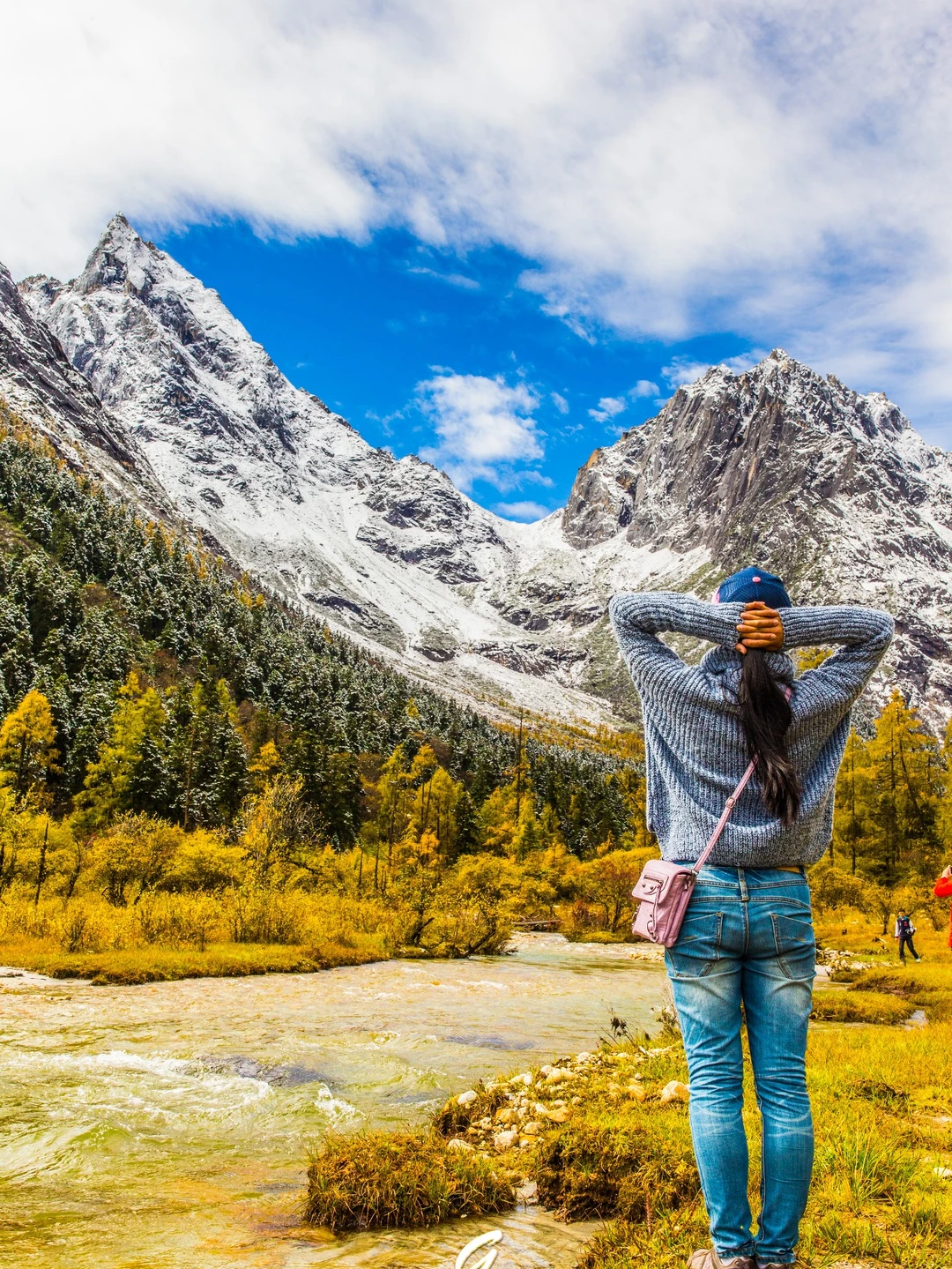
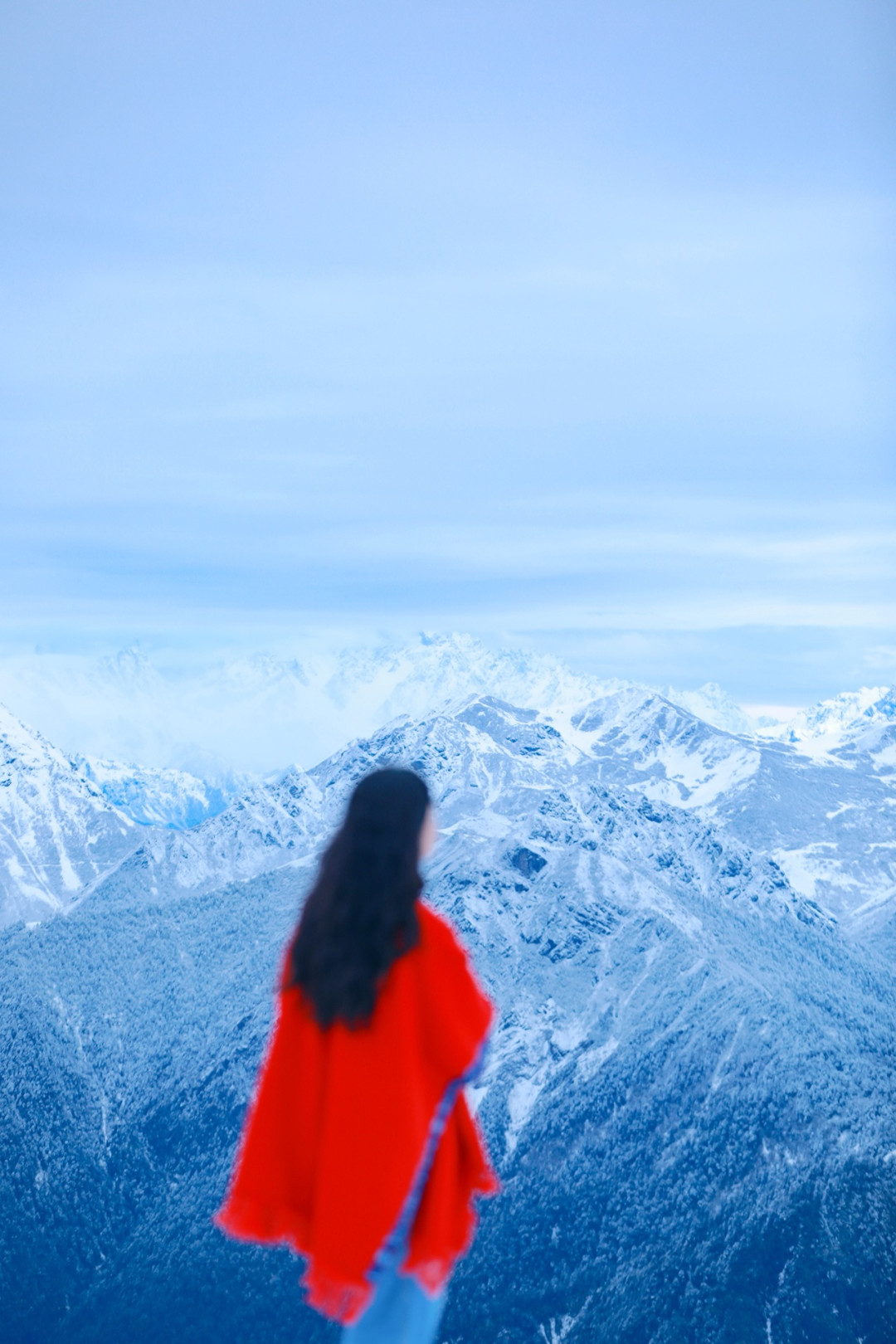
It had snowed on the mountain the night before. The wooden boardwalk leading to the viewing platform was blanketed in white. Every step was labored, and the crunching sound of snow underfoot rang out crisp in the silent early morning. Looking up, I saw several majestic snow-capped peaks standing before me, surrounded by a vast, white expanse. A few trees stood defiantly in the snow, exuding a solitary pride.
Poetry on the Summit: Reflections at 3,866 Meters
Standing on the highest viewing platform, I recalled Chairman Mao Zedong's poem "Snow: To the Tune of Qinyuanchun": "Mountains dance like silver snakes, hills gallop like wax elephants, vying with heaven in height." At that moment, I couldn't help but recite the entire poem atop the summit. Though the wind scattered my voice, the grandeur and vastness etched themselves deep into my heart.
The Unexpected Beauty of Snow-Covered Rhododendrons
Unfortunately, the morning was overcast. The golden sunrise illuminating the snowy peaks—the spectacle we had hoped for—never fully materialized. Only a few stubborn rays of morning sun pierced through the clouds, casting light on the opposite mountain—a gentle consolation. On our way down, we unexpectedly came across alpine rhododendrons. Against the backdrop of snow-covered peaks, the blossoms were breathtakingly beautiful. As Yang Wanli wrote: "Why seek spring in famous gardens? The mountain flowers along the road never disappoint." Indeed, these flowers blooming at the foot of the snow mountains were far more moving than any in cultivated gardens.
Life is like that—gains and losses intertwined. We didn't see the full golden sunrise, but we were rewarded with the surprise of snow-covered rhododendrons. Wang Anshi wrote in "A Journey to Mount Baochan": "The world's most wondrous, grotesque, and extraordinary sights often lie in perilous and distant places, rarely visited by people. Only those with resolve can reach them." True words. Some landscapes are destined only for those willing to rise early and climb.
Afternoon at Qiaoqi Lake: A Gem at the Foot of Dawa Gengza
In the afternoon, we visited Qiaoqi Lake. This reservoir lies upstream of the Qingyi River in Baoxing County, its water so clear it resembles a blue-green gem, quietly resting at the foot of Dawa Gengza. Qiaoqi Tibetan villages dot the lakeshore. We walked along the ring road to the monument commemorating the Red Army's crossing of Jiajin Mountain. We stood there for a long time, paying tribute to the martyrs who gave their lives for the happiness we enjoy today.
[Link: Qiaoqi Lake travel tips]
III. A Thousand Li of Verdant Hills: The Tea Plantation Traversed by Bullet Trains—The Most Vivid Footnote of a Prosperous Era
The Viral Sensation: Bullet Trains Through Tea Plantations
On the third day, we arrived at Mingshan District, Ya’an. Our final stop was the recently viral "Thousand Li of Verdant Hills" scenic area—the vast tea plantations in Hongxing Town, Mingshan.
It's called "Thousand Li of Verdant Hills" because bullet trains race through the sea of tea plants, with mist and clouds swirling around, creating a living landscape painting. The early summer sun was intense, and the clouds soon dispersed, but the endless green tea fields were already intoxicating enough.
A Living Classical Painting
Endless tea plantations, rolling distant mountains, bullet trains passing through, white-walled, gray-tiled farmhouses dotting the landscape... scenes from classical poetry stepped directly into reality. Tao Yuanming wrote in "Returning to Live in the Countryside": "Dimly I see distant villages, faintly I hear the smoke from homes. Dogs bark in the deep lanes, cocks crow a..."
This is the most vivid footnote of a prosperous era—where modern infrastructure harmonizes with ancient agricultural traditions. The bullet train, a symbol of China's rapid development, weaves through the timeless beauty of tea terraces, reminding us that progress and nature can coexist beautifully.
Photography Tips for Thousand Li of Verdant Hills
- Best time: Early morning (7:00–9:00 AM) or late afternoon (4:00–6:00 PM) for soft light
- Best vantage point: The designated viewing platform near Hongxing Town
- Train frequency: Approximately every 30–45 minutes during peak hours
- What to capture: The contrast between the sleek bullet train and the rolling green tea fields
[Link: Tea plantation photography guide]
FAQ: Your Ya’an Travel Questions Answered
1. What is the best time to visit Ya’an for alpine scenery?
Early summer (late May to early June) is ideal. Rhododendrons are in full bloom, temperatures are pleasant, and crowds are minimal. Autumn (September–October) offers golden foliage, but early summer provides the best balance of weather and scenery.
2. How do I get to Shenmulei and Dawa Gengza from Chengdu?
 Drive from Chengdu to Baoxing County (about 5 hours). From Baoxing, it's another 1–2 hours to Shenmulei or Dawa Gengza. Public buses are limited; renting a car or joining a small group tour is recommended.
3. Is altitude sickness a concern at Dawa Gengza (3,866m)?
Yes. Acclimatize in Ya’an city (600m) or Baoxing (1,000m) for a day. Carry oxygen cans, stay hydrated, and avoid alcohol. If you feel dizzy or nauseous, descend immediately.
4. Can I visit all three destinations in one trip?
 Absolutely. A 3-day itinerary works well: Day 1 – Shenmulei; Day 2 – Dawa Gengza and Qiaoqi Lake; Day 3 – Thousand Li of Verdant Hills. This route covers alpine meadows, snow peaks, and tea plantations without rushing.
5. What should I pack for early summer in Ya’an?
Layered clothing (temperatures vary from 5°C at dawn to 25°C midday), waterproof jacket (rain is common), sturdy hiking shoes, sunscreen, sunglasses, and a camera with extra batteries (cold drains battery life).
Conclusion: Why Ya’an Should Be Your Next Western Sichuan Destination
Ya’an is more than just a gateway to western Sichuan—it's a destination in its own right. From the wild meadows of Shenmulei to the sacred peaks of Dawa Gengza and the poetic tea fields of Thousand Li of Verdant Hills, this "Rain City" offers a diversity of landscapes that rival any in the region.
But what truly sets Ya’an apart is its depth of meaning. Here, nature and history intertwine. The same land that nurtured the first giant panda also witnessed the Red Army's heroic crossing of Jiajin Mountain. The same bullet train that speeds through tea plantations carries the dreams of a nation on the move.
Your journey awaits. Whether you're a photographer chasing golden light, a hiker seeking alpine solitude, or a dreamer looking for poetry in everyday life, Ya’an in early summer will not disappoint.
Ready to Plan Your Ya’an Adventure?
- [Link: Chengdu to Ya’an driving guide]
- [Link: Best guesthouses in Baoxing County]
- [Link: Dawa Gengza sunrise photography tips]
- [Link: Tea plantation tours in Mingshan]
Book your trip now and discover why so many travelers say: "So splendid is our land." The mountains are calling—will you answer?
Have you visited Ya’an? Share your experience in the comments below, or ask us any questions about planning your trip!
You may also like