Revisiting Chengdu’s Ancient Towns: Time-Frozen Memories of Western Sichuan
Meta Description: Explore Chengdu’s ancient towns—Yuantong, Jiezi, and the Liu Family Manor. Discover Western Sichuan’s timeless beauty, history, and culture in this SEO-optimized travel guide.
Introduction: A Promise to the Past
Some places leave an indelible mark after just one visit; some landscapes remain unchanged even when you return years later. In April 2025, as I set foot in Chengdu once again, my heart stirred not only with a craving for its legendary cuisine but also with a deep nostalgia for several ancient towns. Six years ago, I had a fleeting encounter with Yuantong Ancient Town and Jiezi Ancient Town. This time, I resolved to revisit these places that time has treated so gently, with the added anticipation of exploring the Liu Family Manor.
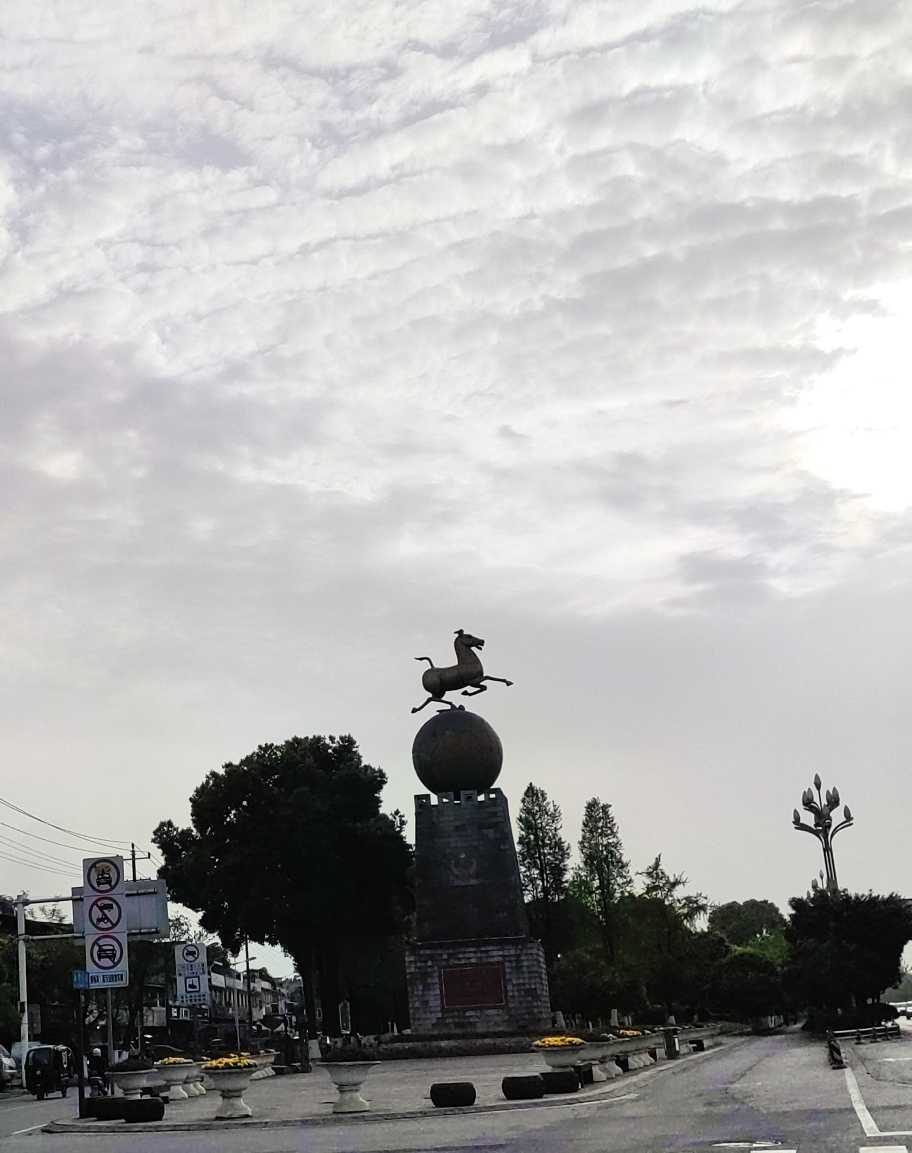
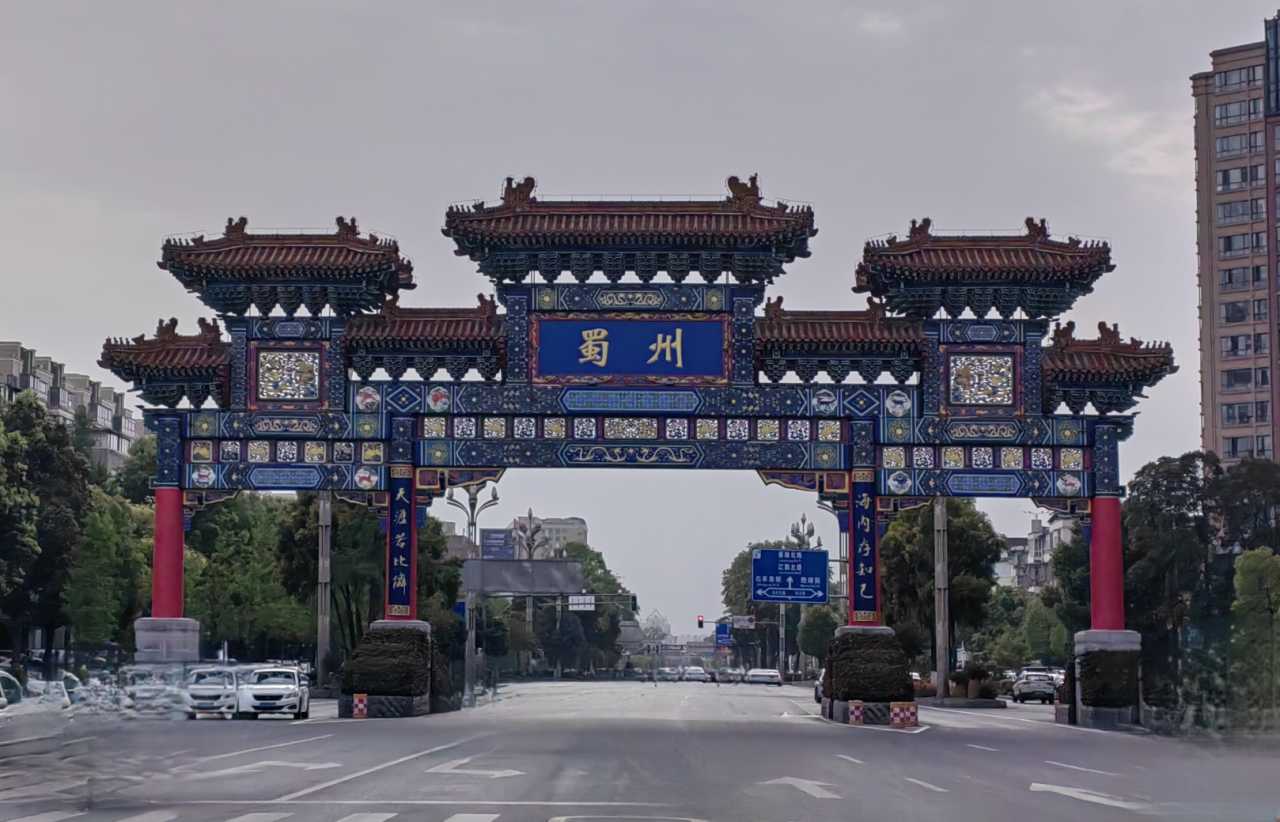
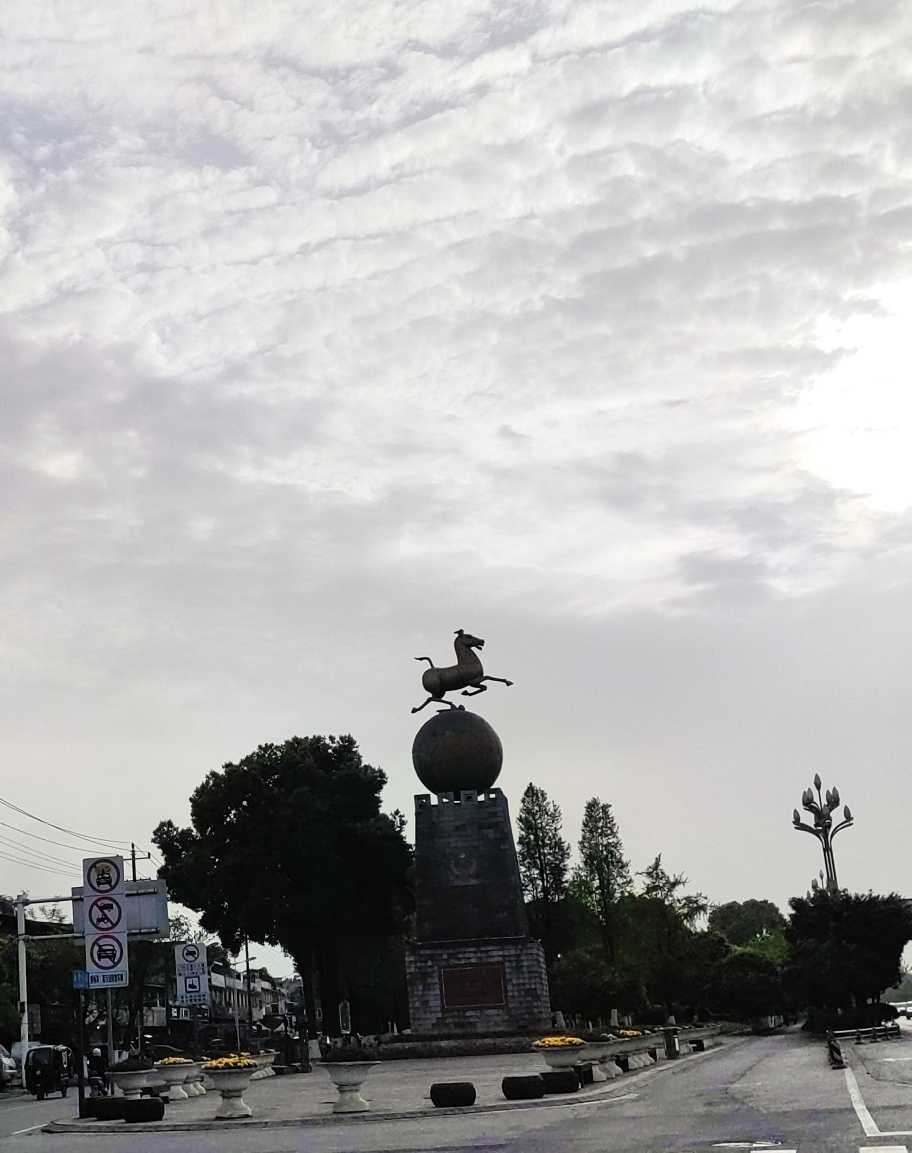
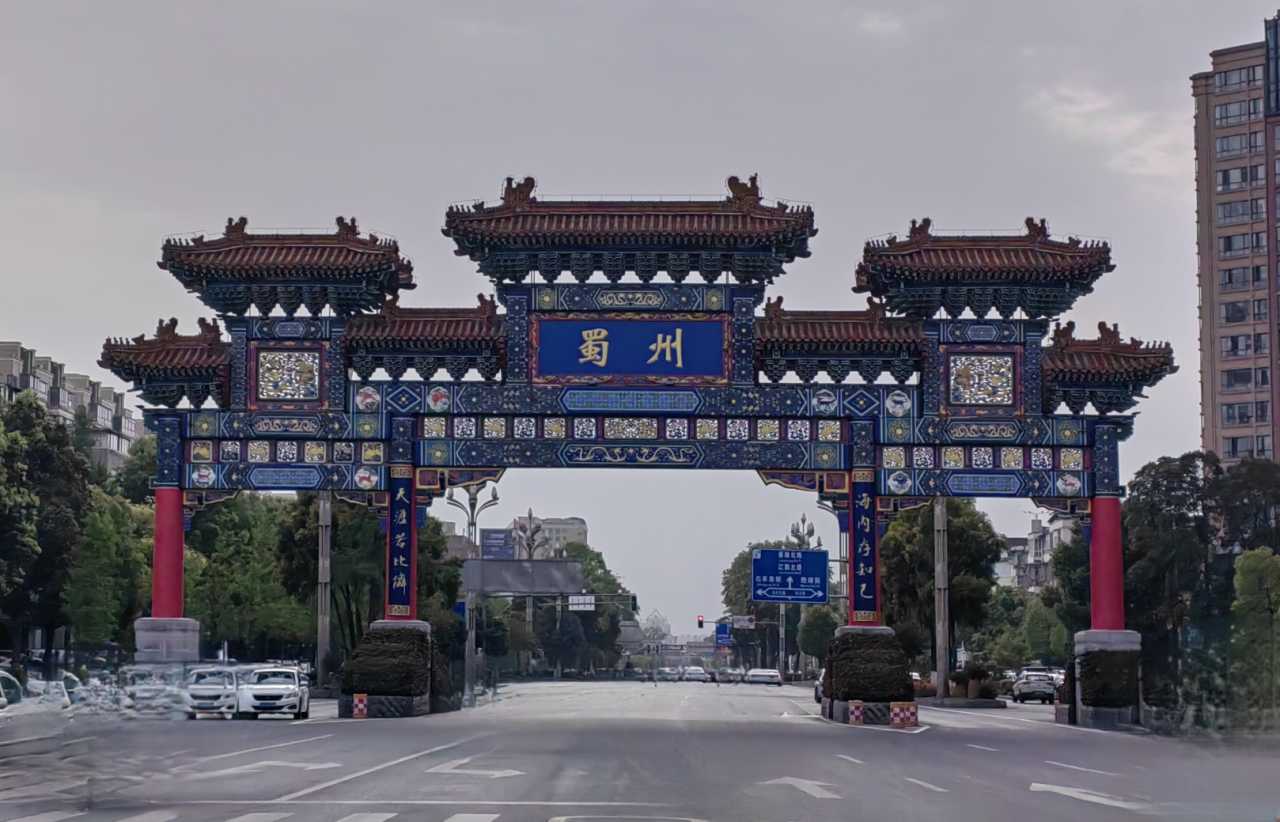
Leaving Chengdu, the car sped past Shuangliu District, and the familiar streets made me almost restless to jump out and wander. When the galloping horse sculptures and the plaque reading “Shuzhou” (an ancient name for the region) came into view, I knew—Yuantong Ancient Town had arrived.
1. Yuantong Ancient Town: The Ultimate Slow Life by the Waters of Western Sichuan
The “Three Wonders” of a Millennia-Old Town
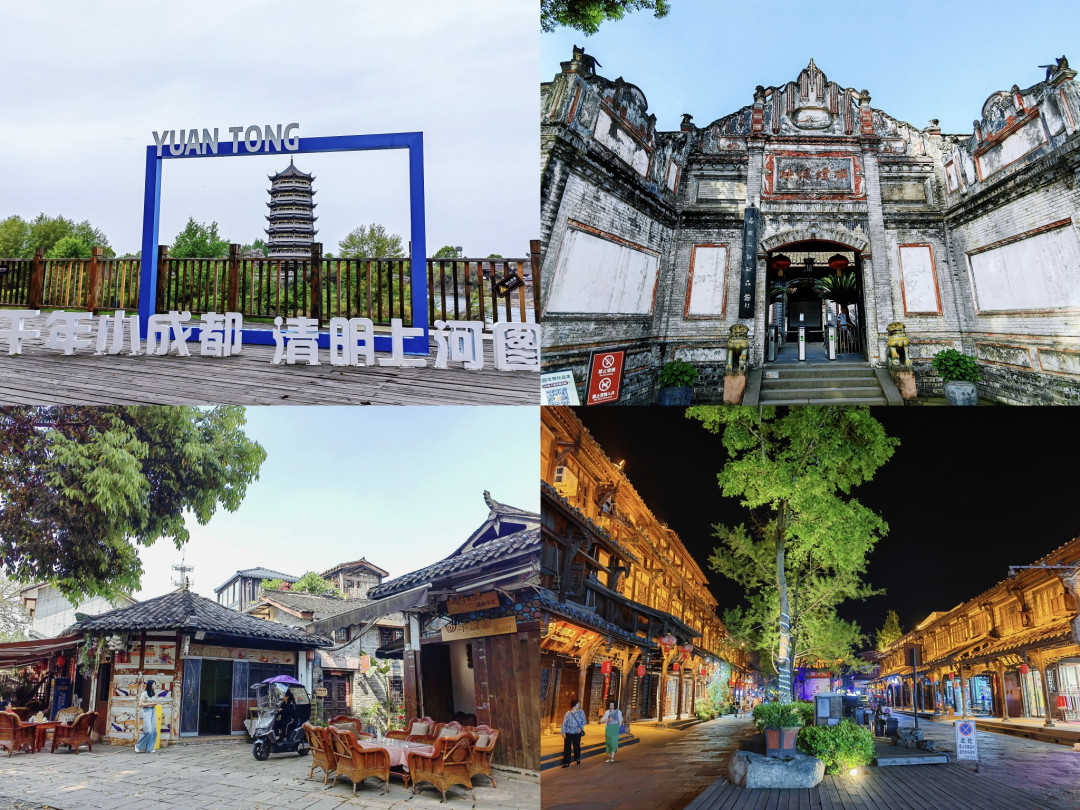
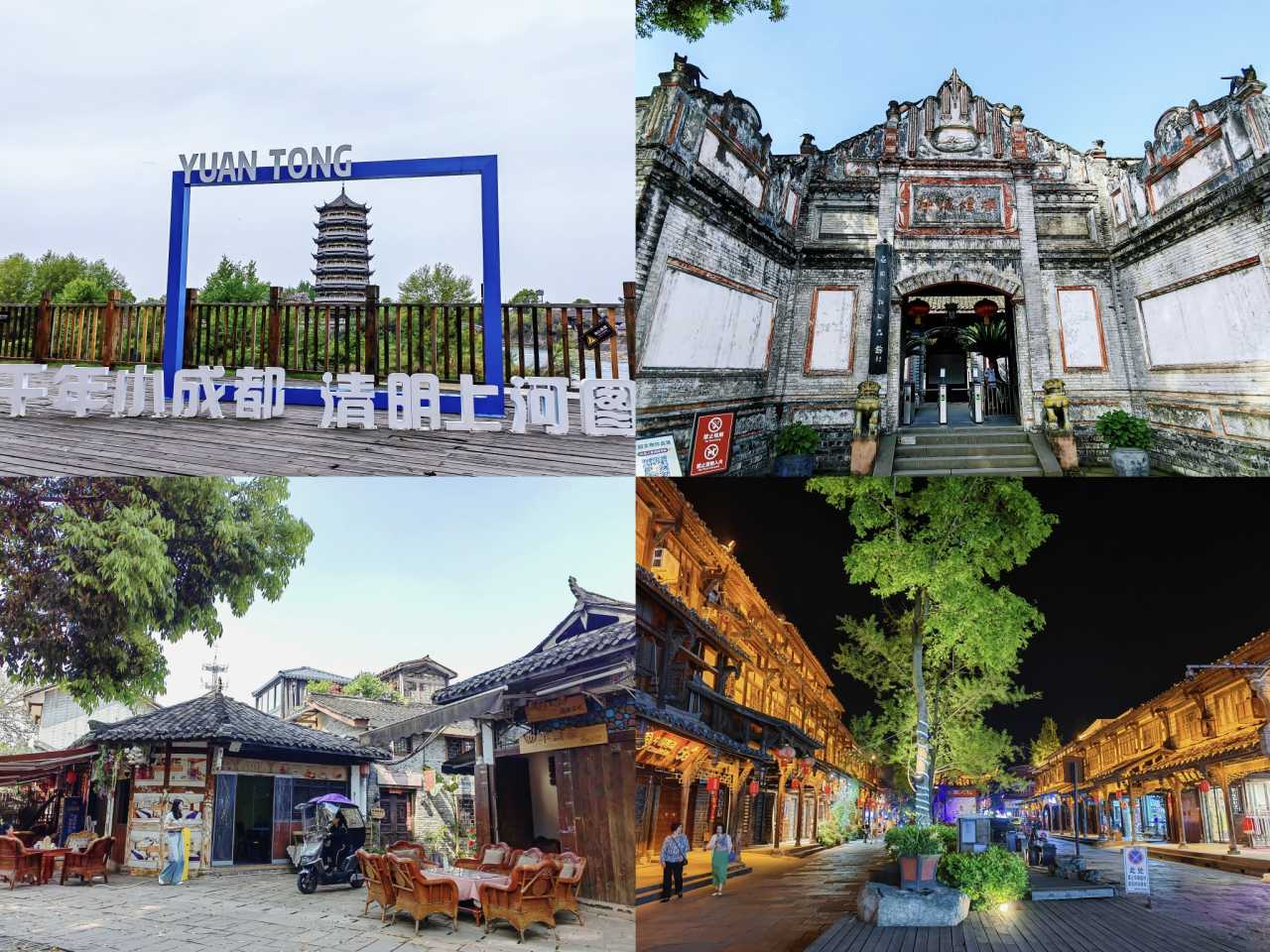
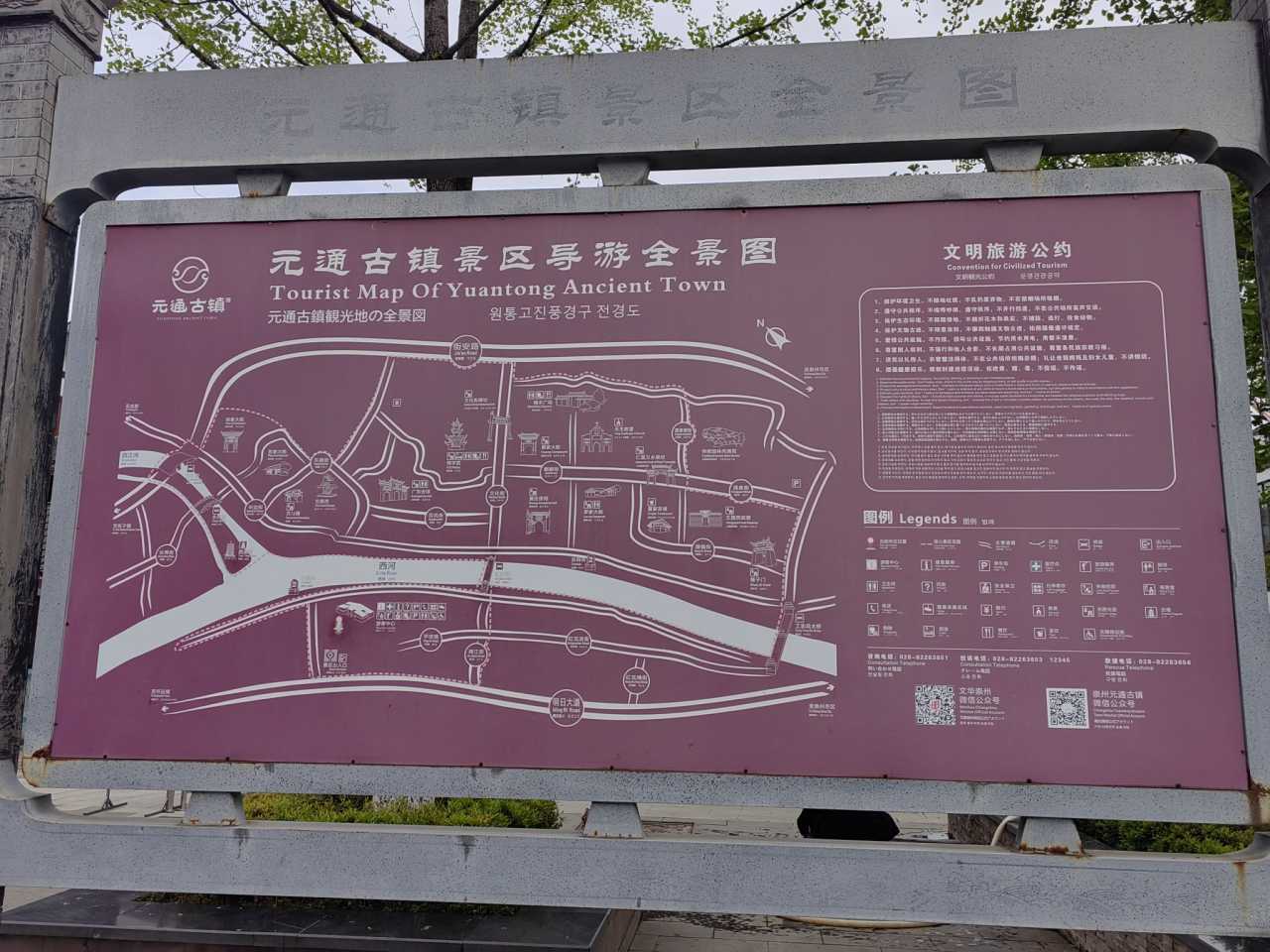
Yuantong Ancient Town, located in the northwestern part of Chongzhou City, Chengdu, is an ancient water town with over 1,600 years of history. Settlements existed here as early as the Eastern Han dynasty, and during the Qing dynasty, it flourished as a salt transport port, earning the nickname “Little Chengdu.”
The town boasts three wonders:
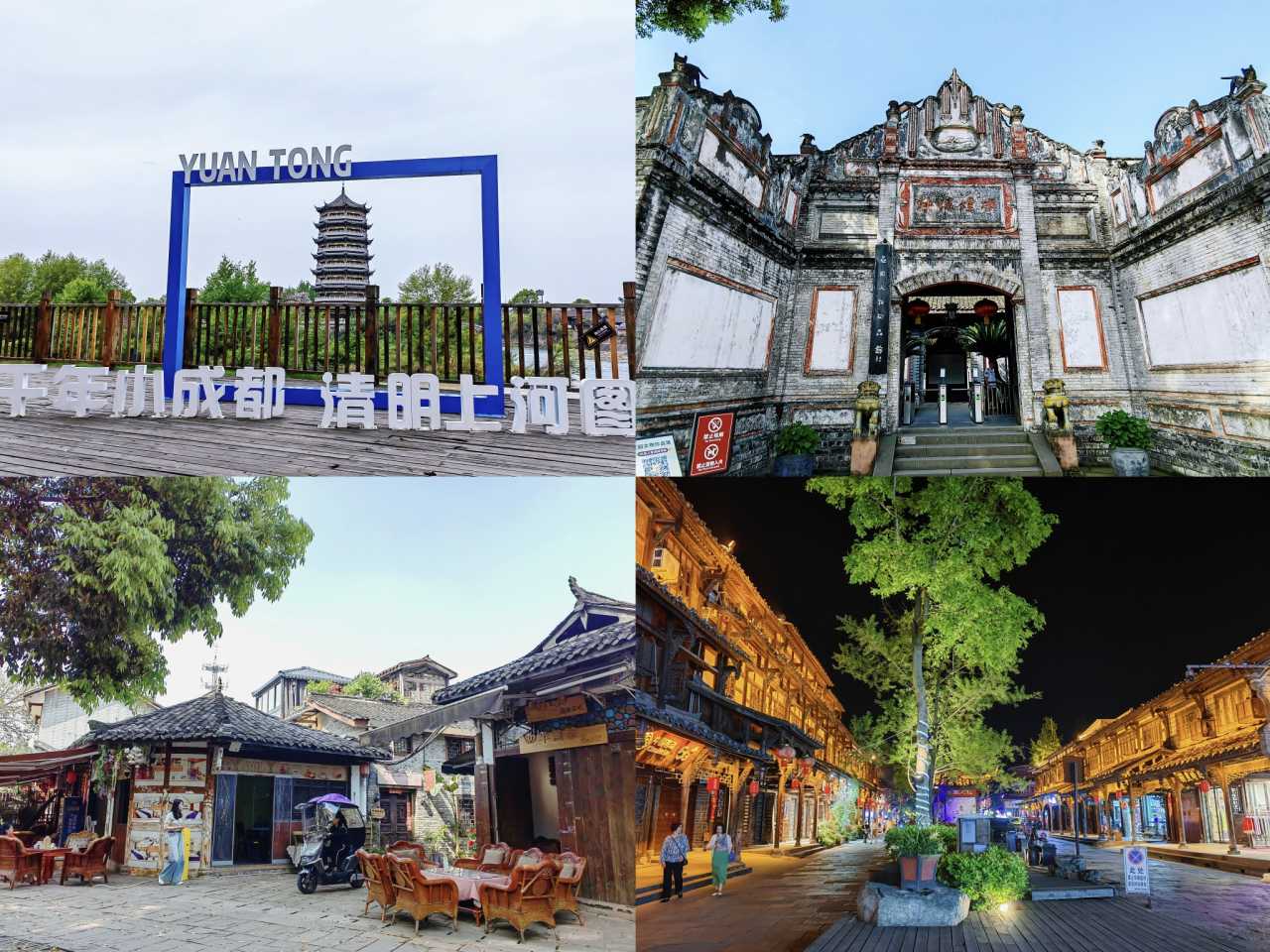
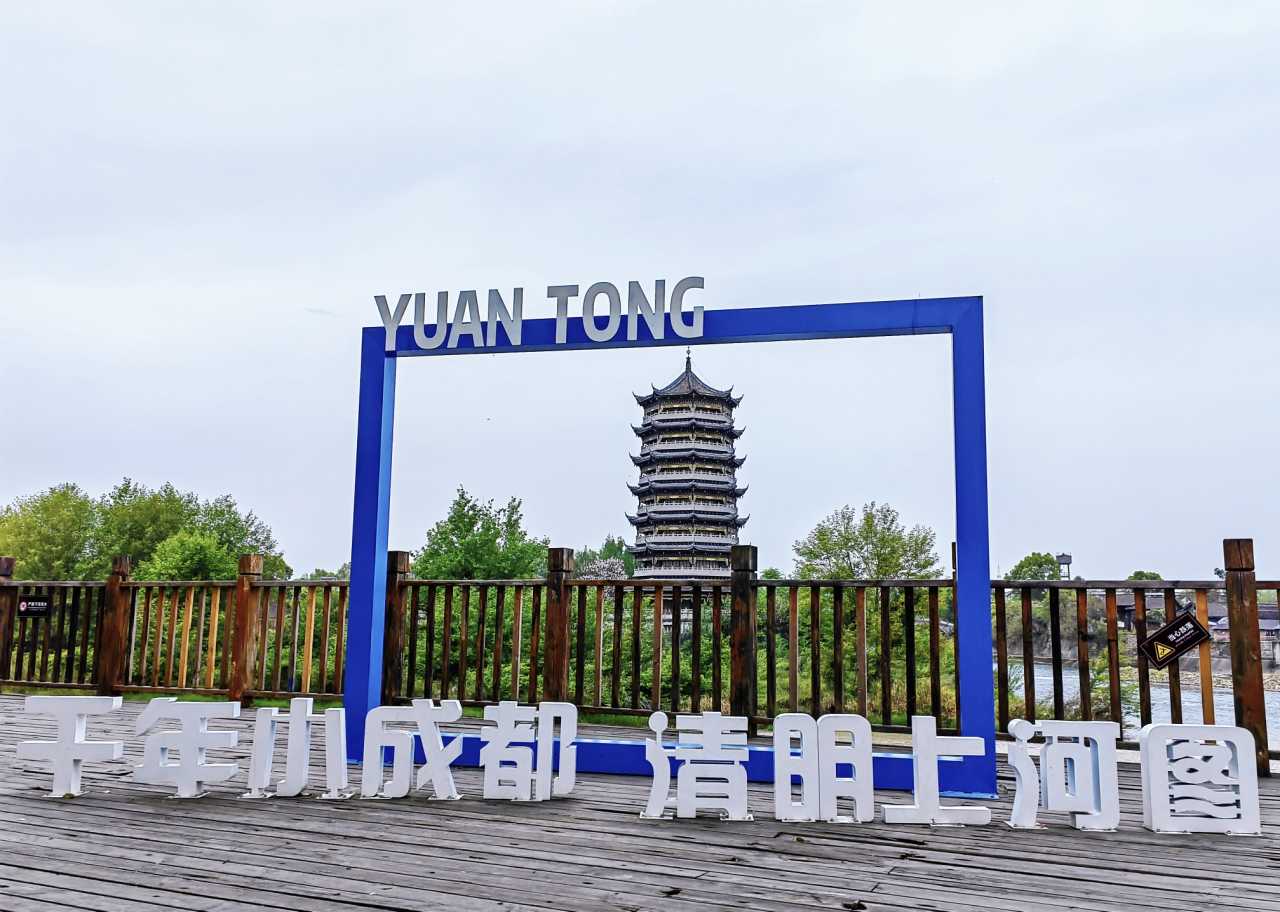
First Wonder: The Water. The Wenjing River, Wei River, and Bo River converge here, creating a miniature version of the Along the River During the Qingming Festival water-town tableau. At the confluence, a iconic ancient pagoda stands silently, serving as the town’s most prominent landmark. In April 2019, I first took a photo with this pagoda; in April 2025, I pressed the shutter from the same spot—six years had passed, and the pagoda remained unchanged, the river still flowed, but the person in the frame had transformed.
Second Wonder: The Yongli Suspension Bridge Relic. This blue-brick arch bridge was rebuilt after 1938, and its carved railings preserve the original craftsmanship from the Jiaqing era of the Qing dynasty. Standing on the bridge, you can take in the entire town, with the rushing river roaring below, as if you can hear the clamor of salt boats from a century ago.
Third Wonder: The Former Huang Family Residence Complex. This includes the Huang Family Courtyard and other Western Sichuan-style dwellings from the Republic of China period. These structures bear witness to the town’s heyday as a salt transport port. Unfortunately, the Huang Family Courtyard is now locked, and many courtyards are no longer open to the public. Recalling my first visit in 2019, when the courtyard was vibrant and bustling, I couldn’t help but feel a pang of melancholy at the passage of time.
Time Has Pressed Pause Here
Walking along the bluestone-paved streets of Qilin Street, Shuangfeng Street, and Dongsheng Street, you’re flanked by buildings from the Qing dynasty and the Republic of China period. Blacksmiths’ hammers ring out, bamboo-weaving shops display handcrafted wares, and the aroma of tea drifts from old teahouses. Everything here seems frozen in a distant era.
What surprised me most was that, six years later, the town had barely changed. Even the street-front shops remained exactly as they were, as if time had pressed pause. The only difference was the number of visitors. Once bustling with crowds, Yuantong Ancient Town now sees few tourists, and many shops have closed their doors, leaving the streets quiet and desolate.

Stepping into the Luo Family Courtyard, I found it as cold and deserted as before, with no sign of life. I had taken photos here in 2019; looking at it now, only I had changed. This experience of “things remain, but people are different” brought both a sense of tranquility and a touch of wistful sadness.
Yuantong’s charm lies in its perfect fusion of traditional Western Sichuan residential architecture, dock culture, and riverside water-town atmosphere. It harmoniously incorporates Catholic churches, Guangdong guild halls, and other Chinese-Western architectural elements, while preserving Taoist cultural relics like the Xizi Temple (a pavilion for burning written paper). It is the epitome of slow living, a rendezvous across a thousand years, and a true portrayal of “Western Sichuan’s premier waterfront.”
[Link: Best time to visit Yuantong Ancient Town]
2. Liu Family Manor: A Living Modern History
Stepping into the Extravagant World of a Landlord
Leaving Yuantong Ancient Town, we drove to Anren Town in Dayi County. Dayi County lies in the transitional zone between the Chengdu Plain and the northwestern Sichuan Plateau, bordering the Qionglai Mountains. Its history stretches back to the Neolithic era. But its most famous attraction is undoubtedly the Liu Family Manor.
The Liu Family Manor, officially named “Dayi Liu Family Manor Museum,” is located at 15 Jingui Street in Anren Town. It is the best-preserved landlord manor complex in modern Sichuan. Comprising the mansions of five brothers—including Liu Wencai and Liu Wenhui—and the ancestral home of the Liu family, it covers over 70,000 square meters, with a building area of 21,000 square meters. Designated a National Key Cultural Relic Protection Unit in 1996, it was upgraded to a National Grade II Museum in 2024.
Construction began in the late Qing dynasty and was completed during the Republic of China period. The complex is divided into northern and southern sections. The old manor, centered on Liu Wencai’s mansion, features 27 courtyards and over 180 rooms, with a closed, intricate layout. The new manor, Liu Wenhui’s residence, blends Gothic arched gates with Chinese structural elements, exemplifying a Chinese-Western fusion.
First, we visited Liu Wencai’s mansion. The moment we entered, an overwhelming sense of opulence greeted us. The main door was made of three-inch-thick camphor wood, secretly embedded with thin steel plates—so thick that even shotgun pellets couldn’t penetrate it back then. The women’s quarters were even more luxurious, with intricately carved beds and exquisite furniture, each piece exuding a strong antique charm. The most striking item was a carved golden dragon bed—the most extravagant piece of furniture in the entire manor, every inch adorned with intricate carvings that left visitors in awe.
The mansion also housed a secret “golden chamber for a hidden beauty,” as well as underground vaults for gold, an opium storage room, a water dungeon, and an execution chamber. These scenes create a powerful narrative, transporting visitors back to that turbulent era.
“The Rent Collection Courtyard”: A Milestone in Sculpture History
Passing through a corridor, we entered an independent quadrangle-style building, home to the renowned sculptural group “The Rent Collection Courtyard.” In 1965, teachers and students from the Sichuan Fine Arts Institute set up scaffolding here and spent three months creating 114 life-sized clay figures, producing this monumental clay sculpture series.
In the 118-meter-long corridor of the rent collection courtyard, these life-sized figures, their expressions, movements, and scene details, are incredibly realistic and vivid. Accountants click abacuses in the office, a mother kneels in supplication, a young man clenches his fist ready to rebel—each group of clay figures vividly recreates the tragic scenes of peasants paying rent. Through a continuous narrative, the work presents seven groups of scenes: paying rent, inspecting rent, winnowing grain, measuring grain, settling accounts, demanding rent, and resisting. It reveals, in the most direct way, the exploitation and oppression of peasants by landlords under the semi-colonial, semi-feudal conditions of old China.
In 2007, “The Rent Collection Courtyard” was designated a National Grade I Protected Cultural Relic, becoming a milestone in Chinese sculpture history.
[Link: Dayi County travel guide]
3. Jiezi Ancient Town: A Quiet Escape into History
A Town of Scholars and Scenic Beauty
Jiezi Ancient Town, located in Chongzhou City, is another must-visit destination for those exploring ancient towns near Chengdu. Known historically as “Hengyuan Town,” it has a history spanning over 1,000 years. It was once a flourishing commercial hub and a gathering place for scholars during the Ming and Qing dynasties.
The town is built along the banks of the Wenjing River, with traditional Western Sichuan architecture lining both sides. The main street, Wenchang Street, is lined with ancient buildings, many of which have been converted into teahouses, souvenir shops, and small museums. One of the most notable is the Jiezi Ancient Town Museum, which houses a collection of local artifacts and exhibits on the town’s history.
A Town That Time Forgot
Unlike Yuantong, Jiezi has retained a more vibrant atmosphere. The streets are still bustling with locals and tourists alike. The iconic Wenchang Pavilion, a three-story wooden structure dating back to the Qing dynasty, stands at the center of the town. It is said that scholars would gather here to recite poetry and discuss literature.
The town is also famous for its “Four Greats”: the ancient streets, ancient temples, ancient bridges, and ancient trees. The Wenjing Bridge, a covered bridge spanning the river, is a popular spot for photos and offers a panoramic view of the town.
Jiezi Ancient Town is less crowded than Yuantong, making it an ideal destination for those seeking a quieter, more authentic experience. The slow pace of life here is infectious—sit in a riverside teahouse, sip on a cup of local tea, and watch the world go by.
[Link: Jiezi Ancient Town travel tips]
4. Practical Travel Tips for Exploring Chengdu’s Ancient Towns
How to Get There
- Yuantong Ancient Town: Take a bus from Chengdu’s Chadianzi Bus Station to Chongzhou, then transfer to a local bus to Yuantong. Alternatively, drive via the Chengdu-Wenqiong Expressway (about 1.5 hours).
- Liu Family Manor: Take a bus from Chengdu’s Chadianzi Bus Station to Dayi County, then transfer to a local bus to Anren Town. Driving takes about 1.5 hours via the Chengdu-Wenqiong Expressway.
- Jiezi Ancient Town: Similar to Yuantong, take a bus to Chongzhou and then a local bus to Jiezi. Driving is also convenient.
Best Time to Visit
Spring (March–May) and autumn (September–November) are the best seasons to visit. The weather is mild, and the scenery is at its most beautiful. Avoid Chinese public holidays (e.g., National Day, Labor Day) to escape the crowds.
Where to Stay
- Yuantong: There are several guesthouses and small hotels within the ancient town. Staying overnight allows you to experience the town in the early morning and evening when it’s most peaceful.
- Anren Town: There are a few hotels near the Liu Family Manor, including the Anren Old Street Hotel, which offers a traditional Western Sichuan experience.
- Jiezi: Similar to Yuantong, there are guesthouses and small hotels within the town.
What to Eat
- Yuantong: Try the local Yuantong bean jelly and river fish dishes.
- Liu Family Manor: Anren Town is famous for its Anren-style hotpot and Dayi braised pork.
- Jiezi: Sample the Jiezi tofu pudding and local tea.
[Link: Chengdu travel itinerary]
FAQ: Frequently Asked Questions About Chengdu’s Ancient Towns
1. Are these ancient towns accessible for people with mobility issues?
Most ancient towns have uneven stone-paved streets, which can be challenging for wheelchair users. However, many main streets are relatively flat. It’s advisable to check with individual attractions for accessibility.
2. Can I visit all three towns in one day?
It’s possible but very rushed. We recommend dedicating at least one day to each town to fully appreciate their charm. A two-day itinerary covering Yuantong and Jiezi is feasible, with an overnight stay in one of the towns.
3. Are there English guides available?
English guides are not common, but some hotels and tour operators in Chengdu can arrange one. Alternatively, use a translation app for basic communication.
4. What is the entrance fee for the Liu Family Manor?
As of 2025, the entrance fee is approximately 40 RMB (about $5.50 USD). Discounts are available for students and seniors.
5. Are these towns suitable for family trips?
Absolutely! The towns offer a safe, educational, and culturally rich experience for children. The Liu Family Manor, in particular, provides a fascinating history lesson.
Conclusion: A Journey Through Time
Revisiting Chengdu’s ancient towns—Yuantong, Jiezi, and the Liu Family Manor—is more than just a sightseeing trip. It’s a journey through time, a chance to witness the enduring beauty of Western Sichuan’s culture and history. From the slow, water-bound life of Yuantong to the opulent, turbulent world of the Liu Family Manor, each destination offers a unique glimpse into a China that time has treated gently.
Whether you’re a history buff, a photography enthusiast, or simply a traveler seeking peace and authenticity, these ancient towns will leave an indelible mark on your heart. So, pack your bags, leave the noise of the city behind, and step into the timeless charm of Western Sichuan.
Ready to explore? Plan your trip today and discover why these ancient towns are among the most cherished destinations in Sichuan.
[Link: Book your Chengdu tour]
You may also like