Passing Through Daocheng: A Journey of Regret and Healing in Western Sichuan
Meta Description: Discover a six-day Western Sichuan road trip from Daocheng to Yading, exploring Muli’s hidden gems, sacred peaks, and healing landscapes. Perfect for self-drive adventurers seeking altitude-safe routes.
Introduction: A Twenty-Year Dream, Finally Within Reach
Some places are destined to take a long time to reach. Daocheng—a name that has lingered in my mind for over twenty years—felt like a distant Shangri-La, mysterious and unreachable.
Back in the early 2000s, transportation was far less convenient than it is today. My brother, then in his early twenties, set out from Chengdu and after several bumpy days on the road finally arrived at that legendary land. When he returned, he enthusiastically recounted everything about Daocheng, but I had no real concept of it—it just felt like an unattainable dream. Perhaps from that moment, a seed was quietly planted deep in my heart.
In 2023, my family and I took a self-driving trip passing through Litang and Batang, crossing the Genie Southern Route toward Xiangcheng and Deqin. Our wheels rolled across Daocheng's soil. But with my elderly parents and relatives afraid of altitude sickness, I could only let the car speed through. That was my first physical connection with Daocheng—passing through without entering, regret like a thin thorn lodged in my heart. After all, how easy would it be to muster the will again to venture deep into western Sichuan?
Not until this year, when my friend Sister Xiao Qi recommended the Mana Chajin viewing platform in Muli, saying you could see Daocheng's three sacred mountains—Yangmaiyong, Xiannairi, and Xianuoduoji—and might even catch the blooming of the rhododendrons. So a spontaneous trip quickly took shape: starting from Xichang into Muli, then to Daocheng, returning through Litang and Kangding, forming a small loop.
Itinerary Overview: Six Days, Five Nights, a Carefully Planned Journey
| Day | Route | Highlights | Overnight (Elevation) |
|---|---|---|---|
| April 30 | Chengdu → Xichang (5.5 hrs, 450 km) | Dashiban Village, Qionghai Lake | Xichang (1,500m) |
| May 1 | Xichang → Muli → Kangwu Grand Monastery → Shangri-La Lake → Muli Grand Monastery → Guxiang Township | Kangwu Grand Monastery, Shangri-La Lake, sunset at Muli Grand Monastery | Guxiang (2,200m) |
| May 2 | Guxiang → Mana Chajin Viewing Platform (sunrise) → Daocheng Shangri-La Town → Yading short route | Mana Chajin, three sacred peaks | Shangri-La Town (2,900m) |
| May 3 | Yading long route | Full-day hiking in Yading | Shangri-La Town (2,900m) |
| May 4 | Shangri-La Town → Greater Shangri-La Tourism Loop → Litang (Changling Chunqo'i Monastery) → Yajiang | Monastery visits, scenic drives | Yajiang (2,600m) |
| May 5 | Yajiang → Zheduo Mountain → Kangding → Chengdu | Mountain passes, return journey | – |
Xichang: A Photoshoot Under the Jacaranda Trees
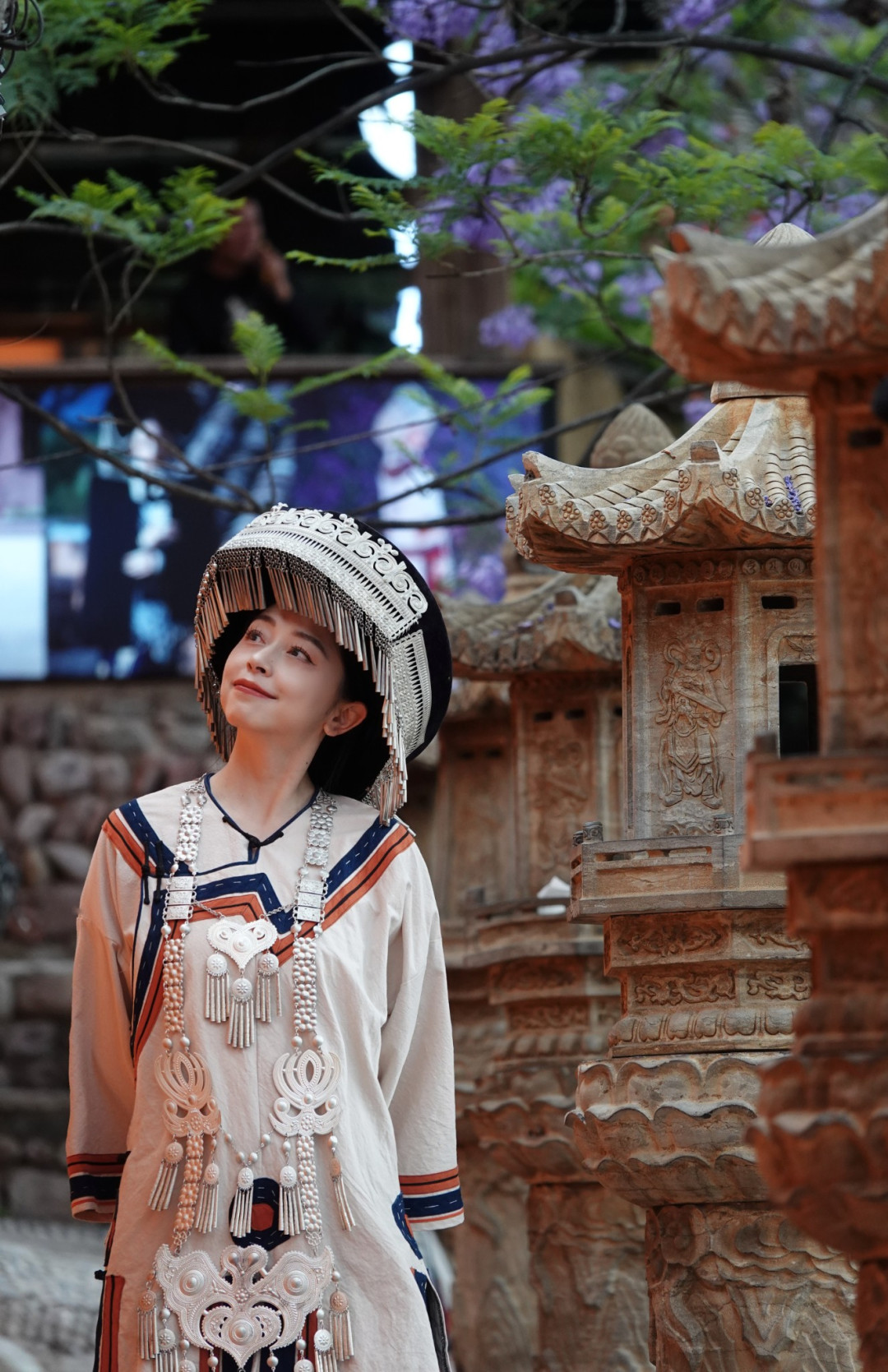
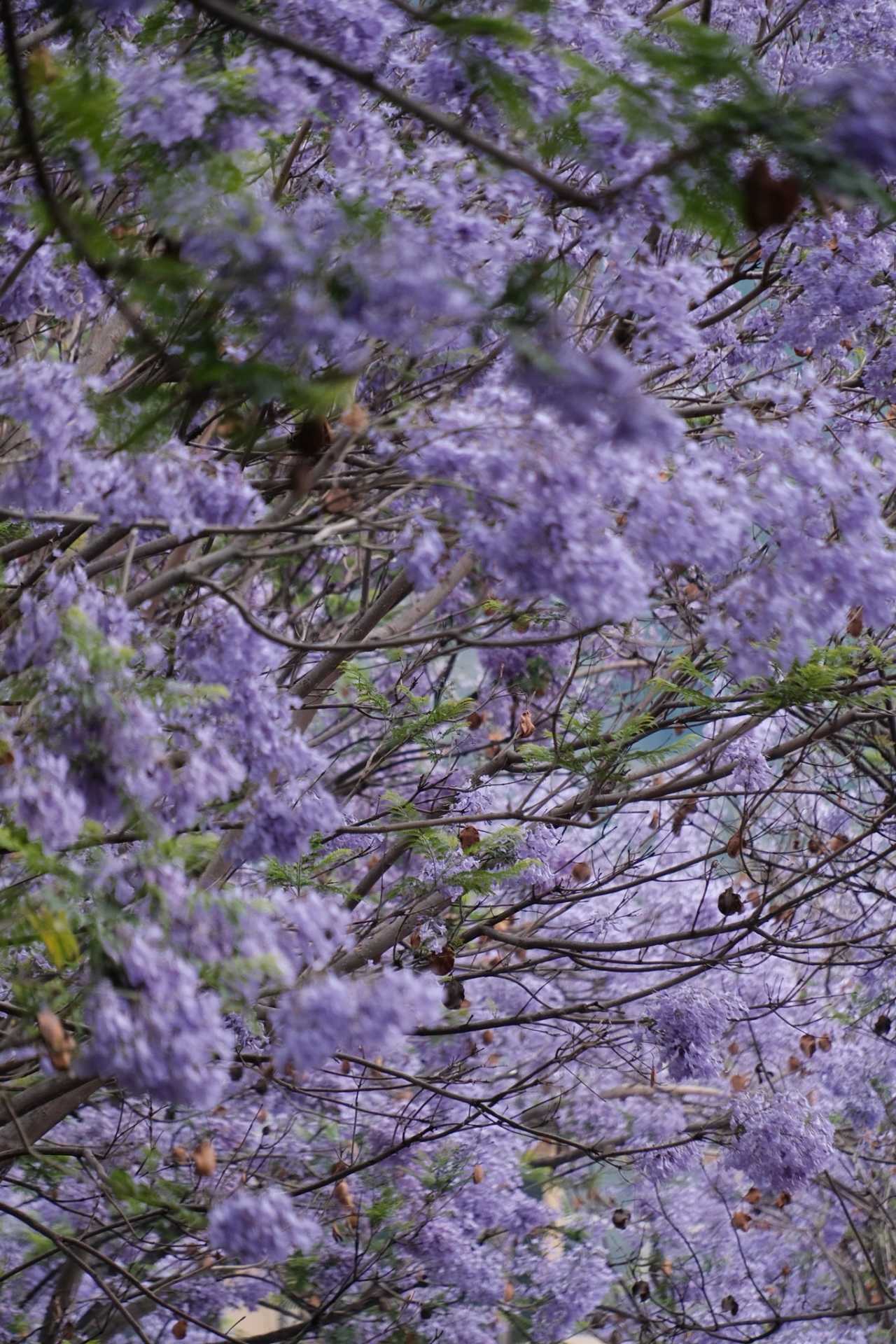
On the morning of April 30, we set out from Chengdu and arrived in Xichang by noon. Two of my travel companions are excellent photographers, and we happened to catch the peak bloom of the jacaranda trees. Since I'd passed through Xichang several times without ever visiting Dashiban Village, we decided to do a photoshoot.
After lunch, my friend Lanxi and I each rented a set of Yi ethnic costumes, including simple hair and makeup, for about 100 yuan per person. The orange walls of Dashiban Village created a striking color contrast with the blooming jacaranda, and with the ancient Ming-dynasty Lingying Temple nestled against the hillside by the water, the scene was breathtakingly beautiful. During this season in Xichang, jacaranda trees are everywhere—you don't need to go to the famous Hangtian Road; any street will give you a stunning shot.
After finishing the shoot, we enjoyed an authentic charcoal-grill barbecue dinner, then returned to our hotel to rest, waiting for the other four companions to arrive from Chengdu and Xi'an. Our group of eight was finally complete, ready to officially begin our May Day road trip.
[Link: Best jacaranda photo spots in Xichang]
Muli: Unexpected Delights in the Hidden Gem of Liangshan

Kangwu Grand Monastery: Serenity in the Valley
From Xichang through Yanyuan County to Muli County takes about five hours by car. The first half on National Highway 348 has many trucks and average road conditions, but regular cars can manage. After passing Yanyuan County, we turned onto National Highway 227—fewer cars, better roads, and almost no tourists even during the May Day holiday. This is the real hidden gem of Liangshan.
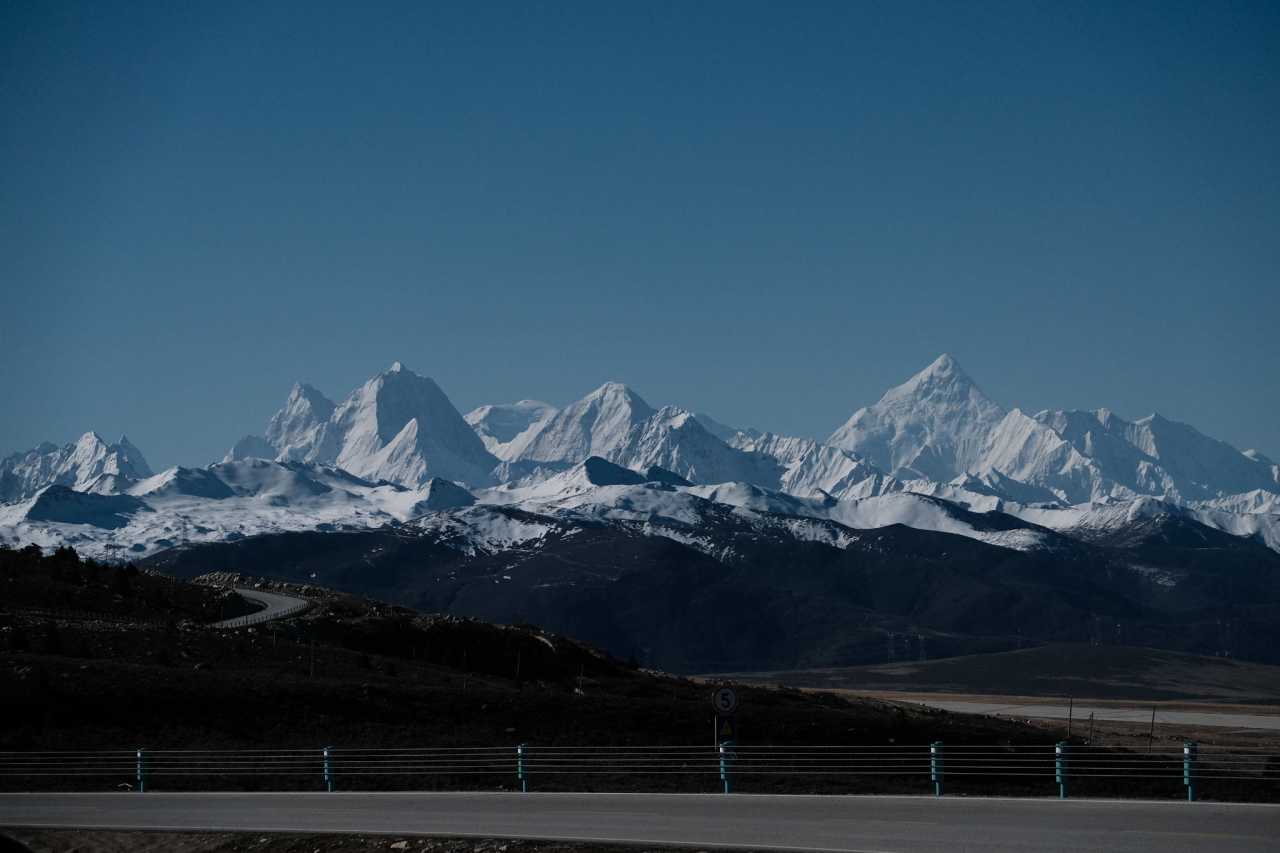
Kangwu Grand Monastery is the second-largest monastery in Muli County, sitting at an elevation of about 3,500 meters at the foot of snow-capped mountains, surrounded by highland pastures. In the valley, it stood serene and beautiful, with so few visitors it was hard to believe it was a holiday. In 1924, American explorer Joseph Rock was received here by the King of Muli, and it was his records that carried the story of Kangwu Grand Monastery to the world alongside the legend of Shangri-La.
Shangri-La Lake: Regret Can Also Be Scenery
A short ten-minute drive from Kangwu Grand Monastery brought us to Shangri-La Lake. Unfortunately, the weather didn't cooperate—a light drizzle began as we reached the shore. The grass hadn't turned green yet, the water wasn't blue, and the rhododendrons were still in bud. After a brief stop, we moved on to our next destination.
Muli Grand Monastery: An Unexpected Sunset Encounter
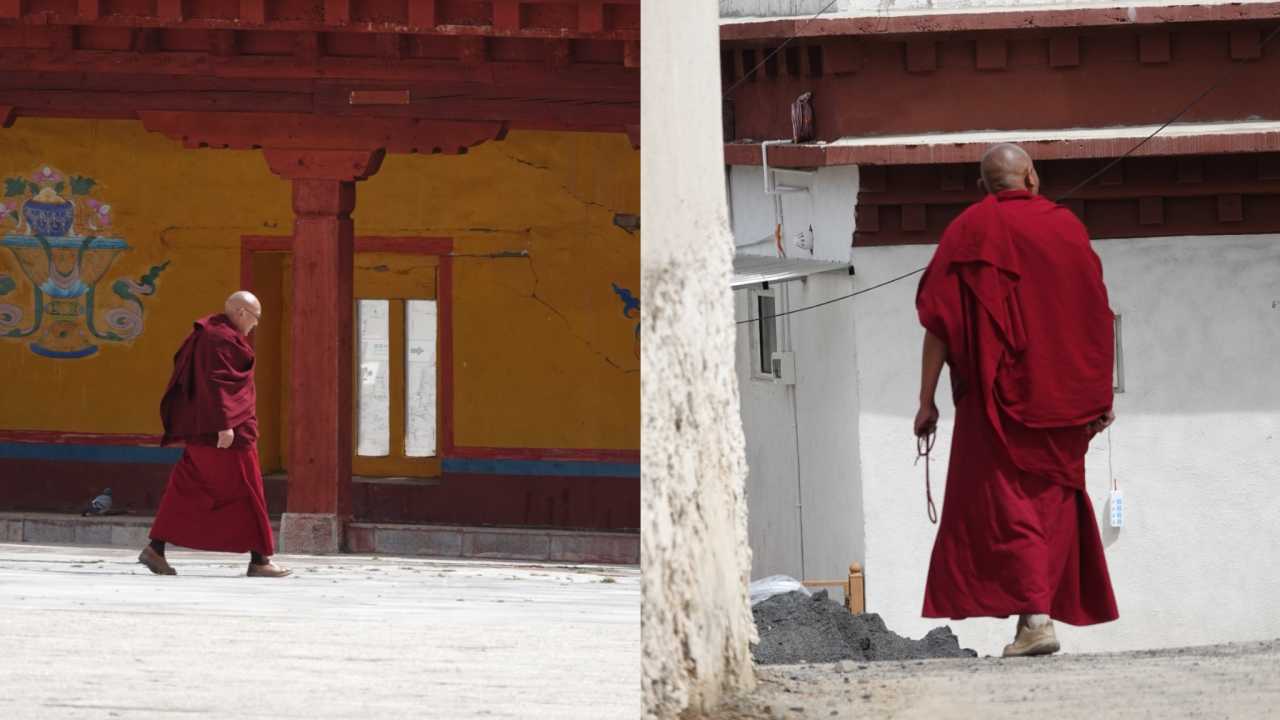
Muli Grand Monastery is located in Taoba Village, Wazhan Town, about 120 kilometers from Muli county seat. At an elevation of roughly 2,700 meters, it sits against a sacred mountain. By the time we arrived, the monastery had already closed, and we couldn't enter to see the Maitreya Buddha statue. Just as we thought the day would end in disappointment, the clouds suddenly parted, and sunset light spilled across the sky—an unexpected gift for everyone.
So, traveling isn't always about getting the perfect shot. Sometimes it's about stepping outside and accepting whatever nature offers.
We spent the night in Guxiang Township, about half an hour from Muli Grand Monastery and the closest concentrated lodging to Mana Chajin.
[Link: Top hidden monasteries in Liangshan]
First Glimpse of Daocheng: Starting from Mana Chajin
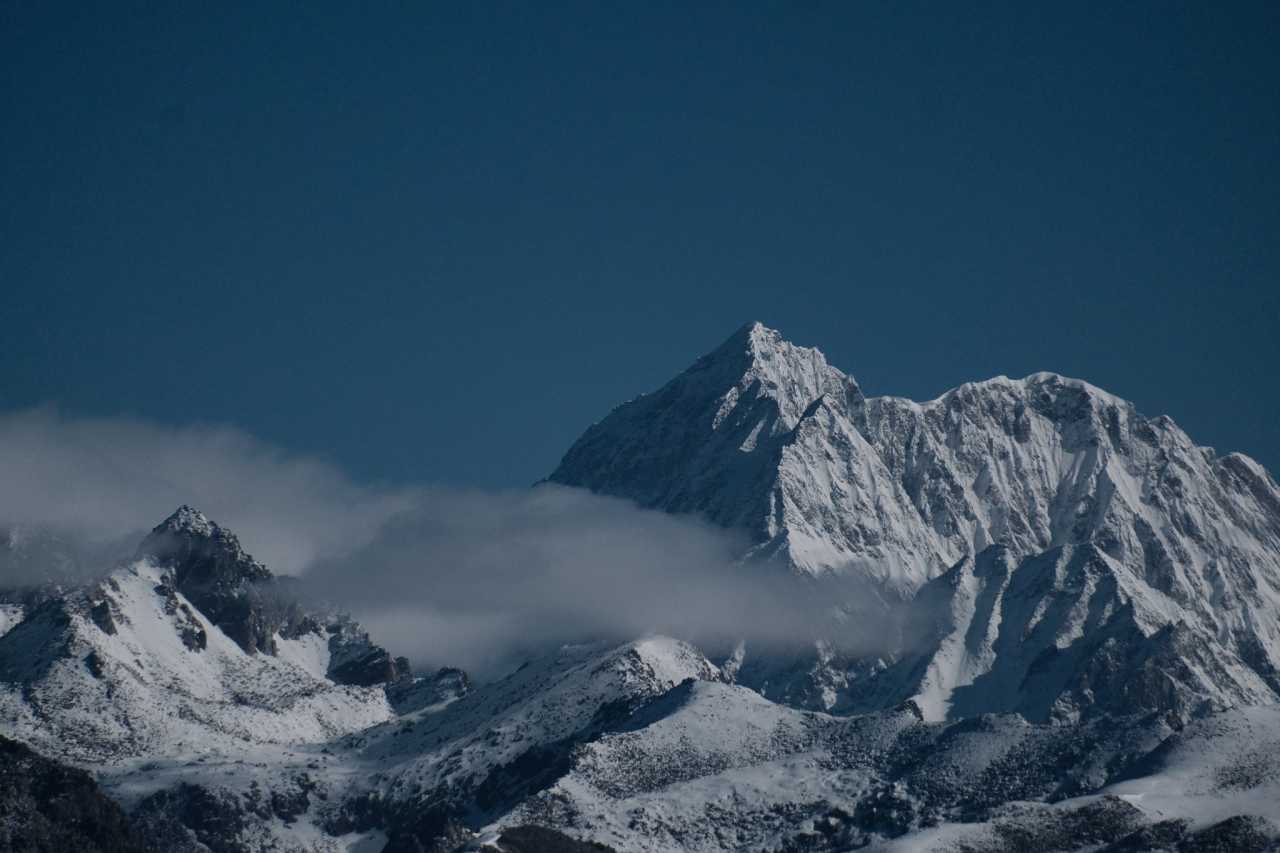
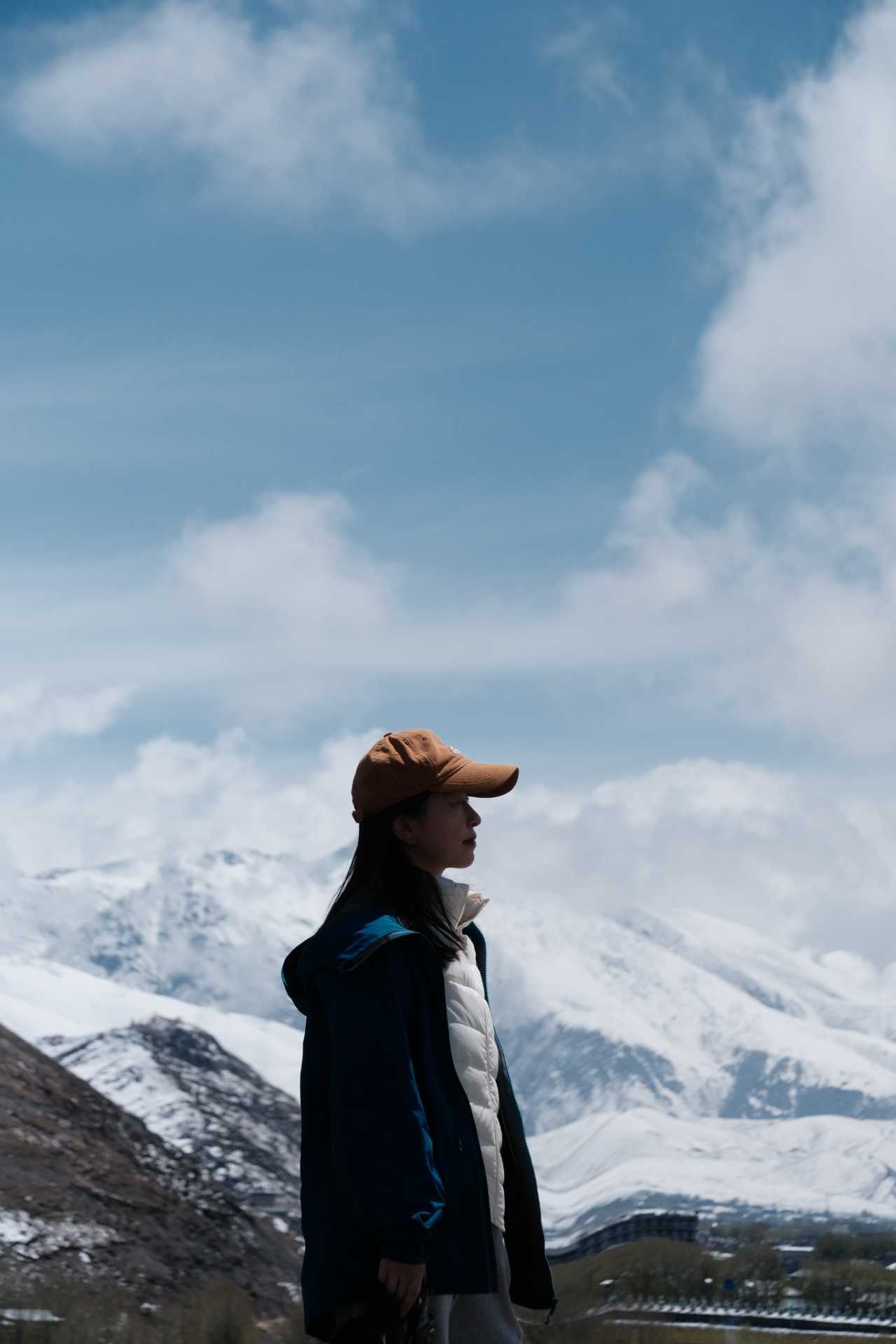
At an elevation of 4,300 meters, the Mana Chajin viewing platform is one of western Sichuan's hidden treasures, known to very few. Standing there, you can see all three sacred mountains—Xiannairi, Yangmaiyong, and Xianuoduoji—in one sweeping view.
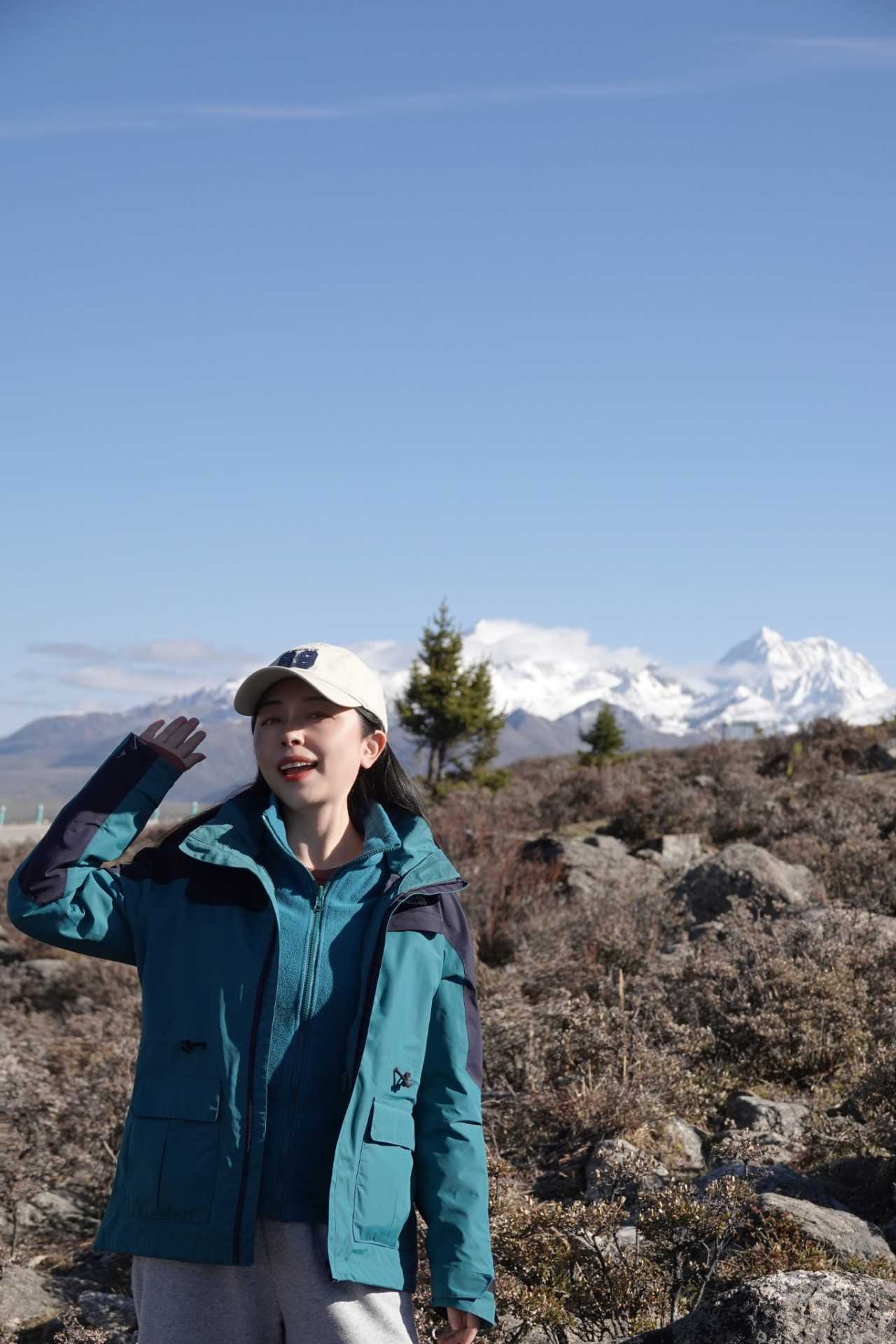
To catch the golden-hour sunrise on the snow peaks, we left Guxiang at 5 a.m., arriving at the platform before dawn. It was a cloudy day, but we were lucky enough to see the first rays of morning light. Even more coincidentally, I spotted myself in a friend's social media post—turns out, years ago on a road trip, we had helped a couple whose tire blew out while they were traveling with their infant daughter. We'd added each other on WeChat but never stayed in touch. And here we were, at the same viewing platform. In the intervening years, their daughter had grown into a three- or four-year-old, traveling everywhere with her parents. How wonderful—she'll surely grow up to be a brave girl.
The weather on the mountain changes in an instant. Soon, thick clouds rolled in, shrouding the peaks in mist. But we were fortunate enough to have seen the three sacred mountains in their full glory. Daocheng—we began to know you from Mana Chajin.
[Link: Best sunrise viewpoints in western Sichuan]
Daocheng Yading: A Love-Hate Hiking Challenge
From Mana Chajin to Daocheng's Shangri-La Town is about a two-hour drive. We arrived at our hotel by 10 a.m., took a short rest, and decided to head straight to the Yading Scenic Area that afternoon.
Yading is a 5A-rated scenic area. The entrance ticket plus round-trip sightseeing bus costs 266 yuan. The ticket is valid for two days, allowing re-entry; the round-trip bus costs 120 yuan for one day, and if you go in again the next day, you get a half-price ticket for 60 yuan round-trip. If you have time, I recommend half a day for the short route and a full day for the long route—after all, "since you're already here."
Short Route: Gentle Introduction to Sacred Peaks
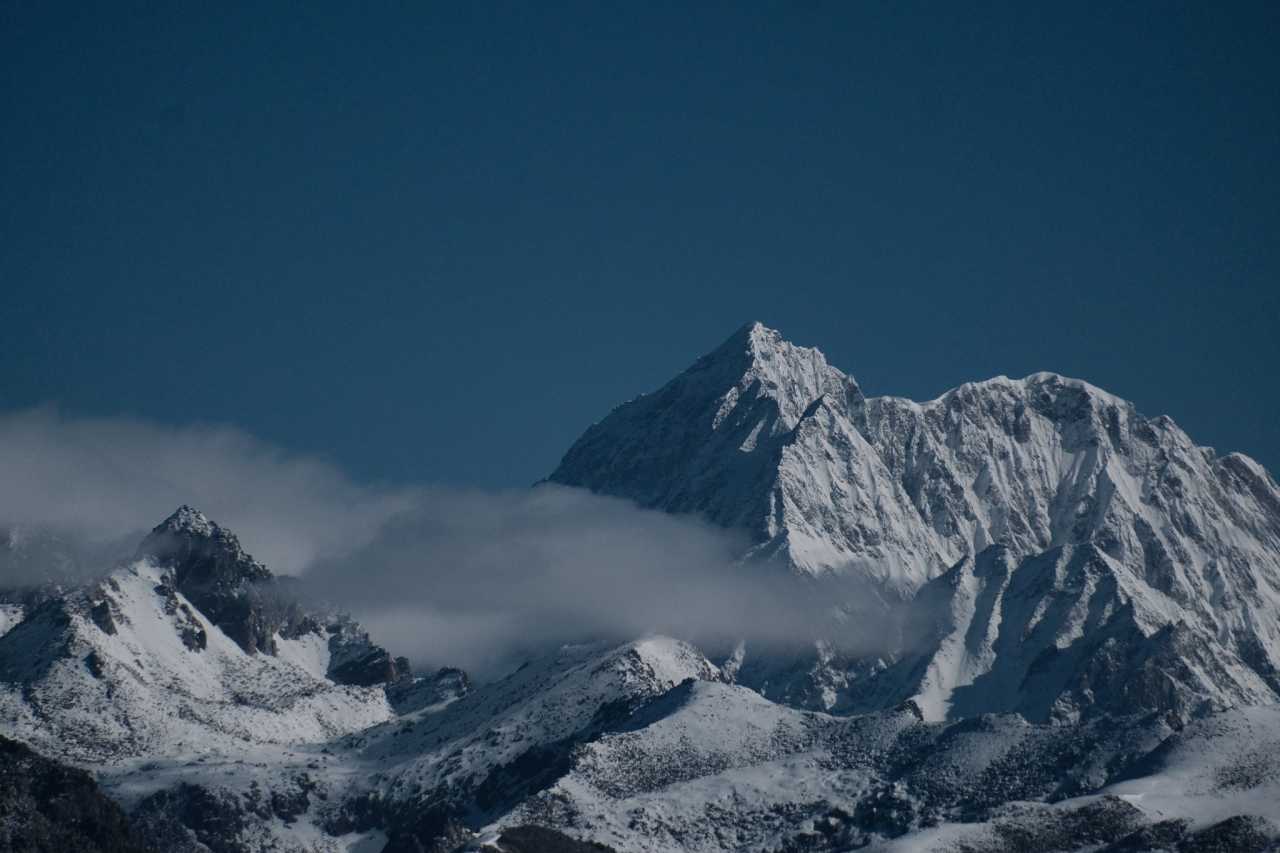
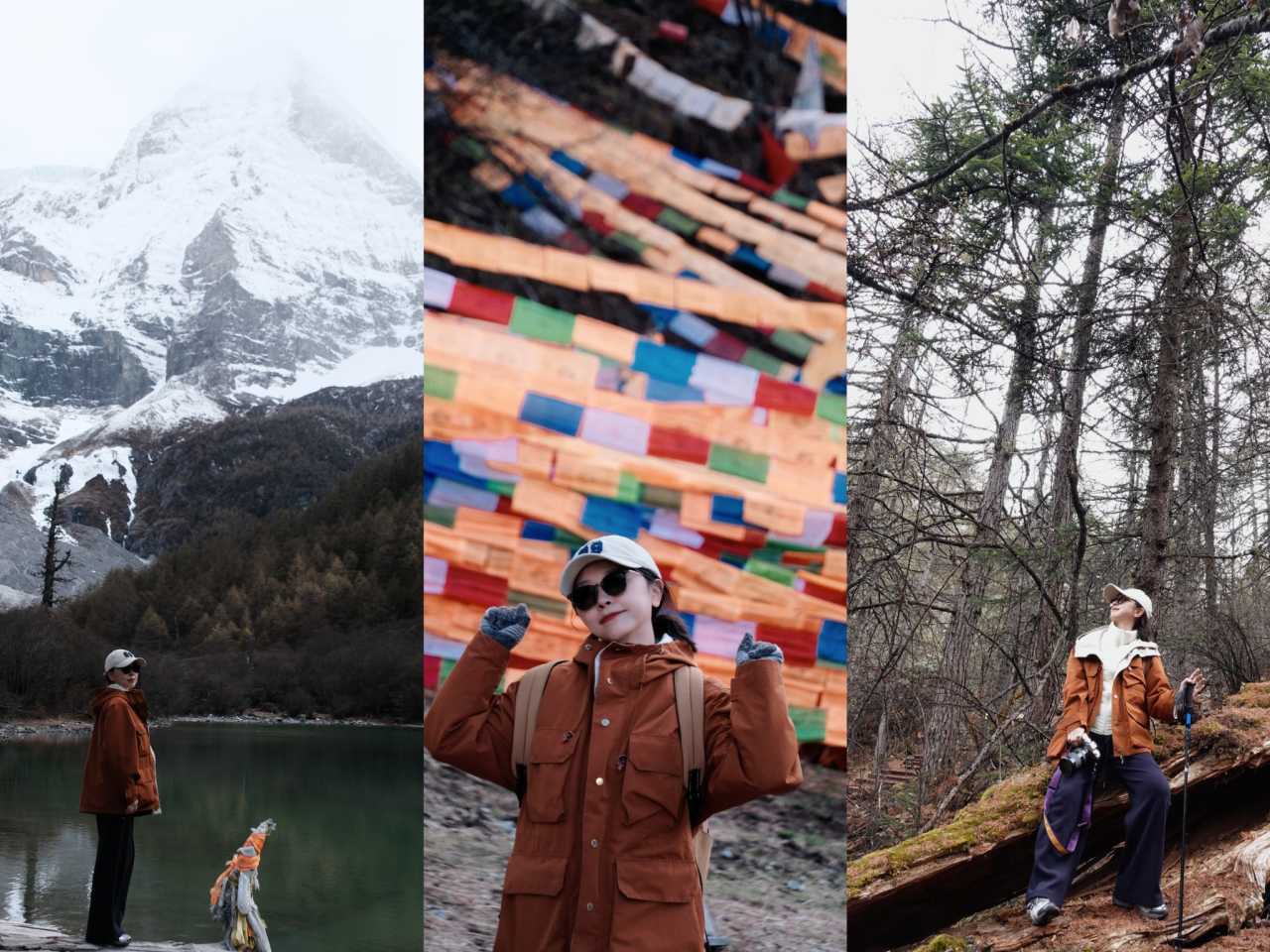
The short route takes you from the bus drop-off point (Longtongba) to Chonggu Monastery, then a gentle 1.5 km walk to the Xiannairi sacred mountain base. This is a relatively flat path, perfect for acclimatizing to the altitude. We spent about 3 hours here, taking photos and soaking in the atmosphere.
Long Route: A Grueling but Rewarding Trek
The next day, we tackled the long route—a 10+ km round trip from Longtongba to Wuse Lake at 4,700 meters. The trail starts with a steep uphill section, then levels out through alpine meadows and rocky terrain. The final ascent to Wuse Lake is punishing, but the turquoise waters against the backdrop of Yangmaiyong and Xianuoduoji make every step worth it.
Pro tip: Bring plenty of water, snacks, and oxygen canisters. The altitude is no joke—several hikers turned back before reaching the lake.
[Link: Yading hiking tips for beginners]
The Greater Shangri-La Loop: Returning Through Litang and Yajiang
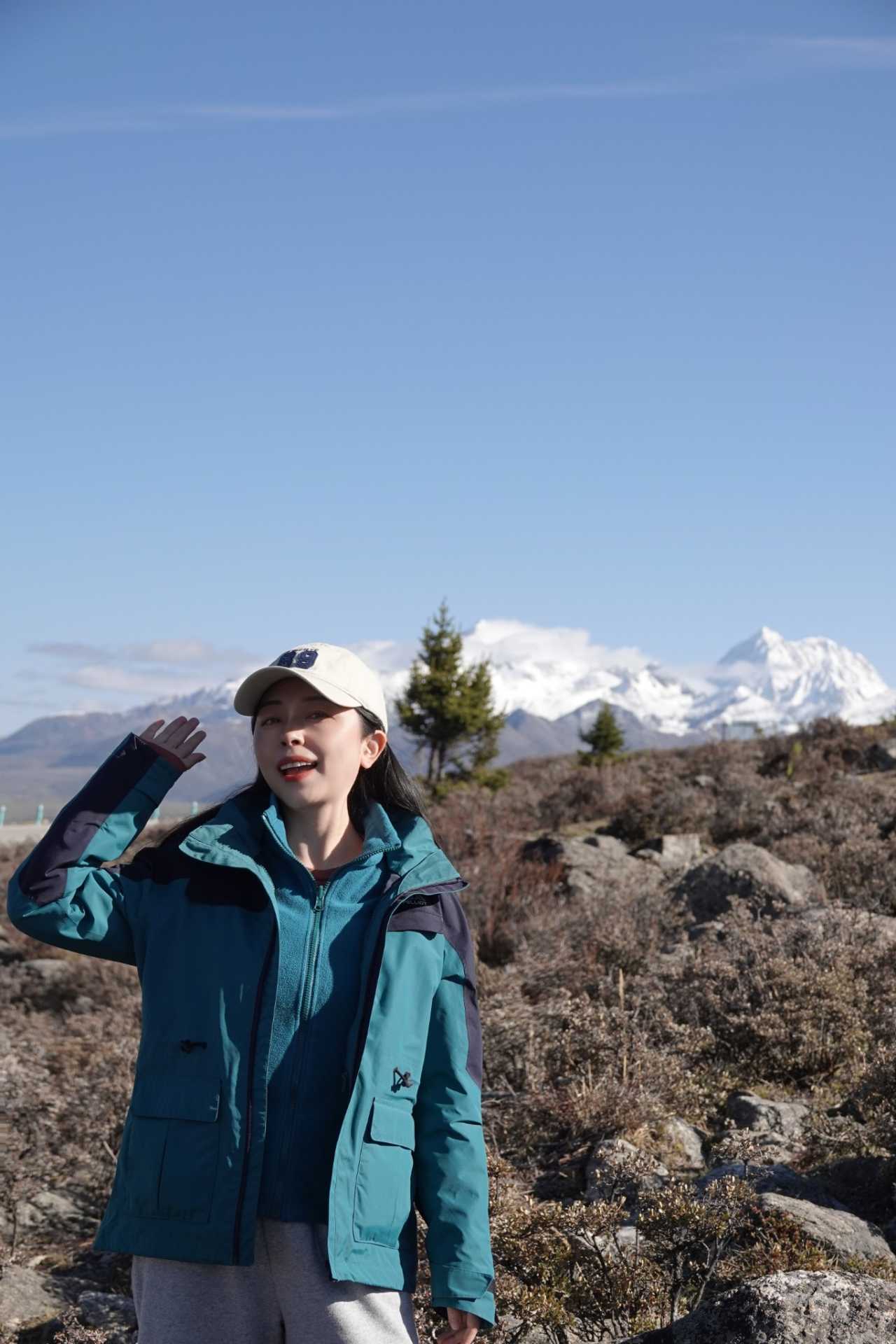
On May 4, we began our return journey via the Greater Shangri-La Tourism Loop. This scenic route connects Daocheng to Litang, passing through high-altitude grasslands and ancient monasteries.
Changling Chunqo'i Monastery in Litang
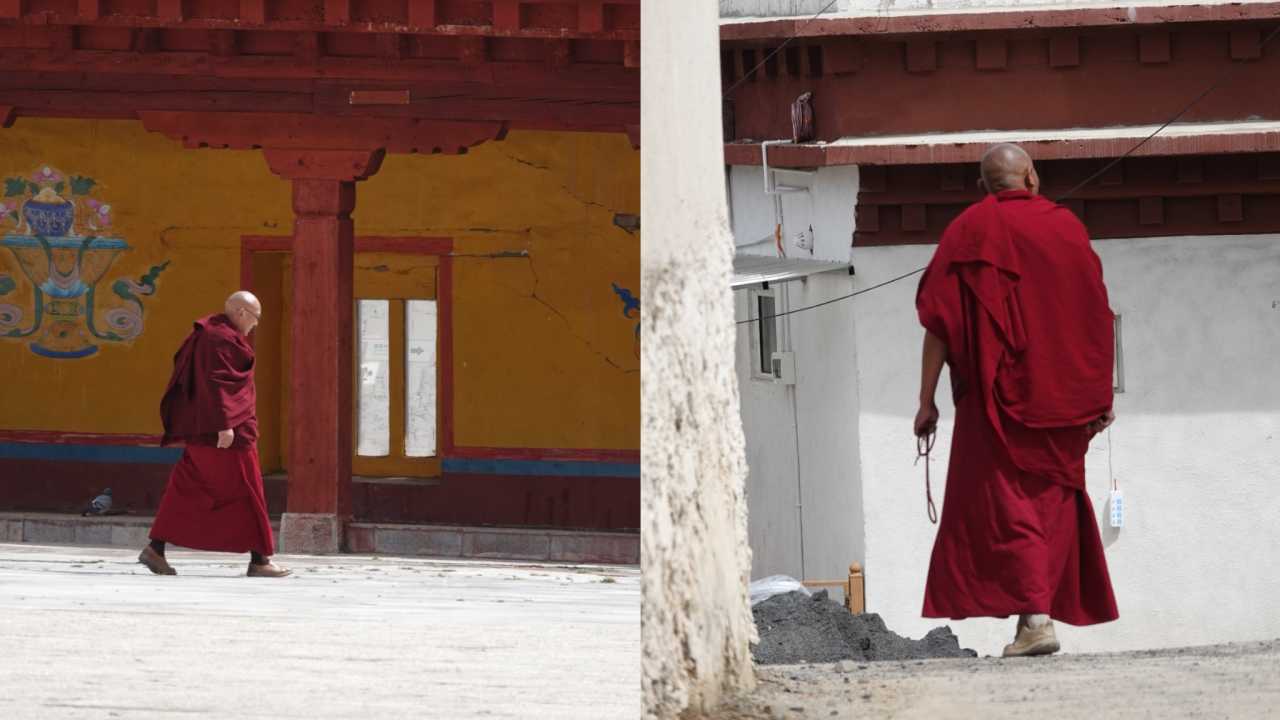
Litang County, at 4,000 meters, is one of the highest towns in the world. We stopped at Changling Chunqo'i Monastery, a Gelugpa sect monastery known for its golden rooftops and peaceful courtyards. The drive itself was breathtaking—endless grasslands dotted with yaks and prayer flags.
Yajiang: A Rest Stop at Lower Elevation
We spent the night in Yajiang (2,600m), a strategic stop for altitude recovery. The town is small but has decent hotels and restaurants. We enjoyed a hotpot dinner and slept soundly before the final day's drive.
Final Day: Zheduo Mountain and Kangding
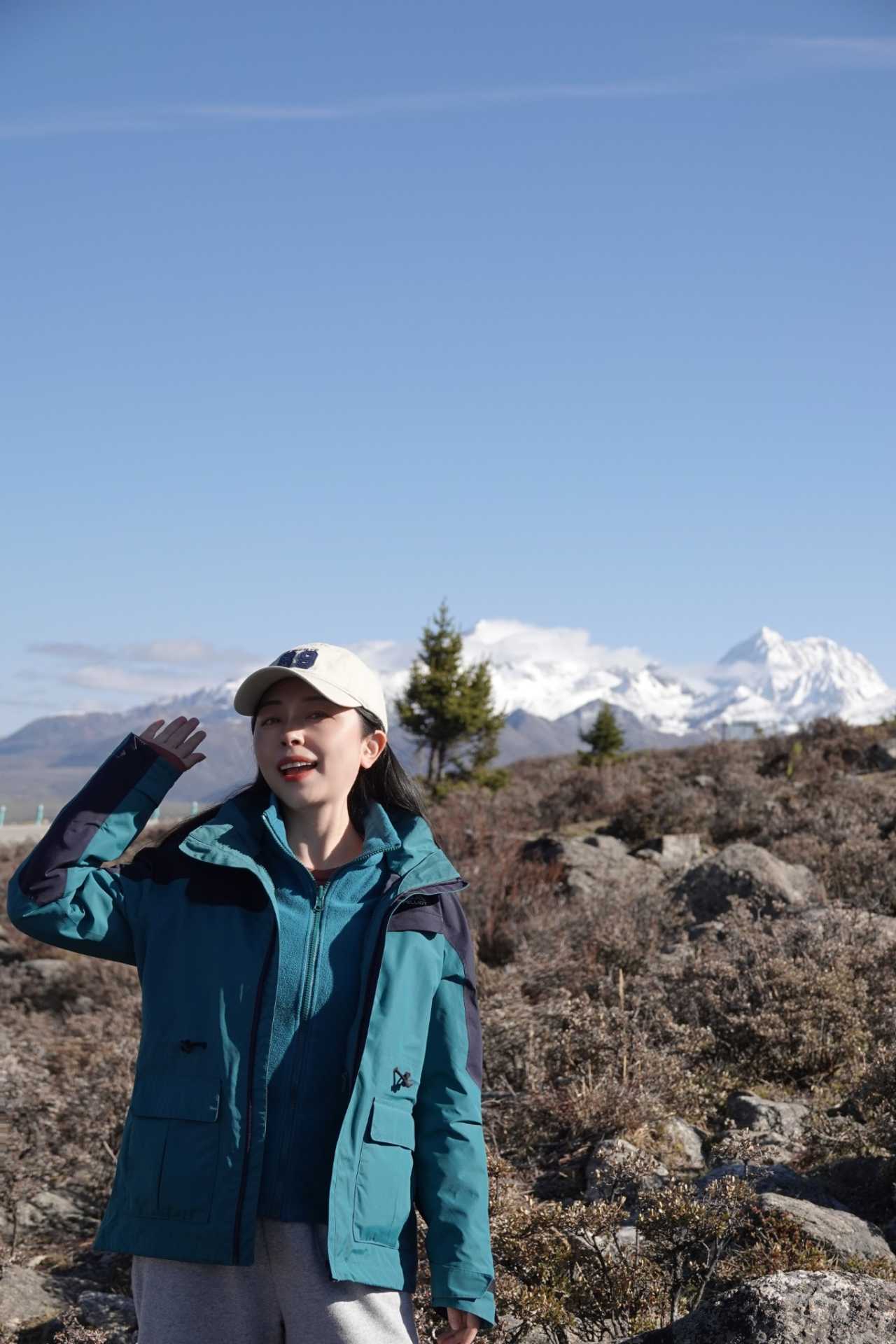
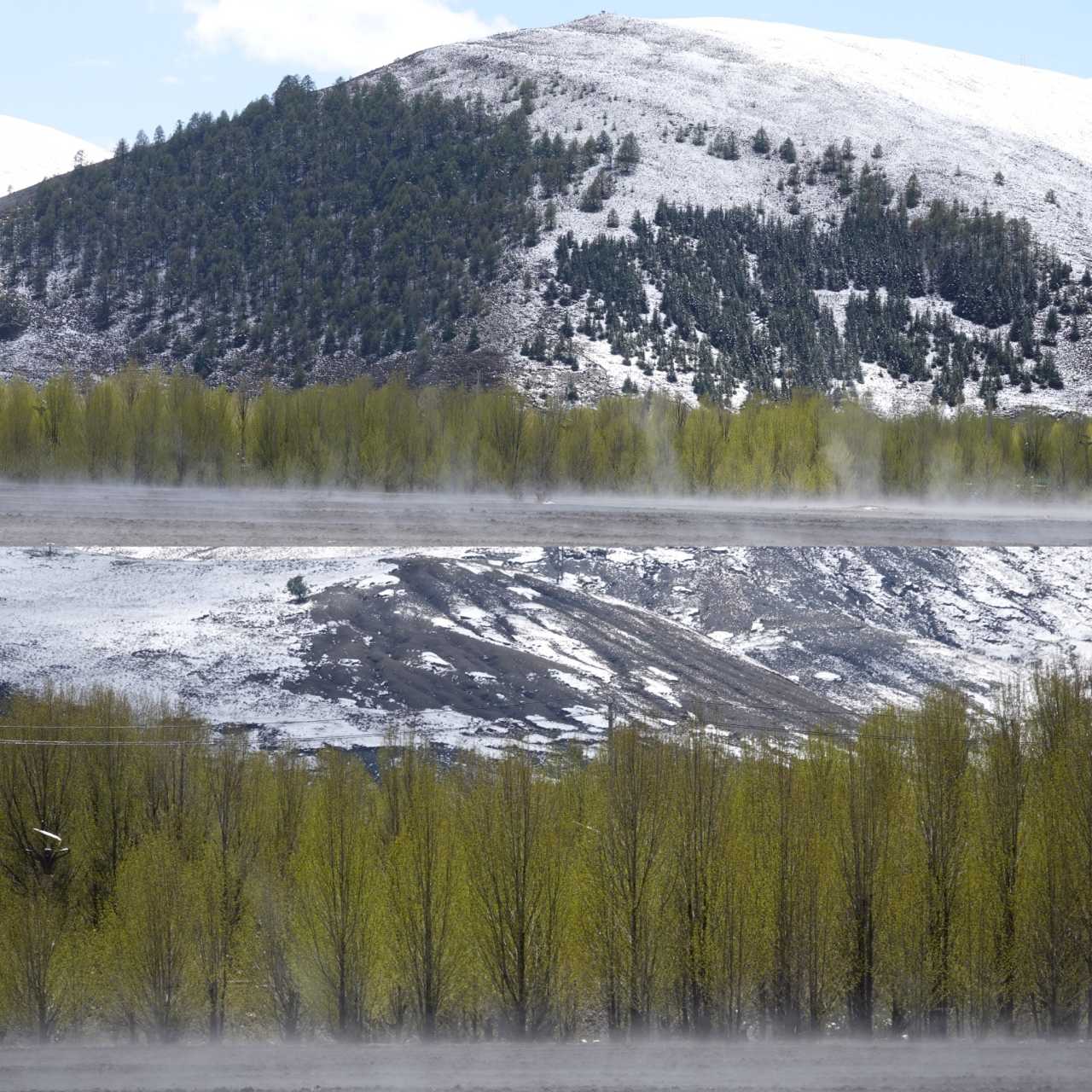
The last leg took us over Zheduo Mountain (4,300m), a famous pass on the Sichuan-Tibet Highway. The views of rolling hills and distant peaks are spectacular, but the road can be narrow and winding—drive carefully.
We passed through Kangding, the gateway to western Sichuan, and continued to Chengdu. By evening, we were back in the city, our hearts full of memories and our legs still aching from the Yading hike.
FAQ: Planning Your Daocheng Road Trip
1. What is the best time to visit Daocheng Yading?
The best season is May to October. May offers rhododendron blooms and fewer crowds, while September-October provides clear skies and golden autumn colors. Avoid July-August for heavy rain and landslides.
2. How do I prevent altitude sickness in Daocheng?
 - Acclimatize gradually: spend a night in Xichang (1,500m) or Kangding (2,600m) before heading higher. - Stay hydrated, avoid alcohol, and consider taking Diamox (acetazolamide) after consulting a doctor. - Carry portable oxygen canisters for emergency use.
3. Is the road from Xichang to Muli suitable for regular cars?
 Yes, National Highway 227 is well-paved and suitable for sedans. However, watch for trucks on National Highway 348 near Yanyuan. A 4WD is not necessary but provides extra comfort on gravel sections.
4. Can I visit Yading with elderly parents or young children?
The short route is manageable for most ages (flat, 1.5 km walk). The long route is strenuous and not recommended for children under 10 or elderly with health concerns. Consider hiring a horse for part of the long route (available at Longtongba).
5. What permits or tickets do I need for the Daocheng road trip?
- Yading Scenic Area: Buy tickets online in advance (266 yuan including bus).
- No special permits are required for the Muli-Daocheng loop.
- Carry your passport/ID for hotel check-ins.
Your Turn: Plan Your Healing Journey
Daocheng isn't just a destination—it's a pilgrimage for the soul. Whether you're chasing the golden sunrise at Mana Chajin, battling the altitude at Wuse Lake, or simply watching clouds roll over sacred peaks, every moment offers a chance to heal and reflect.
Ready to start your own Western Sichuan adventure?
- Book your flights to Chengdu (CTU)
- Rent a reliable SUV from Xichang or Chengdu
- Pack layers, sun protection, and a sense of wonder
Share your story: Have you visited Daocheng or Muli? Drop a comment below—I'd love to hear about your hidden gems and travel tips.
[Link: Complete Western Sichuan road trip itinerary]
[Link: Best hotels in Shangri-La Town, Daocheng]
[Link: Altitude sickness prevention guide for travelers]
Safe travels, and may your journey be filled with unexpected blessings—just like that sunset at Muli Grand Monastery.
You may also like


