Mountain City Hide-and-Seek: Discovering Chongqing’s Hidden Jianghu in Urban Creases
Meta Description: Explore Chongqing’s cyberpunk soul beyond the tourist trail. From elevatorless 24-story cubes to underground teahouses, discover the real Jianghu hiding in the Mountain City’s folds.
Introduction: A City That Refuses to Be Understood
Seven years ago, I dragged my suitcase out of Chongqing, thinking I’d return still young at heart. But standing again before Liberation Monument, with neon lights painting Qiansimen Bridge into a flowing rainbow and mist carrying the river’s scent, I realized I had become a stranger in my own hometown. This city—I had never truly understood it.
People from Chengdu leave room in their words. Chongqing folks will rip their hearts out to show you. When I stood lost, staring at my phone map, a bamboo-pole-carrying uncle shuffled over, voice booming like he was picking a fight: “Don’t look at that crappy thing! Where do you want to go? I’ll point you there!” In that moment, I understood: Chongqing isn’t a city to be understood—it’s a city to be felt.
It’s a pot of boiling beef tallow hotpot—intense enough to choke you, spicy enough to make you cry. But when you leave, that flavor seeps into your bones, surging back on every late night, haunting you, pulling you back.
Why Chongqing Is the Real-World Cyberpunk Capital

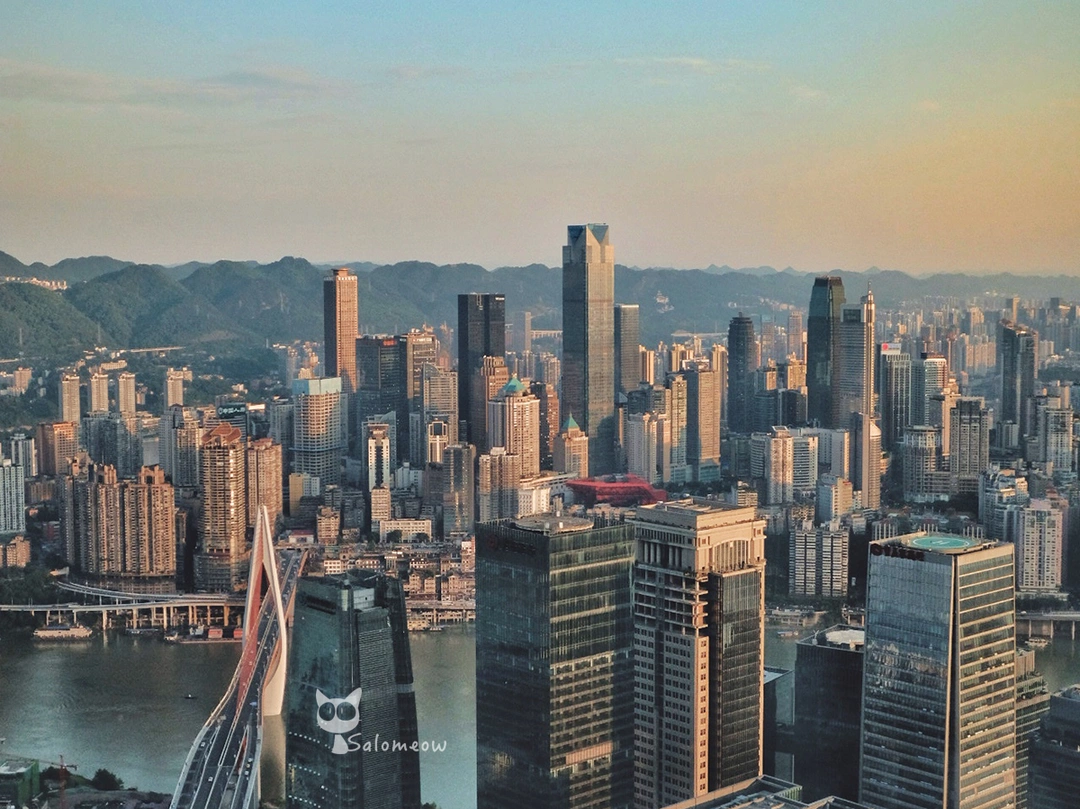
If you think “cyberpunk” exists only in movies, you’ve never been to Chongqing. This mountain city stacks red-brick buildings and skyscrapers like toy blocks—construction sites next to CBDs, light rail cutting through residential towers, riverboats and cargo ships crisscrossing the Yangtze. When fog rolls in and rain starts falling, the whole city looks soaked in hallucinogenic liquid. That “low-life meets high-tech” aesthetic sci-fi fans chase? Here, it’s just Tuesday.
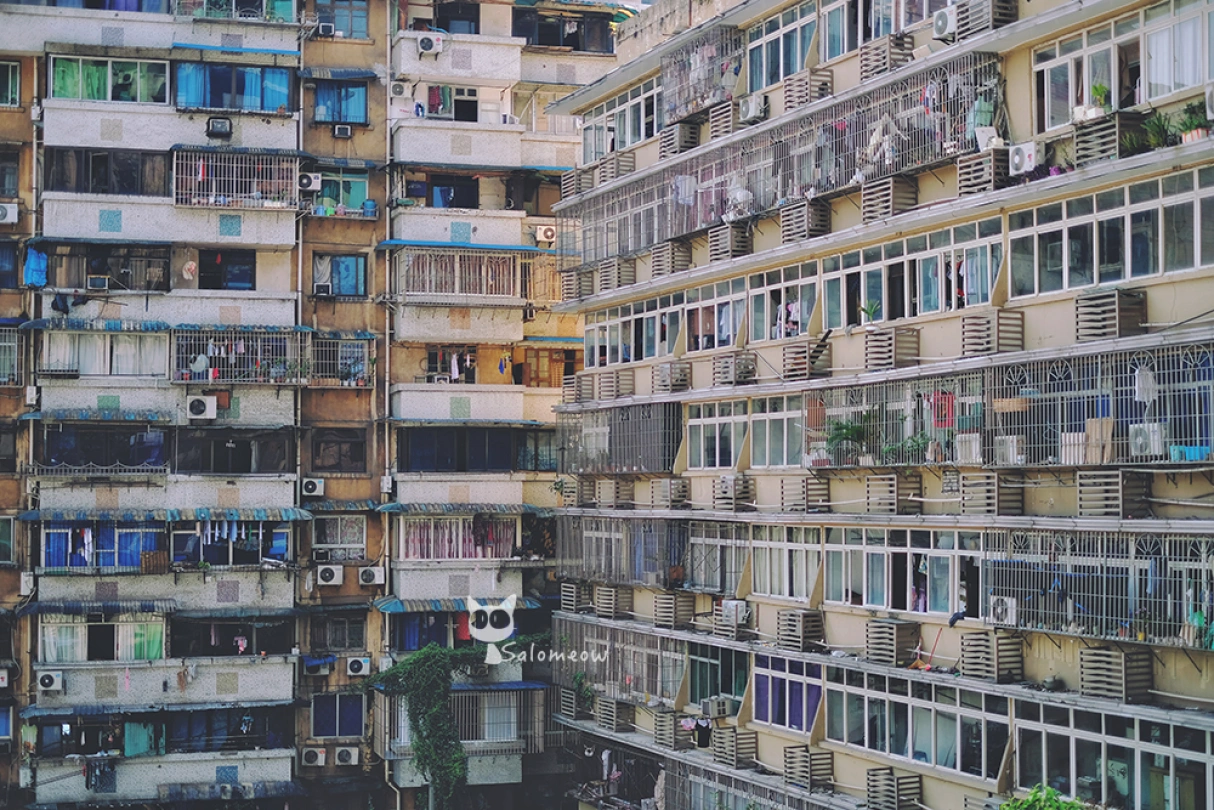
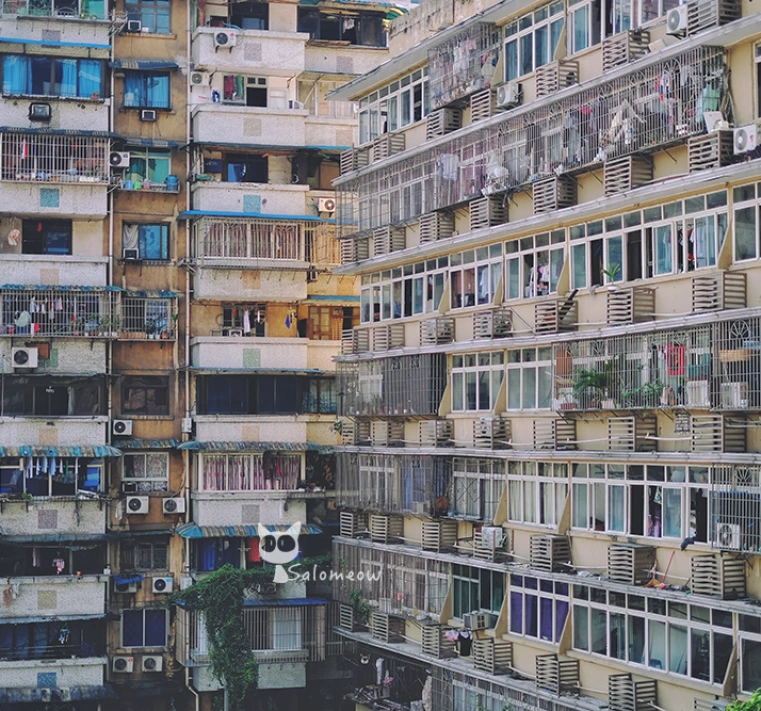
Baixiangju: The 24-Story Cube Without an Elevator
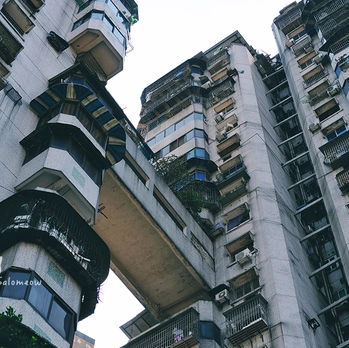
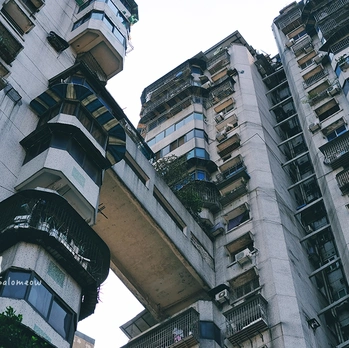
On the Yangtze’s north bank, Baixiangju (White Elephant Residence) stands like a real-life Monument Valley—24 stories, zero elevators. That alone scares off most Instagram tourists. But climb it, and you discover deeper magic: three exits, each leading to a different street on a different level.
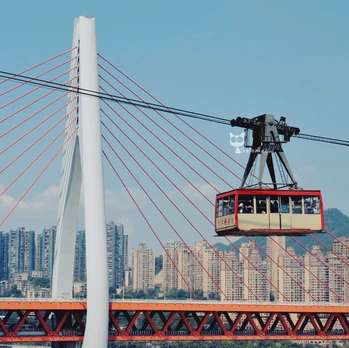
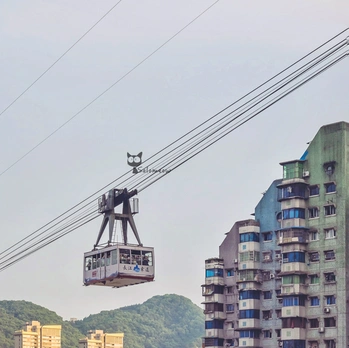
Enter from the 1st floor on Binjiang Road—someone’s cooking hotpot by the door. Climb to the 14th floor—a road stretches before you, a motorcycle parked on it drying laundry. By the time you’re gasping on the 24th floor, the Yangtze River Cable Car brushes past your nose. Your brain asks three questions: Who am I? Where did I come from? Where am I going?
The 14th floor housed Liu Bo’s character in The Ghouls (Chongqing’s The Bombing—the film Chongqing Hotpot). The corridor bridge between Buildings 3 and 4 still looks exactly like the movie. Except now, instead of an old grandpa in a vest, a group of uncles plays cards and chess. You stand there, unsure if you’re in a film or real life.
[Link: Chongqing film locations guide]
Guotai Arts Center & Jiangbeizui: Surreal Reds and Golds
1.5 kilometers from Baixiangju, Guotai Arts Center burns like red flames among gray buildings. Sunlight hits it, dyeing the entire street rosy. Two kilometers north, in Jiangbeizui Central Business District, standing at a 62-story hotel window, the Yuzhong Peninsula appears and disappears in mist. Qiansimen Bridge stretches across the river like a silver dragon. On the other side, Hongyadong glows golden at night—warm as a dream.
Chongqing’s public transport has its own punk vibe: the “air bus” cable car glides over the roaring Yangtze; light rail punches through apartment buildings like a toy train diving into a giant’s belly; the 100-meter Crown Grand Escalator feels like it’s dragging you into an underground labyrinth. Every resident lives in a constant toggle between reality and science fiction.
Luzu Temple: The Möbius Strip Behind Liberation Monument
Chongqing’s terrain-shaped streets are full of surprises. While the city races forward economically, it also preserves labyrinthine old houses and buzzing street vendors. This clash makes the city captivating—after a night of drinking, you can still sit roadside and eat a bowl of xiaomian (Chongqing-style noodles). How reassuring is that?
Liberation Monument grew from Chongqing’s roughest soil, and Luzu Temple (Luzumiao), just one street away, is living proof. This neighborhood sits between Jiaochangkou’s Riguanghui Plaza and Minsheng Road’s Guomao Hotel. To old-school locals, it also includes Shihuishi, Sixian Alley, Xinmin Street, and Datong Road.
By day, it’s a flower and vegetable market where old craftsmen do tailoring and repairs. By night, late-night eateries take over, filling your nose and mouth with every aroma imaginable.
This area sits near Chongqing’s biggest supermarkets, but Luzu Temple locals still prefer Shihuishi vegetable market. Inside the building: colorful fresh produce. Outside: fragrant cooked food and flower shops. The vegetable seller remembers your name because you bought winter melon a few times and asked him to peel it. The duck-selling jiejie (older sister) tells you, almost as an afterthought, that pickled radish soup is the best summer dish. You buy ribs and tomatoes—the laoban (boss) tosses scallions into your bag. The beef tallow aroma from the hotpot shop next door jumps across the street and grabs your nose.
Someone once said: if a person is at the end of their rope, send them to a vegetable market. At Luzu Temple, that saying hits home. Because here, you don’t see life’s hardships—you see life’s heat.
Stepping from towering CBD into low-rise Luzu Temple feels like crossing an invisible door. When darkness begins to fall, the place comes alive. David, who just closed a million-yuan deal, is suddenly shirtless, drinking late-night beer. Returning to basics here is effortless.
[Link: Chongqing hidden neighborhoods guide]
Traffic Teahouse: Where Tea Meets Hip-Hop
Chongqing’s cultural boundaries are blurry. Different elements coexist and feed off each other. In a city shaped by “paoge” (brotherhood) culture, tea drinkers and homies share the same patch of earth.
Next to the Sichuan Fine Arts Institute in Huangjueping, an unremarkable stairwell hides a small door. Behind it, Traffic Teahouse (Jiaotong Chaguan) has run for over 30 years. Dilapidated wooden ceiling. Moss-green walls. Cooling off in summer by sheer willpower. Warming up in winter by shivering. The ceiling fan has spun for over a decade, stirring up damp pipe tobacco scent. Tourists point phones and livestream: “This is the most authentic old teahouse in Chongqing!”
The teahouse has two levels connected by six steps. There used to be a Sichuan opera stage, but costs went up. The laoban (owner) didn’t want to raise prices, so regulars—who’d come for 10 or 20 years—lost their shows.
Twelve years ago, director Ning Hao spent seven days soaking in this teahouse, ordering just one cup of 1.5-yuan tuo tea each day. Later, he decided to film here. The owner got 150 yuan as a location fee. We got Crazy Stone.
Now, many rappers come here for music videos. In GOSH’s videos, Traffic Teahouse gets a new filter—young people in wild outfits with exaggerated hairstyles, singing strange tunes, sitting alongside old men in worn suits. Under the same roof, they look both out of place and perfectly harmonious.
On the walls of the two inner rooms hang Professor Chen Anjian’s Teahouse series from the Sichuan Fine Arts Institute. The paintings capture the same scene you’re sitting in—time folding in on itself.
[Link: Chongqing underground culture spots]
Frequently Asked Questions About Chongqing’s Hidden Jianghu
1. What is the best time to visit Baixiangju for photos?
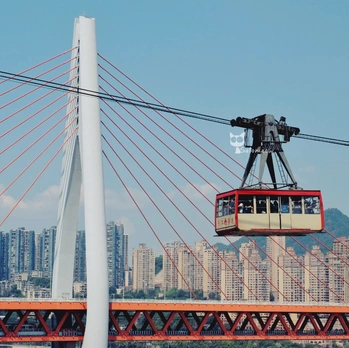 Early morning (7-9 AM) or late afternoon (4-6 PM) offers the best light. The fog often lifts by mid-morning, revealing the Yangtze River Cable Car passing by the 24th floor. Avoid weekends to escape crowds.
2. Is Luzu Temple safe for solo travelers at night?
Absolutely. The area is well-lit and bustling with locals until midnight. Stick to main streets and follow the crowds to late-night eateries. The vegetable market closes around 8 PM, but food stalls stay open until 2 AM.
3. How do I find Traffic Teahouse without getting lost?
 Look for the Sichuan Fine Arts Institute in Huangjueping. The teahouse entrance is a small door next to a stairwell—no sign. Ask locals for “Jiaotong Chaguan” (交通茶馆). It’s open 7 AM to 11 PM daily. Entry costs 10 yuan (includes tea).
4. Can I visit all these locations in one day?
 Possible but rushed. Recommended itinerary: Start at Baixiangju (2 hours), walk to Guotai Arts Center (1 hour), take metro to Luzu Temple (3 hours for market + food), end at Traffic Teahouse (1-2 hours). Use Didi or metro between spots.
5. What should I eat near Luzu Temple?
Must-tries: Xiaomian (Chongqing noodles) from any street stall, Laotie hotpot on Datong Road, and pickled radish soup from Shihuishi market vendors. Don’t skip the flower-shaped bingfen (ice jelly) dessert.
Conclusion: Your Turn to Get Lost in Chongqing’s Creases
Chongqing doesn’t reveal itself to casual tourists. It demands you climb its stairs, eat its street food, and get lost in its labyrinthine neighborhoods. The city’s real magic isn’t in guidebook attractions—it’s in the 24-story building without an elevator, the teahouse where old men and rappers share the same ceiling fan, the vegetable market where a seller remembers your name.
Seven years ago, I left thinking I knew this city. I was wrong. But standing at Baixiangju’s 24th floor, watching the cable car pass by, I realized: Chongqing doesn’t want to be understood. It wants to be lived.
Ready to find your own Jianghu in Chongqing’s creases? Start planning your trip today. Pack comfortable shoes, an empty stomach, and a willingness to get lost. The Mountain City is waiting—and it’s got stories to tell.
[Link: Chongqing travel planning guide]
[Link: Best Chongqing street food map]
[Link: Chongqing off-the-beaten-path itinerary]
You may also like