Meeting You in the Best Season: The Ultimate Solo Travel Guide to Sichuan's Autumn Wonders (Jiuzhaigou, Huanglong, Bipenggou, Siguniangshan)
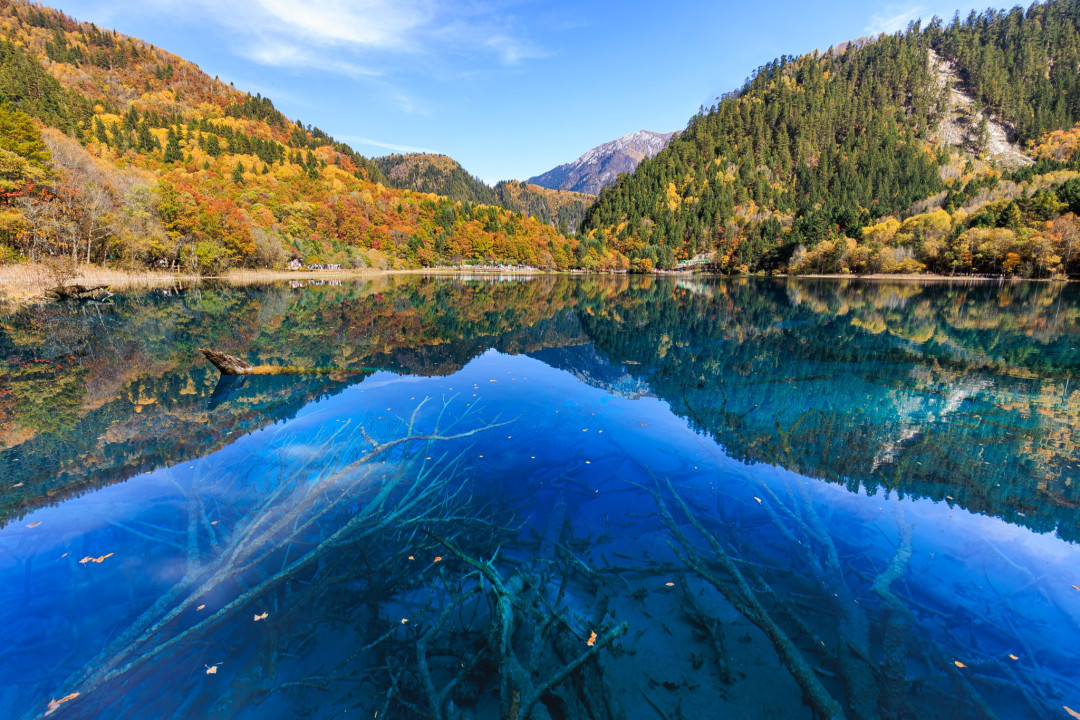
Meta Description: Discover how to plan the perfect solo autumn trip through Sichuan, visiting Jiuzhaigou, Huanglong, Bipenggou, and Siguniangshan. Expert tips on altitude sickness, crowd management, and must-see spots.
Introduction: Why Autumn in Sichuan is a Bucket-List Destination
There’s a moment every traveler knows—the one where logic surrenders to impulse. Last autumn, after months of telling myself “when the high-speed rail opens, when I have time, when I’ve saved enough,” I woke up one morning and simply booked the ticket. Wallet thin. Annual leave exhausted. But the call of Sichuan’s autumn landscapes was undeniable.
Nearly two months after returning from this solo journey through Jiuzhaigou, Huanglong, Bipenggou, and Siguniangshan, I remain grateful for that impulsive decision. The memories—vivid, layered, and worth every penny—deserve to be shared. This guide is for every solo traveler wondering if they can pull it off. Spoiler: you absolutely can.
Pre-Trip Preparation: A Southerner's Guide to Surviving the Plateau
What to Pack for Sichuan's Autumn
As a southerner still wearing shorts in October, I had zero concept of single-digit temperatures. After scouring countless guides, I made a late-night purchase of my first fleece jacket, complete with a down inner layer and a fleece liner. Throughout the trip, the combination of fleece jacket + fleece liner + long-sleeved shirt was sufficient. Regular trousers with thermal leggings worked fine; by midday, I'd even break a sweat.
Key tip: A hat matters more than you think. Windproofing is the real game-changer.
Altitude Sickness: Prevention and Management
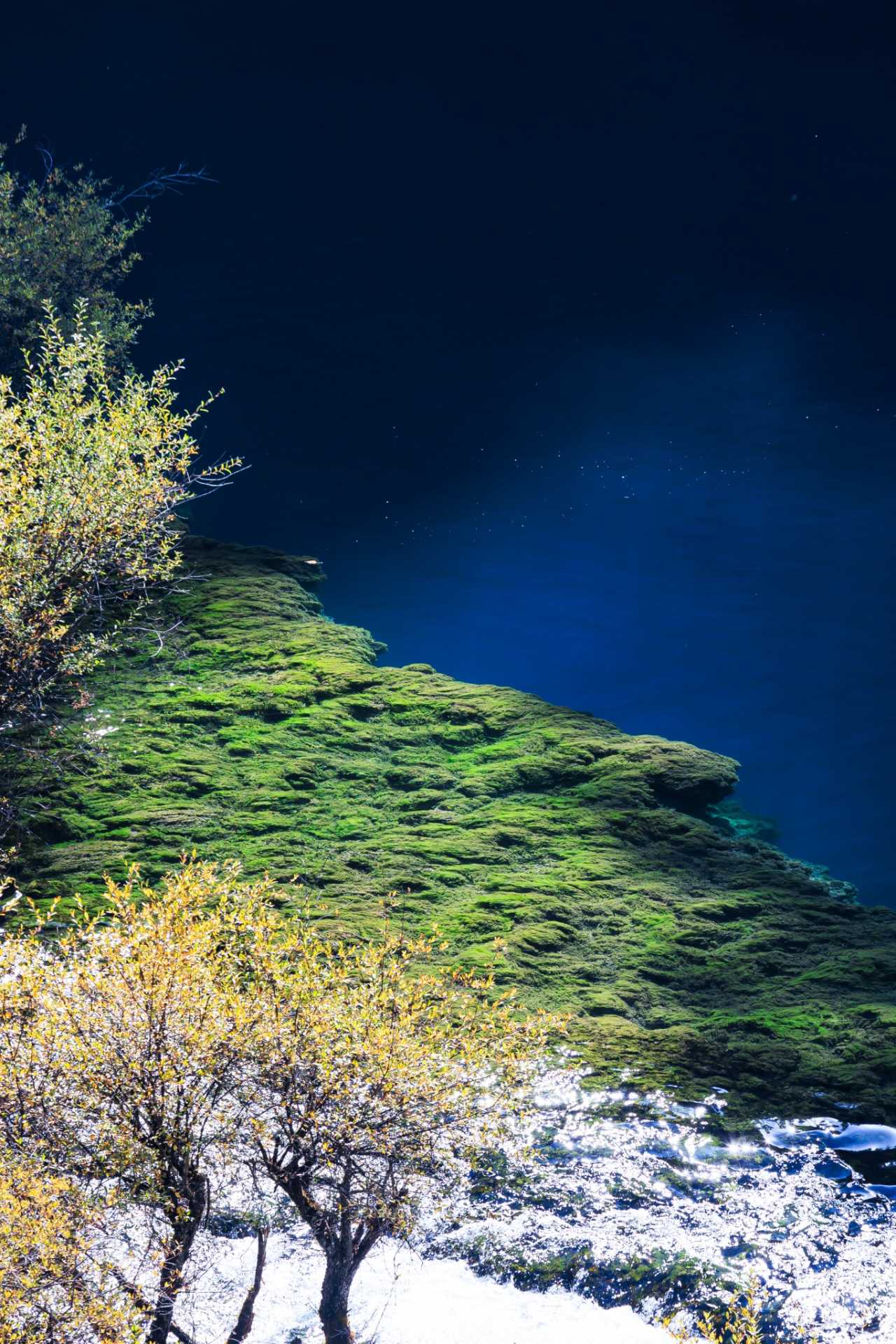
I had a brutal experience on Jade Dragon Snow Mountain before. This time, I discovered acetazolamide tablets. They're effective but come with side effects—numbness in hands and face. Pairing them with potassium chloride extended-release tablets can ease discomfort, but those with kidney issues should consult a doctor first. This is a prescription drug, so always seek medical advice.
Navigating Huanglong: Ticket Strategy
You absolutely must grab a ticket for the sightseeing bus at Huanglong. Tickets go on sale 14 days in advance, with only 5,000 available daily. Without it, you'll walk over three kilometers from the cable car to the Five-Color Pond (Wucai Chi)—every step at high altitude is a struggle.
[Link: How to Book Huanglong Tickets in Advance]
Day 1: Nanning → Chengdu → Sanxingdui → Jiuzhaigou
5 AM: Heading for the Mountains and Seas
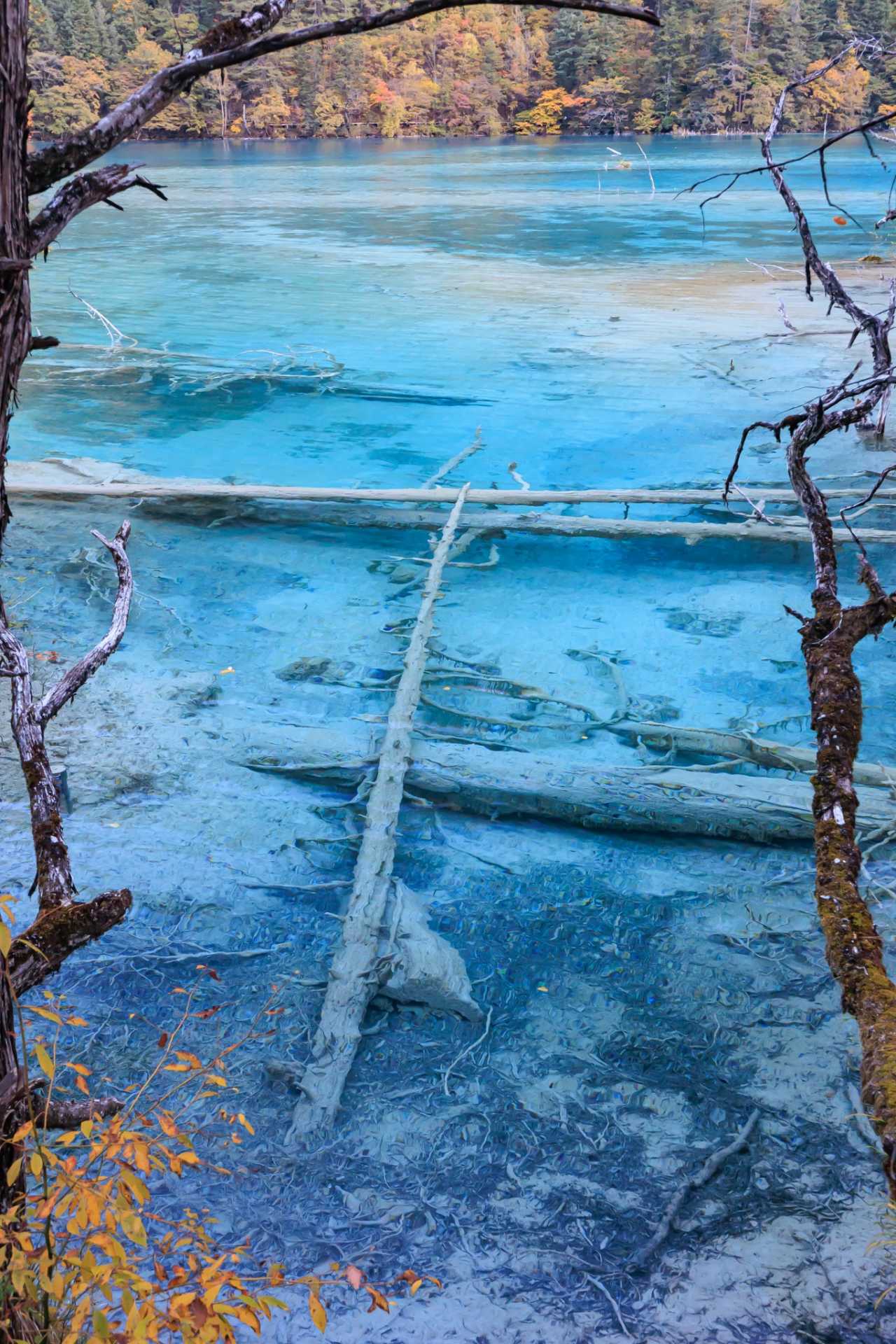
A friend drove me to the airport at five in the morning. How many friends like that do you get in a lifetime? At Wuxu Airport, I grabbed McDonald's and a bubble tea from Shuyi Xiancao—my caffeine addiction kicked off perfectly.
The plane landed half an hour early at Tianfu Airport. Smooth start, right? Then the boarding gate was at the end of the world. It took me 40 minutes to walk to the metro station. I had a train to catch from Chengdu East to Guanghan North at 11:51. On the metro, I frantically searched for shortcuts—and found an elevator. I got off the metro at 11:30, reached the ticket gate at 11:39, and boarded the train directly. Drenched in sweat in cold Chengdu air, but I made it.
Sanxingdui: Awe Across Three Thousand Years
At Guanghan North, I grabbed a bowl of dry pot (干锅)—duck feet and pork trotters with melt-in-your-mouth beans. Spiciness was perfect. Maybe I'm a born Chengdu soul.
Outside the Sanxingdui Museum, free luggage storage was available. I missed the official guided tour, so I spent 20 RMB on a WeChat audio guide. The exhibit descriptions were detailed, but route guidance wasn't clear—I often couldn't match narration to artifacts.
The bronze standing figure was surrounded by crowds, but squeezing in let me snap a photo. The bronze sacred tree is the largest single bronze artifact in the world—circling it three times wasn't enough. Gold items caught my eye too; I'd been checking gold prices lately, so I took a moment to compare ancient rates.
The special exhibition of the Haihunhou (Marquis of Haihun) in the basement was an unexpected delight—pure spectacle.
From Sanxingdui Station to Huanglong Jiuzhaigou Station, it was an hour and a half by train. When the train announced altitude gain, my ears popped. Stepping off, the temperature dropped from 20°C to 3°C—everyone scrambled to layer up on the platform. A two-hour bus ride took me to Jiuzhaigou. The heater felt like burning my feet, and winding roads triggered vomiting sounds around me. As someone prone to motion sickness, I felt nothing—I felt incredibly strong.
Arriving at Jiuzhaigou around 11 PM, the temperature was -1°C. I planned to just wash up, but my face cream tube had puffed up from altitude change. When I opened it, it sprayed all over me. Pro tip: In high-altitude areas, release air from tube products before opening.
[Link: Best Hotels Near Jiuzhaigou for Solo Travelers]
Day 2: Jiuzhaigou — First Glimpse, Stunning
Avoiding the Crowds? Naive Thinking
I woke up after 8 AM and had a leisurely breakfast. Weather was good—a relief. A taxi from the hotel to the scenic area cost 15 RMB (a 15-minute walk was also an option).
There were just a few people in front of the main gate. Thirty-five thousand tickets were sold that day (cap: 41,000). I congratulated myself on avoiding peak crowds. Then I saw a sign: "Please go to the second floor." And then—a sea of people.
Despite the crowds, it took only about 30 minutes from queuing to boarding the bus. Jiuzhaigou's crowd management system is among the best in China. I'd read warning posts about queue-jumping and fights, but over two days, everyone was surprisingly peaceful and friendly.
Shuzheng Lakes to Rhinoceros Lake: Scenery at Every Step
We were dropped off at Shuzheng Lakes station for dispersal and had to walk to Rhinoceros Lake to continue by bus. Finally—my first glimpse of Jiuzhaigou.
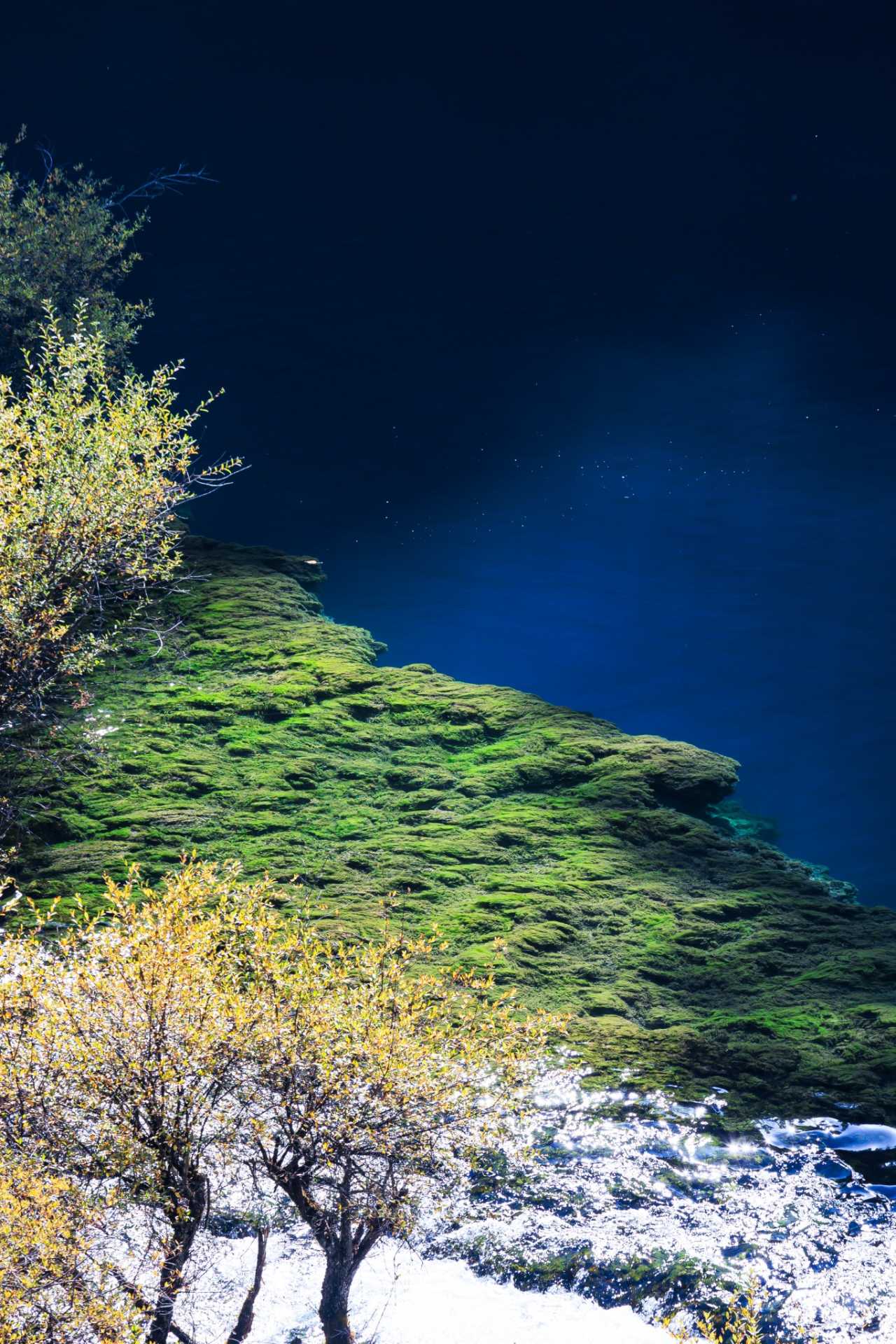
The leaves weren't yellow enough yet (I'd come two weeks later than peak autumn foliage), but the mix of yellow and green gave richer color layers. Unique charm.
"Soft mud underfoot, with lush green water plants swaying; in the gentle waves of the Cam River, I'd gladly be a strand of water grass!" I don't usually quote literature, but at Jiuzhaigou, lines spilled out naturally.
From Shuzheng Lakes to Rhinoceros Lake—a little over a kilometer—I was stopped every few steps. It took nearly an hour.
Long Lake and Five-Color Pond: Between Cloud and Sun
The bus routed us to the left line, straight to Long Lake. Initially overcast, it felt average. Then the sun came out—the entire view transformed. The difference between cloudy and sunny was enormous.
There was no sightseeing bus from Long Lake to Five-Color Pond, so I had to walk downhill—tough on the knees. When I reached Five-Color Pond, everyone was crammed at the entrance, snapping photos. Actually, if you walk further in, it's much more open with decent angles.
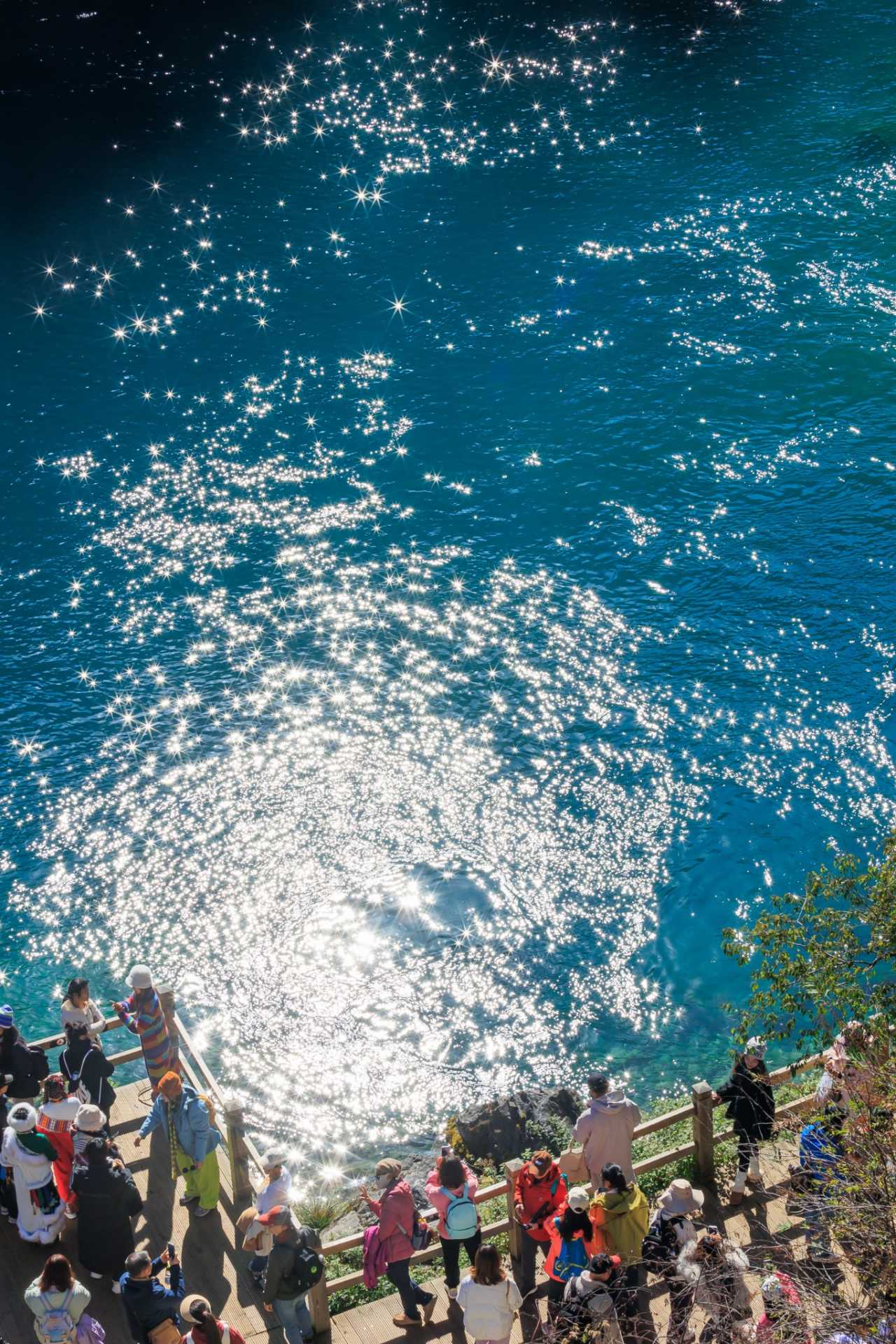
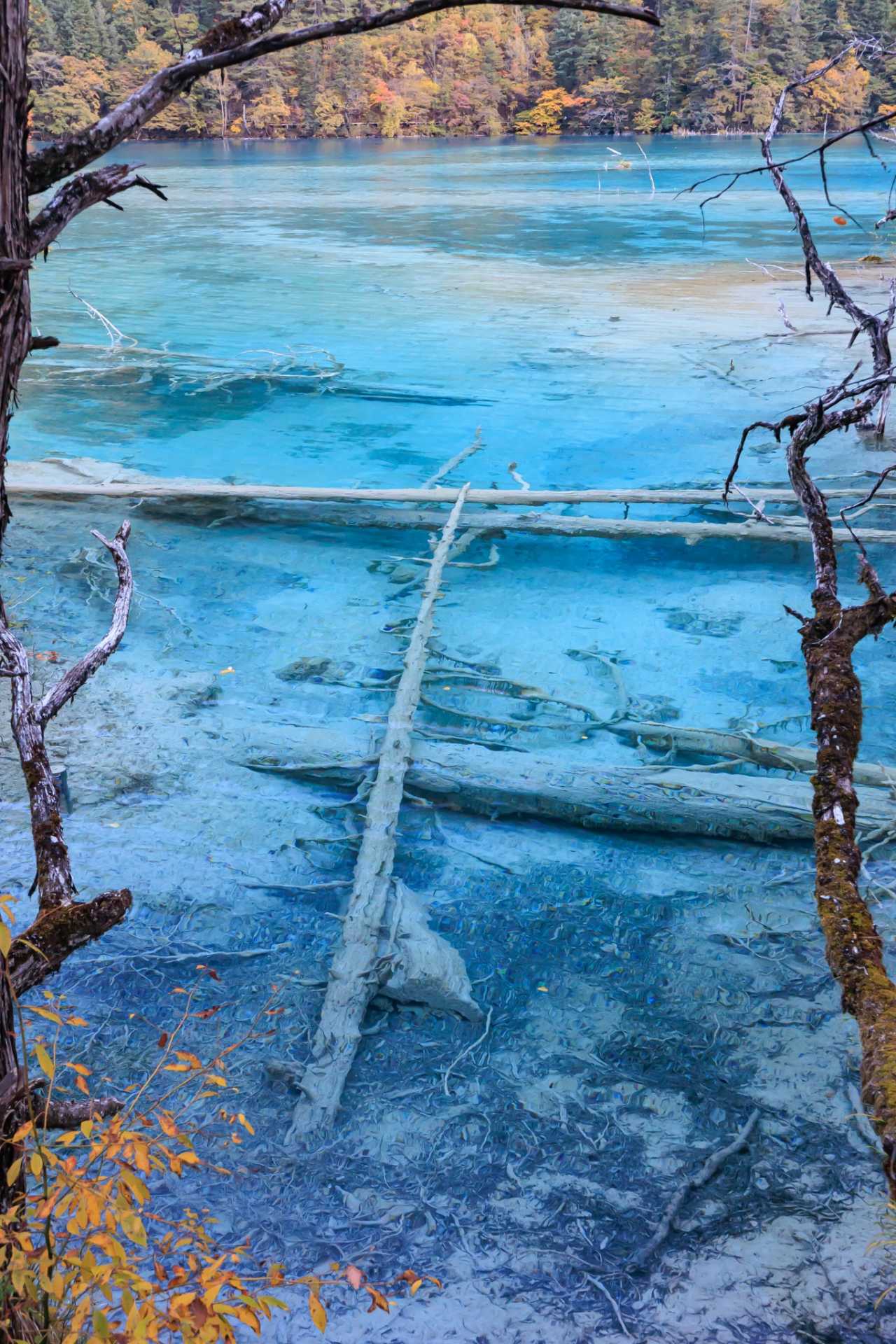
Five-Color Pond isn't too weather-dependent—colors look similar whether sunny or not. To the naked eye, it's mainly blue-green, but close inspection reveals subtle variations.
Day 3: Huanglong — Terraced Pools and Golden Carpets
The Cable Car Strategy
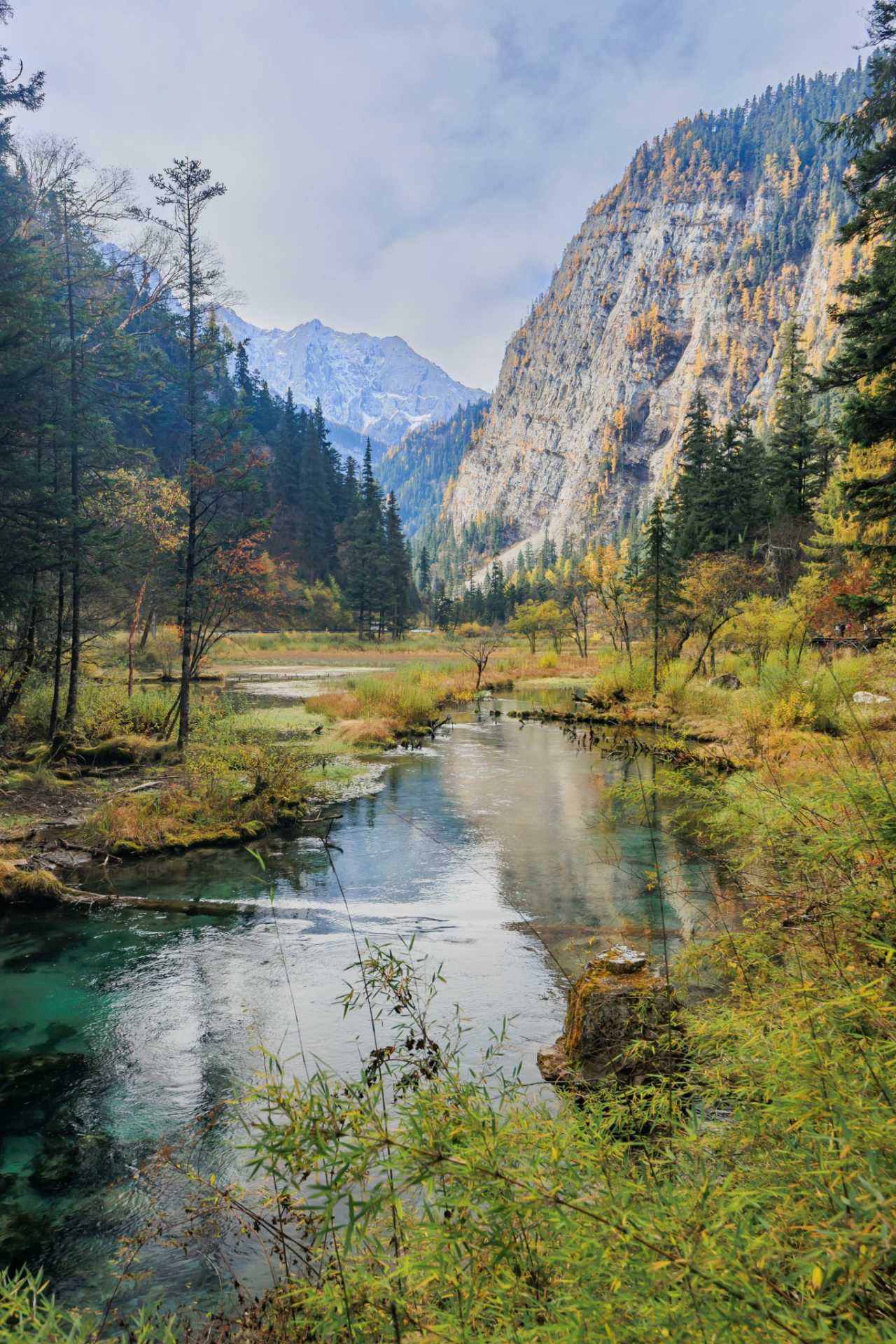
Huanglong's cable car is a lifesaver. I'd booked my sightseeing bus ticket 14 days in advance, so I skipped the three-kilometer death march from the cable car to Five-Color Pond. The bus drops you near the top, and from there, it's a manageable walk.
Five-Color Pond: The Crown Jewel
The pond's travertine terraces look like golden carpets cascading down the mountain. Sunlight hits the water, creating a kaleidoscope of blues, greens, and yellows. It's easy to see why this is Huanglong's most photographed spot.
The Long Descent
Walking down from Five-Color Pond, you pass through a series of smaller pools—each with its own character. The boardwalk is well-maintained, but altitude makes every step count. I took frequent breaks, sipping water and marveling at the pine forests.
[Link: How to Avoid Altitude Sickness in Huanglong]
Day 4: Bipenggou — The Hidden Gem
Why Bipenggou Deserves Your Attention
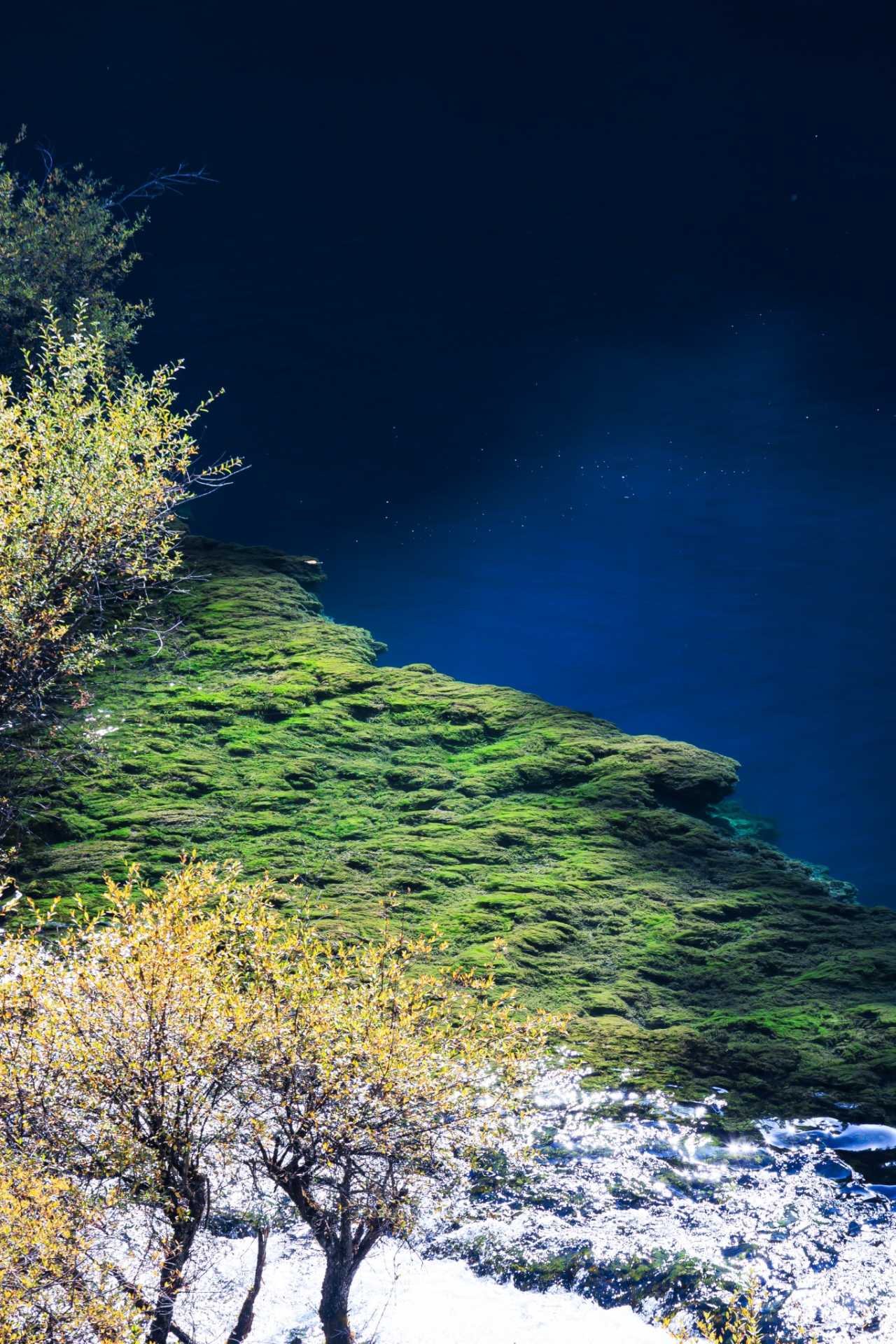
Bipenggou is less famous than Jiuzhaigou but equally stunning. The autumn colors here are more intense, with red, orange, and gold leaves creating a fiery palette. Fewer tourists mean you can enjoy the scenery in relative peace.
The Red Stone Beach
One of Bipenggou's highlights is the Red Stone Beach—a hillside covered in reddish rocks. The contrast with the surrounding greenery is surreal. I spent an hour just sitting there, watching the light shift.
The Longest Boardwalk in Sichuan
Bipenggou boasts a 10-kilometer boardwalk through forests and along streams. I walked about half of it, stopping at viewpoints and picnic areas. The sound of rushing water and birdsong was therapeutic.
[Link: Bipenggou vs. Jiuzhaigou: Which is Better for Solo Travel?]
Day 5: Siguniangshan — Four Sisters Under the Sky

The Four Peaks
Siguniangshan (Four Sisters Mountain) is named after its four peaks—each representing a sister in local legend. The highest, Yaomei Peak, towers at 6,250 meters. Even from the base, the scale is humbling.
The Changping Valley
I took a shuttle to Changping Valley, the most accessible part of the scenic area. The trail winds through alpine meadows, past grazing yaks, and under towering cliffs. The autumn colors here are more subdued—golden grasslands against blue skies.
A Moment of Reflection
At the end of the trail, I sat on a boulder, looking at the four peaks. No crowds. No noise. Just wind and the occasional bird call. This was the moment I'd been chasing—the reason I booked that impulsive ticket.
FAQ: Solo Travel in Sichuan
1. Is it safe to travel solo in Sichuan's high-altitude areas?
Yes, but preparation is key. Acclimatize gradually, carry altitude sickness medication, and stay hydrated. Most scenic areas have well-marked trails and emergency services.
2. When is the best time to visit Jiuzhaigou for autumn foliage?
Peak autumn foliage is typically from mid-October to early November. However, even two weeks after peak, the mix of yellow and green offers unique beauty.
3. How do I book tickets for Huanglong's sightseeing bus?
Tickets go on sale 14 days in advance on the official Huanglong website or through third-party platforms like Ctrip. Only 5,000 are available daily, so book early.
4. What should I pack for a solo trip to Sichuan in autumn?
Pack layers: fleece jacket, thermal leggings, windproof hat, and comfortable walking shoes. Don't forget sunscreen and lip balm—the sun is strong at altitude.
5. Can I visit all four destinations in one trip?
Yes, but plan for at least 7-10 days. Travel between destinations involves buses or trains, and altitude requires rest days. A typical itinerary: Chengdu → Jiuzhaigou (2 days) → Huanglong (1 day) → Bipenggou (1 day) → Siguniangshan (1 day) → Chengdu.
Conclusion: Your Solo Journey Awaits
That impulsive decision last autumn changed something in me. It proved that you don't need perfect conditions—just the courage to start. Jiuzhaigou's turquoise lakes, Huanglong's golden terraces, Bipenggou's fiery forests, and Siguniangshan's majestic peaks—they're waiting for you.
Your move: Book that ticket. Pack that fleece. And meet yourself in the best season.
[Link: Solo Travel Tips for First-Timers in China]
Have questions about planning your Sichuan solo trip? Drop a comment below, and I'll help you craft the perfect itinerary.
You may also like


