Jiuzhaigou Journey: A Deep Exploration of Colorful Forests, Ancient Shu Civilization, and Travel Compatibility
Meta Description: Plan your ultimate Jiuzhaigou autumn trip with this expert guide covering ticket-snatching strategies, Sanxingdui Ancient Shu artifacts, high-speed rail tips, and accommodation hacks for peak season travel.
Introduction: The Art of the Last-Minute Jiuzhaigou Adventure
Sometimes, the best travel stories begin with a spontaneous decision. On an ordinary afternoon, I felt an irresistible pull toward Jiuzhaigou—not for any specific reason, just the whispered promise of autumn foliage so vivid it could make your heart ache. But when I opened the booking platform, I discovered I had walked into a battlefield.
Jiuzhaigou tickets go on sale 14 days in advance and vanish in seconds. I became a determined hunter, checking daily, snatching whatever date I could, watching my perfect itinerary shatter into fragments. If you're planning a Jiuzhaigou off-season travel experience, I'd tell you without hesitation: take the high-speed rail directly from Sanxingdui to Jiuzhaigou-Huanglong Station. It saves both time and energy. But peak season Jiuzhaigou travel? That's a different beast entirely. Accommodation prices skyrocket to over 1,000 RMB per night, and choosing the right hotel location becomes an art form—you absolutely must book near Zangwang Square (Tibetan King Square). Don't be tempted by cheap options near Guoda Parking Lot (National University Parking Lot), which sits 3.3 kilometers from the scenic area, where morning and evening traffic jams will make you question your life choices.
For this trip, I dragged along Miss P, who hadn't traveled far in nearly a decade. We excitedly speculated about what sparks would fly when two "travel newbies" teamed up. The result? Zero sparks. After the trip ended, we declared in unison: "We will never travel together again in this lifetime." Some chemistry only exists in the realm of WeChat Moments.
Jiuzhaigou Itinerary: A High-Intensity "Special Forces" Style Adventure

Day 1: Anticipation on the Overnight Train
Departing from Beijing Fengtai Station on the D965 train at 20:36, arriving at Chengdu East Station at 08:43 the next morning. A night of rocking and rolling, exchanged for the excitement of an unknown journey ahead. [Link: Best overnight trains from Beijing to Chengdu]
Day 2: Crossing Three Thousand Years at Sanxingdui
Arriving in Chengdu in the early morning, we headed straight for the Sanxingdui Museum. We chose a ride-hailing carpool—the smartest decision we made. Remember, it's a carpool (ride-sharing service), not a regular taxi, because Chengdu and Sanxingdui are in different administrative zones. Taxis charge you for the return trip and toll fees, even though the highway itself is free. A carpool neatly avoids all these pitfalls. Even so, after getting off, we had to cross an underground passage, store our luggage, and by the time we stood at the exhibition hall entrance, we were already gasping for breath.
That night, we checked into the Aiyi Xinliang Hotel (Comfortable Xinliang Hotel), right next to Chunxi Road and Taikoo Li in Chengdu—a prime location for exploring the city's vibrant heart.
Day 3: Morning at Kuanzhai Alley and Evening at Jiuzhaigou
In the early morning, Kuanzhai Alley (Wide and Narrow Alley) was delightfully empty of people. We strolled through the deserted lanes, soaking in the tranquility of old Chengdu. Miss P had been here before, while my mind was full of images from the Korean variety show New Journey to the West. The alley's courtyard houses are well-preserved—about 70 traditional compounds covering 32 hectares, with green bricks and black tiles exuding the charm of the Ming and Qing dynasties.
At 13:55, we boarded the C9474 high-speed train from Chengdu East Station, arriving at Jiuzhaigou-Huanglong Station at 15:52. After exiting, we took a direct shuttle bus to Guoda Parking Lot, a ride of about 3 hours—remember to sit on the right side for better scenery. That night, we stayed at Jiuyuan Hotel, very close to the Jiuzhaigou Scenic Area Visitor Center. Dinner was a steaming hot pot of yak meat, instantly healing the day's fatigue.
Day 4: A Full Day Immersed in Jiuzhaigou's Colorful Forests
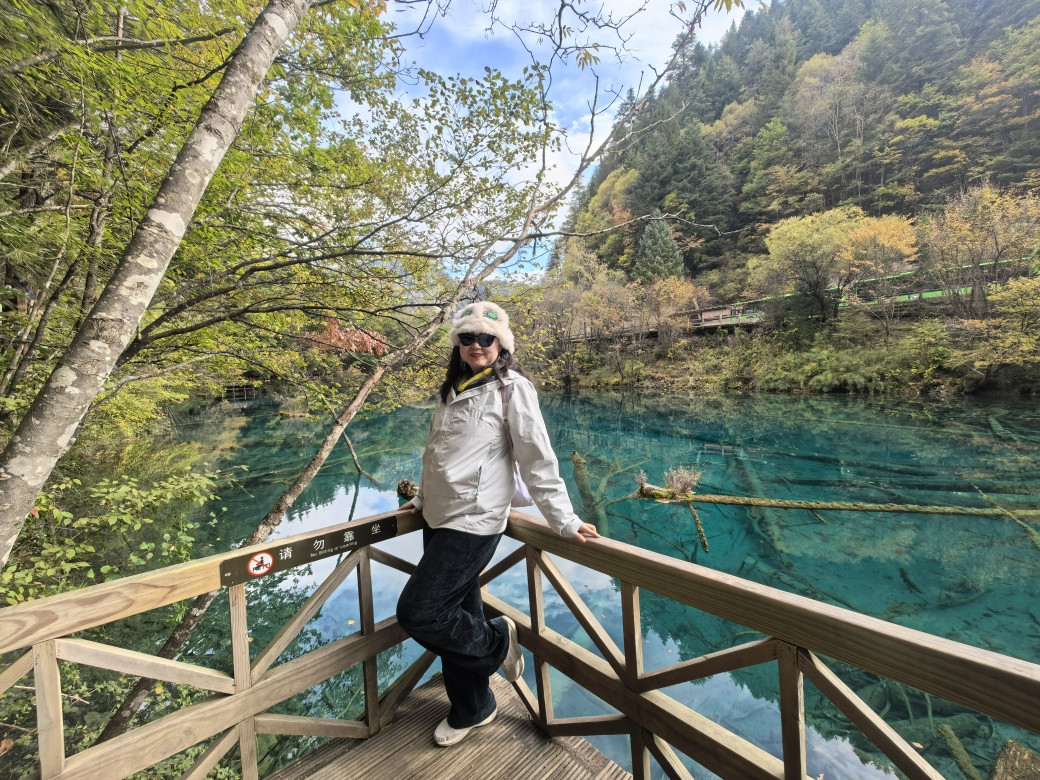
We spent the entire day soaking in Jiuzhaigou's autumn foliage. The colorful forests of Jiuzhaigou are a photographer's dream—layers of red, orange, gold, and green reflected in crystal-clear turquoise lakes. At night, we checked into a guesthouse in Shuzheng Valley, with breakfast and dinner included. Opening the window, we could see colorful forests and hear the sound of flowing water.
Day 5: Farewell to Jiuzhaigou, Return to Chengdu
It's recommended to finish your sightseeing by 15:00 at the latest, allowing 3 hours for travel. Take a direct shuttle from Guoda Parking Lot to Huanglong-Jiuzhaigou Station (about 2 hours), then board the C5798 high-speed train (18:19–20:39) back to Chengdu East Station. That night, we stayed at the Oriental Liji Hotel (Oriental Lizhi Hotel), still near Chunxi Road and Taikoo Li.
Day 6: Leisure at People's Park and the Journey Home
In the morning, we went to People's Park to drink a cup of covered-bowl tea (gaiwan cha), experiencing Chengdu's slow-paced lifestyle, before flying back to Beijing in the afternoon.
Sanxingdui: A Deep Dialogue with the Ancient Shu Civilization
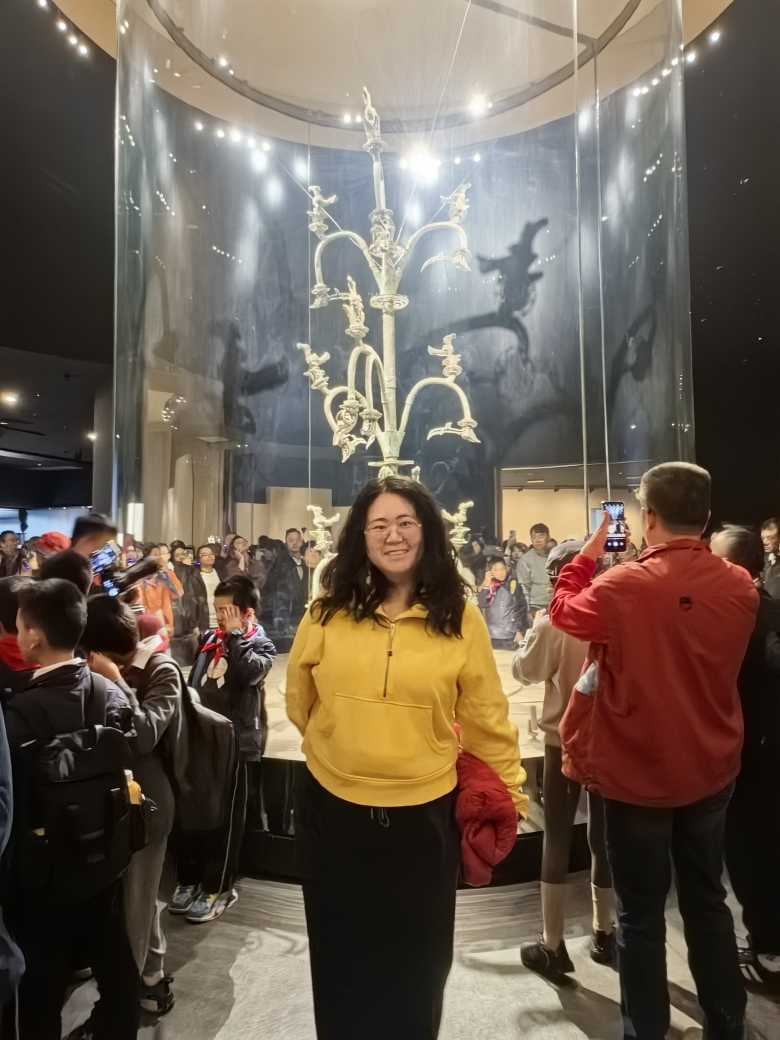
The Bronze Sacred Tree: A Concrete Embodiment of the Cosmic Tree
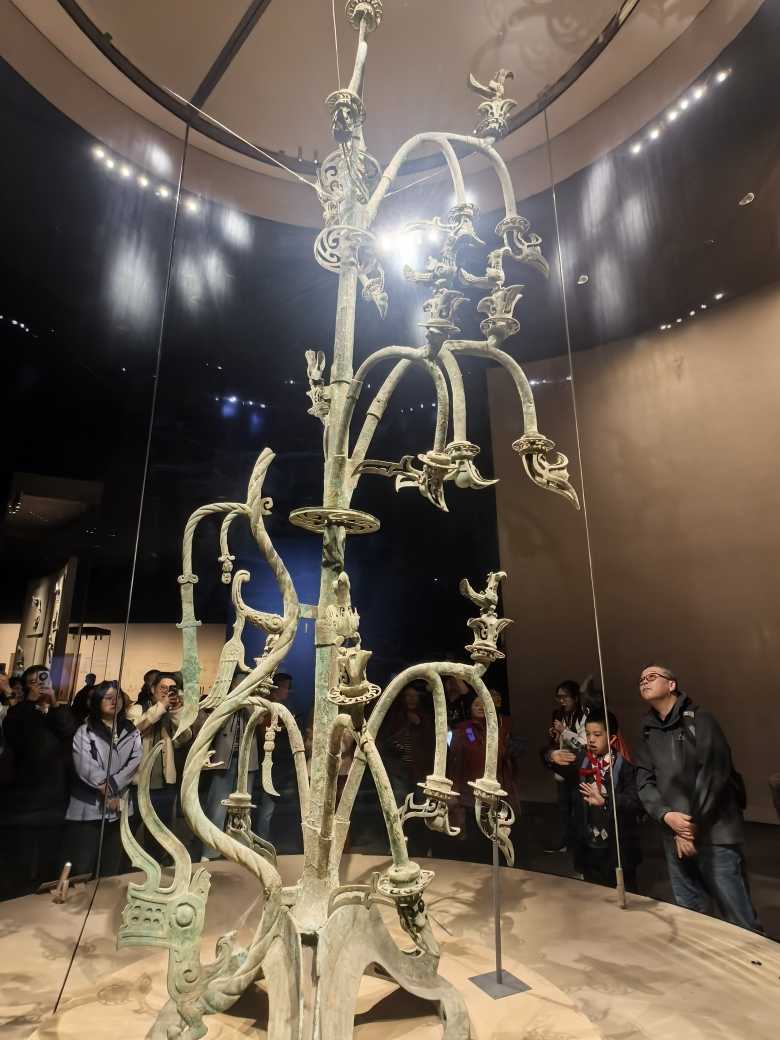
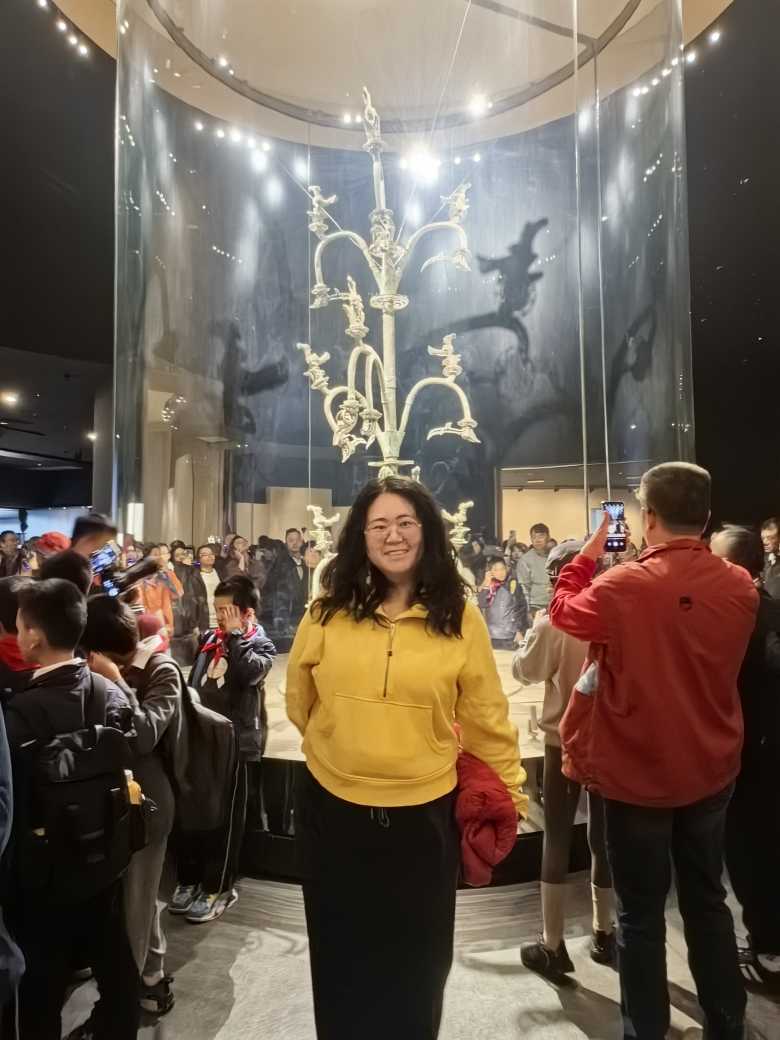
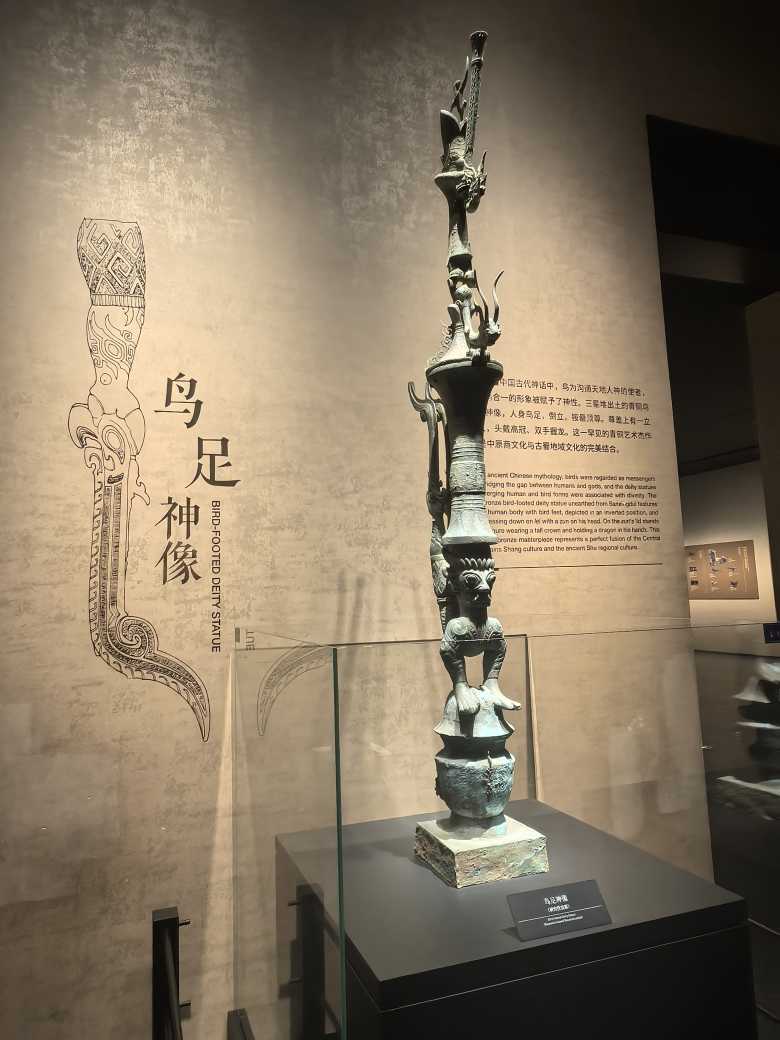
When I finally stood before the Bronze Sacred Tree, I almost held my breath. This 396-centimeter-tall bronze artifact from the late Shang Dynasty is the largest single bronze object ever discovered in China, hailed as the "Cosmic Tree." Its trunk is divided into three tiers with nine branches, each branch bearing a sacred bird, echoing the Classic of Mountains and Seas's record of the Fusang tree where "nine suns rest on its lower branches." The base is carved with a "three mountains connected" image of a sacred mountain, while a downward-hanging dragon coiled around the trunk symbolizes a medium connecting the three realms.
What's most astonishing is the craftsmanship—sectional casting, riveting, and inlay techniques, with mortise-and-tenon joints on the branches having an error of less than 1 millimeter. Recent research has also revealed cinnabar paint on the petals, pushing back the history of Chinese painted bronze craftsmanship by nearly a thousand years. [Link: Sanxingdui Museum visiting guide and ticket tips]
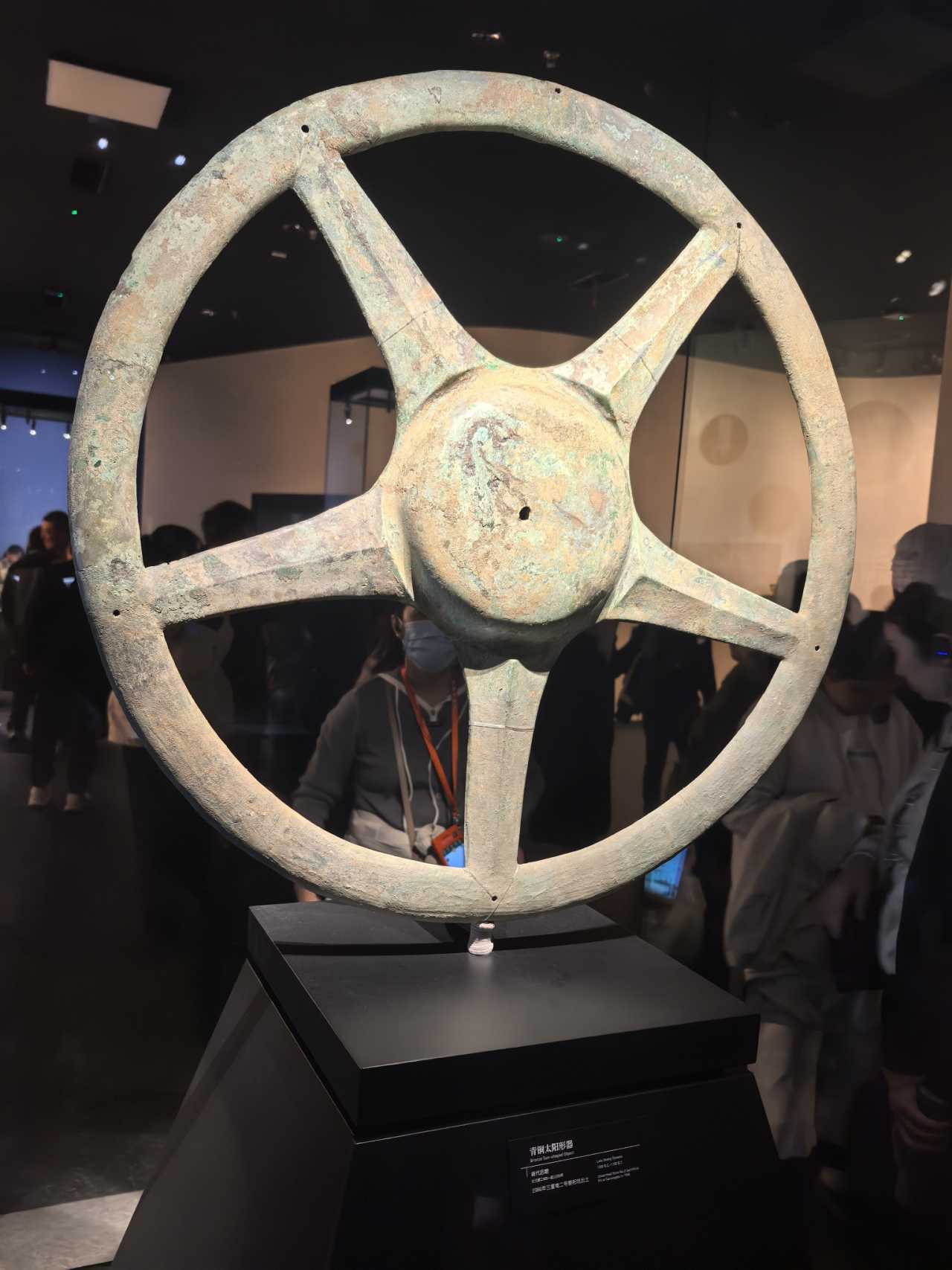
The Bronze Sun-shaped Object: An Astronomical Code of the Ancient Shu People
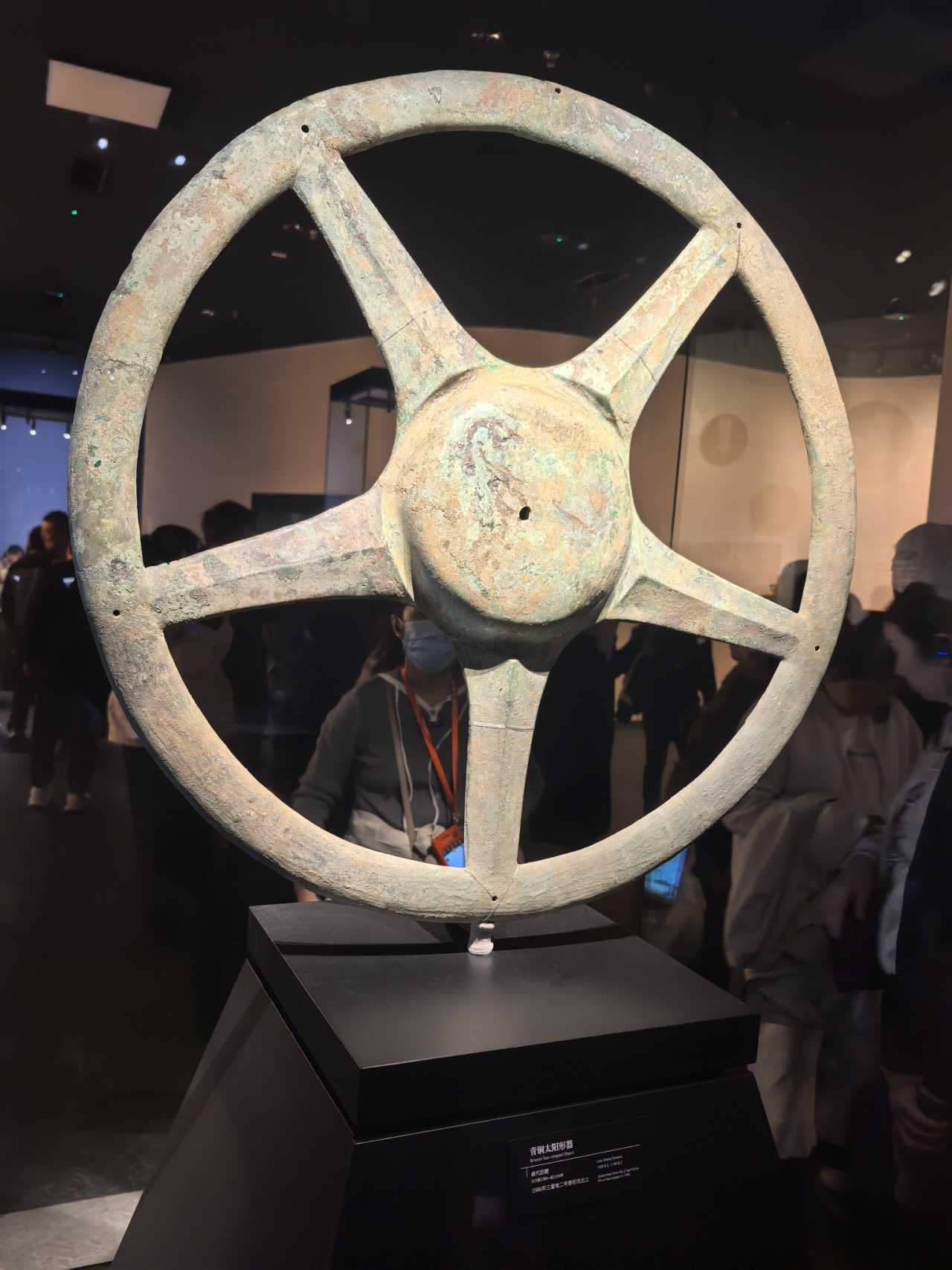
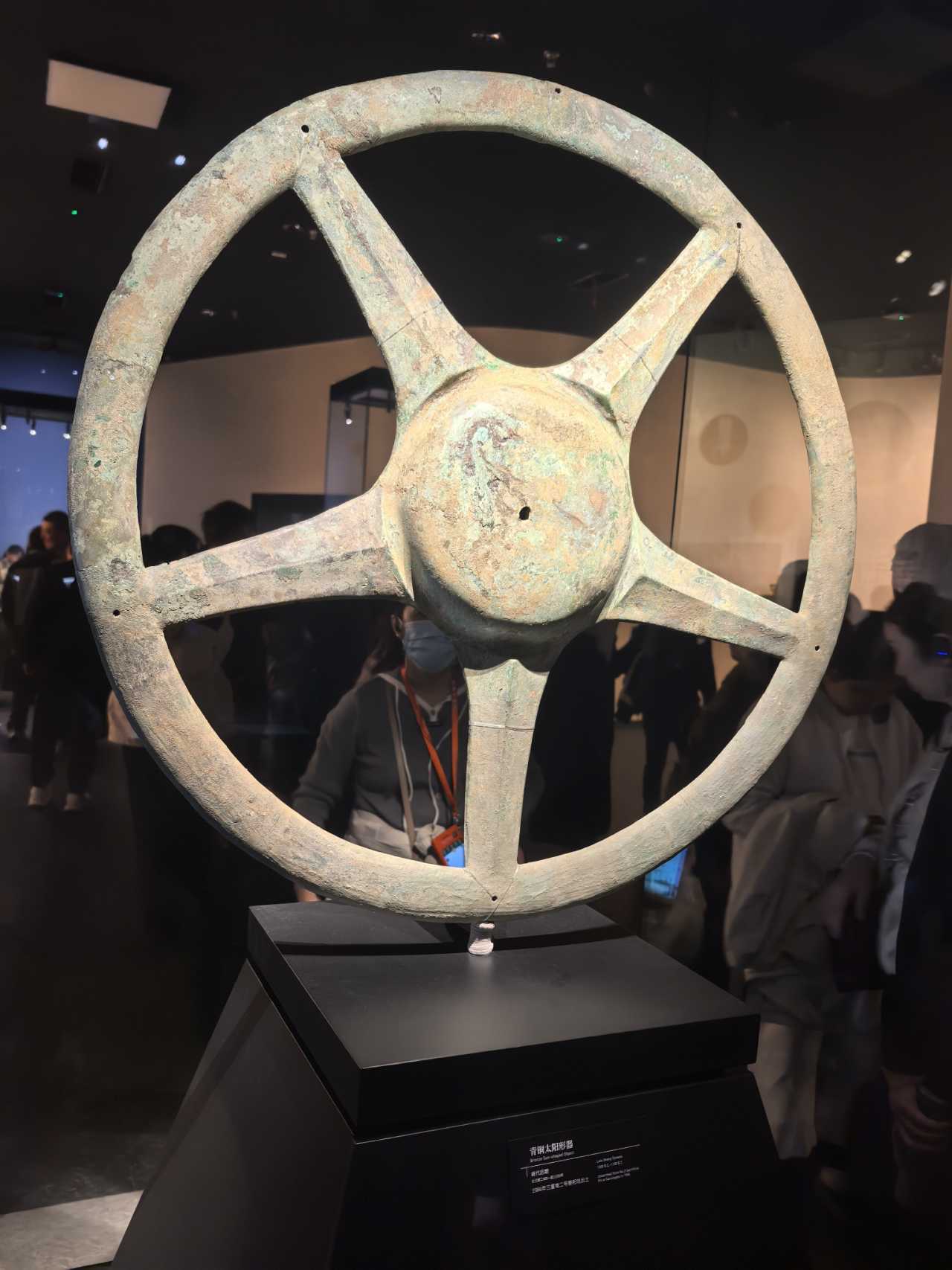
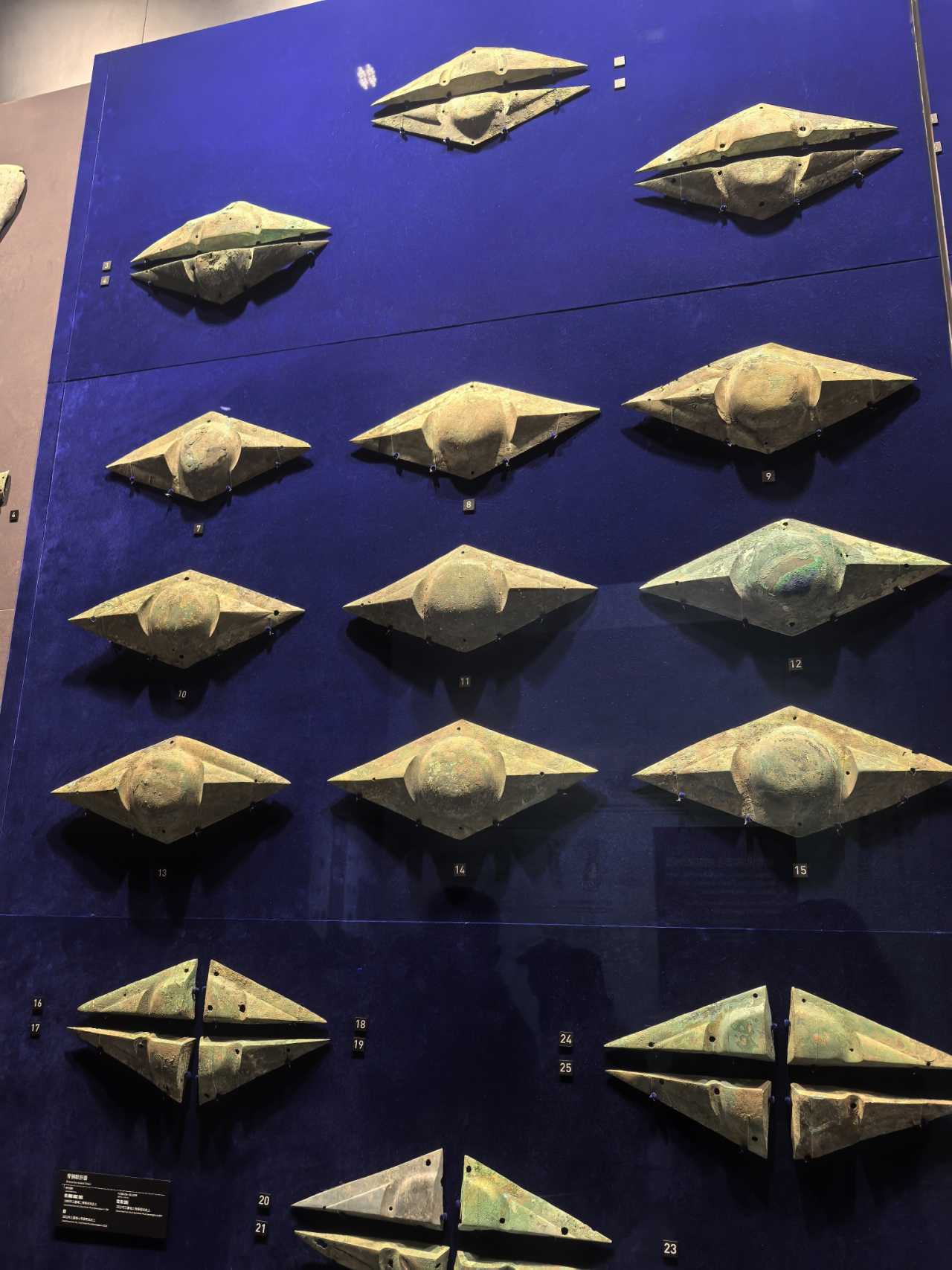
This 85-centimeter-diameter bronze sun-shaped object is the ultimate symbol of the ancient Shu people's sun worship. The raised sun motif in the center features five rays radiating with precision, the angle between each ray measuring 36 degrees. Actual measurements show this corresponds to the noon solar altitude angle at the winter solstice in Sanxingdui—suggesting this may have been an original sundial used by the ancient Shu to observe the seasons.
Even more astonishing is that, without compasses 3,000 years ago, they managed to divide the circle into equal parts with an error of less than 1 degree. The residual cinnabar traces on the tips of the rays once again confirm the advanced nature of ancient Shu painted bronze craftsmanship.
The Gold Scepter: Dual Codes of Royal and Divine Power
This 142-centimeter-long, 2.3-centimeter-diameter gold-wrapped wooden scepter is the largest gold artifact from China's Shang and Zhou dynasties. The arrow-pierced fish and bird motifs engraved on the gold foil are interpreted as the totemic emblem of the Yufu Dynasty (Fish and Cormorant Dynasty). The gold foil is only 0.2 millimeters thick, applied to a carbonized wooden core through hammering and shaping, with the edges folded and wrapped for fixation—the error margin is less than 0.5 millimeters.
Interestingly, similar gold-wrapped scepters have been found in ancient Egypt and West Asia, but the fish-and-bird motif is unique to ancient Shu. Standing before this scepter, I could almost see a shaman from three thousand years ago using it to communicate between heaven and earth, the arrow piercing not just a fish but a time tunnel leading to the kingdom of divine power.
The Gold Mask and Gold Face Cover: The Most Extravagant Investment in Faith
The gold mask unearthed from Pit No. 5 in 2021 weighs 350 grams, making it the heaviest Shang-Zhou gold artifact ever discovered. These masks were not mere decoration—they represented the most extravagant investment in faith, a tangible connection between the earthly realm and the divine.
Jiuzhaigou Travel Compatibility: What You Need to Know
Is Jiuzhaigou Suitable for First-Time Travelers?
Yes, but with caveats. Jiuzhaigou's well-maintained boardwalks and shuttle bus system make it accessible for most fitness levels. However, the altitude (2,000-3,100 meters) can cause mild discomfort. First-time travelers should plan for rest days and avoid overexertion.
How to Handle Travel Compatibility with a Partner
Our trip taught us a valuable lesson: travel compatibility is not guaranteed, even between close friends. Discuss your travel style beforehand—do you prefer slow mornings or early starts? Fine dining or street food? Budget or comfort? These conversations can save your friendship.
FAQ: Jiuzhaigou Travel Tips
Q1: When is the best time to visit Jiuzhaigou for autumn foliage? A: The peak autumn foliage season typically runs from mid-October to early November. The colors are most vibrant around October 20-25, but this also coincides with the busiest period. Book tickets and accommodation at least 14 days in advance.
Q2: How do I get from Chengdu to Jiuzhaigou? A: The most efficient way is the high-speed train from Chengdu East Station to Jiuzhaigou-Huanglong Station (about 2 hours). From there, take a direct shuttle bus to Guoda Parking Lot (about 2-3 hours). Alternatively, you can fly into Jiuzhaigou Huanglong Airport, but flights are often delayed due to weather.
Q3: Is it possible to visit Sanxingdui and Jiuzhaigou in one trip? A: Absolutely. Our itinerary combined both in 6 days, with Sanxingdui on Day 2 and Jiuzhaigou on Days 3-5. The high-speed rail connection between Chengdu and Jiuzhaigou makes this combination surprisingly seamless.
Q4: What should I pack for a Jiuzhaigou autumn trip? A: Layered clothing is essential—temperatures can range from 5°C in the morning to 20°C in the afternoon. Bring a waterproof jacket, comfortable walking shoes, sunscreen, and a reusable water bottle. Don't forget your camera for the colorful forests!
Q5: How do I avoid the crowds at Jiuzhaigou? A: Enter the scenic area as early as possible (around 7:00 AM when gates open). Head to the most popular spots like Five Flower Lake and Panda Lake first. Alternatively, visit during the off-season (November to March) when crowds are thinner, though some areas may be closed.
Ready to Plan Your Jiuzhaigou Adventure?
The journey we've shared is just one possibility—your perfect Jiuzhaigou trip awaits. Whether you're drawn by the colorful forests of autumn, the mysteries of Ancient Shu civilization at Sanxingdui, or the challenge of ticket-snatching during peak season, this destination offers something unforgettable.
Start planning today: Book your high-speed rail tickets, secure your Jiuzhaigou entry pass, and reserve accommodation near Zangwang Square. The colorful forests won't wait forever, and neither should you.
Have questions about your Jiuzhaigou itinerary? Drop a comment below—we'd love to help you craft your perfect journey!
You may also like


