Higher Than the Mountain: Seeking a Climber's Answer on Sacred Cipo Mountain (5,086m)
Meta Description: Discover the ultimate Sacred Cipo Mountain climbing guide. Follow one climber's journey to 5,086m in Siguniang Town, with tips on altitude sickness, base camp hiking, and finding meaning above the clouds.
Introduction: Why Climb a "Useless" Mountain?
"For a goal without worldly value, walking alone into the mountains, enduring the pain of living, facing the risk of death—this is the nobility of a climber."
I was scrolling through my phone in my rented apartment in Guangzhou when I read these words in Higher Than the Mountain. Outside the window, the familiar city lights glowed, but inside me, a nameless, indescribable restlessness was churning. The names of these free climbers—Yan Dongdong, Liu Xinan, Li Hongxue—felt as distant as stars, yet as scorching as embers. Why did they abandon comfort to walk the path of cliffs and thorns? Why, knowing they might fall, did they still rush headlong toward the high peaks?
I decided to climb a snow mountain myself, to find my own answer.
Many people choose Mount Siguniang's Dafeng or Erfeng as their first snow mountain, but unfortunately, Mount Siguniang was still closed at the time. Just as I was hesitating, my friend Hua casually said, "Sacred Cipo Mountain seems pretty good too." I replied, "Sure." Lai was even more direct: "Let's go." Da Mai asked, "Is it easy?" Hua answered, "Easy."
And just like that, the four of us formed a team.
[Link: Best first snow mountains for beginners in China]
Day One: From Guangzhou to Siguniang Town – A Weather Rollercoaster
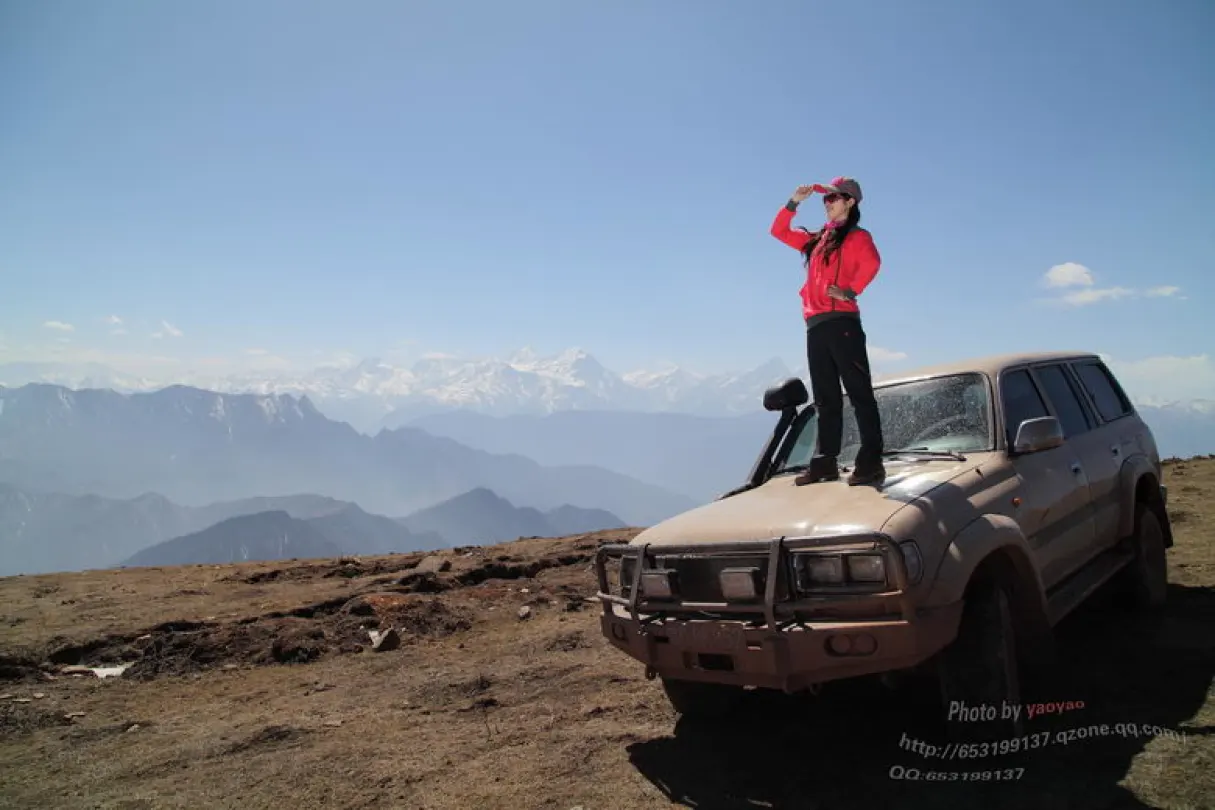
When our flight from Guangzhou to Chengdu landed at Tianfu Airport, the sky was so overcast it looked ready to drip. We rented a car and headed straight for Siguniang Town. For the four-and-a-half-hour drive, the three guys used rock-paper-scissors to decide who would drive for an hour and a half each—a casual arrangement that pretty much sums up the essence of independent travel.
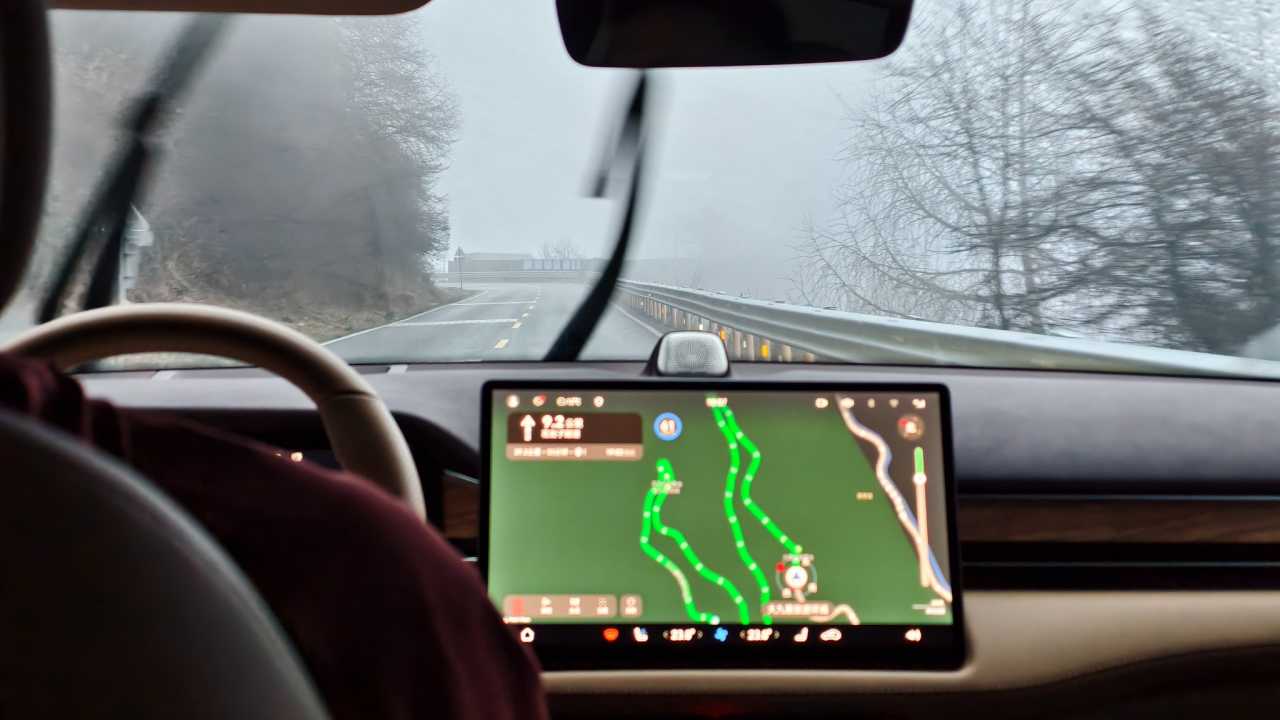
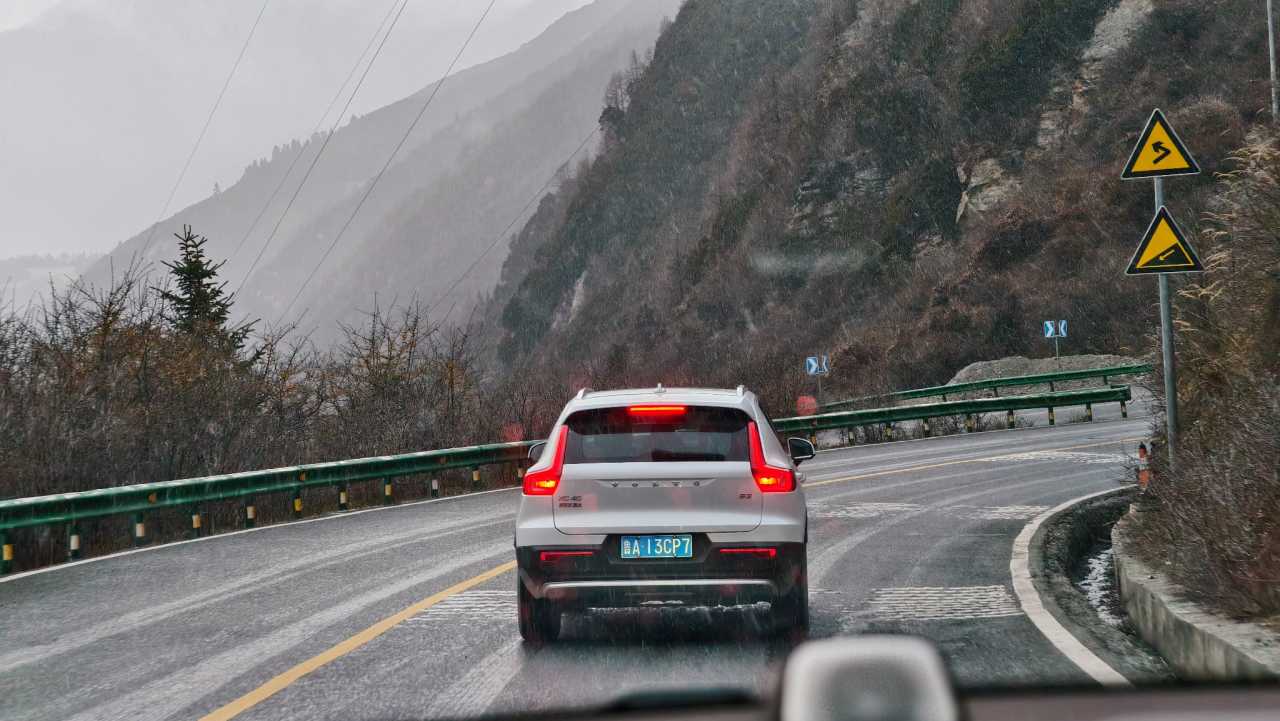
Along the way, the weather played psychological warfare with us: first heavy overcast, then rain, then snow flurries. I stared out the window, my mood swinging—worried the weather would ruin our summit attempt, but also afraid we'd reach the top and see nothing.
Then, just as we entered Siguniang Town, the sky suddenly cleared. A gap in the blue opened wider and wider. Lai didn't even have time to perform his usual "weather prayer"—the heavens gave us a break on their own.
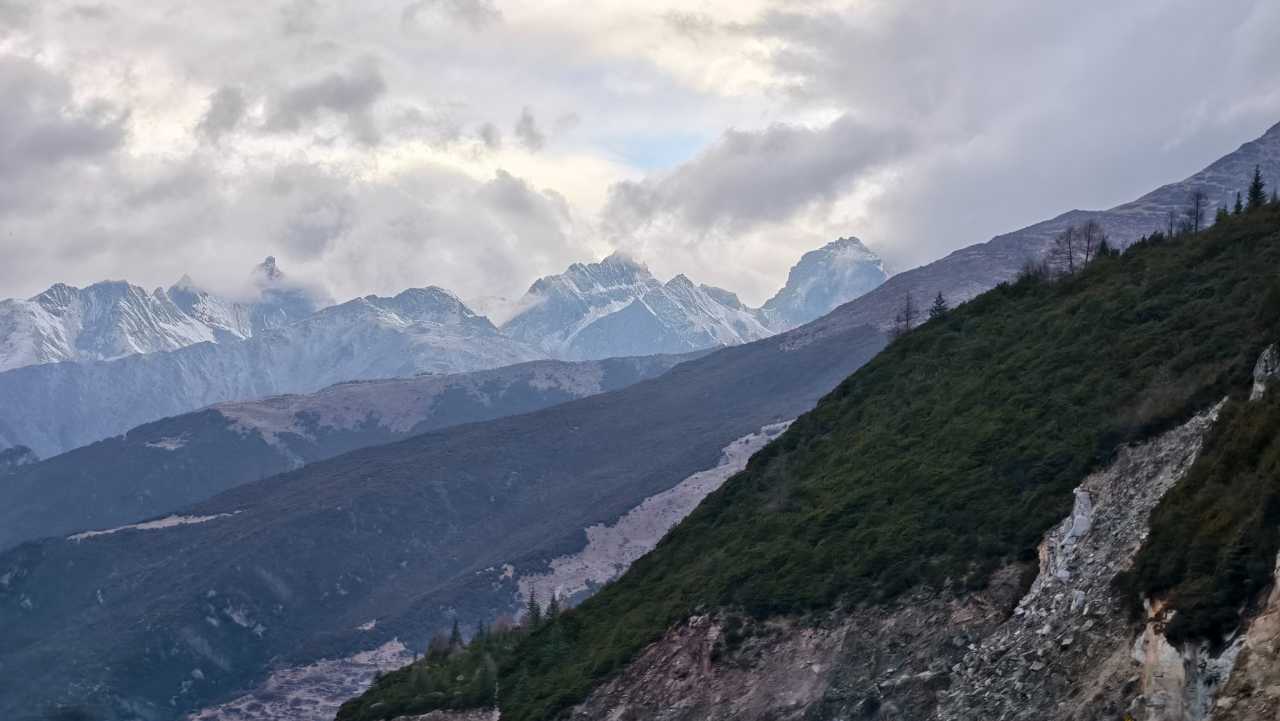
We arrived in town at seven in the evening. The advantage of booking a commercial expedition group became immediately apparent: our guide was already waiting at the hotel, quickly arranged our mountain itinerary, and soon a steaming pot of yak meat hotpot (牦牛火锅) was on the table. Hua sighed, "No wonder I'm drifting further and further away from AA-style groups."
After dinner came Hua's unshakable ritual: coffee time. Siguniang Town sits at 3,300 meters, and it was still snowing in early spring. I was wrapped in the thin jacket I'd brought from Guangzhou, while the three guys had already adapted to local conditions, bundled up in thick down jackets. Hua was especially dramatic—down jacket plus down pants, fully armed. I thought to myself: it's nowhere near cold enough for down pants. Hua must really be feeling the chill.
But traveling with Hua, I truly understood what it means to be a "social predator." He'd been to Siguniang Town ten times and knew everyone: greeting the hotel owner with "I'm back," calling out to the guide "Qiang, it's me again," and waving to the coffee shop owner "Tianliang, good to see you again." Before we even set out for the mountain, he was already discussing plans for a future trip to Sanfeng with the outdoor expert Tianliang.
[Link: How to choose a commercial expedition group for Cipo Mountain]
Day Two: Hiking to Base Camp – Altitude Sickness and an Unexpected Golden Sunset
Sacred Cipo Mountain is a 16-kilometer round trip with nearly 1,800 meters of elevation gain. Many people opt for a single-day speed climb, but for a better experience, we decided to spread it over two days, with one-on-one guide support. Today's task was simple: hike 5 kilometers with less than 1,000 meters of ascent.
I hadn't slept very soundly the night before, but at least I had no symptoms of altitude sickness. When I got up, heavy snow was falling outside—real, proper snow, the kind I hadn't seen in ages! I rushed through my morning routine, eager to run out and let it fall on me. But by the time I got downstairs, the snow had stopped. The feeling of being "set up" by the weather was both frustrating and amusing.
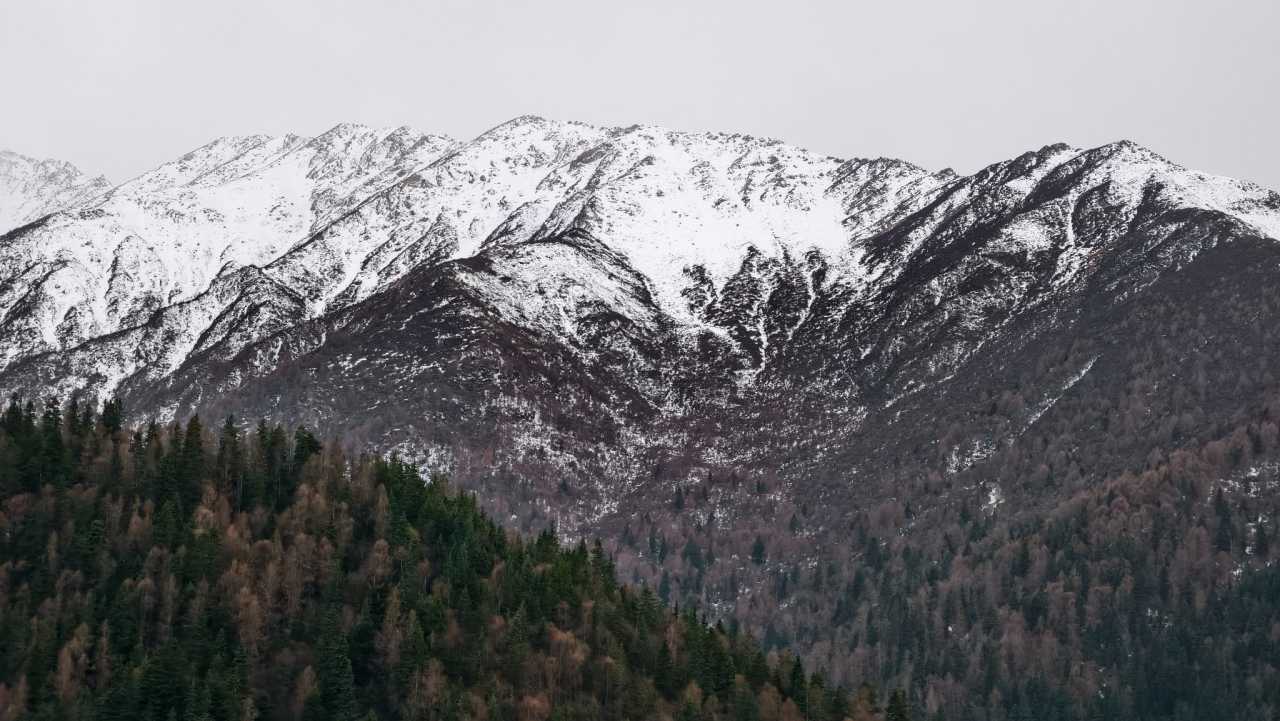
We set off at ten in the morning. The guide led the way, and we carried only light packs. The trail was manageable—the first two kilometers wound through dense forest, with tree branches draped in hanging moss swaying gently in the breeze. Our pace slowed accordingly. We'd stop and sit even when we weren't tired. Seeing that we were in decent shape, the mule driver figured we wouldn't need his horses and instead hauled a load of firewood up to base camp.
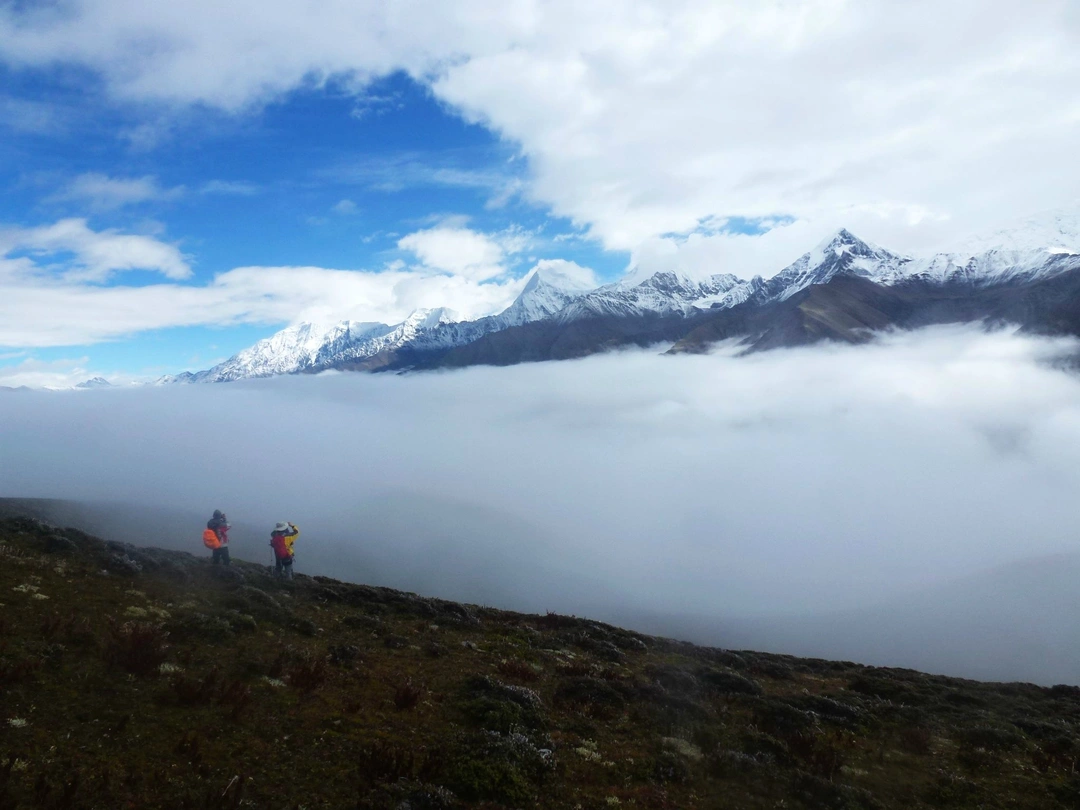
As we emerged from the forest, we ran into the mule driver's free-ranging yaks. Hua wanted a photo with both the snow mountain and the yaks, but the moment he stepped closer, the yak moved, and he stumbled backward three steps in fright—giving us the first comedic moment of the trip: cool for all of three seconds.
After lunch, as the altitude increased, Hua started showing signs of altitude sickness, reduced to crawling up the slope at a snail's pace. I'd just finished an energy gel and felt fully charged, so I quickly handed one to Hua. After he caught up, I was completely sold on energy gels—they're a lifesaver for quick refueling outdoors.
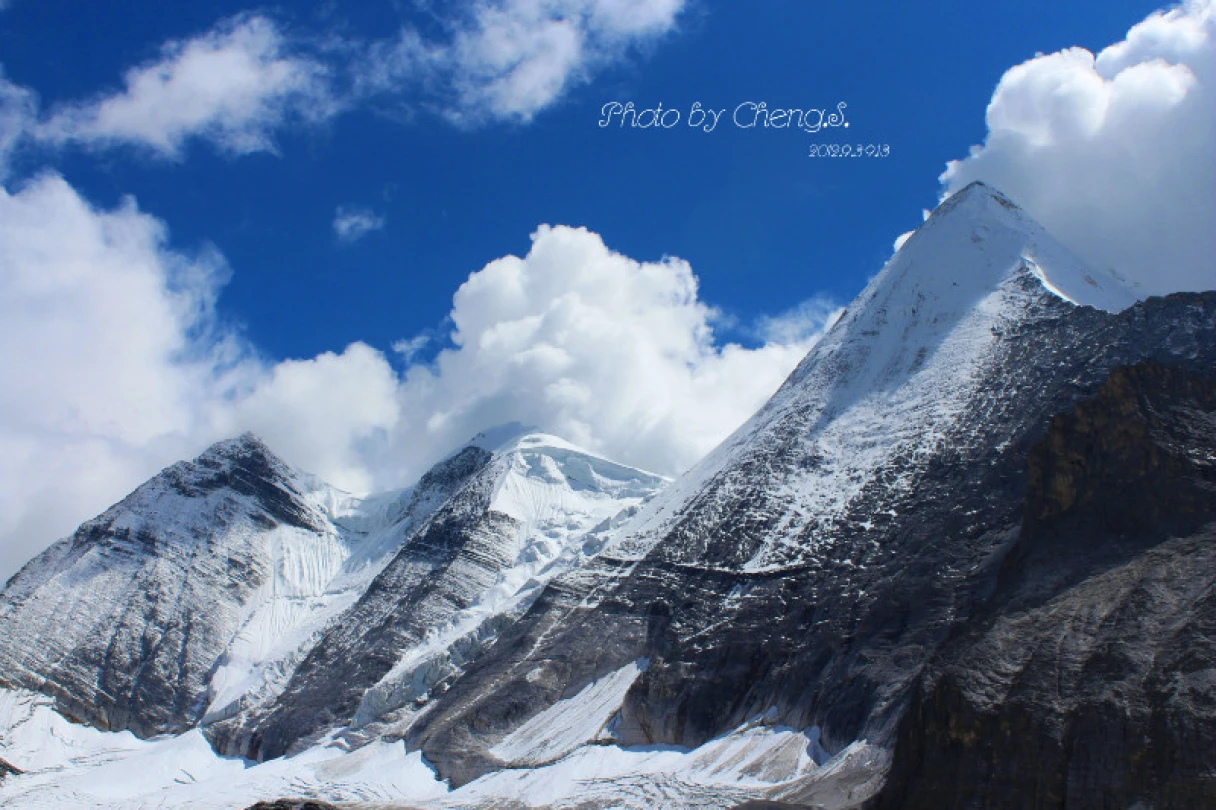
As we neared base camp, the snow mountain range grew closer, and the snow cover deepened. Using the snowy peaks as a backdrop, I took some surprisingly good photos of Hua—after losing nine pounds, you could actually see his jawline. No wonder he was struggling on the climb; he was running on empty carbs. Meanwhile, Lai and Da Mai, those two "high-altitude yaks," were far ahead, leaving me to scramble to catch up.
[Link: Essential gear for Sacred Cipo Mountain climbing]
Night at Base Camp: Insomnia, Knot Practice, and Ten Seconds of Golden Light
We reached base camp at four in the afternoon. The shelter at Cipo's base camp was a stone building with an open horse stable. No tent tonight—that alone was something to celebrate. Five kilometers had taken us six hours. Even the guide commented, "At this pace, you won't make the summit."
Since the summit push involved technical sections requiring ropes, our first task upon arrival was learning how to ascend and descend. Lai and I paid close attention, practicing two or three times. Da Mai was distracted and barely managed to get the hang of it. Hua, feeling nauseous, went through the motions quickly and retreated inside to rest.
After practicing with the ropes, Hua sat quietly by the door, his silhouette lonely and forlorn. He was probably enduring the misery of altitude sickness, wrestling internally with the decision to descend. But in Hua's dictionary, there's no such word as "struggle"—if you're uncomfortable, you go down and try again another time. What I admire most about him is his decisiveness in retreating and his courage to start over. His climbing history has a curse: he'd come twice before finally summiting.
As darkness fell, black clouds rolled in. I had given up hope of seeing a golden sunset on the peaks. But then, in a fleeting glance—there it was! Golden light on the mountain! It lasted only ten seconds, revealing just a sliver of the peak, but it was an unexpected gift. Lai was on the phone with his wife at the time, giving his daily safety report, and missed it completely.
At eight in the evening, we packed up our gear and got ready for bed. It was the earliest I'd gone to sleep in my entire life. Da Mai had just said, "Eight o'clock is way too early to sleep," when he started snoring. Meanwhile, my altitude sickness symptom—insomnia—kicked in. I lay there like a fish flipping in a pan, every second stretching into an eternity. When the three o'clock alarm finally went off, I felt liberated. It turned out Lai hadn't slept either, and had kicked Da Mai several times—unfortunately, to no effect.
[Link: How to prevent altitude sickness on high-altitude climbs]
Day Three: Summit Push – The Final Ascent to 5,086m
The alarm shattered the silence at 3:00 AM. Outside, the stars were so bright they seemed close enough to touch. The wind had died down, and the temperature had dropped to -15°C. We quickly downed a simple breakfast of porridge and steamed buns, then geared up: headlamps on, crampons fastened, harnesses checked.
The first section was a steep snow slope. In the darkness, all I could see was the pool of light from my headlamp and the footprints of the guide ahead. Each step required conscious effort—plant the front points of the crampons, breathe, step, breathe. The altitude was already above 4,500 meters, and every movement felt like wading through molasses.
By 5:30 AM, we reached the technical section. The guide set up the fixed rope, and one by one, we clipped in. My hands were numb despite the thick gloves, but I focused on the rhythm: ascender up, feet up, breathe, repeat. The rope was icy, and the exposure was real—a slip here would mean a long, uncontrolled slide.
Hua, despite his nausea the night before, was moving steadily. He'd made the decision to continue, and once Hua commits, he doesn't look back. Lai and Da Mai were ahead, their headlamps bobbing like fireflies in the pre-dawn darkness.
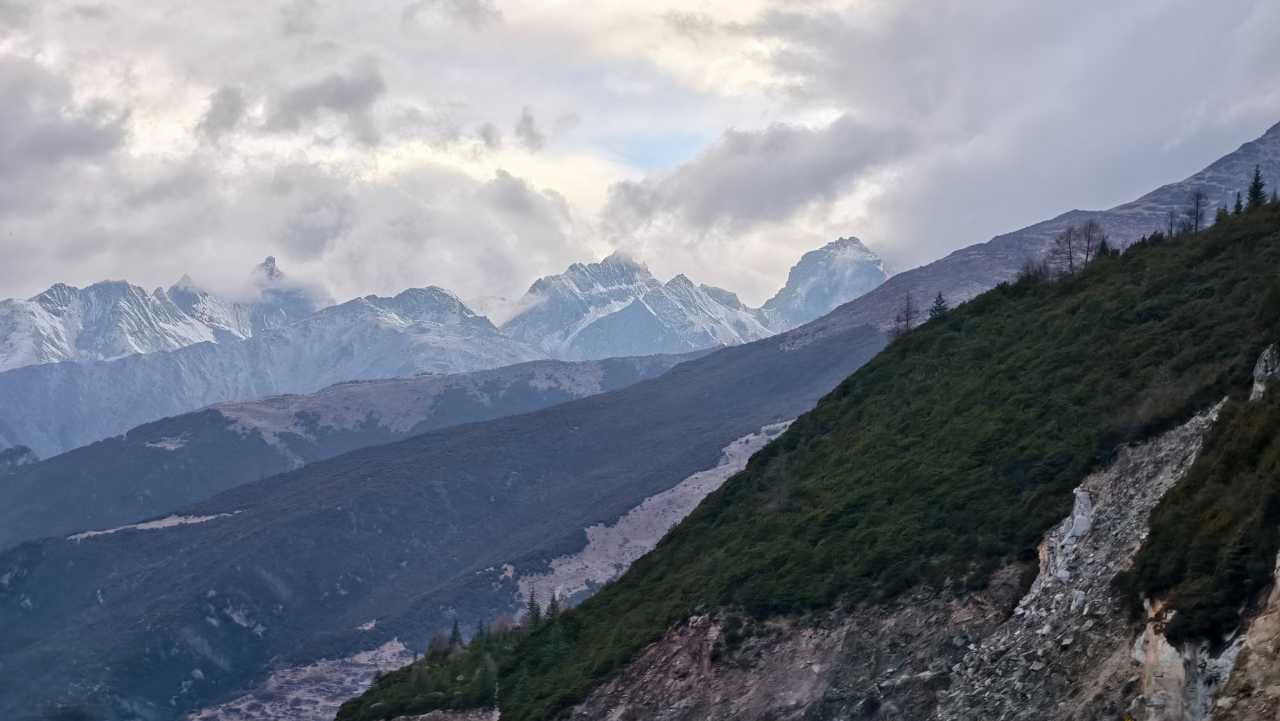
Then, at 6:45 AM, the sky began to lighten. First, a faint glow on the eastern horizon, then streaks of orange and pink painted the surrounding peaks. The guide stopped and pointed: "There it is. The summit."
I looked up. The final ridge stretched before us, a knife-edge of snow and rock. Beyond it, the summit pyramid gleamed in the first rays of sunlight. I had never felt so small, yet so alive.
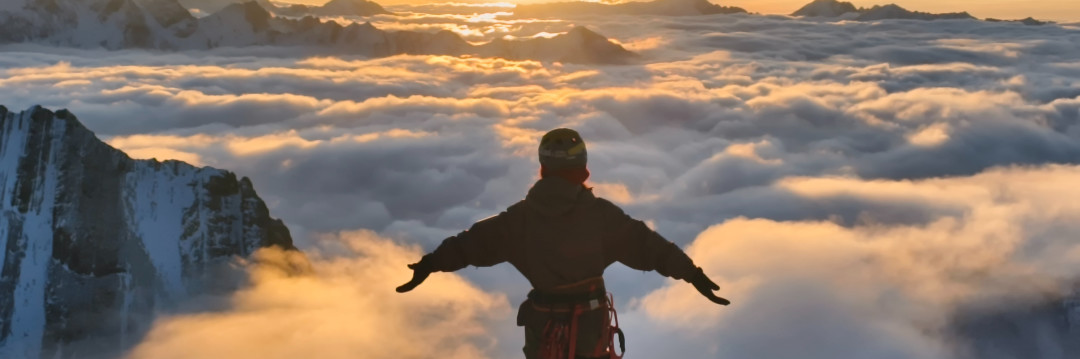
We reached the summit at 7:32 AM. The view was everything I had hoped for and more: a sea of clouds below, the peaks of Mount Siguniang rising like islands in the distance, and the sky a gradient from deep blue to golden orange. I stood there, gasping for air, and realized I had found my answer.
The answer wasn't in the view. It wasn't in the summit photo. It was in the struggle—the sleepless night, the burning lungs, the frozen fingers. It was in the moment when Hua, sick and exhausted, chose to keep climbing. It was in the ten seconds of golden light the day before, when the universe offered a glimpse of something greater.
The mountain doesn't care about your reasons. It doesn't reward you for being brave. But if you climb it anyway, with no promise of worldly value, you discover something that cannot be measured: the nobility of choosing the hard path, simply because it's there.
[Link: Summit day checklist for 5,000m peaks]
FAQ: Sacred Cipo Mountain Climbing Guide
1. Is Sacred Cipo Mountain suitable for beginners?
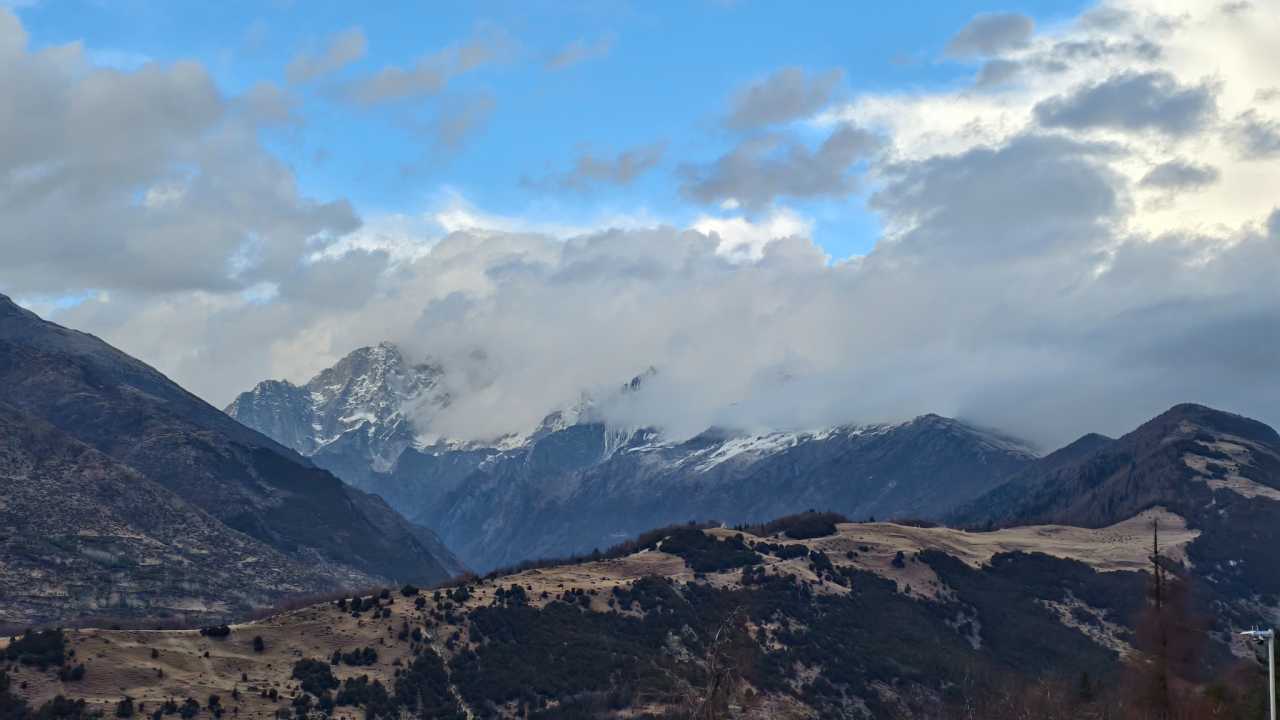
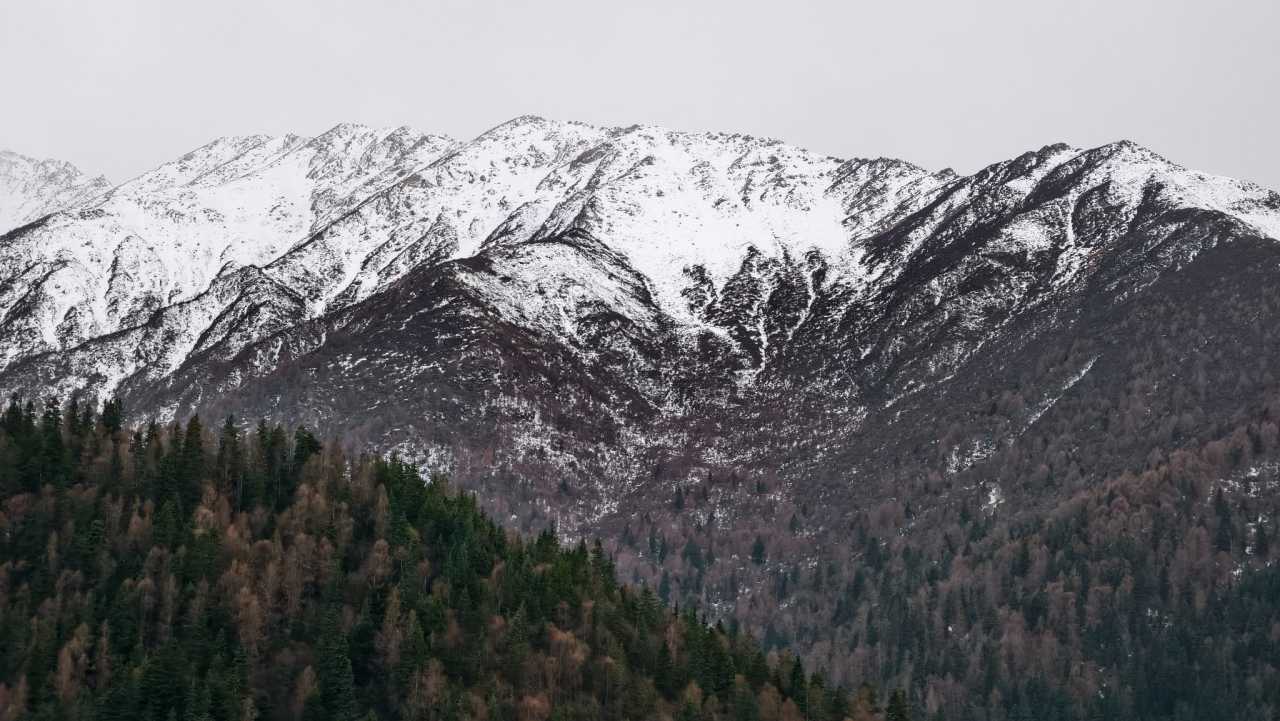
Yes, Sacred Cipo Mountain (5,086m) is considered a good entry-level technical snow mountain. It requires basic rope skills and crampon use, but the technical sections are short and well-supported by commercial guides. However, you should have prior hiking experience and be comfortable with high-altitude conditions (3,000m+).
2. What is the best time to climb Sacred Cipo Mountain?
The optimal climbing season is April to October. Spring (April-May) offers stable snow conditions but colder temperatures. Summer (June-August) has milder weather but more precipitation. Autumn (September-October) provides clear skies and fewer crowds. Winter climbing is possible but requires advanced skills and equipment.
3. How do I prevent altitude sickness on Cipo Mountain?

Key strategies include: - Acclimatize for at least one night in Siguniang Town (3,300m) - Stay hydrated (3-4 liters per day) - Avoid alcohol and heavy meals before the climb - Use medication like acetazolamide (Diamox) if prescribed - Descend immediately if symptoms worsen (HACE/HAPE warning signs)
4. Do I need technical climbing experience for Sacred Cipo Mountain?
Basic familiarity with crampons, ice axes, and rope ascending/descending is recommended but not required if you join a commercial expedition. Guides will provide a training session at base camp. If you have zero experience, consider booking a one-on-one guide for personalized instruction.
5. What is the cost of climbing Sacred Cipo Mountain?
Commercial expedition packages typically range from 2,500-4,000 RMB per person, including guide fees, base camp accommodation, meals, equipment rental (crampons, harness, helmet), and permits. Transportation from Chengdu and Siguniang Town accommodation are extra. DIY options with AA-style groups can be cheaper but require more preparation.
[Link: Budget planning for Sichuan snow mountain expeditions]
Final Thoughts: The Mountain Gives What You Bring
Standing at 5,086 meters, I understood what the book meant. The nobility isn't in reaching the summit—it's in the decision to try. It's in the sleepless nights, the frozen mornings, the moments when your body screams and your mind whispers, "Keep going."
Sacred Cipo Mountain didn't give me a grand revelation. It gave me something better: the memory of four friends, a ten-second golden sunset, and the quiet certainty that some questions can only be answered by walking into the unknown.
Your turn: Have you ever climbed a mountain that changed your perspective? Or are you planning your first high-altitude adventure? Share your story in the comments below, or tag us on social media with #SacredCipoMountain. The mountain is waiting.
[Link: How to prepare for your first 5,000m summit]
Ready to climb Sacred Cipo Mountain?
[Download our free Sacred Cipo Mountain packing checklist] | [Book a guided expedition] | [Join our climbing community forum]
All factual details in this article are based on the original source from Mafengwo (i/24851313). Elevations, distances, and timing are accurate as reported. Climbing conditions may vary; always consult current weather and route reports before your trip.