Hidden in Leshan's Shadow: Jiajiang – The Forgotten Town That Holds My Private Food Map
Meta Description: Discover Jiajiang, the hidden food town near Leshan, China. From 24-hour noodle joints to traditional tofu pudding, explore authentic Sichuan street food without the crowds. Your private food map awaits.
When Leshan Became a Tourist Magnet, I Quietly Turned to Its Neighbor
Have you ever traveled to a city specifically for its food, only to find yourself staring at a three-hour wait for a table? That's the reality of Leshan today. Friends fly in from other cities, only to cry to me that they can't even get a waiting number at "Old Ji's Chicken." I'm not surprised – we're all complicit in this city's explosive popularity.
As someone who used to visit Leshan every few weeks, I've eaten my way through every well-known restaurant. The novelty wore off long ago. Every return trip relies on a handful of old favorites to satisfy my carb cravings.
Until one day, I decided to change direction.

Strictly speaking, on my last few "trips to Leshan," I actually went to a place much closer to Chengdu – Jiajiang. How small is this town? By my third visit, I could find my destinations without even looking at a map.
When I scroll through my phone's photo album, I realize this place has quietly taken up most of my storage. Let Leshan be for those who need it more. I choose to eat my way through Jiajiang.
(Disclaimer: I'm not saying anything bad about Leshan. Leshan's street food will always be legendary.)
A Town Forgotten by Time: Jiajiang's Charm in Obscurity
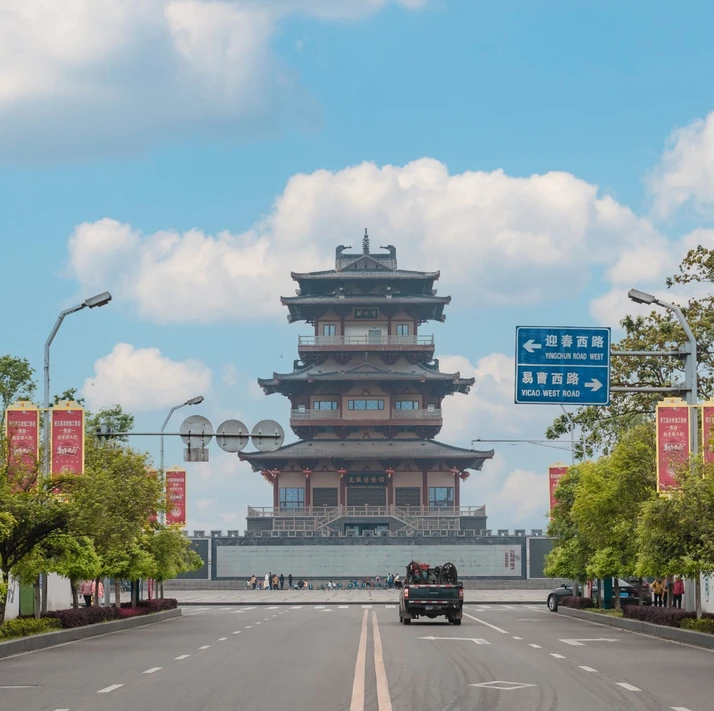
The name Jiajiang comes from the phrase "green mountains face each other on both banks, a river of emerald water flows through the middle." This is also the thousand-year-old home of bamboo papermaking, but in the tides of time, it has gradually faded into obscurity.

The Jiajiang I see isn't some quaint, picturesque small city. It's crowded, noisy, a bit rundown – yet it gives you a sense of happiness wrapped in everyday life. It's like when you claim to love minimalist Japanese aesthetics, but when faced with a cluttered, elaborate American country grandma's house, you just can't resist.
It's the kind of place where, when you go home for Spring Festival, your dad asks if you want to come back for a stable job and find a good husband soon.
The Old Streets: Where Time Took a Nap
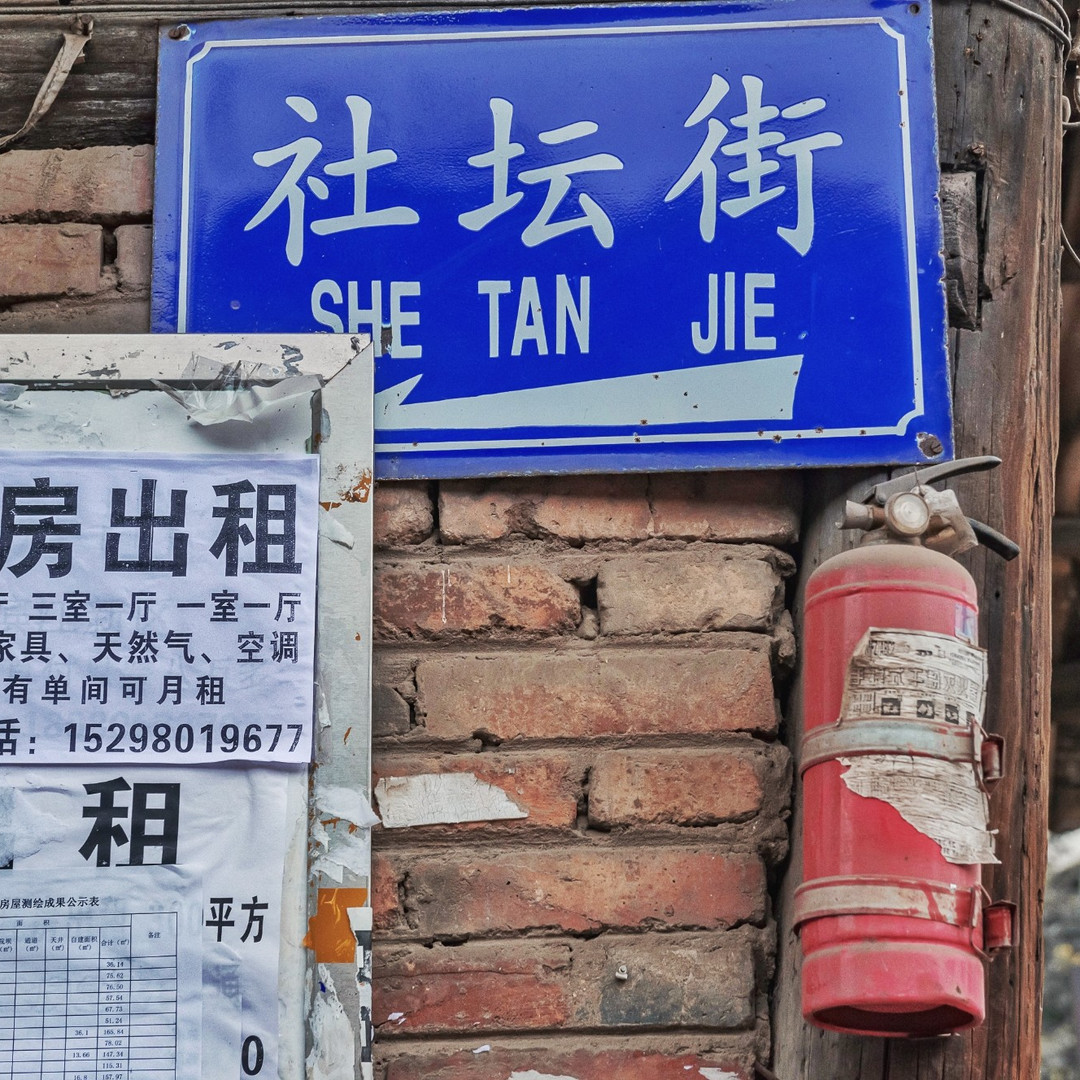
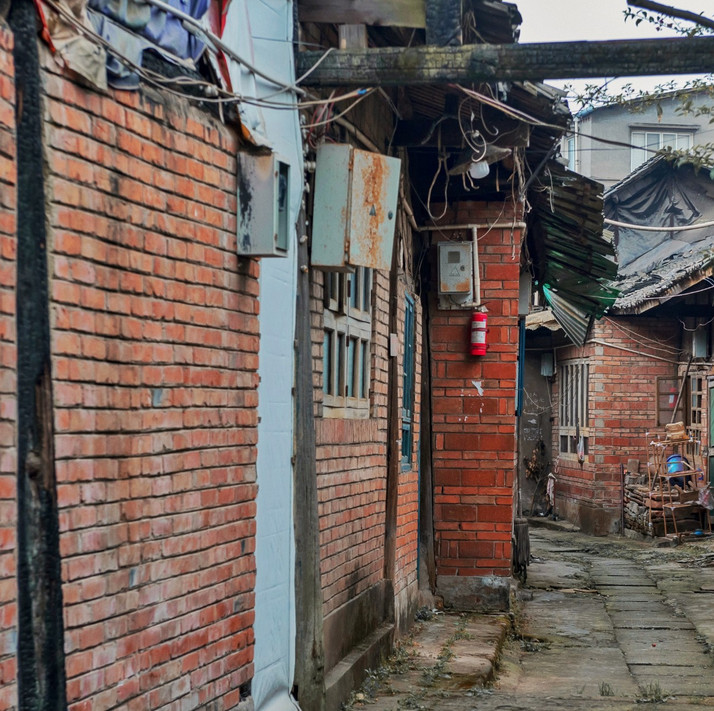
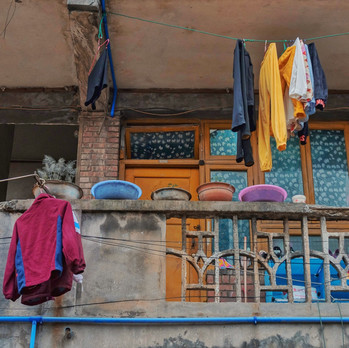
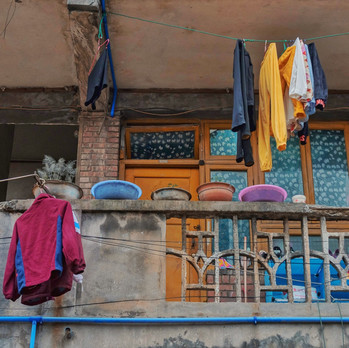
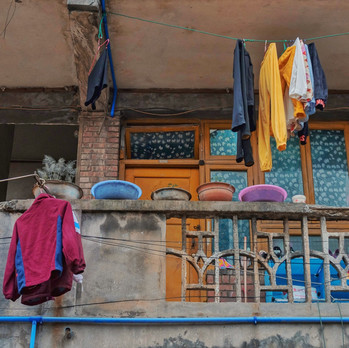
Jiajiang has an old neighborhood, roughly around Shetan Street, Yahou Street, and Qingguo Street. I stumbled upon it while wandering through the alleys looking for food – public housing, dormitory buildings, courtyards – all maintaining the everyday life of an old town from decades ago. There are once-popular terrazzo buildings and low red-brick houses.
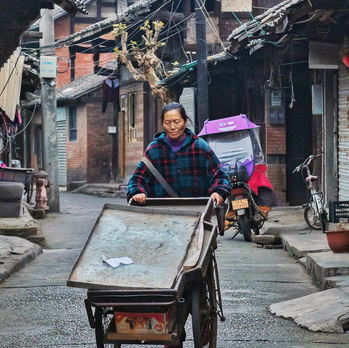
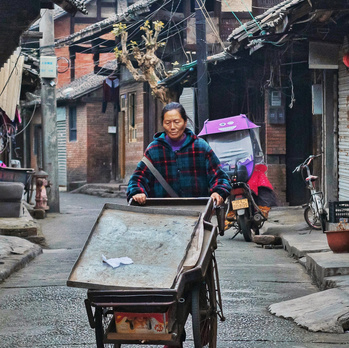
Every street and alley here twists and turns, with cobblestone paths leading to the deepest courtyards. At the entrance of a courtyard stands an ancient banyan tree. Upstairs, you can hear a mother explaining math problems to her child and the sizzling sound of stir-frying. Downstairs, an elderly man is buying groceries while taking his grandchild for a walk.
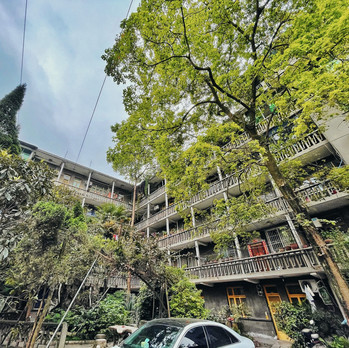
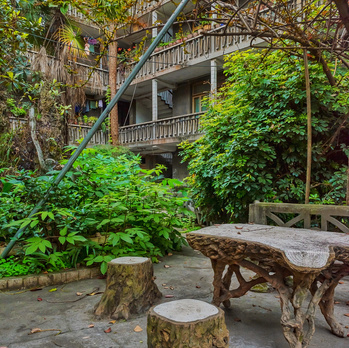
Although many houses have changed owners, the accumulated atmosphere of decades still protects this place well. Once, I accidentally wandered into a large courtyard that looked exactly like the dormitory building I lived in as a child – kids who knew each other running through the hallways, growing up eating from each other's kitchens; a once carefully crafted miniature garden with bridges and flowing water, now half-covered by enormous climbing vines.
An elderly man at the entrance, seeing my interest, pulled over a stool and started chatting. He told me this was a company housing complex built in 1984, once the most stylish buildings in the area. Back then, every family moved in with joy, and it was lively every single day.
Life in these old streets has so much more human connection than in fancy new apartments. There's no shopping mall, but everything for daily life is covered. Cooking oil, salt, soy sauce, and vinegar can be bought right at your doorstep. Kids love the milkman who pushes his cart with a little horn, and they twist their mothers' arms for money when the 50-cent popsicle cart comes by.
There's even a nearly 100-year-old church here. Women holding hands in prayer sing loudly along with the hymns. We walked around the church for a bit and quietly slipped out – human joys don't connect, and neither do our troubles.
Everything in the old streets seems to operate on a different frequency from the new town, but it's more genuinely steeped in that word: the flavor of everyday life.
Walking here, some childhood memories suddenly surface, stirring up a little dust from the past. Then, stepping out into the sunlight at the end of the alley, they settle back down.
When you're tired from wandering, it's time to eat.
The 24-Hour Late-Night Canteen That Never Turns Off the Lights
Every time I go to Jiajiang, I list out my next few meals on my phone. There aren't many good-hearted girls like me who care about the world's delicious food and want to spread the love equally.
Binle Snacks: Jiajiang's First 24-Hour Restaurant
Walking out of the movie theater, complaining about the increasingly terrible plot, we wonder where to grab a bite. Sharing the same thought are the aunties who just finished their midnight mahjong session at 12 AM, still replaying the wrong tiles they played during their break.
Outside, alongside the blue-and-yellow delivery drivers, there are guys who drove over just to order a bowl of beef noodles and tofu pudding. They greet the owner as soon as they walk in, and the owner, noticing their big belly, jokes, "Where have you been getting rich lately?"
I'm not eavesdropping – the sounds just drift into my head on their own.
Is Binle Snacks amazing? Not necessarily. A friend once said, "You know why they only sell at night? Because during the day, all the good restaurants are open."
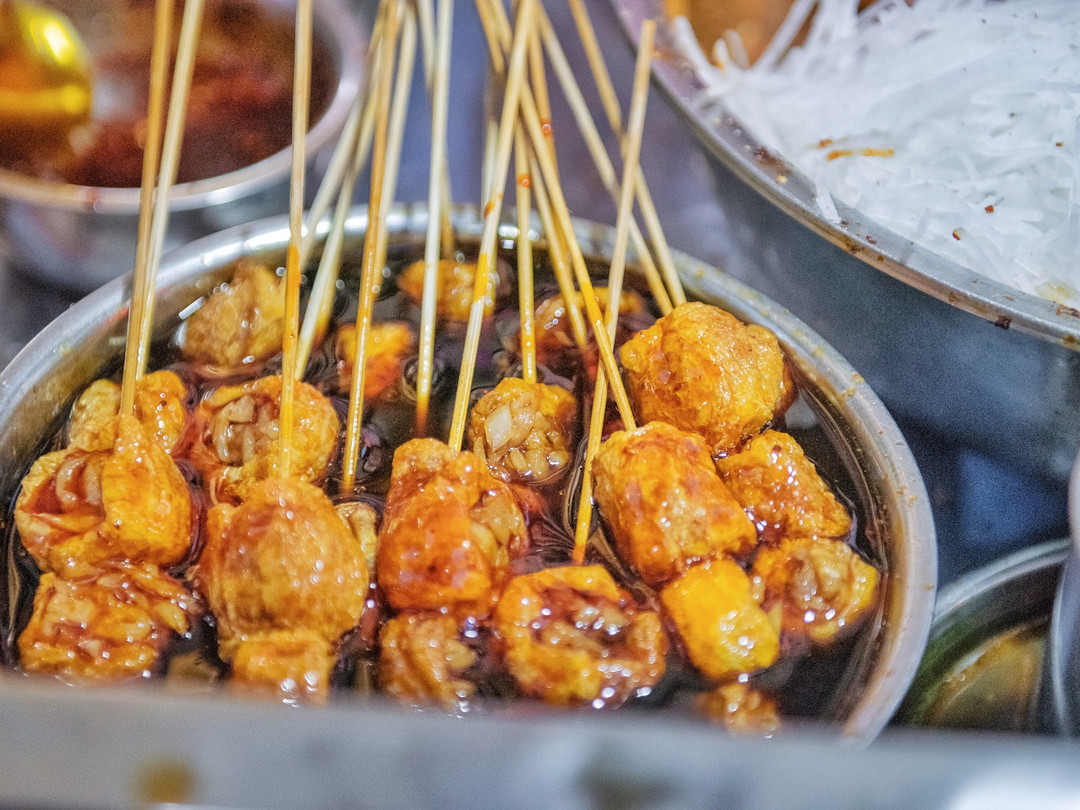
The tofu pudding (豆腐脑) here follows Jiajiang's traditional style, slightly different from Leshan's. More ingredients, heavier flavors. Eating a dry bowl will definitely have you getting up for water in the middle of the night. Pair it with a bowl of 阴米子 (puffed sticky rice porridge) or sweet, sticky 三合泥 (three-ingredient sweet paste) to balance it out.
阴米子 is made from sticky rice that's stir-fried until fluffy. When you eat it, you boil it in water, then crack an egg into it and stir until the egg is broken into fine shreds. The rice grains are soft, sticky, and sweet, and the egg is silky smooth. It reminds me of the days after I got my wisdom teeth pulled out and could only eat cornmeal mush. A whole bowl without any salt, mixed with egg but not a hint of fishiness – I realized halfway through it was lard.
The owner says there's another way to eat it: sprinkle a layer of crispy rice grains in the bowl, then pour a freshly poached egg on top – a crunchy, tender, and smooth meal.
I'd had 三合泥 before in Chengdu, but had completely forgotten what it tasted like. Binle's bowl of black, sticky 三合泥 – one scoop gives you the feeling of finishing dinner, going for a walk with your mom, and running into someone selling freshly made 三合泥 at the street corner, insisting on having a bite. Black sticky rice, soybeans, sesame, and of course, lard – soft, fragrant, and rich.
Under Binle's bright fluorescent lights, aside from the sign on the wall that says "Please Don't Be Loud," there's no sense of it being late at night. There are young guys hurrying the waitstaff to clear tables so they can take their girlfriends for a late-night snack before catching a movie; old friends who meet by chance, quietly pay each other's bills, and pretend to push each other away in a fake goodbye at the door.
Nightlife in a small town may not have the thrill of thumping bass, but it has its own rhythm, one that's hard to break. Like that night – even after we'd walked far away, the sweet taste of sticky rice still lingered in our mouths.
The Tofu Pudding Battlefield: An Ultimate Showdown with No Winner
Jiajiang's tofu pudding isn't just a dish – it's a battlefield. Every shop claims to have the best version, and locals have fierce loyalties. Here's how to navigate the chaos:
- Traditional Jiajiang-style: More ingredients, heavier flavors. Expect a thick, savory broth with tofu, peanuts, pickled vegetables, and a drizzle of chili oil.
- Leshan-style: Lighter, with a clearer broth and fewer toppings. Good for those who want a milder experience.
- Binle Snacks' version: The 24-hour staple. Rich, hearty, and perfect for late-night cravings.
Pro tip: Try both styles and decide for yourself. There's no wrong answer – just delicious food.
FAQ: Your Jiajiang Food Trip Questions Answered
Q: How do I get to Jiajiang from Chengdu?
A: Take a high-speed train from Chengdu East Station to Leshan Station (about 1 hour), then a 30-minute bus or taxi to Jiajiang. Alternatively, drive directly – it's about 1.5 hours from Chengdu.
Q: What's the best time to visit Jiajiang for food?
A: Evening and late-night hours are best. Many iconic spots like Binle Snacks only open after dark. Aim for 6 PM to midnight for the full experience.
Q: Is Jiajiang safe for solo female travelers?
A: Absolutely. Jiajiang is a small, friendly town. Locals are welcoming, and the streets are safe even late at night. Just use common sense like you would anywhere.
Q: What other dishes should I try besides tofu pudding?
A: Don't miss beef noodles, 三合泥 (three-ingredient sweet paste), 阴米子 (puffed sticky rice porridge), and any street-side skewers or dumplings you stumble upon.
Q: Can I find vegetarian options in Jiajiang?
A: Yes, but limited. Tofu pudding can be made vegetarian if you ask for no meat. The sweet dishes like 三合泥 and 阴米子 are naturally vegetarian. For more variety, stick to vegetable-based stir-fries at local eateries.
Your Private Food Map Awaits
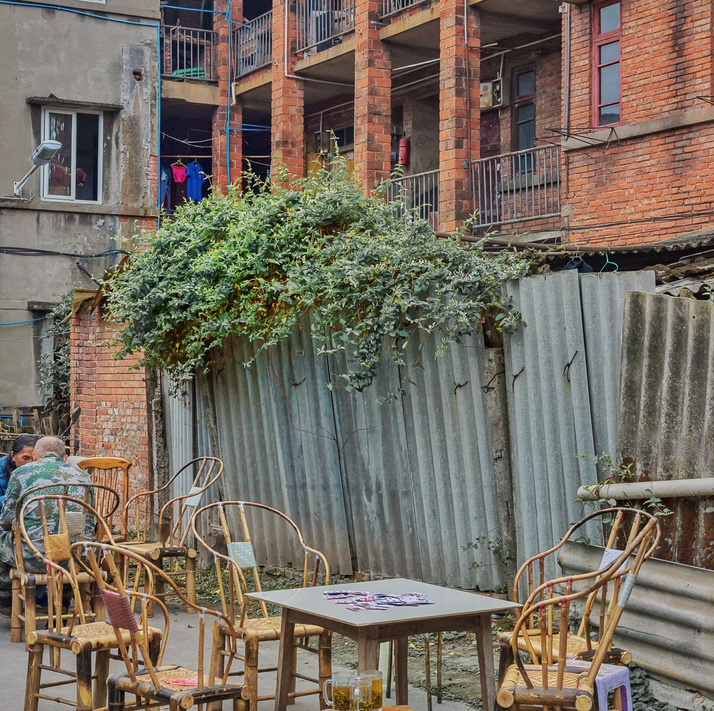
Jiajiang isn't trying to be the next Leshan. It doesn't need to be. This forgotten town holds a quiet, unpretentious charm that rewards those who wander off the beaten path.
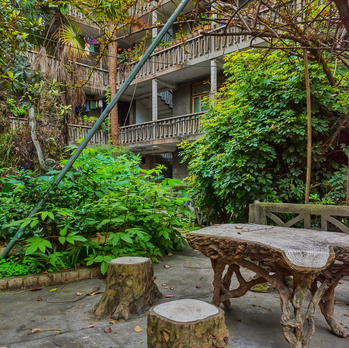
Whether you're a foodie chasing authentic Sichuan street food, a traveler craving human connection, or someone who just wants to eat without waiting in line – Jiajiang is waiting for you.
Your next move:
1. Book a high-speed train to Leshan.
2. Head straight to Jiajiang.
3. Start at Binle Snacks after dark.
4. Explore the old streets the next morning.
5. Repeat.
[Link: Best Sichuan street food cities near Chengdu]
[Link: How to plan a food trip to Leshan and Jiajiang]
[Link: Hidden food towns in China you need to visit]
Don't let Jiajiang stay forgotten. Share this article with a friend who loves food, and start planning your trip today. The tofu pudding is waiting.
You may also like