From Wenchuan to Danba: A Journey Through China's Panda Highway Hidden Realm
Meta Description: Explore China's Panda Highway from Wenchuan to Danba. Discover Luobu Village's rebirth, Jiaju Tibetan Village's pear blossoms, and the hidden beauty of Sichuan's G350 route. Your ultimate travel guide.
Introduction: The Road Less Traveled Through Western Sichuan
February in western Sichuan still carries a chill, but the sun has already begun to give generously. I set out on a road named after the nation's beloved treasure—China's Panda Highway. This scenic stretch of National Highway G350 begins in Yingxiu Town, Wenchuan County, winds through the Wolong Nature Reserve, passes the foot of Mount Siguniang (Four Sisters Mountain), and stretches westward to Danba County.
The road is not long, but it threads like a silk cord, stringing together snow-capped peaks, deep gorges, Qiang villages, Tibetan settlements, the rebirth after a devastating earthquake, the perseverance of ancient peoples, and those tender stories hidden among the pear blossoms. This is more than a road trip—it's a journey through history, culture, and resilience.
The Market in the Clouds: Luobu Village's Remarkable Rebirth
Wenchuan's Living Legacy: Luobu Zhai
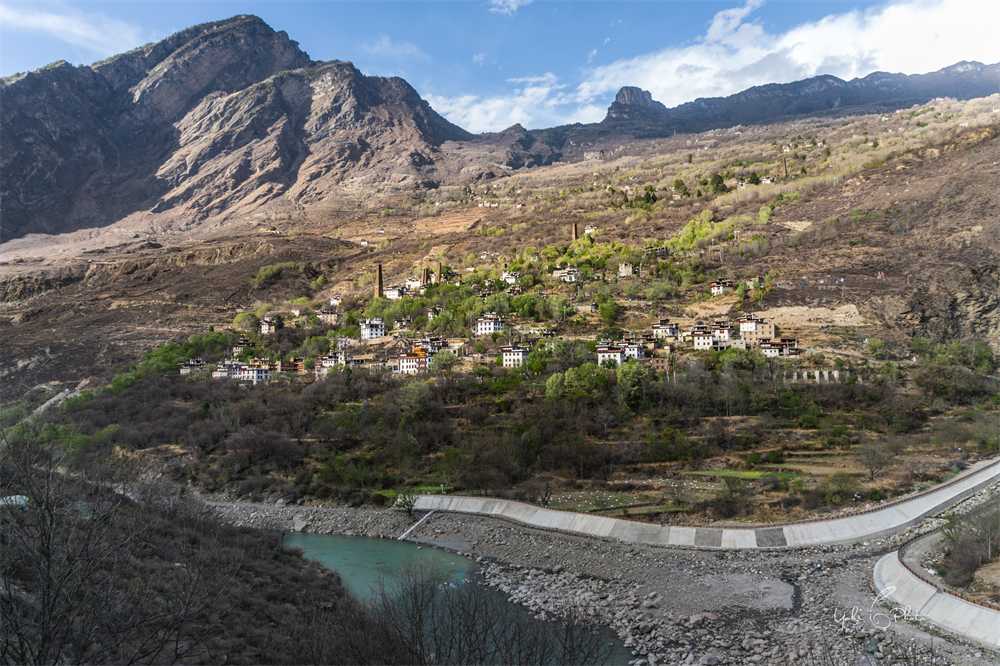
The name Wenchuan always makes one's heart sink. The car climbed up the winding mountain road, rising toward the clouds. On a mountaintop platform at nearly 2,000 meters above sea level, the Min River Grand Canyon lay like a wound carved by a giant axe—and Luobu Village sits right on the edge of that wound.
As a teenager, I read about the "Western Qiang" in history textbooks and felt they were a distant, unreachable people. Those tribes, who followed water and grass to build their homes, settled in the places closest to the sky. Today, the Qiang people call themselves "Erma," meaning "locals," but others prefer to call them "the people on the clouds"—because their villages are always built where clouds rise.
The Legend Behind the Name
Luobu Village was originally called Fenghuang Village (Phoenix Village), and in the Qiang language, it is known as "Wazige." As for its current name, the villagers tell a tragic legend: when foreign invaders came, the village chief led his people to defend their home, but they were outnumbered. On the day the village fell, the enemy's blade came down, and the chief's head fell as cleanly as a radish from the field. To honor him, the village was renamed Luobu (Radish) Village. The story is brutal, but standing beneath the old tree at the village entrance, the wind rustles through the leaves as if whispering about an unyielding will to live on.
Resilience After the 2008 Earthquake
The great 2008 earthquake destroyed most of the old village's houses. Amid the rubble and broken walls, the rammed earth structures had collapsed, wooden doorframes stood alone, and new grass had sprouted on the shattered walls. But strangely, the atmosphere here was not sorrowful. In the narrow lanes, a striking blue caught the eye—the color of the villagers' clothing, a bold contrast against the earthy tones of the buildings. The colorful Qiang embroidery hanging on the mud walls fluttered like flags, declaring that this place was still alive.
I met an elderly woman carrying a basket on her back, preparing to go work in the fields. I asked her, since the new village had already been built, why did she still return to the old one? She adjusted her white headwrap and said calmly, "The houses may have fallen, but the land is still here. As long as the land remains, we can't bear not to come back." In that moment, I saw a resilience in her. The land is a loving mother; even though she has suffered, how could her children abandon her after just one disaster?
The Art of Qiang Embroidery
At the village gate, a woman was completely absorbed in embroidering Qiang-style patterns. On the black fabric, the threads were a seductive rose red and a flamboyant emerald green, coming together to bloom into vivid flowers. I asked her about the common colors used in Qiang embroidery. She answered simply:
- Red symbolizes strength and courage
- Blue represents the purity of the sky and water
- Green shows a cherishing of the homeland
- Yellow signifies harvest and happiness
These colors come directly from the mountains, forests, land, and flowers they live among—sky blue, grass green, earth yellow, rose red—each one an imitation of and reverence for nature.
To thank her for sharing, I bought a small embroidered bag she had sewn herself. The price was so low it made me embarrassed, but she laughed heartily, saying she was happy I liked her work.
Qiang King's Palace Site Museum
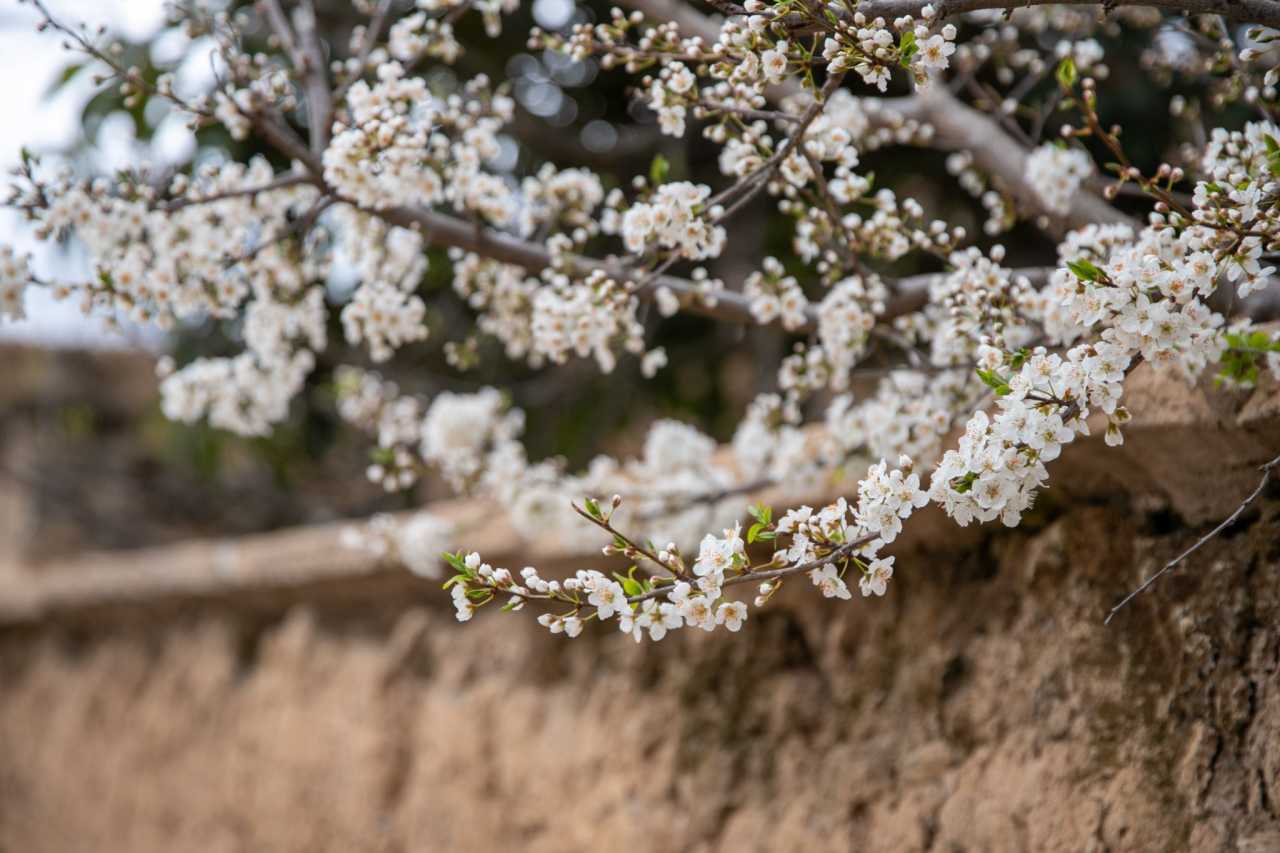
The Qiang King's Palace Site Museum had been fully restored. The caretaker enthusiastically introduced us to the ancient and mysterious Qiang culture. He led us to the highest point of the building and pointed into the distance. "Look beyond the mountain!" Following his gaze, clusters of cherry trees in full bloom softened the rugged Min River Grand Canyon. Pink and white petals trembled delicately, like clouds and mist. Come early summer, the plump cherries would bring abundant sweetness to the villagers. Cherry cultivation is a new industry for Luobu Village over the past decade or so. Picking sweet cherries in the "market in the clouds" sounds romantic just to say.
The sky was darkening, and it was time to descend the mountain. On my way to the parking lot, I kept turning back to look at the old yellow village frozen in time. Suddenly, Tyndall light appeared again, like a lamp illuminating the tall, dense cherry tree in the old village. As I reluctantly said goodbye, that cherry tree became a spirit I admired and was moved by—flowers blooming from ruins are always the most touching.
The Kingdom of Women Amidst Pear Blossoms: Jiaju Tibetan Village
Entering Danba County

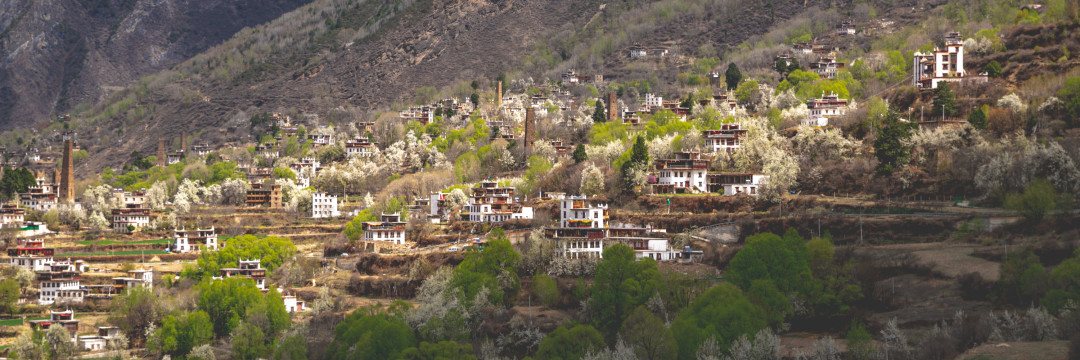
Leaving the Qiang village hidden in the clouds, we turned back onto the Panda Highway. When the brocade-like pear blossoms blanketed both sides of the road, we had arrived in Danba County.
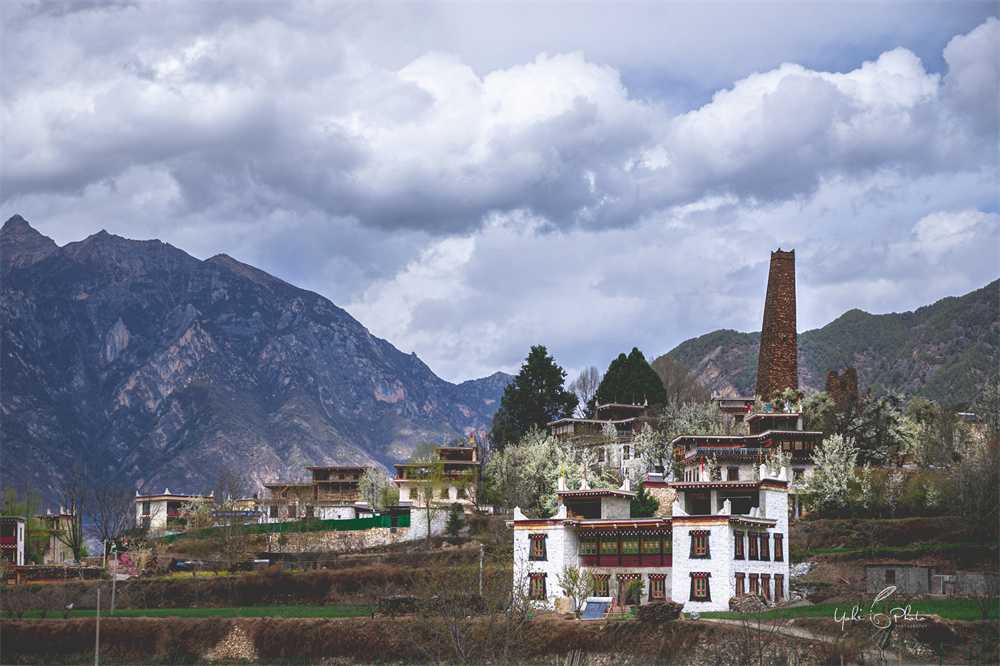
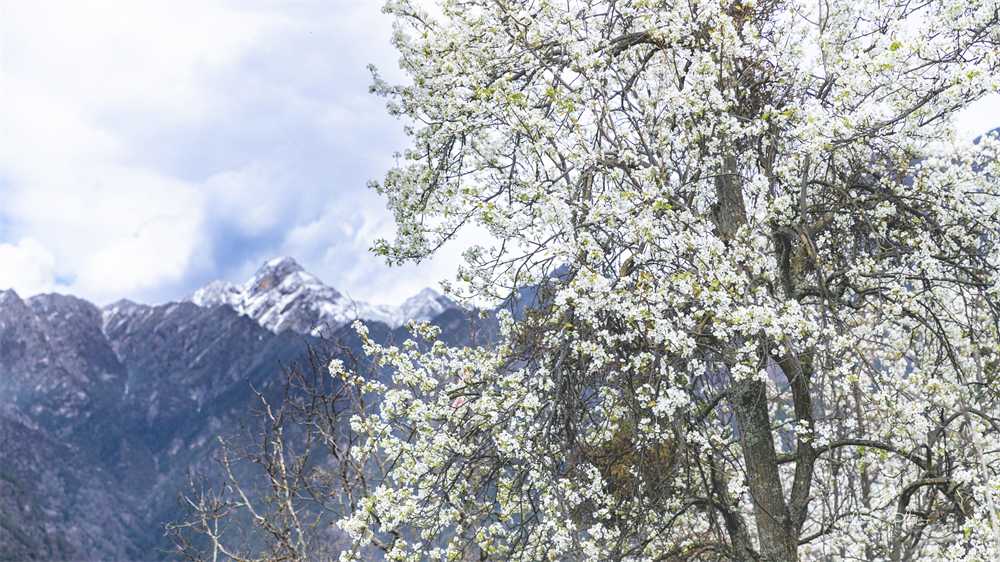
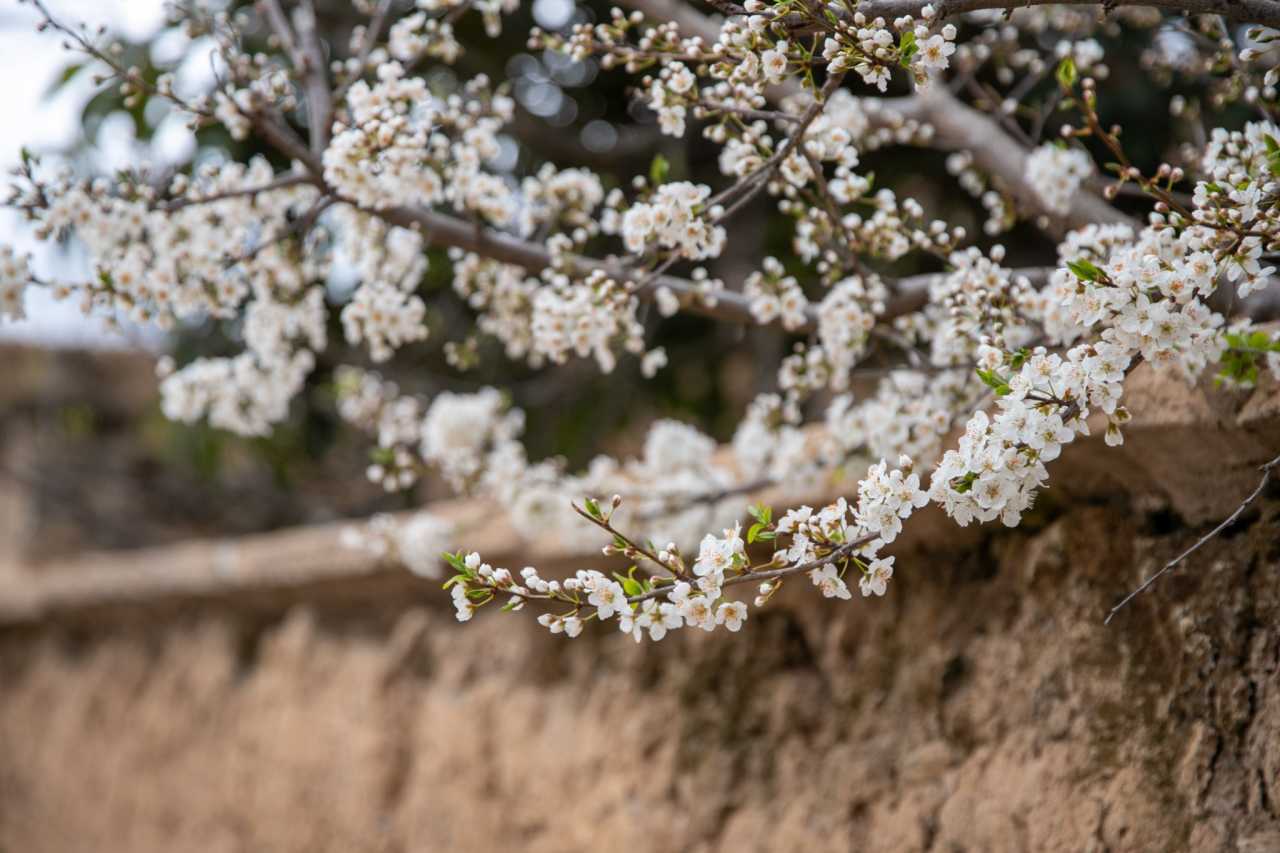
Thanks to the nourishing soil and water of the valley, some of the pear trees were over a hundred years old. They stood gracefully in the valleys and beside Tibetan houses, delicate yet vigorous, beautiful yet dazzling. Large clusters of soft, translucent petals drifted down at the entrance of a Tibetan house whose walls were whiter than milk. For a moment, I couldn't tell which shade of white better captured the fresh, otherworldly beauty of Danba's Tibetan villages.
The Legend of the Eastern Women's Kingdom
This is the hidden paradise deep in the Hengduan Mountains—Danba County in Sichuan, the legendary "Warm River Valley of the Eastern Queen."
During the Sui and Tang dynasties, a matrilineal tribe existed on the western Sichuan plateau, establishing a kingdom ruled by women, historically known as the Eastern Women's Kingdom (Dongnü Guo) . During the Tang Dynasty, the queen of this kingdom sent envoys to Chang'an (modern-day Xi'an) multiple times before it was eventually conquered by the Tubo (Tibetan) Empire. This mysterious kingdom maneuvered between two powerful forces—the Tubo Empire and the Tang Dynasty—buying itself a century and a half of peace before suddenly vanishing from the pages of history. Today's Jiarong Tibetans still live on the land of the Eastern Women's Kingdom, preserving the beauty of the "kingdom of women" in their floral headscarves and flowing, brightly colored skirts.
Ancient Watchtowers of Danba
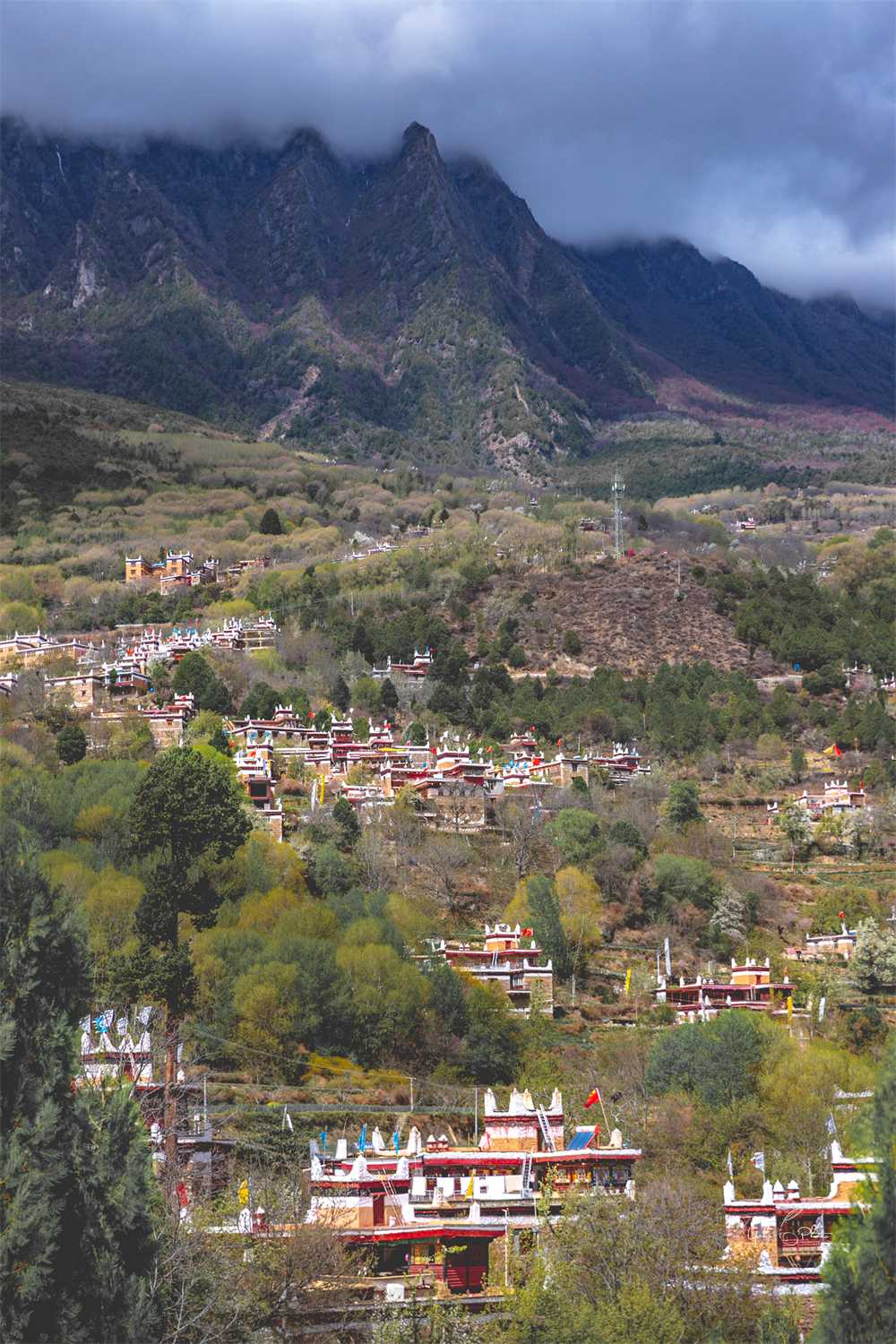
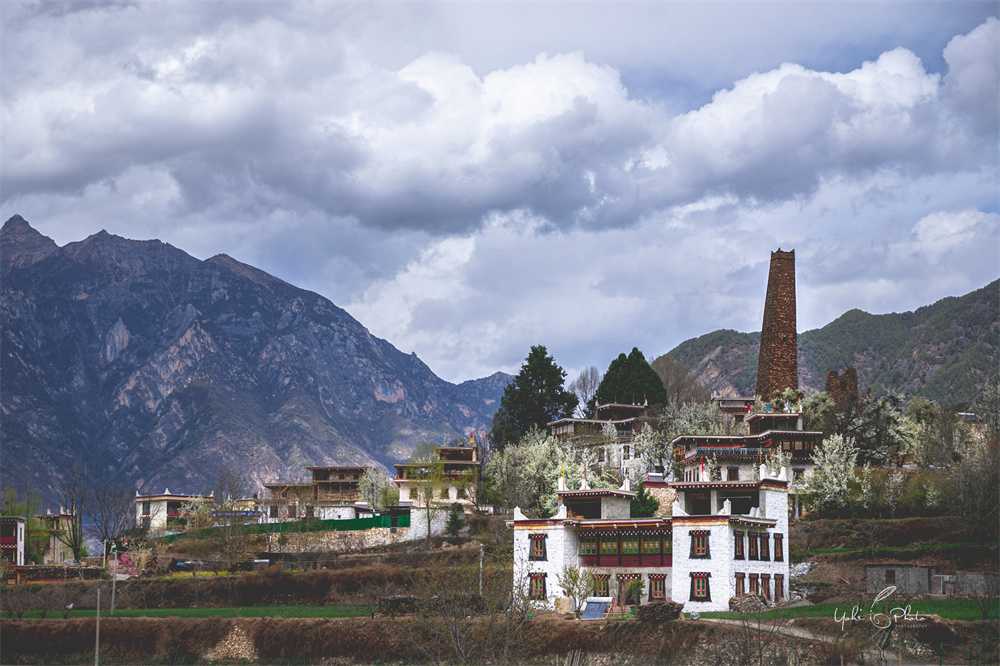
Even taller than the pear trees were the ancient watchtowers. Their corners were as sharp as blades, standing straight and upright. The narrow window openings on their sides were scars left by war. Built only from stone, wood, and earth, they fearlessly withstood earthquakes and never collapsed. The watchtowers rose from fields planted with green wheat sprouts, standing tall against the pure, washed sky, carrying on a conversation that has lasted for thousands of years.
The Embroidered Headscarves of Jiarong Women
What first caught my interest was the embroidered headscarves worn by local women. On ordinary days, they didn't wear their traditional long skirts for convenience, but they insisted on coiling their thick, long braids and tucking them under their black, fully embroidered headscarves. This hairstyle, passed down through generations, had become a kind of totem.
Taking the opportunity during a meal, I asked the innkeeper about the meaning behind the headscarves. She bustled between the kitchen and the dining tables, her face, reddened by the high-altitude sun, breaking into a shy smile. She explained that the headscarves are not just fashion—they are a symbol of identity, heritage, and the enduring spirit of the Jiarong women who have lived on this land for centuries.
Practical Travel Tips for the Panda Highway
Best Time to Visit
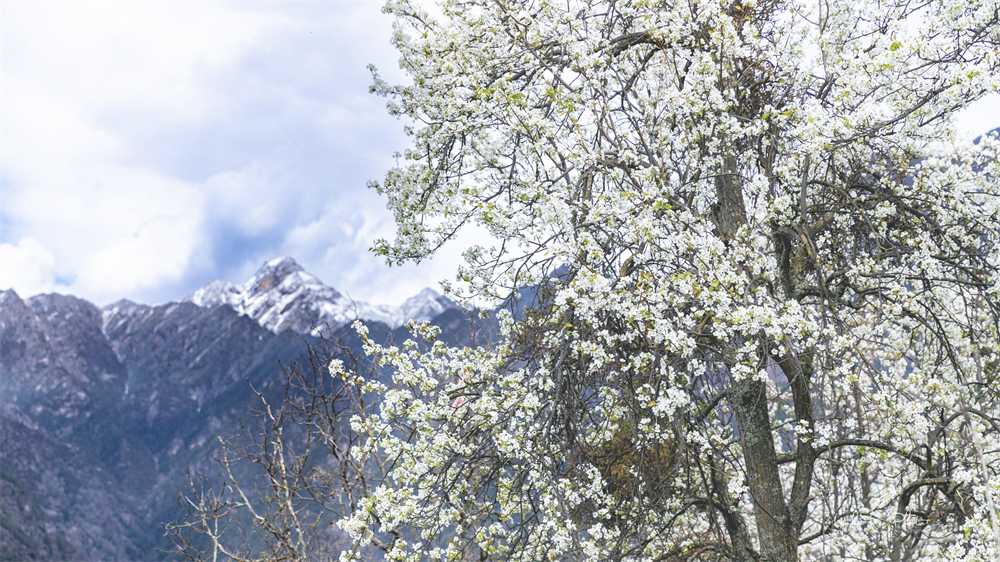
- February to April: Pear blossoms in full bloom around Danba
- May to June: Cherry picking season in Luobu Village
- September to October: Autumn colors and clear skies
How to Get There
- By Car: Drive from Chengdu via the Du-Wen Expressway to Wenchuan, then follow G350 westward
- By Bus: Regular buses from Chengdu to Wenchuan and Danba
- Recommended Route: Chengdu → Wenchuan → Luobu Village → Wolong → Mount Siguniang → Danba
What to Pack
- Warm clothing (temperatures can drop significantly at higher elevations)
- Comfortable walking shoes for village exploration
- Camera for stunning landscapes and cultural photography
- Cash (some villages have limited card acceptance)
Frequently Asked Questions
1. What is the Panda Highway?
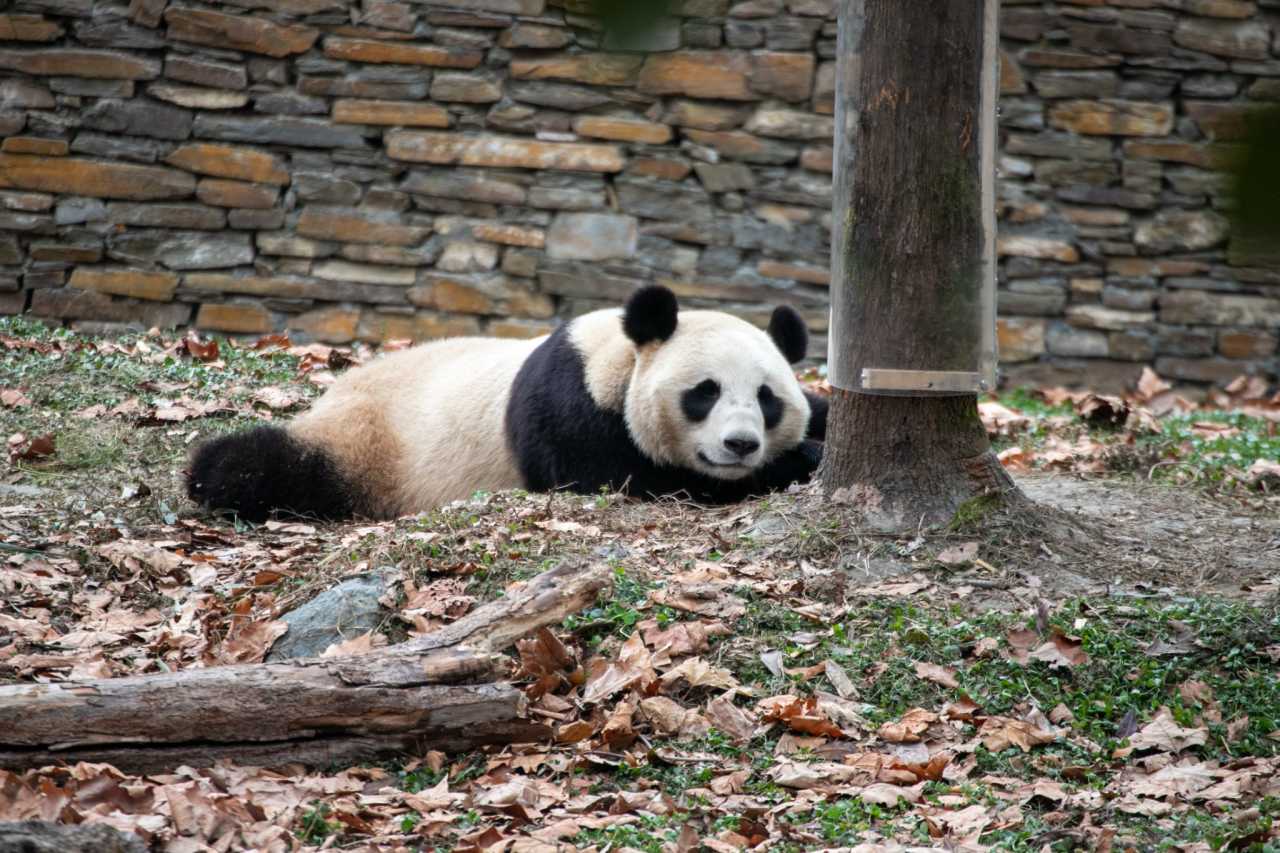
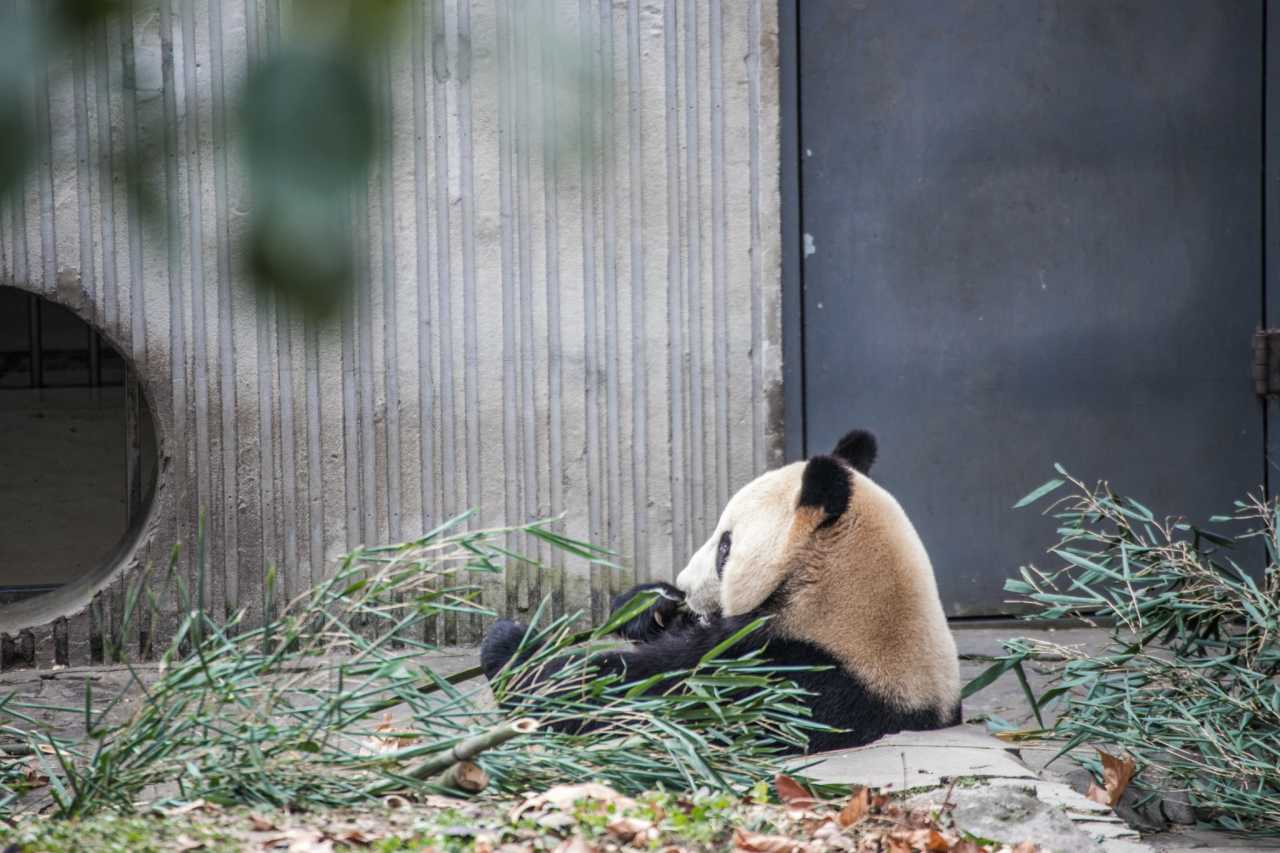
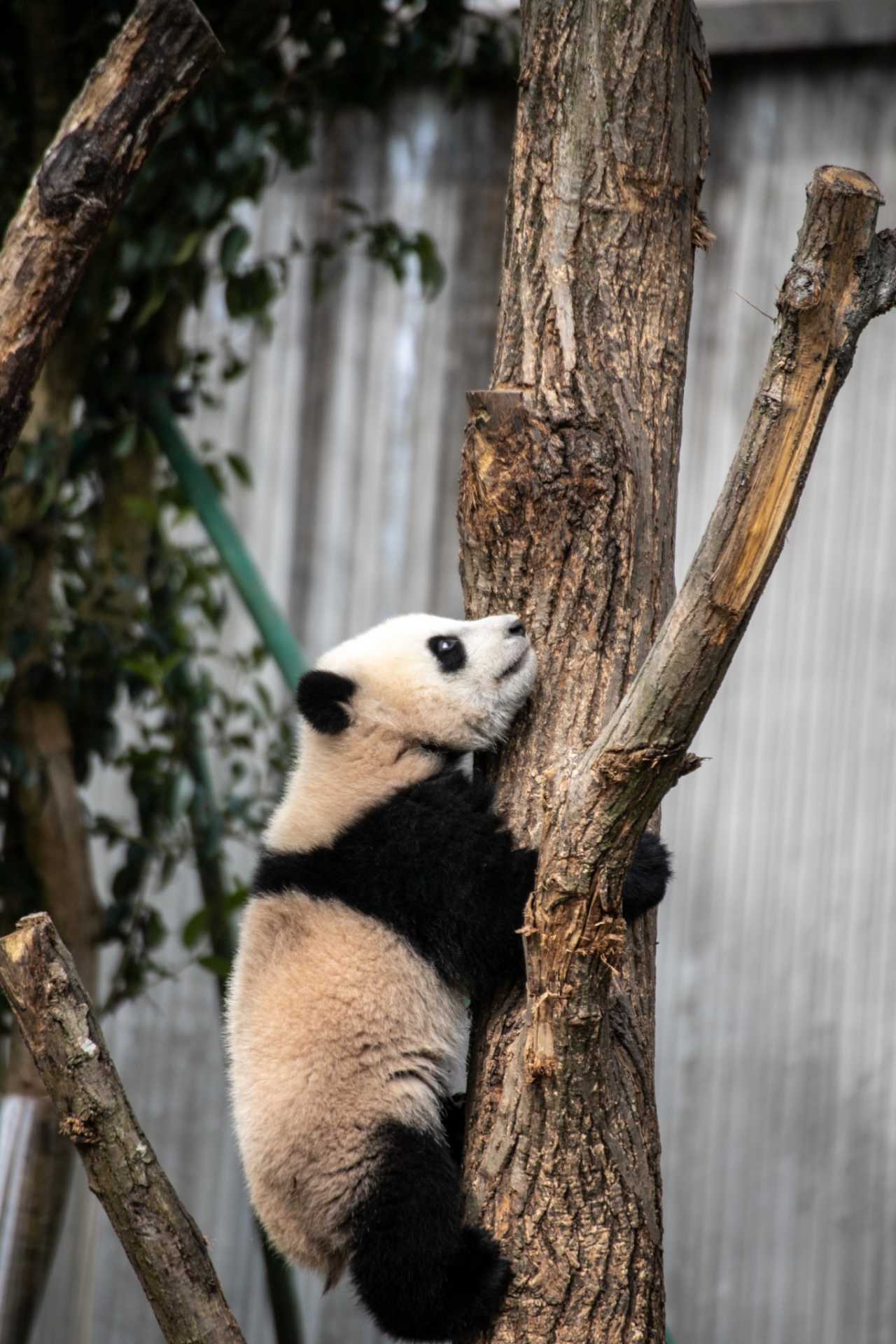
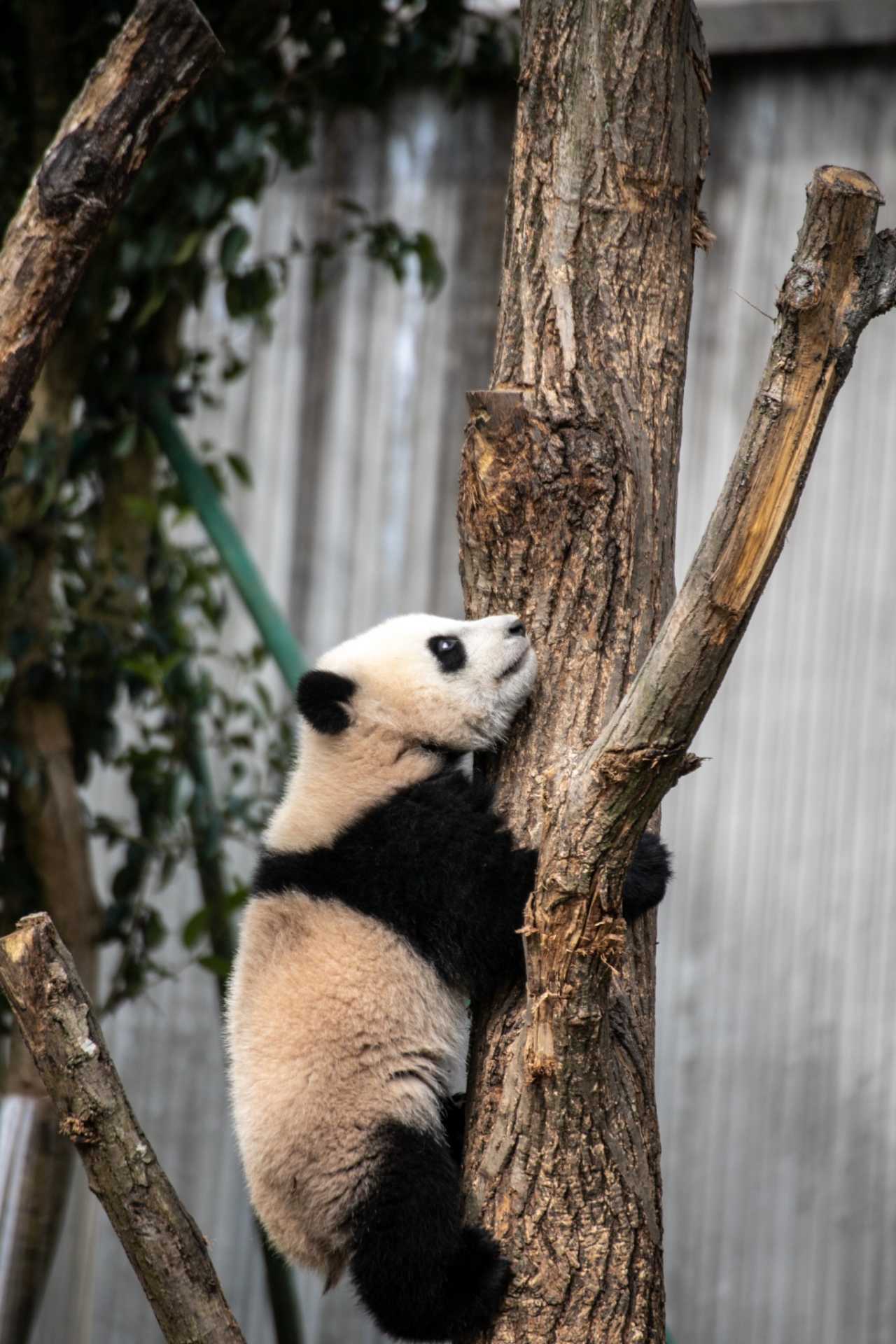
The Panda Highway is the popular name for a section of National Highway G350 in western Sichuan. It starts in Yingxiu Town, Wenchuan County, passes through the Wolong Nature Reserve (a giant panda habitat), and stretches to Danba County. The route offers stunning mountain scenery, cultural villages, and wildlife viewing opportunities.
2. How long does it take to drive from Wenchuan to Danba?
The drive from Wenchuan to Danba along the Panda Highway typically takes 4 to 5 hours without stops. However, we recommend allocating a full day to explore Luobu Village, enjoy scenic viewpoints, and make photo stops along the way.
3. What is the best time to see pear blossoms in Danba?
The pear blossom season in Danba typically runs from mid-March to early April. February can also offer early blooms, as mentioned in this journey. For the best experience, plan your visit during this period when the valleys are covered in white and pink blossoms.
4. Is Luobu Village safe to visit after the 2008 earthquake?
Yes, Luobu Village is completely safe for visitors. The village has been rebuilt with modern infrastructure while preserving its cultural heritage. The old village area is maintained as a historical site, and new buildings meet seismic safety standards.
5. What are the must-see attractions along the Panda Highway?
Key attractions include: - Luobu Village (Qiang culture and cherry blossoms) - Wolong Nature Reserve (giant panda viewing) - Mount Siguniang (stunning mountain views) - Jiaju Tibetan Village (pear blossoms and watchtowers) - Danba County (ancient Tibetan culture and architecture)
Internal Linking Suggestions
[Link: Best time to visit Sichuan's scenic highways]
[Link: Qiang culture and history guide]
[Link: Tibetan villages in western Sichuan]
[Link: Post-earthquake reconstruction tourism in China]
[Link: Cherry blossom and pear blossom viewing in China]
Final Thoughts: Your Journey Awaits
The Panda Highway is more than a road—it's a living museum of resilience, culture, and natural beauty. From the cloud-shrouded Luobu Village where cherry blossoms bloom from ruins, to the pearl-white pear blossoms of Jiaju Tibetan Village that whisper stories of an ancient women's kingdom, every mile of this journey offers something unforgettable.
Whether you're a history enthusiast, a nature lover, or a photographer seeking the perfect shot, the route from Wenchuan to Danba will touch your soul. The Qiang people's embroidery, the Jiarong women's headscarves, the ancient watchtowers standing guard over wheat fields—these are not just sights to see, but stories to carry with you.
Plan your journey today. Pack your bags, fuel your car, and set out on the Panda Highway. The hidden realm of western Sichuan is waiting to reveal its secrets to you. The flowers are blooming, the mountains are calling, and the road is open.
Book your trip to Sichuan's Panda Highway now and experience the magic of China's most scenic route. [Link: Sichuan travel packages and guided tours]
Follow us for more travel inspiration and insider tips on China's hidden gems. Share your Panda Highway journey with us using #PandaHighwayAdventure.
You may also like


