From Purple Dreams to Red Mountains: A Journey Through Southwest Sichuan, Guided by Flowers
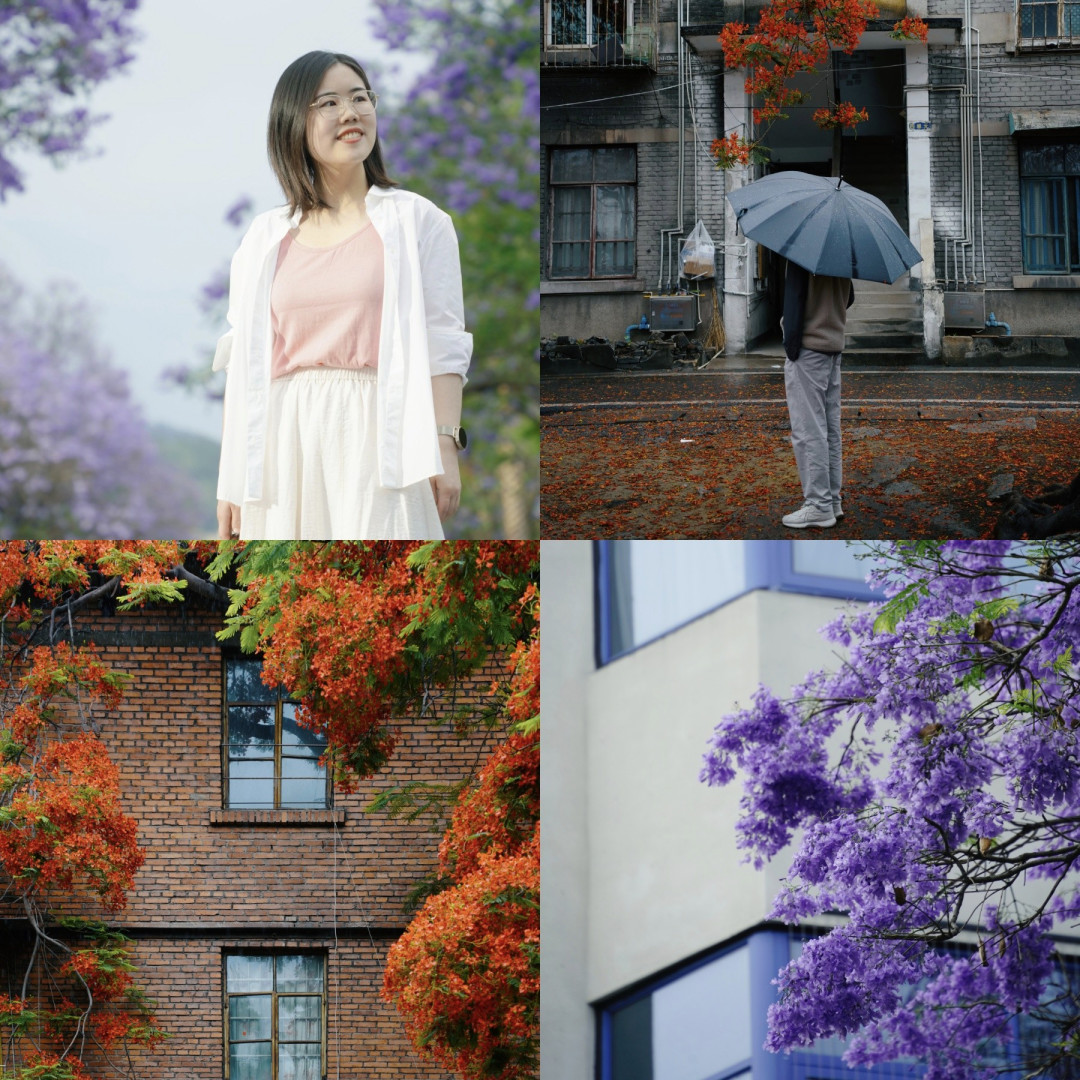
Meta Description: Discover the ultimate Southwest Sichuan travel guide, from Xichang's jacaranda trees to Panzhihua's flame trees. Explore hidden gems, road trip tips, and flower-inspired itineraries for an unforgettable Sichuan adventure.
Introduction: When Flowers Rewrite Your Travel Plans
Have you ever felt the urge to abandon your carefully planned itinerary and follow a flower? That's exactly what happened to my partner A-Fei and me. After a chaotic Chinese New Year trip to Jianshui left us questioning our life choices, we swore off holiday travel. Our original plan? Visit Kunming or Xichang to see the jacaranda trees in bloom. But A-Fei, a Yunnan native, dismissed Kunming with a roll of his eyes. And Xichang—driving eight or nine hours just for flowers? He called it "making a mountain out of a molehill."
We were two travelers trapped in a cage, scrolling through maps on our phones, wanting to go everywhere and nowhere at once. Then, while doom-scrolling, I accidentally caught a glimpse of Panzhihua. On the screen, flame trees (phoenix flowers) were blazing in full bloom, the entire city seemingly set ablaze. That name—a city so familiar from history textbooks yet never appearing on any travel list—hit me like a perfectly aimed bullet. I blurted out, almost without thinking: "Let's go to Panzhihua!"
Even better, the route from Chongqing to Panzhihua conveniently passed through Xichang. That jacaranda dream we'd been hesitating over suddenly became a natural add-on. In that moment, I felt a strange, wonderful anticipation for this trip—as if we weren't choosing the destination, but rather the flowers were calling us.
This is the story of our journey through Southwest Sichuan, guided by blooms, and how we discovered that the best travel experiences often come from following the unexpected.
Day One: On the Road, Where Surprises Are the Real Gift
From Dawn to Dusk: Adventure on a New Highway
On May 1st, we dawdled until 10 a.m. before hitting the road. There are two shortcuts from Chongqing to Xichang: one via the Longhan Expressway connecting to the Jingkun, the other via the Chenghui Expressway onto National Highway 245. The navigation system chose the latter without hesitation—we later realized this was probably because the Longhan Expressway had already turned into a parking lot.
The Chenghui Expressway is a newly opened route. How new? So new that it's nothing but tunnels, two of them stretching 12 to 15 kilometers long, with toll booths still in testing mode. We were forced off the highway multiple times, circling around unfamiliar ramps, cursing under our breath, "Forget it, forget it." But there was no turning back; we just had to grit our teeth and keep driving.
Pro tip for road trippers: Always check highway status before departing, especially during peak travel seasons like May Day or National Day holidays. [Link: Chongqing road trip tips]
Rice Fields, Windmills, and a Sudden Rain on National Highway 245
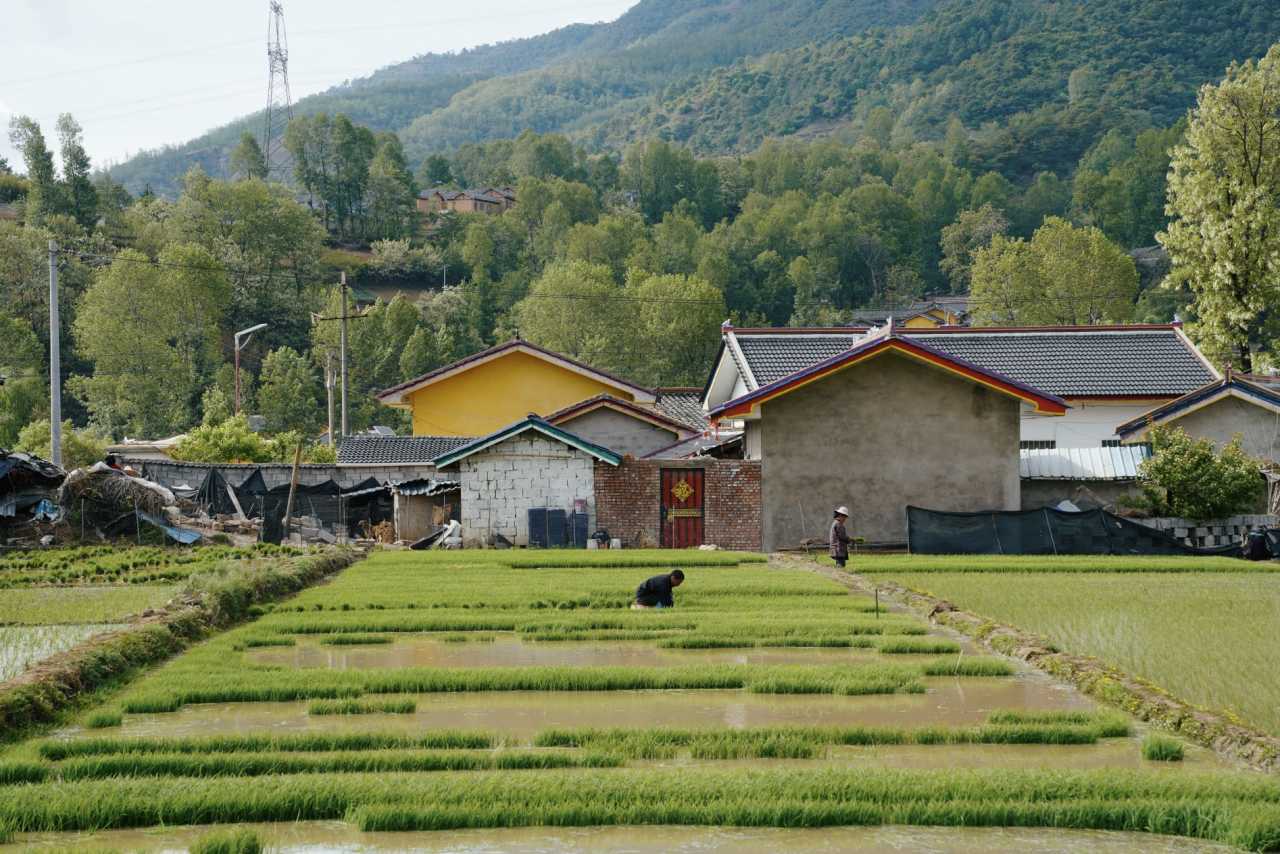
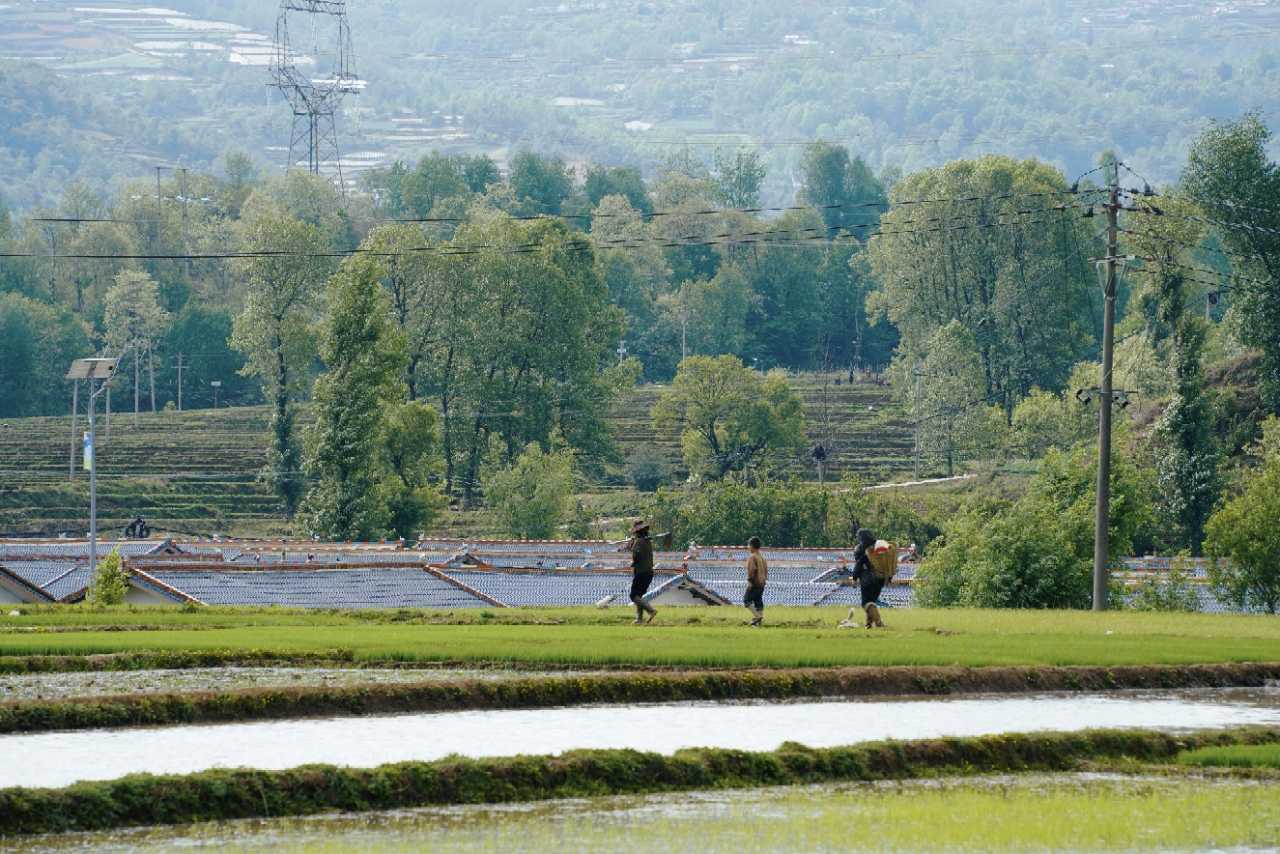
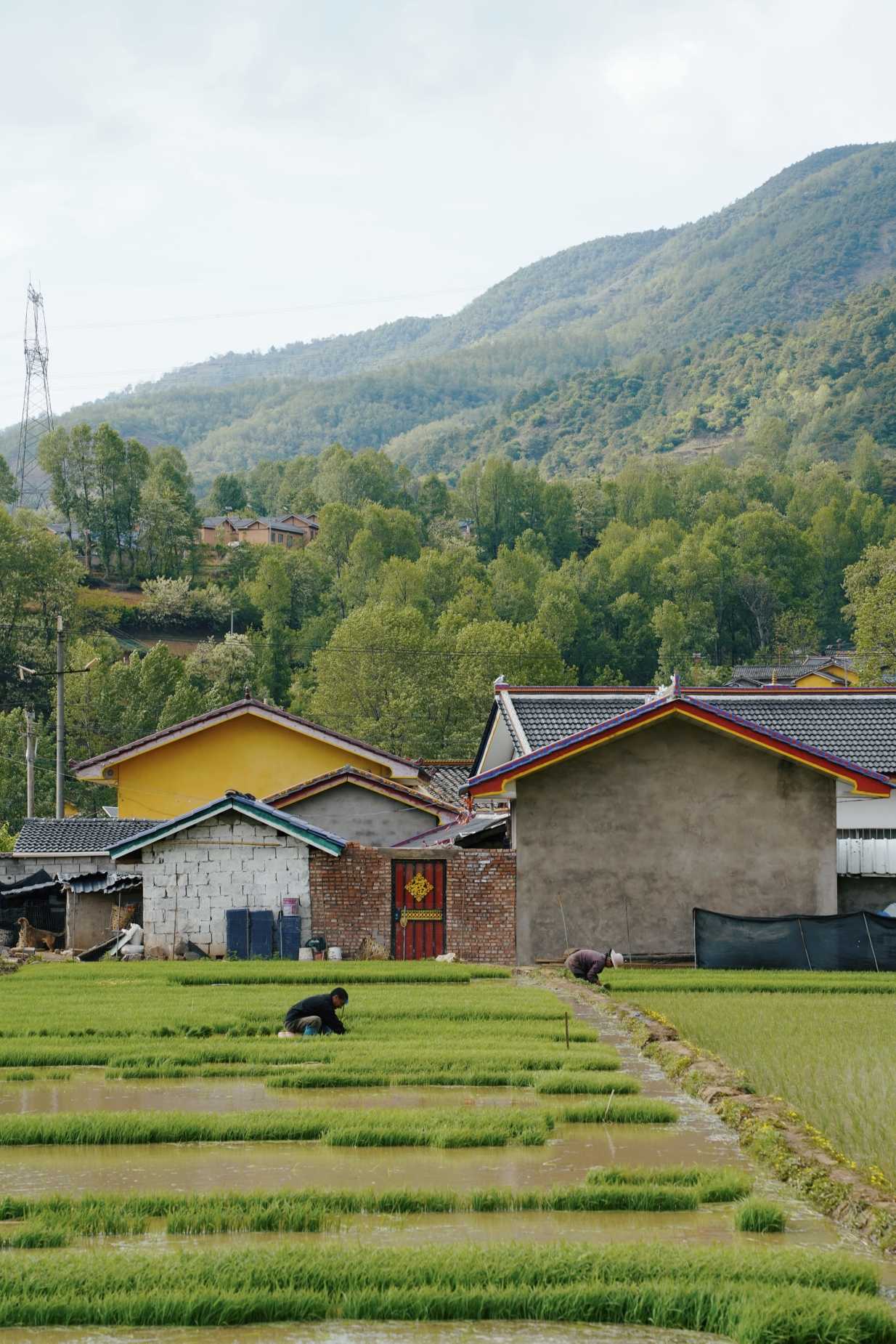
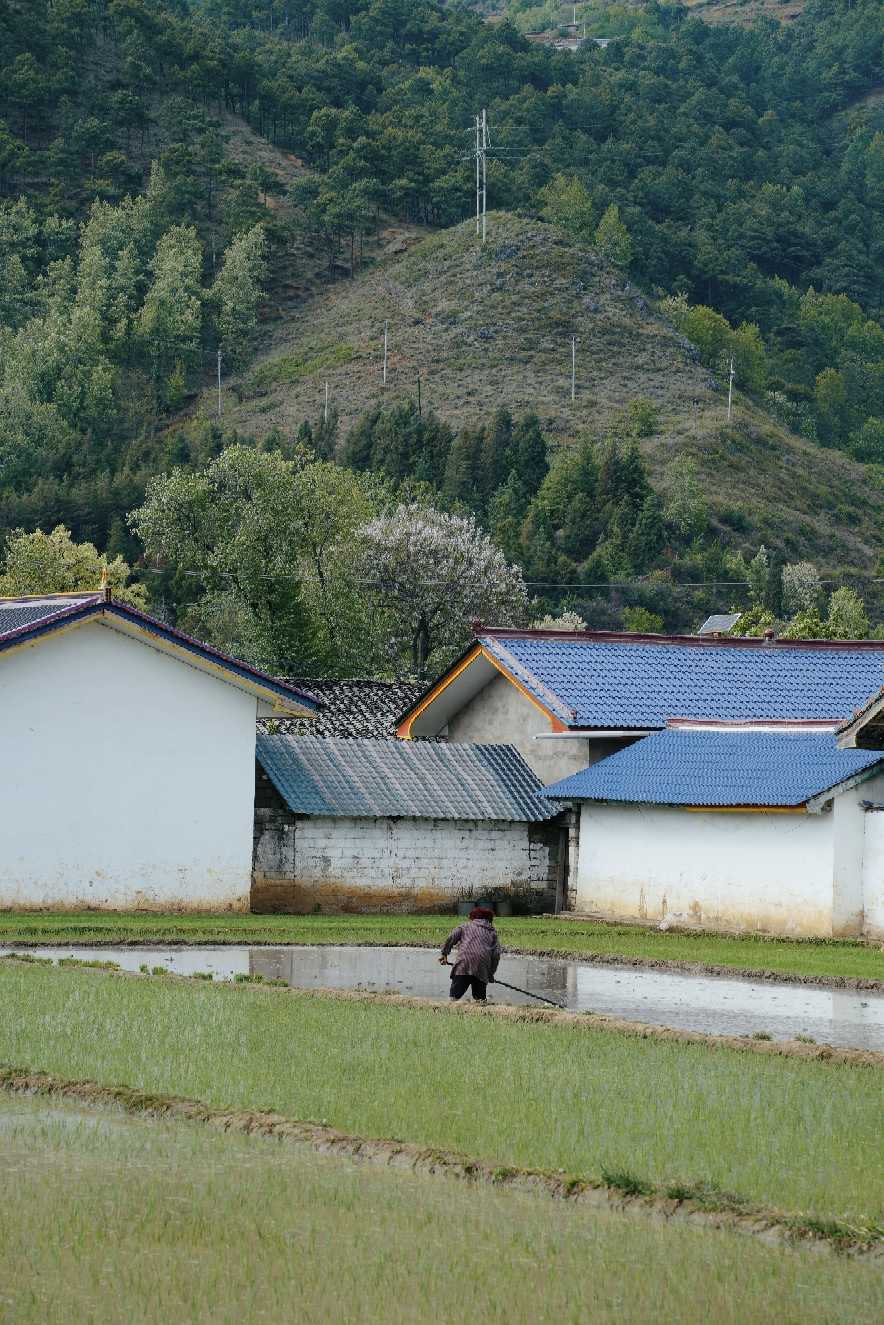
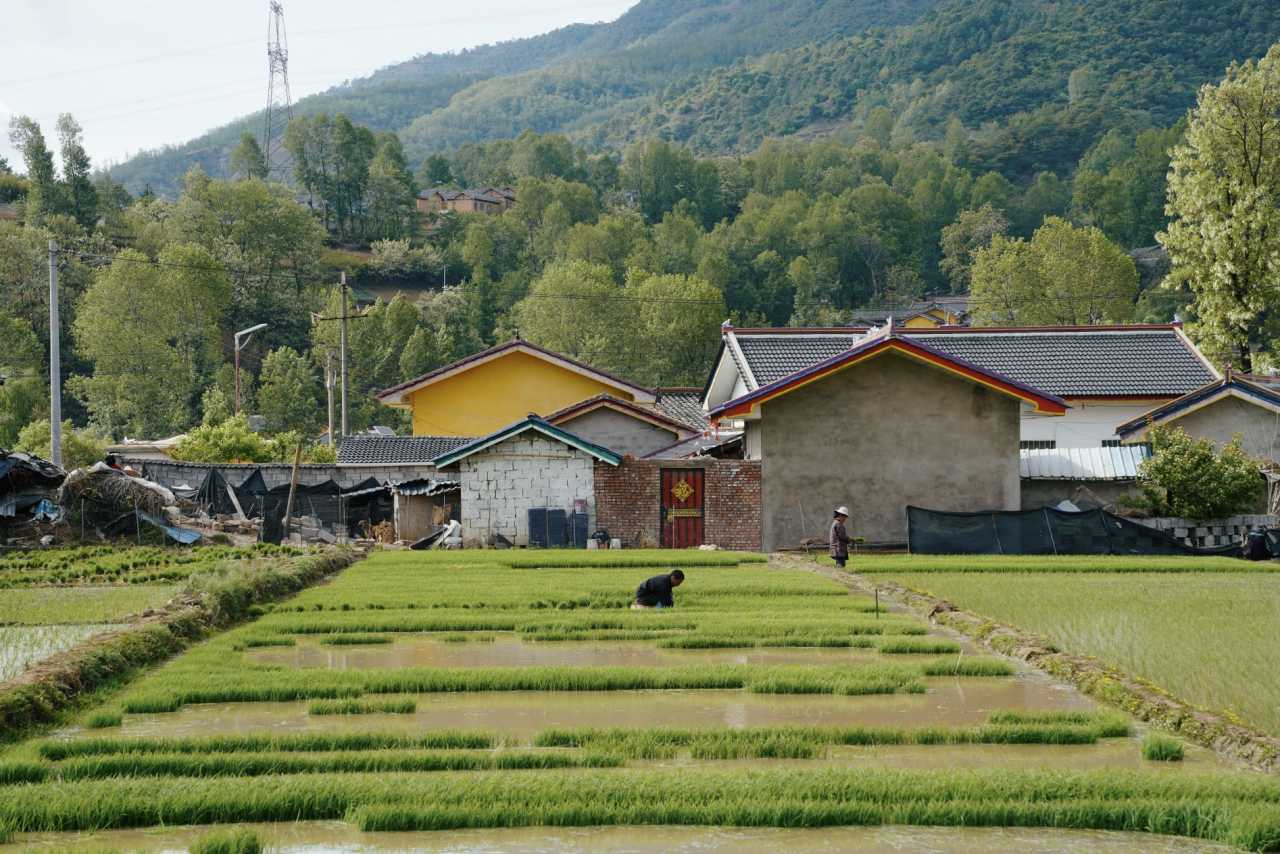
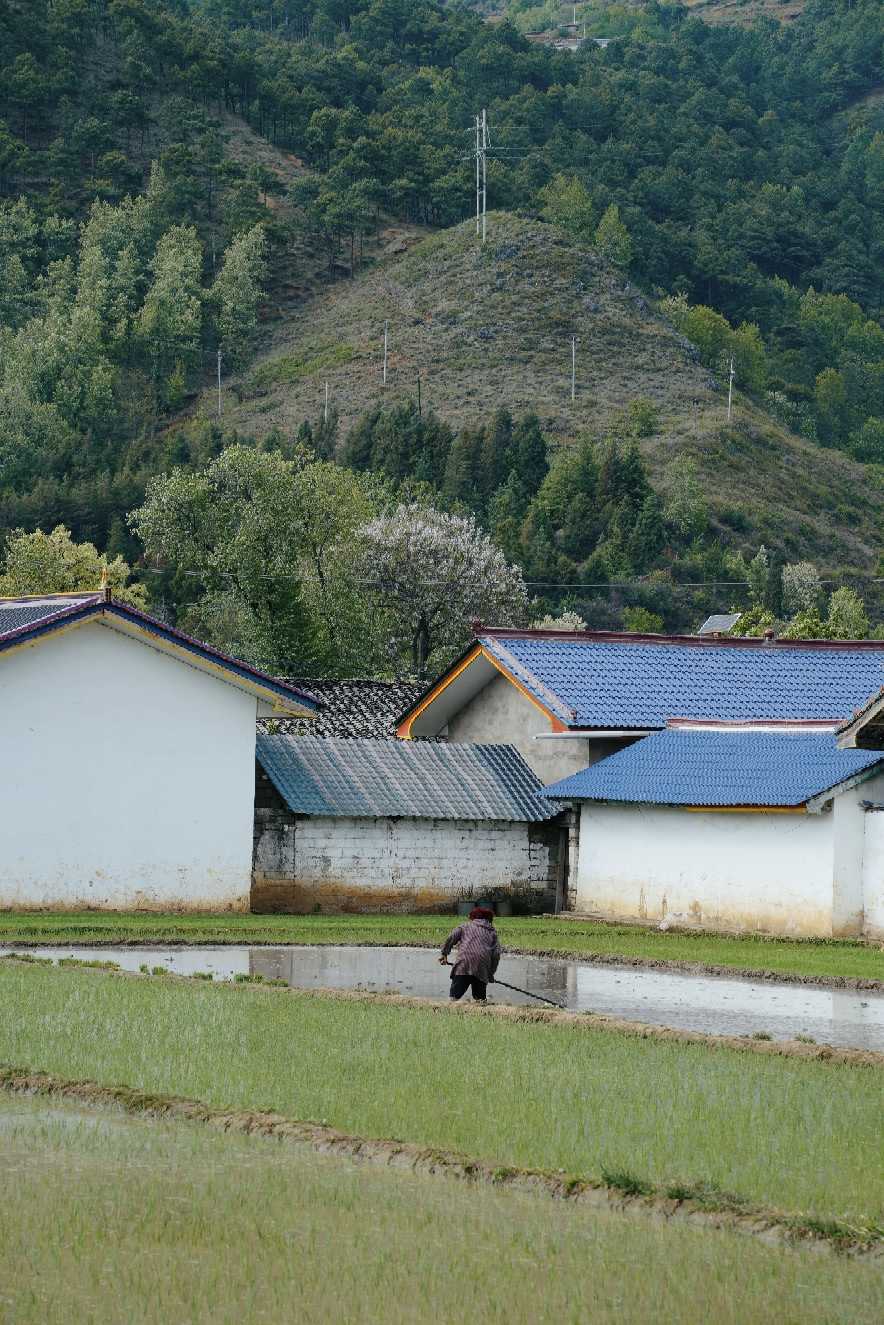
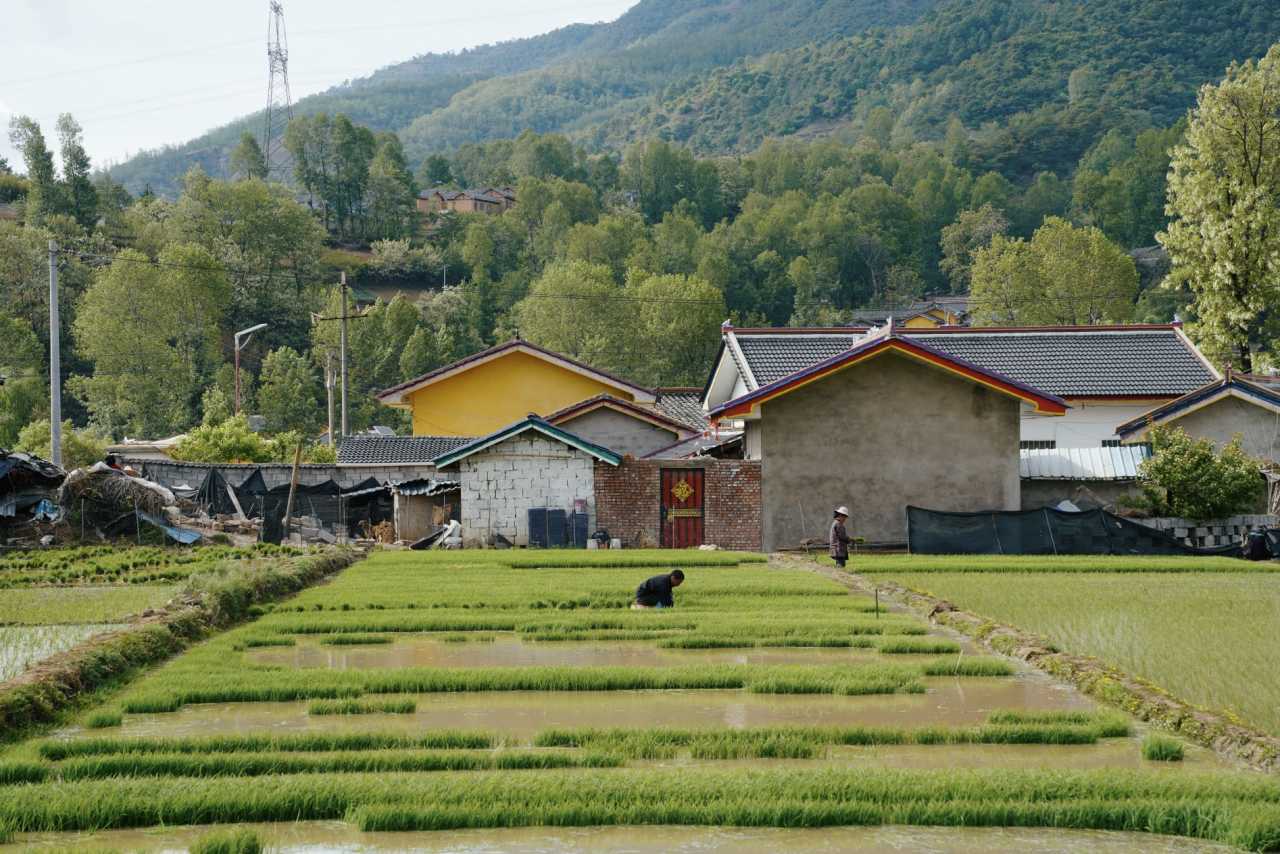
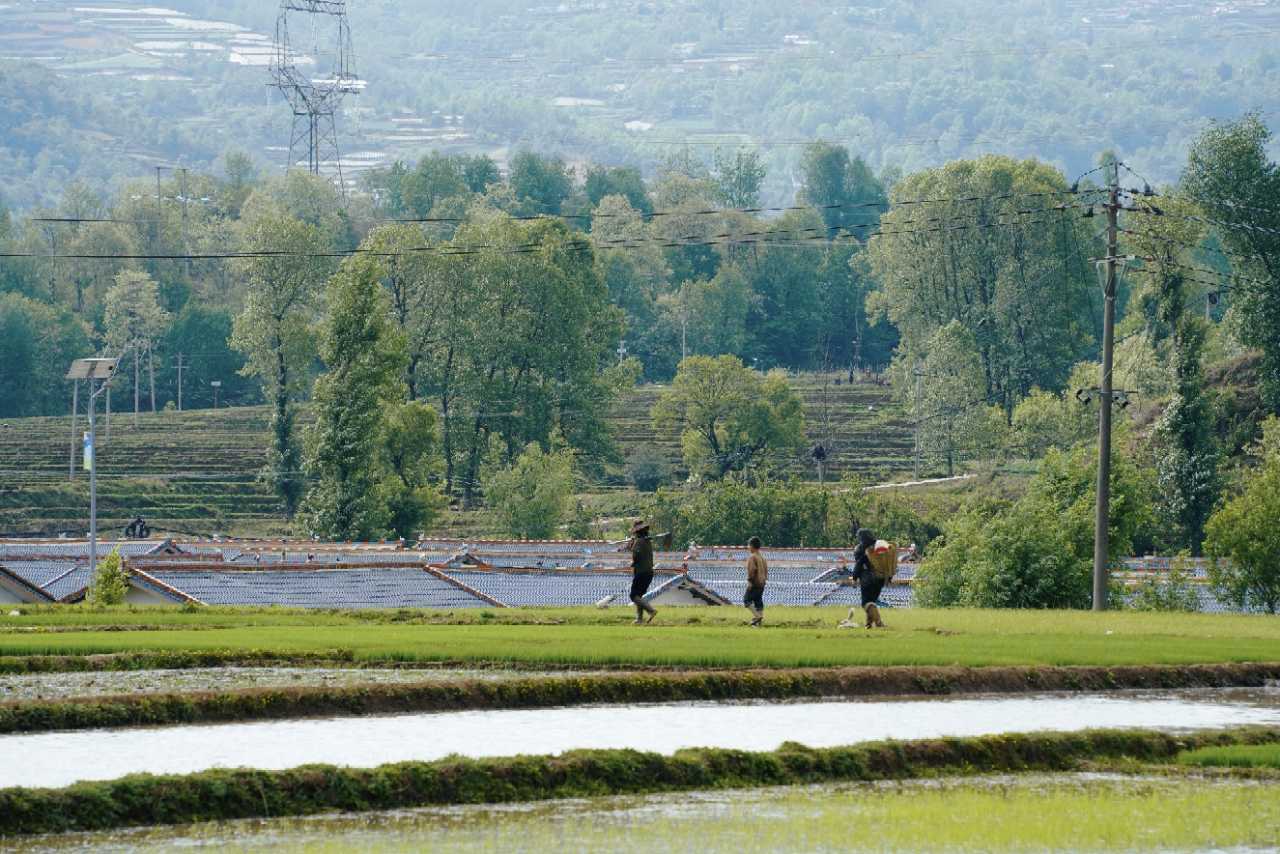
At 5 p.m., we finally exited the expressway onto National Highway 245. As we rounded a bend, the scene before me instantly erased all my complaints—vast stretches of rice paddies lined the road. Some held green seedlings, others had sparse rows of young rice plants already transplanted. A few villagers, pants rolled up, were busy in the fields, their shadows stretched long by the setting sun. Beside the paddies stood a simple, beautiful village, and beyond that, lush green mountains with soft, watercolor-like contours. A gentle breeze blew, and the true pleasure of travel finally washed over us.
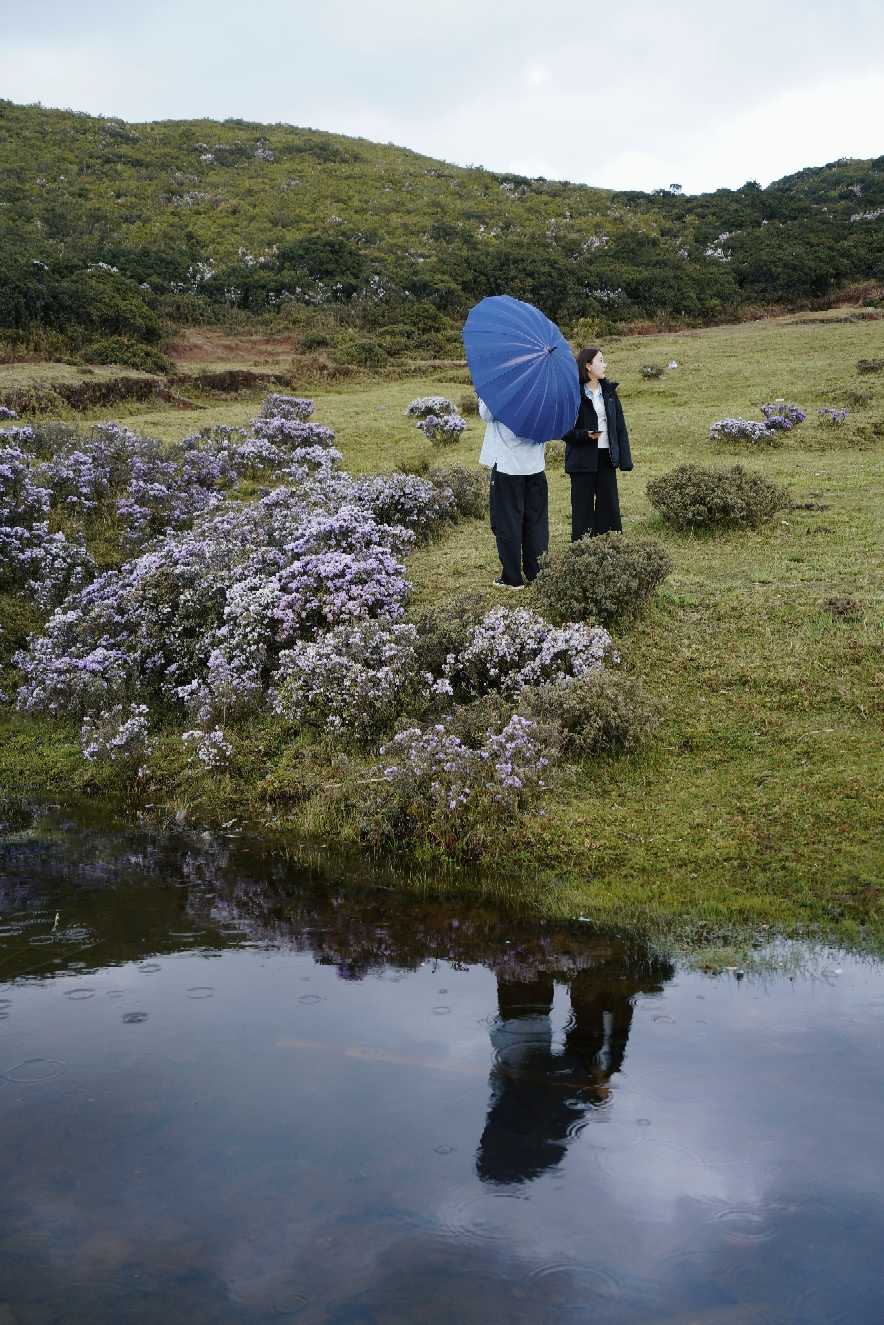
The national highway wound through the mountains, heavy trucks rumbling past one after another. Overtaking was impossible, so we obediently crawled along behind the vehicle ahead. At the summit, windmills turned slowly in the breeze, the wind so strong it was hard to stand steady. A small roadside attraction had gathered a few people and cars, but it wasn't much to look at. What caught my eye instead were the azalea blossoms (suoma flowers) covering the opposite hillside—pink-purple blooms swaying in the wind, so beautiful I couldn't look away.
Suddenly, a light rain began to fall, and the mountain wind turned bitingly cold. A-Fei tugged at me, urging me back to the car, but I ran off to see the flowers instead, not even bothering with an umbrella. His face darkened, and he didn't cheer up until late that night—this incident later became a running joke between us. Whenever he brings it up, he feigns anger and says, "You abandoned your husband for a few flowers."
Golden Sunset over Qionghai Lake
After the rain on the mountain, it seemed like dusk was falling. But the further we drove, the brighter the sky became. In the distance, I saw a large expanse of reflective water—Qionghai Lake. There was a viewpoint on the mountain, but unfortunately, it faced into the afternoon sun, making the water look dull and unappealing. Years ago, I had cycled around Qionghai once and found it stunning. This time, with limited time, we hadn't planned to visit the lake.
At 7:30 p.m., we finally arrived in Xichang. The rain had cleared, and the sky was dyed gold. The sunset stretched overhead like a massive oil painting. In that moment, all the fatigue from the road melted away.
Where to watch sunset near Qionghai Lake: The western shore offers the best views, especially from the Qionghai National Wetland Park. [Link: Xichang sunset spots]
First Meal in Xichang: The Hearty Pleasure of Fire-Pot BBQ
How could you visit Xichang without trying fire-pot barbecue (huopen kaorou)? The highly-rated restaurants all had long lines out front. We're not fans of queuing, so we picked a relatively quiet spot nearby and sat down. People from Chongqing clearly have no concept of Xichang's portion sizes—we ordered seven or eight dishes. When they arrived, we both just stared, dumbfounded. Every serving was enormous, as if mocking our "city-sized" appetites.
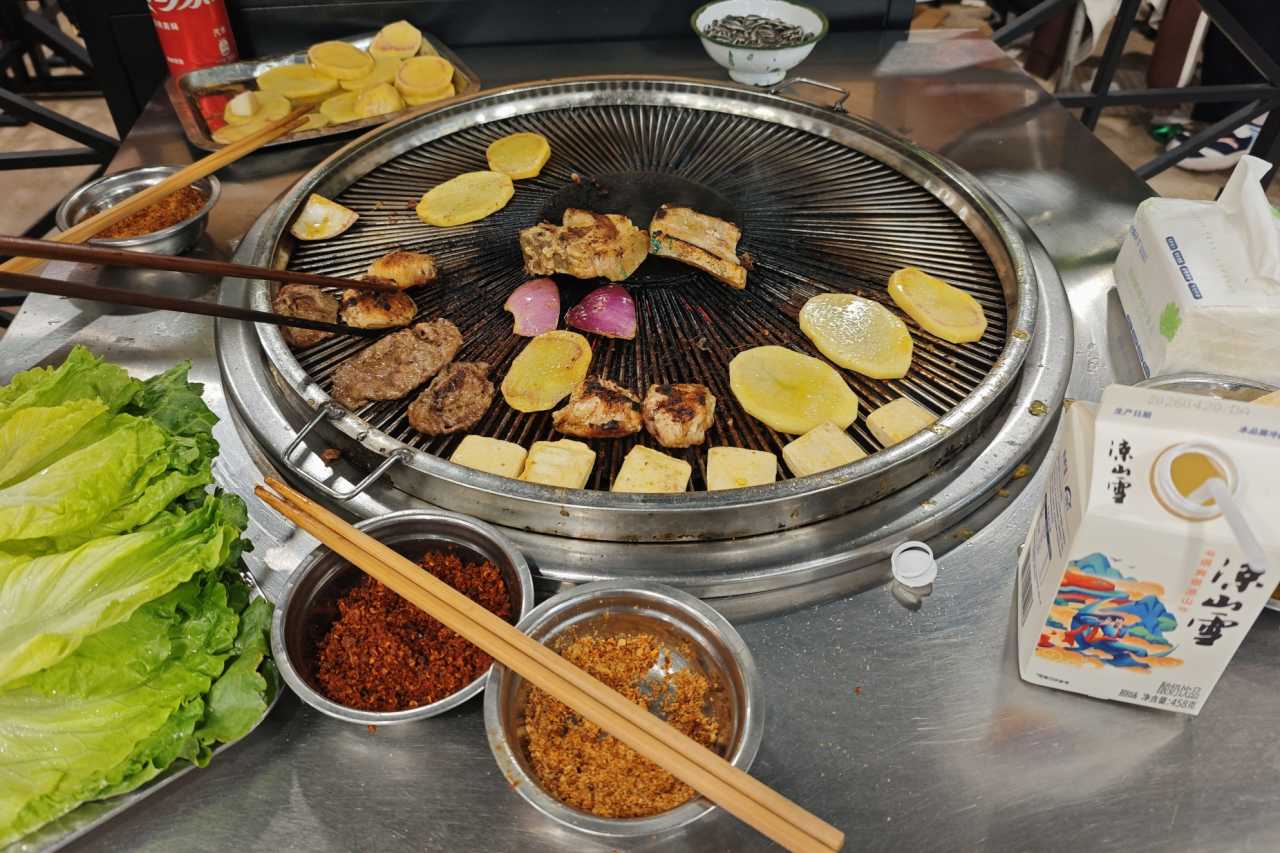
Nearly every table had the coiled pig intestine (panlong xiaochang), but we didn't dare order it. A-Fei really wanted to try, but the portions were too large for two people. The Liangshan-style baby pork (xiaozhu er rou) was fragrant and tender, and the popular "Liangshan Snow" yogurt drink tasted just like Chongqing's Tianyou yogurt—a perfect match for the barbecue. We ate until we were stuffed, but still left over half the food behind, which we had to pack up and take with us.
Must-try Xichang foods: Fire-pot BBQ, Liangshan baby pork, lamb rice noodles, and local yogurt drinks. [Link: Xichang food guide]
Day Two: Purple Romance and a First Encounter with Red
7 a.m.: Chasing a Purple Dream at Hangtian North Road
Xichang has many jacaranda trees, but the most famous spot is Hangtian North Road. We booked a hotel nearby, just a 10-minute walk away. With so many people visiting for the May Day holiday, we arrived at Hangtian North Road at 7 a.m. to beat the crowds. The sun rises early in Xichang—by 6:30 a.m., it's already light. To make it easier for visitors to enjoy the flowers, the entire road was closed to traffic.

Taking advantage of the sparse crowd, we strolled along the street, taking photos and admiring the blooms. This year, the weather had warmed up early, and a heavy rain a few days earlier had pushed the flowers past their peak. But still, the gnarled old trees were adorned with purple blossoms, and the slightly worn-down street was lined with all kinds of shops—selling breakfast, vegetables, and knick-knacks. The shopkeepers paid no attention to the vibrant purple romance blooming above their heads, which somehow made the whole street feel even more alive.
The jacarandas on Hangtian North Road were beautiful, but the display stands, boards, and racks placed under the trees somewhat detracted from the view. Still, many elderly people and children were posing for photos on them, beaming with joy. Everything has two sides; you can't have it all.
Best time to see jacaranda in Xichang: Late April to early May, arriving before 7:30 a.m. to avoid crowds. [Link: Jacaranda season in Sichuan]
A Local Breakfast Discovery: Lamb Rice Noodles
By 8 a.m., the crowds were starting to swell, so we prepared to leave. As we crossed the street, I saw a girl handing a bowl of lamb rice noodles (yangrou mixian) to her mother, who was selling goods by the roadside. The aroma hit A-Fei like a punch. He immediately asked where she'd bought the noodles, and upon learning it was just nearby, he dashed off. When the lamb rice noodles arrived at our table, both of us were instantly intoxicated by the fragrance—a steaming hot broth, tender lamb, and silky smooth rice noodles. It was the perfect comfort for an early morning.
Panzhihua: The Crossroads Where Flame Trees Bloom
The drive from Xichang to Panzhihua takes only three hours. Our plan for the afternoon was to visit the Flame Tree Park (Fenghuanghua Gongyuan) before sunset, so we had plenty of time to rest and improvise.
We had seen the Panzhihua flower (kapok) in photos, but nothing prepared us for the reality. As we entered the city, the flame trees lined the streets like burning torches. The entire city seemed to be on fire—not with danger, but with beauty. The Flame Tree Park was the epicenter, with massive trees covered in crimson blossoms that seemed to glow against the blue sky.
Panzhihua travel tip: The best time to see flame trees is late April through May. The city also has excellent hiking trails and river views. [Link: Panzhihua attractions]
Frequently Asked Questions
1. What is the best time to visit Xichang for jacaranda flowers?
The jacaranda trees in Xichang typically bloom from late April to early May. For the best experience, arrive at Hangtian North Road before 7:30 a.m. to avoid crowds and capture the morning light. The flowers last about 2-3 weeks, but heavy rain can shorten the bloom period.
2. How long does it take to drive from Chongqing to Panzhihua?
The drive from Chongqing to Panzhihua via Xichang takes approximately 8-10 hours, depending on traffic and road conditions. The Chenghui Expressway is a newer, faster option, but be prepared for long tunnels and occasional toll booth testing. Plan for at least one overnight stop in Xichang.
3. What are the must-try foods in Xichang?
Xichang is famous for its fire-pot barbecue (huopen kaorou), Liangshan-style baby pork (xiaozhu er rou), coiled pig intestine (panlong xiaochang), and lamb rice noodles (yangrou mixian). Don't miss the local "Liangshan Snow" yogurt drink, which pairs perfectly with barbecue.
4. Are there other flower-viewing spots in Southwest Sichuan besides Xichang and Panzhihua?
Yes! The region offers diverse floral experiences. In spring, you can see azaleas (suoma flowers) on mountain passes along National Highway 245. Panzhihua is famous for flame trees (phoenix flowers) and kapok. Other notable spots include the rhododendron forests in Liangshan and the cherry blossoms in Zhaojue.
5. What should I pack for a road trip through Southwest Sichuan in spring?
Pack layers, as temperatures can vary dramatically from day to night. Bring a light jacket for mountain passes, comfortable walking shoes, sunscreen, and an umbrella (spring showers are common). Don't forget your camera for the flowers and landscapes!
Conclusion: Follow the Flowers, Find Yourself
This journey through Southwest Sichuan taught us something invaluable: the best travel experiences often come from letting go of rigid plans and following the unexpected. From the purple dreams of Xichang's jacaranda to the red mountains of Panzhihua's flame trees, every turn revealed a new wonder.
We started as two travelers trapped in a cage, scrolling through maps on our phones. We ended as explorers who discovered that flowers can guide you to places you never knew you needed to see. The rice paddies at sunset, the windmills on the mountain pass, the sudden rain that became a running joke—these are the moments that make travel memorable.
Your turn: Have you ever followed a flower or a random destination on a whim? Share your story in the comments below. And if you're planning your own Southwest Sichuan adventure, start by checking the bloom calendars for jacaranda and flame trees—then let nature guide your route.
Ready to plan your flower-inspired road trip? Download our free Southwest Sichuan itinerary checklist, or book a guided tour that takes you from Xichang's purple romance to Panzhihua's red mountains. The flowers are waiting—are you?
This article is based on a real travel experience. All facts, locations, and recommendations are accurate as of the time of writing. Check local travel advisories and bloom conditions before planning your trip.
You may also like


