From Baoji to Guangyuan: A 42-Hour Slow Train Journey Across the Qinling Mountains
Meta Description: Experience the magic of China's 6063 slow train from Baoji to Guangyuan. Discover Qinling mountain scenery, student carriages, and vanishing railway heritage in this 42-hour weekend adventure.
Introduction: Rediscovering the Lost Art of Slow Travel
There are only so many things one can do in a lifetime, but each one can be etched into memory. One weekend in November 2019, I shouldered my backpack and set off alone on a journey of trains, tracks, and time gone by. Over 42 hours, from Baoji in Shaanxi to Guangyuan in Sichuan, from the green-painted slow train on the northern Baoji-Chengdu Railway to the abandoned narrow-gauge tracks of the Rongshan Coal Mine, I was determined to seek out traces of what is fading or has already disappeared. This is not a travel guide, but one person's pilgrimage to a slower pace of life.
In an era of high-speed rail and bullet trains exceeding 300 km/h, the humble 6063 slow train offers something increasingly rare: the chance to experience China's mountainous heartland at a human pace. This journey across the Qinling Mountains and into Sichuan's Rongshan region reveals landscapes, communities, and traditions that modern transportation has left behind.
The 6063 Slow Train: A Lifeline Through the Qinling Mountains

Departure at Dawn: Boarding the Green Train
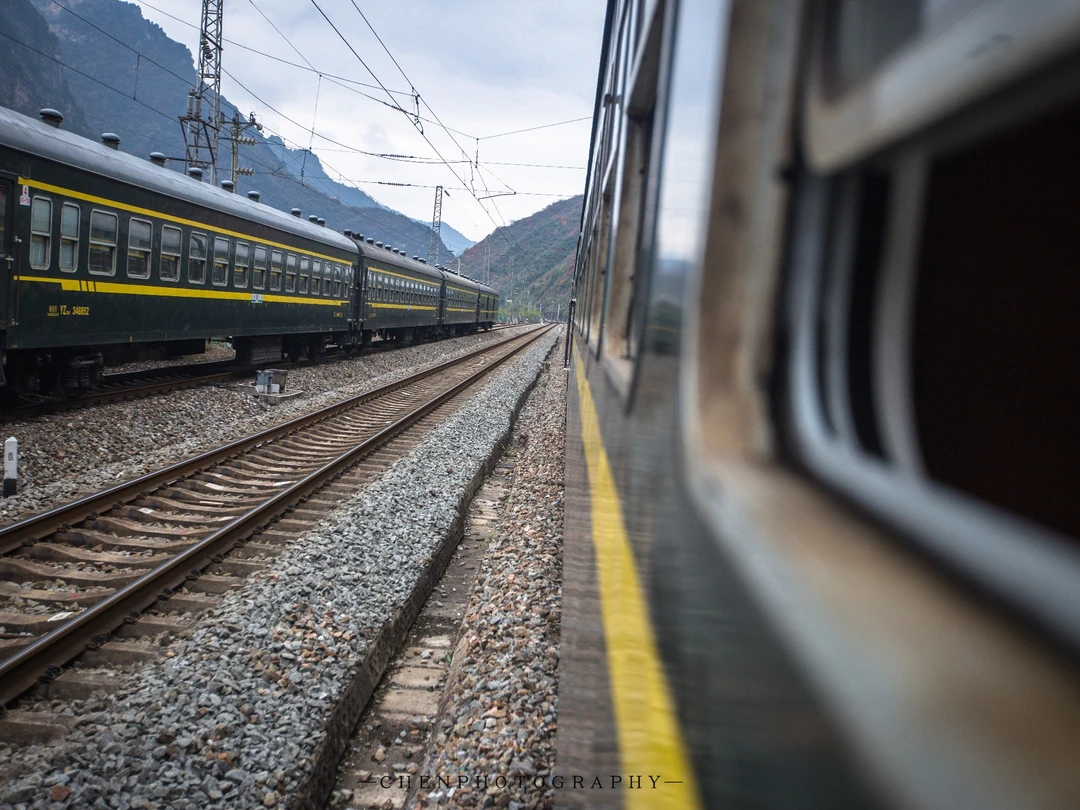
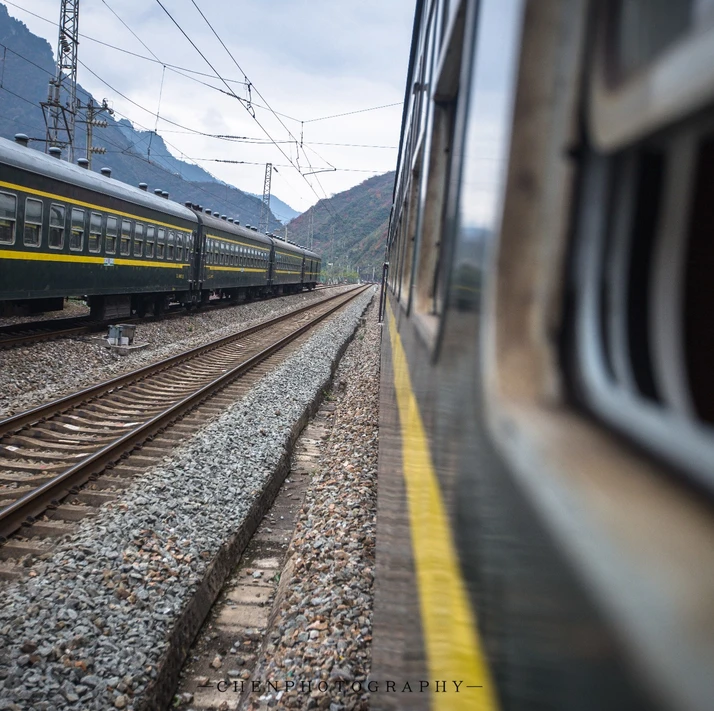
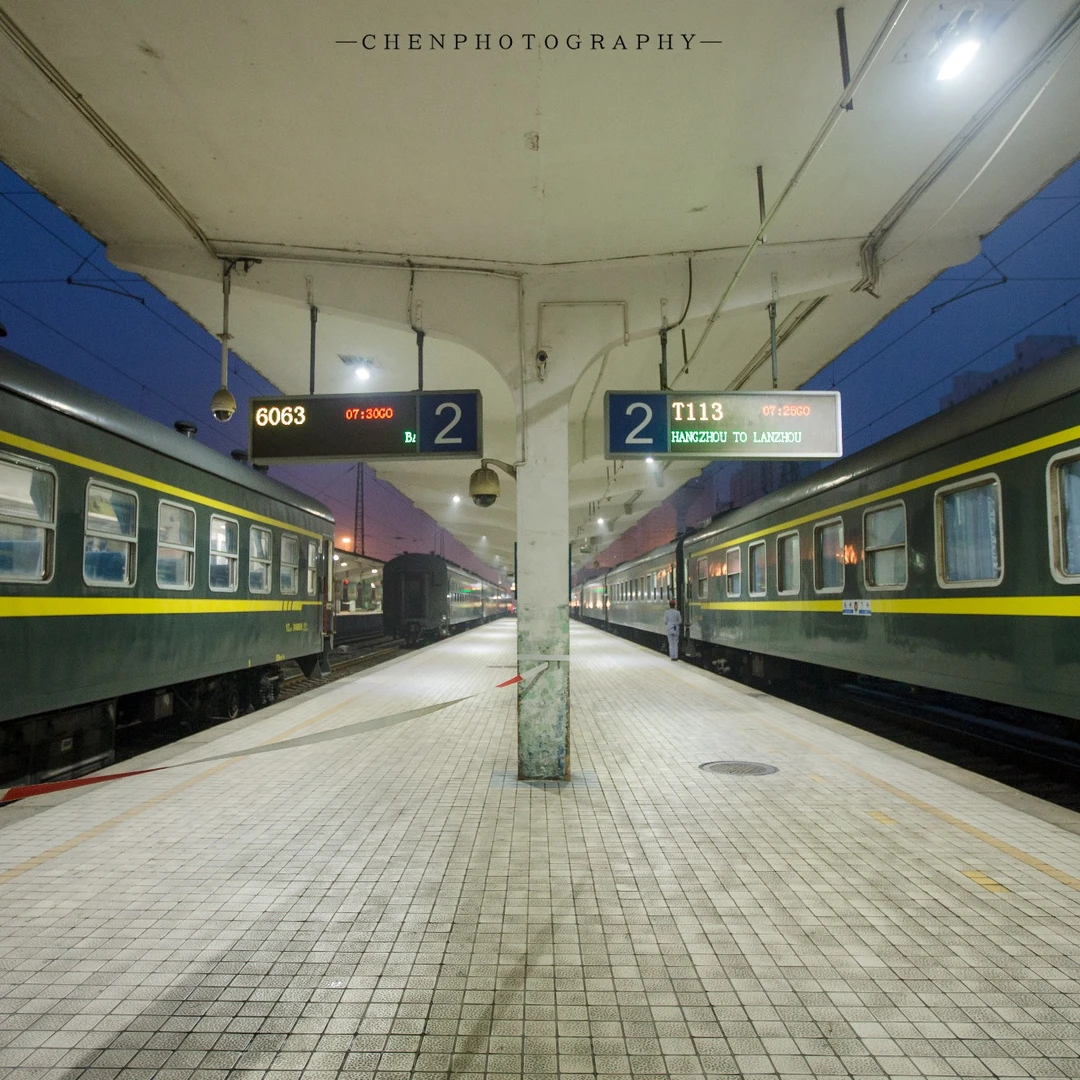
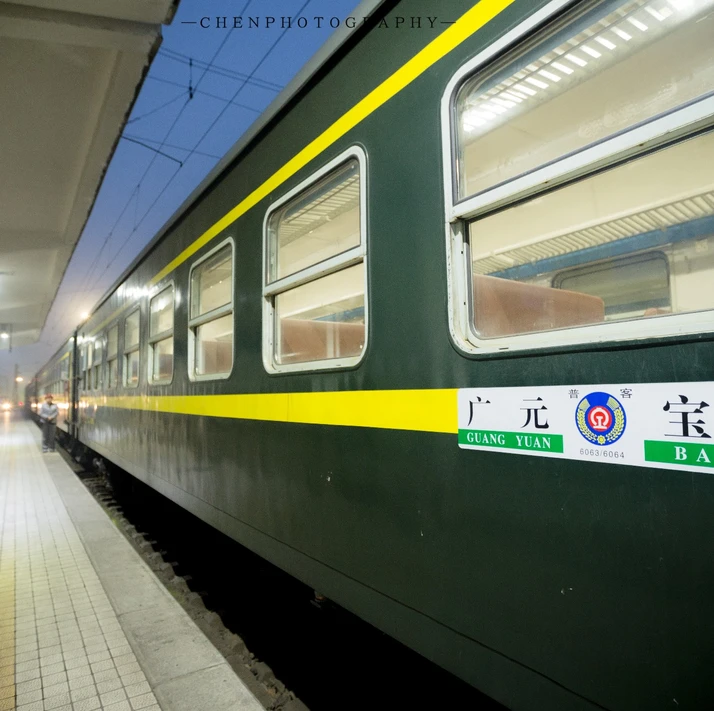
At 7 a.m., Platform 2 of Baoji Station was still shrouded in winter mist. Train 6063—the green-painted slow train running between Baoji and Guangyuan—was quietly preparing for departure. On the opposite track, the T113, which had traveled all the way from Hangzhou, had just pulled in, dusty and weary.
I had come from Xi'an. At 5:10 a.m., the Z293 train carried me through the darkness, heading west along the Longhai Railway. Outside the window, scenes flashed by: the An'yuan Gate, Xi'an West Station, the Feng River Bridge—just like the memories of my first long-distance train ride as a child. Back then, I would always press my face against the window, watching the lights on either side of the tracks slowly recede, my heart full of imagination about distant places.
"Young man, get on board, it's close—no ticket check needed!" The conductor's voice brought me back to reality. This was my first encounter with the 6063—a train that crosses three provinces (Shaanxi, Gansu, and Sichuan), makes 38 stops on a one-way trip, runs for 11 hours and 36 minutes, and costs just 21.5 yuan for the entire journey. The lowest ticket price is only 1 yuan, making it almost a public service line.
[Link: Best budget train journeys in China]
Why Train Enthusiasts Love the Baoji-Chengdu Railway
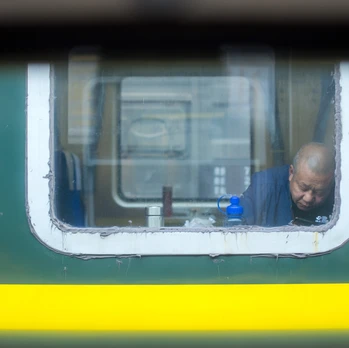
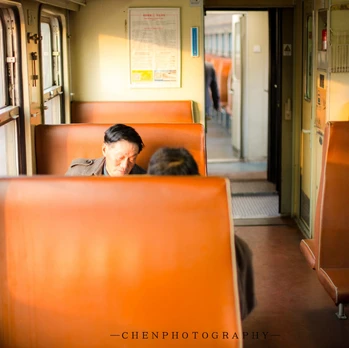
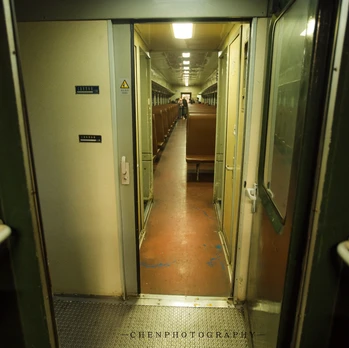
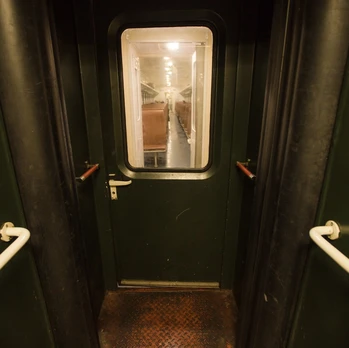
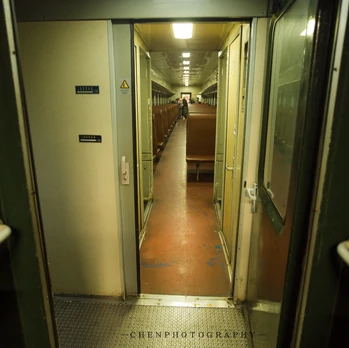
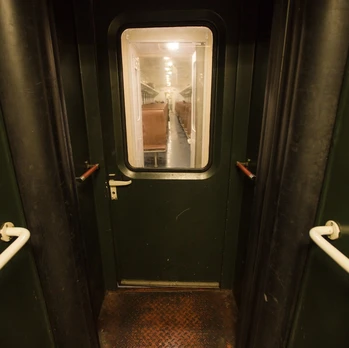
For train enthusiasts, this "little slowpoke" winding through the Qinling Mountains is a treasure; for the residents of the mountainous areas along the route, it's a lifeline. I boarded the train, walked through the dim corridor, and took a seat in Car 2. There were only about a dozen passengers in the car. Across from me sat an older gentleman who had made a special trip from Weinan. He had arrived in Xi'an at 1 a.m., waited over four hours to transfer to Baoji, just to experience this slow train. We chatted happily—about his love for trains, about his daughter's successful graduate school entrance exam—until the train slowly began to move.
The conductor told us that not many tickets had been sold today, so we could switch seats freely. I said goodbye to the older gentleman and slipped into the car behind.
The Track Inspectors: Guardians Deep in the Qinling Mountains
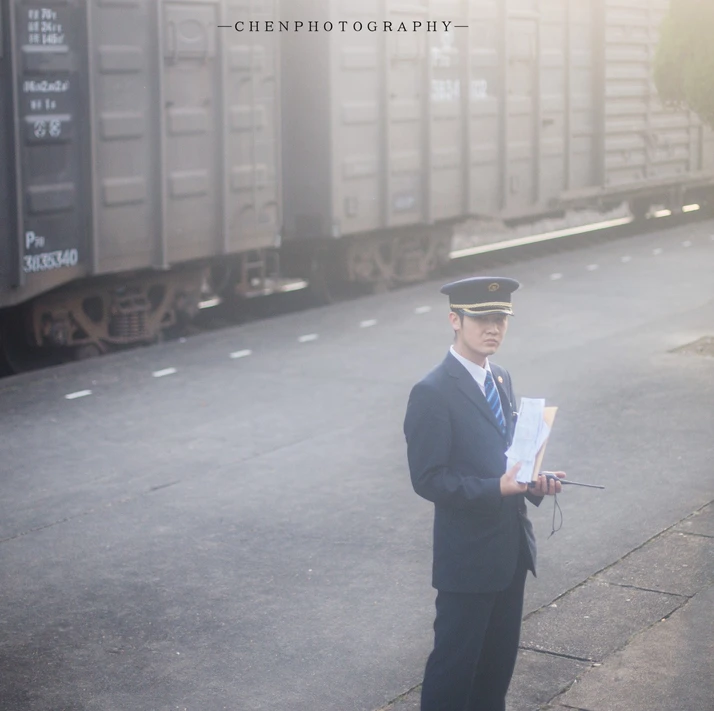
After passing Yangjiawan, several track inspectors boarded the train. The conductor said that the first few stops into the Qinling range had almost no regular passengers—only railway workers. Some got off at Guanyin Mountain, others at Qingshi Cliff, or even farther stations, and then walked back along the tracks.
When the train stopped at Guanyin Mountain, the track inspectors lined up to get off. Watching their backs—clad in fluorescent vests, tool bags slung over their shoulders—disappear into the morning mist, I silently offered them a blessing. They are the most lovable people on the railway, day after day guarding this lifeline through the Qinling Mountains in their ordinary yet arduous jobs.
These unsung heroes maintain one of China's most challenging railway sections. The Baoji-Chengdu Railway, completed in 1956, was the first electrified railway in China and required tunneling through some of the country's most rugged terrain. Today, track inspectors still walk these remote sections daily, ensuring safety for the thousands who depend on this line.
[Link: History of the Baoji-Chengdu Railway construction]
The Student Car: A Library in the Mountains
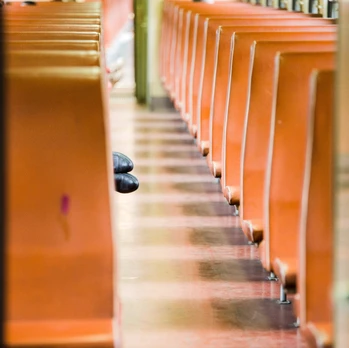
When I stepped into Car 5, a wave of school-day nostalgia hit me. The tables and chairs were covered with cloths, a small bookshelf held neatly arranged extracurricular reading materials for primary and secondary school students, portraits of famous figures hung on both sides of the car, and four large characters were pasted on the window: "Student Seats." This is the most famous feature of the 6063—the student support car.
The areas the 6063 passes through have 24 schools, located at 11 stations. Children from small mountain villages need to ride this train to larger stations like Fengzhou, Feng County, and Lueyang to attend school. This slow train is their school bus. Although it was Saturday, a few children were still in the car. The older ones quietly did their homework, while the younger ones flipped through books, picking and choosing. I pulled a book from my backpack and joined them, enjoying the pleasant reading time.
The train continued through the heart of the Qinling Mountains. The sky began to rain, and thick clouds shrouded the peaks. The conductor said it had even snowed in the mountains a few days earlier. Yes, winter had already set in.
This unique feature transforms a simple train ride into a moving classroom. The student car represents how China's railway system adapts to serve remote communities, ensuring that geography doesn't determine educational opportunity.
[Link: How rural students in China commute to school]
South of Fengzhou: A Moving Fruit and Vegetable Market
"Fengzhou Station—anyone getting off?" A crisp announcement, and the train pulled into Fengzhou Station. The rain had stopped. I followed a few fruit farmers and vendors as they boarded the train. They all headed straight for Car 6, and I followed along.
Soon, the car was filled with bamboo baskets, burlap sacks, and bamboo crates. The scent of fruit wafted from a distance. I lifted a sack and found it full of apples—at least forty or fifty jin (about 20-25 kg). Besides apples, there were vegetables, ginseng, and even a chicken wrapped in a burlap sack.
An older woman in a hunchbacked coat deftly picked apples out of a sack, and soon a crowd gathered around her. A man in a gray jacket grabbed an apple, rubbed it on his sleeve, and bit into it: "Your apples aren't sweet—nowhere near as good as Xinjiang's!" But despite his complaints, he bought a bagful. He taught me how to pick apples: "See those stripes? You want the ones with clear, distinct lines—those are the sweet ones!"
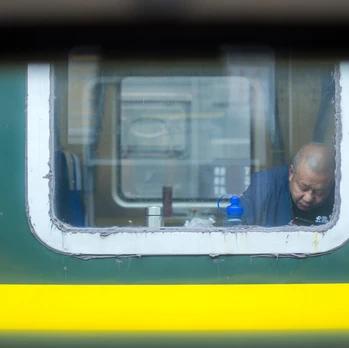
The apples sold for two yuan per jin on the train. I heard that the farmers sold them for only 0.7-0.8 yuan per jin, the price was a bit higher in the towns, and it could reach three yuan in the county market. The hunchbacked woman and another woman in a red coat began hawking their wares up and down the car, carrying baskets. Scenes like this are nearly impossible on any other train. That's what makes the 6063 special—besides the student car, there's also the farmer-support car. Although some decorations hadn't been restored after the train's body was updated, the benefits for villagers and vendors along the route remained unchanged. The woman in red said, "I just find it easier to sell on the train. Even if I only make a few extra mao, I don't want to travel all the way to the town."
I spent four yuan and bought four large apples with clear stripes. I washed one and took a bite—wow, it was really sweet!
This moving market epitomizes the slow train's role as a mobile economy. Farmers who might struggle to reach distant markets can sell their goods directly to passengers, creating an organic marketplace that has operated for decades.
[Link: Agricultural trade along China's rural railways]
Yuguan Station: The Daily Meeting with Train 6064
The train continued on, and the weather improved. I put down my book, lifted the window, and leaned against the frame, soaking in the beauty of the railway. At every small station, I tried to get off, even if only for a minute.
We arrived at Yuguan Station. This small station, located at the border between Shaanxi and Gansu, is not large, but it serves a special role as an interesting node on the Baoji-Chengdu Railway. The line from Baoji to Yangpingguan is single-track, while from Yangpingguan to Chengdu it's double-track. Every day at this time, the 6063 meets the 6064, which runs from Guangyuan to Baoji, precisely at Yuguan. It also has to yield to the K245 from Yangzhou to Chengdu, and even freight trains. As a result, the stop at Yuguan is not short.
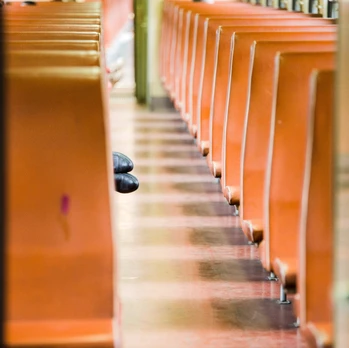
I had planned to take more photos on the platform, but the conductor quickly called me back to the car. When I returned to my seat, I found an elderly monk sitting across from me. He appeared to be about fifty, dressed in an earth-yellow monk's robe—somewhat simple, even a bit muddy. I awkwardly greeted him, and he returned the greeting briefly. During the wait at Yuguan, we struck up a conversation.
The monk's journey was as humble as his appearance—traveling from one small temple to another, relying entirely on the slow train network. His presence reminded me that these trains serve not just commuters and traders, but also pilgrims, wanderers, and anyone seeking connection in an increasingly disconnected world.
[Link: Remote temples accessible by slow train in China]
Rongshan Coal Mine: Abandoned Narrow-Gauge Railways
After reaching Guangyuan, my journey continued to the Rongshan Coal Mine area. This was the second part of my 42-hour adventure—exploring the abandoned narrow-gauge railway tracks that once served the mining industry.
The Rongshan Coal Mine railway represents a bygone era of Chinese industrial development. Narrow-gauge tracks, only 762 mm wide compared to the standard 1,435 mm, wound through the mountains, carrying coal from remote mines to processing facilities. Today, most of these lines have been abandoned, their rails rusting, their stations silent.
Walking along these forgotten tracks, I could almost hear the whistle of long-gone locomotives. The narrow-gauge railways were once the lifeblood of China's mountainous regions, transporting not just coal but also timber, agricultural products, and people. Their decline mirrors the economic transformation of rural China.
[Link: China's abandoned narrow-gauge railways worth exploring]
Why You Should Experience the 6063 Slow Train
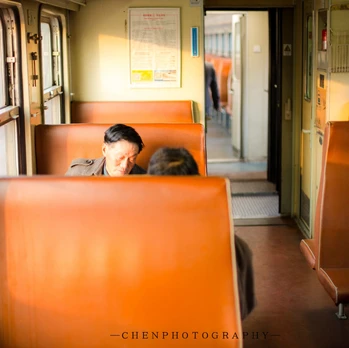
Authentic Cultural Encounters
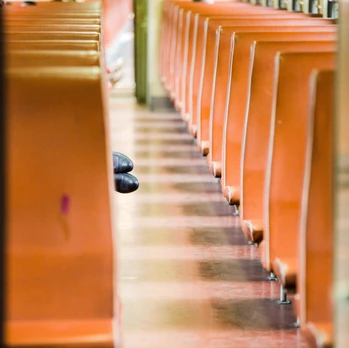
Unlike high-speed trains that isolate passengers from their surroundings, the 6063 immerses you in local life. You'll share carriages with monks, farmers, students, and railway workers—each with their own story. The train becomes a microcosm of rural China.
Stunning Mountain Scenery
The Qinling Mountains form a natural boundary between northern and southern China. The railway follows river valleys, crosses bridges over deep gorges, and passes through tunnels carved into granite cliffs. Autumn colors, winter snow, or spring blossoms—each season offers different beauty.
Budget-Friendly Travel
At just 21.5 yuan for the full journey from Baoji to Guangyuan, this is perhaps the best value train ride in China. Even shorter segments cost only a few yuan, making it accessible to any budget.
Photography Opportunities
From the green-painted train itself to the rural stations and mountain vistas, photographers will find endless subjects. The student car, farmer market, and abandoned narrow-gauge tracks offer unique documentary opportunities.
Frequently Asked Questions
Q: How long does the 6063 slow train take from Baoji to Guangyuan?
 The full journey takes approximately 11 hours and 36 minutes, covering 38 stops across three provinces.
Q: Is the 6063 train still operating in 2024?
 Yes, the 6063/6064 service continues to operate daily between Baoji and Guangyuan, maintaining its role as a vital transport link for mountain communities.
Q: Can I buy tickets in advance for the 6063 slow train?
While advance tickets are available, many passengers simply board without tickets. The conductor will collect fares onboard, and unreserved seating means you can choose your preferred carriage.
Q: What is the best time of year to take this journey?
 Autumn (October-November) offers spectacular fall colors in the Qinling Mountains. Spring (April-May) brings blooming wildflowers. Winter offers snow-capped peaks but colder temperatures.
Q: What should I bring on the 6063 slow train?
Bring snacks and water (though you can buy fresh fruit onboard), a good book for the student car, a camera, and warm clothing as the train can be chilly, especially in mountain sections.
Plan Your Own Slow Train Adventure
The 6063 slow train represents something precious: a connection to China's past that still serves its present. In a country racing toward the future, these green carriages remind us that some journeys are meant to be savored, not just completed.
Start your journey from Xi'an by taking an early morning train to Baoji. Arrive at Baoji Station before 7 a.m. to board the 6063. Spend the day watching the Qinling Mountains unfold outside your window, chatting with fellow passengers, and experiencing a way of travel that is rapidly disappearing.
Consider extending your trip to explore Guangyuan's ancient Shu Road, the Thousand Buddha Cliff, or the Huangze Temple. From Guangyuan, you can continue south to Chengdu or return north to Baoji on the 6064.
Pro tip: For the full experience, ride the entire route from Baoji to Guangyuan in one day, then explore the Rongshan area the following day before returning. The 42-hour weekend is perfectly timed for those with limited vacation days.
[Link: Complete guide to slow train travel in China]
Conclusion: A Pilgrimage Worth Taking
As the 6063 pulled into Guangyuan Station, I felt a pang of loss. The 42-hour journey had ended, but the memories would last much longer. From the student car's makeshift library to the farmer's market in motion, from the track inspectors disappearing into the morning mist to the monk sharing his simple meal—these moments form a tapestry of Chinese life that high-speed rail can never replicate.
The slow train movement is growing worldwide as travelers seek authentic experiences over efficient transit. China's 6063 offers one of the most authentic slow travel experiences available anywhere—a moving museum of rural life, mountain engineering, and human connection.
Your turn: Have you experienced China's slow trains? Share your stories in the comments below, or tag your photos with #SlowTrainChina to join our community of railway enthusiasts. The next journey starts when you decide to slow down.
Ready to plan your slow train adventure? Download our free guide to China's most scenic railway routes, including the 6063 Baoji-Guangyuan journey. [Link: Free slow train travel guide PDF]
You may also like


