Four Sisters Mountain: A Two-Day Spring Escape to a Winter Wonderland in Western Sichuan
Meta Description: Explore Four Sisters Mountain in spring's unexpected snow. Discover Shuangqiao Valley, Cat's Nose Ridge, and budget travel tips for this Western Sichuan winter wonderland. Perfect 2-day itinerary inside.
Introduction: Why This Two-Day Trip to Four Sisters Mountain Deserves a Story
How tall are the snow-capped mountains of Western Sichuan? They stand at the edge of the sky—seemingly within reach, yet impossibly distant. I usually only write travelogues for trips lasting three days or more, but the Four Sisters Mountain scenic area in Aba Prefecture demanded an exception.
This wasn't planned as a story. I intended to save the photos to a hard drive and keep them private. But when spring decided to dress the peaks in a silvery white coat, the frozen forest became too beautiful to ignore. So here we are—a two-day escape that turned into an encounter with a winter wonderland in the middle of spring.
If you're searching for a Four Sisters Mountain two-day itinerary that combines budget travel, stunning snowscapes, and practical tips, this guide is for you.
Chapter One: Departure for the Snowy Peaks – Your Four Sisters Mountain Adventure Begins
Cat's Nose Ridge: The First Glimpse of Four Sisters Mountain
It had been a full year since my last trip to Western Sichuan. My phone still held memories of viewing Gongga Snow Mountain from Lenggacuo. I had been nagging my girlfriend about visiting Four Sisters Mountain for months, but she always refused: "From January to March, it's all bare and barren. Let's go when the grass turns green."
But this time, I made up my mind. I picked two weekdays and signed up for a tour group covering meals, accommodation, and tickets. Why a tour group? Simple: budget. Solo travel in Western Sichuan—when you factor in transportation, accommodation, and tickets—is never as cost-effective as a group package. From December to March, the off-season in Sichuan means cheap tickets and even cheaper tours. For this trip, we spent only 180 yuan on the sightseeing bus.
Pro tip: If you're looking for budget travel in Western Sichuan, the off-season (December–March) offers incredible value. Tour groups are affordable, crowds are minimal, and the scenery can be magical.
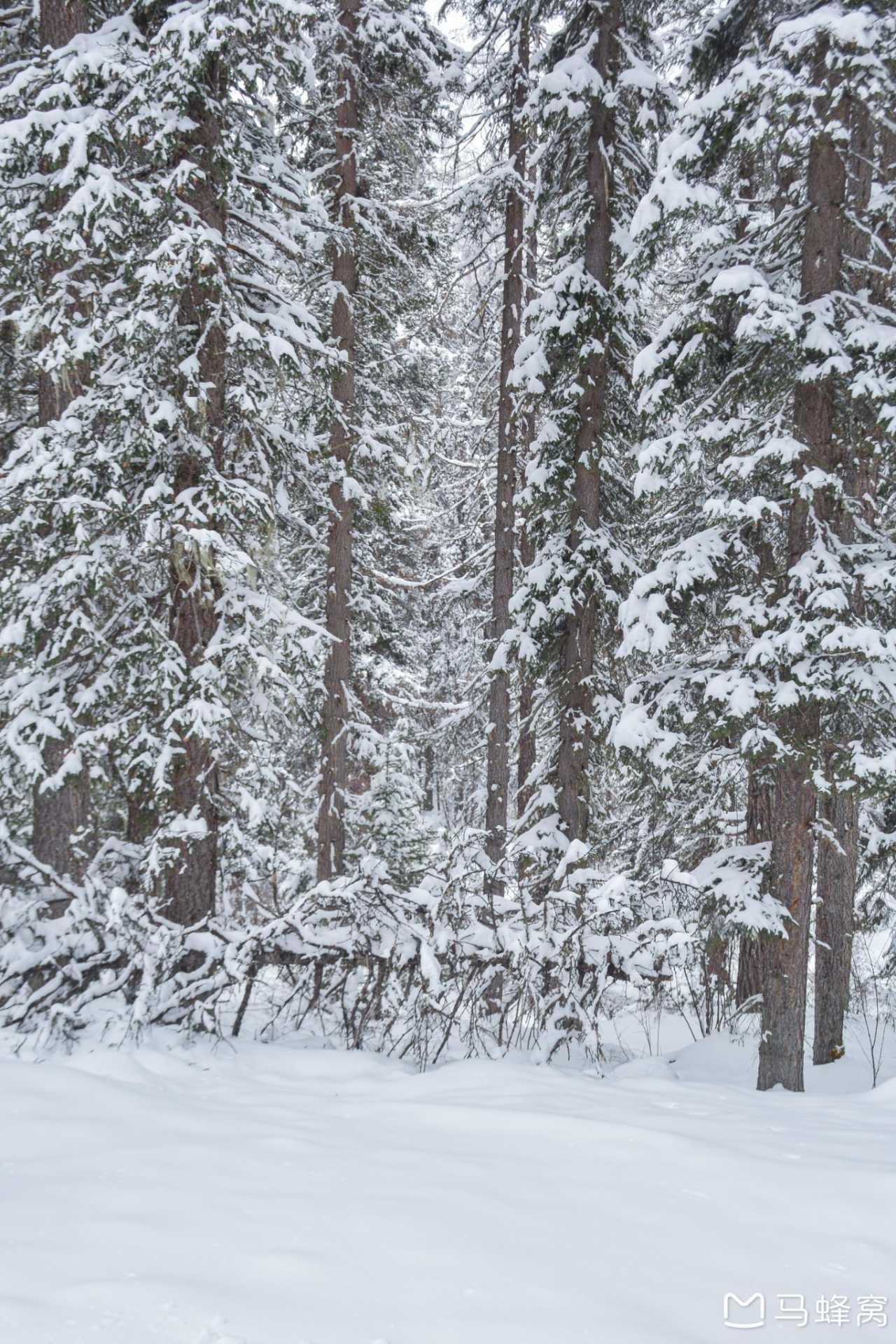
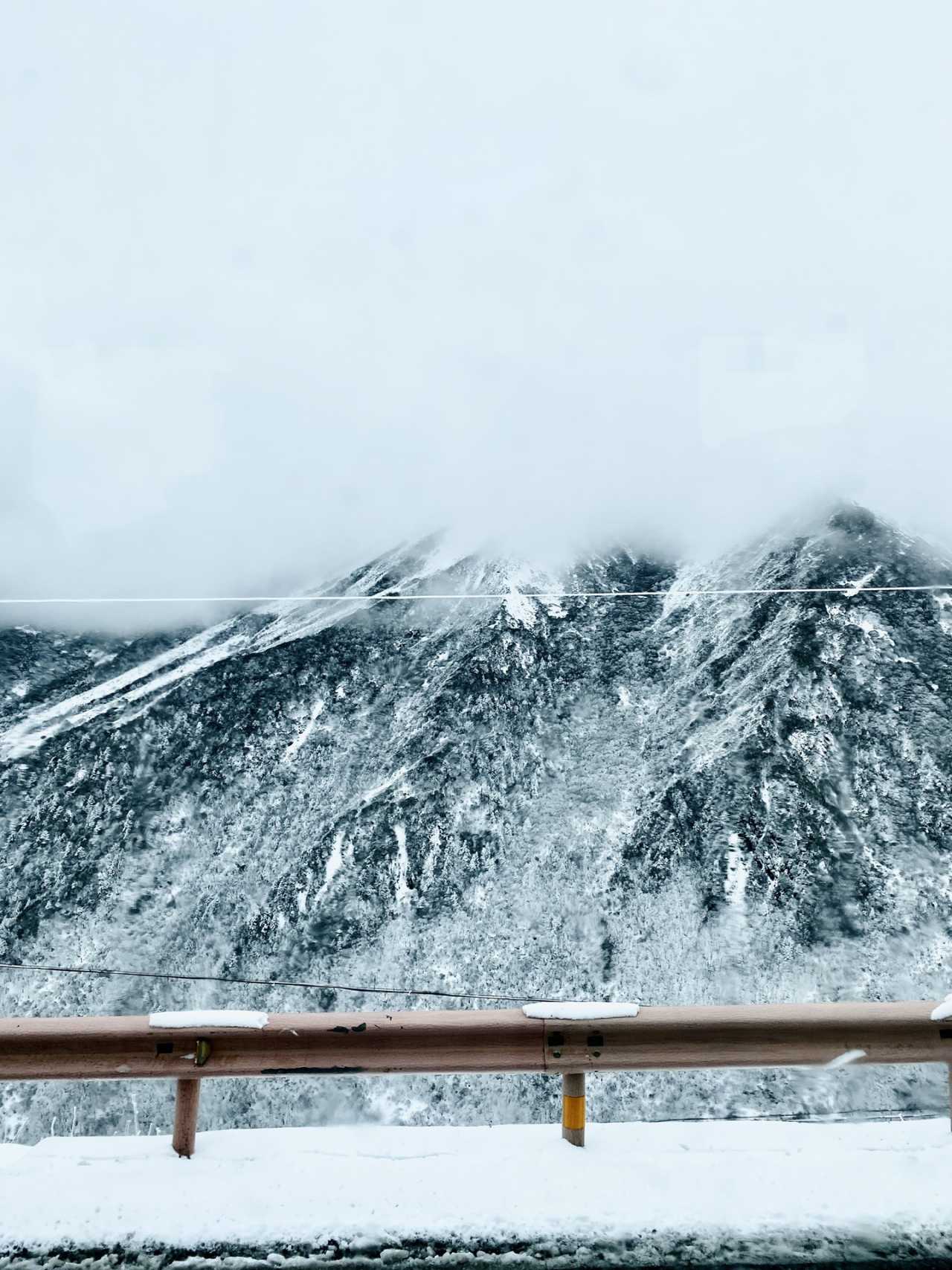
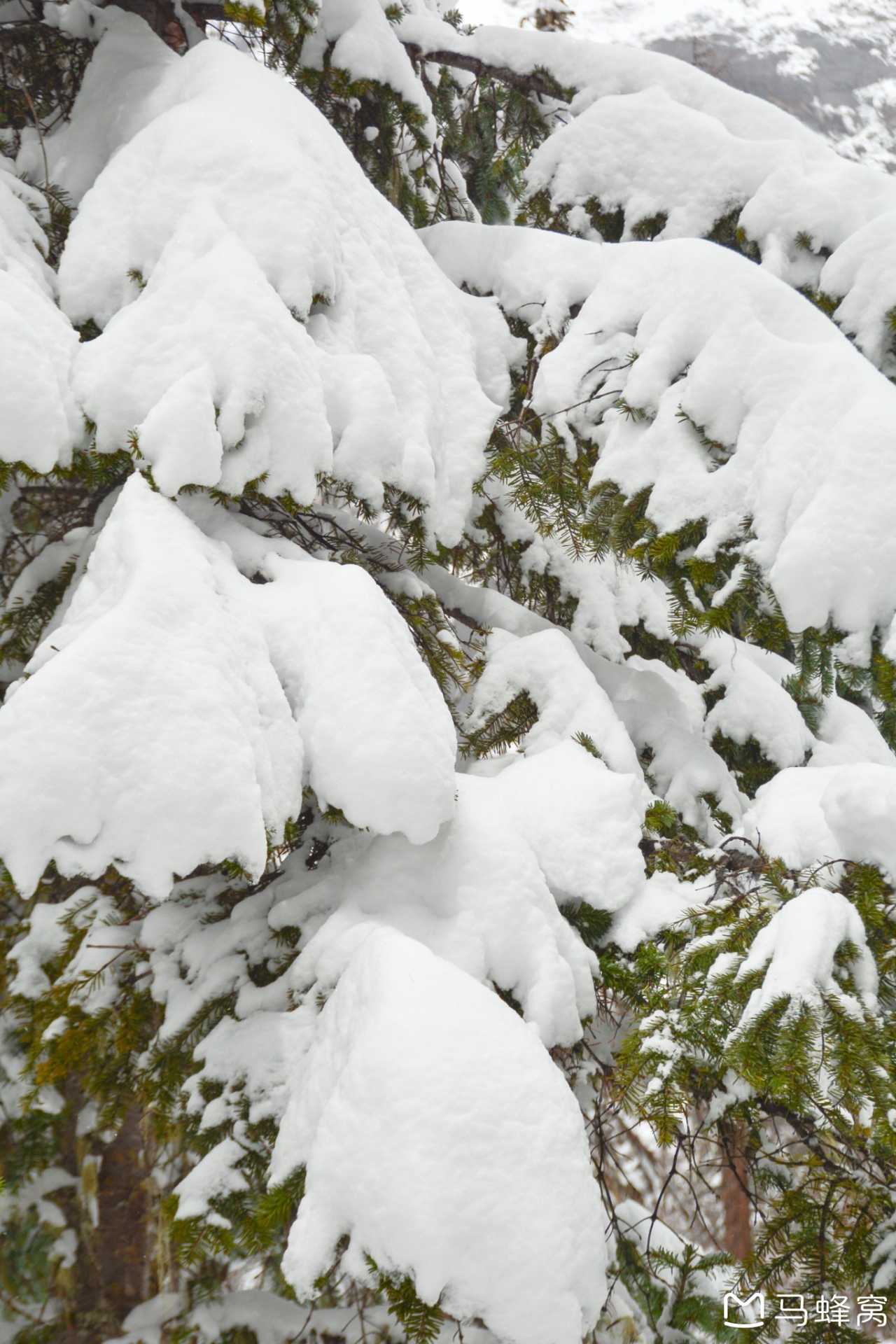
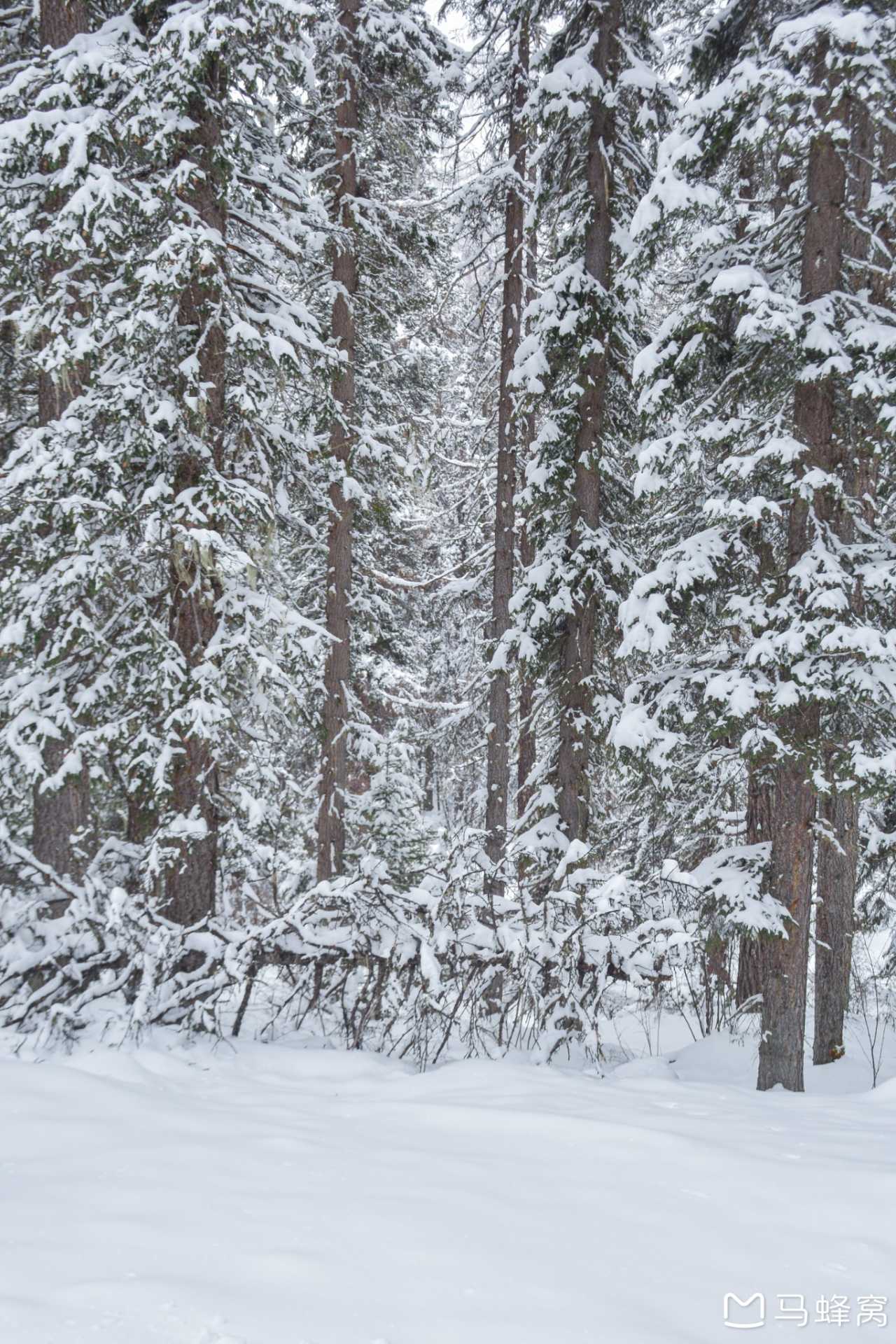
To reach Aba Prefecture, Balang Mountain is a must-pass. At the end of March, Chengdu's weather was already warming up—people wore light spring clothing. But on Balang Mountain, a heavy snow had fallen the night before. Bare slopes turned into a frozen forest overnight. Thick snow still piled on guardrails by the roadside.
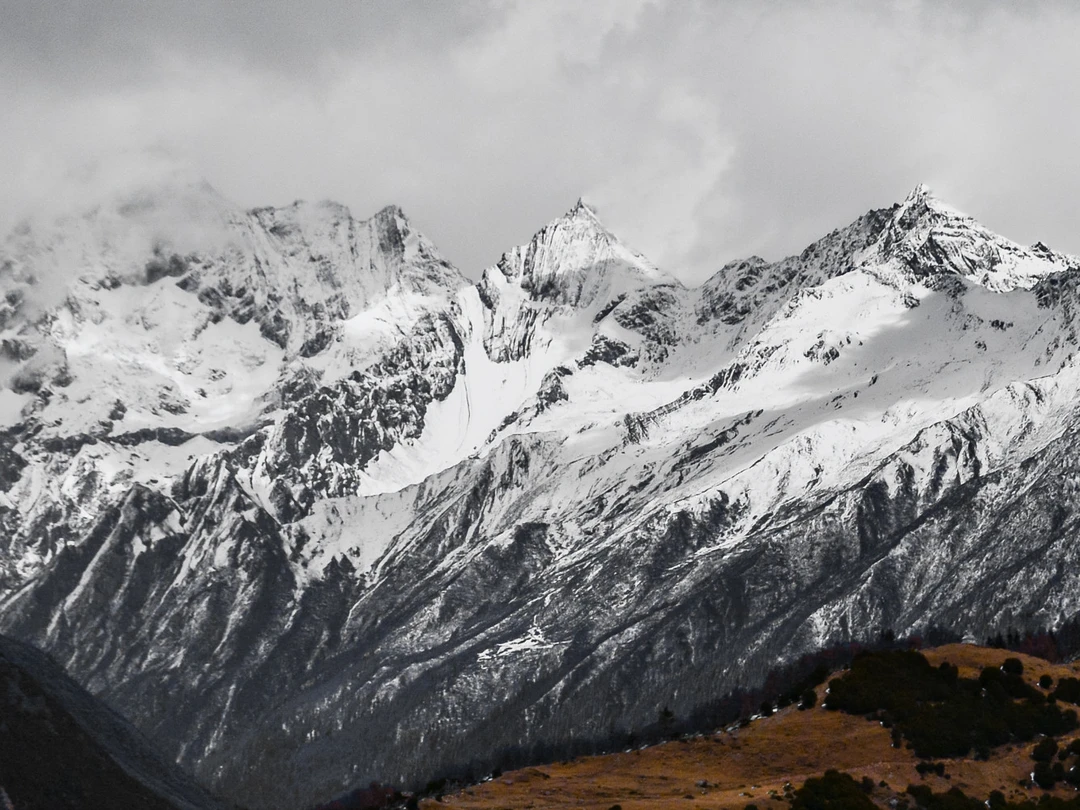
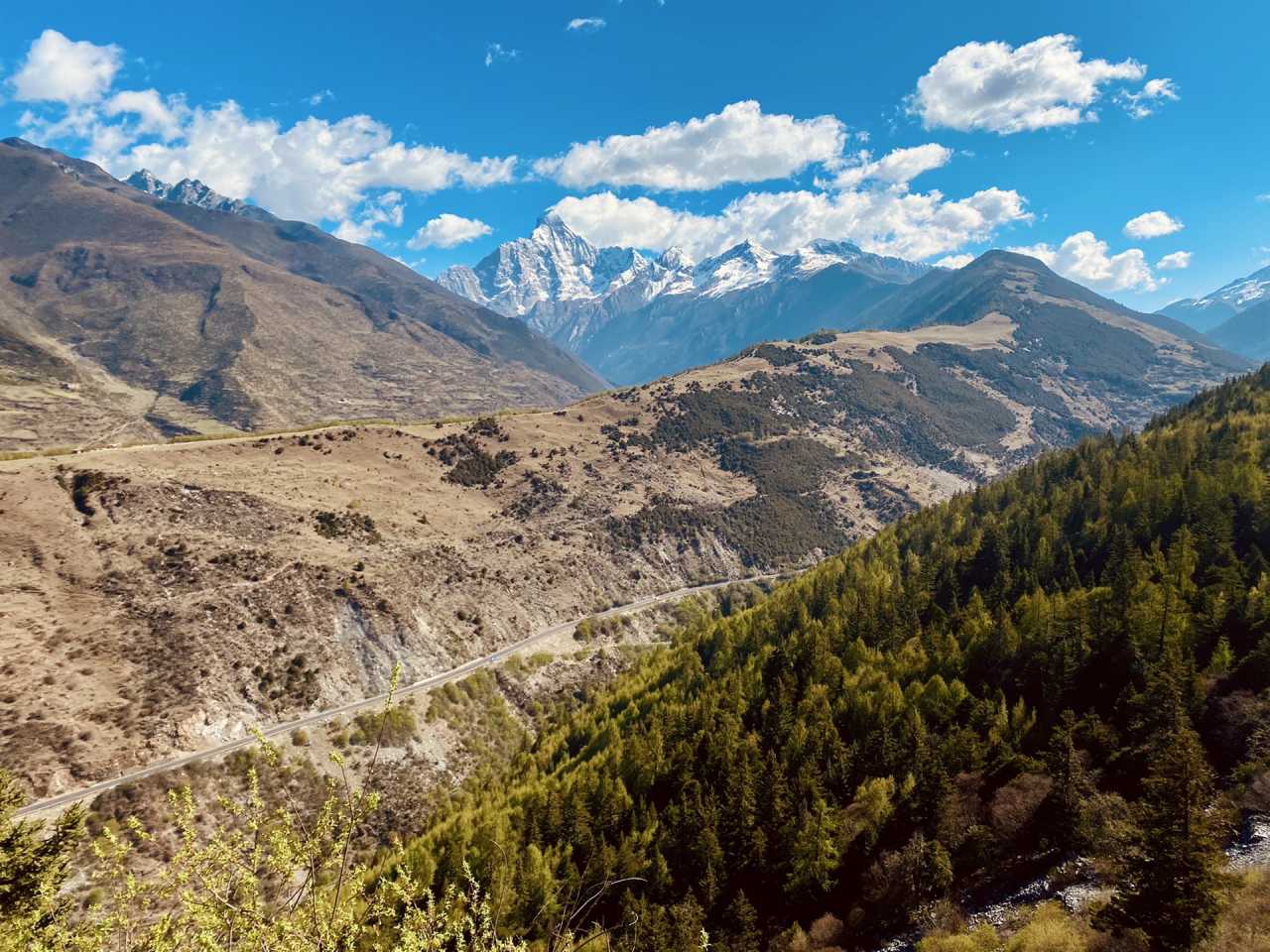
Cat's Nose Ridge—a viewpoint at about 3,500 meters elevation—is hidden along the road from the Balang Mountain tunnel down to Rilong Town. This is the perfect spot for a panoramic view of all four peaks of Four Sisters Mountain. On clear days, you can see rolling clouds and the distinct silhouettes of the four snowy mountains.
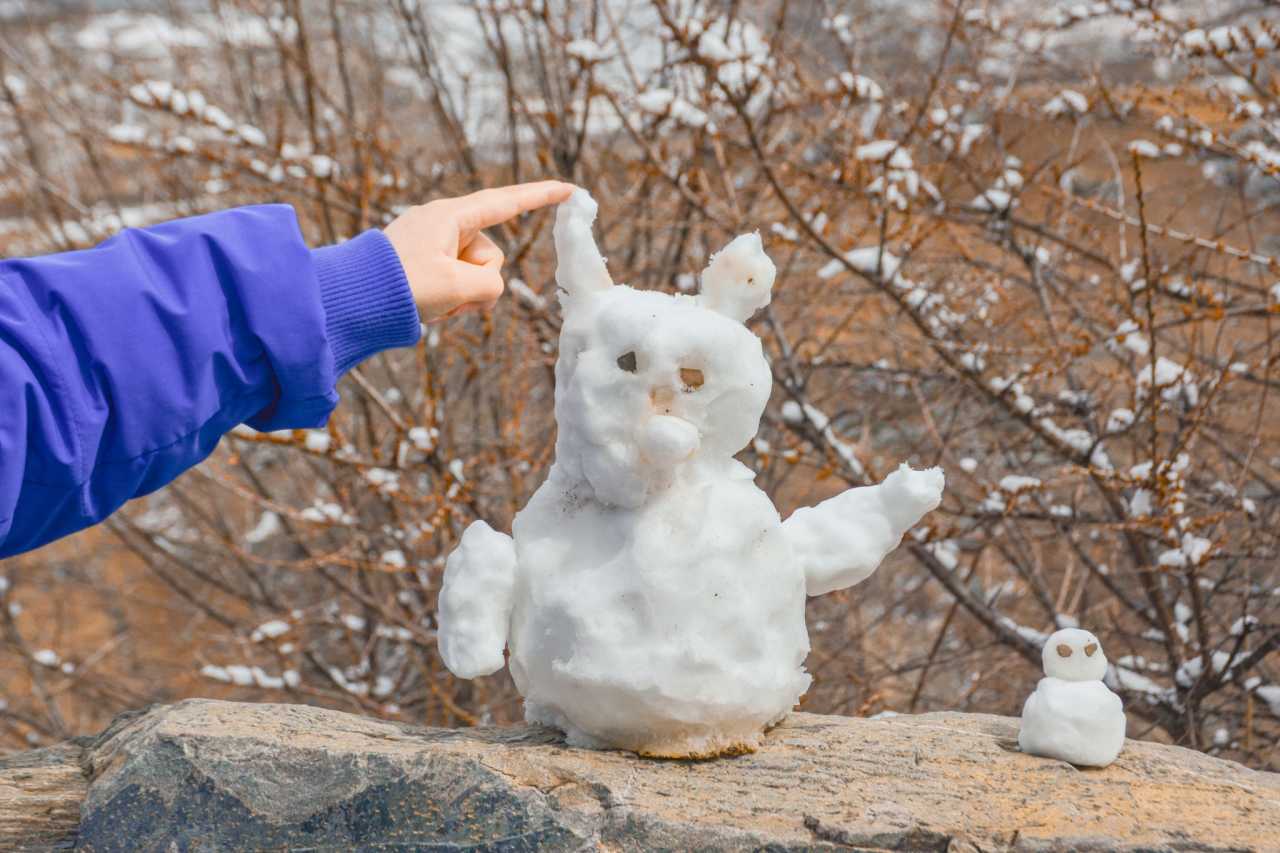
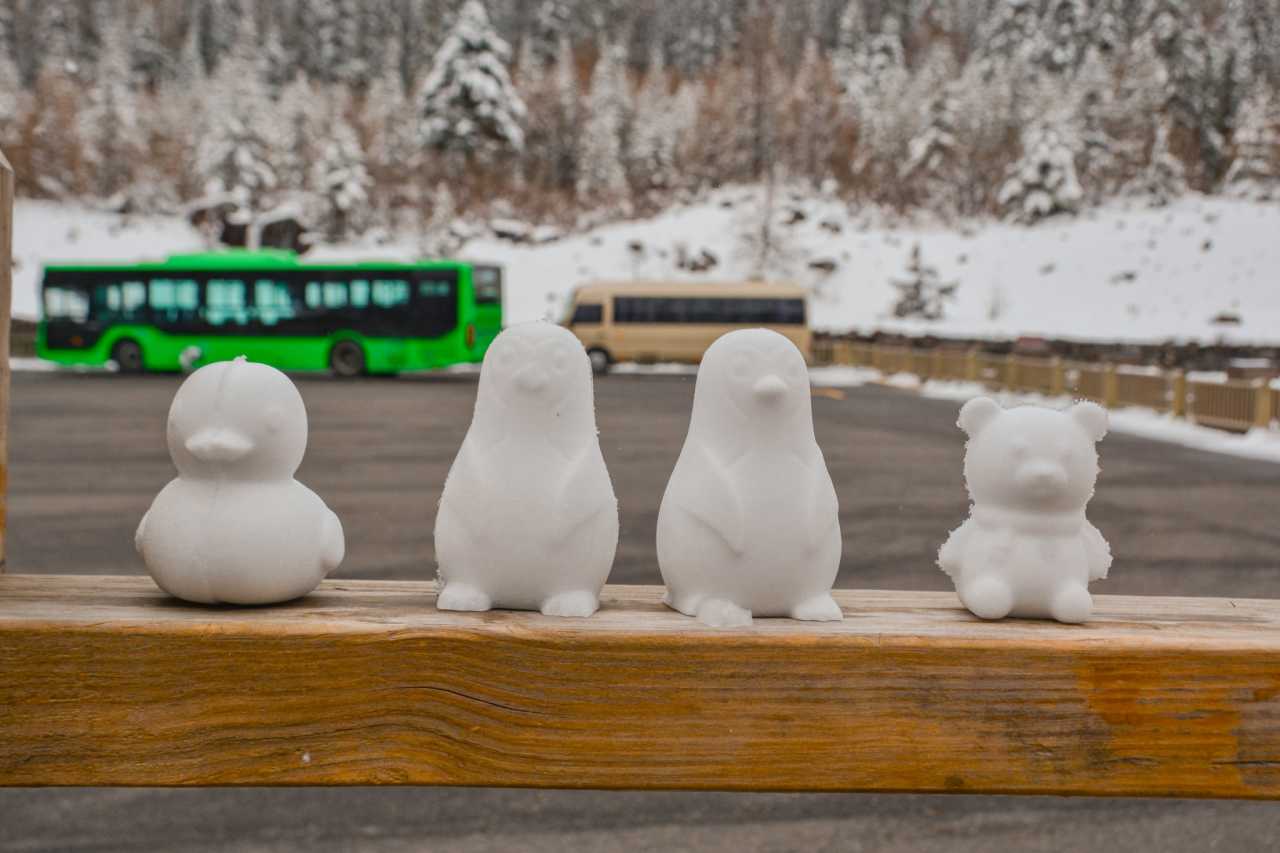
When traveling in Western Sichuan, it's thirty percent about weather and seventy percent about luck. The day we set out, the weather wasn't ideal, so we missed seeing all four peaks. But at the viewpoint, we found a little snow bunny—probably left by a leisurely tourist.
Thinking back to 2017, I had clearly seen all four peaks from this exact spot. Same place, different time, completely different views. The only things that remain unchanged are the mountains and the seas.
Chapter Two: Shuangqiao Valley – A Fairy Tale World in a Frozen Forest
Redwood Forest: From "Shangri-La" to "Winterfell"
The Four Sisters Mountain scenic area has four main peaks: Yaomei Peak (6,250 meters), Third Peak (5,664 meters), Second Peak (5,454 meters), and First Peak (5,355 meters). Only First Peak lacks the sharp, distinctive outline typical of snowy mountains—it looks like it's wearing a hat, making it easy to identify. They all belong to the Qionglai Mountain Range.
The scenic area has three valleys: Shuangqiao Valley, Changping Valley, and Haizi Valley. Most tourists visit Shuangqiao Valley—many one-day tour groups choose this spot. Changping Valley has a lower elevation of about 3,600 meters, but in my opinion, its scenery is even more beautiful.

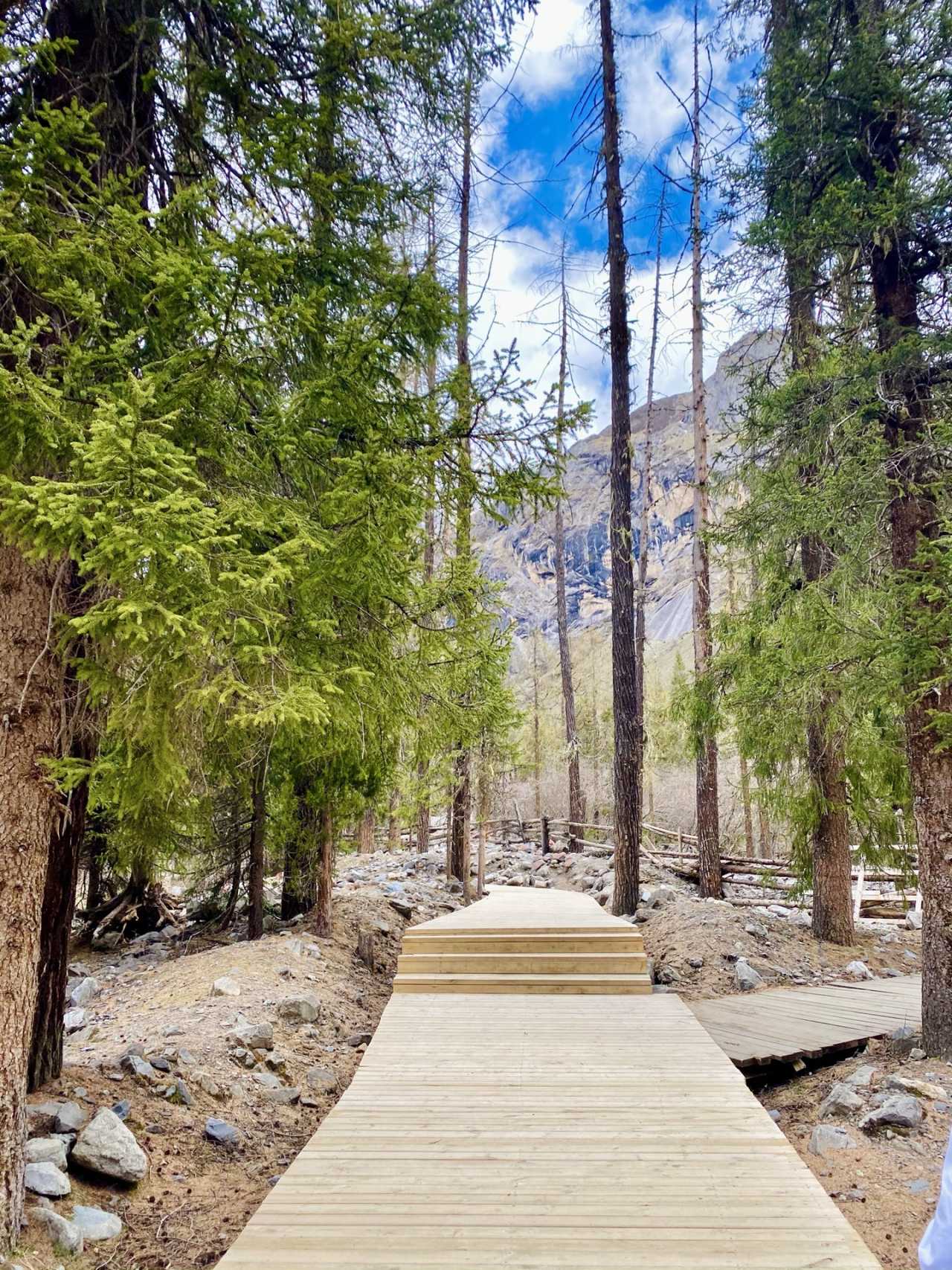
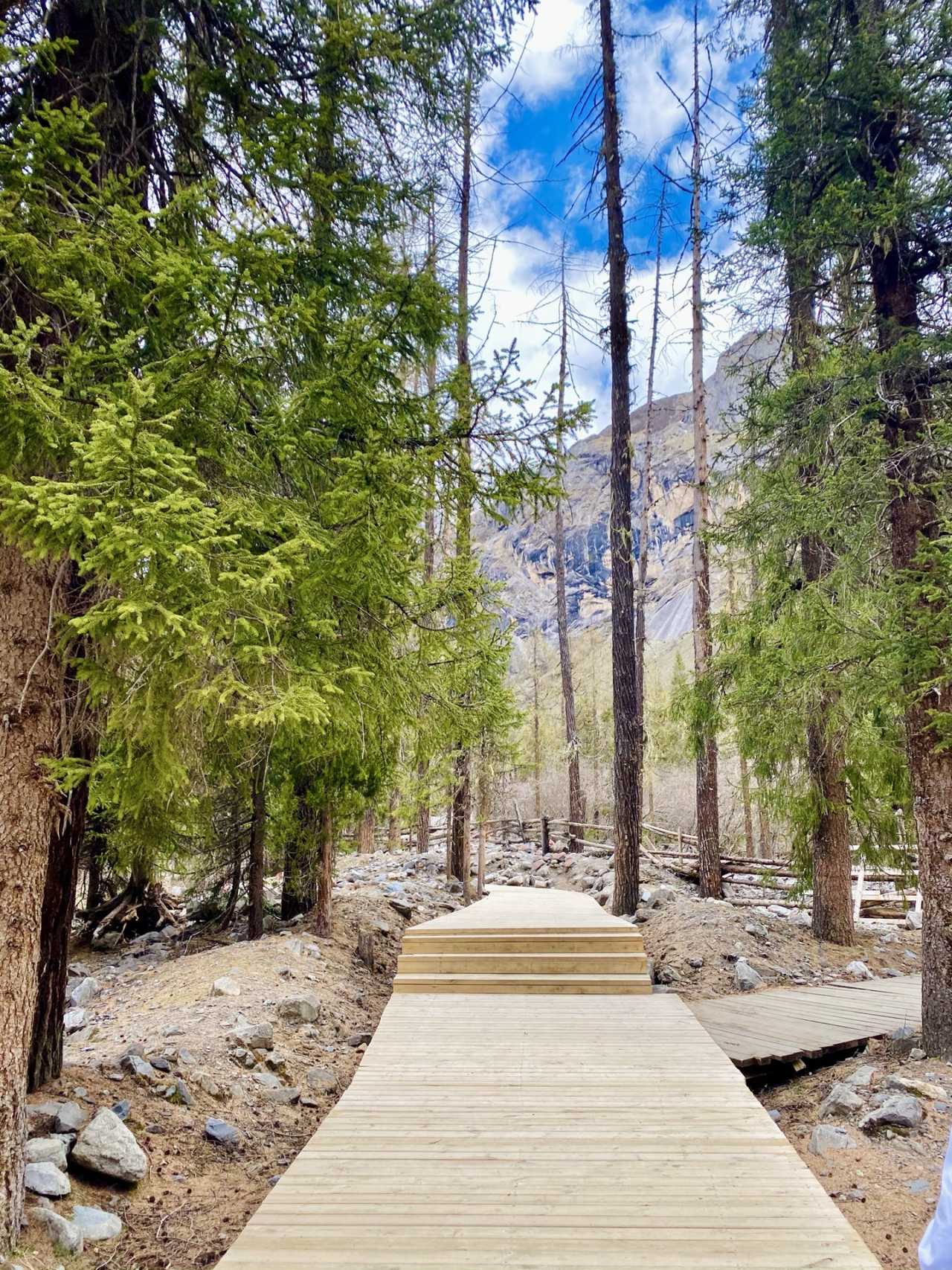
The way to explore Shuangqiao Valley is simple: the sightseeing bus takes you from the entrance to the highest point—Redwood Forest—and then you work your way down to Renshengguo Meadow. The first time I came, we walked from the Redwood Forest boardwalk all the way to Renshengguo Meadow. This time, I wanted my girlfriend to have the same experience—but seeing the thick snow on trees and the boardwalk snow above our ankles, I decisively gave up. We took the bus.
In summer, Redwood Forest is a paradise under blue skies and white clouds. In winter, it's like Winterfell from Game of Thrones—nothing but white snow and brown tree trunks. Quiet. Solemn. It makes you fear a wolf or white fox might leap from the redwoods.
Photography tip: The off-season means no crowds. We found a wooden boardwalk with a nearly 90-degree turn extending into a snowy forest—perfect for photos. My girlfriend's blue jacket popped beautifully against the white snow. She originally didn't want to come this season, but after seeing the frozen forest, she said: "How about we come once every season? Summer and autumn should be even more beautiful." I just smiled.
We have a habit: taking two photos of the same scene—one of her first, then one of me. Bringing a tripod is too much hassle. Except for our Hainan trip, I always bring just a camera and a drone. This time, I lent my drone to a friend, so I was even more light on my feet.
The end of the Redwood Forest boardwalk looked like a heavy, richly colored Chinese ink painting. The wooden cabin, brown fir trees, snowy mountains, and light snow on the peaks made my girlfriend—walking onto the boardwalk beneath the snowy mountains—seem to embody the poetic image of "fishing alone in the cold river snow." The fir trees halfway up the mountain looked like random brushstrokes from a master calligrapher. Nature's beauty never needs to be deliberately crafted.
Budala Peak: Snowball Fights and the Gazing White Stupa
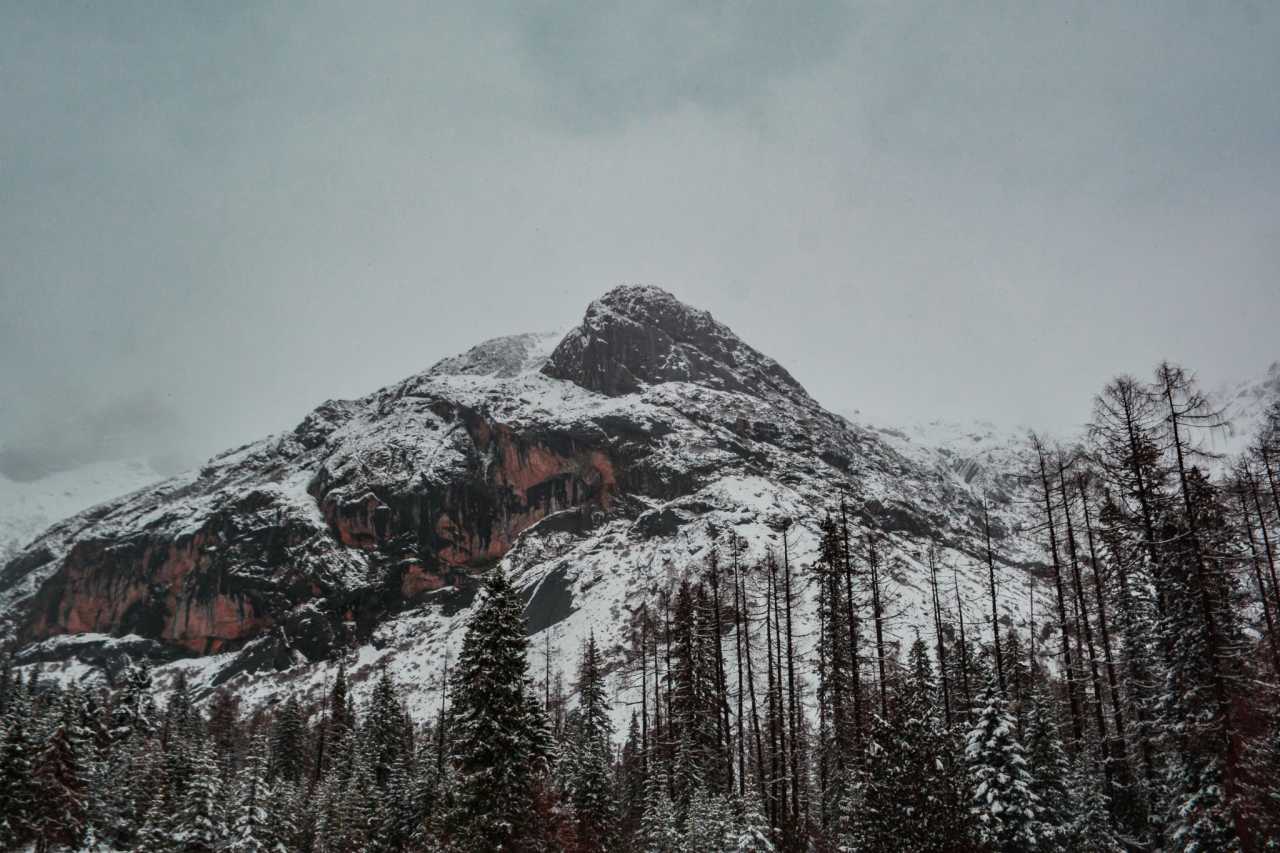
Budala Peak gets its name from its shape resembling the Potala Palace. It stands at nearly 5,200 meters elevation. Echoing it is a white stupa. Standing near the stupa, you can gaze at the towering snowy mountains opposite. Last time we were here, a group of us took a photo by the railing—and in the blink of an eye, it was already a few years ago.
The snow on the boardwalk hadn't been cleared. We grabbed handfuls of fresh snow and had a snowball fight. At nearly 5,000 meters elevation, the air is thin—running and throwing snowballs leaves you breathless. But the laughter, the cold air, and the view of the white stupa against the snowy peaks made it worth every gasp.
Practical Tips for Your Four Sisters Mountain Trip
Best Time to Visit Four Sisters Mountain
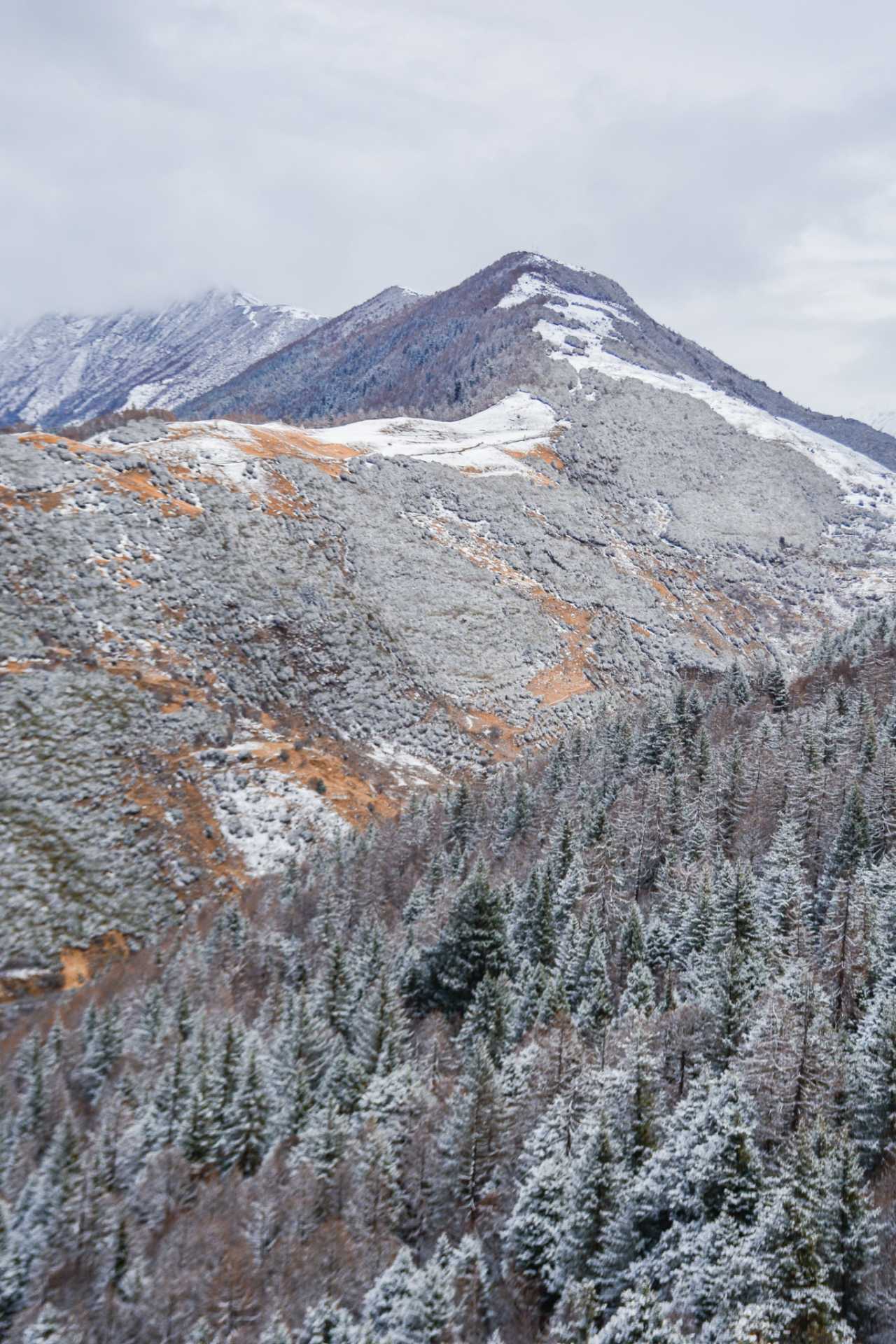
While summer and autumn offer green meadows and clear skies, the winter and early spring months (December–March) provide: - Fewer crowds – Take photos without people in the background - Lower prices – Tour groups and tickets are significantly cheaper - Snowy landscapes – The frozen forest is magical - Unique photography opportunities – Contrast of snow against dark tree trunks
What to Pack for a Winter Trip to Western Sichuan
- Warm layers – Temperatures can drop below freezing, especially at higher elevations
- Waterproof boots – Boardwalk snow can reach above your ankles
- Camera with extra batteries – Cold drains battery life quickly
- Sunglasses – Snow glare is intense at high altitudes
- Snacks and water – Limited food options in the scenic area
Budget Travel Tips for Four Sisters Mountain
- Tour groups are the most cost-effective option during off-season
- Weekday travel – Fewer crowds and potentially lower prices
- Self-drive – If you have a car, you can explore at your own pace
- Accommodation – Rilong Town has budget-friendly guesthouses
Frequently Asked Questions About Four Sisters Mountain
Q1: How many days do you need for Four Sisters Mountain?
A two-day trip is sufficient for Shuangqiao Valley and Cat's Nose Ridge. For a more relaxed experience or to explore Changping Valley, plan for three days.
Q2: Is Four Sisters Mountain worth visiting in spring?
Absolutely. Spring snow transforms the landscape into a winter wonderland. The contrast of snow against emerging green makes for stunning photography.
Q3: What is the elevation of Four Sisters Mountain?
The main peaks range from 5,355 meters (First Peak) to 6,250 meters (Yaomei Peak). The scenic area's highest accessible point is Redwood Forest at about 3,800 meters.
Q4: Do I need altitude sickness medication?
If you're coming from low elevation, consider bringing medication. The scenic area reaches 3,800 meters, and Balang Mountain pass exceeds 4,000 meters. Stay hydrated and avoid rushing.
Q5: Can I visit Four Sisters Mountain independently without a tour group?
Yes. You can drive to Rilong Town, buy tickets at the entrance, and take the sightseeing bus. However, a tour group is more budget-friendly during off-season.
Internal Linking Suggestions
[Link: Best Winter Destinations in Western Sichuan] [Link: Complete Guide to Sichuan Travel on a Budget] [Link: How to Avoid Altitude Sickness in Tibet and Sichuan] [Link: Photography Tips for Snowy Mountain Landscapes]
Conclusion: Your Turn to Discover Four Sisters Mountain
This two-day escape to Four Sisters Mountain proved that spring can hold winter's magic. From the panoramic views at Cat's Nose Ridge to the frozen fairy tale of Shuangqiao Valley's Redwood Forest, every moment felt like stumbling upon a secret world.
The best part? You don't need a long vacation or a big budget. Two days, a tour group, and a willingness to embrace unexpected snow—that's all it takes.
Ready to plan your own escape? Pack your warmest clothes, charge your camera, and head to Western Sichuan. The mountains are waiting—and they might just surprise you with a winter wonderland in the middle of spring.
Have you visited Four Sisters Mountain? Share your experience or questions in the comments below. For collaboration or travel tips, reach out via WeChat: Mrzby24 (please note source).
Keywords: Four Sisters Mountain, Western Sichuan travel, Shuangqiao Valley, Balang Mountain, Cat's Nose Ridge, winter wonderland spring, budget travel Sichuan, Redwood Forest Four Sisters, Budala Peak, two-day itinerary Sichuan
You may also like