Four Days in Bashu: A Soul-Cleansing Family Journey Through Chengdu and Chongqing
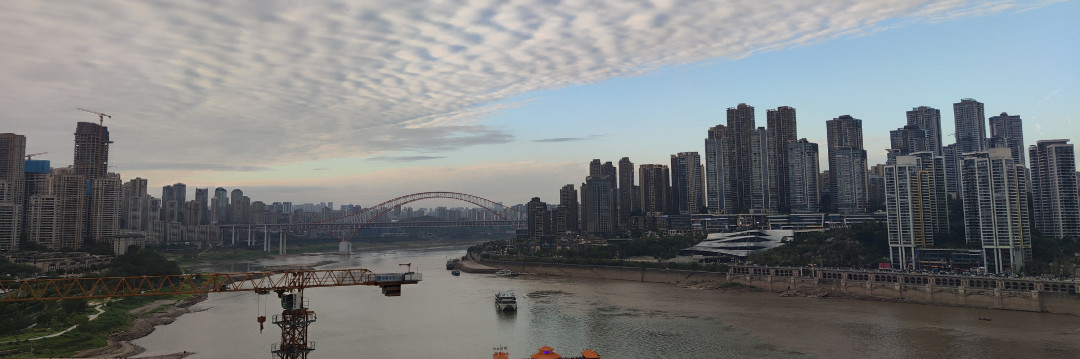
Meta Description: Discover the perfect 4-day Bashu family itinerary covering Wenchuan's solemn history, Chengdu's slow-paced culture, and Chongqing's fiery hotpot. A soul-cleansing journey through Sichuan and Chongqing awaits.
The National Day holiday arrived like a gift from heaven for our family, which had been running nonstop all year. Work, school, and the endless grind of daily life had pressed down on us like three mountains. This time, we chose the road less traveled—packing up the whole family and heading straight for Chengdu and Chongqing to soak in the vibrant energy and deep heritage of the Bashu region.
Four days—not long, not short—but we craved every moment of surprise and emotion. Travel is never just about reaching a destination; it's about the moments you share with family along the way. As the old poem goes, "We will ascend the summit and see the mountains small below." Our journey wasn't about climbing peaks, but it was a spiritual cleansing nonetheless. And to wrap it up with a touch of humor: "The road to Shu is harder than the road to heaven—but we had to find out for ourselves. If nothing else, it was worth it for that one bite of hotpot!"
Day One: Wenchuan Earthquake Memorial – Somber History, Rebirth, and Hope
Why Visit Wenchuan with Family?
Our first stop was Wenchuan. Yes, you read that right—the place that once broke countless hearts. We wanted to see that land, to feel its pain and its hope. For families seeking meaningful travel experiences, Wenchuan offers a profound lesson in resilience and remembrance.
Like a little expedition team, we left Xi'an at 4 a.m., heading straight for Wenchuan. To dodge the National Day crowds, we chose this "crazy" hour. Turns out, we weren't the only early birds—the highway was already buzzing with "birds" racing along.
After nine hours of driving, we finally reached the Dujiangyan service area, less than 20 kilometers from Wenchuan. And then, as if by magic, traffic came to a standstill. Stuck! Luckily, it was like a brief summer shower—half an hour later, we were moving again. By one in the afternoon, we arrived at Yingxiu Town. The kids jumped out of the car, thrilled as if they'd discovered a new world.
An 80-Yuan Lunch That Tasted Like Happiness

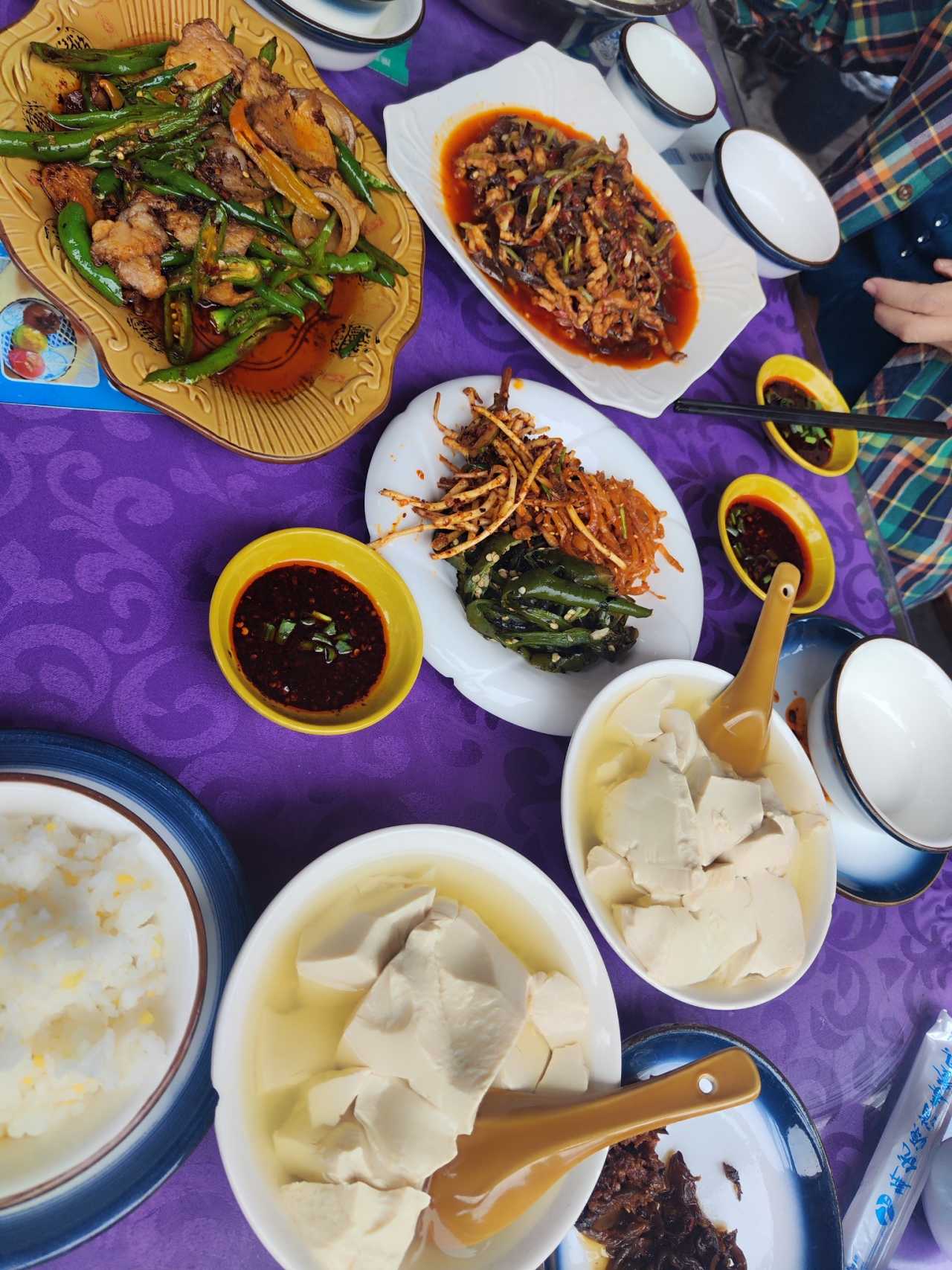
For lunch, we picked a random little eatery and ordered a few dishes. One thing stood out: a bowl of tofu pudding (豆花) that my mother especially loved. It was as delicate as white jade, melting on the tongue with a faint bean fragrance and a hint of sweetness—utterly memorable. To our surprise, the owner generously threw in some homemade matsutake mushrooms and beef sauce—spicy but not harsh, fragrant but not greasy. It was the perfect rice topper.
Four dishes, a full table—and it cost just 80 yuan (about $11) . The value was almost unbelievable. Maybe it's true that "hunger is the best seasoning"—we devoured everything, down to the last drop of red oil. In a place so steeped in history, a simple lunch could feel so satisfying.
Grief and Hope Among the Ruins
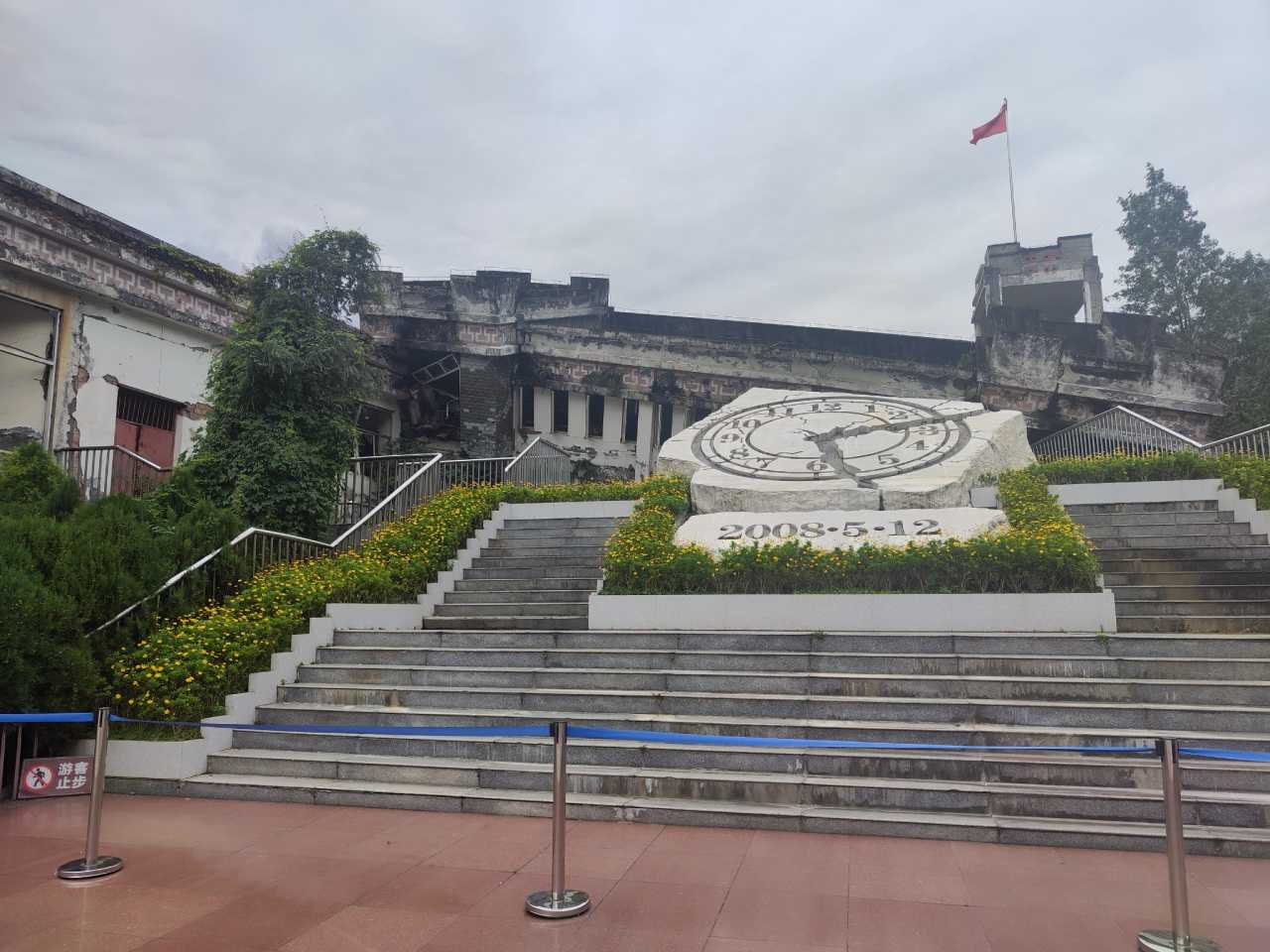
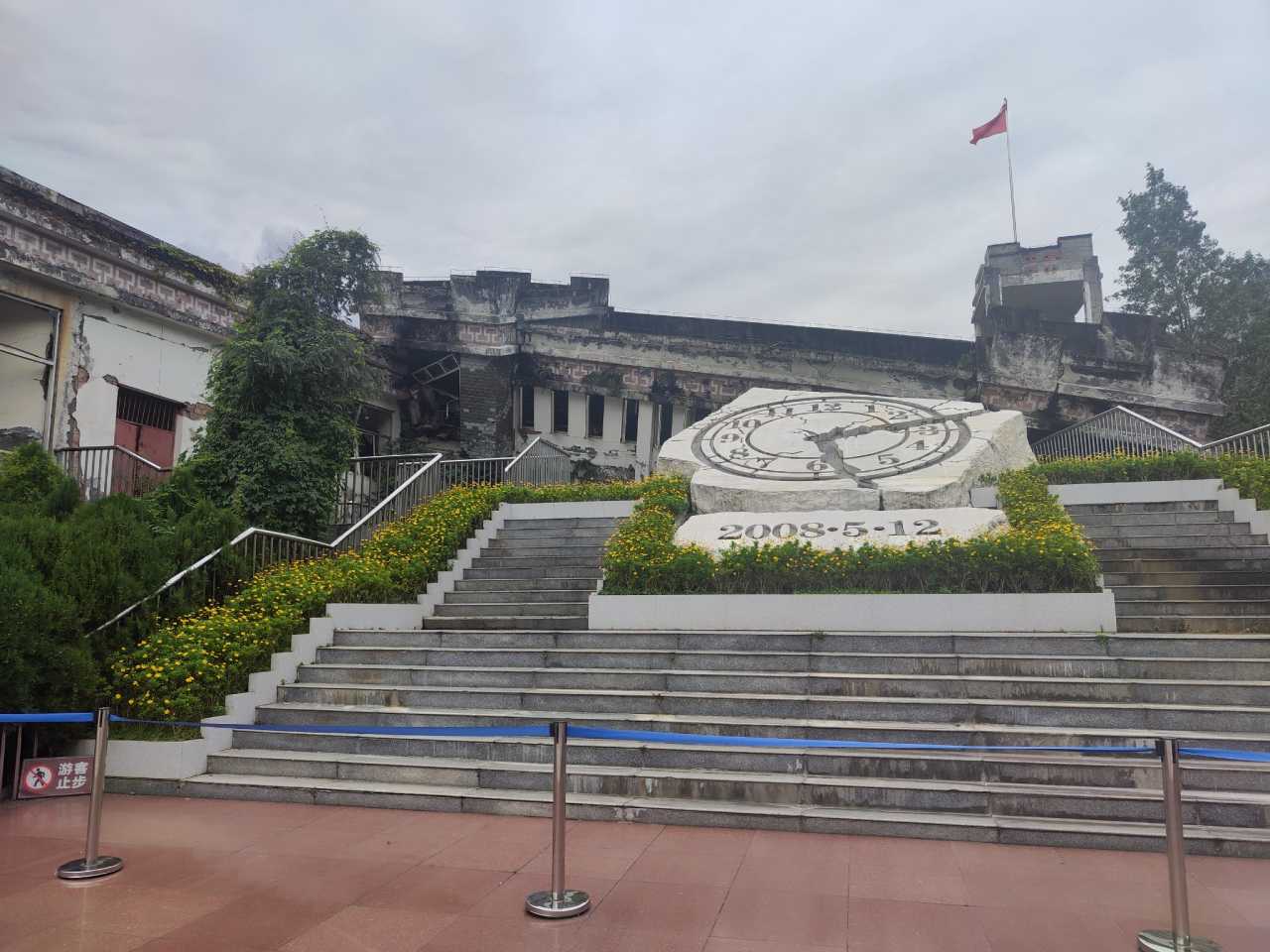
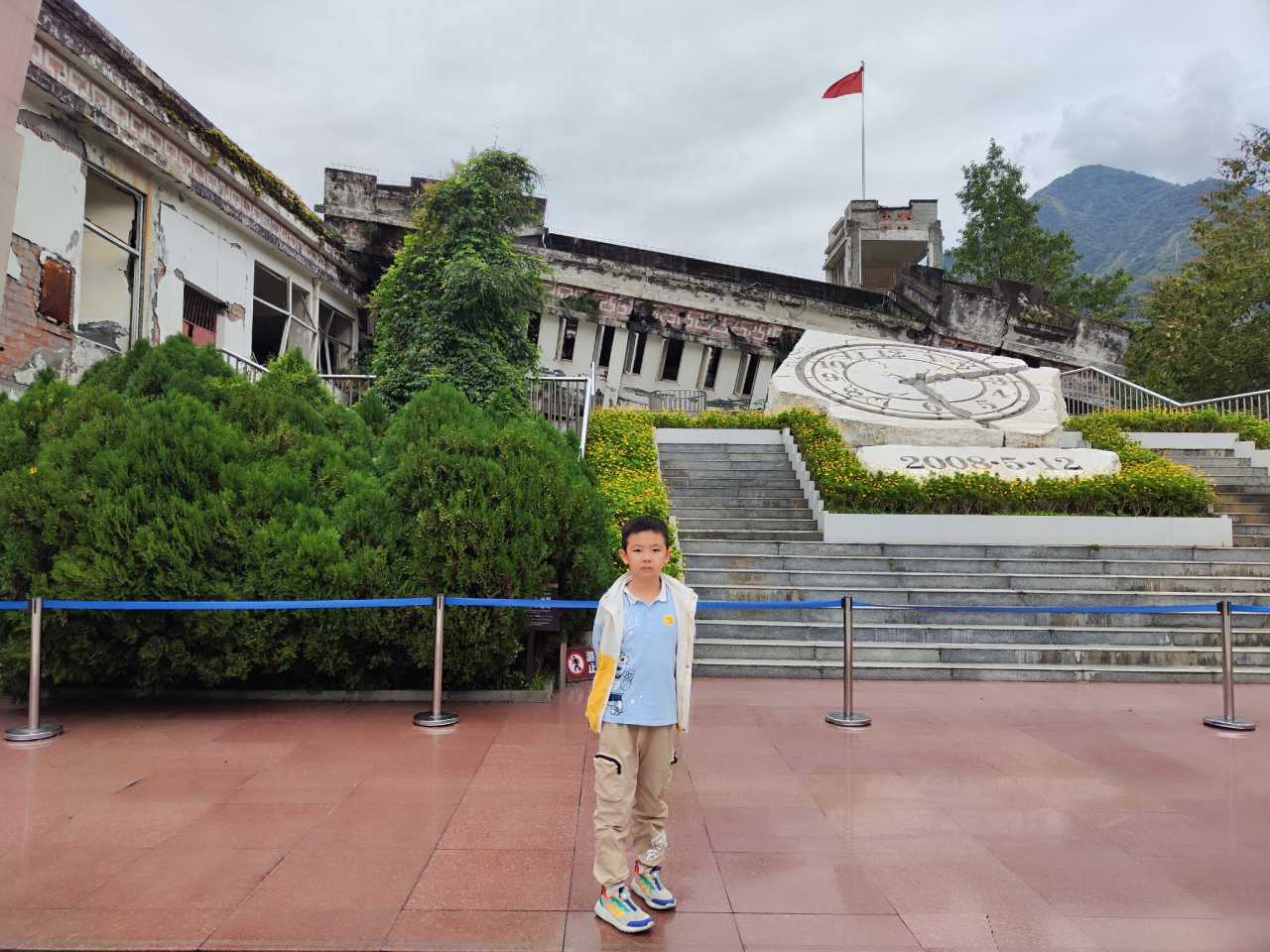
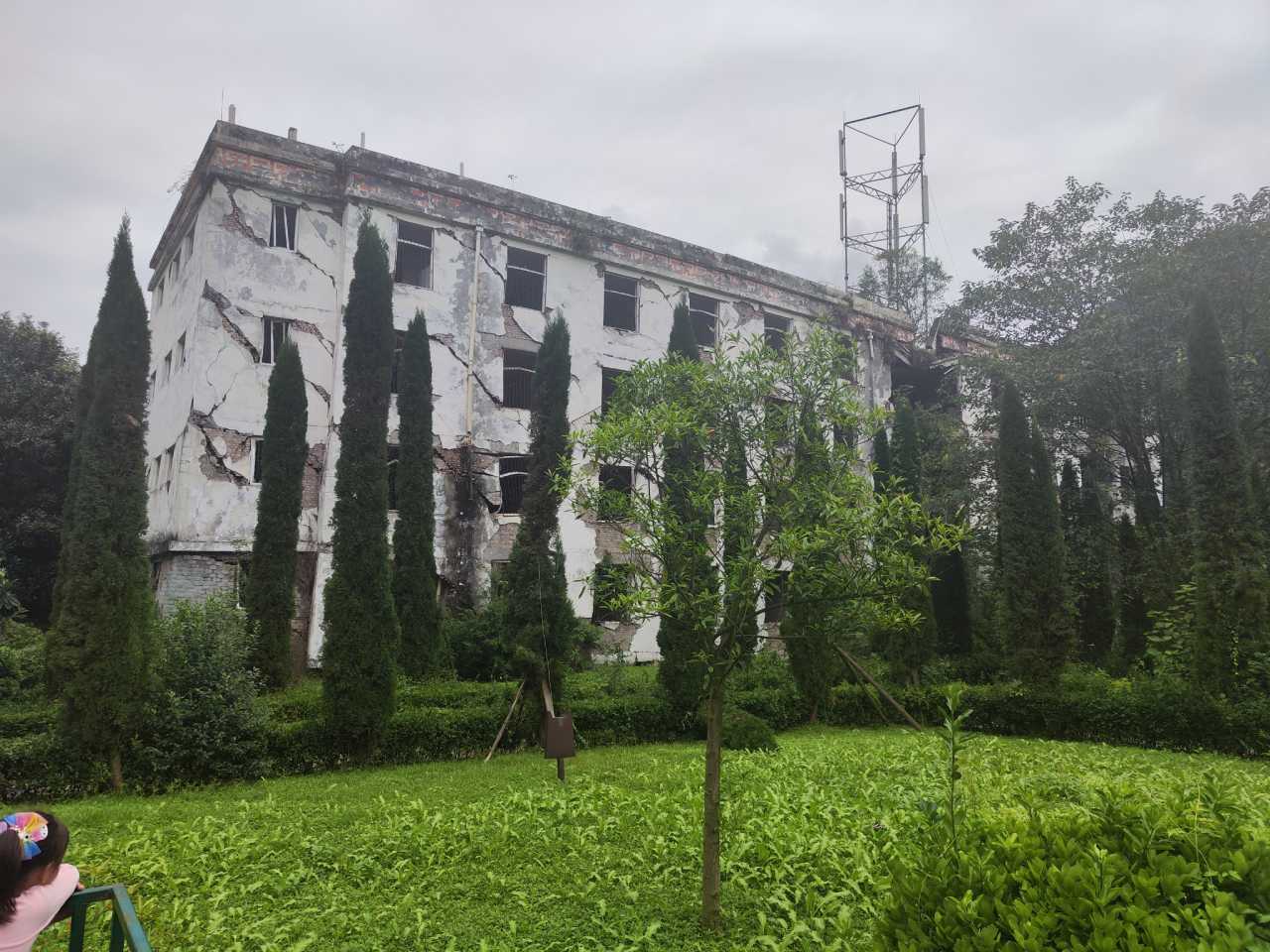
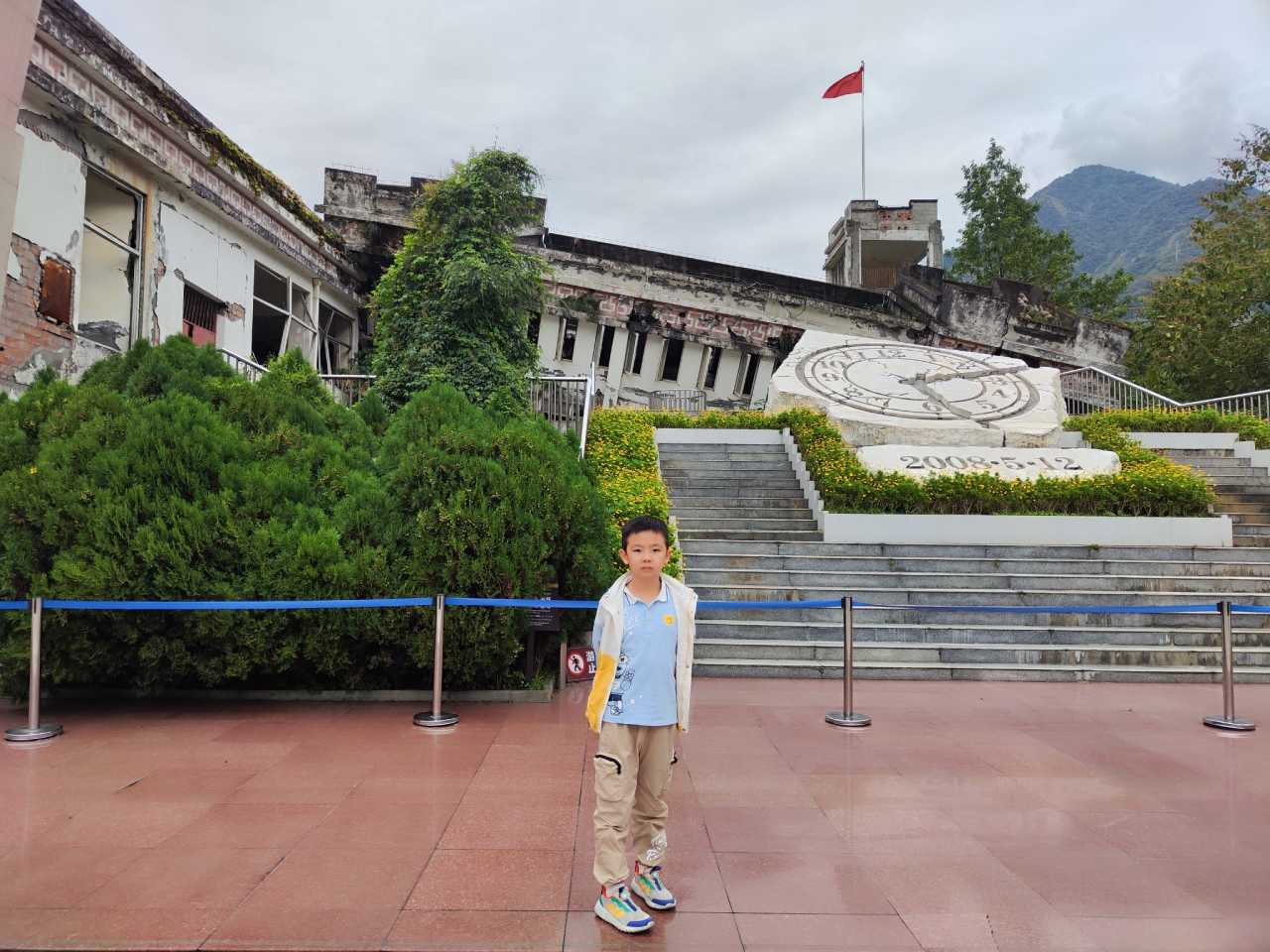
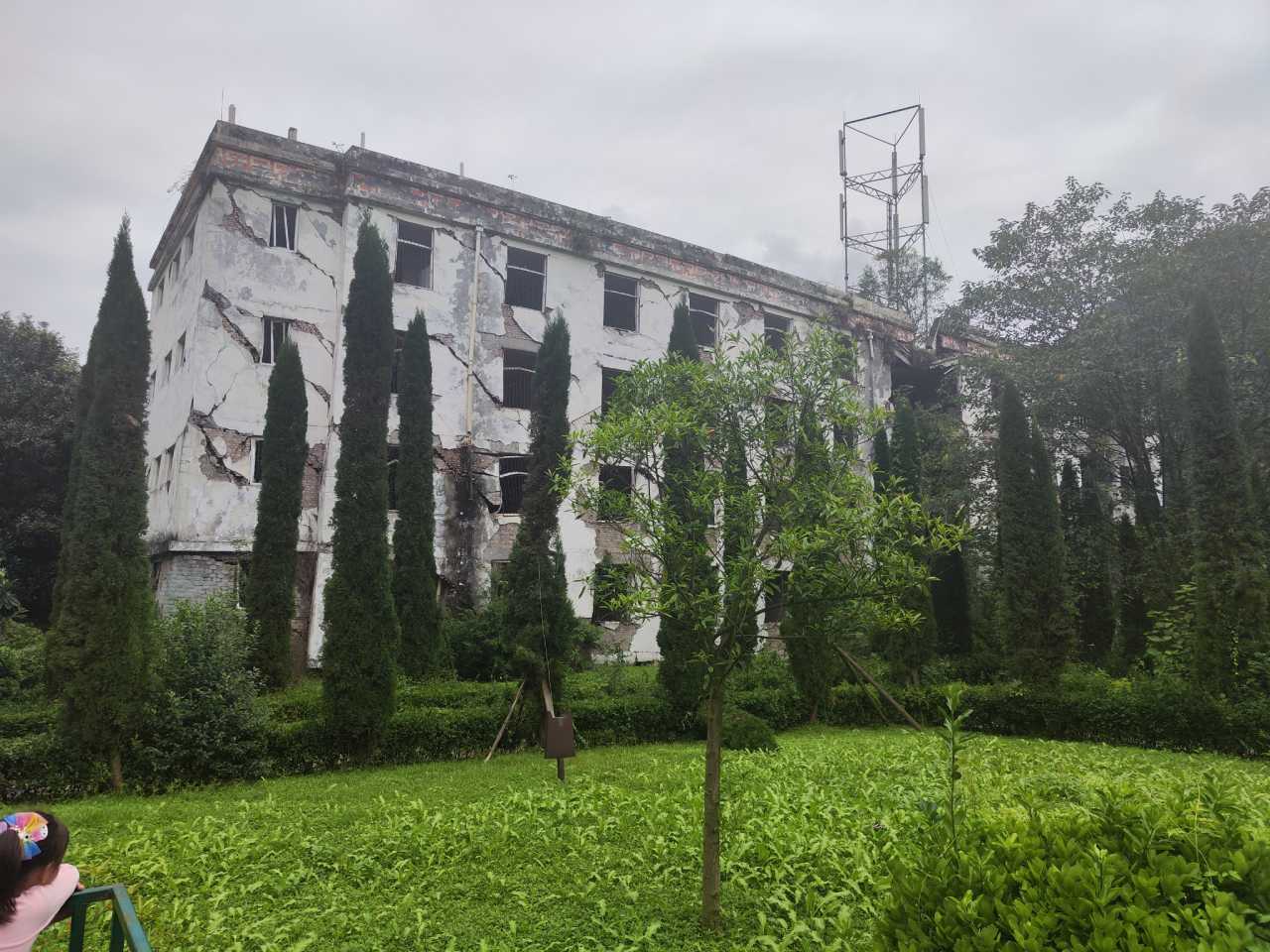
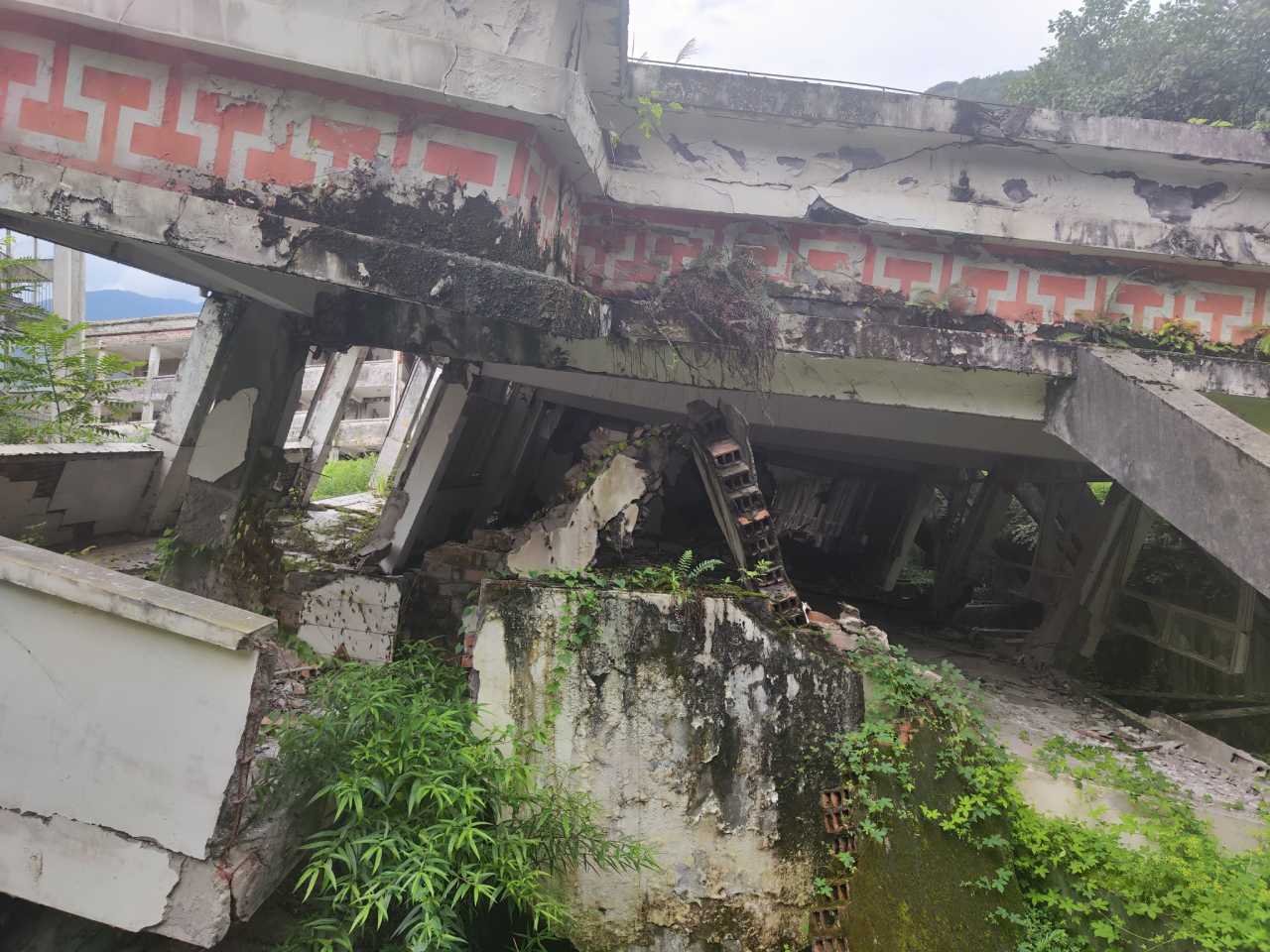
During the Wenchuan earthquake, Yingxiu Town, as the epicenter and hardest-hit area, suffered devastating destruction. Most buildings collapsed, landslides were frequent, and water, power, and communications were cut off. The memorial site includes the Wenchuan Earthquake Epicenter Memorial Hall and the Beichuan Middle School ruins, which have been preserved in their original state, with only structural reinforcements added.
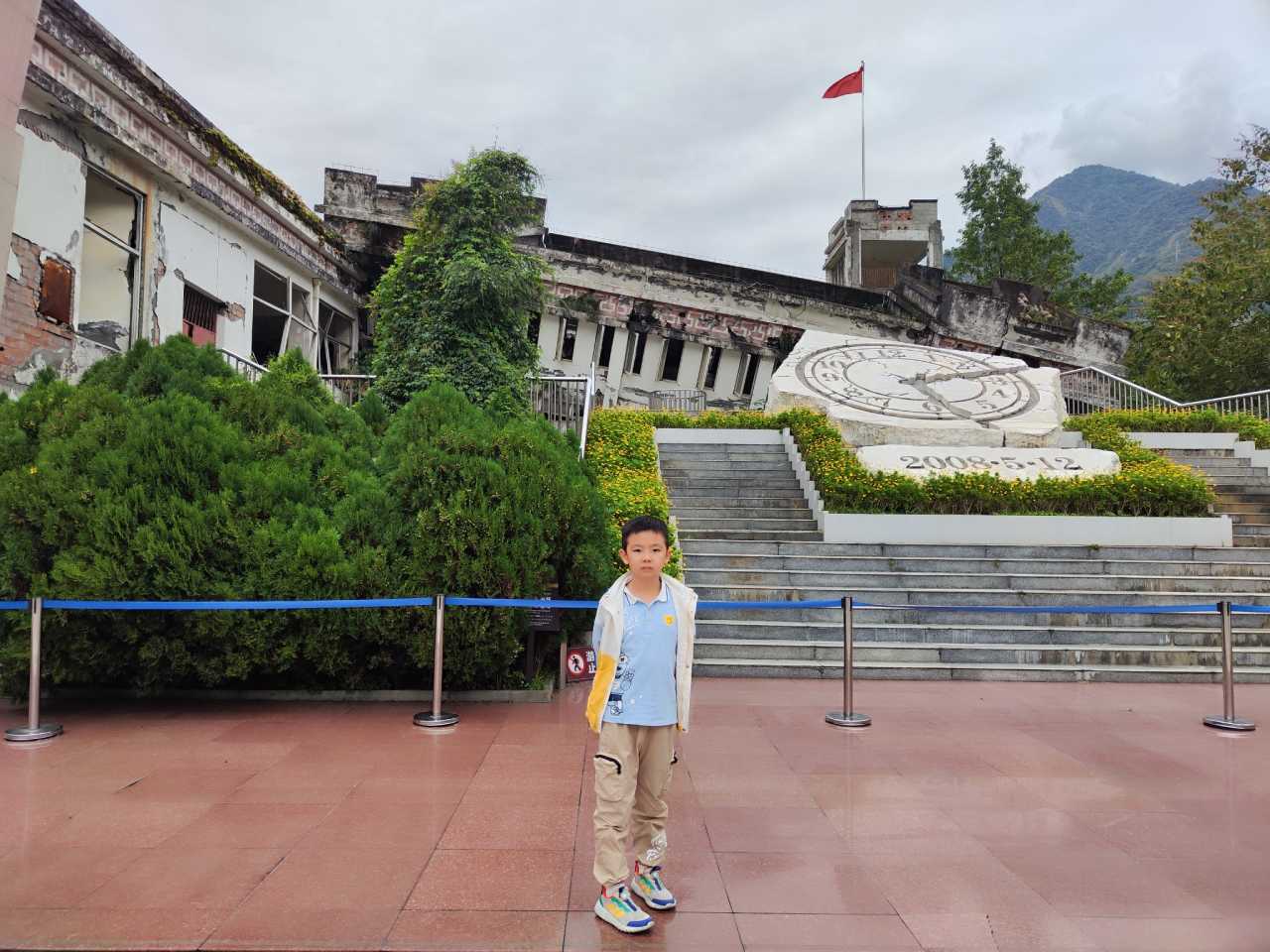
At the entrance to Yingxiu, a large stone inscribed with "5.12 Epicenter Yingxiu" stands as a landmark—it tumbled down from the mountains during the quake. Amid the broken walls of the school ruins, the gloomy weather seemed to echo the tragedy. The kids bought flowers and gently placed them before the memorial wall, honoring the lives lost. This land bore witness to nature's immense power and human fragility, but also to rebirth and hope.
From the school ruins, a 15-minute walk brought us to the Wenchuan Earthquake Epicenter Memorial Hall, which holds more details about the disaster. After returning home, our child even wrote a school essay about this special trip.
[Link: Chengdu family-friendly attractions]
Day Two: Laid-Back Chengdu – The Hustle and Bustle of Slow Living
After a heavy day, the lights and flavors of Chengdu beckoned us. Like little bees chasing sweetness, we arrived at this food capital just before nightfall.
An Ordinary Dinner with Extraordinary Flavor
For dinner, we took a culinary gamble and picked a random Sichuan restaurant downstairs. It looked unremarkable, but the flavors inside were a pleasant surprise. Though we just stumbled in, the food was genuinely good—good enough to make you want another bowl of rice. That meal not only filled our stomachs but also warmed our hearts. In the Chengdu night, we found comfort and a little travel treasure.
Taikoo Li and Chunxi Road: Fashion Landmarks in a Sea of People
After dinner, we strolled through Chengdu's streets like a bunch of leisurely pandas, recharged by the food. As the saying goes, "A hundred steps after a meal, you'll live to ninety-nine." We decided to burn off that fullness by hitting the trendy spots—Taikoo Li and Chunxi Road. During National Day, they were absolutely packed. We held hands tightly, afraid of being swept apart by the crowd.
Taikoo Li, a shopping paradise blending tradition and modernity, was dazzling under the night lights, flowing with people. We weaved through the throngs, feeling like we were at a giant masquerade. Chunxi Road was even livelier—neon lights, tempting aromas from food stalls, making you want to try everything.
Late-Night Cravings: Beef Noodles and Rabbit Heads
Under the night sky, curiosity led us back to the hotel. Despite a full dinner, the craving drove us out again in search of more treats. We found a small, well-known noodle shop and ordered a fragrant bowl of beef noodles, plus some local rabbit heads. Our kid tried a rabbit head for the first time—not scared at all, but eating it with gusto. We sat together, enjoying this simple joy, making the Chengdu night even more unforgettable.
Wenshu Monastery and Sichuan Opera: Leisure and Culture
The next day, we slept in, waking to the morning sun. With fresh spirits, we stepped into the dew and headed to Wenshu Monastery. In this serene temple, we wandered leisurely, feeling the ancient hall's solemnity and peace. Then, we caught a brilliant Sichuan opera performance—the face-changing art (变脸) was a real eye-opener. In just one morning, we experienced Chengdu's leisure and culture, as if traveling through time, sensing the "play is life, life is a play" charm.
[Link: Sichuan opera shows in Chengdu]
An Afternoon at Qingyang Palace: Poetry in a Cup of Tea
In the afternoon, we visited Qingyang Palace, exploring the depths of Taoist culture. The palace's upturned eaves looked especially tranquil under the afternoon sun. We slowed down, immersed in its solemn harmony. After touring, we found a cozy tea spot and tried the local "坝坝茶" (courtyard tea) . Sitting in bamboo chairs, brewing a pot of fragrant tea, chatting with family—it was pure peace. The tea's aroma, the laughter—this afternoon was truly "stealing a half-day of leisure from a busy life."
Under the shade of Qingyang Palace, we found a poetic dwelling, giving our souls a complete rest. As the ancients said, "Tea can intoxicate without wine; books can perfume without flowers." Amid tea and books, we spent a charming afternoon.
Kuanzhai Alley: An "Okay" Adventure
We strolled from Qingyang Palace to Kuanzhai Alley, ready to leave our mark on this internet-famous spot. But wow—the crowd was shoulder-to-shoulder. In the narrow lanes, we were practically pushed along, like being at a rock concert without music. The alley was lively, but honestly, it wasn't as amazing as the hype. Its charm, for us, was like unsweetened coffee—a bit bitter, a bit bland. We lost any interest in eating there, like ignoring a fitness coach's menu.
But isn't that the fun of travel—unexpected adventures? We weaved through the crowd, still enjoying ourselves. After all, sometimes "okay" is its own kind of experience. We exchanged smiles and decided to add this "okay" memory to our travel story collection.
Memories at Southwest Jiaotong University
In the evening, we wandered through the campus of Southwest Jiaotong University, soaking in the academic atmosphere. The tree-lined paths and historic buildings offered a peaceful contrast to the bustling streets. It was a reminder that Chengdu isn't just about food and fun—it's also a city of learning and innovation.
[Link: Chongqing family travel guide]
Day Three: Chongqing – Mountain City Magic and Fiery Hotpot
Crossing into Chongqing: A City of Layers
The next morning, we took the high-speed train from Chengdu to Chongqing, a journey of just over an hour. As the train glided through the lush Sichuan countryside, we could feel the terrain shifting. Chongqing is famously called the "Mountain City" —and for good reason. The moment we stepped out of the station, we were greeted by a skyline that seemed to defy gravity: buildings stacked on hills, bridges spanning rivers, and roads that twisted like ribbons.
Hongya Cave: A Fairytale in the City
Our first stop was Hongya Cave, a stunning complex of stilted buildings that looks like something out of a Studio Ghibli film. By day, it's a maze of shops and restaurants. By night, it transforms into a golden wonderland, with lanterns reflecting off the Jialing River. We wandered through the narrow alleys, sampling local snacks and watching the river boats drift by. The kids were mesmerized by the sheer verticality of the place—elevators that took you up 10 floors only to emerge on a "ground-level" street.
The Ultimate Chongqing Hotpot Experience
No trip to Chongqing is complete without hotpot. We found a local favorite—a hole-in-the-wall joint with red lanterns and steam rising from dozens of bubbling pots. The broth was a deep, fiery red, studded with Sichuan peppercorns and dried chilies. We ordered tripe, beef, lotus root, and the local specialty: duck intestines. The heat hit us like a wave, but the flavor was addictive. We laughed, sweated, and ate until we couldn't move. This was the soul of Bashu—bold, unapologetic, and unforgettable.
Yangtze River Cable Car and Night Views
After lunch, we took the Yangtze River Cable Car, a classic Chongqing experience. Suspended high above the river, we watched the city unfold beneath us—skyscrapers clinging to cliffs, ships gliding through the mist, and bridges connecting the chaos. As night fell, we made our way to Nanshan for a panoramic view of the city lights. The skyline glittered like a jewel box, and for a moment, we felt like we were floating above the world.
[Link: Chongqing hotpot restaurants recommended]
Day Four: Farewell to Bashu – A Journey of the Heart
Morning Markets and Last-Minute Souvenirs
On our final morning, we visited a local morning market in Chongqing's old town. The air was thick with the smell of fried dough, pickled vegetables, and fresh herbs. We bought Chongqing spicy chicken to take home, along with bags of Sichuan peppercorns and dried chilies. The kids picked out cute panda keychains and embroidered pouches. It was a simple, unglamorous morning—but it felt like the perfect ending.
Reflections on the Road Home
As we boarded the train back to Xi'an, we looked back at the mountains receding in the distance. Four days in Bashu had felt like a lifetime. We had walked through tragedy and triumph, tasted fire and sweetness, and shared moments that would stay with us forever. The kids fell asleep against our shoulders, their faces smudged with chili oil and smiles.
Travel, we realized, isn't about ticking off landmarks. It's about the stories you create together. And in Bashu, we found a story worth telling.
FAQ: Planning Your Family Trip to Bashu
1. Is a 4-day Bashu itinerary enough for first-time visitors?
Yes, 4 days in Chengdu and Chongqing is enough to experience the highlights. Focus on 2 days in Chengdu (Wenshu Monastery, Qingyang Palace, Sichuan opera) and 2 days in Chongqing (Hongya Cave, hotpot, Yangtze River views). For deeper exploration, consider adding 1-2 days.
2. What is the best time to visit Bashu with family?
Spring (March-May) and autumn (September-November) offer mild weather and fewer crowds. Avoid National Day (October 1-7) if possible—it's extremely crowded, as we experienced.
3. Is Chongqing hotpot too spicy for kids?
Not necessarily. Many hotpot restaurants offer mild broths (e.g., tomato or mushroom) alongside the spicy one. You can also request "less spicy" (微辣). Our kids enjoyed dipping vegetables in the mild broth while we indulged in the fiery version.
4. How do you get from Chengdu to Chongqing?
The high-speed train is the best option—it takes about 1.5 hours and costs around 150-200 RMB ($20-28). Buses and flights are also available, but the train is most convenient for families.
5. What should I pack for a Bashu trip?
Pack comfortable walking shoes (you'll climb stairs in Chongqing), a light jacket (evenings can be cool), and stomach-soothing medicine (the spice can be intense). Don't forget a camera for the stunning night views.
Final Thoughts: Why Bashu Deserves a Spot on Your Family Travel List
Our four days in Bashu were more than a vacation—they were a soul-cleansing journey. From the solemn ruins of Wenchuan to the vibrant streets of Chengdu, from the fiery hotpot of Chongqing to the quiet tea sessions at Qingyang Palace, every moment reminded us that family travel is about connection, discovery, and growth.
If you're looking for a destination that offers history, culture, food, and heart, look no further than the Bashu region. It's a place where the past and present collide, where every meal is an adventure, and where every street corner holds a story.
Ready to plan your own Bashu family adventure? Start by booking your high-speed train tickets, researching local hotpot spots, and packing your sense of wonder. The road to Shu may be harder than the road to heaven—but trust us, it's worth every step.
[Link: Sichuan travel tips for families] [Link: Chongqing itinerary 4 days]
Have you traveled to Bashu with your family? Share your favorite memories in the comments below! And don't forget to subscribe for more family travel guides and tips.
You may also like


