Duo² | Sêrtar | Rebirth in a Fit of Madness: A Journey to the World’s Largest Buddhist Academy
Meta Description: Discover the raw, transformative power of Sêrtar’s Larung Gar Buddhist Academy. A firsthand account of faith, danger, and unexpected rebirth on the Tibetan Plateau. Plan your spiritual journey today.
Introduction: When Faith Collides with the Soul
Some places you visit, and you instantly know that all words are futile. Sêrtar is one such place. Nestled deep in the Garzê Tibetan Autonomous Prefecture of Sichuan, this remote county is home to the Larung Gar Five Sciences Buddhist Academy—the largest Buddhist institute in the world. With over 40,000 monks and nuns living in a sea of red wooden houses clinging to the mountainsides, Sêrtar is a place where faith becomes tangible, where the boundary between life and death blurs, and where a “fit of madness” can lead to an unexpected rebirth.
This is not a typical travel guide. It’s a story of impulsive decisions, harrowing roads, and a profound encounter with Tibetan Buddhist culture that will change how you see the world—and yourself.
Why Sêrtar? The Allure of the “Red Buddha City”
A Landscape of Devotion
Three years ago, I stood in the valley of Larung Gar, utterly speechless. The sight of thousands of crimson monastic dwellings sprawling across the mountainsides was overwhelming. These tiny, identical huts—no running water, no electricity—sprouted like red mushrooms from the earth, housing tens of thousands of practitioners who had left everything behind for a life of study and meditation.
In the distance, vultures circled above the charnel ground, waiting for another sky burial ceremony. Shock, confusion, fear, transcendence—none of these words capture the experience. Only by hearing the chanting of sutras echo through the valley, or witnessing a sky burial with your own eyes, can you begin to understand how far faith can take a person.
The Madness That Started It All
In 2010, on the eve of the Dragon Boat Festival, work was suffocating me. In a fit of frustration, I asked for five days off, determined to “disappear” during the crowded holiday. A friend casually mentioned Sêrtar. I didn’t even know which province it was in. After ten minutes on Baidu Baike, I made my decision: this was it.
I posted online looking for a travel companion. A guy from Tianjin responded—an experienced photographer who promised to “take care of everything.” I called him “Sir.” Then a colleague (now my boyfriend, then “Uncle”) insisted on joining, offering to swap his sedan for an SUV. I refused. I trusted the bus more.
The bus was scheduled to depart at 5:00 AM. Sir’s flight was canceled due to a thunderstorm. So this “mad” trip turned into: Uncle and I went to Sêrtar, while Sir went to Mount Siguniang alone.
The Road to Sêrtar: A Brush with Death
The Perils of Plateau Travel
To be honest, I was devastated. The person who said he’d take me there couldn’t come. There was only one direct bus from Chengdu to Sêrtar per day, and it was sold out. We chose to transfer through Barkam (Ma’erkang)—closer to Sêrtar.

At 6:25 AM, the bus departed from Chengdu. Ticket price: 165 RMB. Landslides forced a detour over Mount Jiajin. Forests, alpine meadows, floodplains, Tibetan tribal villages—so beautiful it made you forget the exhaustion.
The next day, we learned that a section of the Kangding road had collapsed. A bus had plunged off a cliff. A car had been crushed by falling rocks. Twenty-three people dead, seven injured. That night, Sichuan news was flooded with coverage. I received countless concerned messages.
Sir and I texted until the early hours. Then I got up early to catch the bus. At the highest point of Mount Jiajin, I had zero altitude sickness. But after descending, my ears were ringing and I couldn’t hear clearly—was I some kind of freak?
Traffic jams plus landslides meant we didn’t arrive in Barkam until 8:30 PM—fourteen hours on the road. The first thing I did after finding accommodation was hunt for food.
A Day of Twists and Turns
The next morning, I crawled out of bed to queue for tickets. The crowd was massive. People kept pushing and shoving. A young monk kept telling everyone, “Don’t push, don’t push.” Then tickets went on sale—and that same monk cut right in front of me and bought the last two tickets. He turned around and gave me a sinister smile.
Just as I was about to lose it, a “police uncle” gathered me, Uncle, and five other people into an unlicensed van. Total fare: 600 RMB, split among us. Along the way, we picked up a girl about my age. There was no room—they made her sit between the driver and the front passenger, right over the gear shift.
On roads like these, these drivers were absolute legends. Passengers had no right to protest. I spent the entire ride on edge.
There were three middle-aged men from Henan in the van. The oldest among them had dreamed about the Buddha, so he felt compelled to come to Sêrtar to fulfill that dream. Later, they couldn’t handle the Tibetan food, suffered from altitude sickness, made a donation at the Larung Gar Academy, and rushed back to Barkam.
The girl who got on later was surnamed Wang. She was Han Chinese and worked here as a doctor. We hit it off immediately. Seven hours later, we arrived in Sêrtar.
Exploring Sêrtar: Faith, Food, and Freedom
The Best Yogurt in Tibet
Wang said the town was very small—if you weren’t staying a few days, you’d see everything quickly. We went straight to the station and bought return tickets to Chengdu for the day after tomorrow.
It was still early, so Wang took us to eat at a Tibetan home. The yogurt in Sêrtar was the best I’ve ever had—even better than in Lhasa or Yading. Tangy, creamy, and alive with the flavor of high-altitude pastures.
A Temple of Silence
After the meal, Wang led us to a temple that had once been very popular but now only had elderly people coming to turn prayer wheels. Stepping inside, I felt a strange sense of “I’m still here, but where are you?” The overcast sky finally cleared.
Tibetan mastiffs looked fierce. Don’t go out after dusk. Locals don’t beat the dogs, so the streets are full of strays. They’re prone to attacking at night.
I wanted to send postcards for Dragon Boat Festival, but the post office was closed. I left my address with Wang and asked her to mail them for me. I’ve never received them. If any of you go to Sêrtar, please send me a postcard!
A Tent Under the Stars
From the temple, we could see tents on the outskirts. People said they were eating places. We ordered beef, yogurt, and a pot of butter tea. Hoping to watch the stars at night, I charmed the landlady into letting us stay in one of the tents. She kindly agreed with a smile.
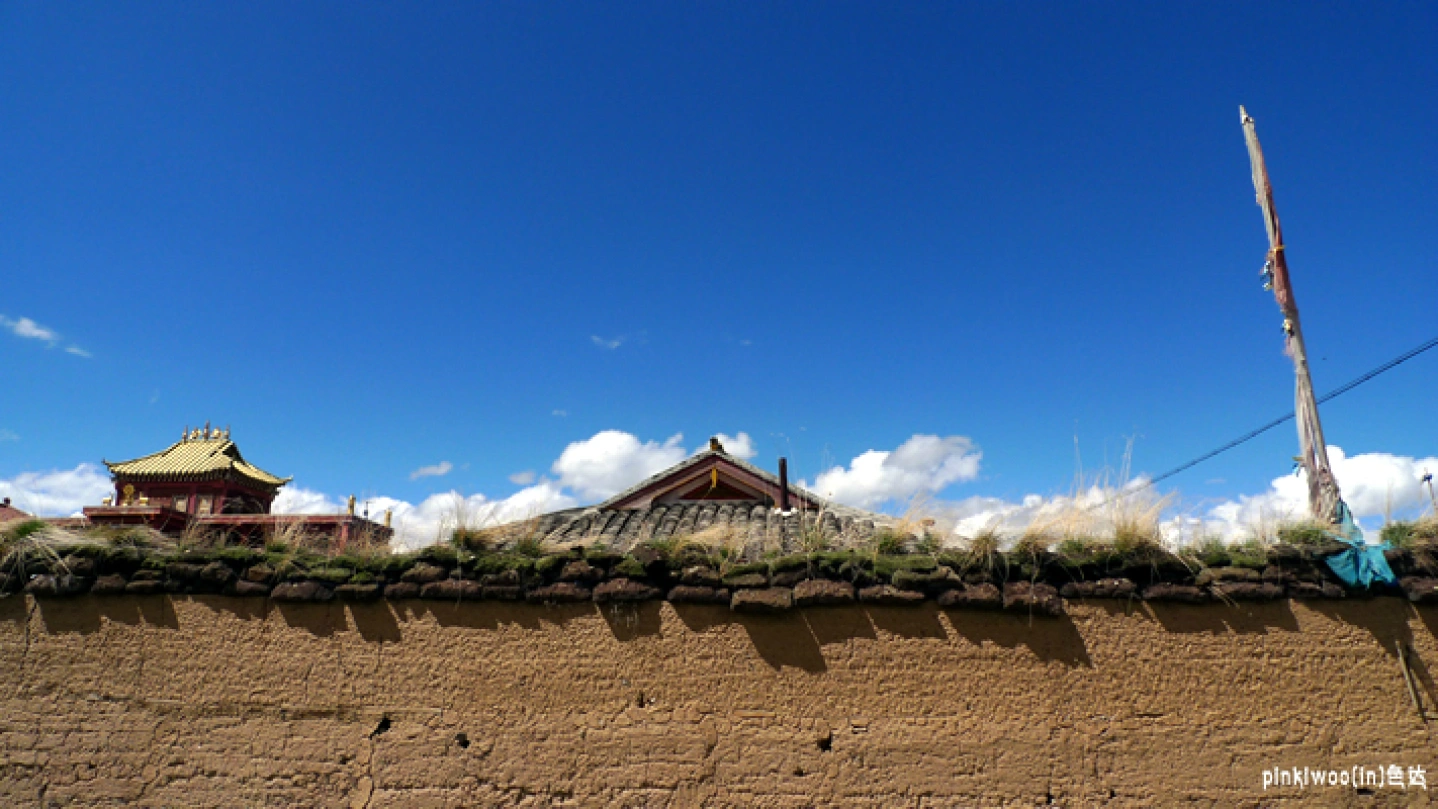
The afternoon sun came out—classic plateau weather. The sun set in the west, while rain fell in the east, and an eastern sunset appeared at the same time. It was stunning. A rainbow appeared—two of them!
Where else but on the plateau could you see scenery that looks so fake, like a movie set? I was both ecstatic and a mess, completely losing my composure.
We couldn’t finish the beef. Uncle said it was too wasteful, so he cut it into small pieces and dried them for the road.
The Larung Gar Academy: A City of Crimson Faith
What to Expect at Larung Gar
The Larung Gar Five Sciences Buddhist Academy is not a tourist attraction—it’s a functioning religious institution. Visitors are expected to respect the rules:
- Dress modestly (no shorts, no sleeveless tops)
- No photography inside temples or of monks without permission
- Stay quiet during chanting sessions
- Altitude awareness: At 4,000 meters (13,000 feet), altitude sickness is real. Acclimatize in Barkam or Kangding first.
The academy’s most iconic feature is the sea of red houses—tiny wooden cabins where monks and nuns live in extreme simplicity. No electricity, no running water, no modern comforts. Yet the atmosphere is one of profound peace and purpose.
Sky Burial: The Ultimate Act of Generosity
If you visit Sêrtar, you may witness a sky burial—a Tibetan Buddhist practice where the deceased’s body is offered to vultures. It is not a spectacle; it is a sacred ritual symbolizing the impermanence of life and the virtue of generosity.
Important: Do not photograph sky burials. Do not disturb the ceremony. Observe from a respectful distance if you are permitted to be present.
[Link: Understanding Tibetan Sky Burials]
Practical Travel Guide to Sêrtar
How to Get to Sêrtar
| Route | Duration | Notes |
|---|---|---|
| Chengdu → Barkam (bus) | 14 hours | 165 RMB; frequent landslides |
| Barkam → Sêrtar (van) | 7 hours | 600 RMB total (shared) |
| Direct bus Chengdu → Sêrtar | 2 days | Very limited; book early |
Best time to visit: May to October. Winter can be brutally cold, with roads closed due to snow.
Altitude: Sêrtar town is at 3,890 meters; Larung Gar is at 4,000+ meters. Prepare for altitude sickness.
Where to Stay
- Sêrtar town: Basic guesthouses with shared bathrooms
- Larung Gar Academy: Limited accommodation for visitors; book through a tour operator or stay in town
- Tent camping: Possible with permission (as I did), but be prepared for cold nights
What to Eat
- Yogurt: The best in Tibet
- Butter tea: A must-try for energy and warmth
- Tsampa: Roasted barley flour, a Tibetan staple
- Dried yak meat: Good for the road
Safety Tips
- Altitude sickness: Symptoms include headache, nausea, dizziness. Descend immediately if severe.
- Dogs: Tibetan mastiffs and strays are aggressive at night. Carry a flashlight and stick.
- Road conditions: Landslides and rockfalls are common. Travel with a reliable driver.
- Respect local customs: Do not touch monks, enter restricted areas, or photograph without permission.
[Link: Altitude Sickness Prevention Tips] [Link: Tibetan Buddhist Etiquette Guide]
FAQ: Everything You Need to Know About Sêrtar
1. Is Sêrtar safe for solo travelers?
Sêrtar is generally safe, but solo travel requires caution. Altitude sickness is the biggest risk. Pair up with a travel companion or join a guided tour. Avoid walking alone at night due to stray dogs.
2. Can foreigners visit Larung Gar Academy?
Foreigners are officially allowed, but access has been restricted in recent years. Check with the Sichuan Provincial Tourism Bureau or a licensed tour operator for the latest regulations. Some travelers have been denied entry without prior arrangement.
3. What is the best time of year to visit Sêrtar?
May to October offers the best weather. July and August are peak season, with mild temperatures and clear skies. Winter (November to March) is extremely cold, with heavy snow and road closures.
4. How do I prepare for the altitude?
- Spend 1–2 days acclimatizing in Kangding (2,800m) or Barkam (2,600m)
- Stay hydrated; avoid alcohol
- Carry Diamox (acetazolamide) for altitude sickness prevention
- If symptoms worsen, descend immediately
5. What should I pack for Sêrtar?
- Warm layers (temperatures drop below freezing at night even in summer)
- Sunscreen and sunglasses (UV is intense at high altitude)
- Comfortable walking shoes
- A flashlight (for navigating dark streets and avoiding dogs)
- Snacks (food options are limited)
- A respectful attitude
Conclusion: Your Rebirth Awaits
Sêrtar is not a vacation. It is a pilgrimage—a journey that will strip away your comforts, challenge your assumptions, and possibly change your life. Whether you come for the photography, the faith, or the madness of an impulsive decision, you will leave with something you didn’t expect.
I went to Sêrtar in a fit of frustration. I came back reborn—not because I found enlightenment, but because I found perspective. The red houses, the chanting monks, the vultures circling overhead—they reminded me that life is fragile, short, and precious. And sometimes, the best thing you can do is say “yes” to the madness.
Are you ready for your own rebirth? Plan your trip to Sêrtar today. Book your bus tickets, pack your bags, and leave your expectations behind. The plateau is waiting.
[Link: How to Plan a Tibetan Plateau Itinerary] [Link: Best Photography Spots in Sêrtar]
Have you been to Sêrtar or Larung Gar? Share your story in the comments below. And if you found this guide helpful, share it with someone who needs a little madness in their life.
You may also like


