Conquering the Long-Bi Traverse of Siguniang Mountain: A Journey Through Youth and Wilderness
Meta Description: Experience the epic Long-Bi traverse of Siguniang Mountain through one traveler's journey. Discover trekking tips, gear essentials, and why this Sichuan adventure is a rite of passage for outdoor enthusiasts. [150 chars]
It's good to be alive.
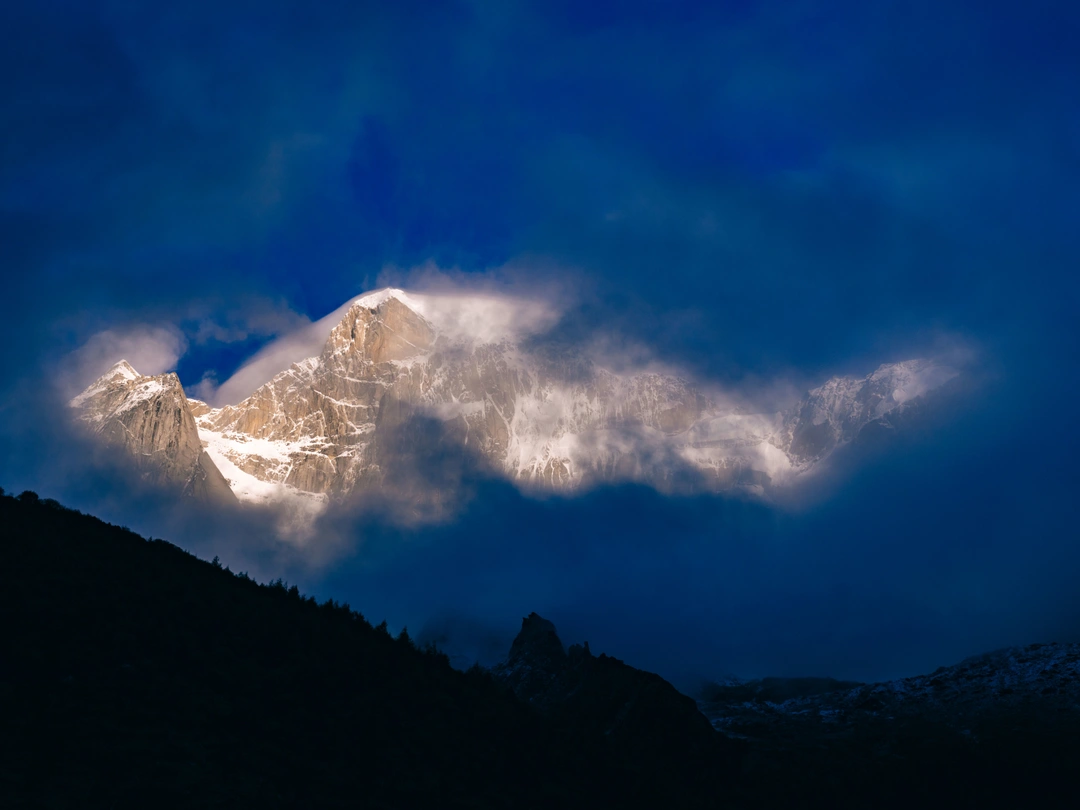
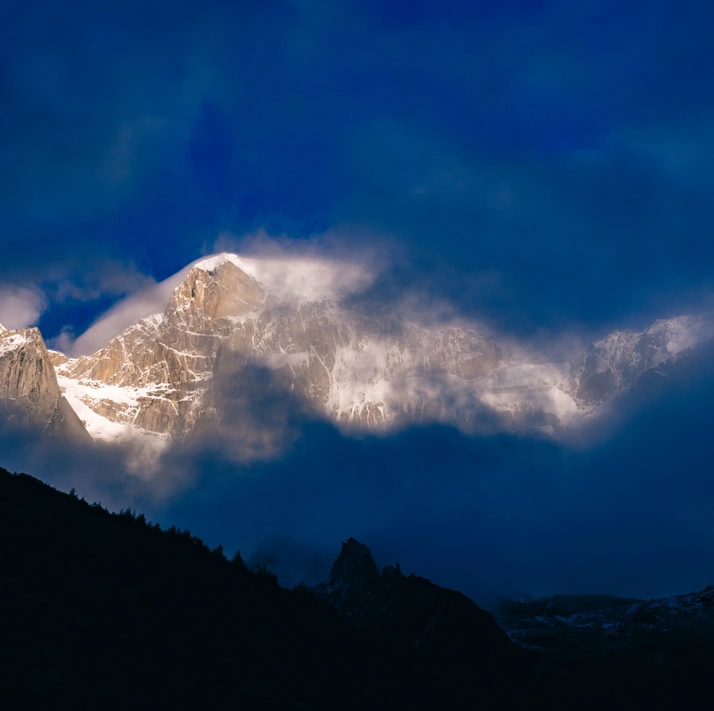
As I scroll through the photos on my phone—those images blurred by snow and wind—memories flash before my eyes like frames of a film. My icy fingertips glide across the screen, and the "ice cream" snowcap on Yaomei Peak (the highest peak of Siguniang Mountain) seems to still carry the scent of high-altitude sunlight. This journey wasn't just about crossing a mountain; it felt like crossing the last hurdle of my youth.
If you've ever dreamed of tackling one of China's top ten classic traverses, this story will inspire you, prepare you, and remind you why the wild calls to us all.
Why the Long-Bi Traverse of Siguniang Mountain Should Be on Your Bucket List
The Long-Bi traverse (长毕穿越) connects Changping Valley (长坪沟) in Siguniang Mountain National Park with Bipeng Valley (毕棚沟) in Li County, Sichuan. It's a 3-4 day high-altitude trek that tests your endurance, rewards you with jaw-dropping scenery, and leaves you forever changed.

But for me, this trek was more than a physical challenge. It was the culmination of a dream put on hold—a reckoning with time, friendship, and the fading edges of youth.
A Dream Put on Hold: From Beijing Drifter to Mountain Seeker
A year ago, after ending my life as a Beijing drifter, I returned to my hometown. In my rented apartment, I set myself a goal for 2018: I had to go to Nepal. To feel the radiance of the gods, to trek through the snow-capped mountains, to wash the dust from my soul.
Back then, I was buzzing with excitement, like I'd been injected with adrenaline. The moment I posted about it on social media, the response was overwhelming. Friends eagerly signed up. I stayed up late crafting itineraries, locking in plans, choosing routes—everything was moving smoothly. But by September, one cold splash of reality after another hit me: "Sorry, something came up." Some got work transfers, others had family issues, and a few simply vanished. In the end, the Nepal trip was shelved.
My heart felt frozen solid.
If you've ever had a travel dream fall apart, you know that hollow feeling. But the mountains have a way of finding you when you least expect it.
A Spontaneous New Goal: How the Siguniang Mountain Trek Came Together
In September 2018, an old friend from the outdoor community posted in our group chat: "Anyone up for Siguniang Mountain?" I replied almost instantly: "I'm in!"
Just like that, a new group was formed. One member had attempted it before but had to turn back due to altitude sickness, and he was determined to make up for it this time. We all chimed in, debating the itinerary, and settled on departing by train from Changsha on September 29th, gathering in Chengdu on the 30th.
Then I glanced at the calendar—it was already September 8th. That meant we had just 20 days until departure!
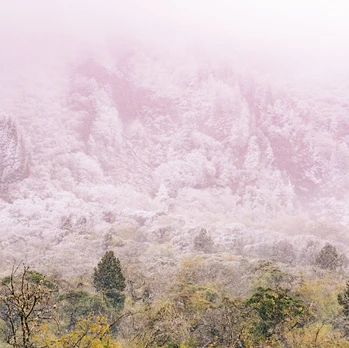
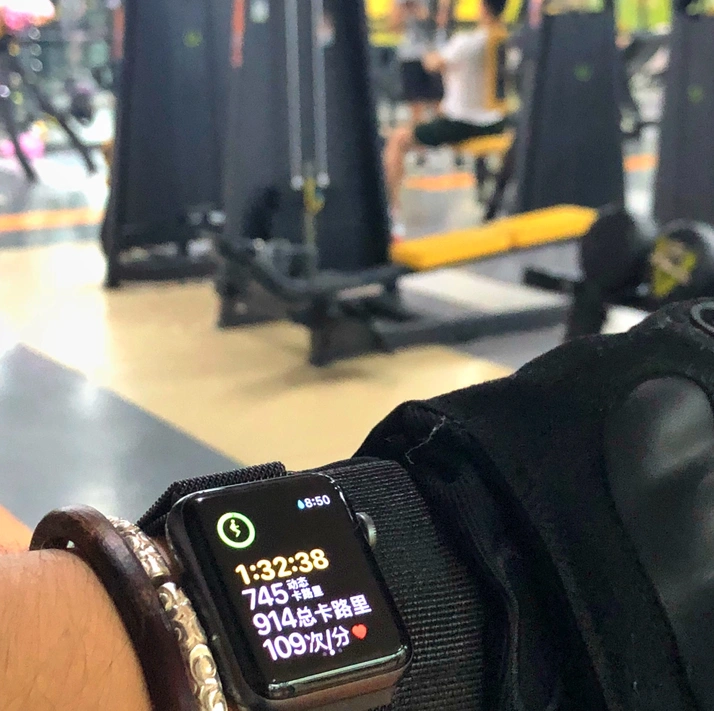
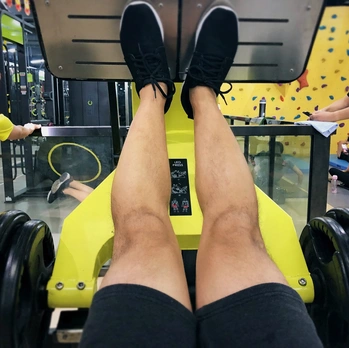
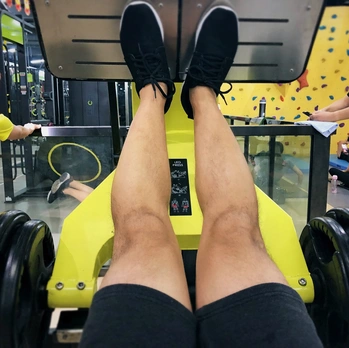
I dropped everything and began a rigorous "boot camp" for myself. That gym membership I'd bought nearly a year ago, with the card about to expire, finally came in handy. I clocked in two weeks straight, training until every muscle ached. Miraculously, I lost a few pounds—something I hadn't managed in half a year of dieting. An unexpected bonus, and it felt like a good omen.
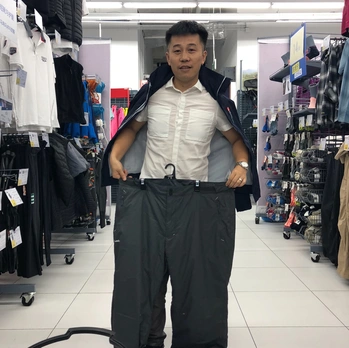
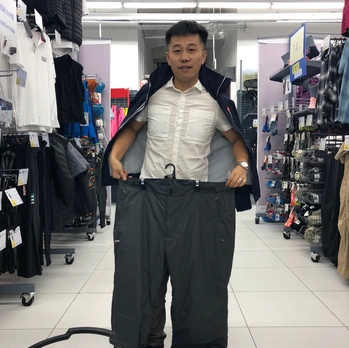
The group chat was buzzing daily—discussing Siguniang Mountain trekking gear, studying routes, sharing tips. I went on a shopping spree: waterproof jackets, trekking poles, gaiters, headlamps… I even dragged a friend to Decathlon for a haul. Packing my gear, I was as excited as a kid on the eve of a school trip.
20 Hours on the Train: The Journey That Forged Our Bond
A few days before departure, I got a last-minute job—shooting a short film in Hangzhou. The timing was awful, but I squeezed my schedule to finish by the 28th. I'd originally planned to fly directly from Hangzhou to Chengdu, but I'd promised to take the train with the group. As a Virgo who takes commitments seriously, that was non-negotiable. So on the evening of the 28th, I bought a ticket from Hangzhou back to Changsha, taking a massive detour just to ride that 20-hour train with everyone.
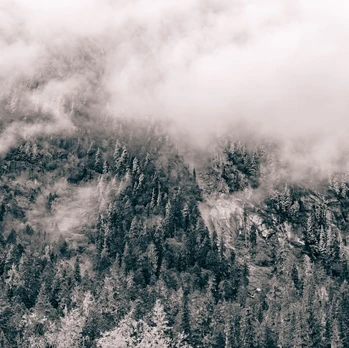
Honestly, I must have been crazy. A two-hour flight could have done the job, but I chose 20 hours on a train instead. But this wasn't the first time—this group had trekked through the Zhongkong Canyon in Yingde together, cycled around Qinghai Lake, and explored countless other places. Time on the train was never boring.
Everyone brought homemade food. I made a huge batch of spicy beef jerky (麻辣牛肉, málà niúròu), vacuum-sealed it, and even braised chicken feet and potatoes (卤鸡爪和土豆, lǔ jīzhuǎ hé tǔdòu). Without saying a word, everyone brought their own drinks—beer, baijiu (Chinese liquor), and even a bottle of homemade plum wine (梅子酒, méizǐ jiǔ). Twenty hours flew by with eating, drinking, chatting, and playing cards.
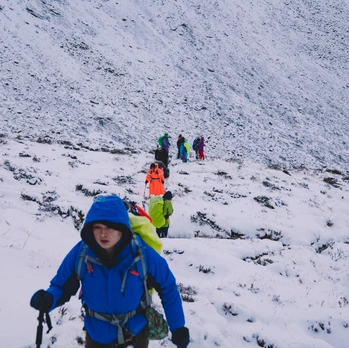
The craziest part? Our group of over a dozen people couldn't get tickets for the same train due to the National Day holiday, so we split into two groups. At one station along the way, our two trains—departing at different times and stopping at different stations—miraculously met! Through the windows, we waved and screamed at each other, laughing like fools.
[Link: How to plan a group trek during Chinese National Day holiday]
Gathering in Chengdu, Heading to Xiaojin: The Gateway to Siguniang
After 20 hours of rocking, we reunited at Chengdu Station. Looking at everyone's bulging backpacks, I suddenly felt this trip was going to be no walk in the park.
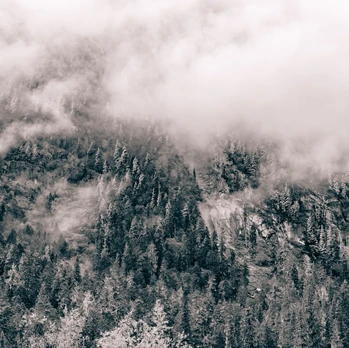
On the way to Xiaojin County (where Siguniang Town is located), we chatted endlessly—sharing funny stories from the train, catching up on the past year's changes: who had a baby, who was single again. This group of outdoor enthusiasts is unique. We met in different mountains, and we can go months without seeing each other or even sending a message. But when we reunite, the conversation never stops, as if no time has passed at all.
The car wound through tunnel after tunnel, circling mountain roads. The altitude climbed, visibility dropped, and soon we could only see about ten meters ahead. We passed many cyclists on the road, and I admired their perseverance—once upon a time, I'd dreamed of cycling the 318 National Highway, but as my weight crept up, that dream faded.
After passing through an especially long tunnel, the view suddenly opened up. The air turned cool—from 32°C (90°F) muggy Chengdu to 10°C (50°F) crisp western Sichuan. We all quickly pulled out our waterproof jackets. At high altitudes, catching a cold is no joke.
[Link: Essential high-altitude trekking tips for beginners]
Final Preparations Before Entering the Mountains: Gear, Food, and a Secret Weapon
Following the advice of experienced members, we knew there would be no drinking water in the mountains. So everyone carried three bottles of water—though later, we ended up eating snow.
I also made my first-ever purchase of sanitary pads, feeling embarrassed as hell. It's a trick seasoned outdoor veterans swear by: put them under your insoles to keep your feet dry and warm. Later, this "foot pad" I bought with a red face saved a lot of people's feet in our group.
Rilong Town in Xiaojin County has been renamed Siguniang Town. The streets are lined with shops catering to tourists and climbers. As I strolled around, I saw the sky split in two—one side glowing with sunset, the other dusted with snow on pine-covered rocks. I decisively ditched my thin gloves for a pair of thick ones, bought a new heavy-duty rain poncho, a headlamp, and a roll of black electrical tape. These decisions turned out to be incredibly wise.
Entering the Mountains: Changping Valley and the Long-Bi Traverse Begins
On the 30th, we officially entered Changping Valley (长坪沟, Chángpíng Gōu). To conserve energy, we rented six horses and hired two porters. All the heavy bags went on the horses, and we hiked light—calling it "for a better experience," but really, we were just being lazy.
Our group of 16 signed a "life-and-death waiver" at the management office. After all, we were attempting a traverse route—one of China's top ten classic traverses. We all knew the saying: "Your body is in hell, but your eyes are in heaven." But we had no idea how tough it would actually be.
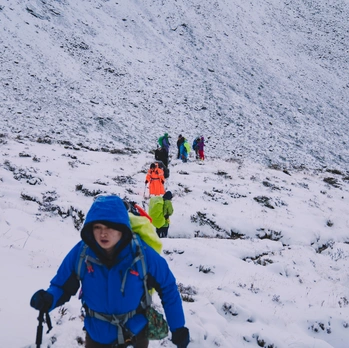
Our guide was a guy in his 30s, not much older than us, but his face was already etched with the harshness of the highlands. He had a great temper and stayed with us the whole way. The only time he got angry was on the last day, when another group tried to cut in line and scramble up the pass—it was dangerous. One person's recklessness could endanger an entire team.
The Long-Bi traverse route goes from Changping Valley over the pass (垭口, yākǒu) into Bipeng Valley (毕棚沟, Bìpéng Gōu), so we had to buy tickets for both scenic areas. Some friends suggested sneaking in, but we figured outdoor adventures are about having fun, and paying for tickets is the right thing to do. No need to ruin the mood over something so trivial.
Just as we were about to enter the mountains, it started to snow. That snow would later become something we both loved and hated.
[Link: Complete guide to the Long-Bi traverse route and permits]
Frequently Asked Questions About the Long-Bi Traverse of Siguniang Mountain
1. How difficult is the Long-Bi traverse?
 The Long-Bi traverse is considered a moderate to challenging high-altitude trek. It's suitable for experienced hikers with good fitness and some altitude experience. The highest point is the pass at approximately 4,700 meters (15,420 feet), so altitude sickness is a real risk. Proper acclimatization and a slow pace are essential.
2. What is the best time to do the Long-Bi traverse?
 The best seasons are late spring (May-June) and autumn (September-October). Summer brings heavy rain and landslides, while winter (November-April) has deep snow and extreme cold. Autumn offers the most stable weather and stunning fall colors in Bipeng Valley.
3. Do I need a guide for the Long-Bi traverse?
 Yes, a local guide is highly recommended and in some cases required by park regulations. The route can be confusing in bad weather, and guides know the safest paths, water sources, and camping spots. Our guide was invaluable for navigation and safety.
4. What gear is essential for the Siguniang Mountain trek?
 Key items include: waterproof jacket and pants, insulated layers, trekking poles, gaiters, headlamp with extra batteries, high-altitude sleeping bag (rated to -10°C or lower), water purification tablets, and high-calorie snacks. Don't forget the sanitary pad trick for your boots—it works!
5. Can I do the Long-Bi traverse solo?
Solo traverses are possible but not recommended for first-timers. The weather can change rapidly, cell service is nonexistent, and rescue is difficult. If you go solo, register with park authorities, carry a satellite communicator, and have extensive high-altitude experience.

Walking Through Snow: The Final Push
The snow continued to fall as we climbed higher. Each step became a negotiation with gravity, with oxygen, with my own doubts. But the laughter of my friends, the crunch of snow underfoot, and the majestic peaks rising around us kept me going.

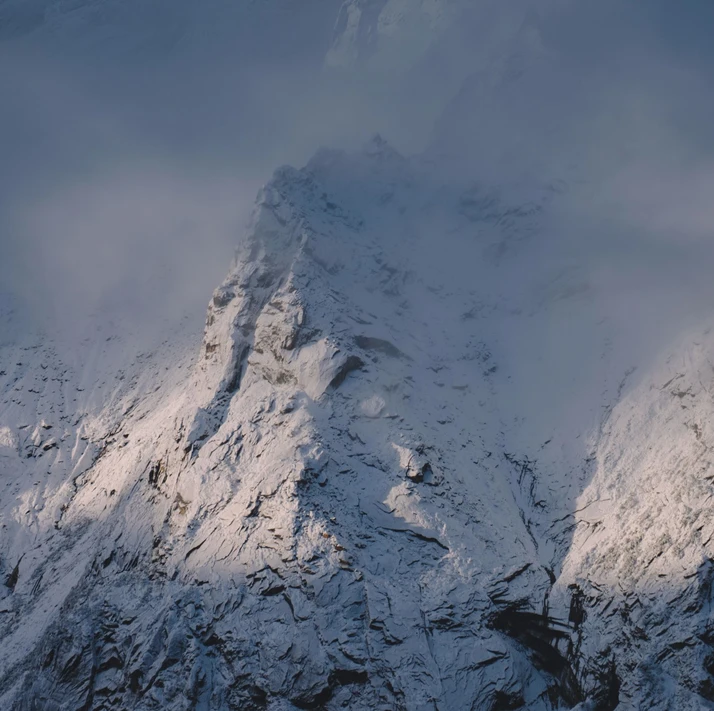
When we finally reached the pass, the view was indescribable. Below us, Bipeng Valley stretched out like a frozen dream. Above us, the sky was a piercing blue. And in that moment, I understood why we do this—why we endure the cold, the exhaustion, the risk.
Because on the other side of struggle is something priceless: a memory that will warm you for a lifetime.
Your Turn: Plan Your Siguniang Mountain Adventure Today
The Long-Bi traverse of Siguniang Mountain isn't just a trek—it's a rite of passage, a challenge that will test your limits and reward you with beauty beyond words. Whether you're a seasoned outdoor enthusiast or a beginner with a dream, this journey is waiting for you.
Ready to start planning? Here's what to do next:

- Research thoroughly – Read our complete guide to [Link: Siguniang Mountain trekking permits and logistics]
- Train smart – Start altitude conditioning and cardio training 4-6 weeks before your trip
- Gather your crew – Find like-minded adventurers who share your commitment
- Book early – Especially during National Day holiday, permits and accommodation fill up fast
The mountains are calling. Will you answer?
Have you done the Long-Bi traverse or another classic Chinese trek? Share your story in the comments below—we'd love to hear from you!
For more inspiration, check out: [Link: Top 10 classic treks in China] | [Link: Altitude sickness prevention guide] | [Link: Best hiking gear for Sichuan mountains]
You may also like


