Conquering the Clouds and Mist of the Ancient Shu Road: A Five-Day Self-Drive Deep Dive Through Guangyuan, Sichuan – 2025
Meta Description: Experience the ancient Shu Road like never before. Our 2025 five-day self-drive itinerary covers Jianmen Pass, Huangze Temple, and Zhaohua Ancient City. Discover hidden gems, local cuisine, and expert tips for conquering Sichuan's most legendary route.
"Alas! How perilous and high! The Shu Road is harder than ascending to the blue sky!"
Li Bai's timeless masterpiece wasn't written for some distant fantasy. It was written for the very earth beneath our feet. When your tires grind over the folds of the Qinba Mountains, and your boots step onto the ancient stone slabs of a millennium-old path, you understand: some roads aren't meant to be walked – they are meant to be read.
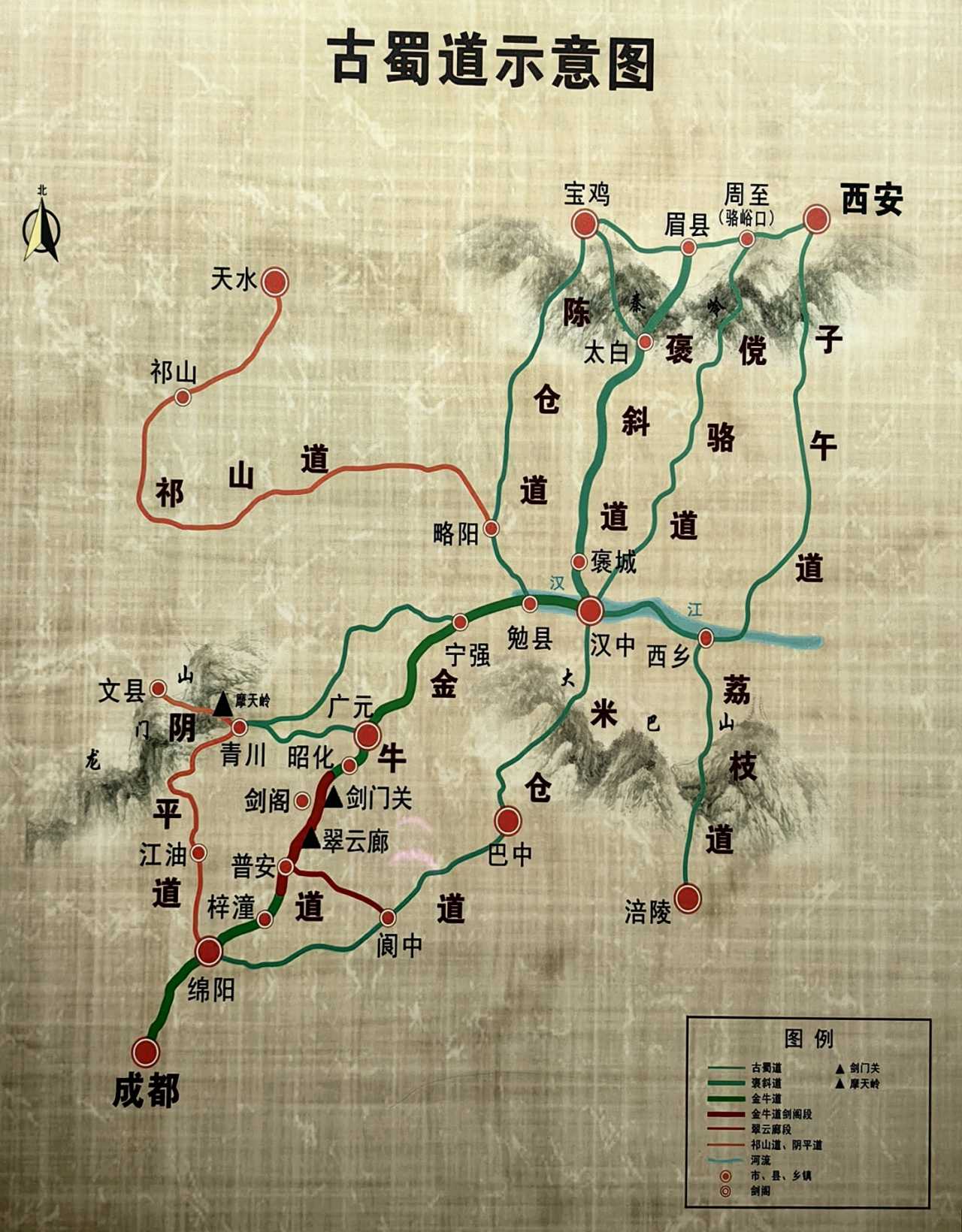
In the deep winter of 2025, my partner and I set out from Shanghai. Over five days, we traced the veins of the ancient Golden Ox Road (Jinniu Dao), weaving through the mountains and towns of Guangyuan, Sichuan. This wasn't a trip for ticking boxes. It was a pilgrimage to keep a thousand-year-old appointment with the heroes of the Three Kingdoms.
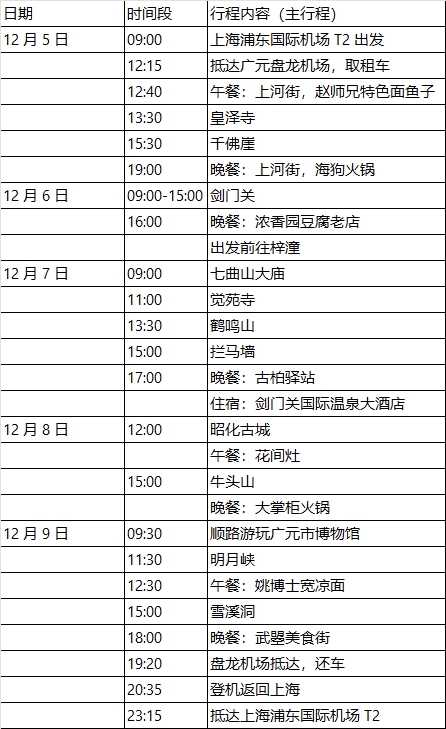
Five-Day Guangyuan Self-Drive Itinerary: A Journey Through Time
| Day | Route Highlights | Key Attractions |
|---|---|---|
| 1 | Shanghai → Guangyuan | Shanghe Street, Huangze Temple, Thousand Buddha Cliff |
| 2 | Jianmen Pass full-day | Bird Path, Ape's Path, Glass Observation Deck, Pass Tower |
| 3 | Zitong cultural route | Qiqu Mountain Grand Temple, Jueyuan Temple, Lanma Wall |
| 4 | Zhaohua Ancient City | Niutou Mountain, Old Town stroll, Authentic hotpot |
| 5 | Guangyuan city wrap-up | City Museum, Mingyue Gorge, Xuexi Cave |
Day 1: First Glimpse of Guangyuan – A Bowl of "Mian Yu Zi" to Start Your Northern Sichuan Adventure
The Lively Atmosphere of Shanghe Street
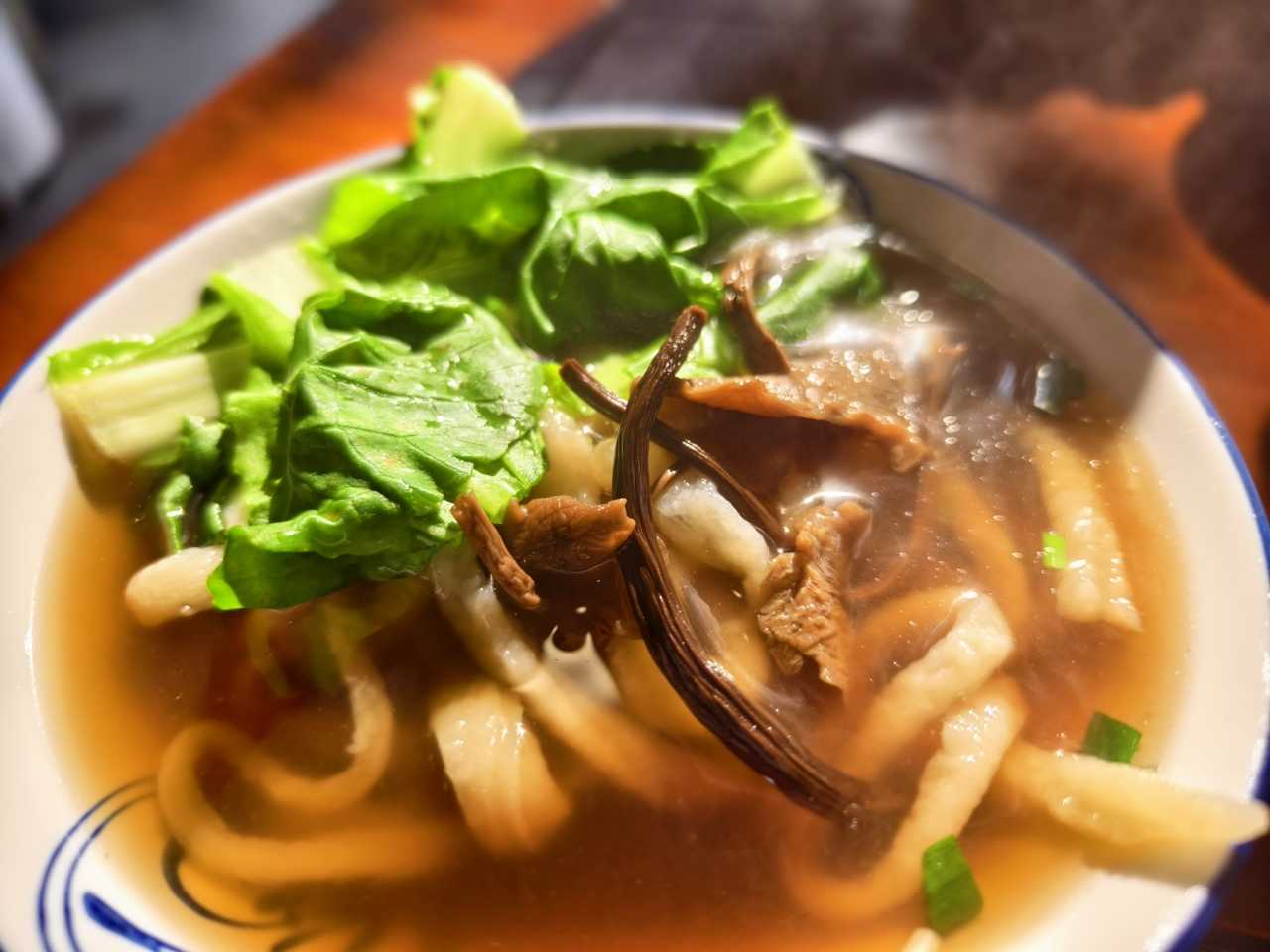
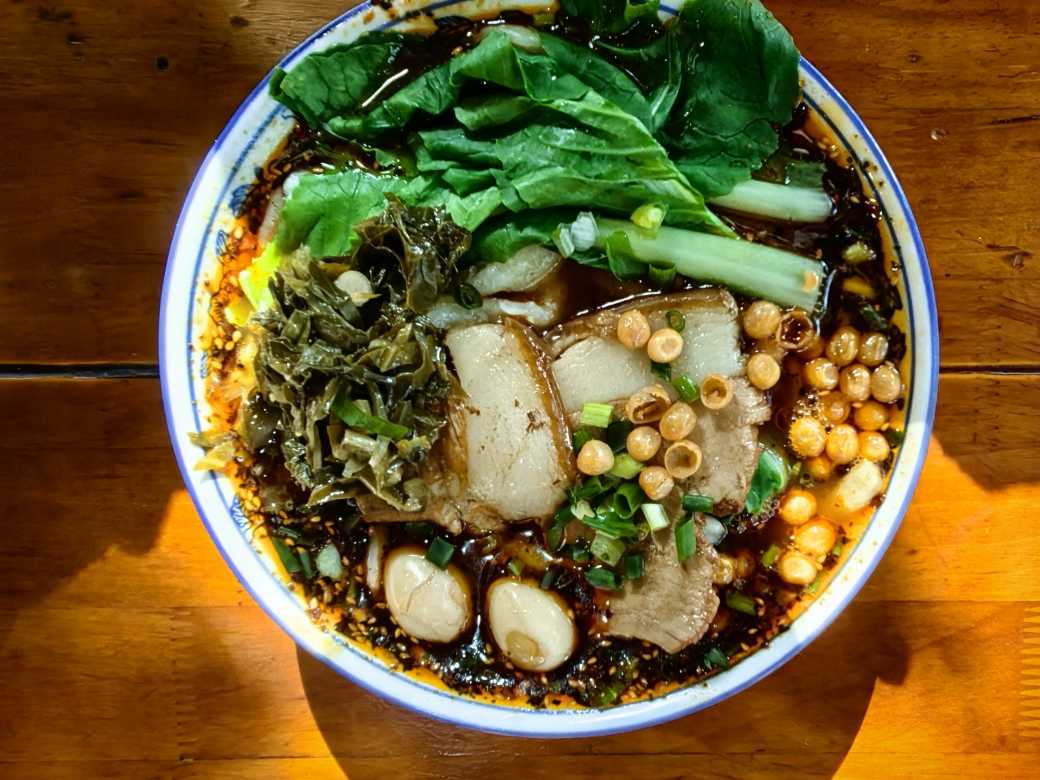
As soon as our plane touched down in Guangyuan, we headed straight for Shanghe Street. This old street, hugging the Jialing River, is the breakfast battleground for locals. Outside Brother Zhao's "Mian Yu Zi" shop, steam billowed from the pots. Locals squatted by the roadside, bowls in hand, eating with unbridled gusto.
"Mian Yu Zi" – a noodle dish shaped like little tadpoles – is a simple, cherished food memory for people in northern Sichuan. I ordered the signature pickled vegetable version. For a Shanghai stomach, the default spice level hit about a 6 or 6.5 out of 10. It was manageable, but my forehead was already beading with sweat. Pro tip for first-timers: start with mild and work your way up.
Huangze Temple: The Only Imperial Temple for a Female Emperor
A fifteen-minute walk from the old street brought us to the Huangze Temple on the banks of the Jialing River. This is the only temple in China dedicated to the memory of Empress Wu Zetian. Nestled in the embrace of Wulong Mountain, it is understated yet radiates an undeniable power.
Inside the Zetian Hall stands a 1.8-meter stone statue of the Empress in her true likeness. Carved from sandstone, the face of a prosperous era is serene, yet hints at hidden schemes. Standing before her, you can almost feel the breath and heartbeat of China's only female emperor.
The cliffside carvings are simply breathtaking: 6 caves, 41 niches, and 1,203 figures, spanning from the Northern Wei dynasty to the Ming and Qing. Each one is a conversation across a thousand years. In the Hall of Two Sages, bronze statues of Emperor Gaozong of Tang and Wu Zetian stand side-by-side, recreating the rare historical scene of "Two Sages Ruling the Court."
[Link: Best time to visit Huangze Temple for photography]
Thousand Buddha Cliff: A Corridor of Faith on a Precipice
In the afternoon, we visited the Thousand Buddha Cliff (Qianfoya) on the Jialing River. The cliff carvings here began in the Northern Wei dynasty and flourished in the Tang. After 1,300 years of wind and frost, they remain as solemn as ever.
Inside the Great Buddha Hall, a 7-meter-high main Buddha sits on a lotus throne, the textures of his monastic robe still clearly visible. The Central Pillar Cave is the only Northern Wei-style grotto in Sichuan, its square pillar carrying a thousand years of Zen tranquility. The reclining Buddha relief in the Nirvana Niche has flowing robe lines like a river, hinting at the cultural codes of the Silk Road.
That evening, we experienced the true heat of northern Sichuan hotpot at Haigou (Seadog) Hotpot. And it was incredible. This isn't just a simple, sharp spiciness. It's a layered, complex flavor with a lingering aftertaste that makes you sweat and reach for your chopsticks again at the same time.
Day 2: Conquering Jianmen Pass – Becoming a True "Shu Road Soldier"
The Difficulty of the Shu Road, Conquerable Today
"The Shu Road is harder than ascending to the blue sky." This saying finds its most visceral proof at Jianmen Pass.
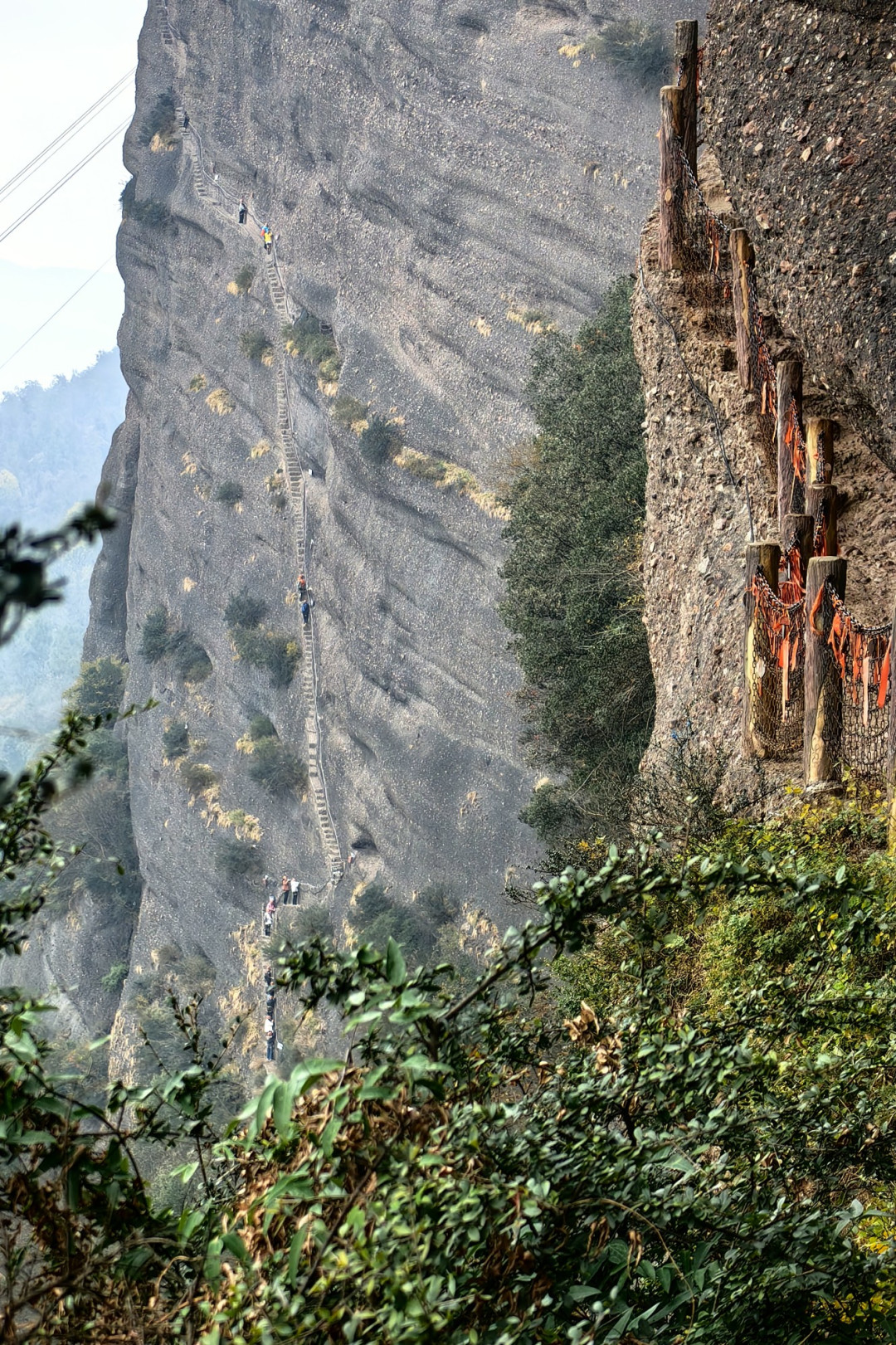
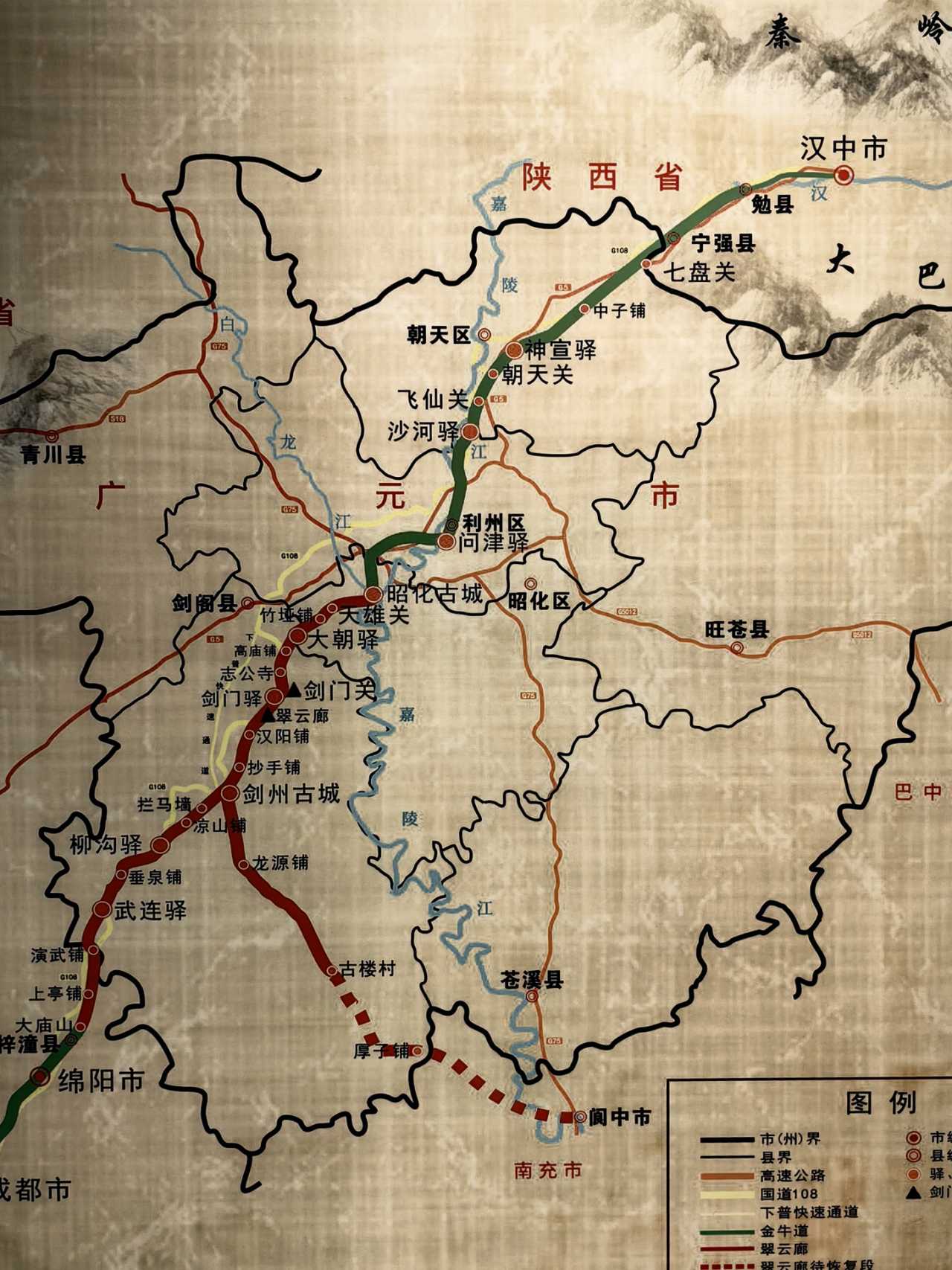
Jianmen Pass is the heart of the ancient Golden Ox Shu Road. Its 72 peaks thrust into the sky like swords. This is not only an ancient battlefield from the Three Kingdoms era, but also home to the legendary, treacherous paths known as the "Ape's Path" and the "Bird Path." We chose the optimal "Enter from the North, Exit from the South" route to avoid backtracking.
Route Selection: Choose Your Challenge
The Challenger's Route: North Gate → Cable Car 1 → Fairy Corridor → Bird Path / Ape's Path → Glass Observation Deck → Liangshan Temple → Big & Small Holes → Bamboo Shoot Peak → Yixian Tian (A Thread of Sky) → Pass Tower → South Gate Exit (5-6 hours total)
The Relaxed Route: North Gate → Cable Car → Glass Observation Deck → Cable Car down → Pass Tower → South Gate
The Family-Friendly Route: Enter and exit from the North Gate, use the cable car both ways, see only the core attractions, no exhaustion.
We chose the challenger's route. You pick either the Bird Path or the Ape's Path; both are one-way uphill and don't overlap. The Bird Path is free. The Ape's Path costs 68 RMB per person. We chose the Ape's Path – a steel cable walkway clinging to a vertical cliff face. A bottomless abyss yawned below, and the mountain wind howled in our ears. Every step required grabbing the iron chains with our hands and finding footholds in the rock crevices with our feet.
Pro Tip: Do not enter from the South Gate! It's uphill the entire way and will exhaust 90% of visitors. Bring gloves for the Ape's Path to protect your hands from the chains.
Standing in front of the Pass Tower, looking down at the Jialing River like a silver ribbon, I finally understood the meaning of "One man can hold the pass against ten thousand." Liu Bei, Zhuge Liang, Jiang Wei... these heroes of the Three Kingdoms once planned their campaigns and decided the fate of empires here. And we, a thousand years later, were merely following in their footsteps, playing the part of a "Shu Road soldier" for a day.
In the evening, we had an authentic Jianmen tofu meal – so tender it melts in your mouth. The tofu banquet is a specialty of Jianmen Pass. Made with local mountain spring water, the tofu has a delicate texture that, when paired with spicy and numbing Sichuan seasonings, is simply exceptional.
[Link: Best hotels near Jianmen Pass for self-drive travelers]
Day 3: Zitong Cultural Tour – The Literary Pulse and Zen Spirit of the Ancient Road
Qiqu Mountain Grand Temple: The Hometown of the Wenchang Emperor
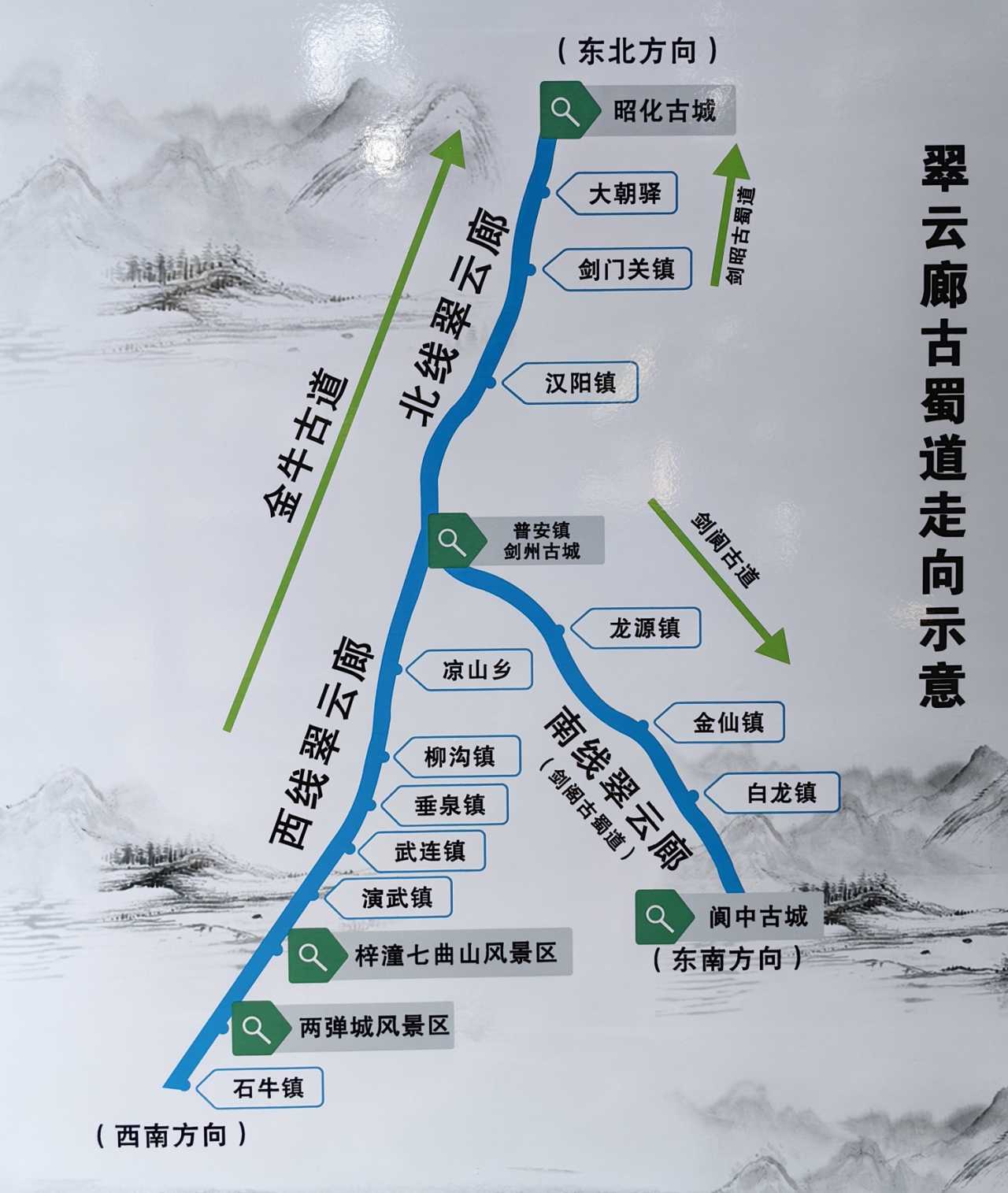
Perched atop Qiqu Mountain, the Grand Temple is built into the hillside. Amidst swirling clouds and mist, the main Wenchang Hall stands in harmony with the rustling pines. This is the starting point of the Golden Ox Shu Road and the birthplace of the "Five Oxen Tearing Open the Mountain" legend.
A must-see is the "Kuixing Dotted Stele" – students touch it for good luck in their exams. Inside the Green Cloud Corridor (Cuiyunlang) , 38 ancient cypress trees, over a thousand years old, tower into the sky. Walking among them feels like traveling back to the Qin and Han dynasties. The exquisite Ming Dynasty stone carvings on the Imperial Hometown Archway are perfect for photos, especially in the morning light.
Jueyuan Temple: A Forgotten Treasure House of Murals
Jueyuan Temple was first built during the Zhenguan era of the Tang dynasty. Unlike the more famous tourist spots, this temple remains relatively undiscovered. Inside, you'll find well-preserved Ming Dynasty murals depicting Buddhist scriptures and local life. The lack of crowds means you can take your time absorbing the artistry without jostling for space.
Lanma Wall Ancient Shu Road: Walking in History's Footsteps
The Lanma Wall section of the ancient Shu Road is one of the best-preserved original stone paths. Here, you can still see the ruts carved by countless cart wheels over centuries. Walking this stretch feels like stepping into a living museum – each stone tells a story of merchants, soldiers, and pilgrims who passed this way.
Day 4: Slow Life in Zhaohua Ancient City
Niutou Mountain Sunrise

Start your day early with a hike up Niutou Mountain for panoramic views of Zhaohua Ancient City and the Jialing River. The morning mist rising from the river creates an ethereal atmosphere that photographers dream about.
Strolling Through the Old Town
Zhaohua Ancient City is remarkably well-preserved. Unlike many "ancient towns" in China that feel overly commercialized, Zhaohua retains its authentic character. Wander through the narrow alleyways, visit local craft shops, and chat with elderly residents who have lived here for generations.
Authentic Hotpot Experience
End your day with a hotpot dinner at a local restaurant. The key difference here: the broth is made with local ingredients, including wild mushrooms and herbs from the Qinba Mountains. The resulting flavor profile is deeper and more complex than what you'll find in Chengdu or Chongqing.
[Link: Zhaohua Ancient City accommodation guide]
Day 5: Wrapping Up in Guangyuan City
City Museum: Understanding the Region's Rich History
The Guangyuan City Museum provides excellent context for everything you've experienced over the past four days. Exhibits cover the Three Kingdoms period, the ancient Shu Road, and the region's Buddhist heritage. Allow at least two hours for a thorough visit.
Mingyue Gorge and Xuexi Cave
Mingyue Gorge offers a dramatic finale to your trip. The canyon walls rise steeply on either side, and the emerald-green water below creates a stunning contrast. Nearby, Xuexi Cave features impressive karst formations and underground streams.
Return Journey
Head back to Guangyuan's airport or train station for your journey home. If time allows, pick up some local specialties at the station: Jianmen tofu snacks, dried mushrooms, or Sichuan peppercorns.
FAQ: Planning Your Guangyuan Self-Drive Trip
1. Is a self-drive trip to Guangyuan suitable for first-time visitors to Sichuan?
Absolutely. The roads are well-maintained, and signage is clear in both Chinese and English. However, be prepared for mountain driving conditions, including fog and occasional narrow roads near scenic spots. We recommend renting a car with good ground clearance.
2. What is the best time of year to visit the ancient Shu Road?
Spring (March-May) and autumn (September-November) offer the most comfortable temperatures and clear skies. Winter visits (like ours) have fewer crowds but require warm clothing, especially at higher elevations like Jianmen Pass.
3. How difficult is the Ape's Path at Jianmen Pass?
The Ape's Path is physically demanding but not technically dangerous for people with average fitness. You'll need to use your arms to pull yourself up steep sections. We recommend wearing sturdy hiking shoes and bringing gloves. Allow 45-60 minutes for this section alone.
4. Can I visit these attractions without speaking Chinese?
Major attractions like Jianmen Pass, Huangze Temple, and Thousand Buddha Cliff have English signage and audio guides. Smaller temples and local restaurants may have limited English. We recommend downloading a translation app and having key phrases ready.
5. How much should I budget for a five-day Guangyuan self-drive trip?
Expect to spend approximately 3,000-5,000 RMB per person (excluding flights), covering car rental, fuel, accommodation, meals, and entrance fees. Luxury options at Zhaohua Ancient City and near Jianmen Pass will increase costs.
Ready to Conquer the Ancient Shu Road?
The ancient Shu Road isn't just a destination – it's a journey through time, culture, and some of China's most dramatic landscapes. Whether you're a history buff, a food lover, or an adventure seeker, this five-day Guangyuan self-drive itinerary offers something unforgettable.
Book your trip today and experience why Li Bai called this route "harder than ascending to the blue sky." The clouds and mist of the Qinba Mountains await.
[Link: How to rent a car in Sichuan for self-drive tours] [Link: Complete packing list for Sichuan mountain travel]
Have you traveled the ancient Shu Road? Share your experience in the comments below, or tag us in your photos using #ShuRoad2025
You may also like


