Chengdu on the Left, Happiness on the Right: Your Ultimate Guide to the City of Smoke and Fire
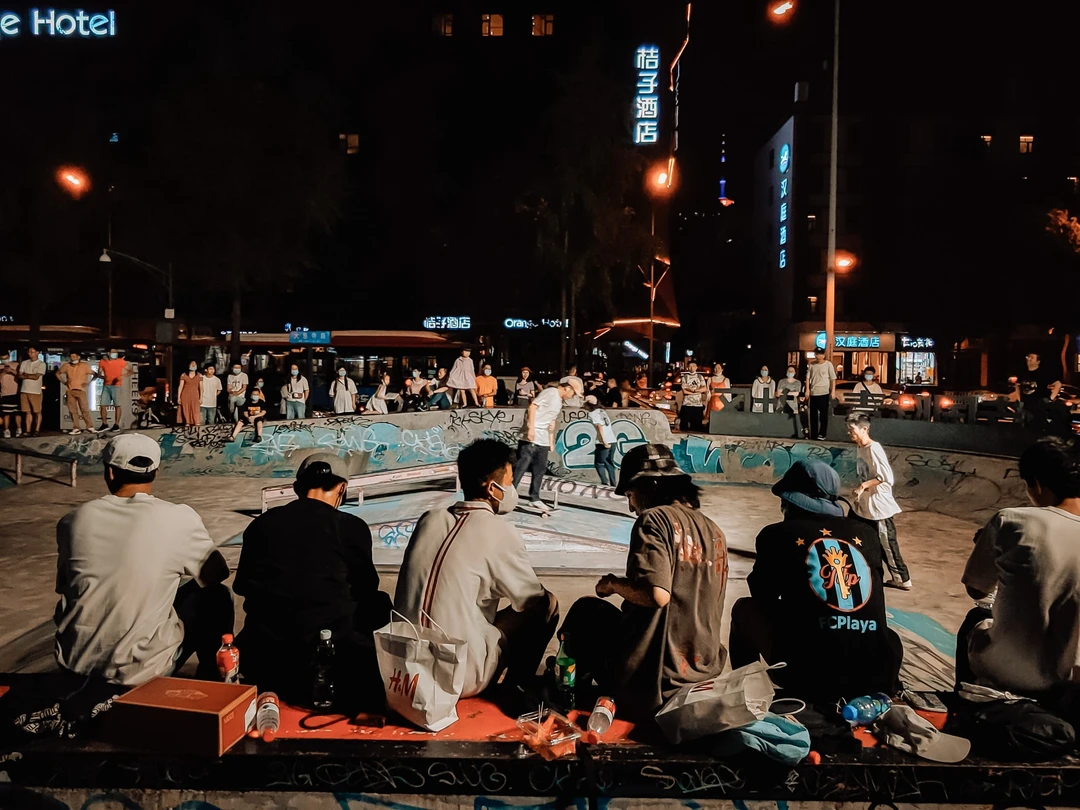
Meta Description: Discover Chengdu's hidden gems in 2024—from open-air cinemas on Luhu Island to the geometric spiral staircase bookstore. Explore the city where ancient tea culture meets modern art, and find happiness in every corner.
Some cities grow colder the longer you stay. Chengdu is the opposite—no matter how many years pass, it welcomes you back with a steaming bowl of dandan noodles, a fragrant cup of lidded tea, and a heartfelt "巴适 (how comfortable!)." In 2020, I retraced my steps through this city where I've lived for over two decades, and I discovered that happiness has never been far away. It's hidden in corner cafés, by lakeside cinemas, and on every step of a spiral staircase.
This article is my love letter to Chengdu. If you, too, long for the perfect blend of everyday life and ideal living, come with me—let's explore the left and right of this enchanting city.
Why Chengdu Captivates: The City of Smoke and Fire
Chengdu isn't just a city; it's a feeling. Known as the "Land of Abundance," it seamlessly marries ancient traditions with modern creativity. From the spicy aroma of mapo tofu wafting through narrow alleys to the avant-garde art installations in the High-Tech Zone, Chengdu offers a sensory experience unlike any other. Whether you're a first-time visitor or a returning traveler, this guide will help you uncover the city's most memorable spots.
H2: Island Escape: Watching an Open-Air Movie at Luhu
Chengdu locals adore water, but the city lacks large natural lakes. In the past, a lakeside retreat meant a two-hour drive to Sancha Lake or Yele Lake. Then, in 2020, a friend introduced me to Luhu (麓湖) —and I discovered Chengdu has its own "island" after all.
H3: Lukezhou Island: A Hidden Gem in Tianfu New Area

📍 Lukezhou Island is a secluded paradise in Tianfu New Area, surrounded by water on three sides and shaded by lush greenery. Drive there, or take Metro Line 1 to Luhu Station, then hop on a free shuttle to the dock. Reserve a yacht via the "Luhu Water City" WeChat account, and you'll soon step into a fairy-tale world: expansive lawns, wooden cabins, tent areas, and—best of all—an open-air cinema.
We arrived at 7 p.m., though the movie didn't start until 8. Using the golden hour light, my sister and I captured stunning backlit photos by the lake. The Ricoh camera's straight-out-of-camera results were breathtaking. Reeds swayed in the breeze, cabin lights flickered on one by one. Some guests brought beer and snacks, others laid out picnic blankets, and children ran across the grass. The film was Life of Pi. Sitting in the back row gave a wider view. The evening breeze brushed past, and for a moment, I was transported back to summer childhood.
H3: Practical Tips for Your Luhu Visit
- Reserve your yacht in advance via the "Luhu Water City" WeChat public account
- Bring mosquito repellent—the lake attracts plenty of bugs
- Pack your own fruit and snacks; island food is pricey
- Arrive before 6:30 p.m. if you want a front-row cushion
[Link: Best outdoor activities in Chengdu]
H2: The Cave Bookstore and the Spiral Staircase: Geometric Bookstore's Artistic Aesthetic
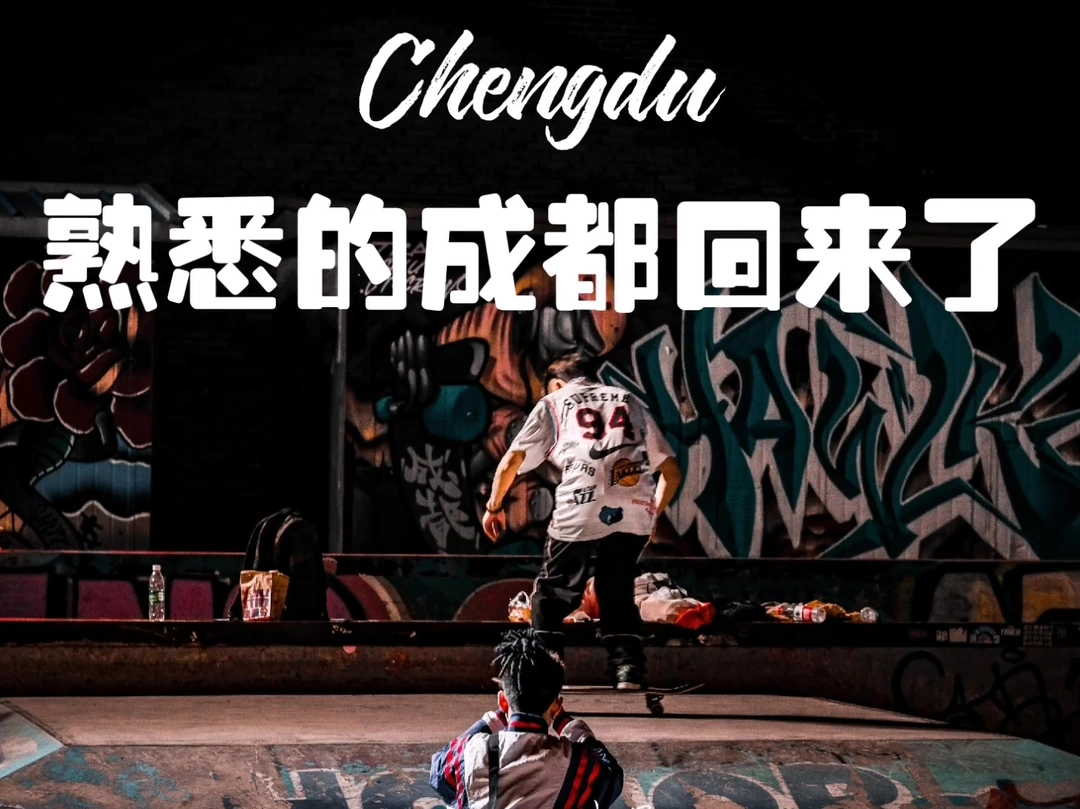
If Chengdu has one defining trait, it's the harmonious blend of old and new. The Geometric Bookstore (几何书店) in Mengzhuiwan perfectly embodies this spirit.
H3: A Photographer's Paradise: The Industrial Cave Design
The entrance is unassuming, but inside, it's a different world. The star attraction is the spiral staircase—an industrial cave-like design that creates a striking visual impact. Shooting from above looking down, or from below looking up, yields breathtaking results. My friend and I waited nearly two hours to get a clean shot without people, but when we saw the final image, it was all worth it.
H3: Three Floors of Exploration
- First floor: Creative products and books
- Second floor: A bar for drinks and relaxation
- Third floor: Hands-on area for painting or crafts
Find a seat by the window, let sunlight fall on the wooden table, and let the scent of books and coffee blend. An afternoon slips away quietly.
H3: Practical Info for Geometric Bookstore
- Name: Geometric Bookstore (几何书店)
- Address: Wangping Binhe Road, Mengzhuiwan (near Taikoo Li)
- Transport: Metro Line 2, Dongmen Bridge Station
- Hours: 10:00 a.m. – 10:00 p.m.
- Best time to visit: Weekdays or right when it opens to avoid crowds
[Link: Top Instagrammable spots in Chengdu]
H2: Slow Life in a Café: Afternoon Sun at Little Travel
"Falling in love with a city begins with a café." I couldn't agree more.
H3: Discovering Binsheng Street's Hidden Gem
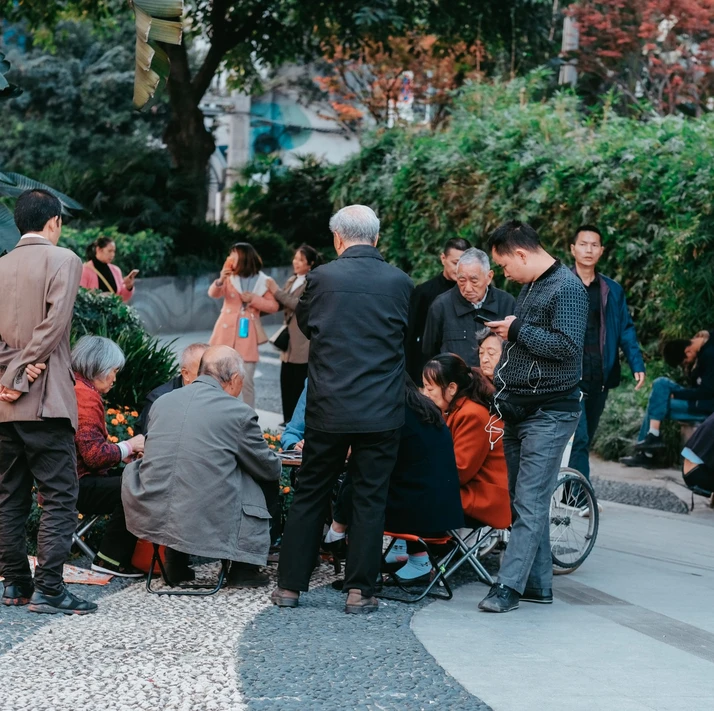
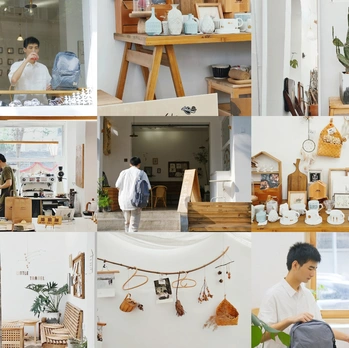
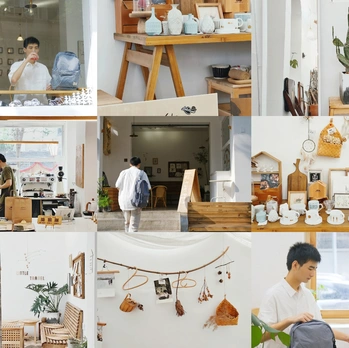
Chengdu has countless cafés, each with its own personality. When a friend invited me to Little Travel (里途) near Kuanzhai Alley, I discovered Binsheng Street for the first time—a quiet little lane that feels like Paulownia Tree Street but even more serene.
The shop is small, but inside, it opens up. There are three distinct coffee areas, each thoughtfully decorated. That day, the sun came out, streaming through the sheer curtains and casting dappled light. I ordered a latte, my friend a pour-over, and we sat by the window chatting, lingering for an entire afternoon. When it was time to leave, I felt a pang of reluctance—this was a place I could visit again and again.
H3: Practical Info for Little Travel
- Name: Little Travel (里途)
- Average cost: About 47 yuan per person
- Address: No. 24-1 Binsheng Street (next to the marriage registration office)
- Hours: 9:00 a.m. – 9:00 p.m.
[Link: Best cafés in Chengdu for remote work]
H2: The Real-Life Möbius Strip: Wuchazi Bridge's Infinite Loop
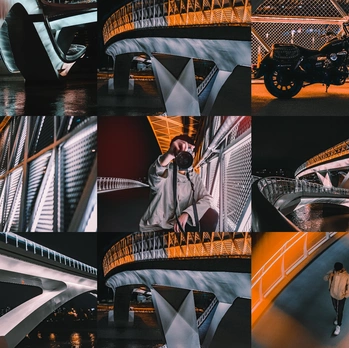
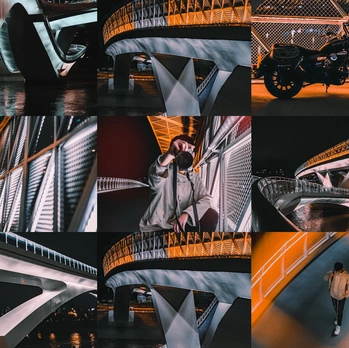
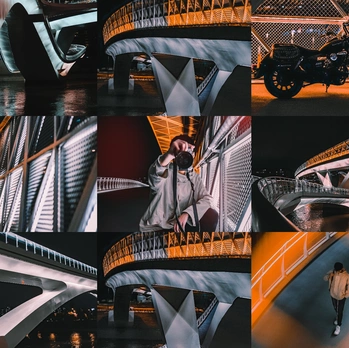
The five most famous words in Chengdu in 2020 were undoubtedly "五岔子大桥 (Wuchazi Bridge)." This structure, hailed as "China's most complex pedestrian bridge," draws its inspiration from the mathematical Möbius strip—a shape that exists only in four-dimensional space, abstracted into a three-dimensional world to form the "∞" symbol.
H3: How to Capture the Perfect Shot
The first time I saw it, I was genuinely awestruck. The bridge's lines are fluid, its lighting primarily diffuse with occasional accent points. At night, it unfurls like a painting over the Jin River. I visited in March, before it became wildly popular. Now, you'd probably have to queue for ages to get a decent photo.
H3: Three Best Photo Spots
- Beside the bridge's wire mesh — crouch down and pose, using the shifting light and shadow of the mesh; orange-and-white alternation works best
- On the main walkway — shoot downward through the mesh for a blurred, mysterious effect
- Under the bridge pillars — capture someone walking on the pillars for a sense of scale and imagination
H3: Practical Info for Wuchazi Bridge
- Address: Wuchazi Bridge, High-Tech Zone
- Transport: Metro Line 1 to Century City Station, then a 10-minute bike ride
- Admission: Free
- Pro tip: Bring a tripod; use your phone's professional mode for sharper shots
[Link: Best night photography spots in Chengdu]
H2: A Museum You Can Eat: The Sichuan Cuisine Museum's Taste Journey
"Pandas and Sichuan cuisine are Sichuan's two treasures," said the head of the UN World Tourism Organization. But did you know that Chengdu has a Sichuan Cuisine Museum (川菜博物馆) —and many people have never heard of it?
H3: Exploring 3,000 Years of Culinary History
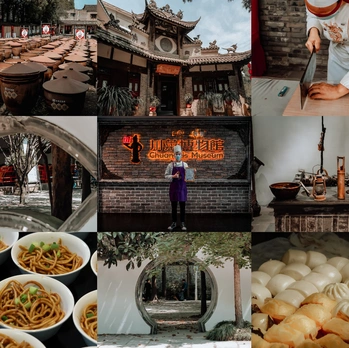
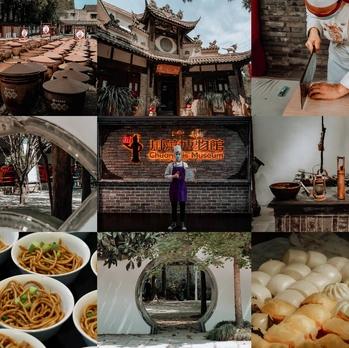
Out of curiosity, I visited this museum in Pidu District, and I was completely won over. The 12,000-square-meter collection hall displays over 3,000 pieces of Sichuan cooking vessels, from the Warring States period to modern times, including cookware, serving dishes, wine vessels, and tea sets. The museum's crown jewel is a pickling jar from the Kangxi era of the Qing Dynasty—the guide said it's priceless.
H3: The Best Part? Free Street Snacks Included
The biggest surprise? The ticket includes free access to over 20 types of Chengdu street snacks: dandan noodles, cold noodles, ice jelly, stone-ground tofu pudding, roasted sweet potatoes... My friend and I ate until we were stuffed, and the flavors were better than most restaurants. After eating, head to the tea house for cards and tea, or watch a chef slice noodles blindfolded—a heavy cleaver turning dough into threads thin enough to thread a needle. Absolutely mesmerizing.
H3: Practical Info for Sichuan Cuisine Museum
- Address: Ronghua North Lane, Gucheng Town, Pidu District, Chengdu
- Ticket: 60 yuan (includes snacks)
- Hours: 9:00 a.m. – 6:00 p.m.
- Highlights: Viewing artifacts, experiencing broad bean paste making, free snacks, mahjong and tea
[Link: Must-try Sichuan dishes in Chengdu]
H2: The City's Path Home: A Hundred Years of Chongde Lane
"The true hermit hides in the city, not in the wilderness." Just one street away from Taikoo Li, Chongde Lane (崇德里) is the perfect embodiment of this saying.
H3: A Century-Old Alley Transformed
A nondescript alley with the words "A City's Path Home" painted on the wall. Step inside, and century-old Western Sichuan residential buildings have been transformed into a slow-living space. Mottled brick walls, restored architecture, a courtyard so quiet you can only hear birdsong... Brew a cup of tea, pick up a book—this is a world apart from the bustle.
Why is it called "the path home"? Because it represents the journey back to simplicity, to the essence of Chengdu life. In a city that's constantly evolving, Chongde Lane remains a sanctuary of tranquility.
H3: Practical Info for Chongde Lane
- Address: Chongde Lane, near Taikoo Li
- Best time to visit: Early morning or late afternoon for the best light and atmosphere
- What to do: Enjoy tea, read, take photographs, or simply soak in the peaceful ambiance
[Link: Historic alleys and lanes in Chengdu]
FAQ: Your Chengdu Travel Questions Answered
Q1: What is the best time to visit Chengdu?
A: Spring (March to May) and autumn (September to November) offer the most pleasant weather, with mild temperatures and fewer crowds. Avoid summer if you're sensitive to heat and humidity.
Q2: How many days do I need to explore Chengdu?
 A: A minimum of 3-4 days is recommended to cover major attractions like the Giant Panda Base, Jinli Ancient Street, and the spots mentioned in this guide. For a more relaxed pace, extend to 5-7 days.
Q3: Is Chengdu expensive for tourists?
A: Compared to Beijing or Shanghai, Chengdu is quite affordable. Street food costs as little as 10-20 yuan per meal, and entrance fees for most attractions range from 30-100 yuan. Accommodation varies widely, from budget hostels to luxury hotels.
Q4: What are the must-try dishes in Chengdu?
 A: Don't miss mapo tofu, kung pao chicken, dandan noodles, hot pot, and ice jelly for dessert. For a truly authentic experience, visit a local chuanchuan (skewer) restaurant.
Q5: How do I get around Chengdu?
A: The Chengdu Metro is efficient and covers most tourist spots. Taxis and ride-hailing apps like Didi are affordable. For short distances, bike-sharing services like Mobike are convenient.
Your Chengdu Adventure Awaits
Chengdu is more than a destination—it's a feeling. It's the warmth of a tea house, the spice of a hot pot, the serenity of a century-old alley, and the excitement of a modern art installation. Whether you're watching a movie by the lake, photographing a spiral staircase, or savoring free street snacks at a museum, Chengdu invites you to slow down and savor life.
Ready to experience Chengdu's magic? Start planning your trip today. Book your flights, reserve your yacht at Luhu, and pack your appetite for the culinary journey of a lifetime. The city of smoke and fire is waiting to welcome you home.
Share your Chengdu story: Tag us on social media with your favorite Chengdu moments. We'd love to see your photos from Wuchazi Bridge, Geometric Bookstore, or any of the hidden gems we've explored together.
Don't forget to subscribe to our newsletter for more travel guides, insider tips, and exclusive offers on Chengdu experiences. Your next adventure begins now.
Last updated: November 2024. Prices and hours may vary; please check official websites before visiting.


