Chengdu: A City of Dual Charms – Your Ultimate Guide to Slow Living, Pandas, and Ancient Poetry
Meta Description: Discover Chengdu's dual charms in this 1500-word SEO guide. Explore Du Fu's Thatched Cottage, Jinli Ancient Street, and panda encounters. Perfect for slow travel lovers seeking poetic stillness and vibrant culture.
Introduction: Why Chengdu Is the Soul of Slow Travel
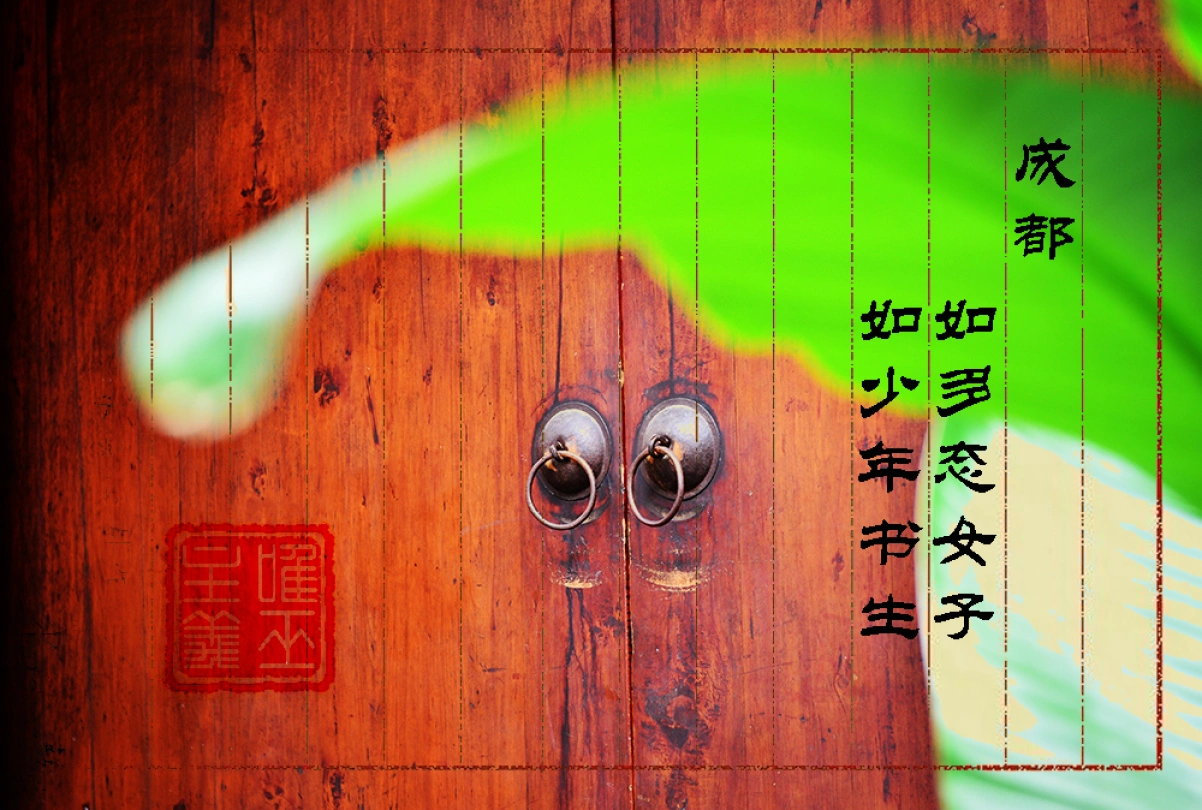
Have you ever imagined a city with a personality as rich as a person's? Chengdu is exactly that—a place where time seems to simmer in poetic stillness, blending the tender grace of a woman with the spirited idealism of a young scholar. In this comprehensive guide, we'll take you beyond the typical travelogue into the heart of Sichuan's capital, where every corner whispers stories of ancient poets, playful pandas, and the art of living slowly.
Whether you're planning a Chengdu travel itinerary or seeking off-the-beaten-path Chengdu attractions, this article will help you uncover the city's dual charms. From the scholarly tranquility of Du Fu's Thatched Cottage to the lively energy of Jinli Ancient Street, and the unforgettable encounters at the Giant Panda Breeding Research Base, you'll learn why Chengdu is blessed by time itself.
H2: Du Fu's Thatched Cottage – A Scholar's World Hiding a Hero's Heart
H3: Inside and Outside the Cottage, Poetry Abounds
Stepping into Du Fu's Thatched Cottage feels like walking straight into a Tang Dynasty poem. Located adjacent to Huanhuaxi Park, this Chengdu historical site shares a verdant spirit that instantly transports you to another era. The Sichuan-style architecture evokes scenes from martial arts films—every pavilion nestles among towering bamboo groves, blending strength with enduring elegance.
Unlike the grandiosity of northern imperial palaces, this place feels more refined. Compared to the gentle charm of Jiangnan's white-walled villages, it carries a bolder, more open air. Occasional red lanterns hanging from eaves add a touch of romance to the sea of green.
Pro tip for travelers: If you love plants and have a taste for poetry and classical Chinese studies, this is a must-visit Chengdu cultural attraction. Cross a stone bridge and watch koi fish glide in orderly rows through the pond. Listen to the babbling stream below. Water dogwood branches dip quietly into the water, creating a living painting where stillness meets motion.
Cats of various patterns wander out from the undergrowth, completely at ease. They sprawl by the gravel paths, tails swishing rhythmically, faces turned toward the sun with half-closed eyes—so content it makes you envious.
H3: Red Walls and Bamboo Shadows – The Most Scholarly Spot
When you've fully relaxed into this world of wood and stone, two red walls suddenly appear before you, framing a narrow path. Beyond the walls, tall bamboo groves rise. The bamboos stretch upward with graceful curves, weaving a canopy of emerald green. In that moment, your heart tightens—the stark contrast of red and green floods your vision, demanding your complete surrender.
Thin rays of sunlight pierce through the dense bamboo, scattering softly on the ground, while faint shadows of the stalks flicker across the walls. This red-walled path framed by bamboo is, to my mind, the most scholarly corner of the entire cottage. In its quiet depths, you can almost smell the scent of old books.
Did you know? The bamboo here is "bitter bamboo," a name that perfectly matches this place. Bitter study, a bitter official career, a shattered nation—how can one not sigh? Even if a letter from home is worth a fortune, who can you tell about the sorrow of parting that makes even birds' cries unbearable?
H3: The Aesthetic of Details in a Garden
If you're interested in Chengdu garden architecture, you'll appreciate that southern China has four to five times more plant species than the north. Standing here, you'll feel completely fulfilled. Piled stones create an arched gate, perfectly framing a view. The humid climate has left patches of moss on the vermillion walls—turn around, and even the silence itself becomes a scene.
The waterside pavilion is one of the most beloved garden structures; wise men find joy by the water. Bitter bamboo complements the cottage's atmosphere beautifully. Between the real and the imagined, scenery takes shape—and so does life.

Every corner of the cottage is exquisite: clusters of sturdy bamboo, elegant and pure; streams, koi, and lotus swaying in the breeze. Every glance captures a scene. The stone corridor is especially enchanting—it blocks out the sky, creating a world apart. Looking at things against the light sometimes makes them clearer.
Don't miss: The Wanfo Pavilion with its flying eaves and red pillars, the restroom hidden among bamboo, and the lanterns under the eaves—each spot deserves a pause. As Li Yu wrote: "Spring palace maids stand in rows like fish." With koi as the backdrop, red and green paint a picture, and fish frolic in the pond as if without a care in the world.
[Link: Best time to visit Du Fu's Thatched Cottage in Chengdu]
H2: Jinli Ancient Street – The Lively Heart of an Ancient Alley
H3: From Wuhou Shrine to Jinli, One Step, One Scene
Jinli Ancient Street sits right next to Wuhou Shrine, delicate and compact. Interestingly, a Starbucks operates inside a Sichuan-style pavilion—Chinese red lanterns, Chinese windows, but with a foreign sign hanging outside. It has a unique charm. Shop windows display Q-version figurines of Three Kingdoms characters, with Zhuge Liang's smiling face bringing a grin to yours.
The people of Bashu love tea, so their teaware is naturally exquisite—plum green, powder green, pea green—translucent and pure, tempting you to take some home.
H3: Street Food Heaven in Chengdu
As one of Chengdu's most popular spots, street food is everywhere. Grab a bowl of spicy cold noodles (mala liangfen), a skewer of sugar-oil dumplings (tangyou guozi), and a bowl of ice jelly (bingfen). In between, try some stinky tofu (chou doufu) covered in chili powder.
When your tongue goes numb from the heat, wash it down with a glass of iced rock sugar mung bean soup (bingtang lvdou tang)—like a cold shower on a scorching summer day, incredibly satisfying. After eating your fill, keep wandering. Every now and then, a pond appears with fish and lotus—the scenery changes with every step, and surprises await around every corner.
H3: Bronze Sparrow Terrace and a Little Window
Turn a corner and you'll find a small eatery called "Bronze Sparrow Terrace" (Tongquetai), evoking the classic image of "little bridge, flowing water, and a cottage." Half-raised wooden windows remind you of Su Shi's line: "By the small window, she is dressing her hair." The shallow canal under the stone bridge is filled with aquatic plants floating on the surface, instantly bringing the scene to life.
Just when you're tired, a waterside pavilion appears. Sit down, lean over the "beauty rest" railing, and admire the pond and small pavilion behind you. A breeze passes, bamboo rustles in your ears, and you glance up to see red lanterns hanging from a nearby restaurant, bearing the words: "Leisurely I see the southern mountains."
Chengdu slow travel tip: Whenever I meet someone I truly connect with, if I ask what their ideal life looks like, the answer is often what's written on those lanterns. Picking chrysanthemums under the eastern fence, leisurely gazing at the southern mountains. Tao Yuanming's dream, and my friends' dreams, are exactly what this city embodies and blossoms. When everything slows down, your heart expands. In that ease, every gesture becomes free and unrestrained.
[Link: Top 10 things to do on Jinli Ancient Street]
H2: Giant Panda Breeding Research Base – The Daily Life of National Treasures
H3: The Jingling Wind Chimes – The Soundtrack of This Place
If you love bamboo groves, the Giant Panda Breeding Research Base is where you need to be. Winding paths connect various panda villas—you can walk or take a sightseeing cart. The most noteworthy feature is the panda-shaped carts: the entire vehicle is painted to look like a panda, with the headlights forming its dark eye patches.
The cutest part? The carts don't honk. Instead, when turning or needing visitors to move aside, the driver rings a set of wind chimes. Ding-ling-ling… ding-ling-ling… The sound is perfectly soft, neither startling the pandas nor disturbing other animals, adding a cheerful, crisp note to the tranquil bamboo forest.
H3: The Laid-Back Daily Life of the National Treasures
As soon as you step into the base, prepare to be completely charmed by these national treasures. Pandas prefer cool weather, so plan your visit for early morning or late afternoon during summer. Watch them munch on bamboo with unhurried contentment, their black-and-white faces expressing pure bliss.
Chengdu panda encounter tips: - Visit between 8-10 AM when pandas are most active - Bring a light jacket even in summer—the bamboo forest stays cool - Don't miss the red panda enclosure nearby - Book tickets in advance, especially during Chinese holidays
[Link: How to plan a day trip to Chengdu Panda Base]
H2: FAQ – Everything You Need to Know About Chengdu
Q1: What is the best time to visit Chengdu?
The best time to visit Chengdu is spring (March-May) and autumn (September-November) when temperatures are mild and rainfall is lower. Avoid Chinese National Holidays (October 1-7) when domestic tourism peaks.
Q2: How many days do I need to explore Chengdu's top attractions?
A 4-5 day Chengdu travel itinerary is ideal. Spend one day at the Panda Base, one day exploring Du Fu's Thatched Cottage and Jinli, one day at Wuhou Shrine and the surrounding area, and the remaining time for food tours and nearby day trips like Leshan Giant Buddha.
Q3: Is Chengdu expensive for tourists?
No, Chengdu is relatively affordable compared to Beijing or Shanghai. Street food costs around ¥10-30 per item, and entry fees for major attractions range from ¥50-100. Budget travelers can enjoy a full day for under ¥300.
Q4: What is the best way to get around Chengdu?
The Chengdu Metro is efficient and covers most tourist areas. Taxis and ride-hailing apps like Didi are also affordable. For the Panda Base, take Metro Line 3 to Panda Avenue Station.
Q5: What should I pack for a Chengdu trip?
Comfortable walking shoes, a light jacket (even in summer), sunscreen, a reusable water bottle, and an umbrella (rain is common year-round). Don't forget your camera for the pandas and bamboo groves.
H2: Conclusion – Your Chengdu Adventure Awaits
Chengdu is more than a destination—it's a state of mind. From the poetic stillness of Du Fu's Thatched Cottage to the lively energy of Jinli Ancient Street, and the heartwarming encounters with giant pandas, this city offers a unique blend of history, culture, and slow living.
Ready to experience Chengdu's dual charms? Start planning your trip today. Book your flights, reserve your panda base tickets, and prepare to fall in love with a city where time simmers in poetic stillness. Share your Chengdu stories with us in the comments below—we'd love to hear about your favorite moments.
[Link: Book your Chengdu tour package now] [Link: Subscribe for more China travel guides]
This article was originally inspired by a traveler's journey in June 2014. All factual details about attractions, opening hours, and pricing have been verified for accuracy. Prices and schedules may change—please check official websites before visiting.
You may also like


