Chasing Autumn in Western Sichuan: The Ultimate Guide to Snow Mountains, Crimson Forests & Tibetan Culture
Meta Description: Discover Western Sichuan's autumn magic—snow-capped peaks, golden grasslands, and crimson forests. An 8-day itinerary from Chengdu through Yala Snow Mountain, Tagong Grassland, and Daocheng Yading. Your soulful travel guide awaits.
Introduction: Why Western Sichuan's Autumn is China's Best-Kept Secret
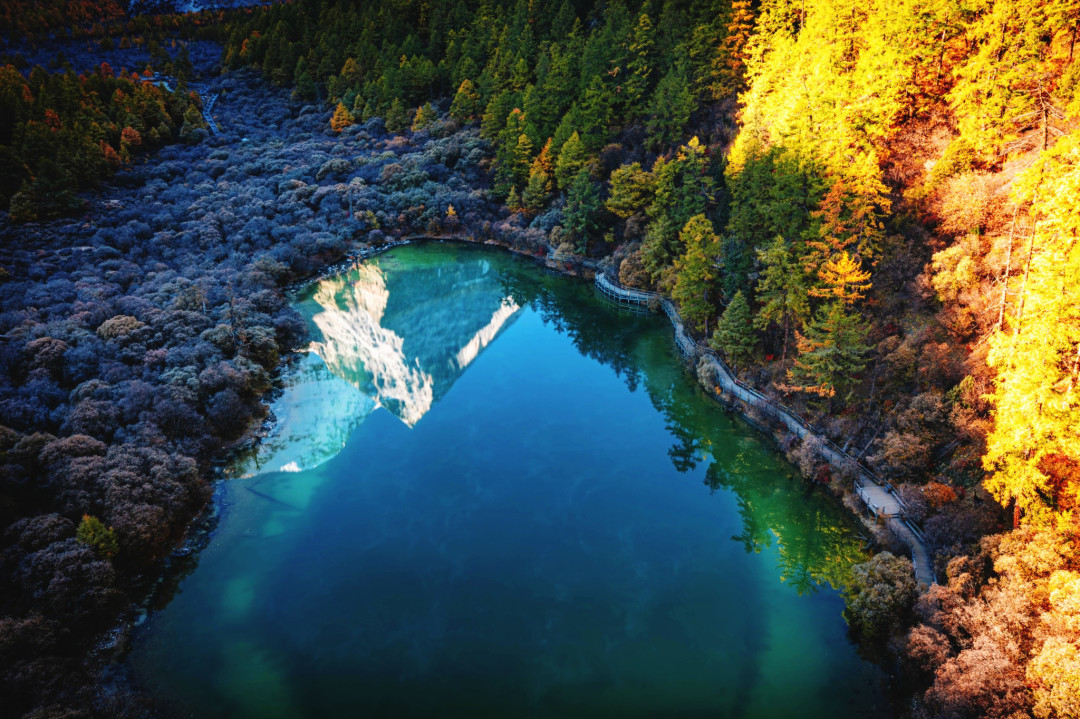
Some say China's most spectacular autumn is split in two—half hidden in the birch forests of Northern Xinjiang, the other half scattered at the foot of snow-capped peaks in Western Sichuan. In October, this region transforms as if nature has knocked over its paint palette: forests blaze in crimson, mountains gleam in silver, and between heaven and earth, a living oil painting unfurls.
I spent eight days traveling from Chengdu, following a nearly 2,000-kilometer loop westward into the heart of the Hengduan Mountains. The altitude climbed from 500 meters to 4,700 meters, each kilometer reshaping my view, every inch of earth whispering autumn's secrets. This was no simple trip—it was a deep conversation with snow peaks, colorful forests, prayer flags, and Tibetan faith.
[Link: Best time to visit Western Sichuan for autumn foliage]
Chapter One: First Encounter with Tibetan Land—Ancient Watchtowers and Autumn's First Touch
Zhonglu Tibetan Village: A Century of Silent Vigil
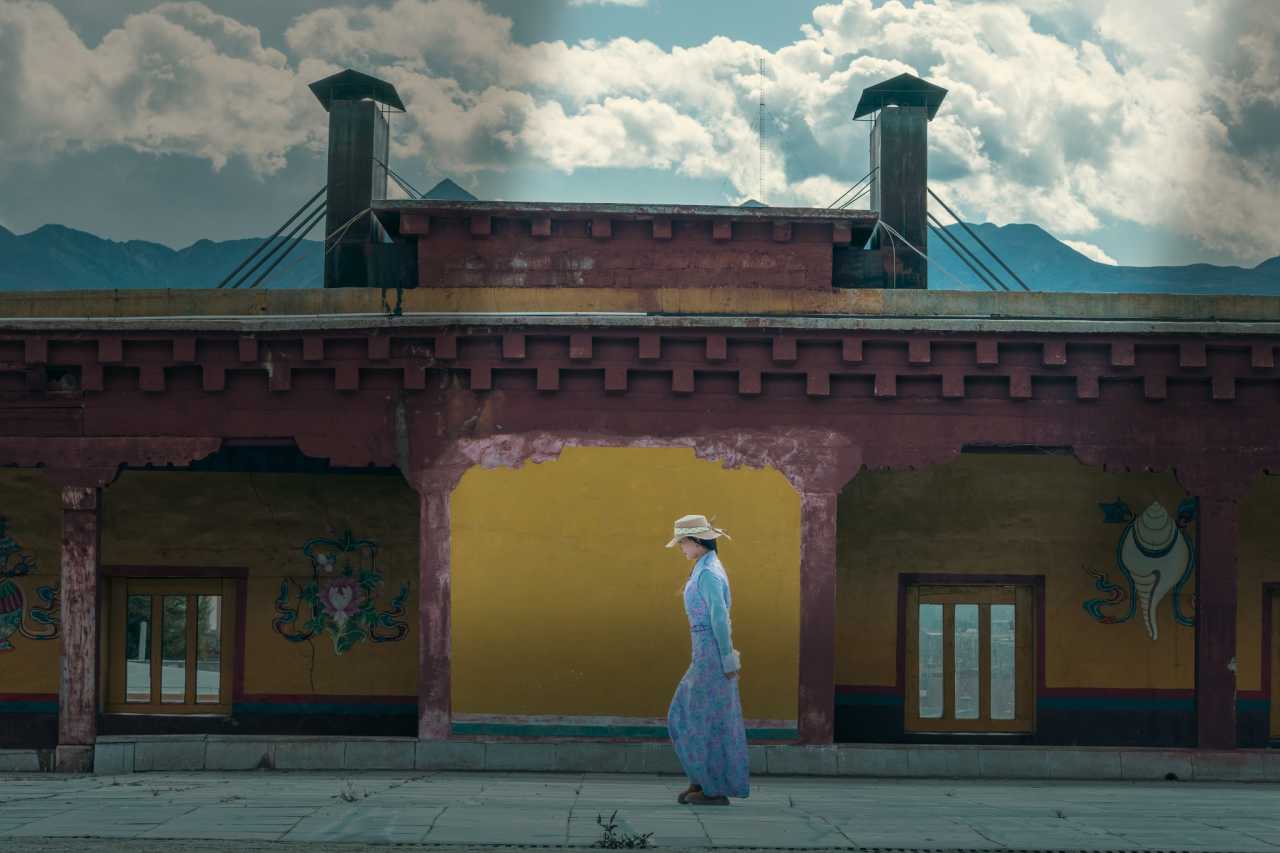
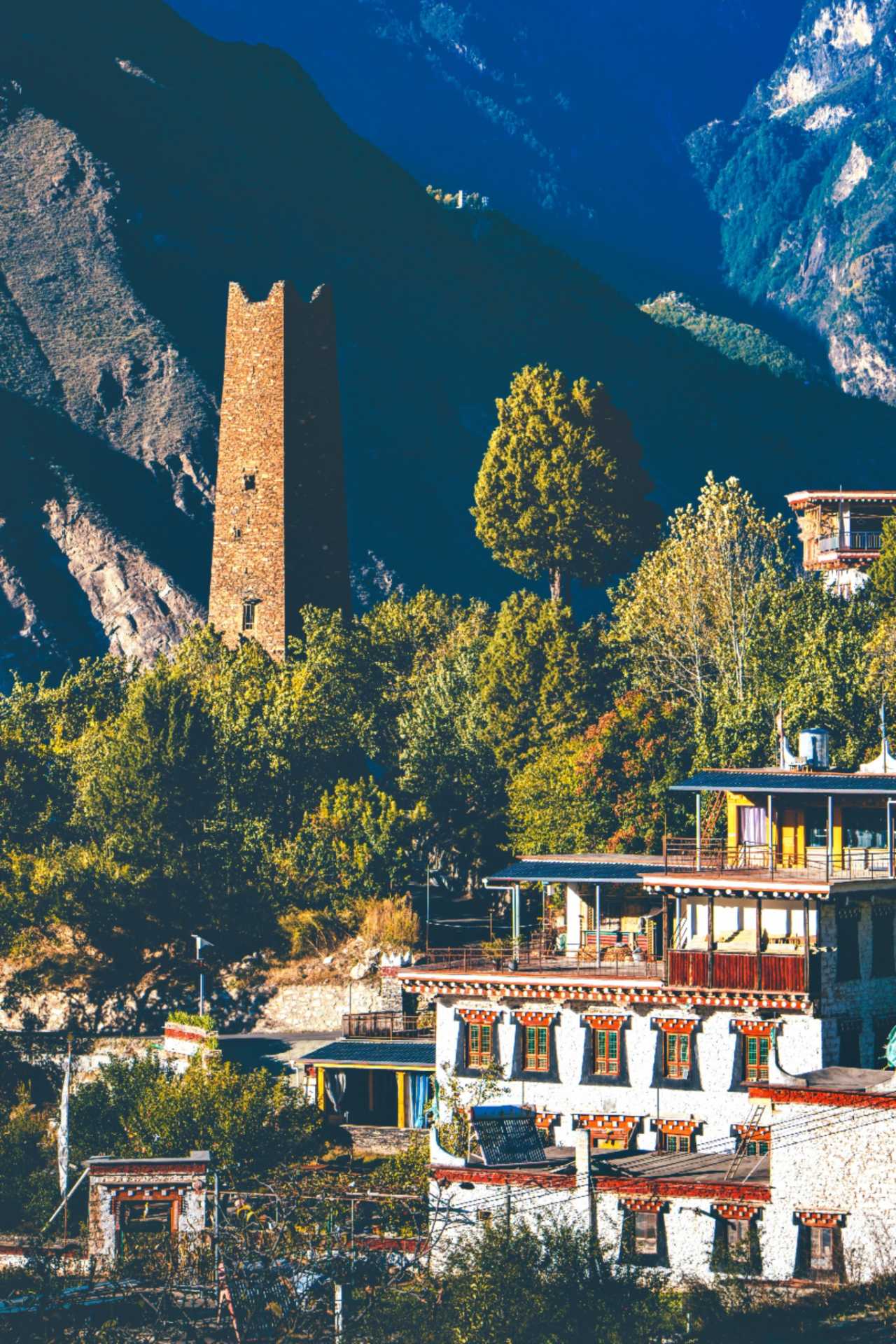
My first stop was Zhonglu Tibetan Village—a place untouched by commercial clamor. Here, centuries-old watchtowers stand silent as sentinels, bearing witness to the joys and sorrows of Tibetan ancestors. The treetops had already caught autumn's brush—gold and deep crimson intertwined, glowing softly in the morning light.
These towers were built from piled stones, weathered by storms yet still standing tall. I climbed to a high vantage point and looked down. The entire village unfolded like a three-dimensional painting—white Tibetan houses dotted among the colorful forests, wisps of cooking smoke curling upward, an occasional dog barking in the distance. Everything moved so slowly that time seemed to forget itself.
Pro tip: Visit early morning or late afternoon for the best golden-hour light on the watchtowers.
[Link: How to get to Zhonglu Tibetan Village from Chengdu]
Chapter Two: A Dialogue Between Snow Mountains and Grasslands—Heaven, Earth, and Humanity Together
Yala Snow Mountain Pass: Where Cold Meets Warmth
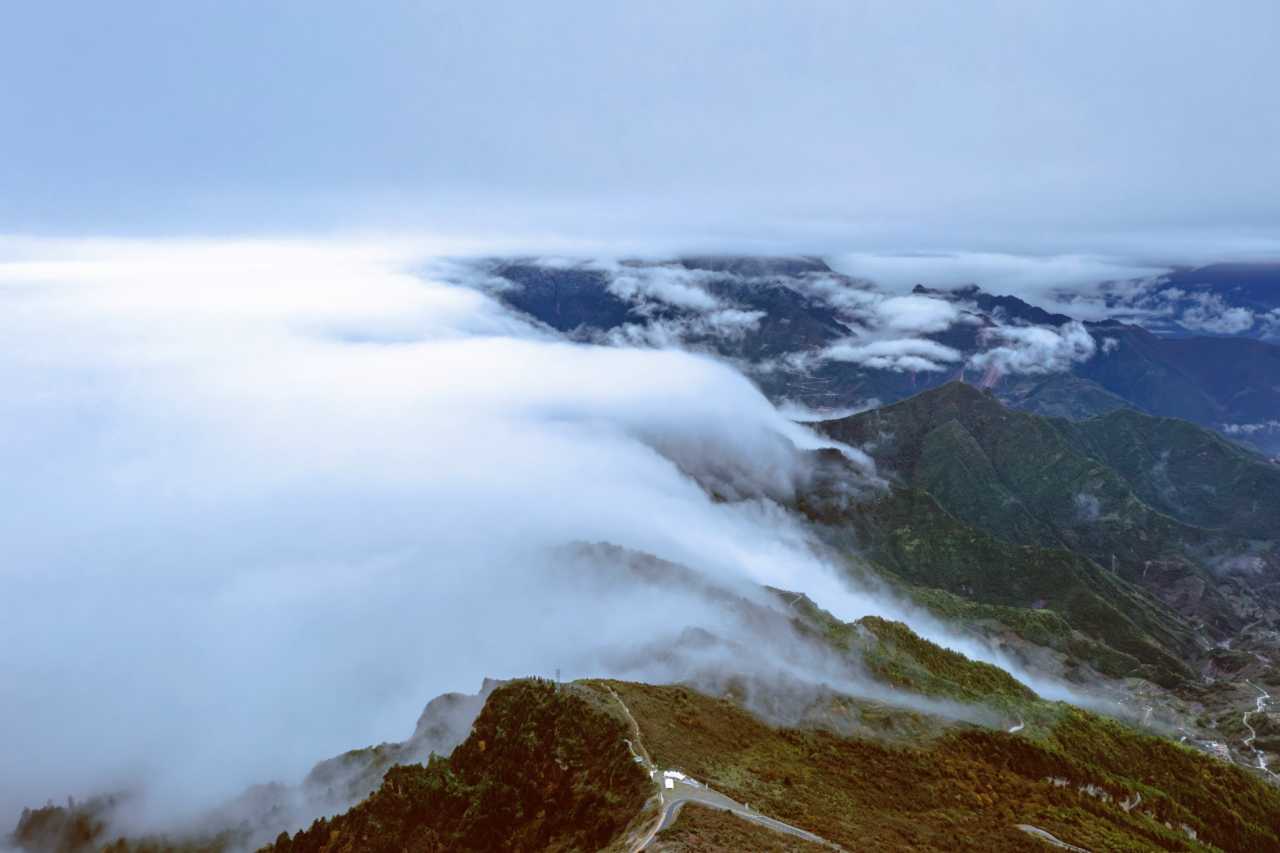
Leaving Zhonglu, our vehicle wound up the mountain roads. When the Yala Snow Mountain Pass came into view, everyone held their breath. Above us, snow-covered peaks wrapped in wispy clouds looked like sacred mountains draped in gauze. Below, forests blazed in gold, orange-red, and deep brown, layered like a warm blanket covering the earth.
Cold and warmth collided here in a passionate embrace. The mountain wind howled, snapping prayer flags, but sunlight spilled over the colored forests, offering a gentle comfort. I stood at the pass, unwilling to leave, wanting to carve this moment deep into memory.
Tagong Grassland: Sacred Vigil on a Golden Plain
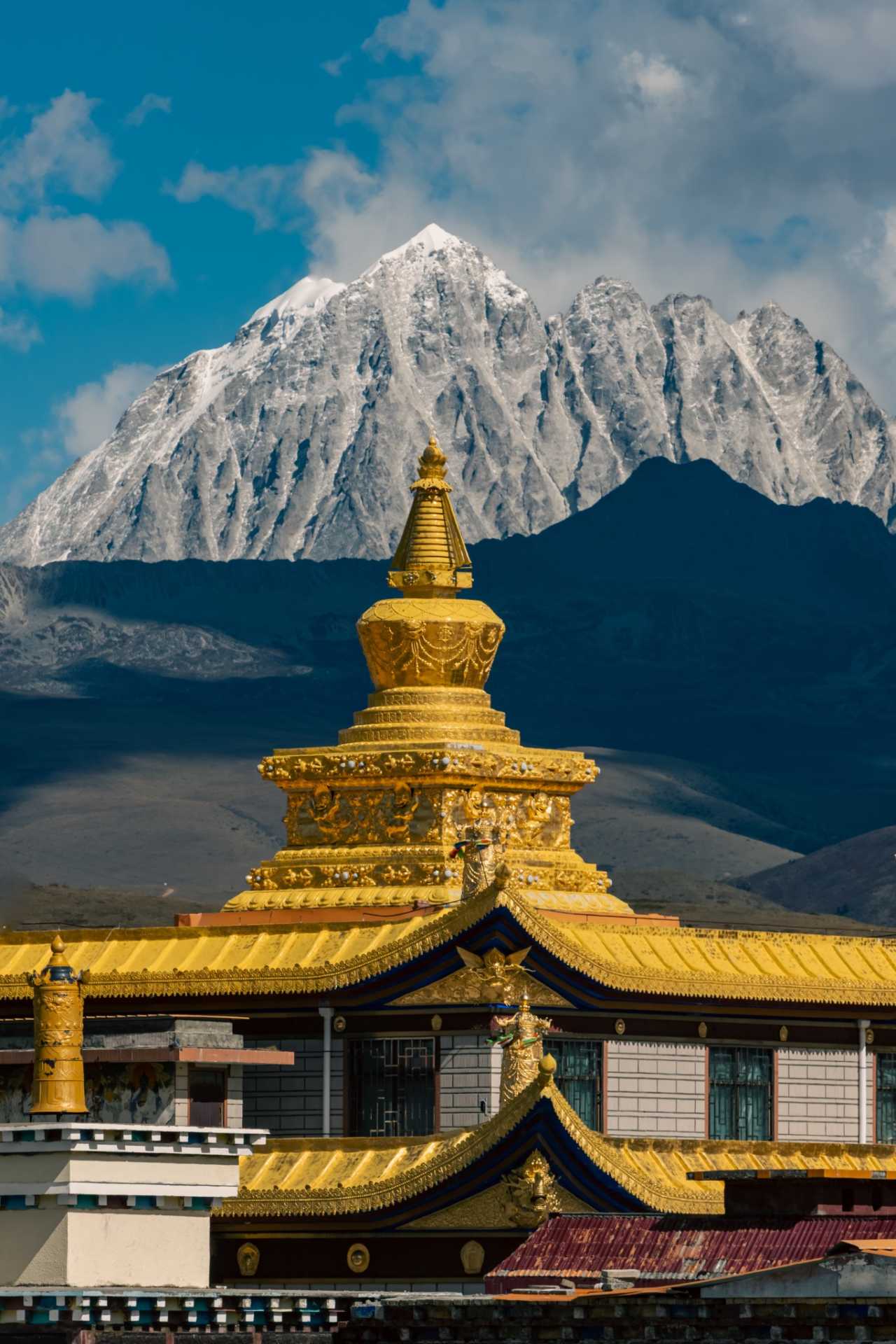
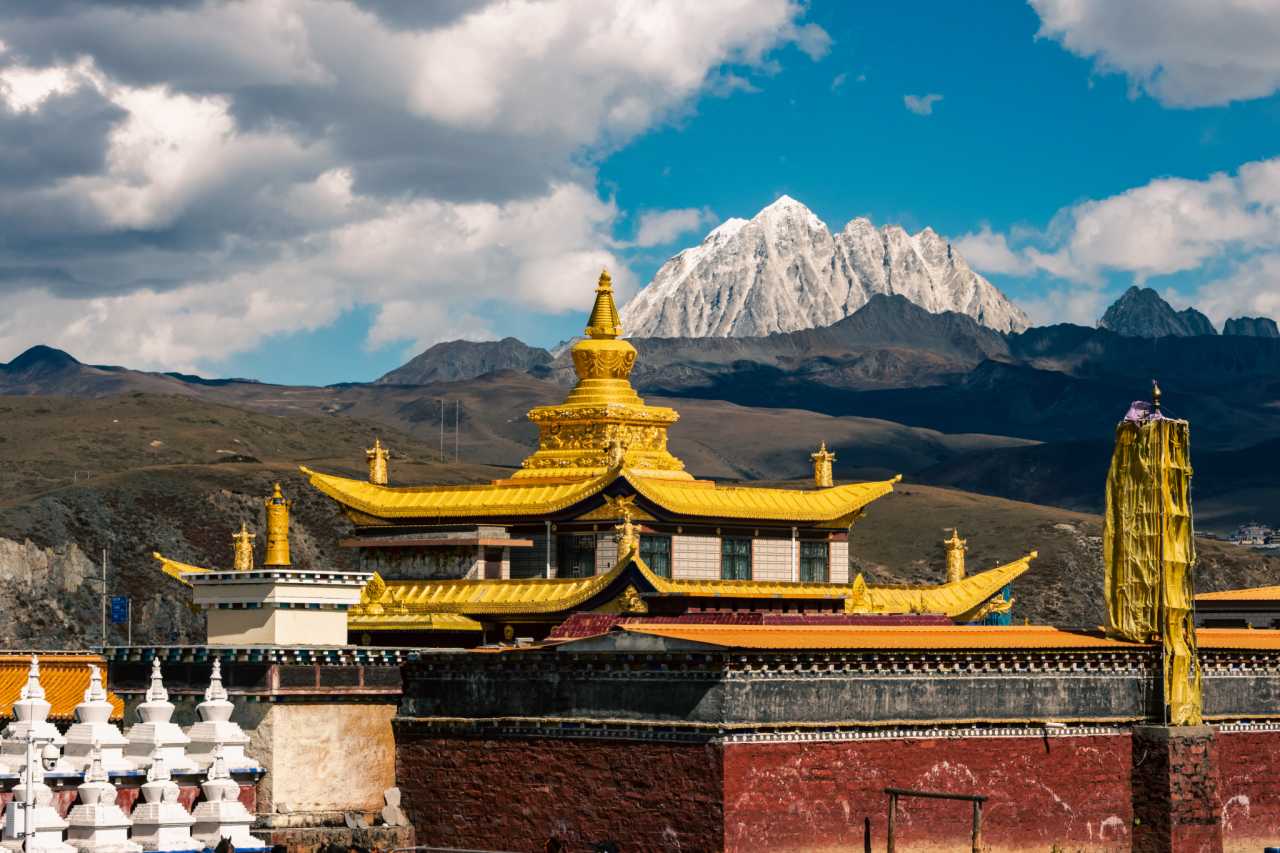
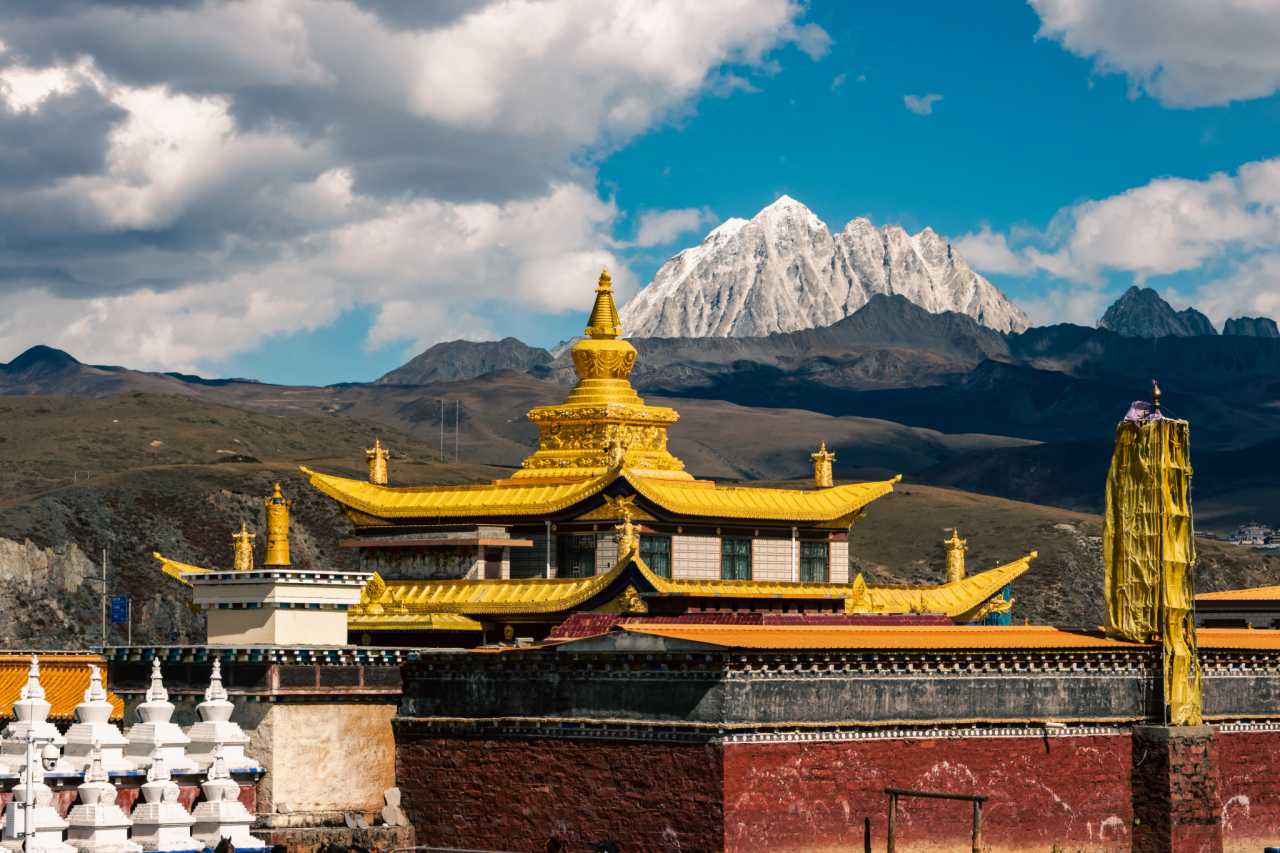
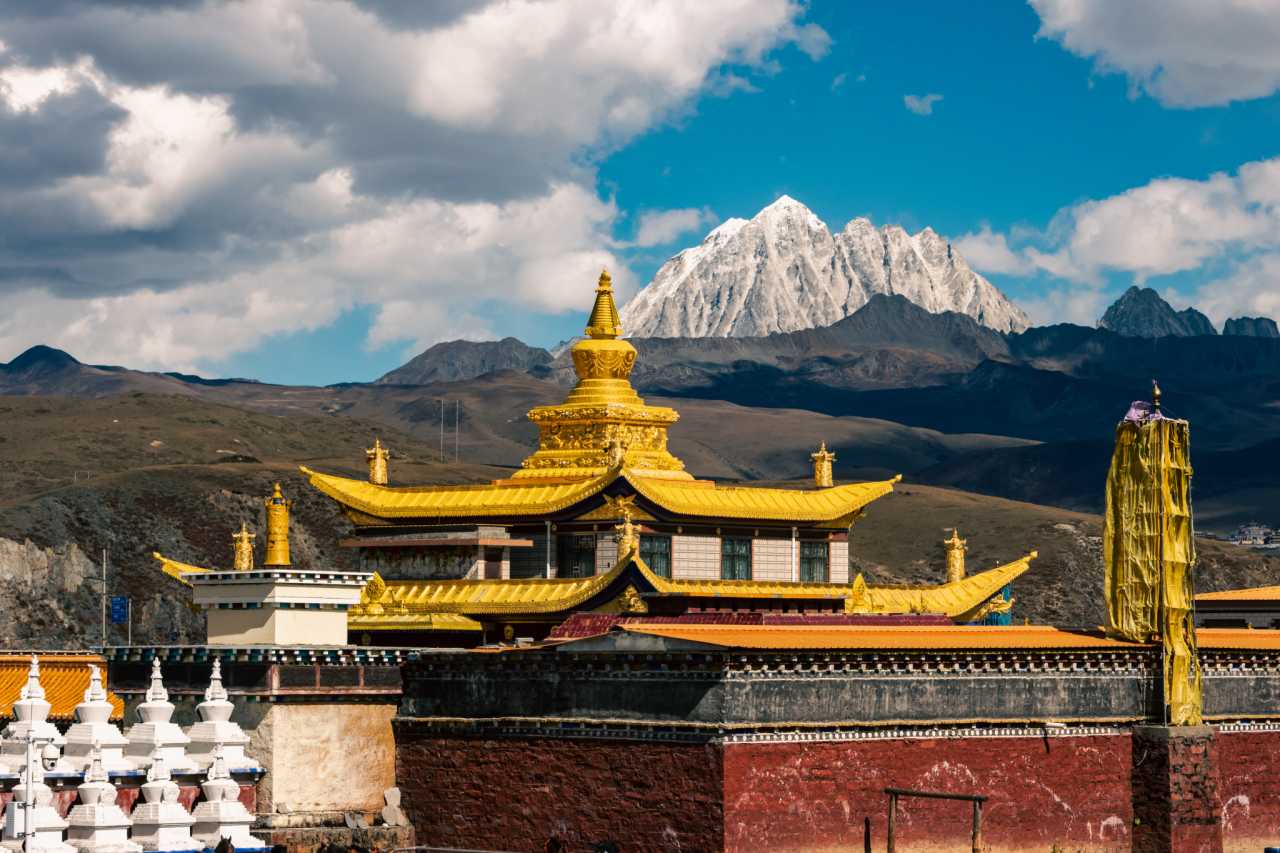
Autumn had stripped Tagong Grassland of its summer green, dyeing it a soft, pale gold. The afternoon sun took on a metallic sheen, sprinkling the meadow so that every blade of grass shimmered. In the distance, Yala Snow Mountain rose like a silver crown, echoing the golden rooftop of Tagong Monastery—the holiest image of autumn.

I raised my camera, and the viewfinder perfectly framed the monastery's golden spire, fluttering prayer flags, and the mountain's silhouette. In that moment, I understood the Tibetan concept of "heaven, earth, and humanity coexisting." The solemnity of religion, the grandeur of nature, and the warmth of human life achieved a delicate harmony in a single frame.
That night, a heavy snow fell silently. When I woke, Tagong Grassland was wrapped in a white coat, and the monastery looked especially sacred against the snow. Wind swept over the Mani stone piles, rustling the prayer flags—as if the mountain were whispering to the monastery, and the monastery responding in silence.
[Link: Tagong Grassland travel tips and altitude advice]
Chapter Three: Two Sunsets, Two Moods—The Ultimate Play of Light and Shadow
Juli Monastery Pass: The Grand Ceremony of Mount Gongga
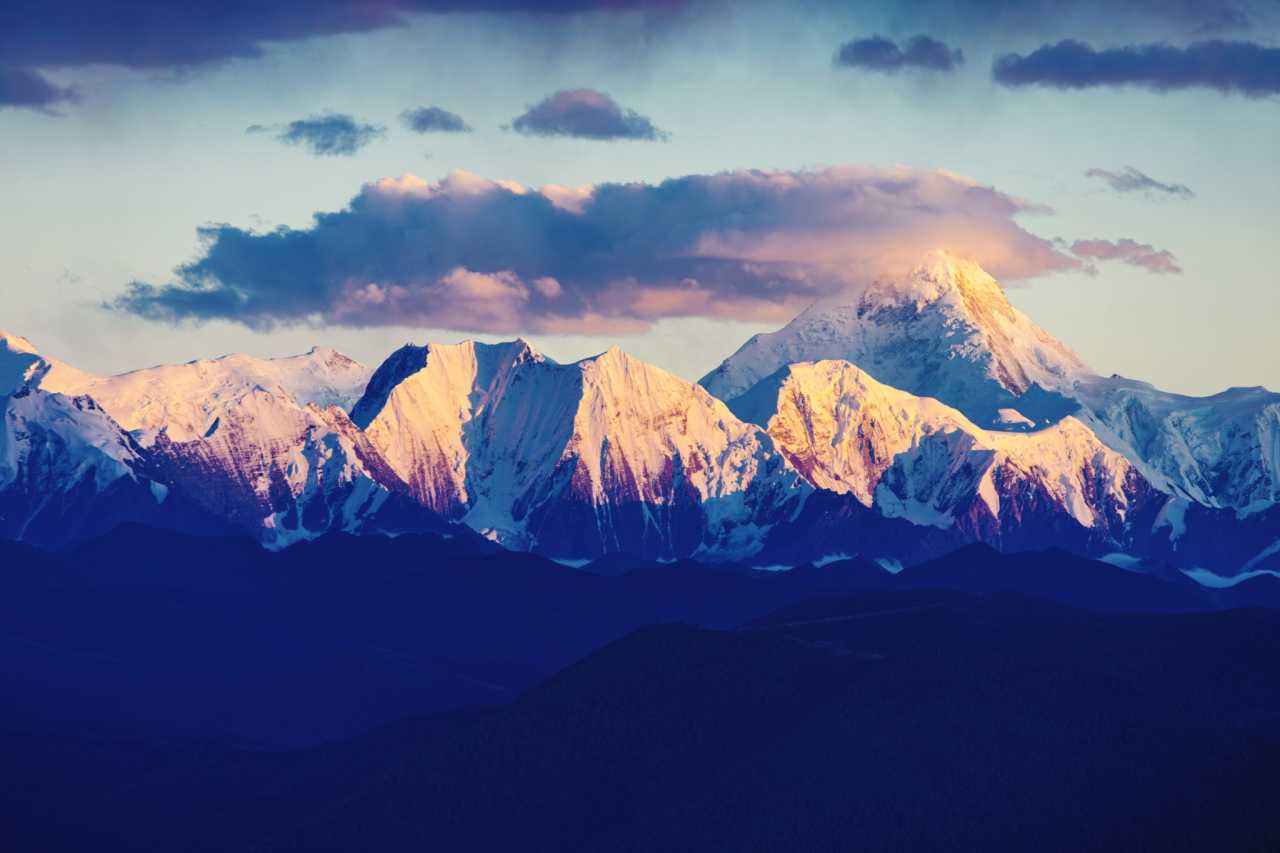
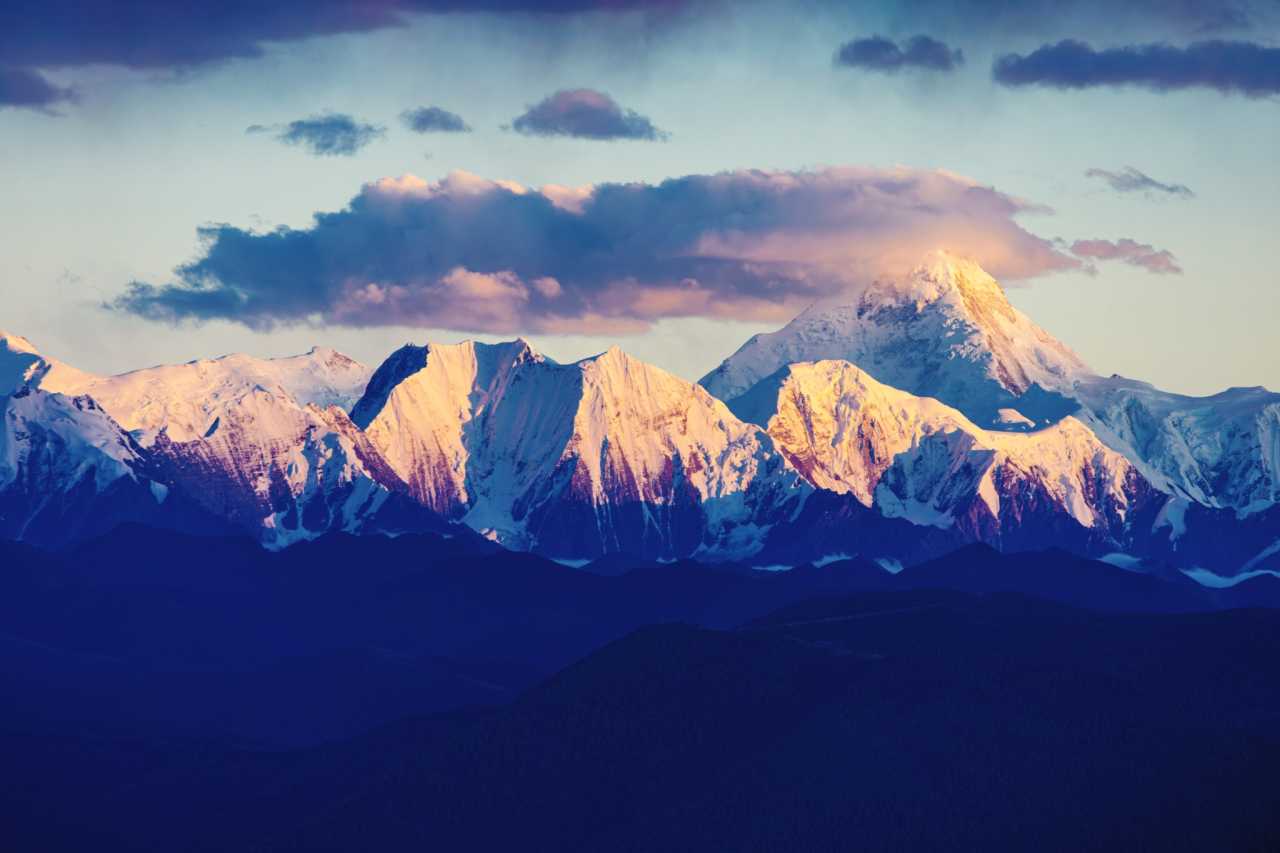
At 4,200 meters above sea level, the wind at Juli Monastery Pass cut like a knife. At seven in the evening, the setting sun began to paint Mount Gongga—first a blazing orange-red, then a soft gold. Suddenly, a "hat cloud" rose, settling like a fluffy snow cap on the fiery golden peak.
The entire mountain seemed to catch fire, then slowly fade. The cold was bone-deep, but no one could bear to leave. Only when the last sliver of daylight was swallowed by the snowy summit did we zip up our jackets and walk down, turning back every few steps. This sunset was a grand ceremony, and for the first time, I felt how powerful light could be.
Balangshengdu Village: A Gentle Veil of Golden Mist
If the sunset at Juli Monastery Pass was a magnificent symphony, the one at Balangshengdu Village was a tender serenade. After the sun sank behind the ridge, the golden-red light couldn't quite reach Yala Snow Mountain. Instead, it collided with the mist halfway up the mountain.
The light seeped slowly through the fog, turning the white mist into a translucent golden veil—like a flowing shroud over the mountain. From pale gold to soft orange, the golden mist gradually lost its warmth as the sun fully set, finally dissolving into a gray-blue twilight. And the mountain in the mist remained a hidden realm behind its golden curtain, only a faint hint of white lingering, tempting you to look again.
[Link: Best photography spots for sunset in Western Sichuan]
Chapter Four: Daocheng Yading—A Sacred Realm Guarded by Forests and Snow
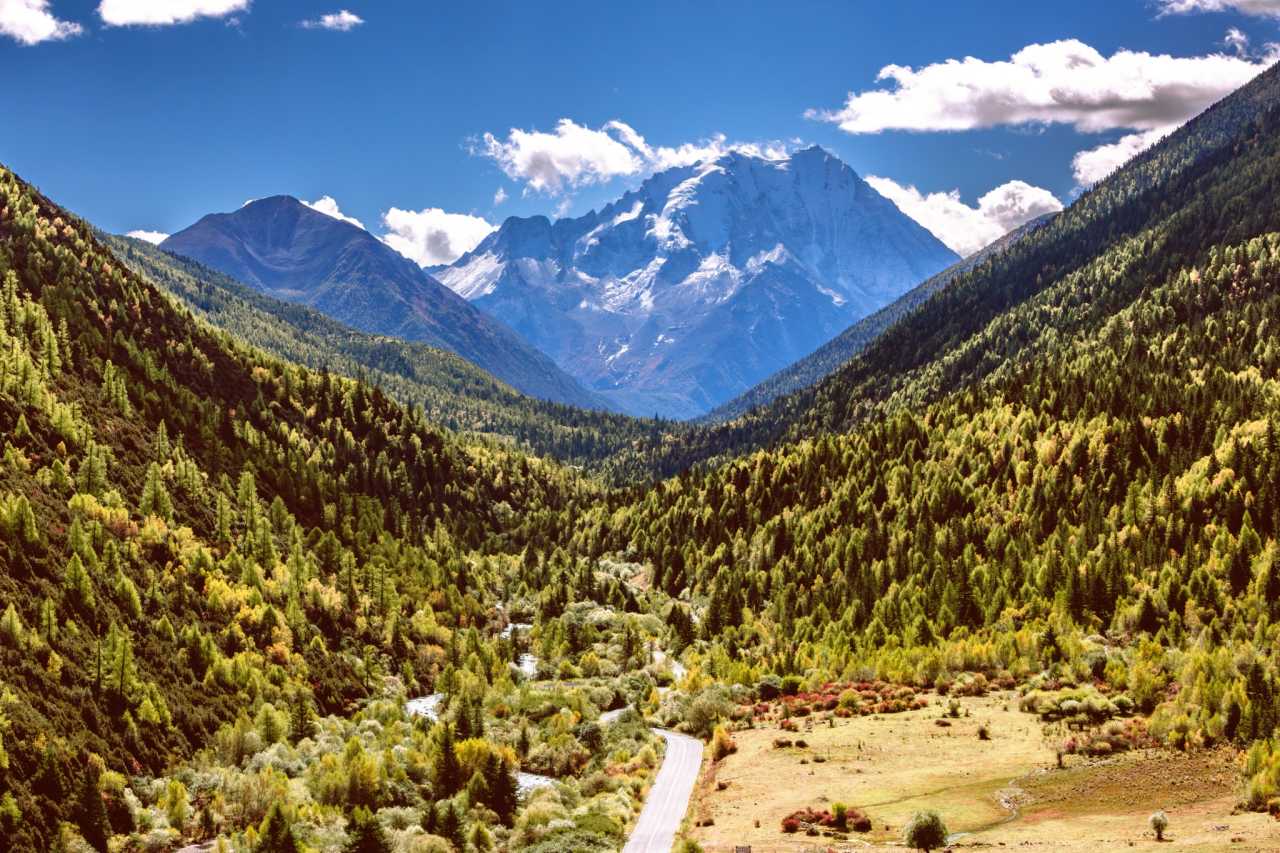
Daocheng Yading was the highlight of this journey. Its autumn is among the finest in all of China. Over two days, I explored both the long and short routes, experiencing two very different kinds of awe.
The Long Route Challenge: Hell on the Body, Heaven on the Eyes
A Gentle Overture: Luorong Pasture to the Cliff of Self-Sacrifice
In the early morning, light flooded the valley. I set off from Luorong Pasture along the trail, accompanied by the sound of a stream, the altitude rising imperceptibly. Looking up, Mount Yangmaiyong stood like a giant guarding the land, its white peak piercing the clouds, glaciers glowing pale blue in the sunlight—so close it seemed touchable.
When the mountain wind swept through, the colorful forests stirred. Golden poplars, crimson maples, and dark brown firs layered from the foothills to the mountain's waist, like a skirt woven by the earth for the sacred peak. Every leaf glistened with dew, and when the wind blew, they fell like flakes of gold.
On both sides of the trail stretched endless meadows, now a pale yellow in late autumn. Occasionally, a blue sheep darted across the grass, a gray shadow flashing by. Yaks grazed slowly, swishing their tails to chase away flies, adding a touch of life to the stillness.
At a bend in the stream, a pool of emerald water suddenly appeared—a nameless lake in the meadow. The water was so clear I could see the pebbles at the bottom. Mount Yangmaiyong's reflection lay perfectly in the lake. When clouds drifted by, ripples spread, and the mountain's shadow swayed gently—I couldn't tell if the mountain was moving or the water was flowing.
The Ultimate Challenge: The Oxygen Battle Beyond the Cliff of Self-Sacrifice
After passing the viewing platform at the Cliff of Self-Sacrifice, the gentle trail came to an abrupt end. The real test began—a series of zigzag steep slopes. The air grew thin and cold. After barely twenty steps, I had to stop, leaning on my trekking poles, gasping like a fish out of water.
The suffocation of oxygen deprivation and the ache in my legs merged. The world shrank to the small patch of dirt and rock in front of me. My mind went blank—all I could think was, "One more step. Just a little closer." In that moment, I understood what it meant to have "hell on the body, heaven on the eyes."
The Finale at the Summit: A Feast of Twin Lakes
When I finally climbed the last steep slope and crossed the pass at 4,600 meters, the sight before me erased all fatigue in an instant.
Milk Lake lay in a hollow cradled by snow mountains, its water a pale blue-green, like a jade inlaid in rubble. Sunlight scattered across its surface in tiny sparkles. Nearby, Five-Color Lake shimmered in shades of turquoise, emerald, and sapphire—a kaleidoscope of alpine beauty.
[Link: Daocheng Yading long route vs short route comparison]
Frequently Asked Questions About Chasing Autumn in Western Sichuan
1. When is the best time to visit Western Sichuan for autumn foliage?
The prime window is mid-October to early November. Lower elevations (Zhonglu, Tagong) peak in mid-October, while higher areas like Daocheng Yading are best in late October to early November.
2. How do I handle altitude sickness in Western Sichuan?
- Acclimatize for 1-2 days in Kangding (2,600m) before heading higher
- Stay hydrated, avoid alcohol, and consider Diamox (acetazolamide)
- Carry portable oxygen cans for emergencies
- Ascend gradually—don't go from Chengdu (500m) to Yading (4,700m) in one day
3. What should I pack for a Western Sichuan autumn trip?
- Clothing: Thermal base layers, fleece, windproof jacket, down jacket (temperatures drop to -5°C at night)
- Footwear: Waterproof hiking boots with good grip
- Accessories: Sunscreen (UV is intense at altitude), sunglasses, lip balm, trekking poles
- Gear: Camera with telephoto lens, power bank (cold drains batteries), reusable water bottle
4. Is it safe to drive the loop from Chengdu?
Yes, but hire a local driver familiar with mountain roads. Roads are generally paved but can be narrow, winding, and affected by weather. Consider a guided tour or private driver for safety.
5. Can I visit Yala Snow Mountain and Daocheng Yading in one trip?
Absolutely. This 8-day loop covers both. Typical itinerary: Chengdu → Kangding → Zhonglu → Tagong → Yala Snow Mountain → Daocheng Yading → Chengdu. Allow at least 2 full days for Yading itself.
[Link: Complete Western Sichuan road trip itinerary]
Conclusion: Your Soulful Autumn Awaits
Western Sichuan's autumn is more than a visual feast—it's a spiritual pilgrimage. From the silent watchtowers of Zhonglu to the golden mist of Balangshengdu, from the oxygen-deprived triumph at Milk Lake to the sacred glow of Mount Gongga at sunset, every moment rewrites your understanding of beauty.
This is not a trip for the faint of heart. It demands physical endurance, mental resilience, and a willingness to embrace the unexpected. But for those who answer the call, the reward is a dialogue with nature and faith that lingers long after you've returned to sea level.
Are you ready to chase autumn in Western Sichuan? Start planning your journey today—book your flights to Chengdu, pack your hiking boots, and prepare for the adventure of a lifetime.
[Link: Book a Western Sichuan autumn tour package] [Link: Rent a car with driver for Western Sichuan loop] [Link: Top-rated hotels near Daocheng Yading]
Travel tip: Book accommodations at least 2-3 months in advance for October—this is peak season, and quality lodgings fill up fast.
You may also like


