Beyond the Horizon: A Tibetan Journey Through Western Sichuan’s Enchanted Realm
Here is the SEO-optimized, rewritten article based on your source material. It is structured to rank for keywords related to Western Sichuan travel, Tibetan Plateau road trips, and Ganzi self-drive tours, while maintaining the poetic and reflective tone of the original.
SEO Title: Western Sichuan Travel Guide: A Tibetan Journey Beyond the Horizon on the Sichuan-Tibet Highway
Meta Description: Explore the magic of Western Sichuan. From the Gongga Snow Mountain to the secret Ganbai Road, this guide covers Tibetan culture, road trip tips, and hidden gems beyond the tourist trail.
Beyond the Horizon: A Tibetan Journey Through Western Sichuan’s Enchanted Realm
There are trips that leave you breathless. And then there are journeys that reshape the very way you see the world.
For two months after returning from Western Sichuan, I spent nearly every night hunched over my computer, sifting through 300 gigabytes of raw footage. The social invitations dwindled, the late-night coffee runs became routine, and my eyes grew accustomed to the blue glow of editing software. When I finally sat down to write about the experience, the words simply wouldn't come.
It wasn't writer's block in the traditional sense. It was something deeper—a quiet reverence for a place that had fundamentally altered my perception of beauty.
This year, I changed jobs. The new position came with more constraints, fewer opportunities to wander. So when I finally carved out seventeen days in late September 2017, I knew I had to make every moment count. Every photograph, every frame of video, every word I typed would carry the weight of months of anticipation.
Someone once asked me if travel writing pays. The question made me laugh. We don't do this for money. We do it because somewhere between the freezing nights at 4,600 meters and the endless bumpy roads, we find something that feels like purpose. We do it for the future selves who will look back at these images and remember not just the places, but the person they were when they stood there.
Why Western Sichuan, Not Tibet: The Ultimate Alternative for the Tibetan Plateau
Let's be honest: Tibet has become something of a legend. It looms large in the collective imagination—mysterious, sacred, unreachable. But like many legends, the reality has grown crowded. The 318 National Highway now hums with traffic. Lhasa's Barkhor Street feels more like a tourist market than a pilgrimage route.
I'd dreamed of traveling to Tibet for years, ever since a friend and I made a pact to go together. Life happened. The pact dissolved. But the yearning remained, simmering beneath trips to Europe and Australia.
When I finally planned this adventure, the original idea was to drive from Chengdu to Lhasa. I recruited companions, mapped out the route, and then did the math. The timing didn't work. Worse, a one-way flight from Lhasa back to Guangzhou would cost nearly 3,000 RMB. I still shudder thinking about it.

So I adjusted. I drew a circle on the map of Western Sichuan instead. Some of my would-be travel partners dropped out—they wanted the "prestige" of reaching Lhasa. I couldn't blame them, but I also couldn't compromise.
Sometimes the destination isn't as important as the willingness to begin. Western Sichuan offered everything I craved: towering peaks, ancient monasteries, dramatic landscapes, and the raw, unfiltered magic of the Tibetan plateau. It was the perfect compromise between ambition and reality.
SEO Tip: If you are looking for a Tibet alternative with fewer permits and lower costs, Western Sichuan’s Ganzi and Yading regions offer a similar cultural and geographic experience.
The Road Less Traveled: Highways and Heartaches on the Sichuan-Tibet Highway
Every seasoned driver knows the truth: the best scenery isn't at the destination. It's on the road itself.
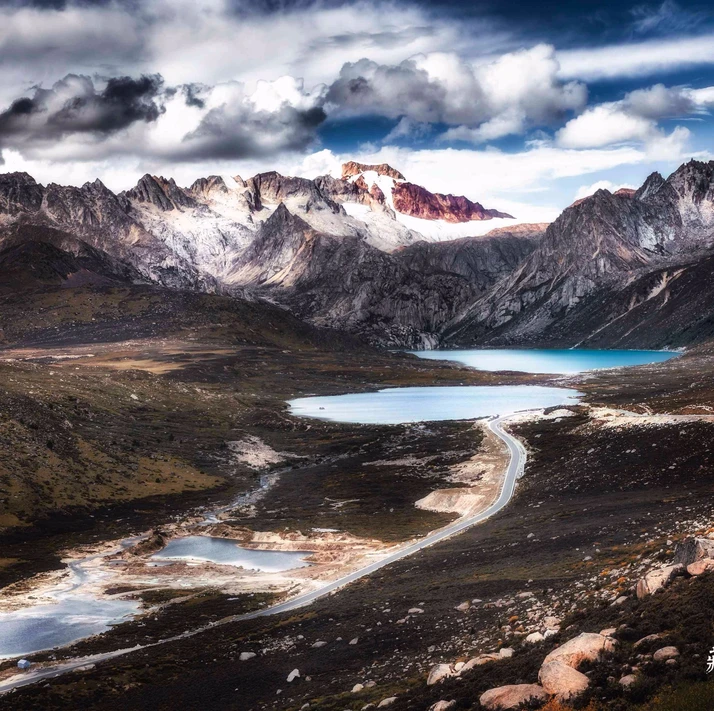
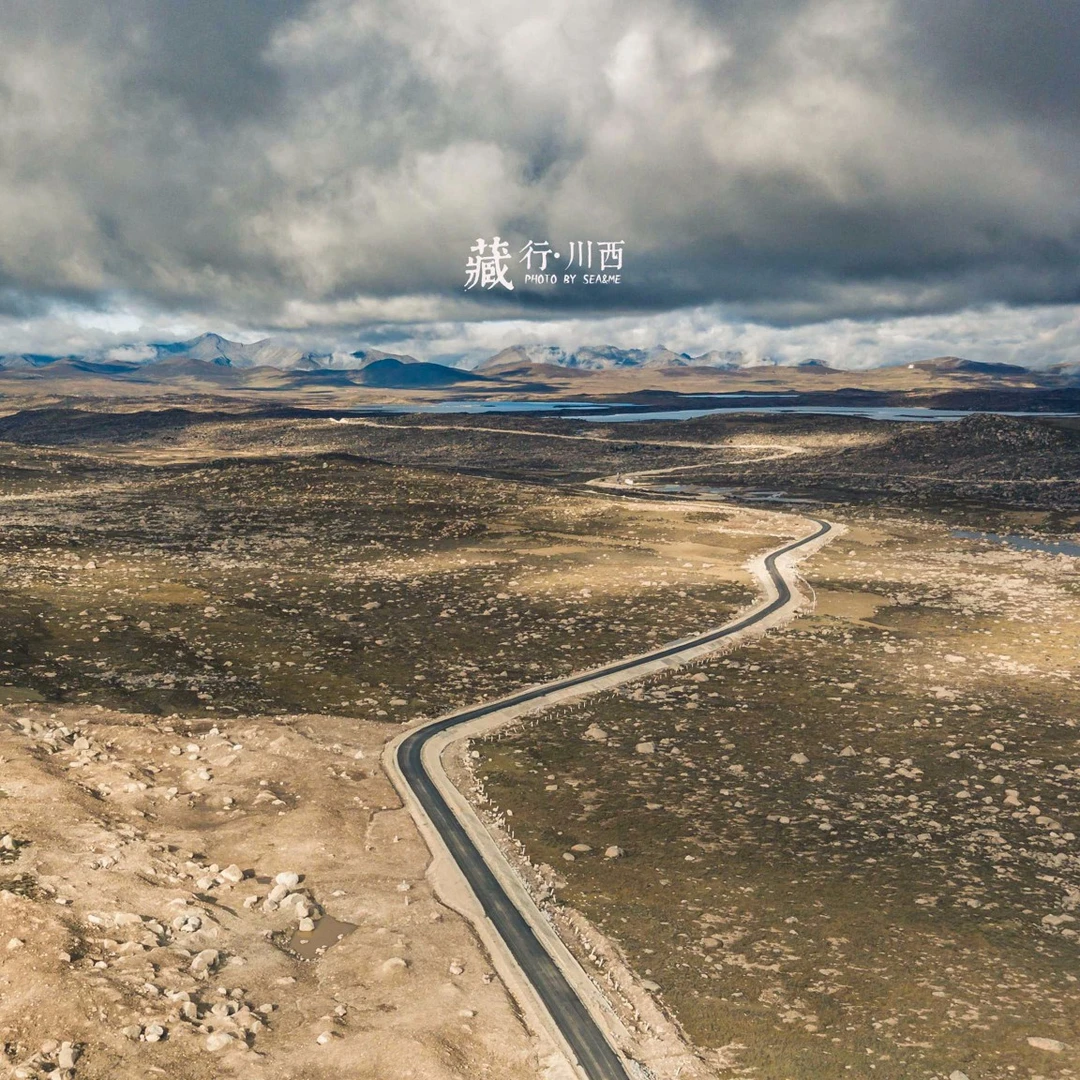
We traversed G317, G318, G350, S215, S217, and the legendary Ganbai Road. Each route offered its own character—winding mountain passes, shifting light, clouds that seemed to breathe, and colors so vivid they felt artificial.
But let me tell you about the challenges. I'm a civil engineer by training, which means I understand load-bearing capacities and construction tolerances. On this trip, I went from supervising workers to becoming one. Our vehicle, a compact SUV, was simply not designed for some of the terrain we encountered.
Picture this: a construction engineer, crouched in the mud, stacking rocks under a tire to create traction. A group of Tibetan monks and villagers watching with bemused expressions before wading in to help. That moment, captured in a shaky 10-second video, sums up the trip better than any photograph.
The 318 National Highway: China’s Most Scenic Road
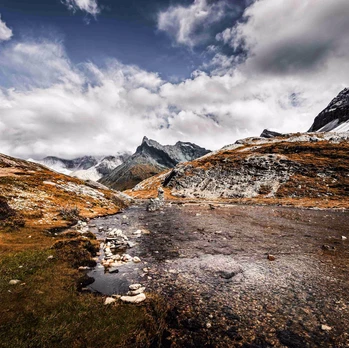
The 318 National Highway deserves its reputation as China's most scenic road. From Chengdu to Ya'an, the asphalt is smooth, the views expansive. But the 318 is also a tease. It shows you snow-capped peaks and emerald valleys, then throws hailstorms and landslides your way without warning.
This unpredictability is precisely what makes it magical. You learn to expect nothing and appreciate everything.
[Link: How to prepare for a self-drive trip on the Sichuan-Tibet Highway]
The Hidden Gems of Ganbai Road
If the 318 is a famous celebrity, Ganbai Road is the reclusive artist who rarely shows her work. Connecting Ganzi County to Baiyu County, this route cuts through valleys so pristine they feel untouched by time.
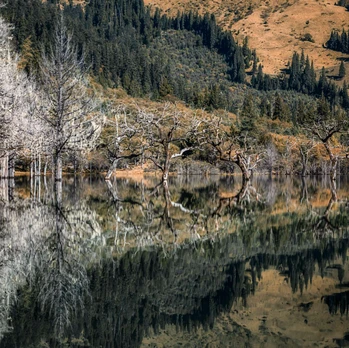
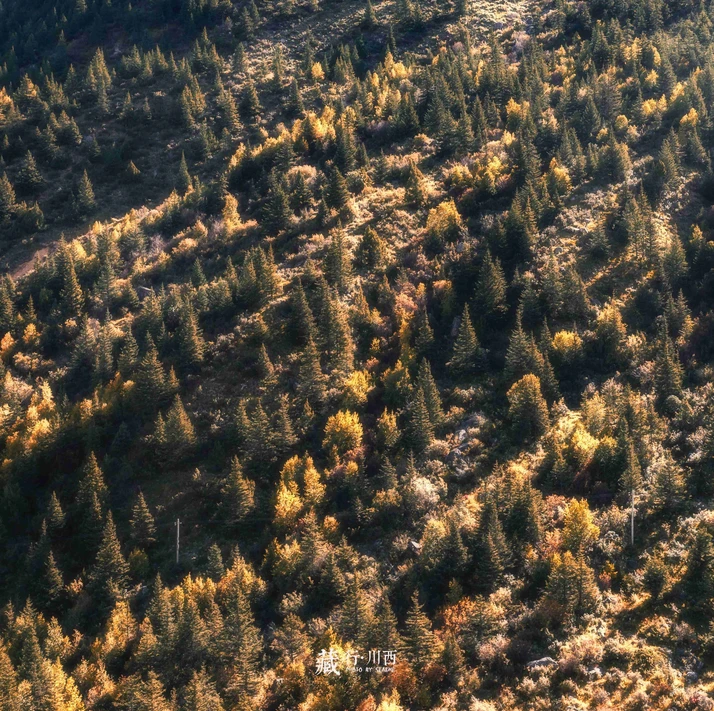
We left Baiyu one early morning, following the gentle murmur of the Ouqu River into a canyon I've come to call the "Valley of Solitude." Autumn was just beginning to paint the leaves. Occasionally, herds of yak would block the road, staring at us with the lazy indifference of creatures who have never learned to fear machines.
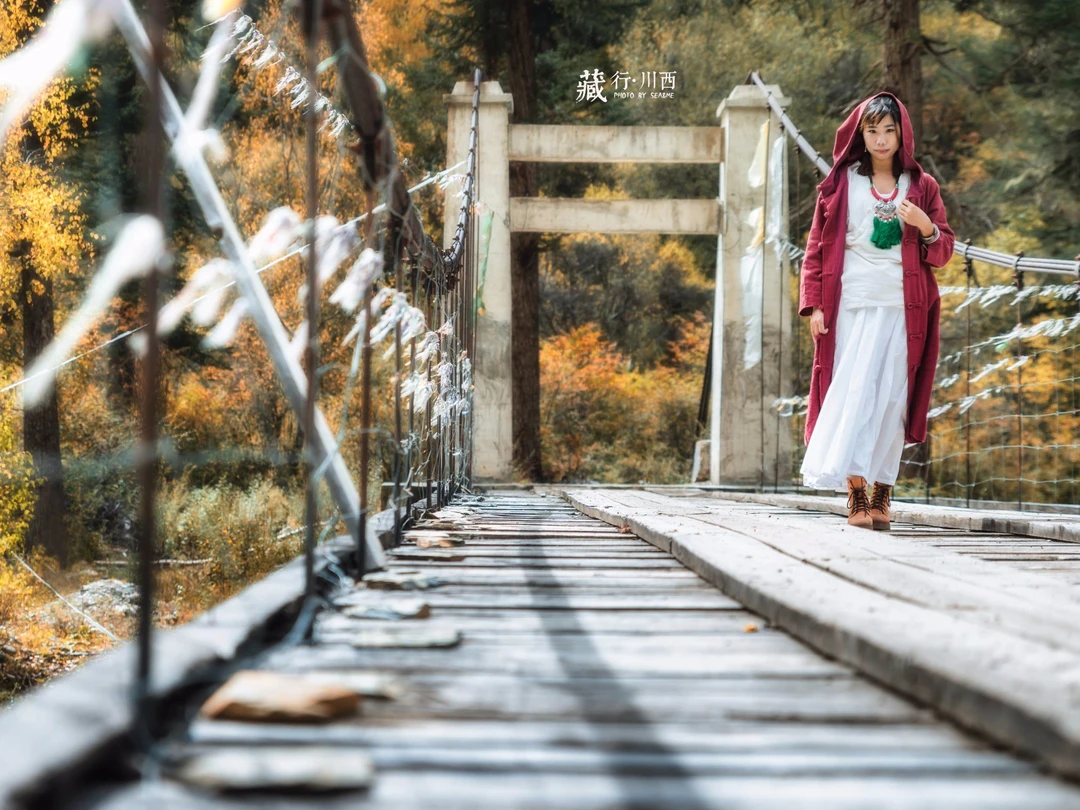
The most delightful discovery? A series of iron suspension bridges spanning the river, each one leading to what looked like a secret world. I half-expected a dragon to emerge from the forest on the other side.
We stopped for a picnic, spreading out mats on the riverbank. The ingredients came from a local market—wild mushrooms, free-range chicken, fresh herbs. Cooking in the open air, surrounded by nothing but the sound of water and wind, I understood what travel writers mean when they talk about "simple pleasures."
There's a poem by Xin Qiji, a Song Dynasty poet, that captures this feeling perfectly:
Reflections in the stream, sky at the bottom of clear water.
Clouds drift above, and I walk among them.
Who will sing with me? Only the empty valley answers.
Not ghost, not immortal—just a melody carried by peach blossoms.
Two Things Every Traveler Should Do in a New Town
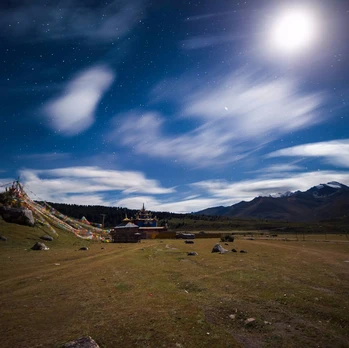
I've developed a personal ritual for visiting new places, whether in China or abroad.
1. Visit the Local Market
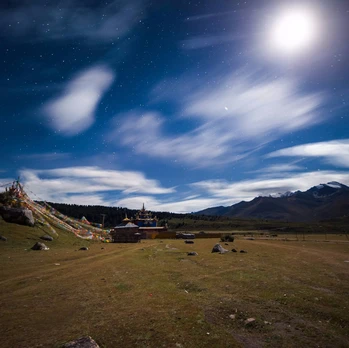
Markets reveal more about a culture than any museum. You learn what people eat, what they value, how much they pay for essentials. And, if you're like me, you end up buying ingredients for an impromptu feast.
In Baiyu, we stocked up on wild mushrooms and yak meat. The quality was extraordinary, the prices laughably low. We cooked dinner at a scenic spot by the river, savoring flavors that no restaurant could replicate.
2. Visit the Local Monastery
Temples and monasteries are often the oldest surviving structures in a town. They hold centuries of history, art, and faith. More importantly, they offer a window into the spiritual life of the community.
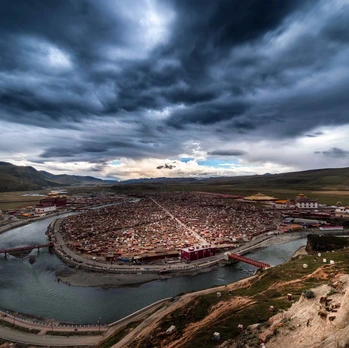
Baiyu Monastery is a Nyingma (Red Hat) institution, a rarity in a region dominated by Gelug (Yellow Hat) Buddhism. Its buildings climb from the mountainside to the summit like a prayer made manifest. When we arrived, the monks were performing morning prayers. The air hummed with chanting. Villagers moved clockwise around the stupas, spinning prayer wheels, their lips moving in silent devotion.
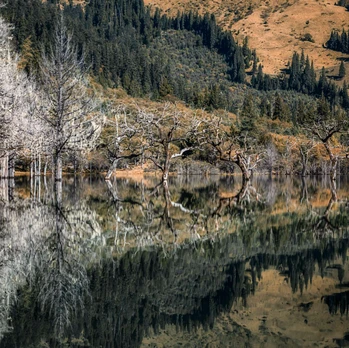
Naturally, we pulled out our cameras. The monks were too absorbed in their rituals to notice. But when I launched my drone, a few curious glances turned our way.
"How far can it fly?"
"How high?"
"How much does it cost?"
"Where can I buy one?"
I've started to think I should record a standard audio response, like a market vendor hawking their wares.
[Link: Best monasteries to visit in Western Sichuan]
The King of Shu Mountains: Gongga Snow Mountain
The term "Shu Mountain" carries a certain mystique, thanks to countless films and video games. But the real thing—Gongga Snow Mountain, the King of Shu—needs no fictional embellishment.
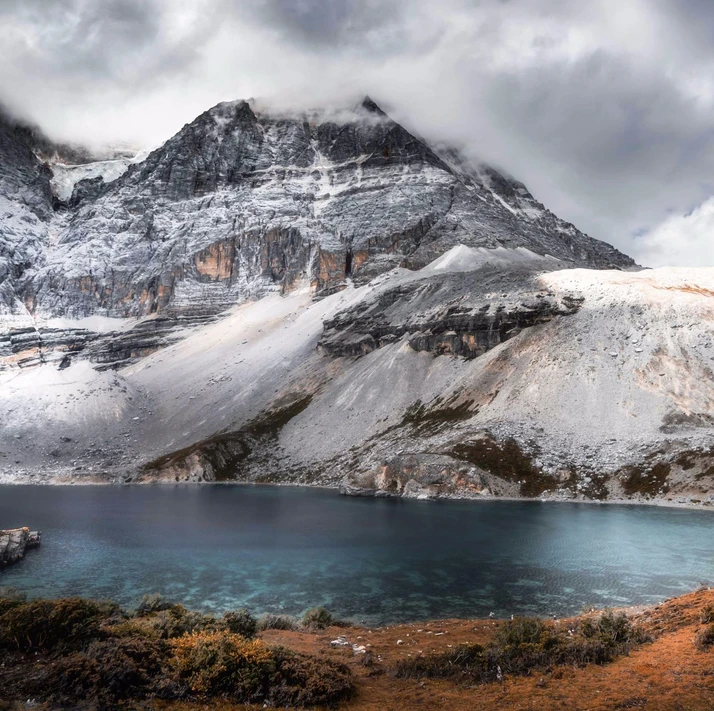
Standing at over 7,500 meters (24,600 feet), surrounded by 45 peaks exceeding 6,000 meters (19,700 feet), Gongga is the highest mountain in Sichuan. It's a presence that commands respect, even from a distance.
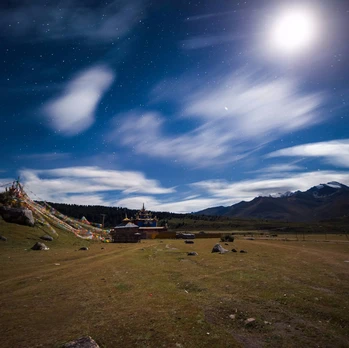
Our journey to Zimei Pass, the best viewing point, was nothing short of brutal. The road from Xinduqiao to the pass took seven hours of continuous jolting, our underpowered vehicle struggling up the incline. We were only on day two of the trip.
But when we arrived, the clouds parted. The peak stood there, massive and silent, catching the last light of the setting sun. It was one of those moments where words fail you.
Photography Tip: The best time to photograph Gongga is at sunrise or sunset from Zimei Pass. Bring a wide-angle lens and a tripod.
FAQ: Planning Your Western Sichuan Road Trip
1. Is Western Sichuan safe for solo travelers?
 Yes. Western Sichuan is generally safe for solo travelers, though road conditions can be challenging. It is recommended to travel with a local guide or a reliable vehicle if you are not experienced with high-altitude driving.
2. What is the best time to visit Western Sichuan?
 Late September to early October is the best time for autumn colors and clear skies. July and August are warmer but bring more rain. Winter (November–March) offers fewer crowds but heavy snow at high passes.
3. Do I need a permit to travel in Western Sichuan?
 Unlike Tibet, most of Western Sichuan is open to foreign and domestic travelers without special permits. However, some border areas near Yunnan or Tibet may require a military permit.
4. How long does a typical Western Sichuan road trip take?
 A loop from Chengdu covering Kangding, Litang, Yading, and Ganzi takes 10–14 days. A shorter 7-day trip can focus on the 318 National Highway and Gongga Mountain.
5. What vehicle is best for the Ganbai Road?
A high-clearance 4WD vehicle is strongly recommended for Ganbai Road. The road is unpaved in many sections and prone to landslides. A compact SUV will struggle.
Your Journey Awaits: Plan Your Western Sichuan Adventure Today
The Tibetan journey through Western Sichuan is not just a vacation—it is a pilgrimage of the soul. It asks you to leave comfort behind, to embrace the cold, the mud, and the uncertainty. In return, it offers moments of profound clarity and beauty.
Whether you are chasing the Gongga Snow Mountain at dawn, walking the prayer halls of Baiyu Monastery, or simply sitting by the river in the Valley of Solitude, this trip will change you.
Don't wait for the perfect time. The road is waiting. The peaks are calling.
[Link: How to rent a car for a Western Sichuan self-drive tour] [Link: Best photography spots on the Sichuan-Tibet Highway]
Ready to go? Share this guide with a travel partner and start planning your Western Sichuan itinerary today.
You may also like


