【Autumn in Bazhong】Catching the Red Leaves by Air: The Ultimate 48-Hour Weekend Guide to Mount Guangwu
Meta Description: Discover Bazhong's autumn splendor with this SEO-optimized guide to Mount Guangwu red leaves. Learn how to see Micangshan & Eighteen Moon Ponds in 48 hours, plus sunrise tips, route planning, and FAQs.
Introduction: Why Bazhong's Autumn Is Worth Every Second
Once the National Day holiday fades, the calendar offers no more official days off. In previous years, I'd curl up on the sofa, scrolling through others' autumn scenery photos, silently envious. But this year was different—November in southern China is when the Mount Guangwu red leaves blaze most fiercely. That restless urge to travel, stirred by the autumn wind like a flickering flame, only grew stronger.
I didn't want to take leave, but I couldn't bear to let this autumn slip by. After much deliberation, I made a bold decision: to use a weekend for a spontaneous trip to Bazhong, Sichuan. As it turned out, 48 hours was enough. With proper planning, you can absolutely immerse yourself in a crimson feast this season. Here's my complete guide to catching the red leaves by air—a weekend autumn fairytale that's closer than you think.
Why Mount Guangwu? The Premier Red-Leaf Destination
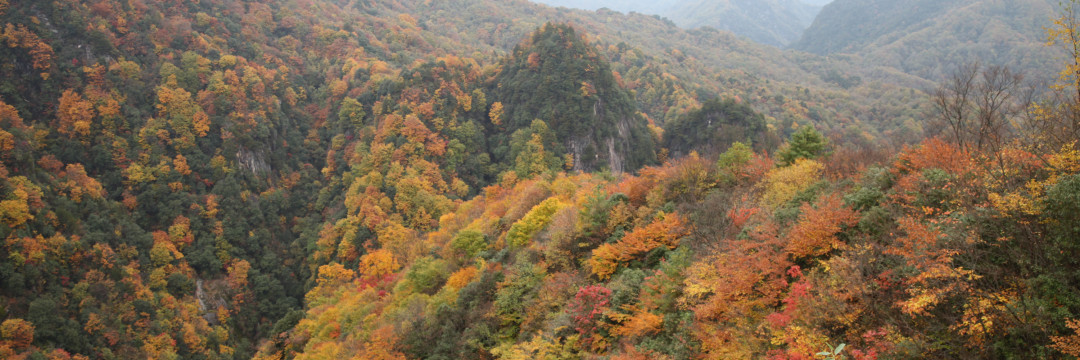
When it comes to autumn foliage in China, several famous destinations come to mind. I've visited Benxi in Liaoning and Yichun in Heilongjiang during National Day holidays—their autumn colors are breathtaking. But one place has always lingered in my mind: Mount Guangwu (Guangwu Shan) .

Located in Bazhong, Sichuan, bordering Hanzhong in Shaanxi, Mount Guangwu is recognized as one of China's three premier red-leaf viewing spots, on par with Benxi in the north. Its autumn foliage peak season arrives a bit later, typically in early November. This "lateness" makes its red leaves all the more precious. So why hesitate? Book the tickets and go!
[Link: Best time to visit Sichuan for autumn foliage]
Planning Your 48-Hour Bazhong Weekend Trip
My Route: A Perfect Loop Without Backtracking
Although Mount Guangwu administratively belongs to Bazhong, it's geographically closer to Hanzhong. Flying from Beijing to Hanzhong and renting a car was the most time-efficient plan. Depart Friday evening, return Sunday evening—every minute counts.
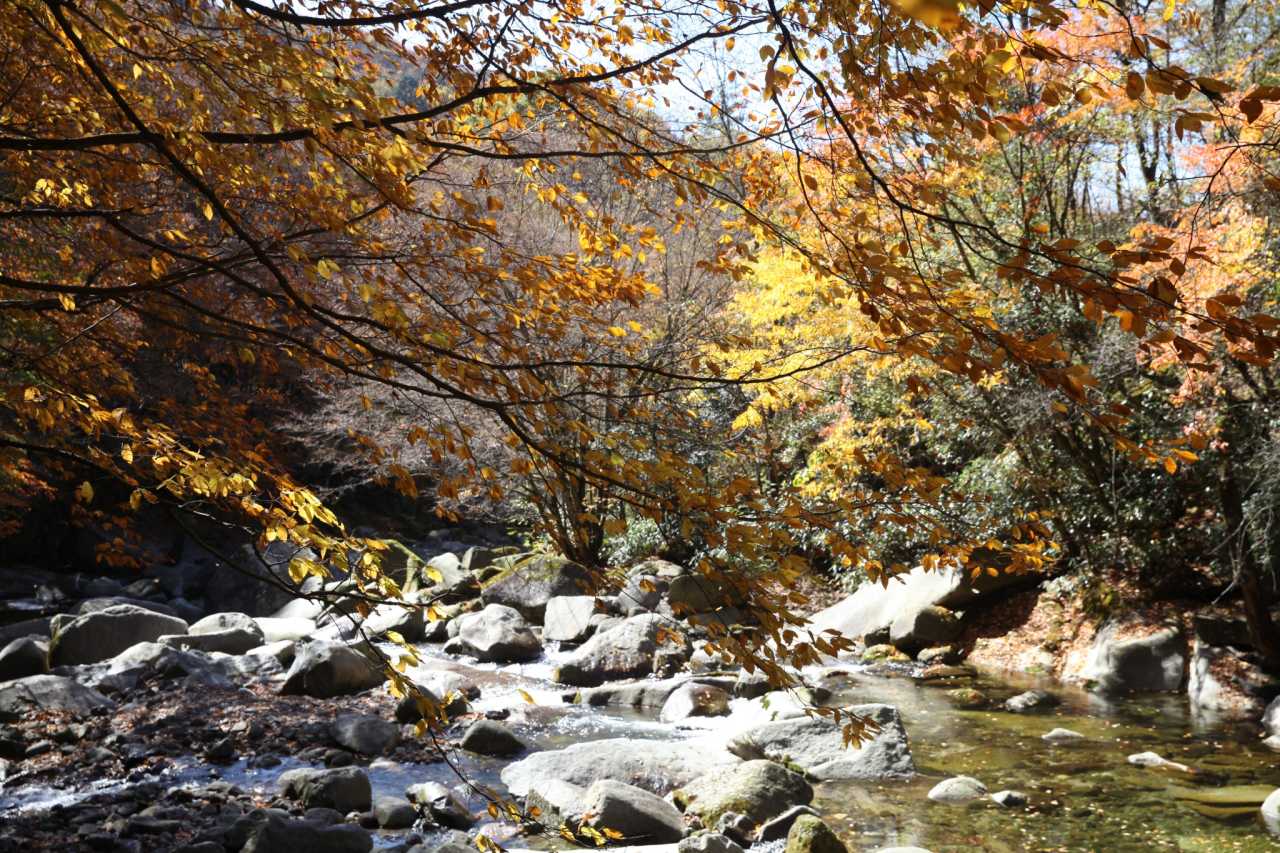
The route I chose: Beijing → Hanzhong → Micangshan → Nanjiang County → Eighteen Moon Ponds (Shiba Yuetan) → Mount Guangwu → Hanzhong
The biggest advantage of this route is that it involves almost no backtracking. Plus, there are two golden windows you absolutely can't miss:
- Nanjiang County to Eighteen Moon Ponds: Set out early in the morning—the sunrise at the mountain top will surprise you.
- Eighteen Moon Ponds to Mount Guangwu: Travel in the afternoon—the scenery is stunning, and traffic flows in the opposite direction, so there's no congestion.
[Link: How to get to Bazhong from major Chinese cities]
Micangshan and Eighteen Moon Ponds: Can't Tell Them Apart?
To be honest, my understanding of Mount Guangwu was initially vague. I thought it was a single scenic area, but upon research, I discovered it's actually a "big concept"—a cluster of scenic zones encompassing several smaller ones.
When people talk about "viewing red leaves" here, the core spots are Micangshan and Eighteen Moon Ponds. The Taoyuan Scenic Area of Mount Guangwu, on the other hand, features karst landscapes. Don't mix them up. If you have ample time, by all means visit all of them; but if you only have two days, prioritize Micangshan and Eighteen Moon Ponds—you won't regret it.
DAY 1: Micangshan—The "Main Course" of Red Leaves

Micangshan is the heart of Mount Guangwu's red-leaf scenery. Initially, I thought I could follow my previous experience at Benxi and Yichun and cover two scenic areas in one day. But upon arrival, I realized how vast Micangshan is! It comprises four smaller zones. I entered at 7:30 AM when the gates opened, started touring at 8:00 AM, and didn't emerge until after 3:00 PM. Visiting another area? Impossible. So, allocating a full day to one scenic area is the right approach.
Natural Gallery—An Appetizer That's a Knockout
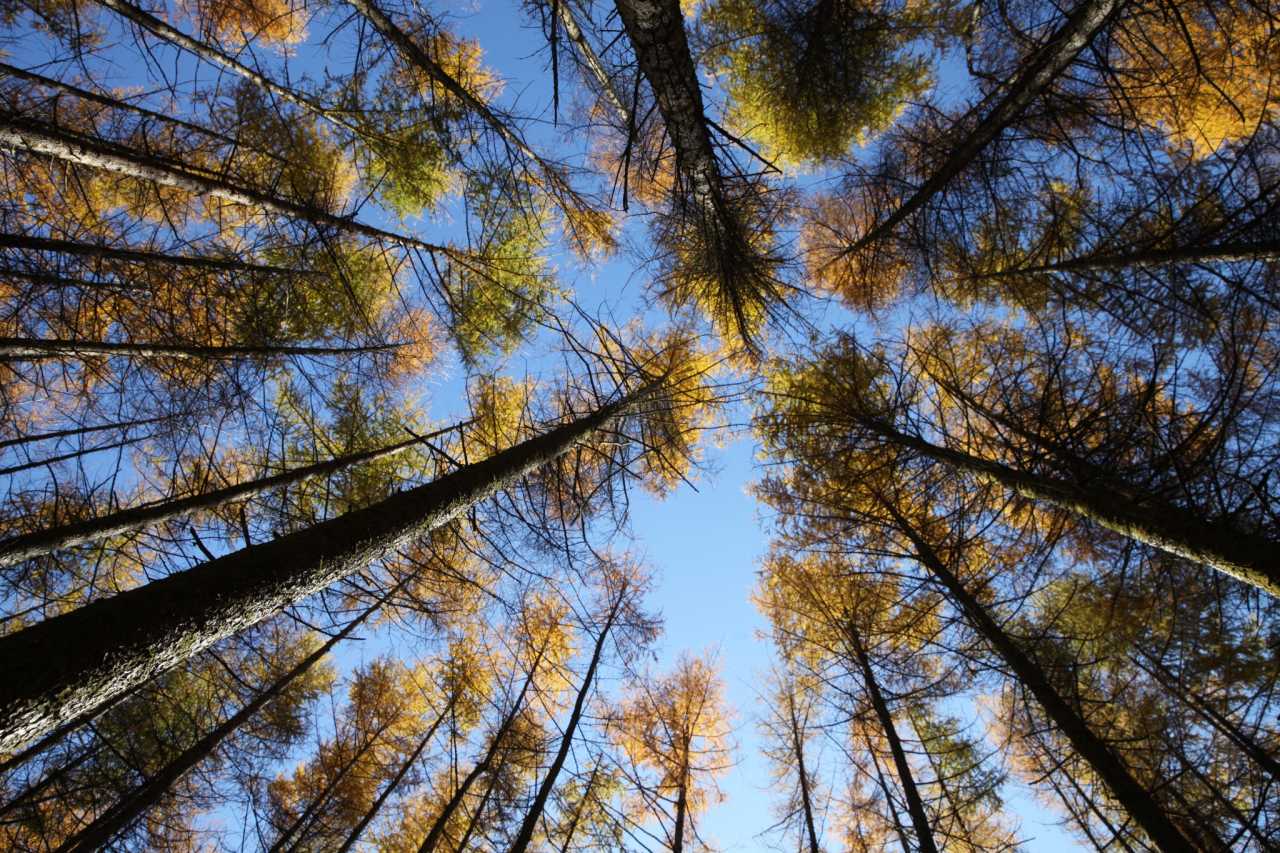
From the Micangshan entrance, take the scenic shuttle to the Daba transfer point, passing a place called "Natural Gallery" (Tianran Hualang) . A short boardwalk, but so beautiful it's hard to tear your eyes away. Especially when sunlight pours through, the colors are perfectly composed.
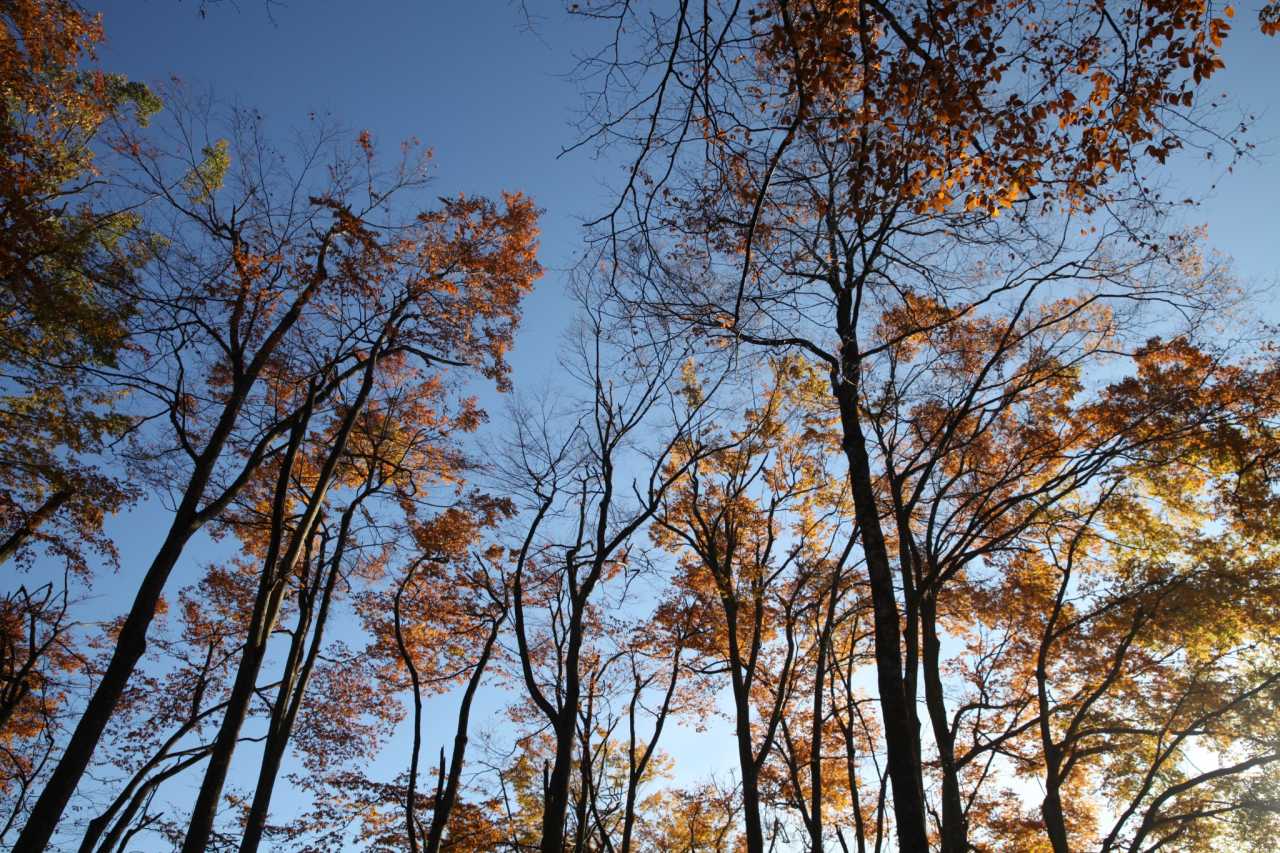
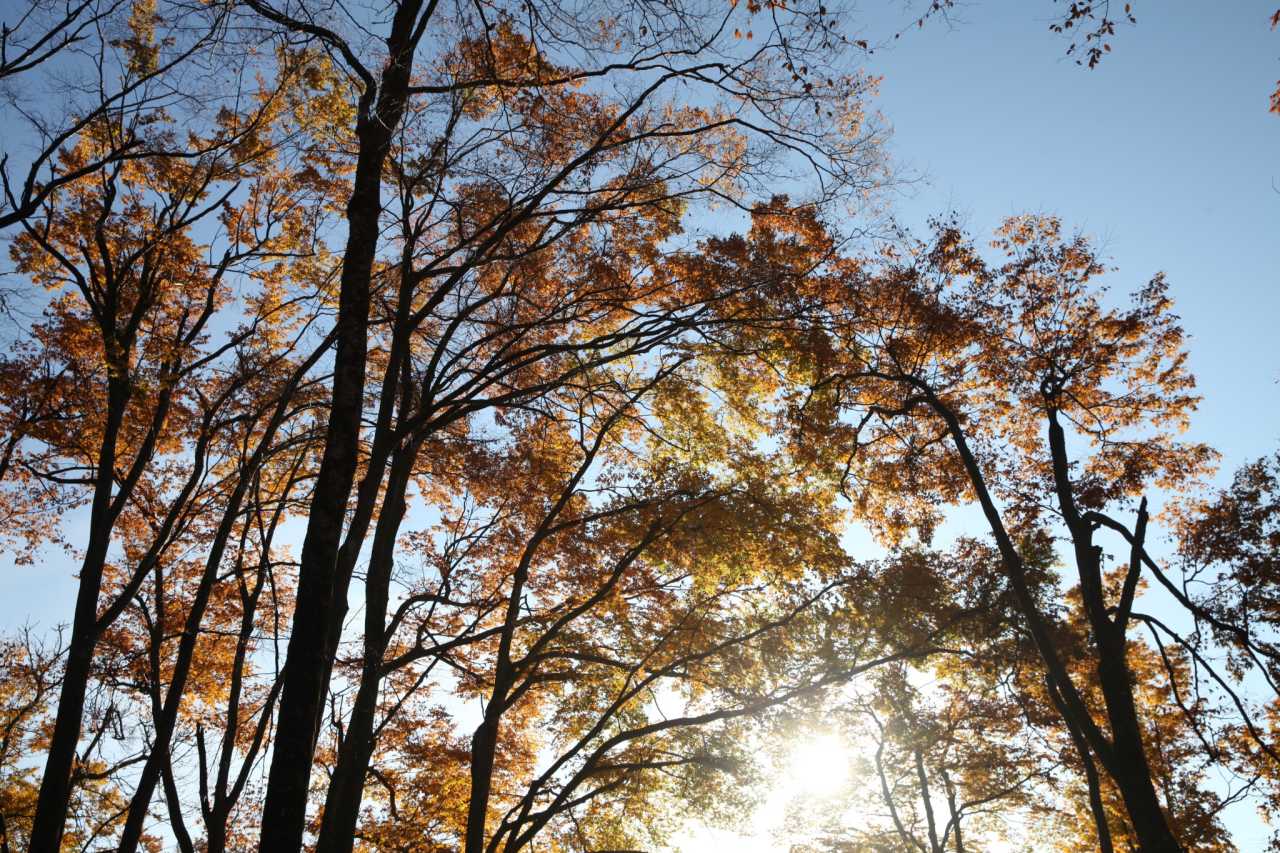
I spent almost the entire time shooting upward—the trees were too tall, with sunlight filtering through the branches, creating a play of light and shadow like a flowing oil painting. However, this spot is the first stop in the scenic area, so everyone crowds in, leading to congestion. My advice: pick up the pace and move to the back—fewer people, and the scenery is even better.
This "appetizer" left me thinking only one thing: it was worth the trip.
Xianglu Peak—Views Above the Sea of Clouds
From Natural Gallery, head to the Daba transfer point, where two routes diverge: one to Xianglu Peak and Heixiong Valley, the other to Big and Small Orchid Valleys (Da Xiao Lan Gou) . My suggestion: take the Xianglu Peak route first. You'll need to ride a cable car to Xianglu Peak, so go early, or you'll face a soul-crushing queue. I arrived before 9:00 AM and already had to wait 20 minutes; by the time I came down, the line had stretched to over an hour and a half.
Between Heixiong Valley and Xianglu Peak, there's a large forest with a long corridor that's perfect for photos. Xianglu Peak is Micangshan's highest point, primarily for sunrise and sea of clouds. Ideally, you'd watch sunrise here, but the scenic area opens at 7:30 AM—the only option is to stay at a nearby farmhouse and take a shuttle up in the morning. It sounds dreamy.
Even during the day, with good weather, all you see is a magnificent sea of clouds stretching to the horizon.
Heixiong Valley—A Symphony of Water and Leaves
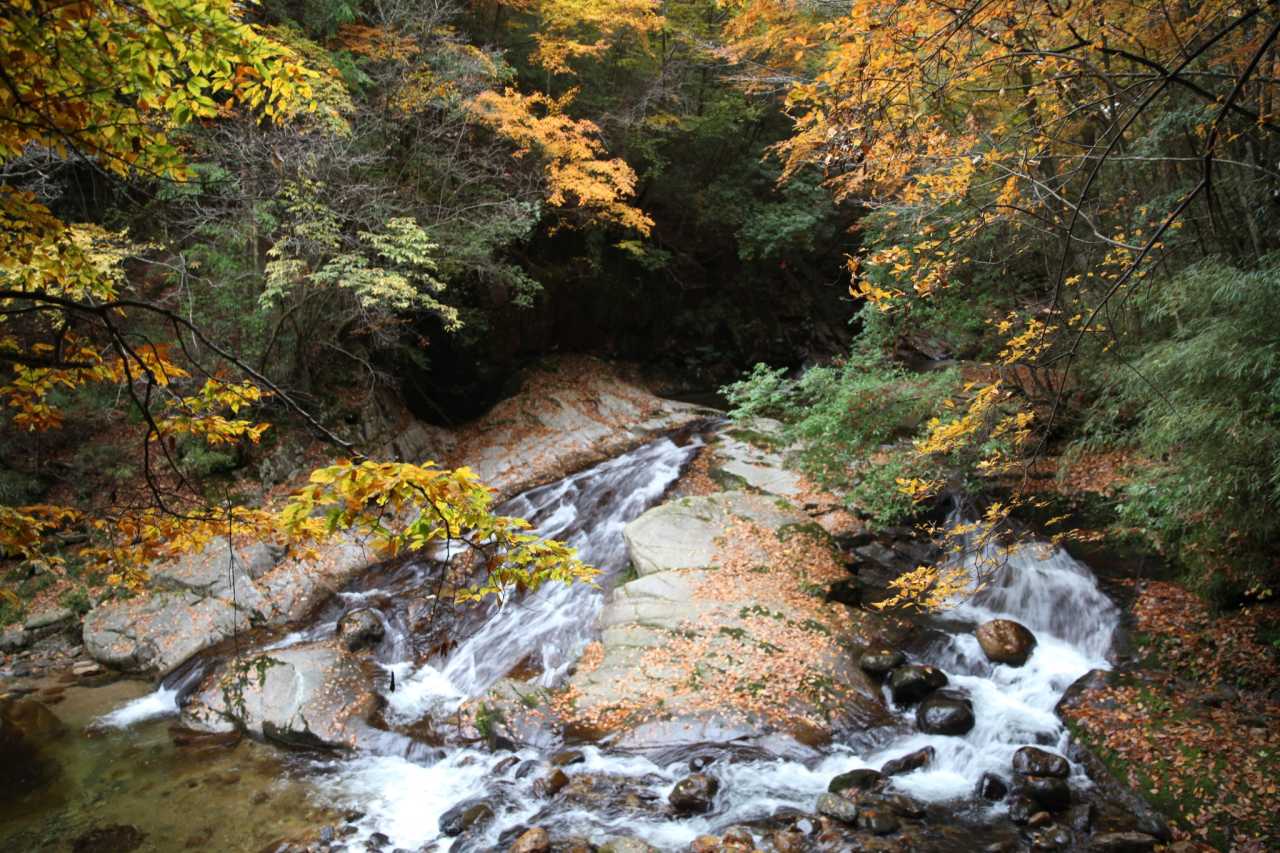
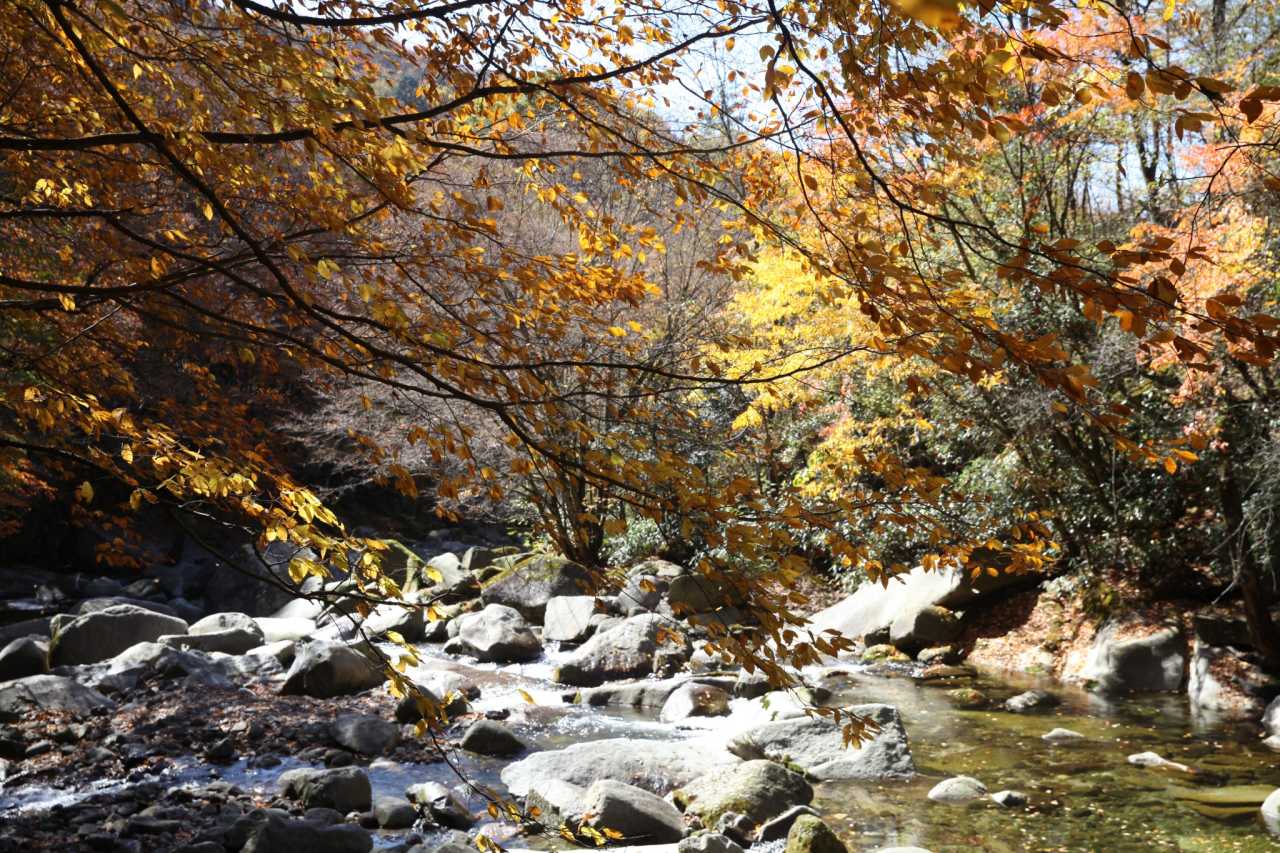
From Xianglu Peak, it's a short walk to Heixiong Valley. Follow the river for about 3 kilometers to reach the Daba transfer point. The style here resembles Benxi—water and trees, with red leaves reflected in the stream, making for fantastic photos.
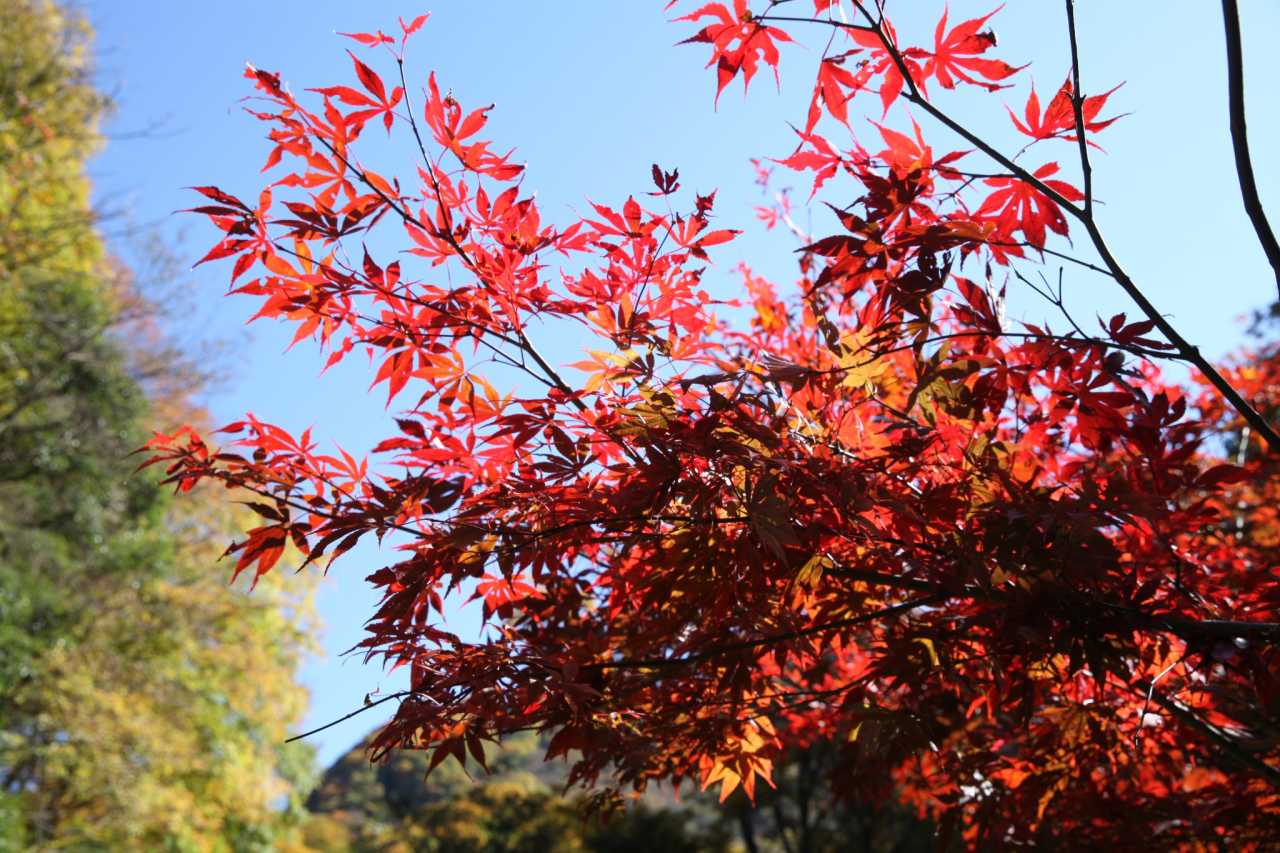
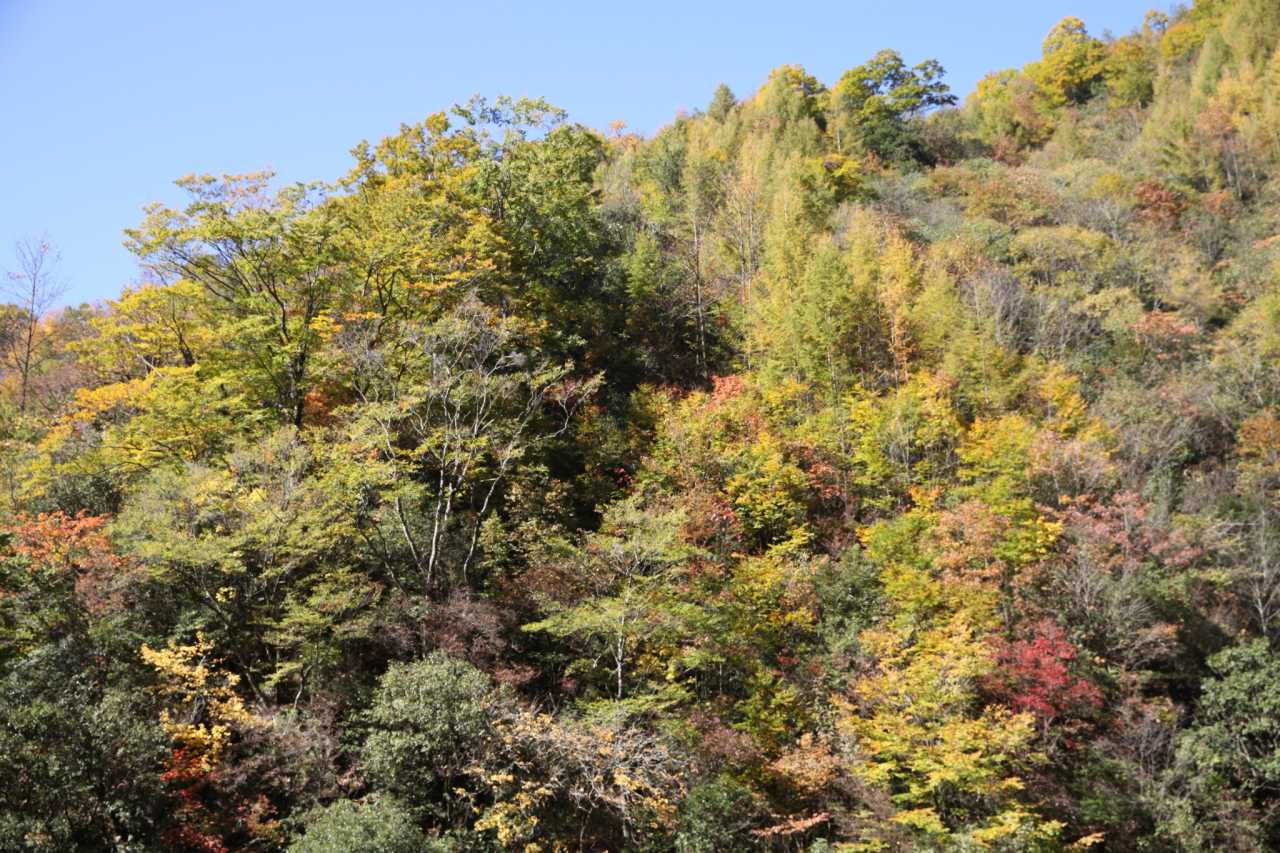
Walking along the boardwalk, the scenery on both sides is so beautiful you'll want to stop and daydream. Sunlight filters through the leaves, creating a tapestry of fallen foliage—green, yellow, and red interwoven, like nature's overturned palette. Heixiong Valley is widely regarded as the essence of Micangshan, so take your time and don't rush. A fleeting glance is still a scene.
Big and Small Orchid Valleys—A Grand Spectacle of Layered Forests
From Heixiong Valley, take the shuttle to the Daba transfer point, then head to Big and Small Orchid Valleys. Here, you can also take a helicopter to view the red leaves—an experience that maxes out the thrill factor.
Big and Small Orchid Valleys are about 5 kilometers one way. After walking 3 kilometers, the crowd thins out. You can walk or take an electric cart, but I recommend walking all the way in—fewer people, and the scenery is even more beautiful. The style differs from Heixiong Valley; instead of following waterways, you view mountain peaks. Layers of forests in vibrant colors create a majestic scene.
At the end, there's a forest fire prevention road that supposedly leads to the Taoyuan Scenic Area of Mount Guangwu, but it's now sealed off. If it were open, the scenery inside would surely be even more stunning.
When I emerged from Micangshan, it was already 3:30 PM. I'd originally planned to visit Mount Guangwu, but although it's only a 20-minute drive away, Mount Guangwu itself requires a full day. After weighing my options, I chose to stay in Nanjiang County. That way, I could catch the most beautiful sunrise the next morning.
[Link: Best accommodation in Nanjiang County for autumn trips]
DAY 2: From Nanjiang County to Eighteen Moon Ponds—An Unexpected Surprise
I stayed in Nanjiang County overnight, partly because the inns near the scenic area didn't offer good value, and partly because Nanjiang has more accommodation choices at lower prices, plus I could enjoy the night view of a small fourth-tier city. Little did I know that this decision would gift me a stunning sunrise the next morning.
On the Road from Nanjiang County to Eighteen Moon Ponds—Sunrise at the Mountain Top
I set out from Nanjiang County at 6:00 AM and reached the mountain top around 6:30. This casual decision led to a sunrise I'll never forget. The colors shifted from deep blue to orange-red to golden, with the mist rising from the valleys below. If you're planning a Bazhong autumn photography trip, this is the moment you cannot miss.
Eighteen Moon Ponds: The Perfect Finale

Eighteen Moon Ponds (Shiba Yuetan) is the second core red-leaf area in the Mount Guangwu cluster. It's smaller than Micangshan but equally stunning. The name comes from the series of crescent-shaped ponds that dot the landscape, reflecting the fiery red leaves like mirrors. The contrast between the still water and the vibrant foliage creates a serene, almost meditative atmosphere.
I spent about 3 hours here, walking the full loop. The crowds were thinner than Micangshan, allowing for peaceful contemplation and plenty of photo opportunities. The best photo spots are at the main pond, where the red leaves frame the water perfectly.
Returning to Hanzhong
After Eighteen Moon Ponds, I drove back to Hanzhong in the afternoon. The return trip took about 2 hours, with the autumn scenery unfolding outside the window like a moving painting. I arrived at Hanzhong airport by 5:00 PM, caught my 6:30 PM flight to Beijing, and was home by 9:00 PM. A perfect 48-hour escape.
FAQ: Your Questions About Bazhong Autumn Trip Answered
1. What is the best time to see red leaves at Mount Guangwu?
 The Mount Guangwu red leaves peak season is typically from late October to mid-November, with the absolute peak around the first week of November. The timing can vary slightly depending on weather conditions each year, so check local forecasts before booking.
2. How do I get to Mount Guangwu from major cities?
The most convenient route is to fly to Hanzhong, Shaanxi (which has an airport with flights from Beijing, Shanghai, and other major cities), then rent a car or take a bus to Mount Guangwu (about 1.5 hours drive). Alternatively, you can fly to Bazhong Enyang Airport and drive 2 hours to the scenic area.
3. Can I visit both Micangshan and Eighteen Moon Ponds in one day?
 Technically yes, but it's not recommended. Each scenic area requires at least 4-5 hours to explore properly. If you're short on time, prioritize Micangshan for the most spectacular red-leaf views, or allocate a full day to each.
4. Is it worth staying in Nanjiang County instead of near the scenic area?
Absolutely. Nanjiang County offers more affordable accommodation, better dining options, and the chance to catch the stunning sunrise on the road to Eighteen Moon Ponds. The drive to the scenic areas is only 30-40 minutes, so it's a smart trade-off.
5. What should I pack for a Bazhong autumn trip?
Pack layers—mornings and evenings can be chilly (5-10°C), while afternoons warm up to 15-20°C. Bring comfortable walking shoes, a camera with a zoom lens, a reusable water bottle, and snacks. Sunscreen and sunglasses are also recommended for the high-altitude sun.
Conclusion: Your 48-Hour Autumn Fairytale Awaits
Don't let the lack of official holidays stop you from experiencing one of China's most spectacular autumn displays. With careful planning, a weekend trip to Bazhong can deliver a crimson feast that rivals any week-long vacation. From the sunrise at Nanjiang County to the layered forests of Micangshan, from the serene ponds of Eighteen Moon Ponds to the helicopter views of the red leaves—every moment feels like stepping into a painting.
Ready to catch the red leaves by air? Book your flight to Hanzhong, reserve a rental car, and prepare for an unforgettable 48-hour autumn adventure. The leaves are waiting—don't let this season pass you by.
Pro tip: Check the official Mount Guangwu website or social media for real-time red-leaf updates before you go. And remember: the early bird catches the sunrise—and the best photos!
[Link: Book flights to Hanzhong] [Link: Rent a car in Hanzhong for Bazhong autumn trip] [Link: Top-rated hotels in Nanjiang County]
Have you visited Mount Guangwu for autumn foliage? Share your experience in the comments below, or tag us in your red-leaf photos on social media!
You may also like


