Autumn Colors of Western Sichuan: A Dreamlike Journey Through Spectacular Timeless Forests
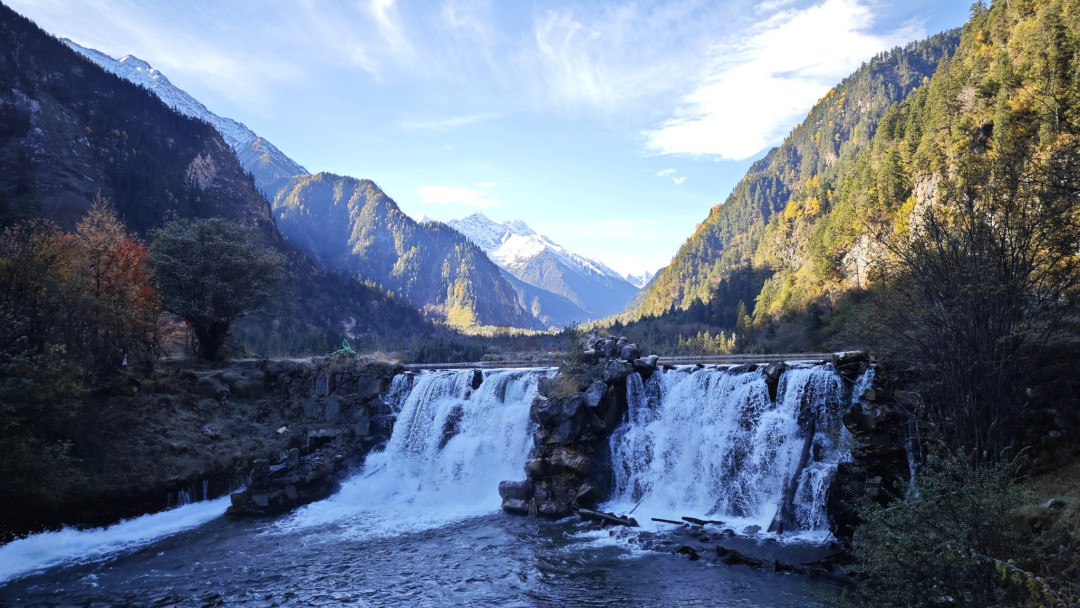
Meta Description: Discover the breathtaking autumn colors of Western Sichuan on a 5-day self-drive tour through Bipenggou, Naizigou, and Dagu Glacier. Explore crimson forests, snowy peaks, and alpine lakes in this ultimate fall travel guide.
Introduction: Why Western Sichuan's Autumn Colors Are a Must-See
When the first autumn breeze sweeps across the Western Sichuan Plateau in October, this magical land transforms into a living canvas. Thousands of mountains turn crimson, layer upon layer of forests blaze with color, and a dazzling palette of hues spills across the landscape like God's overturned paintbox. This is no fairy tale—it is the most intoxicating season of the year: the colorful forest season in Western Sichuan.
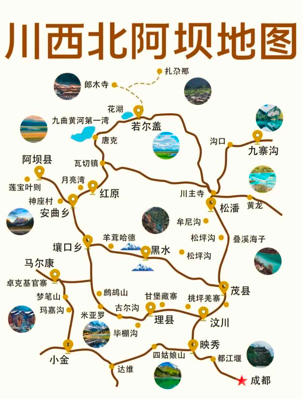
In late autumn 2023, my family and I embarked on a five-day self-driving journey along the Aba Small Loop, chasing those dreamlike autumn forests that had long haunted our imaginations. Starting from Chengdu, we passed through Dujiangyan, Wenchuan, and Li County, heading westward to Heishui County. The entire journey covered approximately 900 kilometers, weaving together expressways and national highways with smooth traffic throughout. It was a visual feast—and even more so, a pilgrimage for the soul.
Bipenggou: An Autumn Fairytale Beneath Snowy Peaks
First Encounter with Bipenggou
Bipenggou, a hidden gem located in Putou Town, Li County, within the Aba Tibetan and Qiang Autonomous Prefecture, lies just over 200 kilometers from Chengdu—almost entirely accessible by expressway. It was our first stop on this journey. Situated in the core area of the Miya Luo Nature Reserve, it is an important part of the Qionglai Mountain Giant Panda Corridor, a UNESCO World Natural Heritage site.
The scenic area spans 613.8 square kilometers, with elevations ranging from 2,015 meters to 5,922 meters. The highest point most visitors can reach is Yanzhi Rock (Swallow Rock) , at around 3,800 meters above sea level.
To be honest, Aba Prefecture is overflowing with breathtaking sights—Jiuzhaigou and Siguniang Mountain (Four Girls Mountain) have long been world-famous. But in my heart, Bipenggou ranks at least among the top three. It sits back-to-back with Siguniang Mountain, like twin sisters, sharing natural wonders such as snowy peaks and glaciers, colorful forests and red leaves, alpine lakes, streams and waterfalls, wetlands and meadows, and primeval forests.
In spring, enjoy the wildflowers in full bloom; in summer, escape the scorching heat; in autumn, marvel at the picturesque forests; in winter, revel in a world of ice and snow—each season in Bipenggou has its own stunning beauty.
The Autumn Chase: From Longwanghai to Yanzhi Rock
On the day we set out, the sun was shining brightly. We left Chengdu at 10 a.m., taking the Chengdu–Dujiangyan Expressway, the Dujiangyan–Wenchuan Expressway, and the Rongchang Expressway. We exited at Putou Toll Station, then drove a short stretch on National Highway 317—a total of about 245 kilometers, taking just over four hours to arrive.
We had booked our hotel online in advance: the Jieyuan Hotel, located only 1 kilometer from the scenic area entrance. A standard double room cost 180 RMB, and opening the window revealed a mountain view—excellent value for money. That evening's yak meat hotpot was unforgettable.
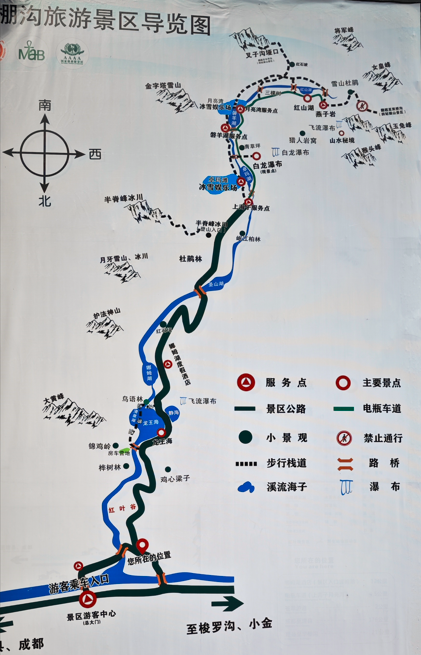
The next morning, under a brilliant sky, we arrived early at the scenic area. Tickets must be reserved in advance on platforms like Ctrip or Meituan, with a full-price ticket costing 129 RMB (including the shuttle bus) . Sightseeing electric carts are purchased separately at 30 RMB per segment, with two segments available: from Shanghaizi to Panyang Lake, and from Panyang Lake to Yanzhi Rock.
Boarding the scenic area shuttle bus, we ascended from 2,050 meters above sea level. The first stop was Longwanghai (Dragon King Lake) at 2,946 meters—a 330,000-square-meter jade-like lake, breathtakingly beautiful against the backdrop of snowy peaks and colorful forests. Next came Zhuoma Beach and Zhuoma Lake at 3,612 meters, where emerald waters, blue skies, white waves, sandy shores, and vibrant forests wove together into a stunning painting. Panyang Lake and Moon Bay, at 3,676 meters, had crystal-clear waters reflecting the snowy mountains, with blue skies and white clouds seemingly within reach. Finally, we reached Yanzhi Rock at 3,837 meters, with majestic snowy peaks, winding glaciers, cascading waterfalls, and colorful forests surrounding us—standing there, you feel that all the fatigue was worth it.
Every scenic spot deserves a five-star rating, but what I found most unforgettable was the overwhelming sense of being immersed in a world of vivid colors. In late autumn, Bipenggou seems kissed by the divine, with every tree and every leaf bursting into its own brilliant hues.
Naizigou: An Eighty-Li Natural Gallery of Colorful Forests
A Place Where Immortals Dwell
On the third day, we bid farewell to Bipenggou and drove toward Heishui County. The journey was 185 kilometers, a mix of expressways and national highways with good road conditions. Around 1 p.m., we entered the Naizigou Colorful Forest Scenic Area.
Naizigou—the name sounds a bit unusual—but it is Asia's largest eighty-li (40-kilometer) natural colorful forest. Located along the main route from Heishui County to Barkam, it connects to the Hongyuan Prairie, with an average elevation of 2,800 meters. In 2019, it was designated a national AAAA-level scenic area. What's most delightful is that it is free to enter—National Highway 347 runs right through it, allowing you to stop anytime and enjoy the scenery along the way.
The heart of Naizigou is Yangrong Hade Village, which in Tibetan means "the place where immortals dwell." This Tibetan village, at an elevation of 2,360 meters, was rebuilt after the devastating Wenchuan earthquake on May 12, 2008. Over 40 exquisite Tibetan-style villas are built into the mountainside, surrounded by hills on three sides and facing water on one side. Every late autumn, the entire village is enveloped in a riot of colors, like a fairy-tale world.
Tibetan Charm Deep in the Colorful Forests
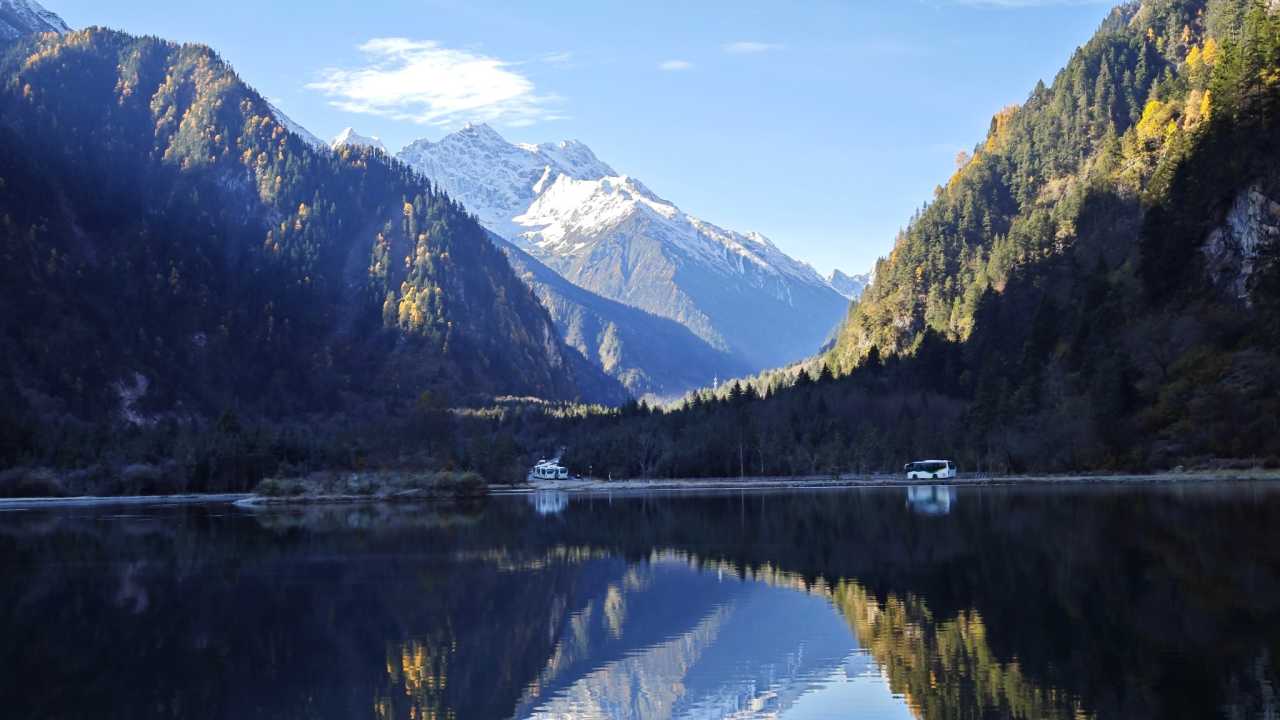
Stepping into Yangrong Hade, you are struck by its beauty. The Tibetan-style village gate at the entrance is grand and imposing. The village is well-equipped, with a visitor center, parking lots, a food and entertainment street, and uniformly managed guesthouses. We stayed here for one night—opening the door revealed a vista of colorful forests, with flowing streams, birdsong, and fragrant flowers. It truly felt like living in a place where immortals dwell.
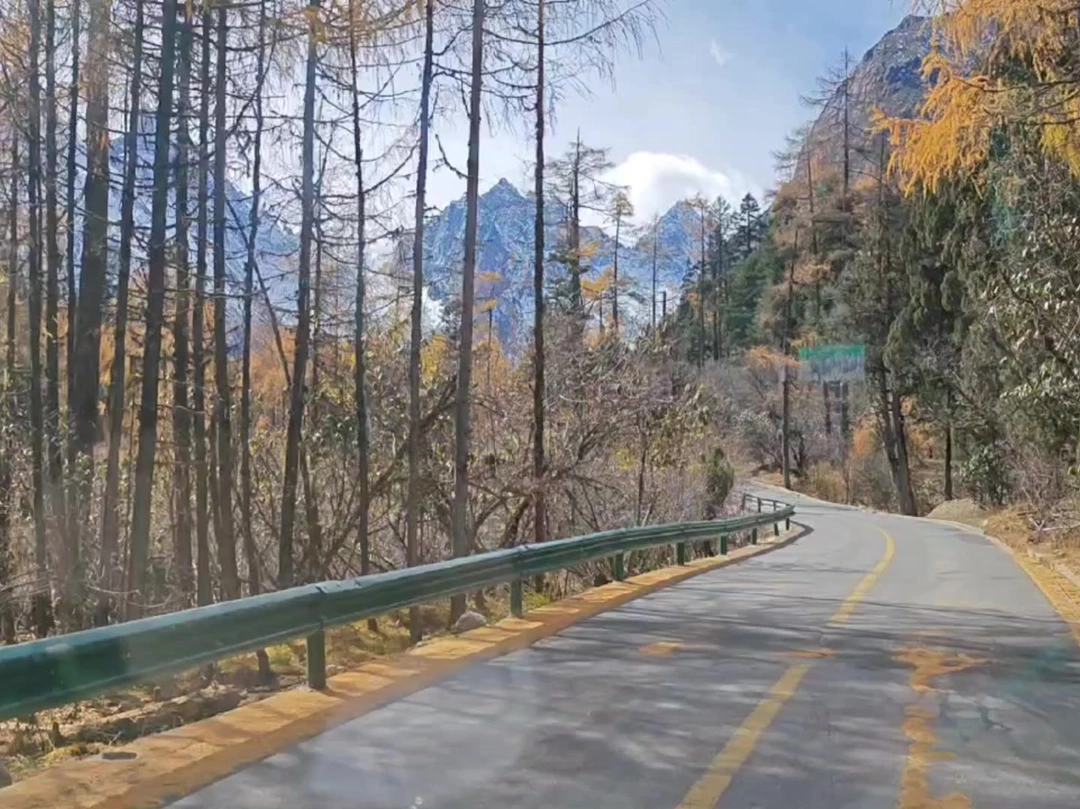
The colorful forests of Naizigou are overwhelming in their beauty. From the foot of the mountains to the summits, from river valleys to hillsides, red, yellow, green, and purple intertwine like a giant oil painting. There are plenty of temporary parking spots along National Highway 347, so you can stop anytime to take photos. The scenic area also has dedicated walking paths that lead deep into the forests, allowing you to experience both the tranquility and the brilliance up close.
Dagu Glacier: Touching the Blue Sky from the Summit of a Snowy Peak
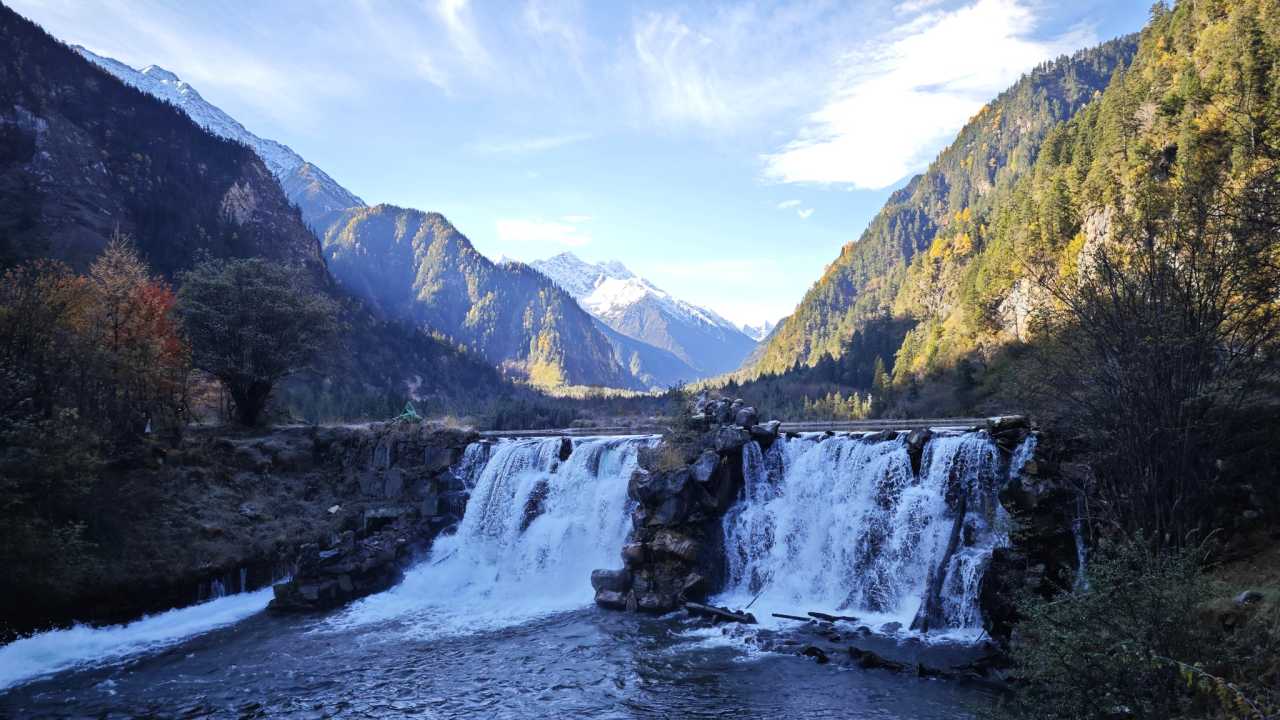
Crossing the Colorful Forests, Ascending the Glacier
On the fourth day, we set out from our hotel in Heishui County town and arrived at the Dagu Glacier scenic area parking lot in just 16 minutes—a mere 10-kilometer drive, very convenient.
Dagu Glacier is located in Sandagu Village, Luhua Town, Heishui County, with elevations ranging from 3,800 to 5,100 meters. It is a national AAAA-level tourist attraction. What is most awe-inspiring here are the three glacier segments—Glaciers No. 1, 2, and 3—covering an area of about 8.25 square kilometers. Formed over hundreds of millions of years, they are the soul of the entire scenic area. In addition to the glaciers, the area features colorful forests, alpine lakes, streams, waterfalls, meadows, primeval forests, wild Tibetan macaques, and Tibetan villages—a comprehensive destination blending nature and culture.
Tickets must be booked in advance. The full-price ticket costs 120 RMB, and the sightseeing bus is 70 RMB round-trip. From the scenic area entrance, the bus takes you to the cable car station at 3,800 meters. The cable car ride to the summit at 4,860 meters takes about 15 minutes—one of the highest-altitude cable cars in the world.
Standing at the top, the world opens up before you. The glaciers stretch endlessly, pure white against a brilliant blue sky. Colorful forests spread across the lower slopes like a patchwork quilt. You can walk along the boardwalks to viewpoints overlooking Glacier No. 1, or simply sit and breathe in the thin, crisp air. It feels like you can touch the sky.
FAQ: Planning Your Western Sichuan Autumn Color Tour
1. When is the best time to see autumn colors in Western Sichuan? The peak season is typically from mid-October to early November. In Bipenggou, colors peak around late October; in Naizigou and Dagu Glacier, early to mid-November offers the best views. Check local forecasts before your trip.
2. Is it safe to drive the Aba Small Loop in autumn? Yes, the roads are well-maintained. The route combines expressways (Chengdu–Dujiangyan, Dujiangyan–Wenchuan, Rongchang) with National Highway 347. However, be prepared for occasional fog, rain, or light snow at higher elevations. A 4WD vehicle is recommended but not essential.

3. What should I pack for a Western Sichuan autumn trip? Temperatures range from 5°C to 20°C at lower elevations, but can drop below freezing at high altitudes (Dagu Glacier summit). Pack layers: thermal base layers, fleece, a windproof jacket, warm hat, gloves, and sturdy hiking boots. Sunscreen and sunglasses are essential due to strong UV rays.
4. Do I need to book tickets in advance? Yes, especially during peak autumn season. Book tickets for Bipenggou, Dagu Glacier, and any accommodation in Yangrong Hade Village at least 1–2 weeks ahead on platforms like Ctrip or Meituan. Naizigou is free to enter.
5. Are there altitude sickness concerns? Elevations range from 2,000m to 5,100m. Most visitors handle Bipenggou (max 3,837m) and Naizigou (2,800m) without issues. For Dagu Glacier (4,860m), take it slow, stay hydrated, and consider bringing portable oxygen canisters. Avoid strenuous exercise at high altitudes.
Internal Linking Suggestions
- [Link: Best time to visit Western Sichuan for autumn colors]
- [Link: Complete guide to Bipenggou scenic area]
- [Link: Top self-drive routes in Aba Prefecture]
- [Link: How to avoid altitude sickness in Sichuan highlands]
- [Link: Tibetan culture and villages in Western Sichuan]
Conclusion: Your Dream Autumn Awaits
Western Sichuan in autumn is a masterpiece of nature—a symphony of red, gold, green, and white that will stay with you long after you return home. From the fairy-tale forests of Bipenggou to the endless galleries of Naizigou and the icy majesty of Dagu Glacier, every moment is a photograph waiting to be taken.
Ready to chase the autumn colors? Start planning your 5-day Aba Small Loop adventure today. Book your tickets, pack your bags, and set out on a journey that will fill your soul with wonder. The forests are calling—answer them.
Share your own Western Sichuan autumn photos with us on social media using #WesternSichuanAutumn. We'd love to see your dreamlike journey!
You may also like


