Anyue Stone Carvings: A Complete Guide to Sichuan's Hidden Buddhist Masterpieces
Meta Description: Discover Anyue Stone Carvings, China's millennium-old Buddhist art scattered across Sichuan countryside. 2-day itinerary, top sites like Wofo Temple & Piyu Cave, and why these Tang-Song treasures rival Dazu.
Introduction: Why Anyue Stone Carvings Deserve Your Attention
When we think of Chinese Buddhist stone carvings, names like Dunhuang, Yungang, and Longmen immediately come to mind. But tucked away in the rolling hills of eastern Sichuan, a lesser-known treasure awaits—the Anyue Stone Carvings.
Unlike their famous northern counterparts, the Anyue grottoes tell a different story. They represent the late flowering of Chinese Buddhist art, spanning from the Tang dynasty through the Song, Ming, and even Qing periods. With over 100,000 statues spread across nine national-level protected sites and a dozen provincial ones, Anyue offers an intimate, unpolished encounter with history—one where you can stand face-to-face with a thousand-year-old Buddha without fighting crowds.
In this guide, we'll take you through everything you need to know: what makes Anyue unique, how to plan your visit, and which carvings will leave you speechless.
What Makes Anyue Stone Carvings Unique?
Historical Context: The Southern Branch of Buddhist Art
Buddhism's journey east followed two main routes. The famous northern route passed through the Silk Road, creating masterpieces like the Mogao Caves. But a lesser-known southern tributary split off at Luoyang, flowing directly into the Sichuan Basin.
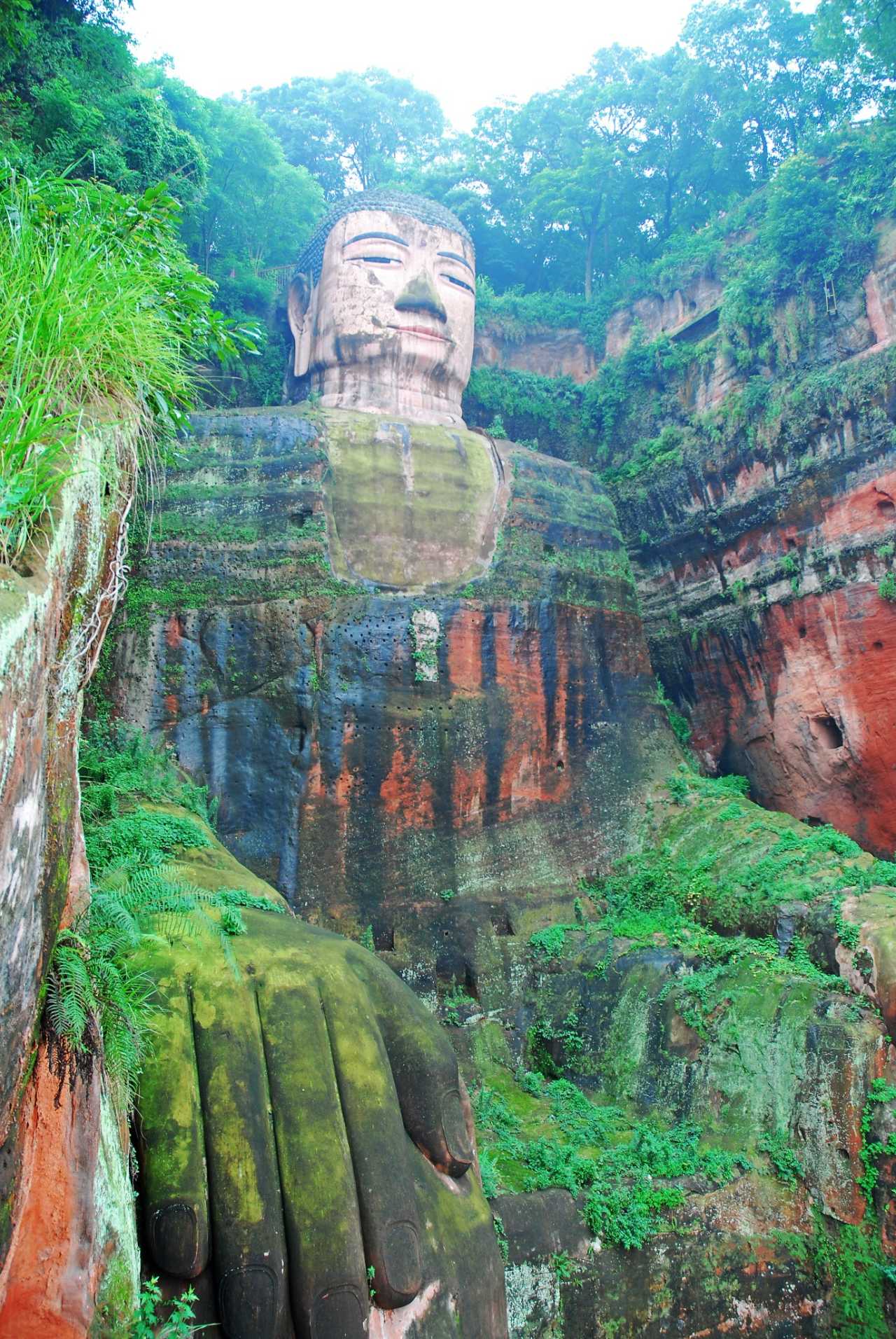
This southern branch gave birth to: - Guangyuan Thousand Buddha Cliff - Leshan Giant Buddha - Anyue Stone Carvings - Dazu Rock Carvings
While northern China's large-scale carving declined after the late Tang, Sichuan's prosperity—fueled by the "Land of Abundance"—allowed the tradition to thrive for centuries more.
Artistic Freedom: Why Anyue Carvings Feel Alive
What truly sets Anyue apart is the creative independence of its craftsmen. During the Song dynasty, when the economy boomed and scholarship flourished, local artisans began injecting personal imagination and everyday observations into their work.
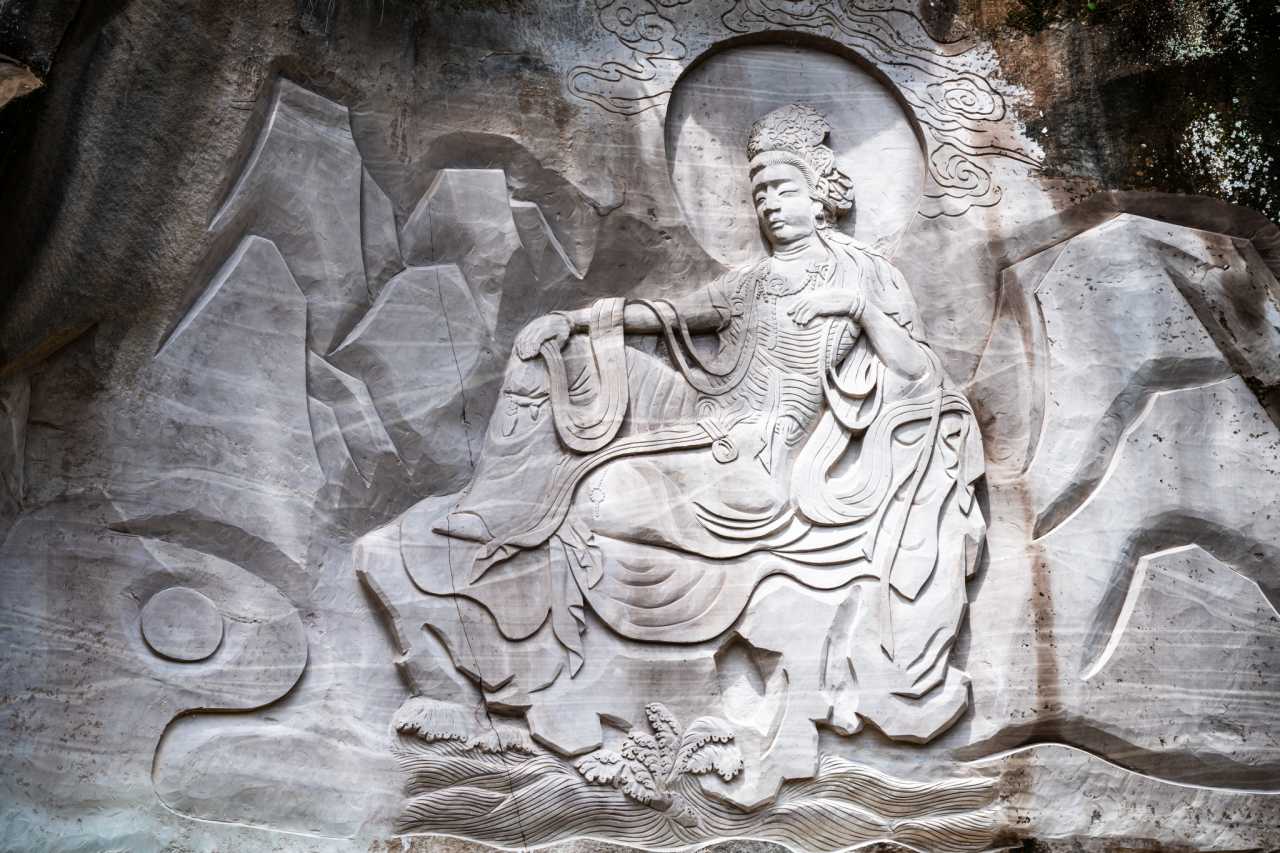
The result? Buddhist figures that feel human. The Water-Moon Guanyin at Piyu Cave sits with one leg crossed, one hand resting casually on her knee—a pose so relaxed she could be a neighbor resting after work. This approachable warmth is a hallmark of Anyue's style.
Key Statistic: Anyue County contains 9 national-level key cultural relic protection sites and over 100,000 statues—each site with its own distinct style.
Anyue Stone Carvings Itinerary: 2 Days Covering the Highlights
Anyue sits conveniently between Chengdu and Chongqing, making it an easy weekend trip. This two-day itinerary follows the chronological path of Buddhist transmission, from north to south.
Day 1: Northern Anyue & County Surroundings
| Time | Site | Highlights |
|---|---|---|
| Morning | Wofo Temple (Wofo Yuan) | Largest Tang dynasty reclining Buddha, 23m long |
| Noon | Mumen Temple (Mumen Si) | Unique stone building imitating wooden architecture |
| Afternoon | Qianfo Village (Qianfo Zhai) | Largest scale, most diverse carvings |
| Late Afternoon | Yuanjue Cave (Yuanjue Dong) | Best-preserved carvings, half-scale reclining Buddha replica |
Day 2: Southeastern Anyue (Near Dazu Border)

| Site | Key Feature |
|---|---|
| Piyu Cave (Piyu Dong) | Water-Moon Guanyin, the "Fairy Sister" statue |
| Huayan Cave (Huayan Dong) | Song dynasty bodhisattva carvings |
| Mingshan Temple (Mingshan Si) | Ming dynasty additions |
| Peacock Cave (Kongque Dong) | Intricate peacock-themed carvings |
Pro Tip: This route subtly follows the chronological order—from Northern Wei to High Tang, then Northern Song to Southern Song Dazu—allowing you to see artistic evolution firsthand.
Day 1 Deep Dive: Finding Truth Amidst Ruin
Wofo Temple: The Reclining Buddha That Survived Destruction
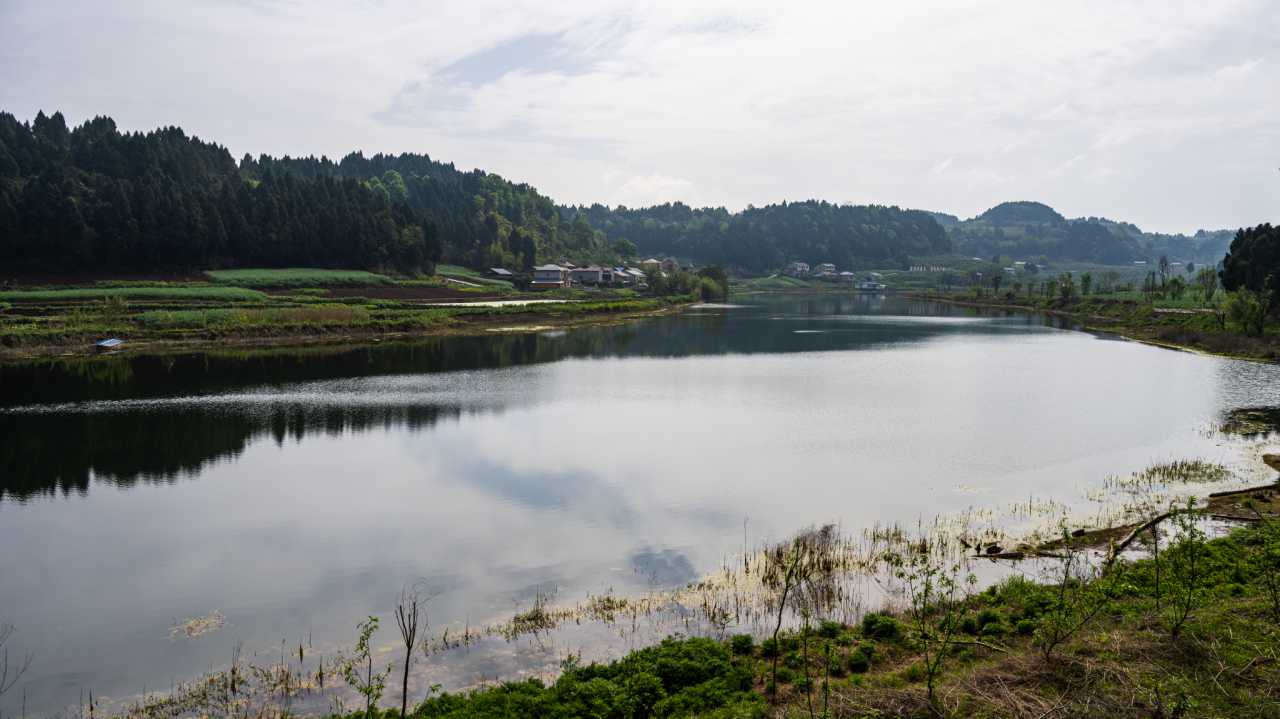
Located at the northernmost point of Anyue, Wofo Temple was first built during the Han and Five Dynasties periods, flourishing in the Tang and Song. The drive from Chongqing takes about two hours, with the last 12 kilometers winding through narrow county roads flanked by endless rapeseed flower fields.
Entrance Fee: 10 yuan (reportedly started April 1, 2024)
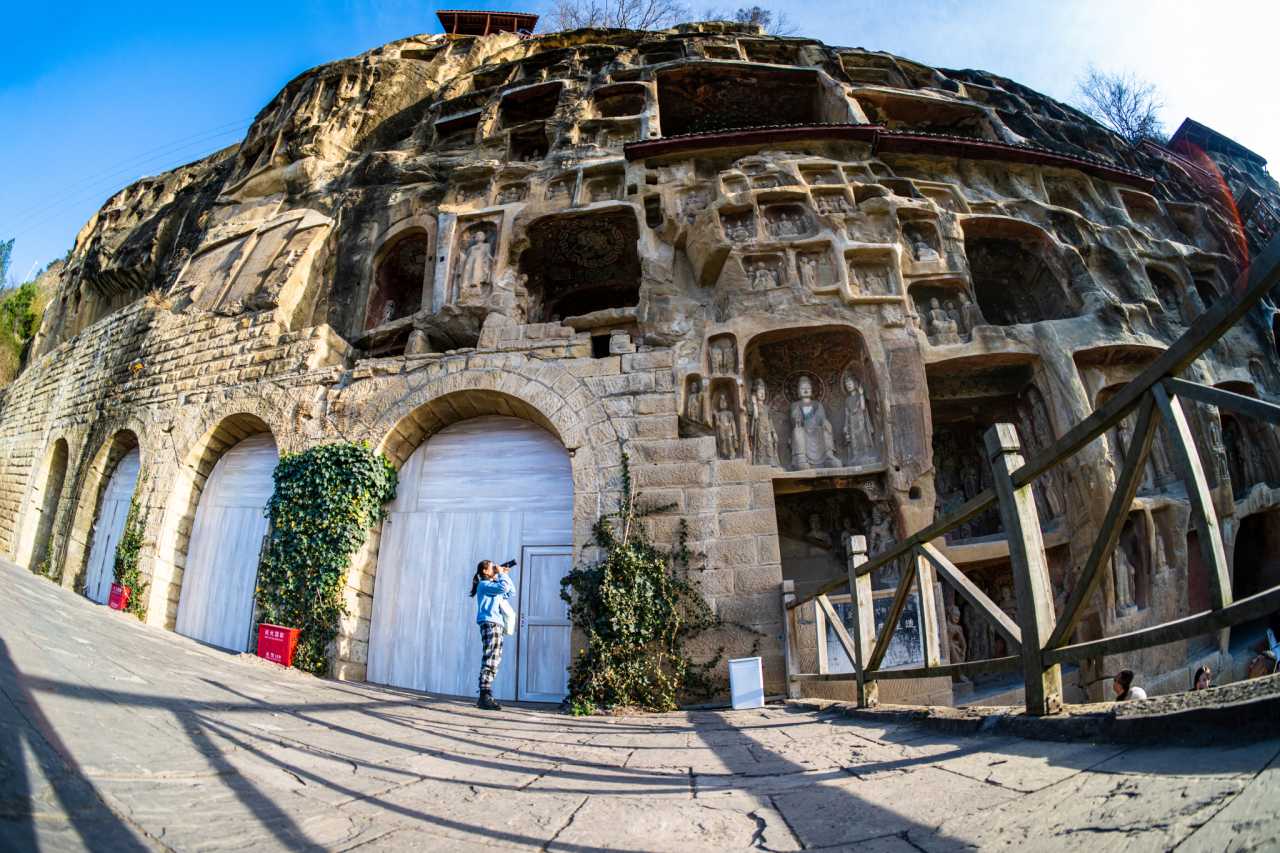
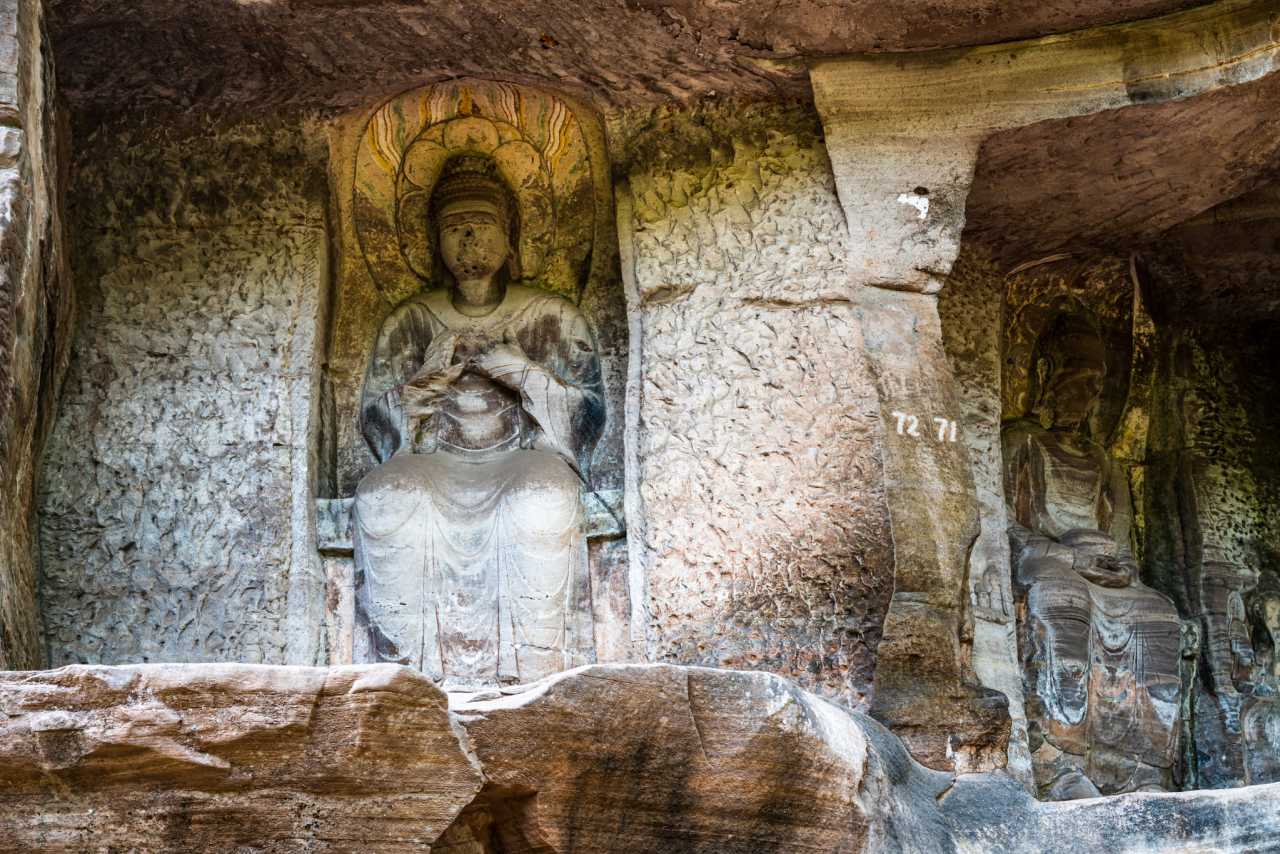
Walking along the Panlong River, you'll see the left cliff face dotted with grottoes—but most are heartbreakingly damaged. Buddha heads missing, bodies broken, some caves completely empty. This destruction, largely from the Cultural Revolution, far exceeds a thousand years of natural weathering.
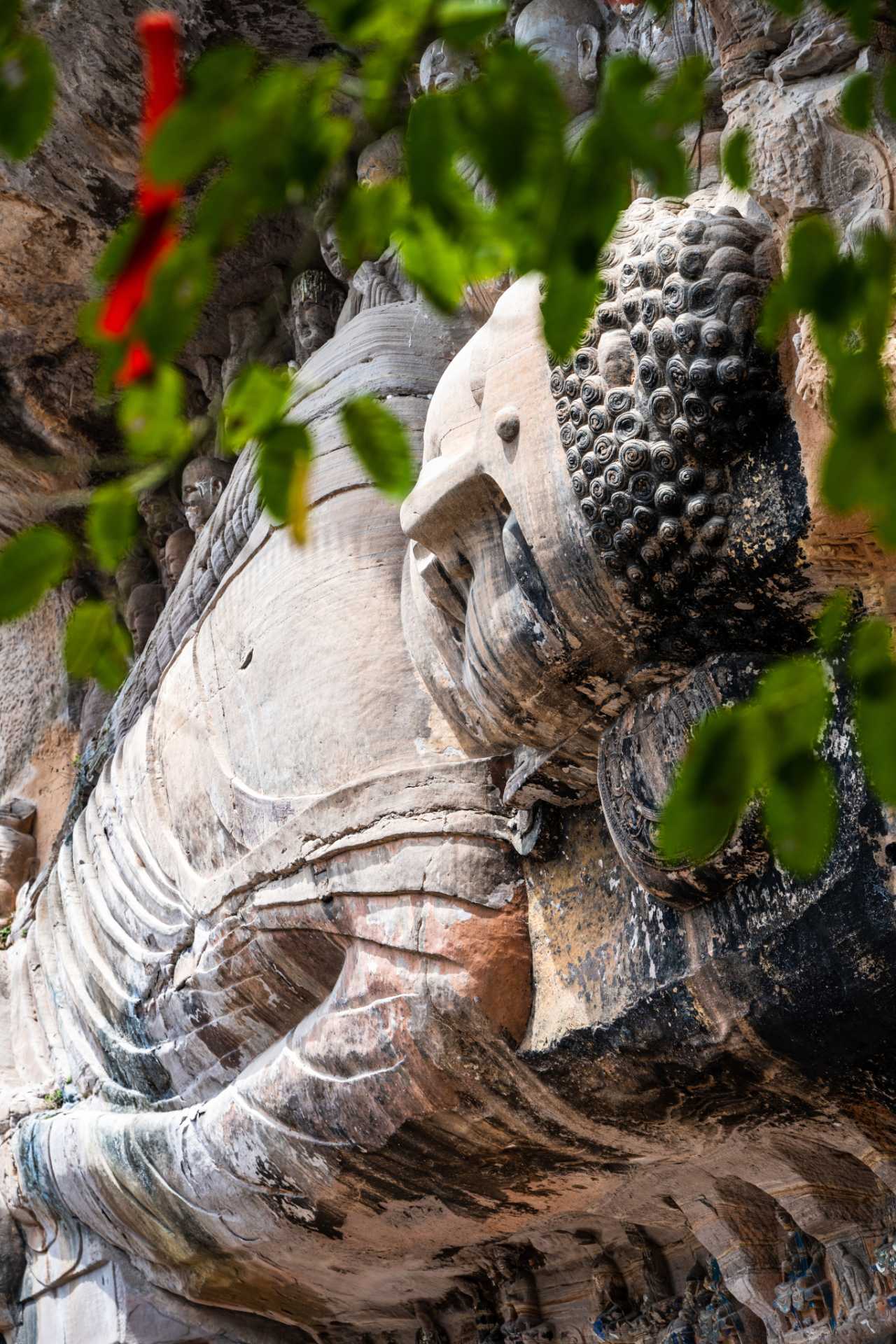
Yet amidst this ruin, one masterpiece remains intact: the Tang dynasty depiction of Shakyamuni Buddha's Nirvana. This reclining Buddha measures: - 23 meters long (longest Tang dynasty full-body stone reclining Buddha in China) - Head: 3 meters long - Shoulders: 3.1 meters wide
Unique Feature: It's the only Tang reclining Buddha lying on its left side. The Buddha rests on a flat lotus-shaped pillow, eyes closed as if asleep, with disciples and bodhisattvas clinging closely above and below—creating an intricate, narrative composition.
Why did this one survive? Perhaps its sheer size—too large for manual destruction without dynamite, like the Bamiyan Buddhas.
Mumen Temple: A Stone Building Disguised as Wood
A 12-kilometer drive from Wofo Temple brings you to Mumen Temple, a Chan Buddhist (Zen) temple of the Linji school built during the Ming dynasty's Yongxi reign.
At first glance, it looks like an ordinary wooden temple. But look closer—it's actually a stone building imitating wooden architecture. Every beam, bracket, and column is carved from local stone, an architectural wonder often misunderstood by casual visitors.
Parking Note: The last stretch of mountain road is extremely narrow. Park at the farmhouse at the mountain foot and walk up.
Day 2 Deep Dive: The Southern Masterpieces
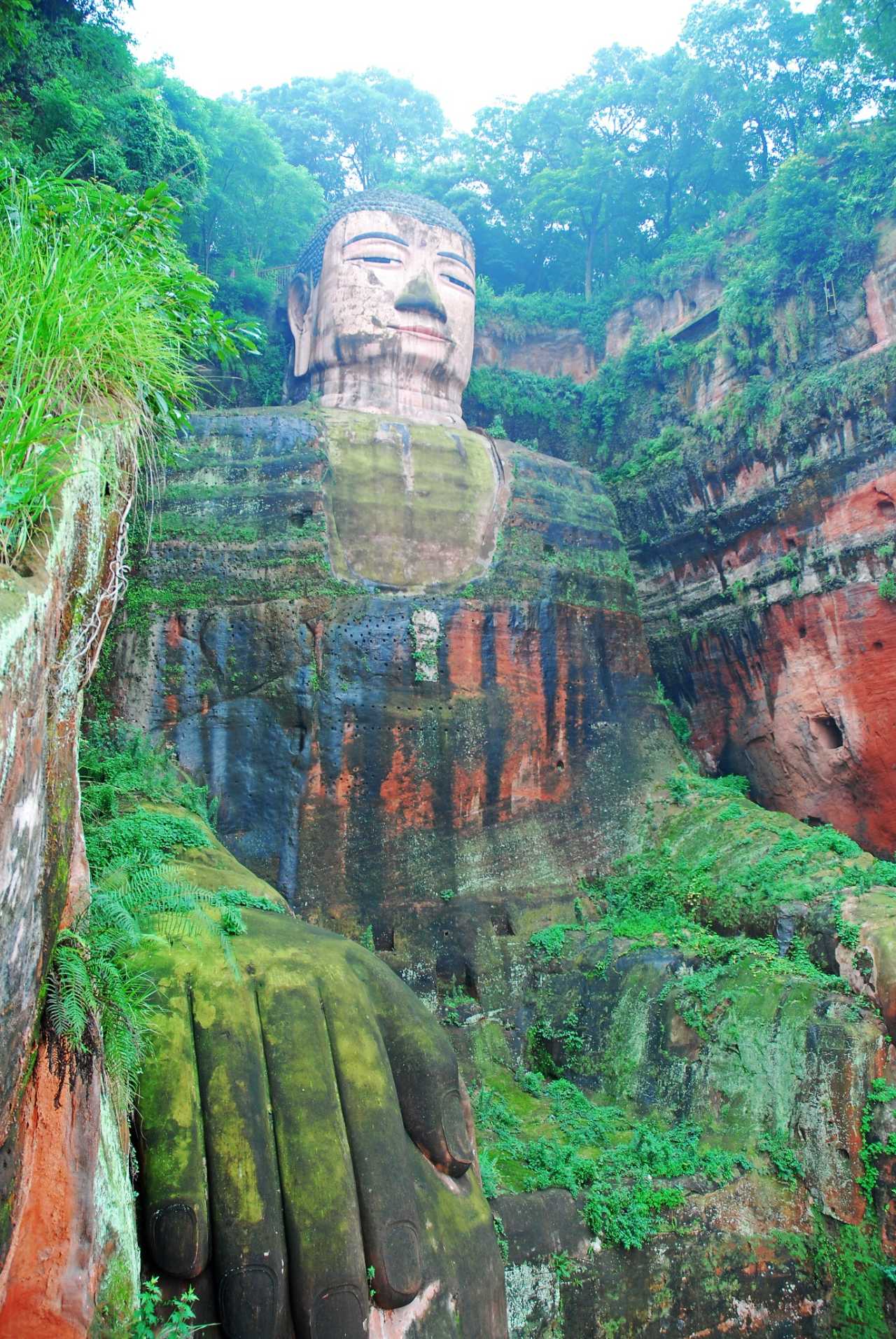
Piyu Cave: Where You'll Meet the "Fairy Sister"
The Water-Moon Guanyin at Piyu Cave is arguably Anyue's most famous single statue. Her casual posture—one leg crossed, hand resting on knee—inspired the fictional "Fairy Sister" statue in Louis Cha's novel The Demi-Gods and Semi-Devils.
This isn't the aloof majesty of a deity. It's approachable warmth, the kind of beauty that makes you understand why someone would fall in love with a statue. Visitors often report feeling an emotional connection that's rare in more formal Buddhist art.
Huayan Cave & Peacock Cave: Song Dynasty Elegance
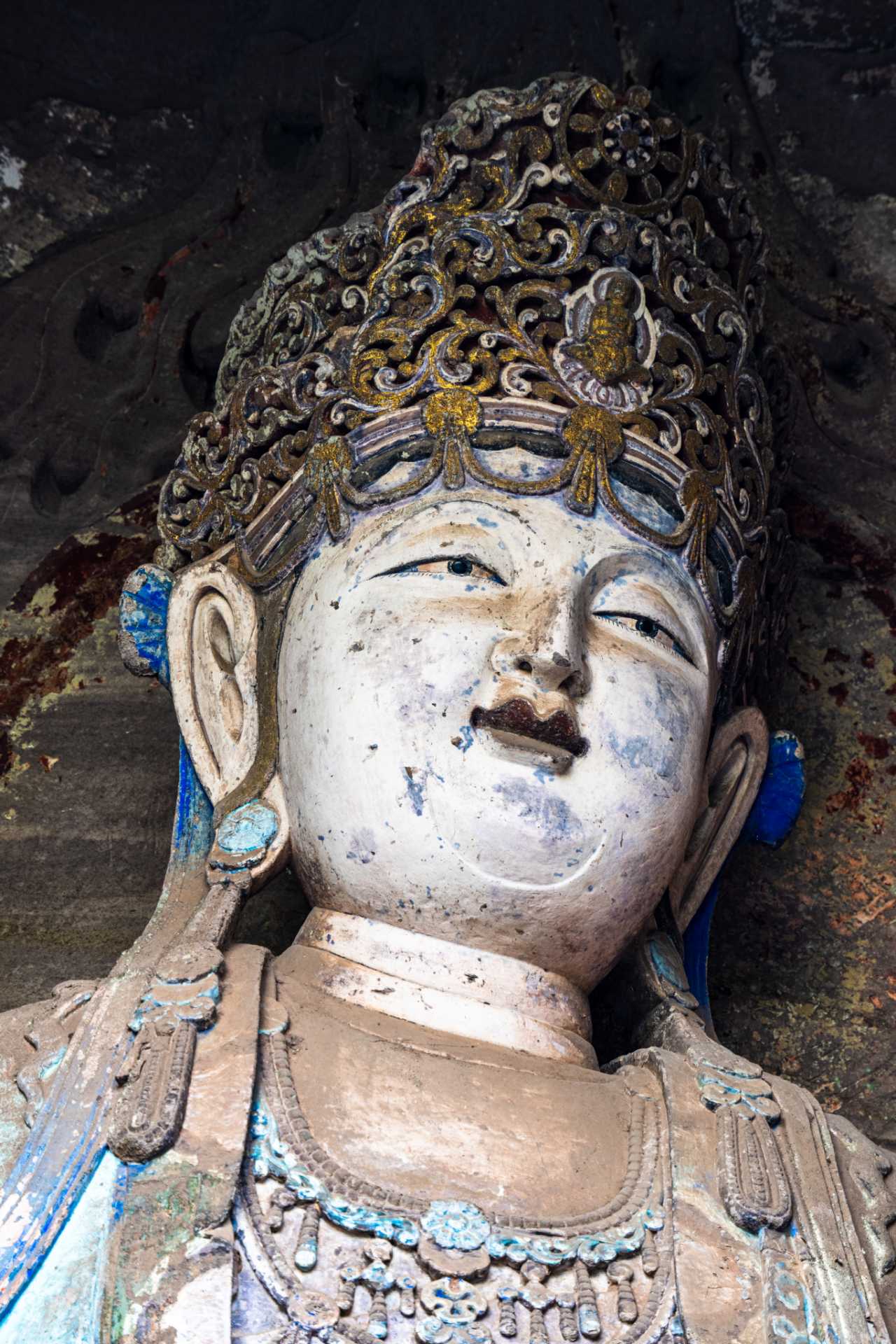
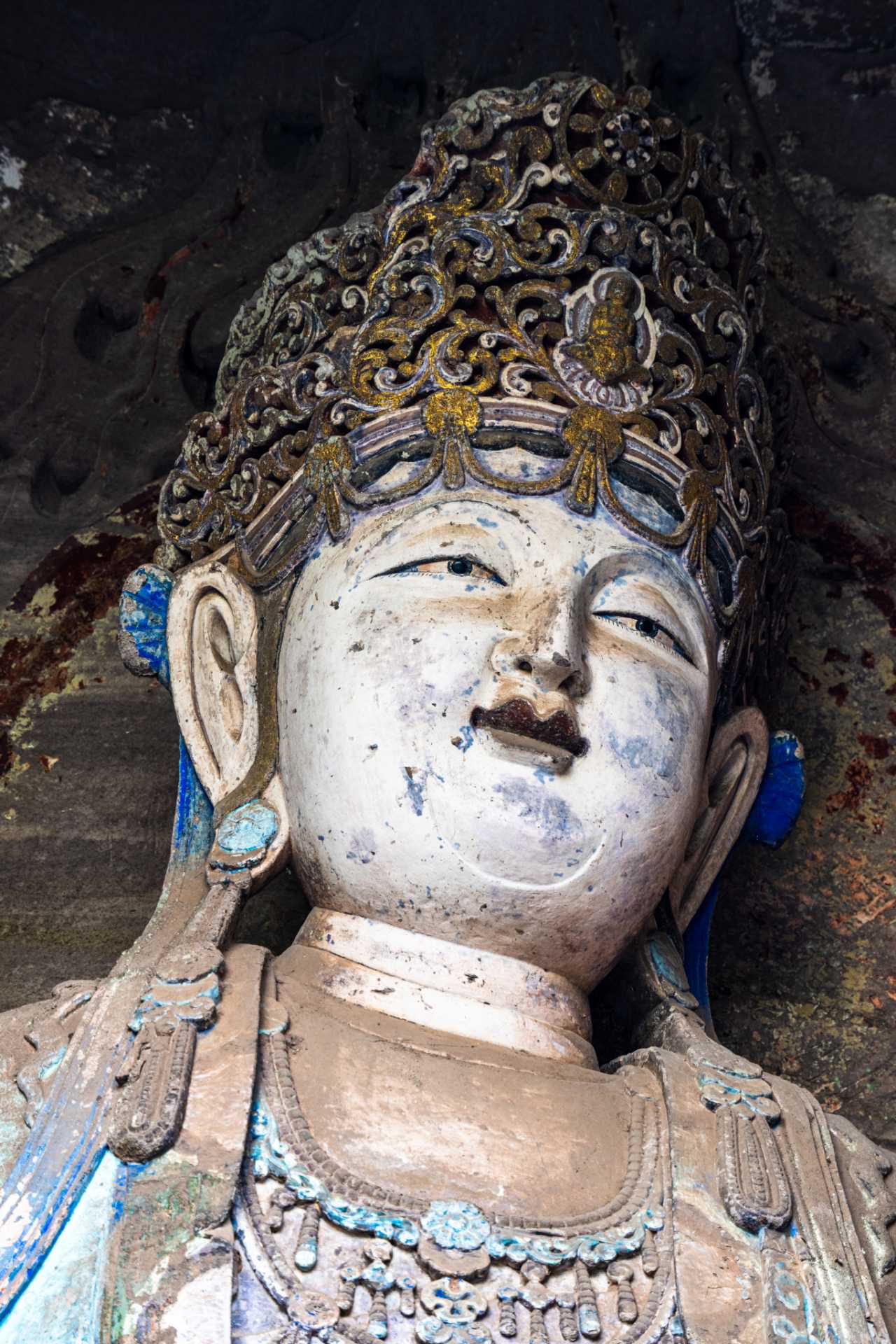
Huayan Cave showcases Song dynasty bodhisattva carvings with exquisite detail—flowing robes, delicate jewelry, and serene expressions. Peacock Cave features intricate peacock-themed carvings, a testament to the craftsmen's ability to blend Buddhist iconography with local artistic traditions.
Practical Travel Tips for Anyue Stone Carvings
Best Time to Visit
 - Spring (March-April): Rapeseed flowers in bloom, pleasant temperatures - Autumn (October-November): Clear skies, comfortable hiking weather - Avoid: Summer heat and rainy season (June-August)
Getting There
- From Chengdu: 2.5 hours by car via G4217 Chengyu Expressway
- From Chongqing: 2 hours by car
- Public transport: Bus from Chengdu or Chongqing to Anyue County, then local taxis
What to Bring
- Comfortable walking shoes (many sites require hiking)
- Water and snacks (limited facilities at remote sites)
- Camera with zoom lens (some carvings are high on cliffs)
- Cash (some entrance fees are cash-only)
FAQ: Anyue Stone Carvings
1. How do Anyue Stone Carvings compare to Dazu Rock Carvings?
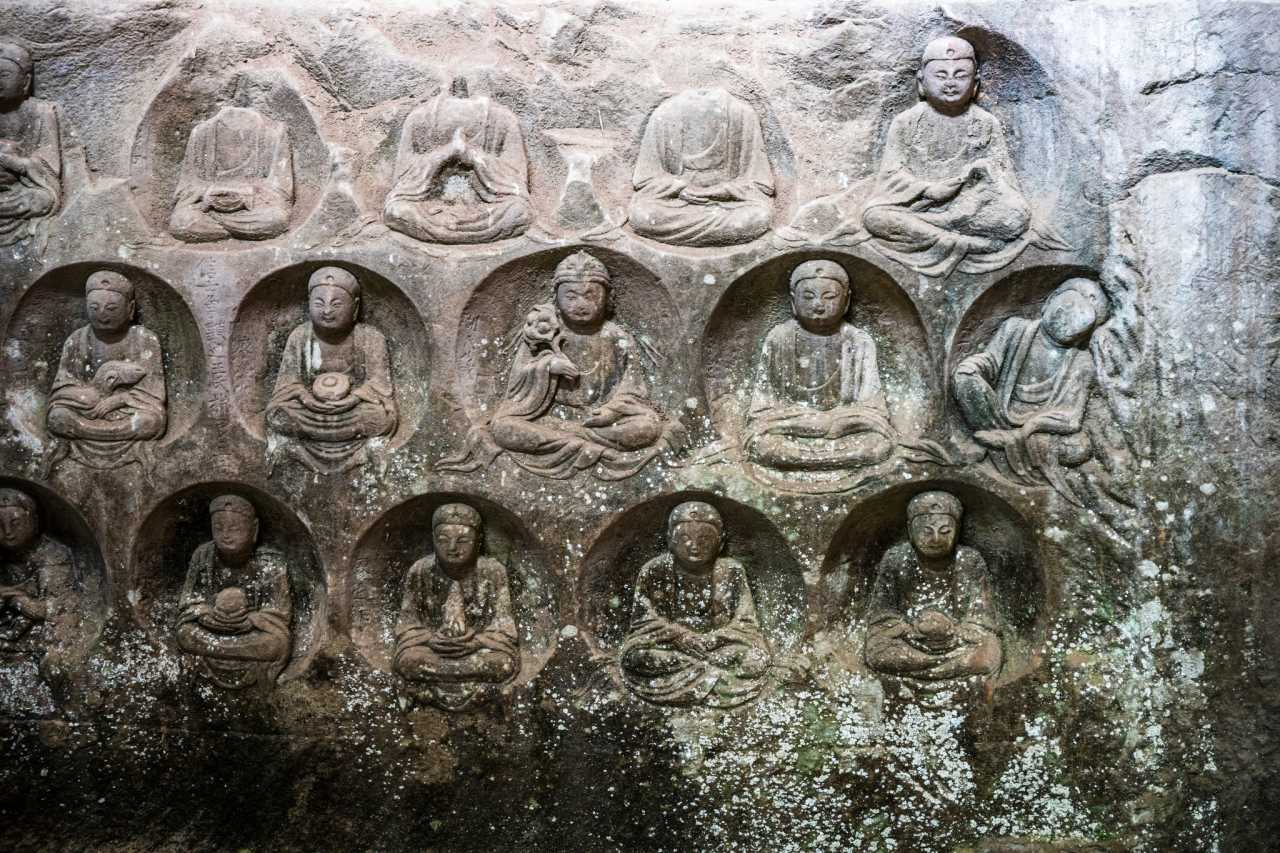
Anyue and Dazu are complementary. Dazu is more famous, better preserved, and easier to access. Anyue is more rustic, scattered across countryside, and offers a raw, unpolished experience. Many scholars consider Anyue the "missing link" between Tang and Song carving styles, with Dazu representing the culmination.
2. Are the Anyue Stone Carvings accessible for elderly visitors?
Some sites require hiking up hills or walking on uneven paths. Wofo Temple and Mumen Temple have relatively flat approaches. Qianfo Village and Piyu Cave involve more climbing. We recommend visiting the more accessible sites if mobility is a concern.
3. Is photography allowed at the Anyue Stone Carvings?
Yes, photography is generally allowed at all sites. Flash photography may be restricted inside caves to protect the carvings. Drones are not permitted at most national-level protected sites.
4. What's the best way to see all major sites in one trip?
The two-day itinerary in this guide covers eight national-level sites. For a shorter visit, focus on Wofo Temple (the reclining Buddha) and Piyu Cave (the Water-Moon Guanyin)—these are the most iconic.
5. Why are so many Anyue Stone Carvings damaged?
Like many Chinese historical sites, the Anyue carvings suffered extensive damage during the Cultural Revolution (1966-1976) . Natural weathering over centuries also took its toll. However, the surviving fragments still reveal extraordinary craftsmanship.
Internal Linking Suggestions
[Link: Dazu Rock Carvings Complete Guide] [Link: Sichuan Buddhist Cave Temples Itinerary] [Link: Leshan Giant Buddha Travel Tips] [Link: Chengdu to Anyue Day Trip] [Link: Chinese Buddhist Art History Overview]
Final Thoughts: Why You Should Visit Anyue Now
The Anyue Stone Carvings represent something increasingly rare in China's tourism landscape: an authentic, uncurated encounter with history. There are no ticket queues, no selfie sticks blocking your view, no souvenir shops at every turn.
Instead, you'll find: - Tang dynasty masterpieces hidden in farm fields - Song dynasty bodhisattvas with human expressions - Ming dynasty architectural wonders carved from living rock - A journey through time where damage itself becomes history's ID card
As one visitor put it: "I'd rather look at these fragments and use my imagination than see modern people's 'restorations' done with self-righteous ignorance."
Ready to experience the Buddhist light scattered across Sichuan's countryside? Plan your trip to Anyue today. Whether you're a history buff, a photography enthusiast, or simply someone seeking beauty off the beaten path, these millennia-old carvings are waiting to tell you their story.
Have you visited Anyue Stone Carvings? Share your experience in the comments below, or ask us questions about planning your trip!
You may also like


