A Three-Day Self-Drive Trip to Guangyuan: Persimmons, Ancient Towns, and the Perilous Shu Roads – A Dog-Friendly Adventure from Chengdu
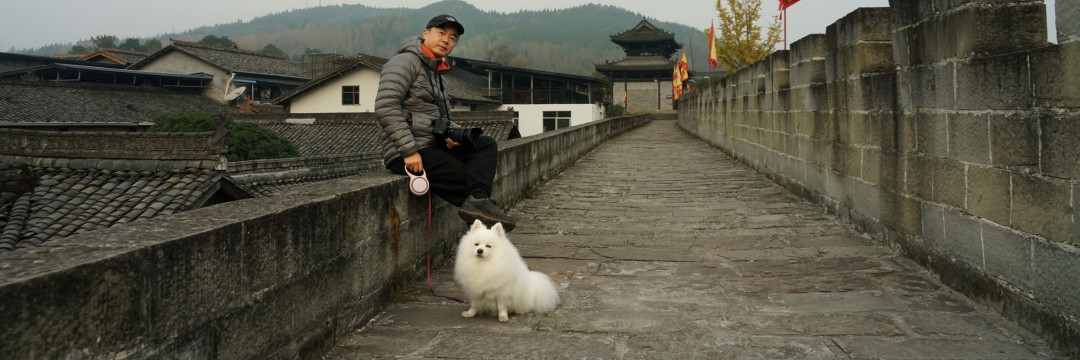
Meta Description: Discover a perfect autumn getaway from Chengdu! Explore Guangyuan's century-old persimmon trees, Qingxi Ancient Town, Zhaohua Ancient City, and Jianmen Pass. A dog-friendly self-drive itinerary with practical tips and stunning photography spots.
Introduction: Why Guangyuan Should Be Your Next Autumn Road Trip Destination
As a signed photographer and self-drive travel enthusiast, I'm always chasing the warm colors of late autumn. From the red persimmons of Shexian County in Anhui to the harvest scenes of Gongcheng in Guangxi, every November stirs a familiar restlessness—the urge to hit the road and capture those fiery red "lanterns" hanging from ancient trees.
But this time, I wanted to stay closer to Chengdu. I needed a destination within easy driving distance that offered persimmon photography, rich history, and natural beauty. After browsing travel forums and recommendations, I locked onto Guangyuan—just over 200 kilometers from Chengdu. It promised Qingxi Ancient Town, Zhaohua Ancient City, and Jianmen Pass, places I had never explored before.
What followed was a three-day adventure that connected two ancient villages, one formidable mountain pass, two historic towns, and my very first self-drive trip to Guangyuan with my dog.
Trip Highlights at a Glance
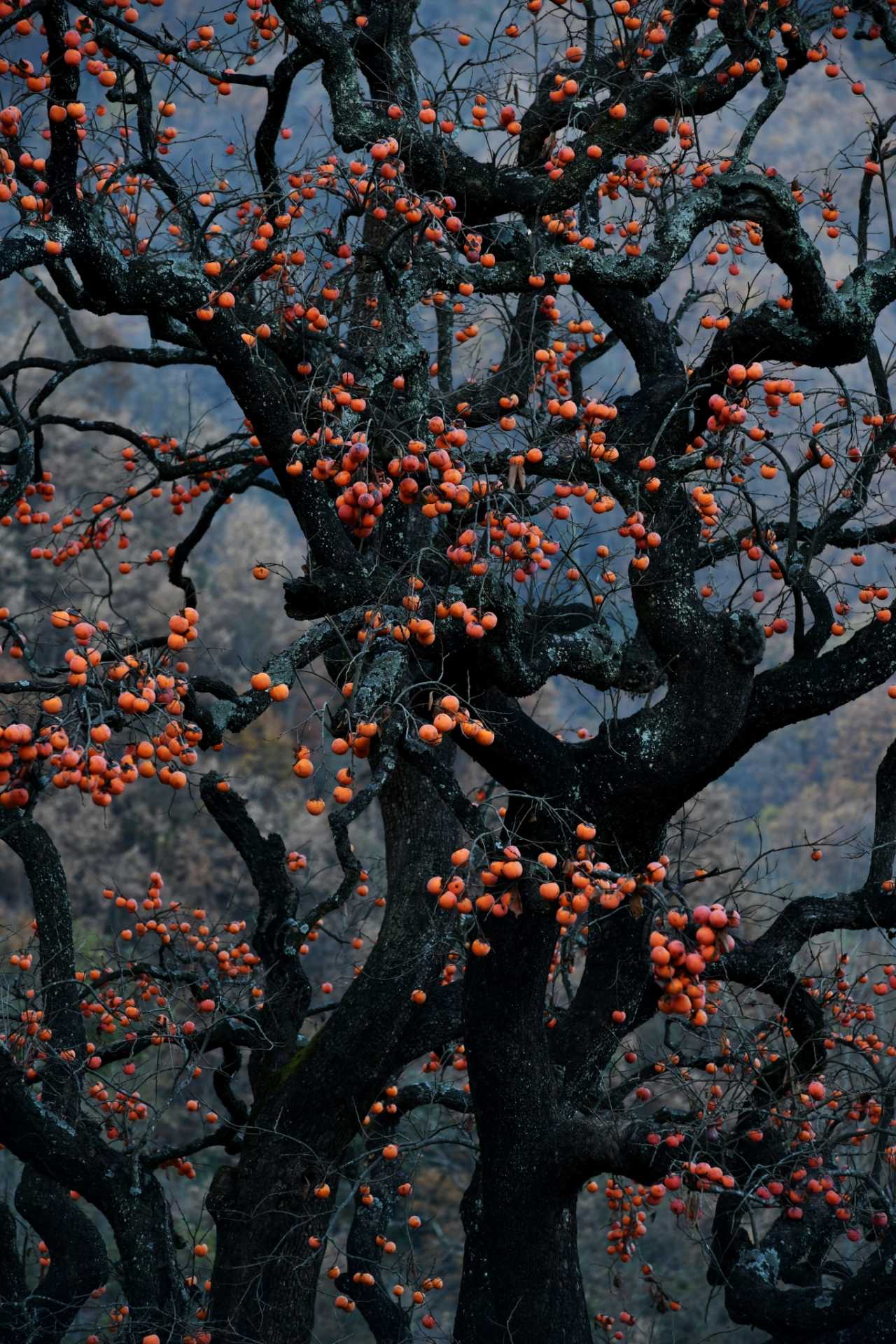
- Century-old persimmon trees in Maogoudong Village, heavy with red fruit
- Persimmons dotting the hillsides along the Jian-Zhao Road in Niutou Village
- The quiet streets and alleys of Qingxi Ancient Town
- Night scenery and lantern lights of Zhaohua Ancient City
- The gate tower, Stone Bamboo Shoot Peak, cliffside paths, and "Sliver of Sky" at Jianmen Pass
I. The Hidden Red of Persimmons in the Mountains
If you had to choose a fruit that is both festive and auspicious, it would be the persimmon. The Chinese love to say "May everything go as you wish" (shì shì rú yì) and "Smooth sailing in all things" (shì shì shùn suì)—blessings hidden within every bright red fruit.
For this trip to northern Sichuan, I deliberately selected two locations for persimmon photography: Maogoudong Village in Sanyang Town, Qingchuan County, and Niutou Village at the foot of Niutou Mountain in Zhaohua Town. The two villages are only about 70–80 kilometers apart, making them easy to visit in sequence.
Both villages are free to enter, and homestays are available if you want to stay overnight to catch sunrise and morning mist. We originally planned to leave in mid-November, but various errands delayed us until December 6. I assumed the persimmons would have long been picked, and I was just going for a casual outing. To my surprise, both villages still had a few old trees bearing fruit—enough to dazzle our eyes and warm this early winter.
1.1 Maogoudong Village: The Warmth of Three Persimmon Trees
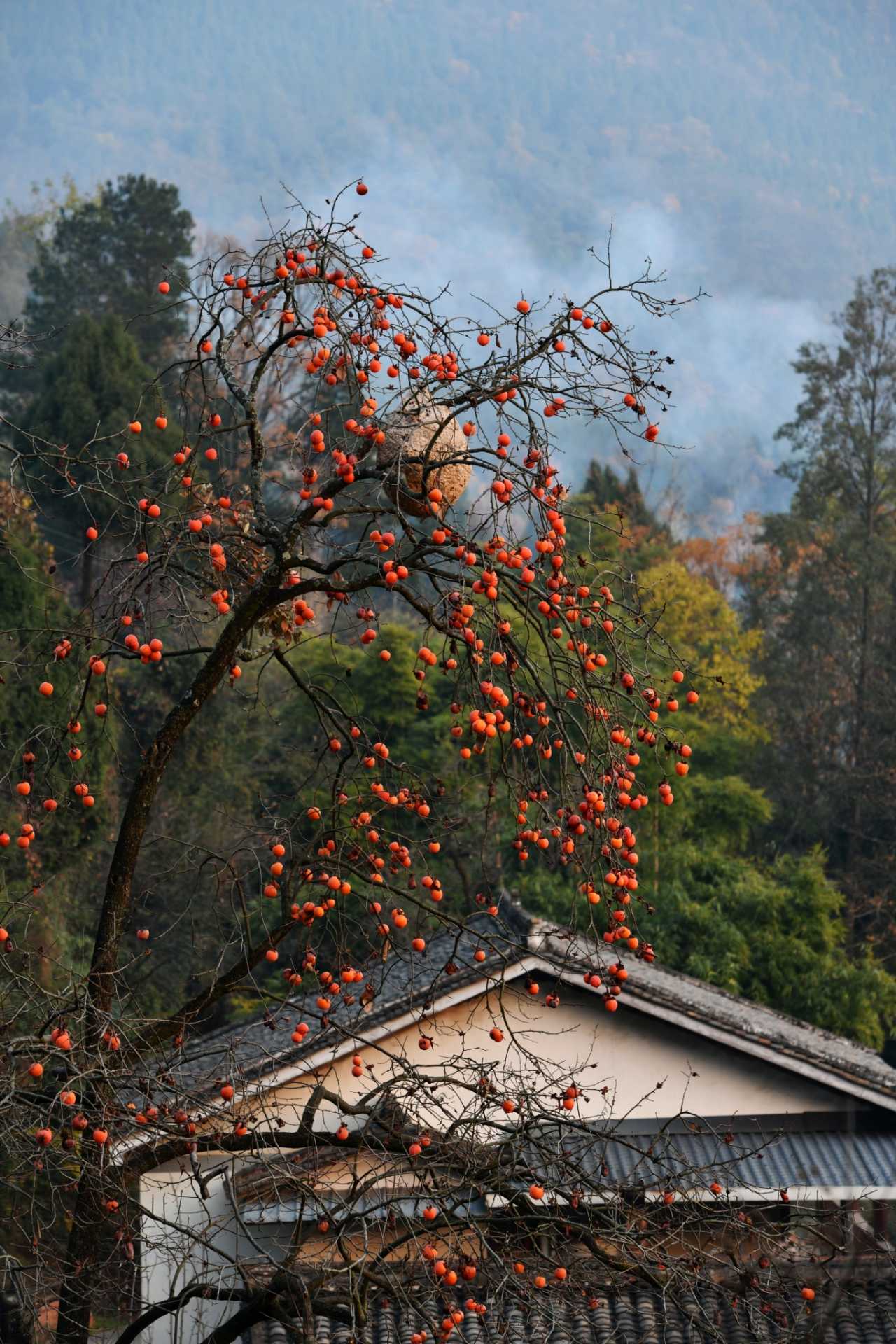
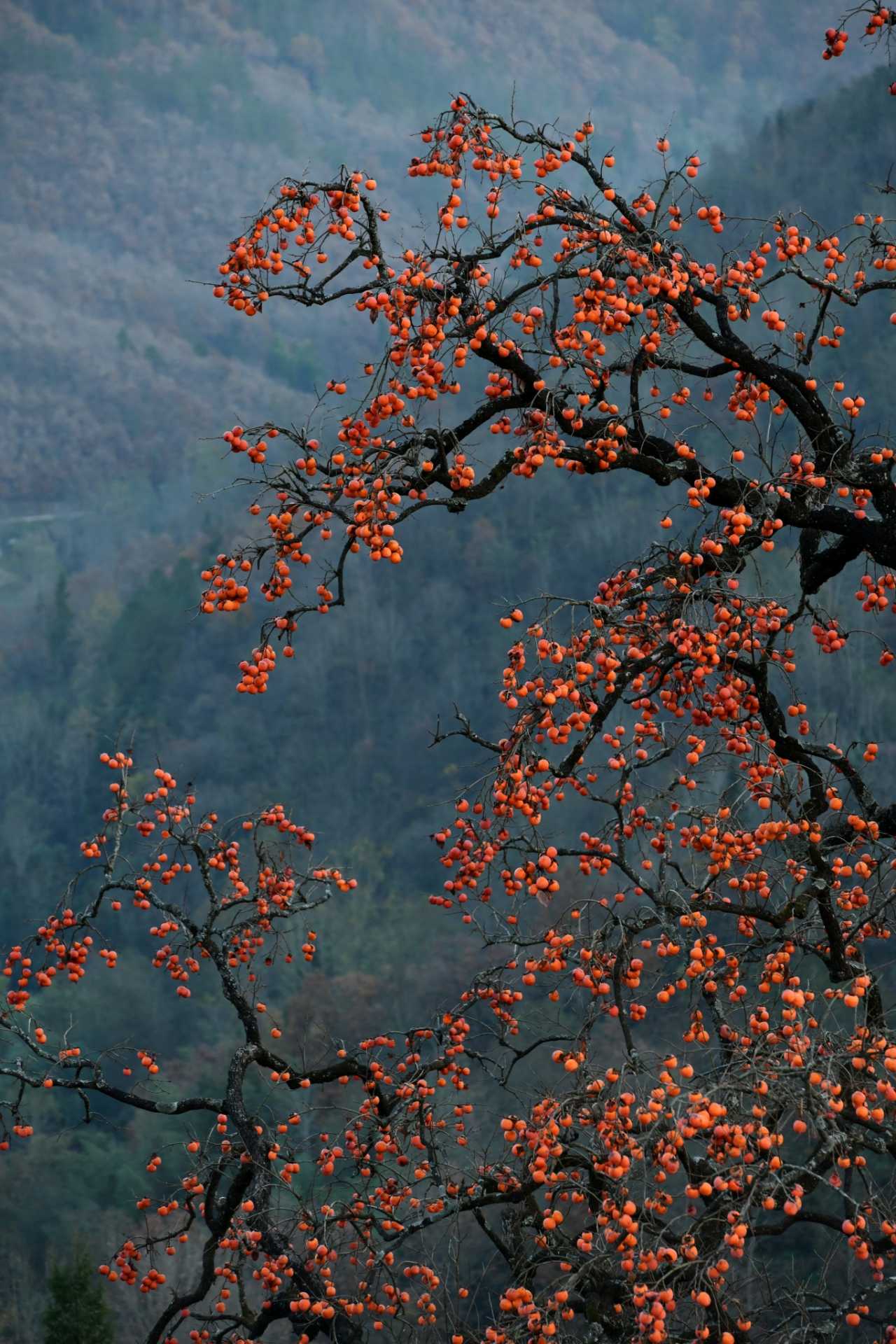
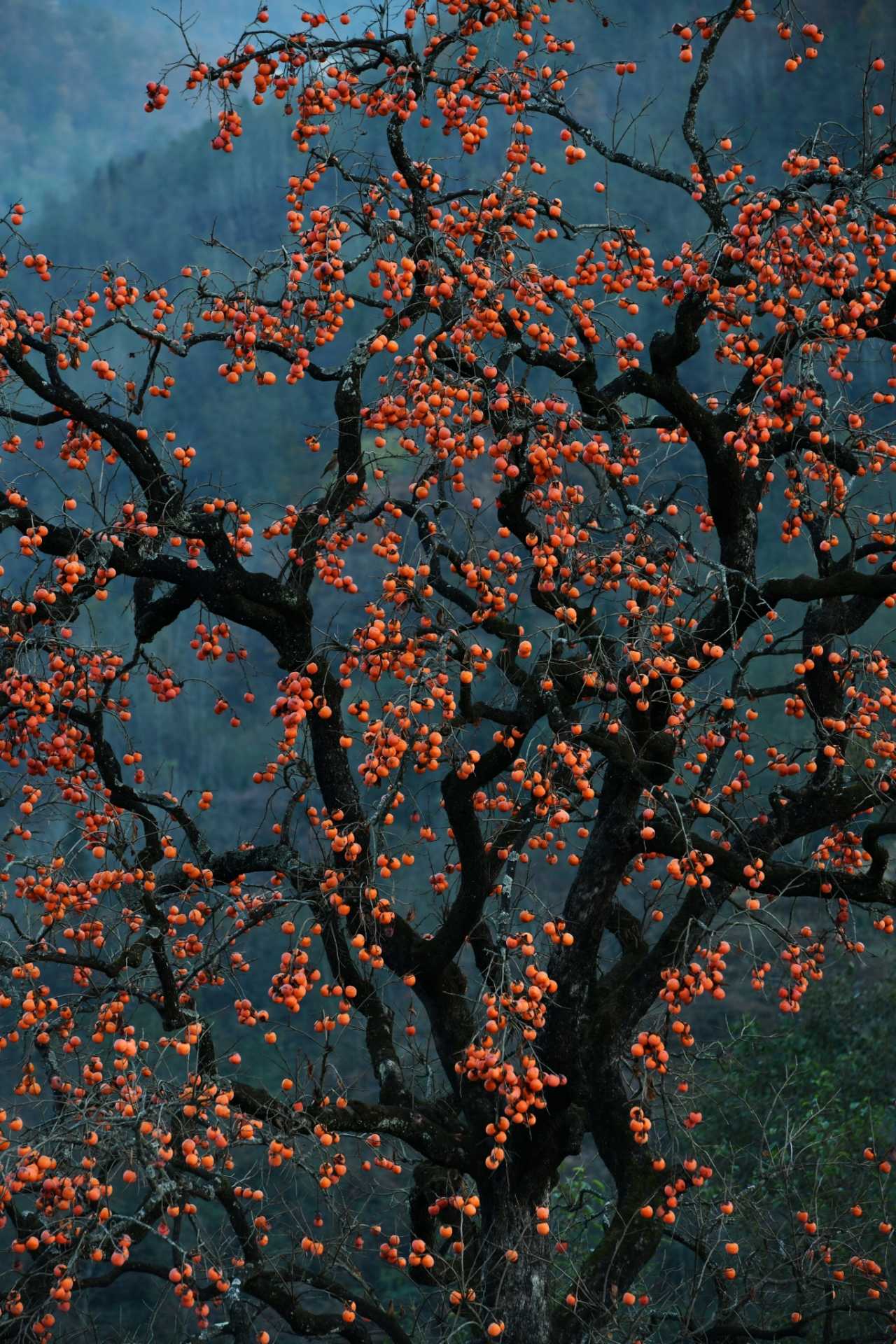
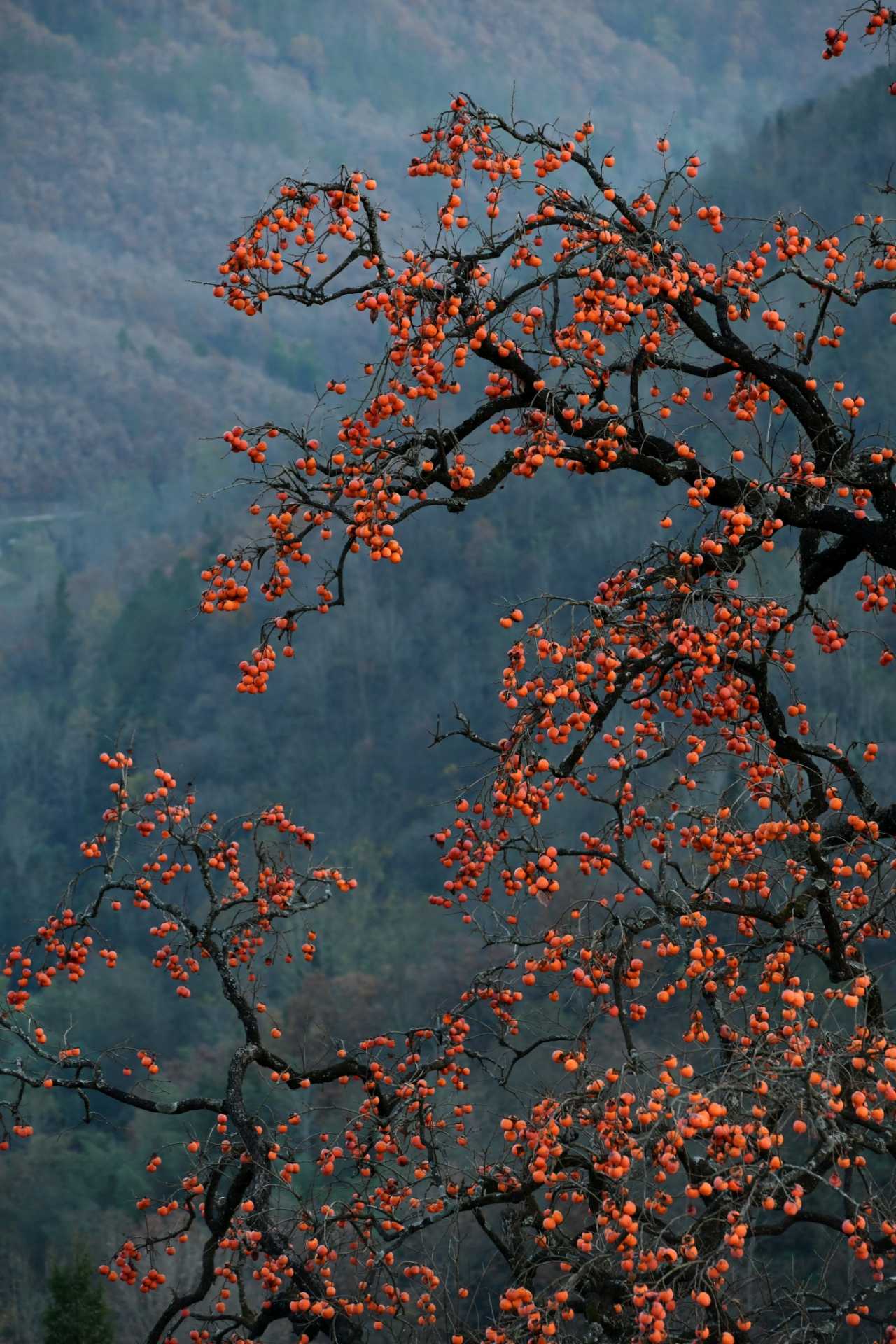
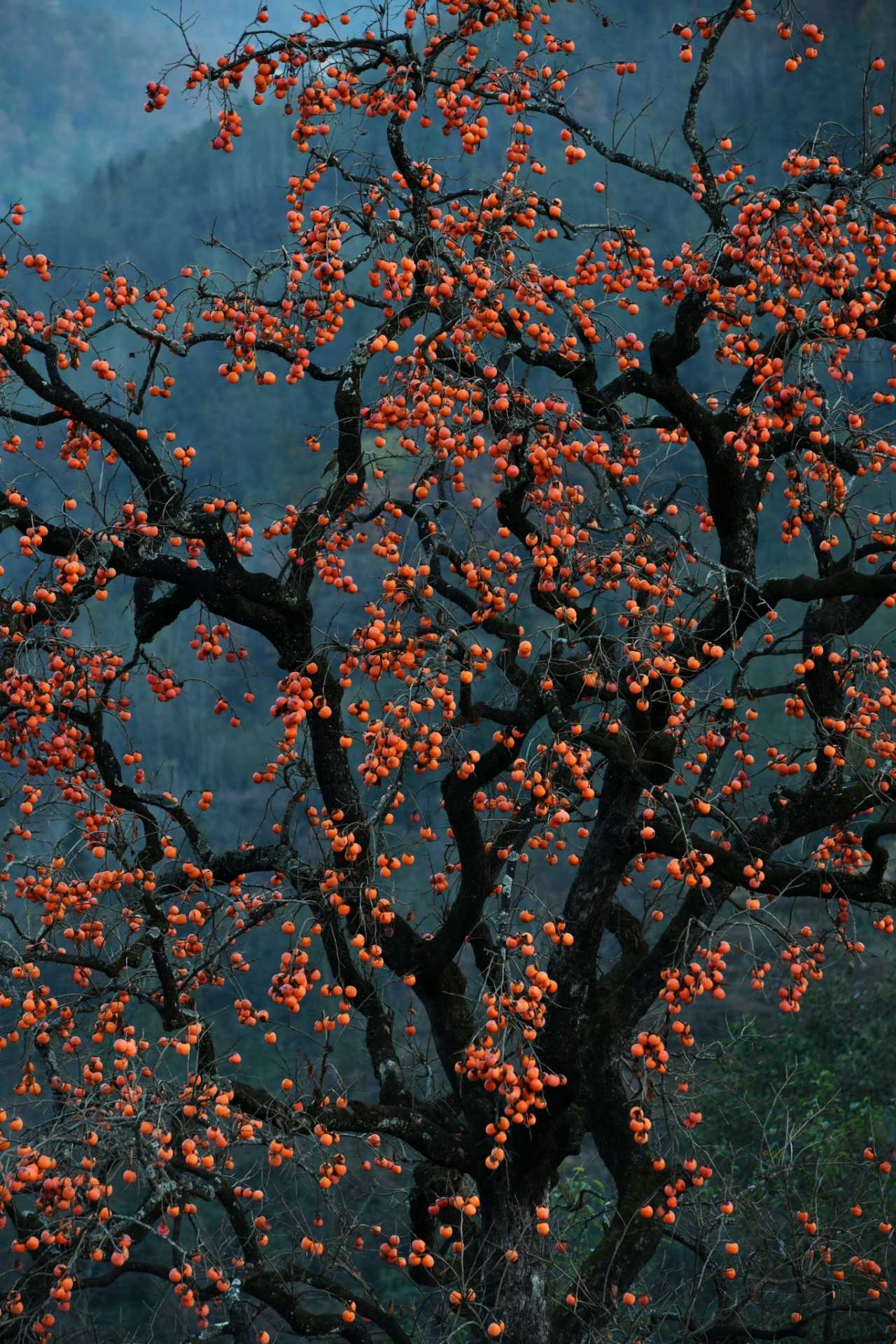
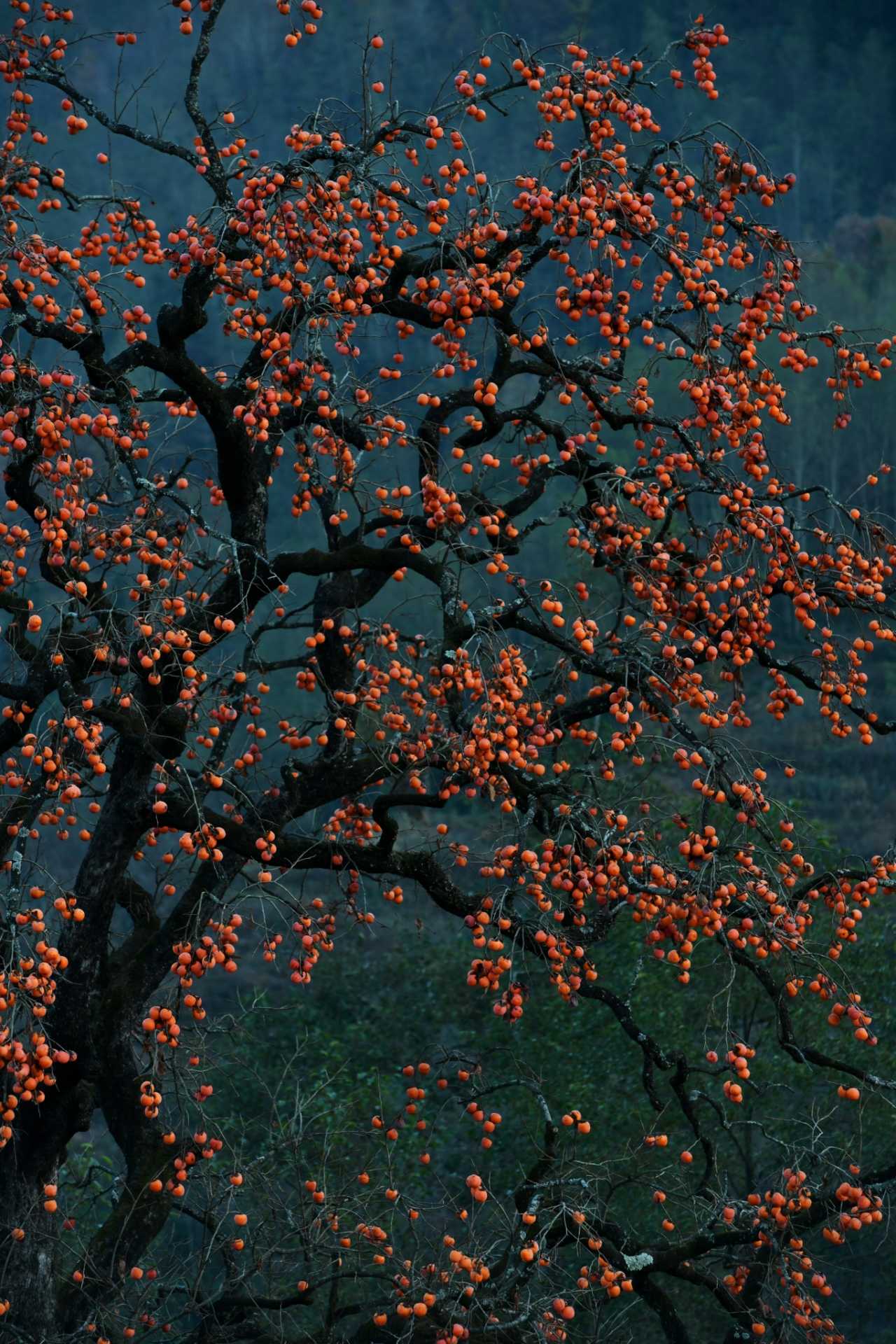
The persimmons of Maogoudong Village are quite famous in Guangyuan. The village is filled with century-old persimmon trees planted in front of and behind houses. When autumn arrives, the trees are laden with red fruit, like countless red lanterns decorating the mountain village with a festive air.
By early December, the season is well past its peak. However, the village deliberately left three old trees with the best shapes untouched—not a single persimmon picked—specifically for visitors to admire and photograph.
The first tree we encountered was at the village entrance, belonging to a family surnamed Zhou. The Zhou family preserved this oldest, best-shaped, and most strategically positioned persimmon tree. They had even opened a homestay around it, with a courtyard that could serve as a parking lot. Parking cost only 10 yuan, which also included viewing the persimmons. The yard was hung with half-dried persimmon cakes—another bountiful harvest year, it seemed.
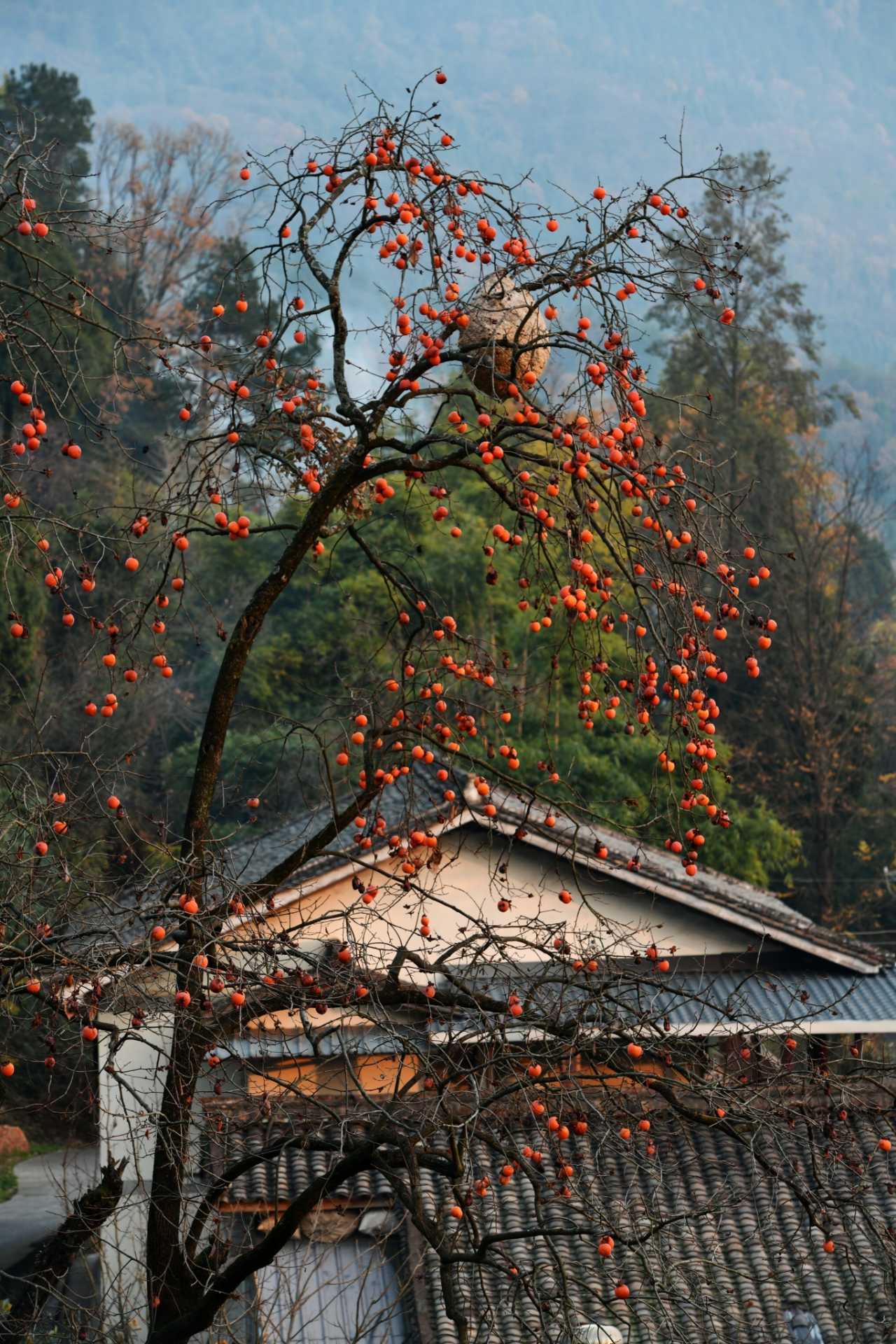
Passing through the Zhou family's courtyard and out the back door, we walked about a hundred meters along a mountain path to see the tall, majestic persimmon tree. It stood at the highest point of the valley where the village lay, offering a wide view and plenty of angles for photography. We spent the most time under this tree.
The other two persimmon trees were located in the village at the bottom of the valley. According to locals, the fruit on these trees had been purchased by the government and deliberately left behind. A viewing platform had even been built up ahead to make it easier for tourists to take photos. The local government and residents were clearly determined to use persimmons to boost tourism.
Even though there were only three trees, and even though we arrived late, the sight of the full "lanterns" hanging high still warmed and brightened the entire small mountain village.
Practical Tip for Maogoudong Village: First navigate to "Qingxi Ancient Town" (about 270 kilometers from Chengdu). Searching for "Maogoudong" or "Sanyang Town" directly on navigation apps won't work; you need to search for "Suyang Village Veterans Service Station." From there, two routes are available: - County Road 121 via Qiaolou (20 kilometers) - A township road over the mountain (8.6 kilometers, slightly narrower)
I recommend the latter, but the last 1.6 kilometers of concrete road are very narrow. Large vehicles will test your driving skills. Before entering this section, you'll see an intersection with a small path on the left and a sign reading "Maogoudong"—ignore the navigation and turn left.
1.2 Niutou Village: A Splash of Red on the Jian-Zhao Road
Niutou Village is located halfway up Niutou Mountain in Zhaohua Town, spread across the slopes on both sides of the "Jian (Jianmen Pass) Zhao (Zhaohua Ancient City) Road." The village's fields, hillsides, and areas around houses are all planted with persimmon trees. If you come in November, it must be stunning. Although we arrived late, there were still a few old trees bearing fruit.
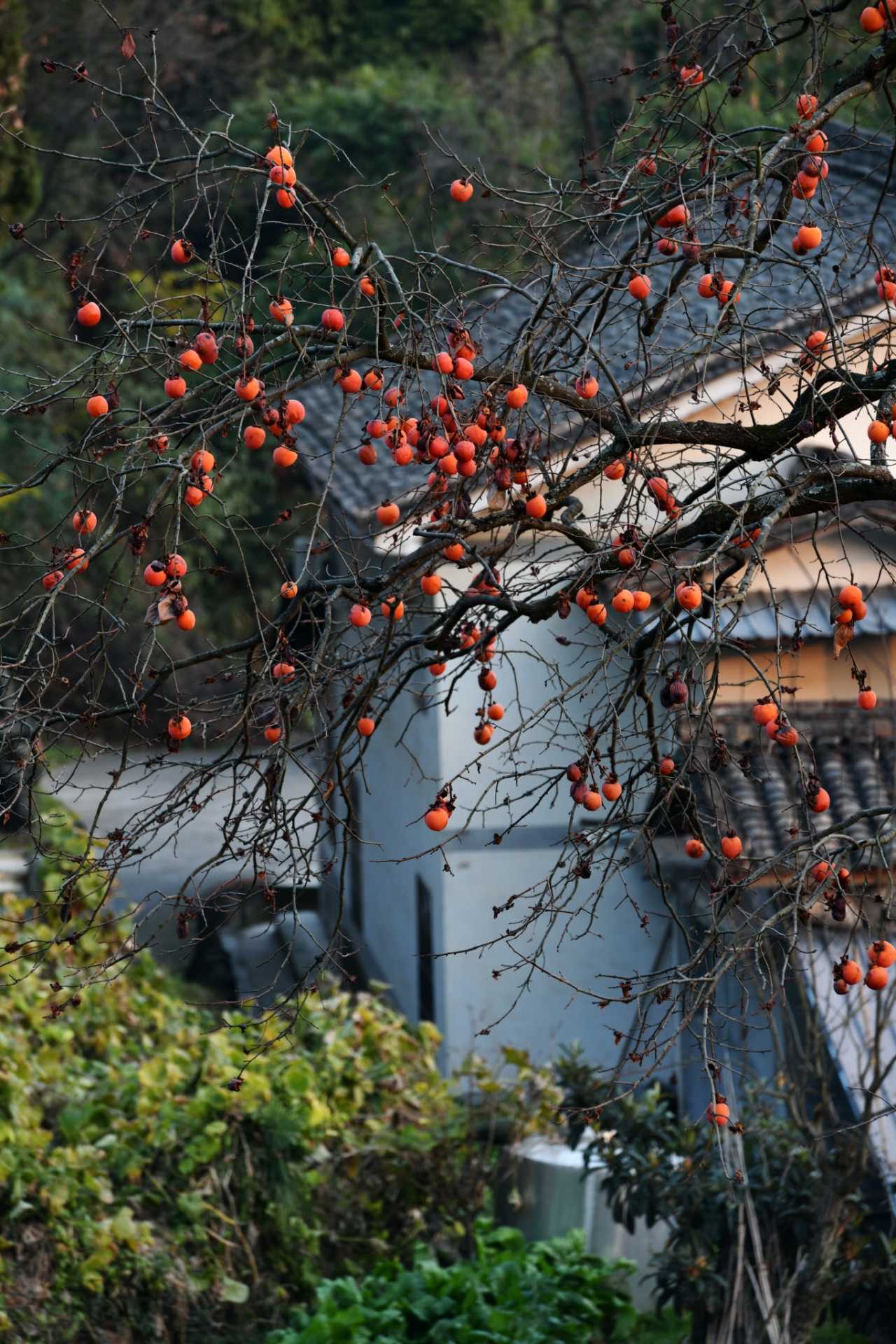
We had photographed Maogoudong Village the day before, stayed overnight in Zhaohua Ancient City, visited Jianmen Pass the next day, and then specifically took the Jian-Zhao Road to stop by Niutou Village on the way. If you're coming directly from Chengdu, first navigate to "Zhaohua Ancient City," then after exiting the highway, navigate to "Niutou Mountain." Once you reach the Niutou Mountain scenic area entrance, continue along the Jian-Zhao Road for 2.3 kilometers to arrive. You can see the persimmon trees on both sides of the road from the highway.
In truth, even without the persimmons, just walking through such a small mountain village, breathing in the mountain air, feeling the breeze carrying the scent of trees, and experiencing the leisurely life far from the hustle and bustle, is a rare and pleasant experience.
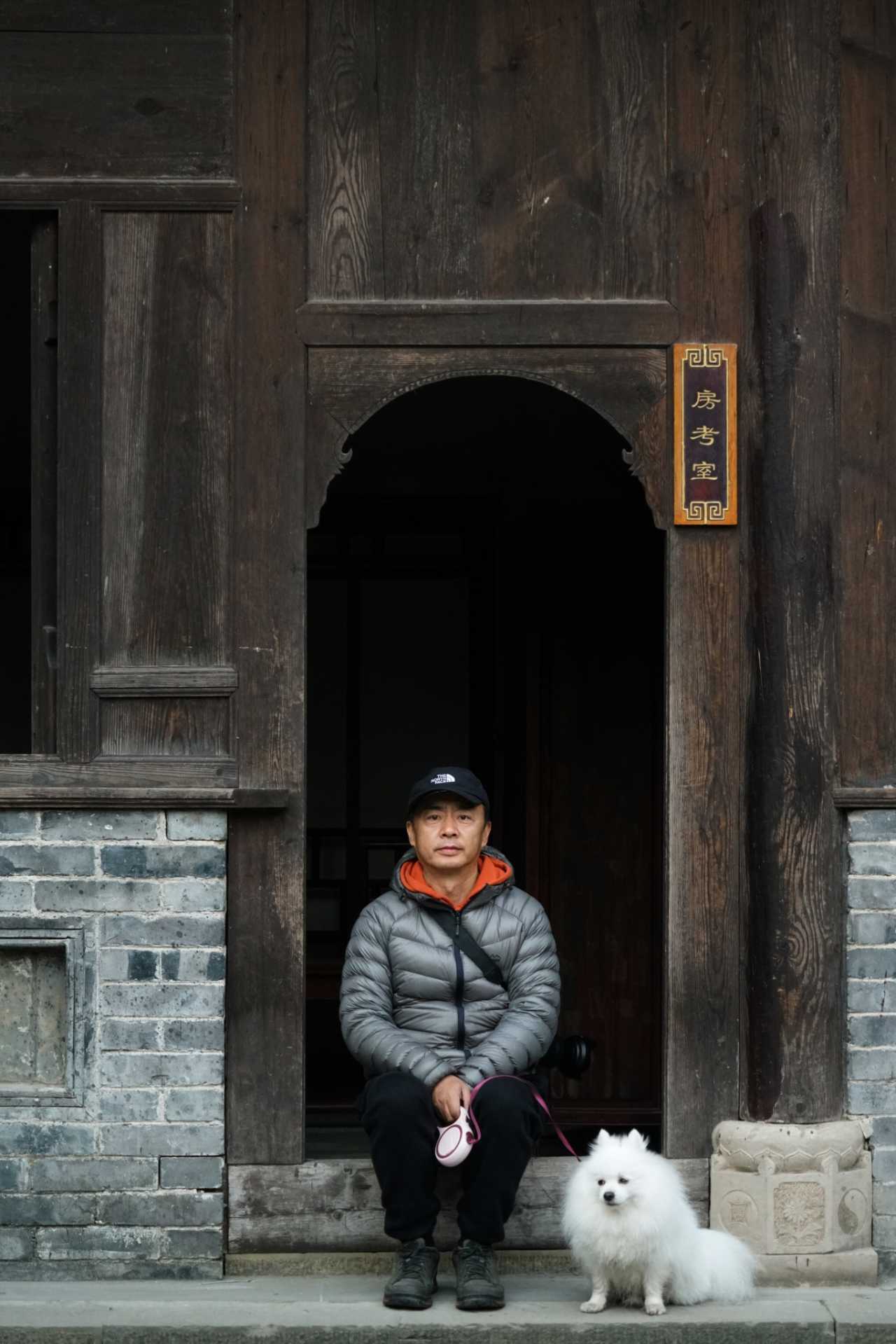
Pro Tip for Dog Owners: Both villages are dog-friendly. Keep your dog on a leash, especially near farm animals and narrow mountain paths. Bring water and snacks for your furry companion.
II. Ancient Towns Once Glorious, Now Low-Key
On this trip, I visited two ancient towns with long histories, both of which had once written brilliant chapters in the annals of history.
2.1 Qingxi Ancient Town: Gateway to Northern Sichuan, Throat of Western Shu
From Chengdu to Qingxi Ancient Town is about 270 kilometers, a nearly four-hour drive. The ancient town is located in Qingxi Town, Qingchuan County. After exiting the highway, you'll arrive in just a few dozen meters. Mountain spring water flows through the town from west to east, forming a long water street with clear springs gurgling year-round, hence the name "Qingxi" (Clear Stream).

Since the Qin and Han dynasties, this place has been the seat of commanderies, prefectures, and counties. It was an important post station on the ancient Southern Silk Road and the Tea Horse Road, earning it the reputation of "Gateway to Northern Sichuan, Throat of Western Shu." During the Three Kingdoms period, the Shu Han general Liao Hua was stationed here for many years. It was a crucial pass on the Yinping Ancient Road and was also known as "Border Town."
Because the town's shape resembles a "boot" and its gates are like "urns," it is also called "Boot City" and "Urn City." The ancient town was severely damaged during the Wenchuan earthquake but has since been rebuilt. Today, it retains its traditional charm with stone-paved streets, wooden houses, and peaceful courtyards.
What to Do in Qingxi Ancient Town: - Stroll along the water street and listen to the gurgling springs - Visit the Liao Hua Temple and learn about the Three Kingdoms history - Taste local specialties like Qingxi tofu and pickled vegetables - Photograph the ancient gates and traditional architecture - Stay overnight in a local homestay for a peaceful evening
Practical Tip: Qingxi Ancient Town is less commercialized than other ancient towns in Sichuan. It offers an authentic experience without the crowds. Parking is available near the town entrance.
2.2 Zhaohua Ancient City: Night Scenery and Lantern Lights
Zhaohua Ancient City is located in Zhaohua Town, about 30 kilometers from Qingxi Ancient Town. It served as the capital of the ancient Shu state and later became an important military stronghold during the Three Kingdoms period. The city walls, gates, and ancient streets are remarkably well-preserved.
We stayed overnight in Zhaohua Ancient City, which allowed us to experience the night scenery and lantern lights. The ancient city transforms after dark, with warm lanterns illuminating the stone streets and traditional buildings. It's a photographer's dream.
What to Do in Zhaohua Ancient City: - Walk the ancient city walls at sunset - Explore the Three Kingdoms cultural sites - Enjoy local street food and snacks - Photograph the lantern-lit streets at night - Visit the Zhaohua Confucian Temple
Accommodation Tip: Several boutique hotels and homestays are available within the ancient city. Book in advance during peak seasons. Most are dog-friendly, but confirm when booking.
III. The Perilous Shu Roads: Jianmen Pass
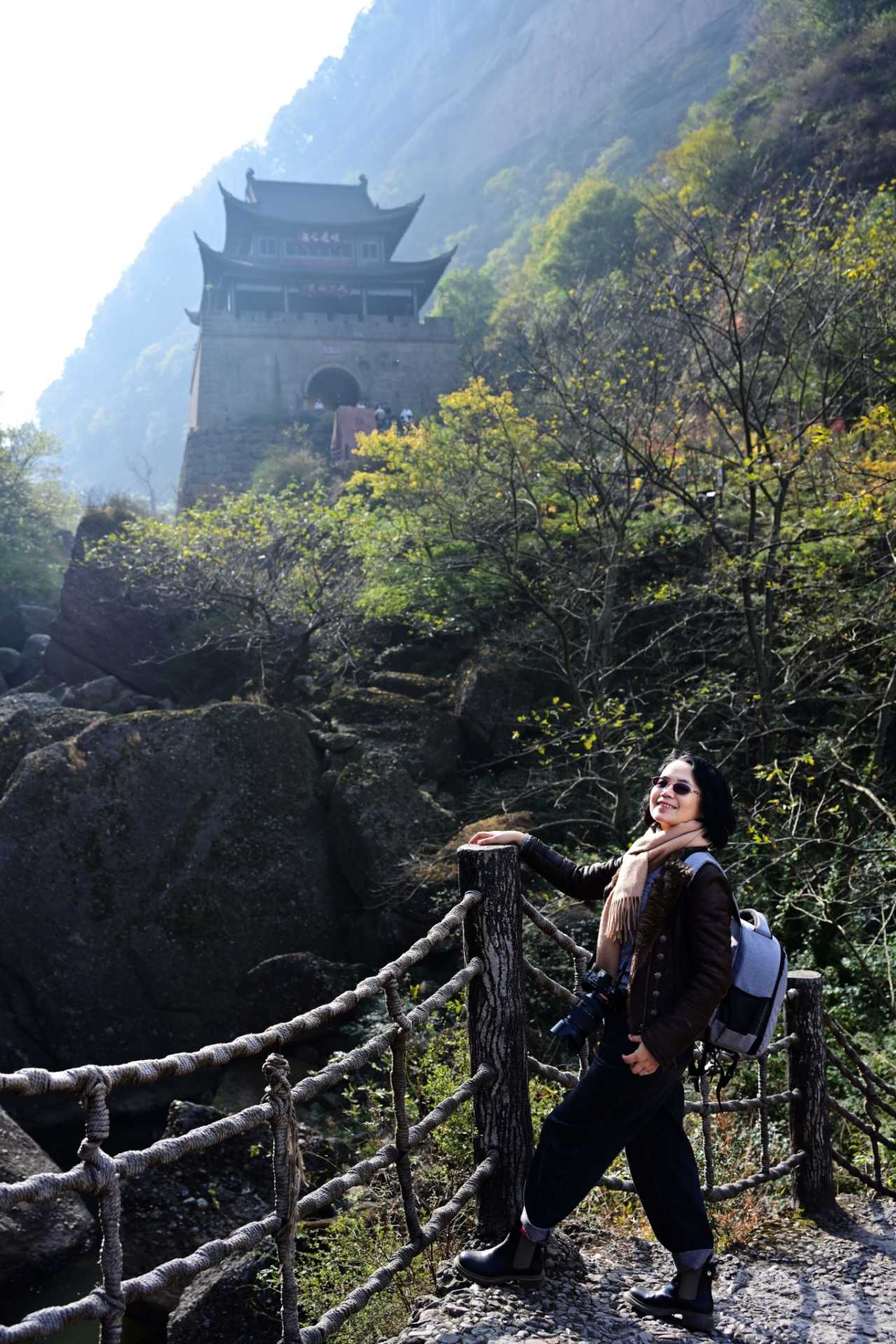
No trip to Guangyuan is complete without visiting Jianmen Pass (Jianmen Guan), one of the most famous passes on the ancient Shu Road. Located about 30 kilometers from Zhaohua Ancient City, Jianmen Pass is a natural fortress carved into the cliffs of the Jianmen Mountain range.
The pass has been a strategic military point for over 2,000 years. It was famously defended by the Shu Han general Jiang Wei during the Three Kingdoms period. The pass is also known for its "Sliver of Sky" (Yi Xian Tian), a narrow cliffside path that offers breathtaking views.
Key Attractions at Jianmen Pass: - The Gate Tower: The iconic entrance to the pass, rebuilt in the Ming Dynasty style - Stone Bamboo Shoot Peak: A unique rock formation resembling bamboo shoots - Cliffside Paths: Walkways carved into the vertical cliffs - Sliver of Sky: A narrow passage between two cliffs, offering dramatic views - Jianmen Plank Road: A reconstructed ancient plank road along the cliff face
Practical Tips for Jianmen Pass: - Allow at least 3–4 hours for a thorough visit - Wear comfortable walking shoes; the paths can be steep and uneven - Bring water and snacks; options inside the scenic area are limited - Dogs are allowed on leash, but some sections may be challenging for small breeds - The best time to visit is early morning to avoid crowds and capture the morning mist
Ticket Information: Admission is approximately 105 yuan per person. Discounts are available for students and seniors. Parking costs 10 yuan.
IV. Practical Travel Information for Your Guangyuan Self-Drive Trip
Best Time to Visit
The ideal time for persimmon viewing is mid-November to early December. For hiking and sightseeing, October to November offers pleasant temperatures and colorful autumn foliage. Summer can be hot and humid, while winter is cold but less crowded.
How to Get There
From Chengdu, take the G5 Beijing-Kunming Expressway to Guangyuan. The drive takes approximately 3–4 hours. Exit at: - Qingxi Ancient Town: Exit at Qingxi/Qingchuan - Zhaohua Ancient City: Exit at Zhaohua - Jianmen Pass: Exit at Jianmen Pass
Suggested 3-Day Itinerary
Day 1: - Morning: Depart from Chengdu, drive to Qingxi Ancient Town (3.5 hours) - Afternoon: Explore Qingxi Ancient Town, visit Maogoudong Village for persimmons - Evening: Stay overnight in Qingxi or drive to Zhaohua Ancient City
Day 2: - Morning: Visit Jianmen Pass (30 minutes from Zhaohua) - Afternoon: Drive the Jian-Zhao Road to Niutou Village for persimmons - Evening: Explore Zhaohua Ancient City at night
Day 3: - Morning: Visit any remaining attractions, shop for local products - Afternoon: Return to Chengdu (3.5 hours)
Where to Stay
- Qingxi Ancient Town: Homestays near the water street (budget-friendly, authentic)
- Zhaohua Ancient City: Boutique hotels and inns within the ancient city walls (mid-range)
- Jianmen Pass Area: Hotels near the scenic area entrance (convenient for early access)
What to Eat
- Qingxi Tofu: Smooth and flavorful, often served in a clay pot
- Jianmen Bean Curd: A local specialty with a unique texture
- Zhaohua Steamed Buns: Filled with pork and vegetables
- Persimmon Cakes: Dried persimmons, a popular souvenir
Frequently Asked Questions (FAQ)
Q1: Is Guangyuan suitable for a weekend trip from Chengdu?
 A: Absolutely! Guangyuan is just over 200 kilometers from Chengdu, making it perfect for a 2–3 day weekend getaway. You can cover the main attractions in two days, but a three-day itinerary allows for a more relaxed pace.
Q2: Are the persimmon trees still worth visiting in December?
A: Yes, but with caveats. The peak season is mid-November. By December, most fruit has been harvested. However, as we discovered, some villages deliberately leave a few trees untouched for photography. Maogoudong Village is particularly reliable for late-season persimmons.
Q3: Can I bring my dog to these attractions?
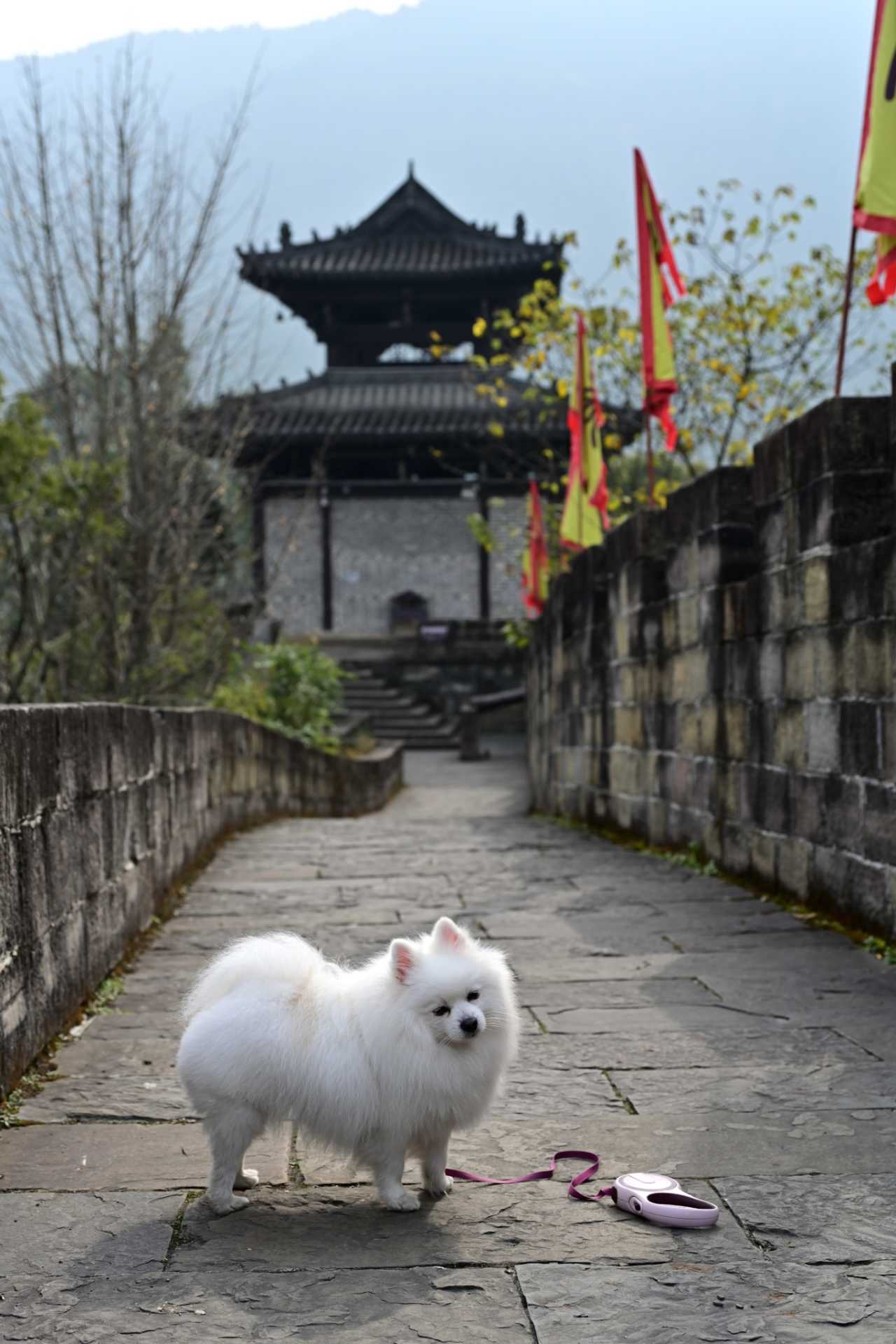 A: Yes, most attractions in Guangyuan are dog-friendly. Qingxi Ancient Town, Zhaohua Ancient City, and Maogoudong Village welcome well-behaved dogs on leashes. Jianmen Pass also allows dogs, but some cliffside paths may be challenging for small breeds. Always carry water and clean-up bags.
Q4: What is the driving condition like on the Jian-Zhao Road?
 A: The Jian-Zhao Road is a scenic mountain road with moderate traffic. It's well-maintained but has many curves and narrow sections. Drive carefully, especially in wet weather. The road offers stunning views of the surrounding mountains and valleys.
Q5: How much should I budget for a three-day trip to Guangyuan?
A: A budget of 1,500–2,500 yuan per person (excluding fuel) should cover accommodation, meals, entrance fees, and snacks. Homestays cost around 150–300 yuan per night, while boutique hotels range from 300–600 yuan. Entrance fees are approximately 105 yuan for Jianmen Pass and free for the villages.
Internal Linking Suggestions
- [Link: Best Autumn Road Trips from Chengdu]
- [Link: Dog-Friendly Travel Destinations in Sichuan]
- [Link: Complete Guide to Jianmen Pass and the Shu Roads]
- [Link: Photography Tips for Autumn Landscapes]
- [Link: Three Kingdoms Historical Sites in Sichuan]
Conclusion: Your Guangyuan Adventure Awaits
Guangyuan offers a perfect blend of natural beauty, historical depth, and authentic rural charm—all within easy driving distance from Chengdu. Whether you're a photographer chasing the perfect persimmon shot, a history buff exploring the ancient Shu Roads, or a dog owner looking for a pet-friendly getaway, this three-day itinerary has something for everyone.
The century-old persimmon trees, the quiet streets of Qingxi Ancient Town, the lantern-lit nights of Zhaohua Ancient City, and the dramatic cliffs of Jianmen Pass will leave you with memories that last a lifetime.
Ready to hit the road? Pack your camera, leash up your furry friend, and set your navigation for Guangyuan. The red lanterns of autumn are waiting for you.
Book your homestay in advance through platforms like Mafengwo or Ctrip to secure the best options. And don't forget to share your persimmon photos with us using the hashtag #GuangyuanPersimmons!
Safe travels, and may everything go as you wish!
You may also like


