A Secret Journey Around Chengdu: In Daying, Encountering a Different Kind of Worldly Charm
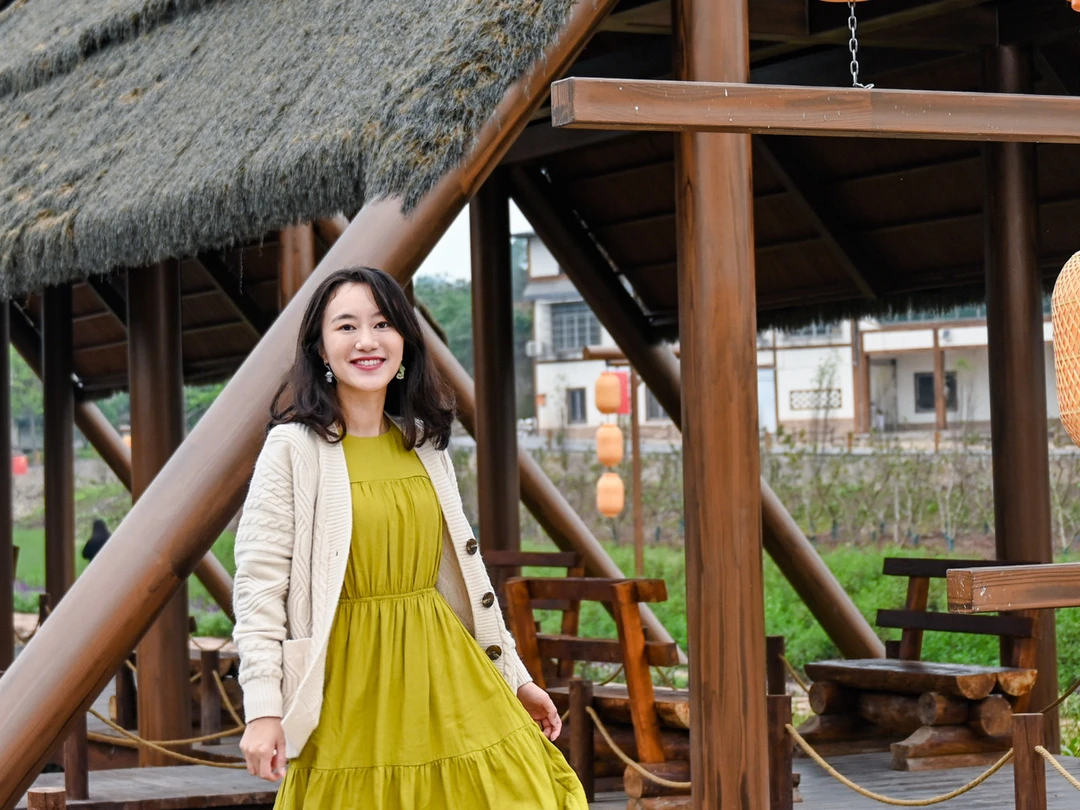
Meta Description: Discover Daying's hidden gems on a Chengdu weekend getaway—from Song Dynasty villages and thousand-year salt wells to lakeside hotpot and pastoral escapes. Your ultimate Daying travel guide awaits.
Introduction: Why Daying Deserves a Spot on Your Chengdu Travel Map
When the autumn wind turns the ginkgo leaves yellow and the sky stretches high like a freshly washed canvas, wanderlust calls. In an era where every trip feels like stolen time, finding a destination that balances history, nature, and authenticity is rare. Enter Daying (大英) —a county in Suining City, just a short drive from Chengdu, that offers a different kind of worldly charm.
Familiar yet ever-surprising, Daying has become my go-to escape. This journey was a collision of nature and history, spiced with fiery hotpot, ancient-style villages, and those poetic moments hidden in the countryside. Whether you're planning a Chengdu weekend getaway or a deeper Sichuan off-the-beaten-path adventure, Daying delivers.
Songjing Taoyuan: A Dream of Song Dynasty Timelessness
Step into a Thousand-Year-Old Peach Blossom Land
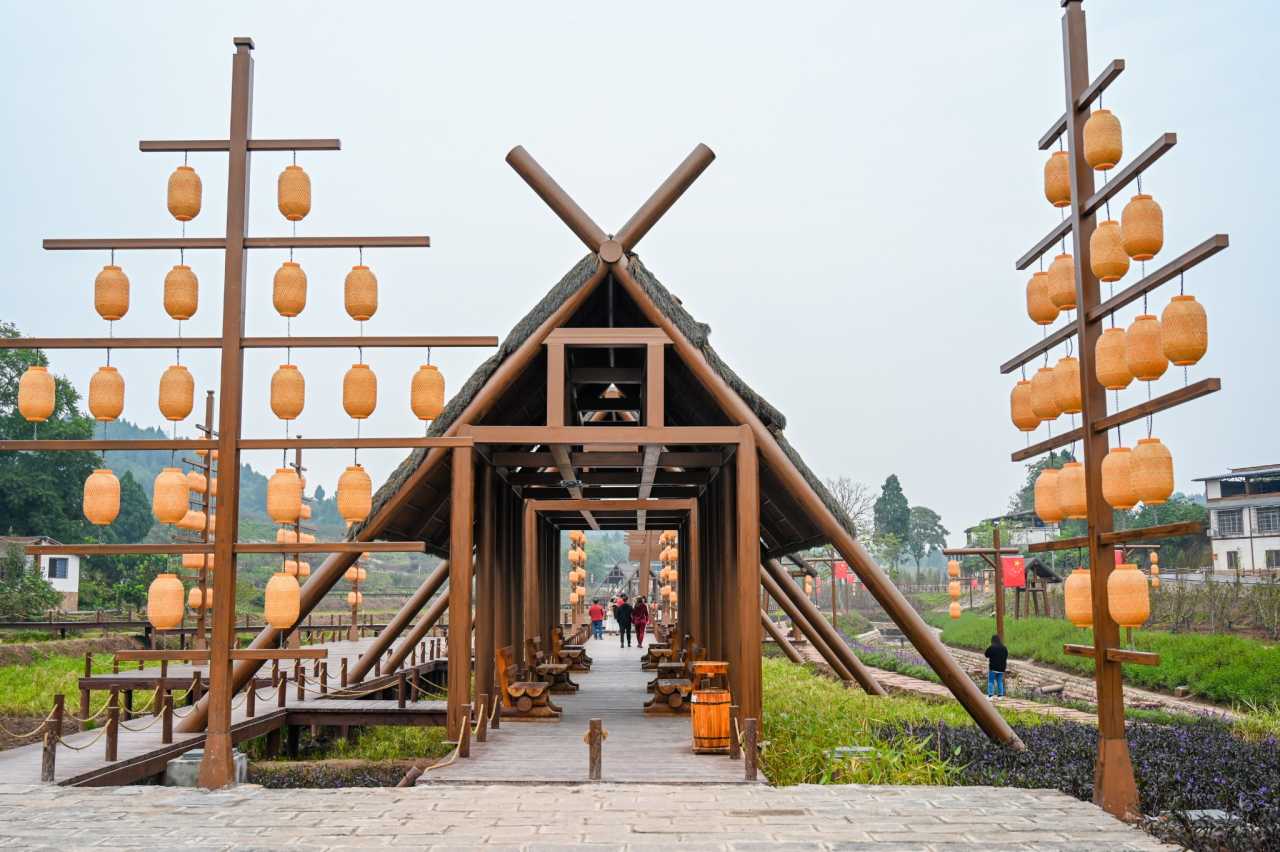
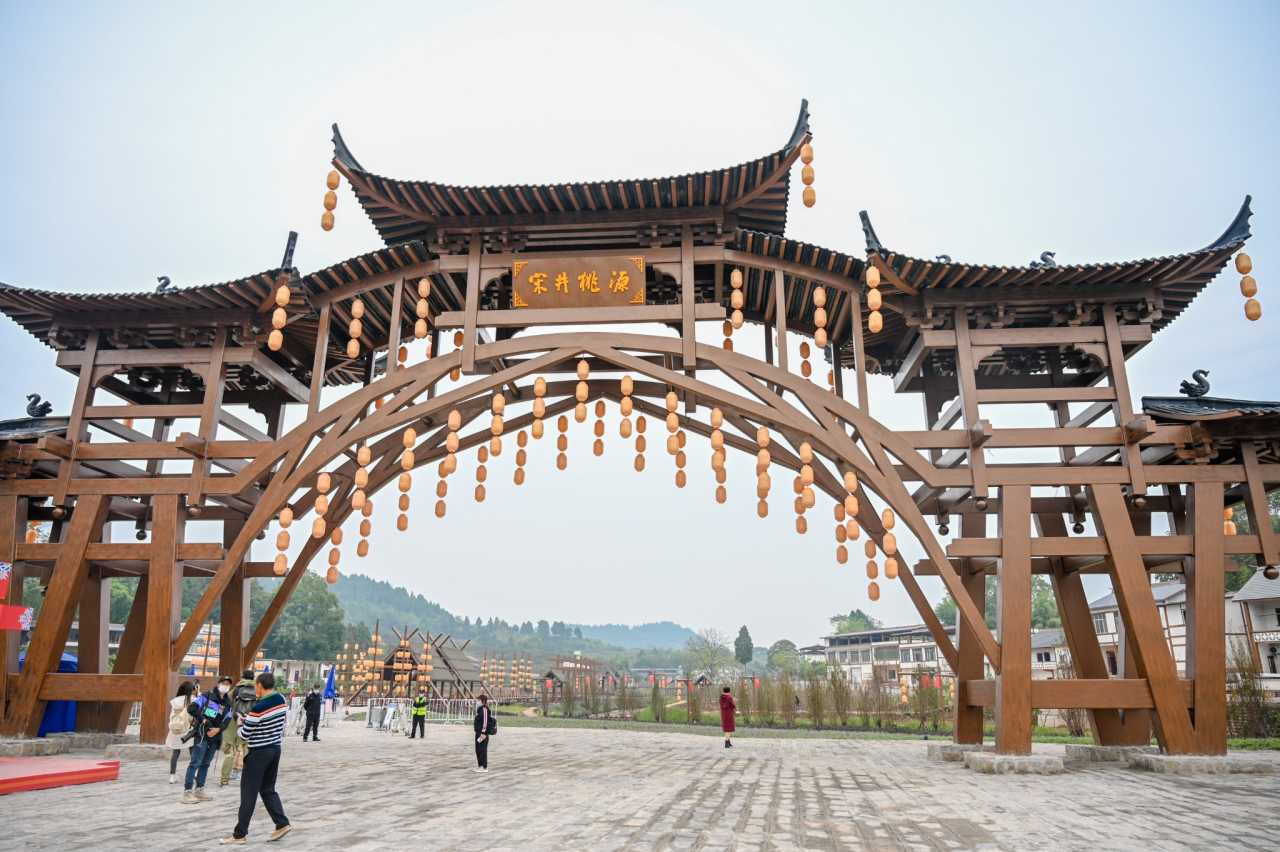
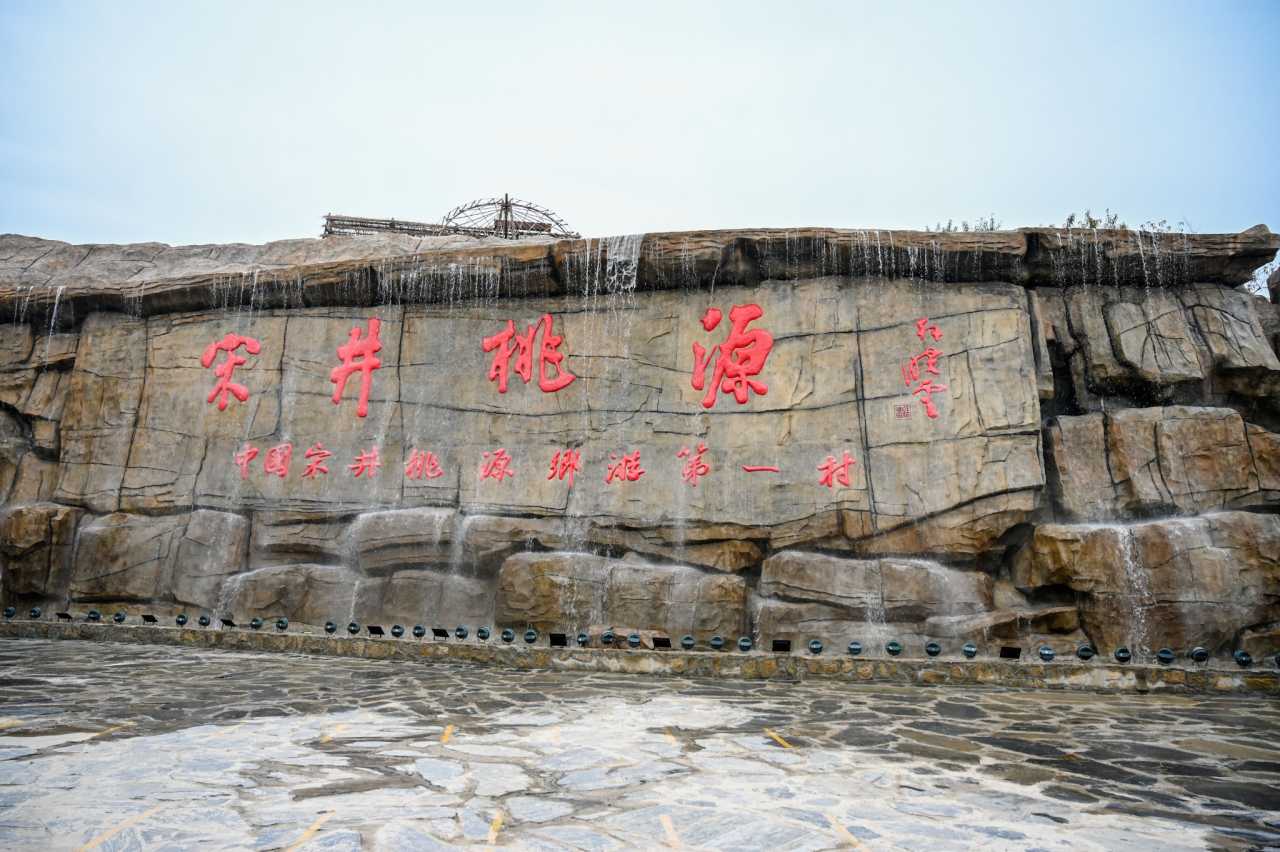
Our first stop was Songjing Taoyuan (宋井桃源, "Song Well Peach Blossom Land") . Standing at the entrance, the Song Dynasty–style gate—upturned eaves, green bricks, and dark tiles—transports you instantly. If not for the tourists snapping photos, you'd swear you'd time-traveled.
Located in Weiganping Village, Daying County, Suining City, this place was once famous as a peach-growing powerhouse. Locals told me that every spring, the hillsides burst into a sea of peach blossoms—a sight so breathtaking it intoxicates the heart. I made a mental note: return next spring for that endless pink bloom.
Unique Lanterns and Cultural Fusion
The lanterns here are special—not the standard red ones found in tourist traps, but a soft, pale yellow with historical texture, warm like moonlight from a bygone era. Some hang beside bright red national flags, where ancient and modern meet in strangely harmonious ways. Standing beneath them, a warmth swells in your chest: this is the magic of Chinese culture—flowing through millennia, ever vibrant and alive.
Family-Friendly Attractions and Photo Ops
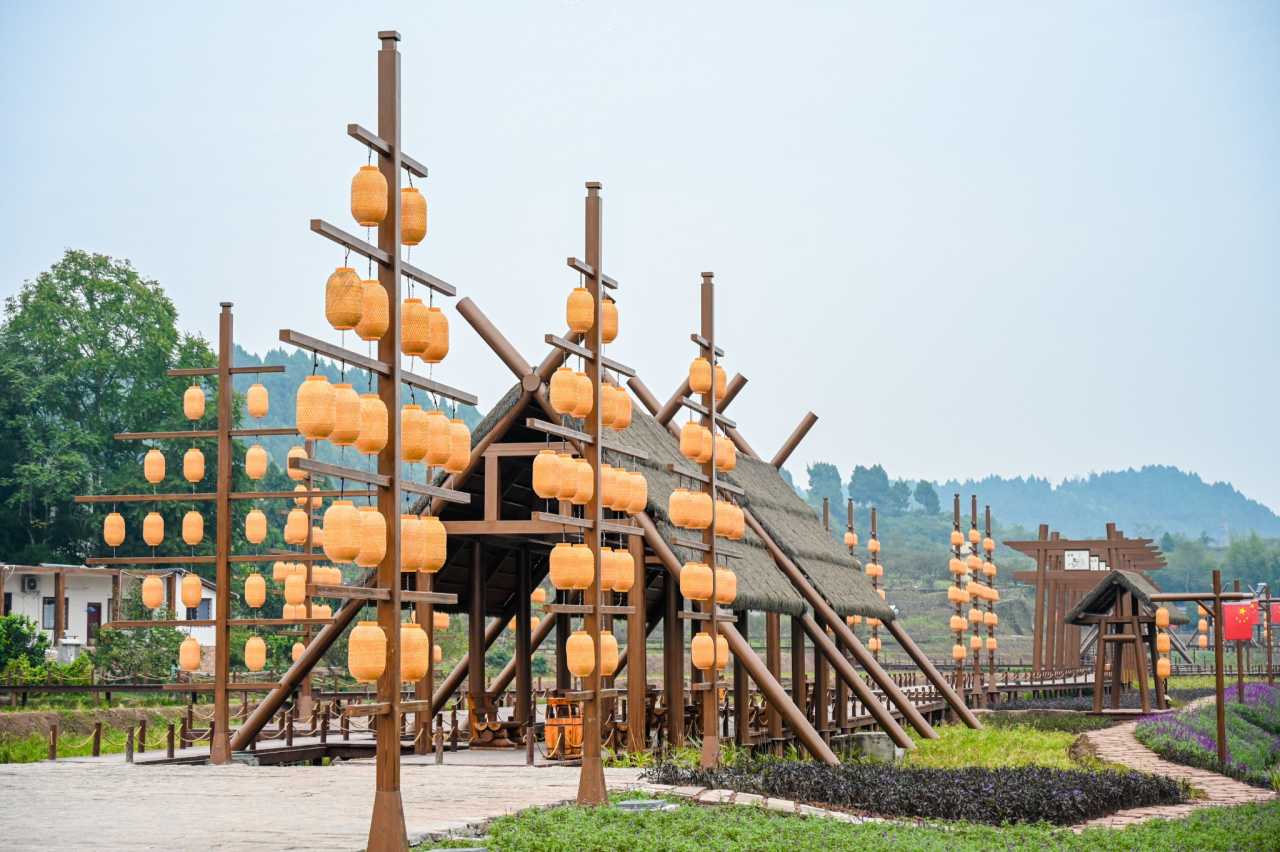
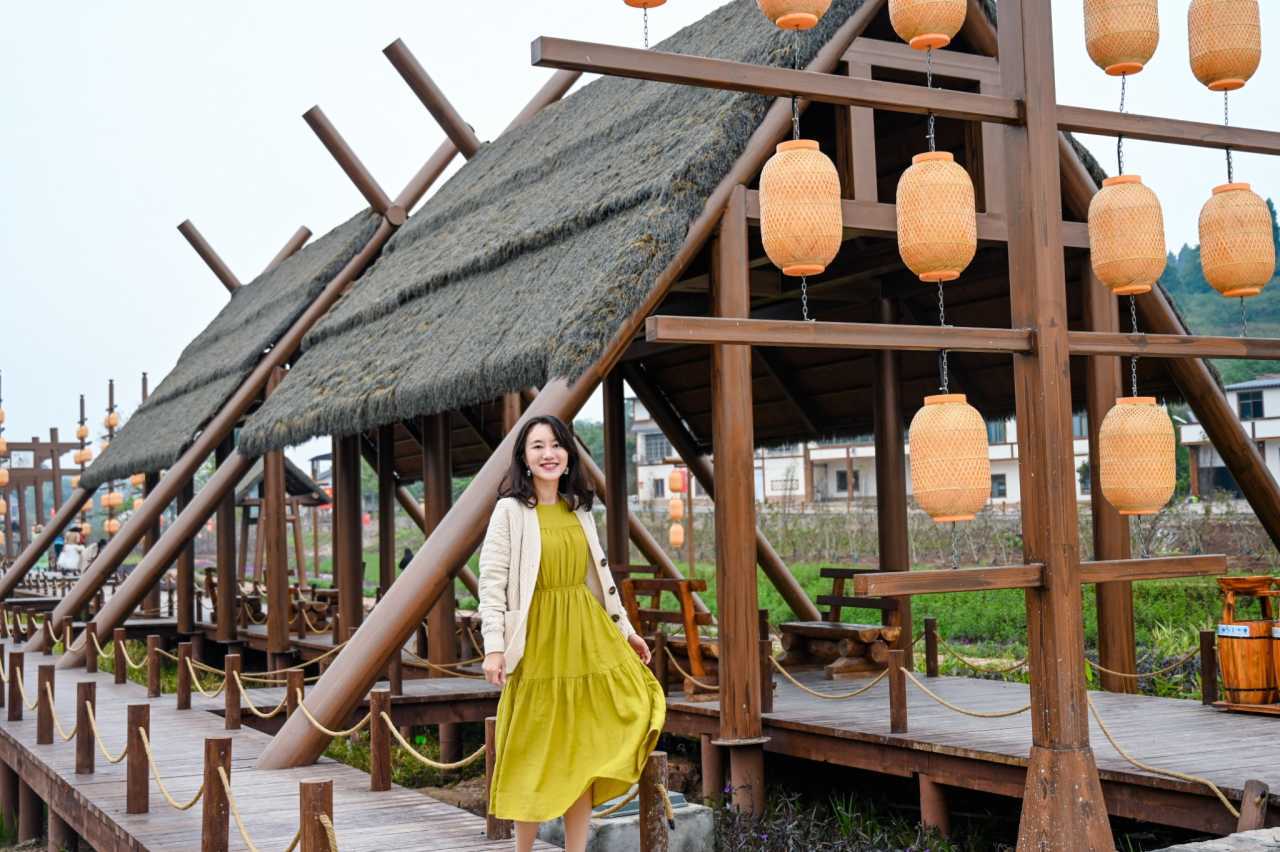
Wandering the village paths, surprises come one after another. Villagers have woven lifelike straw cattle, so vivid they seem ready to moo. Piles of smiling straw figures pop up unexpectedly, making you grin. In the fields, harvest barns and adorable little rabbits speak of the locals' love for life.
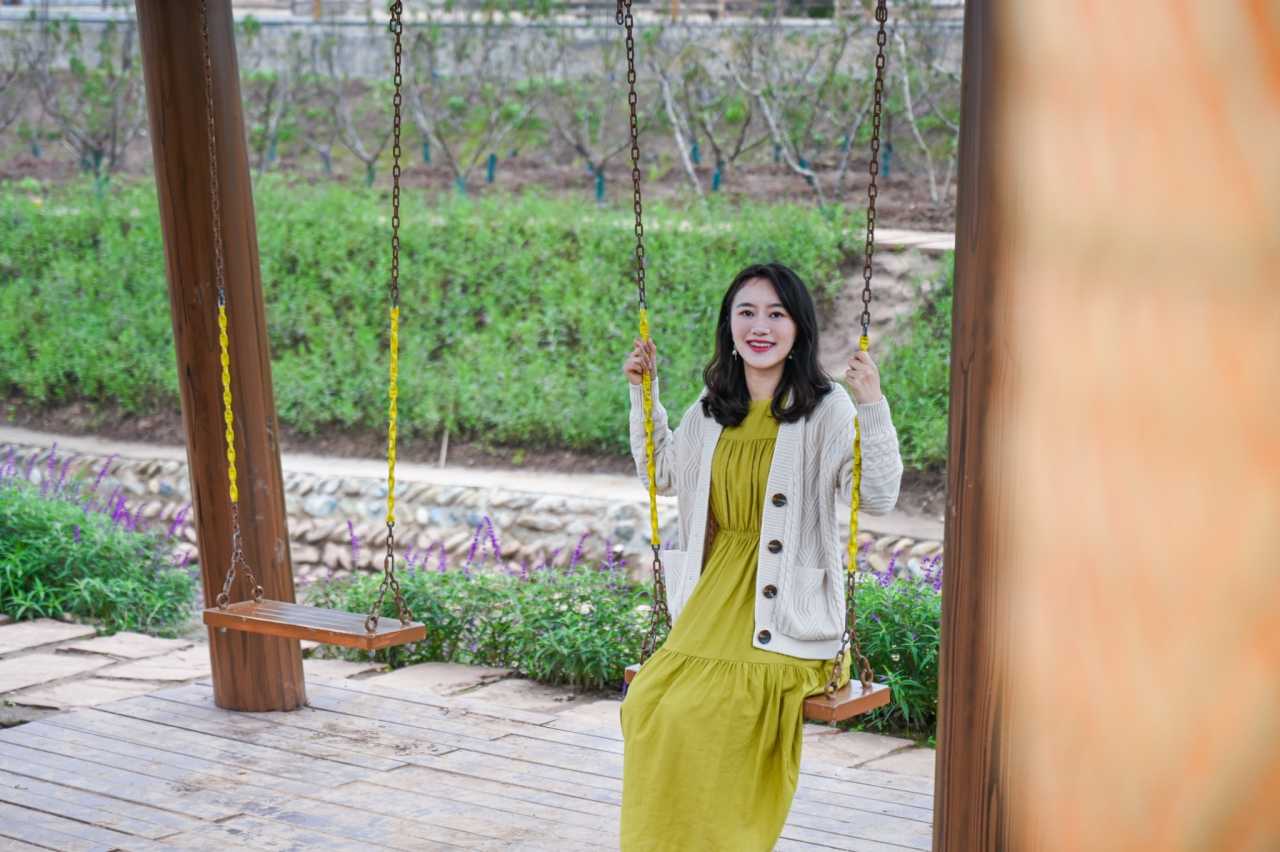
This place is perfect for a family outing near Chengdu. The air feels filtered, pure and fresh. With mountains and water to explore, photo ops everywhere, mothers would adore it. Even as a young traveler, I was drawn to the purple wildflowers by the roadside, stopping to snap a few shots.
Architecture and Heritage
What amazed me most was that even in late autumn, the greenery remained lush. The sky was a distant blue, and the Song-style buildings blended seamlessly with the hills and rivers, like a watercolor painting. Following a bridge over a stream, we reached the reception hall—a space that can hold 500 people, shaped like a salt-drying rack from the traditional Zhuotongjing (卓筒井, "Bamboo Tube Well") technique, a nod to local heritage. Inside, there's a restaurant where you can refuel with fresh local specialties.
Guanxian Street: A Peaceful Old Street
Climbing the steps, we arrived at Guanxian Street (管咸市, "Salt Management Market") . This old street buzzes with life but lacks the chaos of other ancient towns. No hawkers shouting, just peace and quiet. I strolled slowly, sunlight filtering through old tree branches, warming my skin and calming my heart.
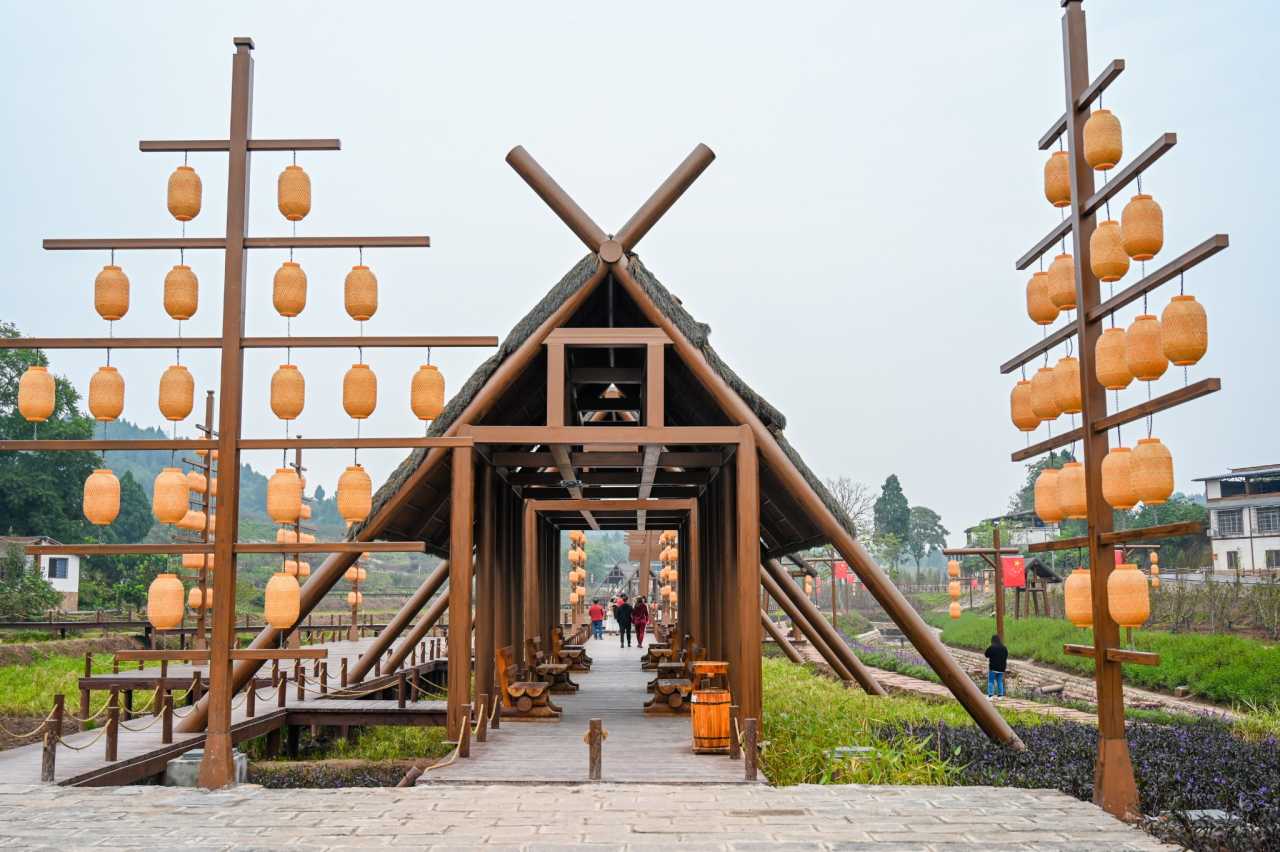
Every corner held a discovery: paper fish lanterns, creatively designed bamboo chairs, a horse woven from rattan. Tradition and modernity clashed here, yet somehow found harmony. If you want to stay overnight, there's a hotel in the scenic area, plus nearby guesthouses—both excellent options.
As dusk fell, the lanterns on Guanxian Street lit up one by one, and a light show began. In that moment, I truly felt I was walking through the streets of a Song Dynasty market town—full of earthly charm, yet steeped in poetry.
[Link: Best ancient towns near Chengdu for a day trip]
Zhuotongjing: The Living Legacy of a Thousand-Year Salt Well
A UNESCO-Worthy Heritage Site

In Daying, even more famous than peaches is the Zhuotongjing (卓筒井) . Historical records note: "Sichuan is far from the sea, so salt is taken from wells... Since the Qingli and Huangyou eras of the Song Dynasty, Sichuan began creating 'tube wells'..." This text chronicles the world-renowned Zhuotongjing of Daying—a thousand-year salt well that continues to operate using ancient techniques.
At the Zhuotongjing Exhibition Hall, we observed, experienced, and learned about the thousand-year-old craft of hand-making salt from these wells. The salt-drying racks use natural wind and sunlight to evaporate moisture from brine, saving fuel and concentrating the solution. Seeing these low-carbon, eco-friendly setups, I couldn't help but admire the ingenuity of our ancestors.
Witnessing the Extraction Process
We were also lucky to visit the actual site, witnessing the salt extraction process firsthand. An elderly salt worker shared a nursery rhyme: "Drill two wells, one for the stove, one for drying salt, build a house, take a wife, and have a bunch of kids." This rhyme, familiar to older generations in Daying, paints a vivid picture of life in Zhuotongjing Town.
The drying racks stand less than 10 meters tall, built entirely from bamboo and wood. The Zhuotongjing method uses a frame fitted with an iron ring-shaped drill bit, striking downward to bore into the ground. Thick bamboo tubes seal off freshwater, and brine is lifted using special bamboo buckets. The well mouth is as wide as a bowl, but the depth reaches around 300 meters. This drilling and salt-harvesting technique has been passed down continuously since the Song Dynasty—a living tradition spanning a thousand years.
The workers demonstrated the extraction process, and I took a small taste—truly salty. The weathered wooden buckets, ancient stoves, and gleaming white salt all told stories of the ages. Isn't that the point of travel? To learn as you go, to reflect through experience.
[Link: Unique industrial heritage sites in Sichuan]
Lushan Weihu: The Ideal Vision of Pastoral Poetry
A Little Switzerland in Sichuan
Modern people yearn for nature—to get close, to return, to escape the high-speed, high-stress grind and find a leisurely, soothing, natural rural joy. And all of that is realized at Lushan Weihu (绿山微湖, "Green Mountain Tiny Lake") .
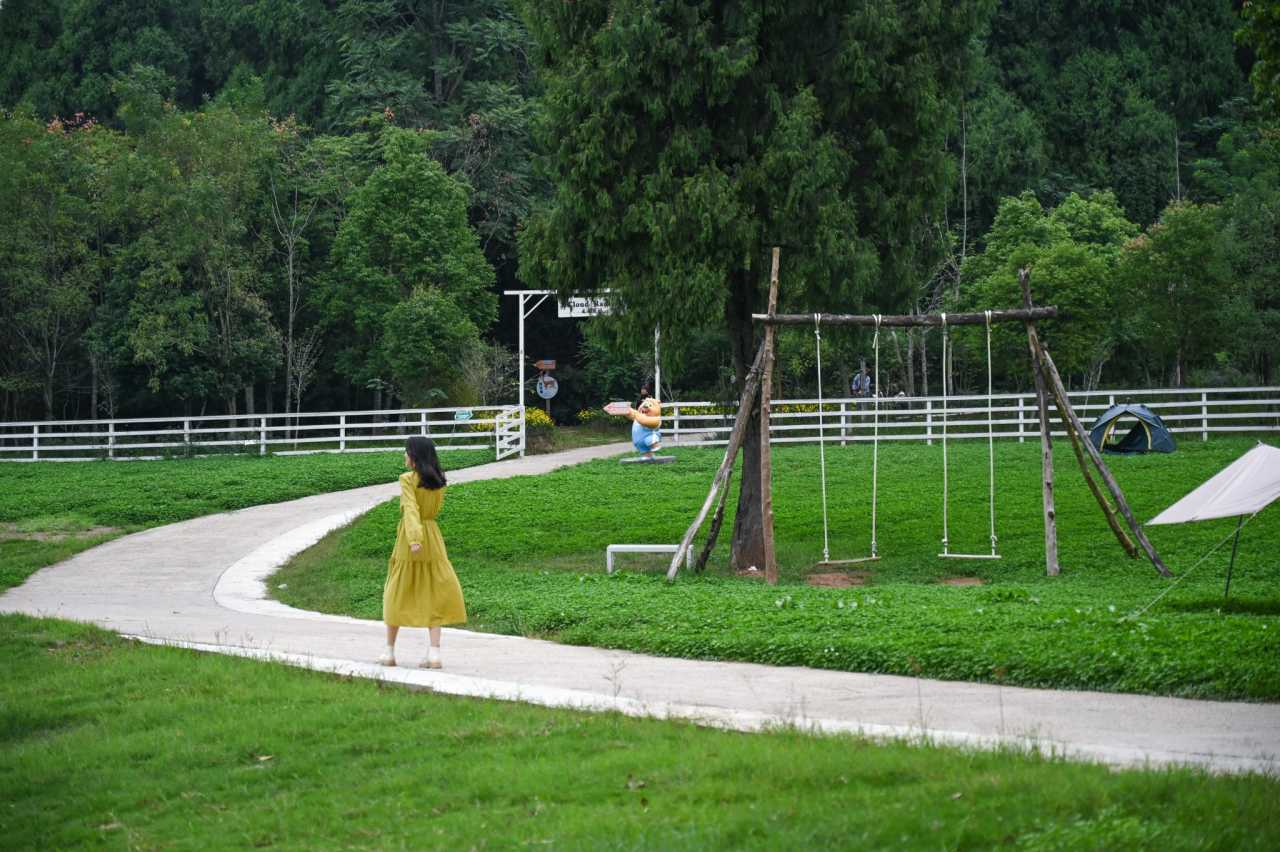
It's like a little Switzerland here—every snapshot looks like a masterpiece. Endless flowers, wild meadows, and a brilliant blue sky make it the perfect weekend escape from Chengdu. Goats, alpacas, spotted deer, peacocks, little donkeys—gentle animals roam freely, friendly companions without a hint of aggression.
Animal Encounters and Camping
That little donkey was too cute, with its endearing, goofy expression that made you want to hug it. The silly ostriches and round little pigs drew delighted cheers. The vast lawn is ideal for camping near Chengdu—grab a few friends, come for a weekend, eat, drink, and unwind. Days like this are pure happiness.
[Link: Best camping spots within 2 hours of Chengdu]
Jiuge Tingyuan: A Hotpot Feast on the Water
The Ultimate Sichuan Hotpot Experience
Dinner couldn't be an afterthought. On a local friend's recommendation, we went to Jiuge Tingyuan (九歌庭园, "Nine Songs Garden") for an eco-friendly hotpot. Rating: five stars!
A table piled high with dishes—who could resist drooling? Unlike traditional indoor hotpot spots, the private rooms and main hall here float on water. As night fell, colorful lights along the lake shore flickered on. We feasted on hotpot while taking in the beautiful lake views and light show—unbelievably satisfying!
A Serene Twist on a Classic

Turns out, hotpot doesn't have to be all noise and chaos. It can be serene and ceremonial. The colored lights reflected on the water, with a misty, ethereal atmosphere. The water pavilions, styled like Jiangnan (江南, "South of the Yangtze") covered boats, were moored one after another, exuding a rich, watery charm. This is Sichuan hotpot dining elevated to an art form.
[Link: Best hotpot restaurants in Suining area]
Yongyi Plaza: The Bustling Nightlife of a County Town
Full and content, we headed to Yongyi Plaza (永逸广场) . This shopping center in Daying seamlessly blends traditional businesses with modern life—I never expected to find such a large mall in a county town. After exploring it, our day came to a close under the glow of Daying's night lights. It's a perfect spot for evening shopping in Daying and soaking up local life.
FAQ: Planning Your Daying Trip
1. How far is Daying from Chengdu, and how do I get there?
Daying is approximately 120 kilometers from Chengdu, about a 1.5-hour drive via the G42 Expressway. You can also take a high-speed train from Chengdu East Station to Daying Station (about 40 minutes), then a short taxi ride to attractions.
2. What is the best time to visit Daying?
 Spring (March-April) for peach blossoms at Songjing Taoyuan, autumn (October-November) for pleasant weather and fewer crowds. Summer is great for camping at Lushan Weihu, while winter offers a quieter experience.
3. Is Daying suitable for a family trip?
Absolutely. Songjing Taoyuan offers interactive exhibits and photo ops, Lushan Weihu has gentle animals kids love, and Jiuge Tingyuan provides a unique dining experience. The area is safe, clean, and well-maintained.
4. Can I visit all these attractions in one day?
 While possible, it's better to spread over 2 days. Day 1: Songjing Taoyuan and Zhuotongjing. Day 2: Lushan Weihu and Jiuge Tingyuan. Overnight stays are available at Songjing Taoyuan or nearby guesthouses.
5. Are there English-language services available?
Major attractions have basic English signage, but English-speaking guides are limited. It's recommended to download a translation app or join a guided tour for the best experience.
Final Thoughts: Your Daying Adventure Awaits
This trip to Daying was truly worthwhile. From the ancient charm of Songjing Taoyuan to the thousand-year legacy of Zhuotongjing, from the pastoral poetry of Lushan Weihu to the lakeside hotpot at Jiuge Tingyuan—every moment was a discovery.
Daying offers something rare: a chance to step off the beaten path and encounter a different kind of worldly charm—one that's authentic, serene, and deeply rooted in history. Whether you're a history buff, a nature lover, or a foodie, this hidden gem near Chengdu has something for everyone.
Ready to plan your escape? Book your trip to Daying today and discover why this unassuming county town is becoming one of Sichuan's most sought-after destinations. Share your experience with us in the comments below!
[Link: Book your Daying tour package] [Link: Find hotels in Daying, Suining] [Link: More Sichuan travel guides]
You may also like


