A Journey Through the Land of Shu: From Sanxingdui Bronze Mysteries to Chongqing's Riverbank Echoes
Meta Description: Explore the Land of Shu on an epic journey from Sanxingdui's bronze sacred tree to Chongqing's mountain city riverbanks. Discover ancient Shu mysteries, Qingcheng Taoist temples, and modern marvels in this SEO-optimized travel guide.
When the gentle warmth of the "Land of Abundance" intertwines with the steep slopes of the "Mountain City" in a single journey—when the numbing spiciness on your tongue, the bronze sacred tree before your eyes, the river's roar in your ears, and the whistle of a light rail train passing through a building all surge together—I know I have stepped onto the threshold of the Ba-Shu region. This is a traverse along the vertical axis of time and the horizontal axis of space, from the ancient mysteries of the Shu kingdom three thousand years ago to the modern clamor at the confluence of two rivers. Every step is a dialogue with history; every glance resonates with the mountains and rivers.
Now, please follow me as I push open this door.
Sanxingdui Museum: A Face-to-Face Encounter with Ancient Shu Civilization
Stepping into the new Sanxingdui Museum, your first sensation is not one of visiting, but of being watched. The eyes of those protruding-eye masks seem to have traversed three thousand years, still scrutinizing every intruder. This is the heart of the Sanxingdui archaeological site, where the bronze mysteries of ancient Shu come alive.
Museum Overview: The Largest Site-Specific Museum in Southwest China
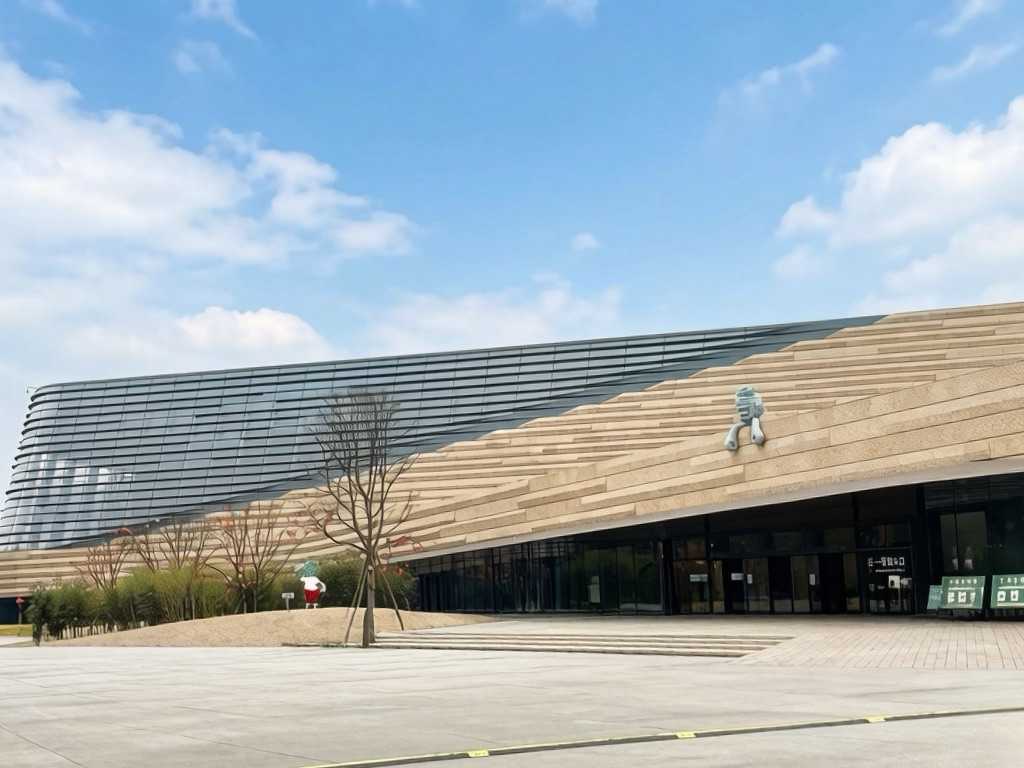
The new Sanxingdui Museum is the largest single-site museum building in Southwest China. It displays over 1,500 pieces (sets) of precious artifacts unearthed from the Sanxingdui site, comprehensively and systematically showcasing the archaeological excavations and the latest research findings.
Practical Information: - Sanxingdui Museum Ticket Price: 72 RMB/person, online booking available up to 5 days in advance - Opening Hours: 8:00 AM – 6:00 PM - Sanxingdui Guided Tours: Book at the lobby of Exhibition Hall No. 1; duration 90 minutes; service hours 8:30 AM – 11:50 AM and 1:00 PM – 5:00 PM. Group tours in Chinese (20–30 people) cost 30 RMB/person.
Three Exhibition Zones: From Archaeology to Civilization to Spirituality
The new museum's exhibition is structured around the theme "Ancient City, Ancient Kingdom, Ancient Shu Culture" and is divided into three zones:

A Century of Dream-Chasing (1st Floor): This section recounts the century-long archaeological history of Sanxingdui, from the first excavations in 1927 to the present day, including the process of artifact restoration. It allows you to witness how these national treasures awakened from the earth.
The Majestic Royal Capital (1st Floor): This zone displays the layout of the ancient Shu capital, its social structure, and power dynamics. The museum's crown jewels—the Bronze Standing Figure and the Gold Scepter—are housed here. The 2.62-meter-tall bronze figure, with its hands clasped as if holding something, seems to have once held the fate of the entire ancient Shu kingdom.
Heaven, Earth, and Man (2nd Floor): The most awe-inspiring zone. Core national treasures like the Bronze Sacred Tree and the Bronze Protruding-Eye Mask are displayed here, guiding you into the sacrificial system and spiritual world of the ancient Shu people.
Artifacts That Will Make You Hold Your Breath
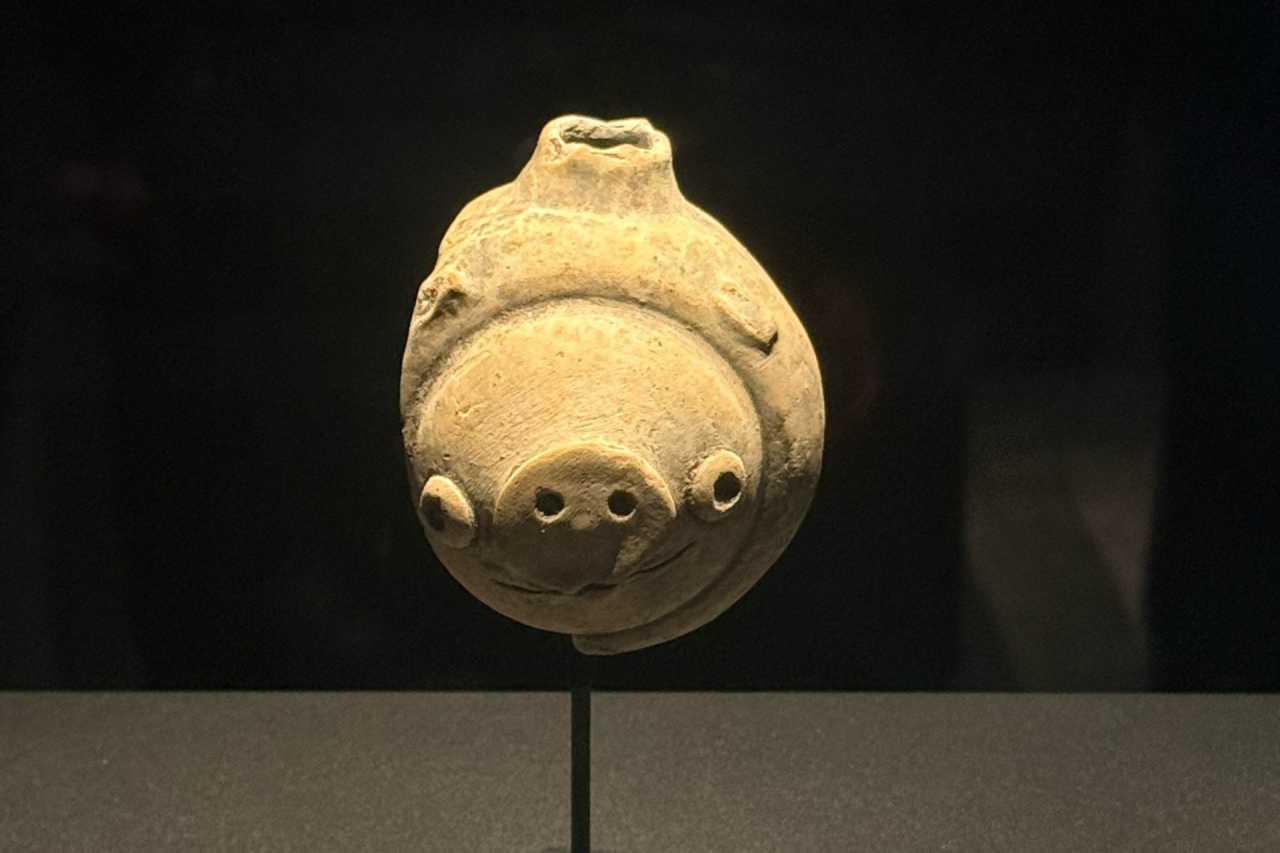
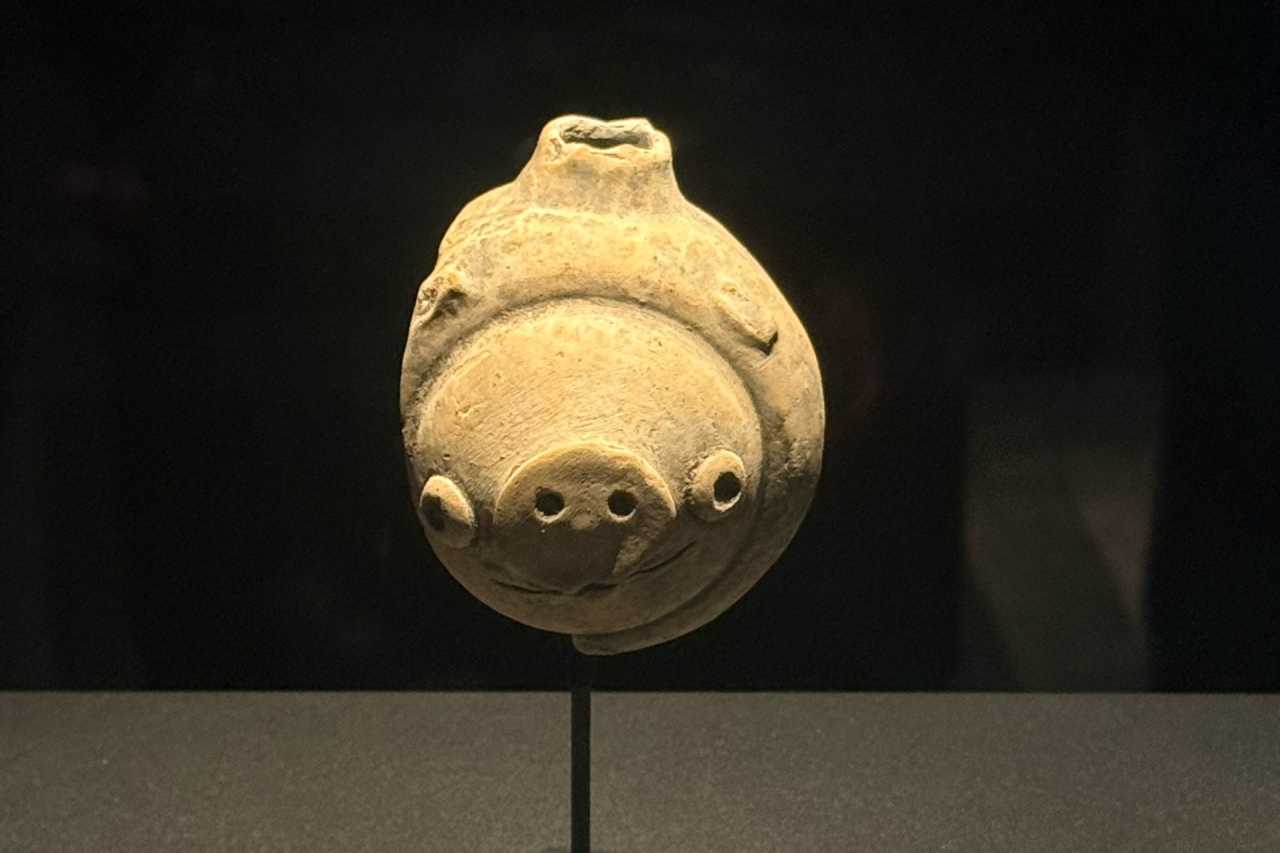
Shang-Zhou Dynasty Pottery Pig Head (approx. 3,000 years old): This "cute" artifact is round and chubby, with four small circular holes decorating the nostrils, protruding eyes, and a slightly upturned mouth, as if wearing a mysterious smile. Pigs were not only a source of meat in ancient Shu culture but also symbols of wealth and sacrifice.
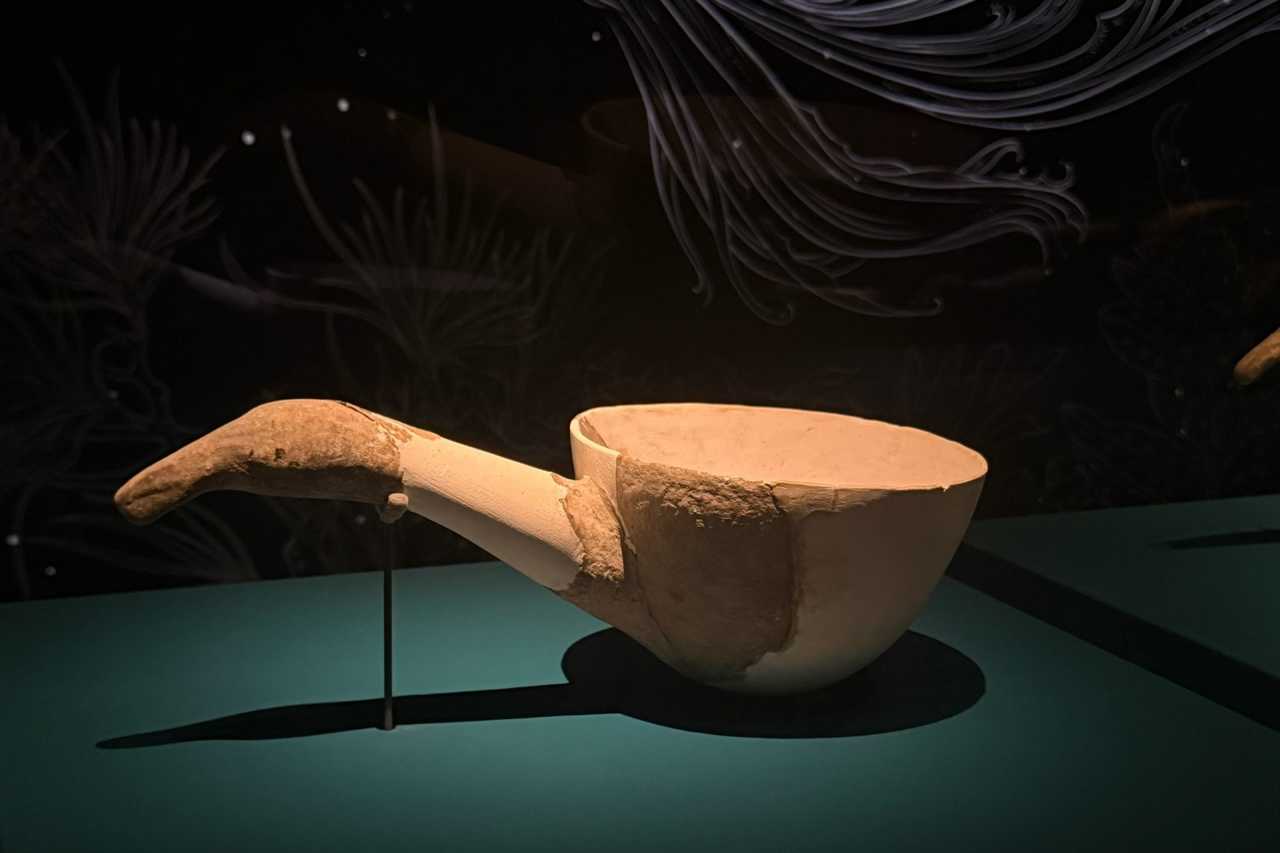
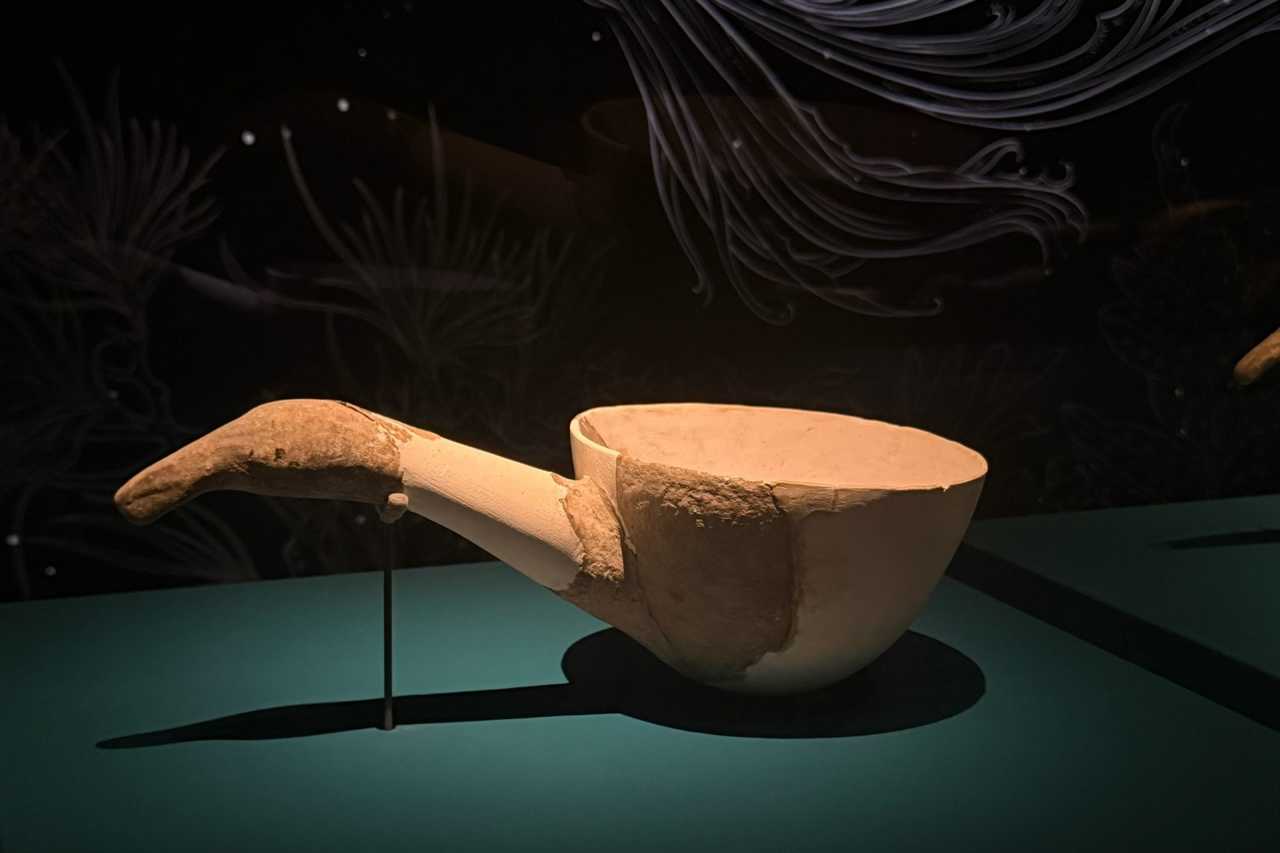
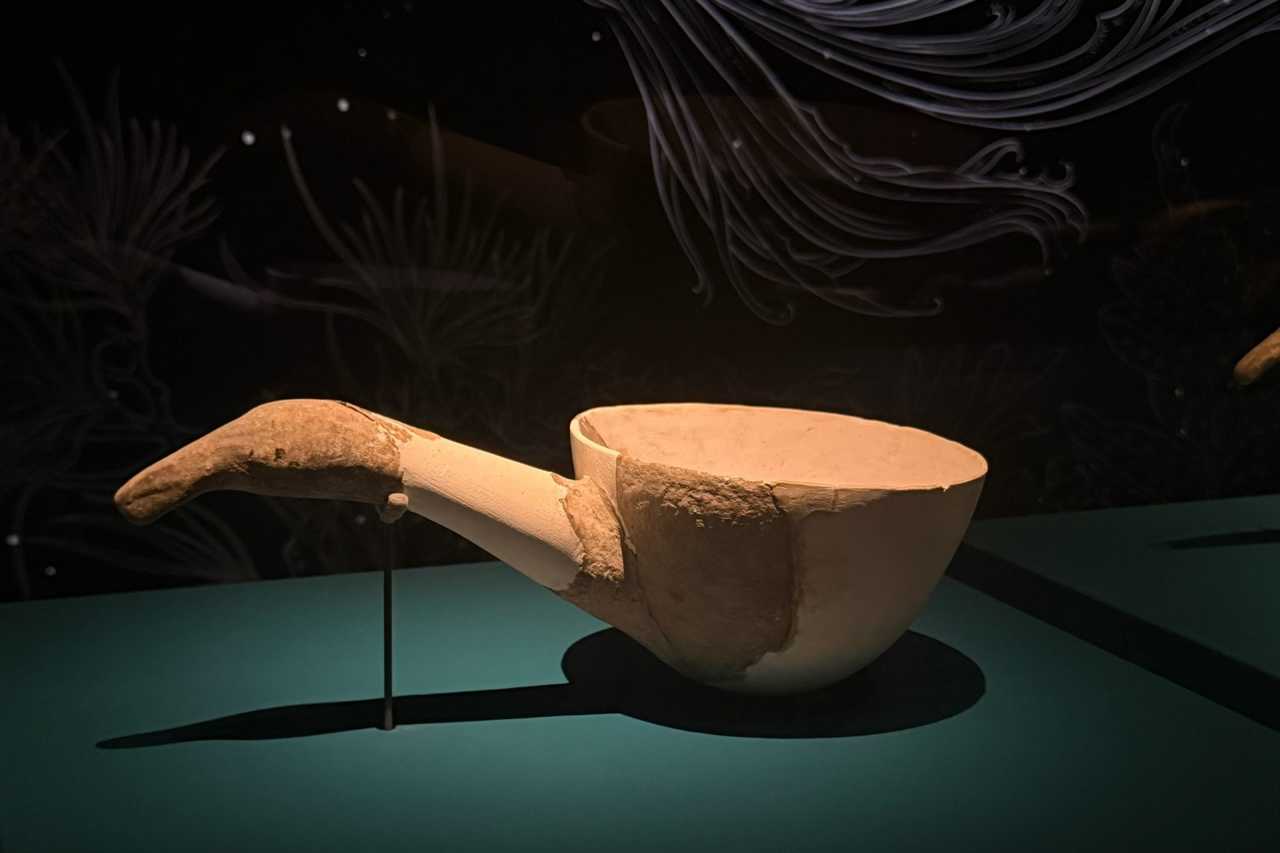
Pottery Bird-Head Handle Ladle (Early Shang Dynasty): A unique wine vessel. The bird-shaped handle is slender and slightly hooked, capturing the dynamic moment of a bird singing. The ancient Shu people's worship of birds is fully revealed in this object, which perfectly combines practical function with totemic symbolism.
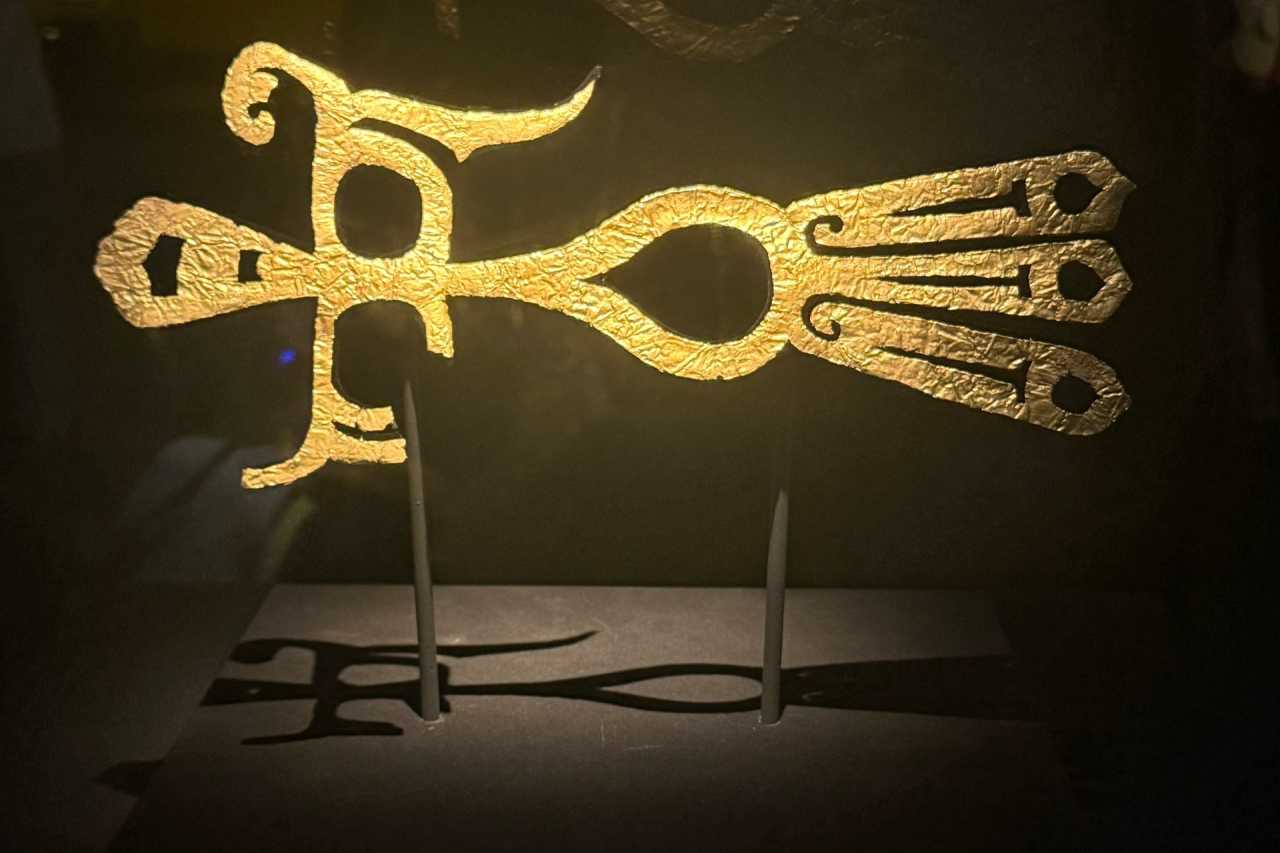
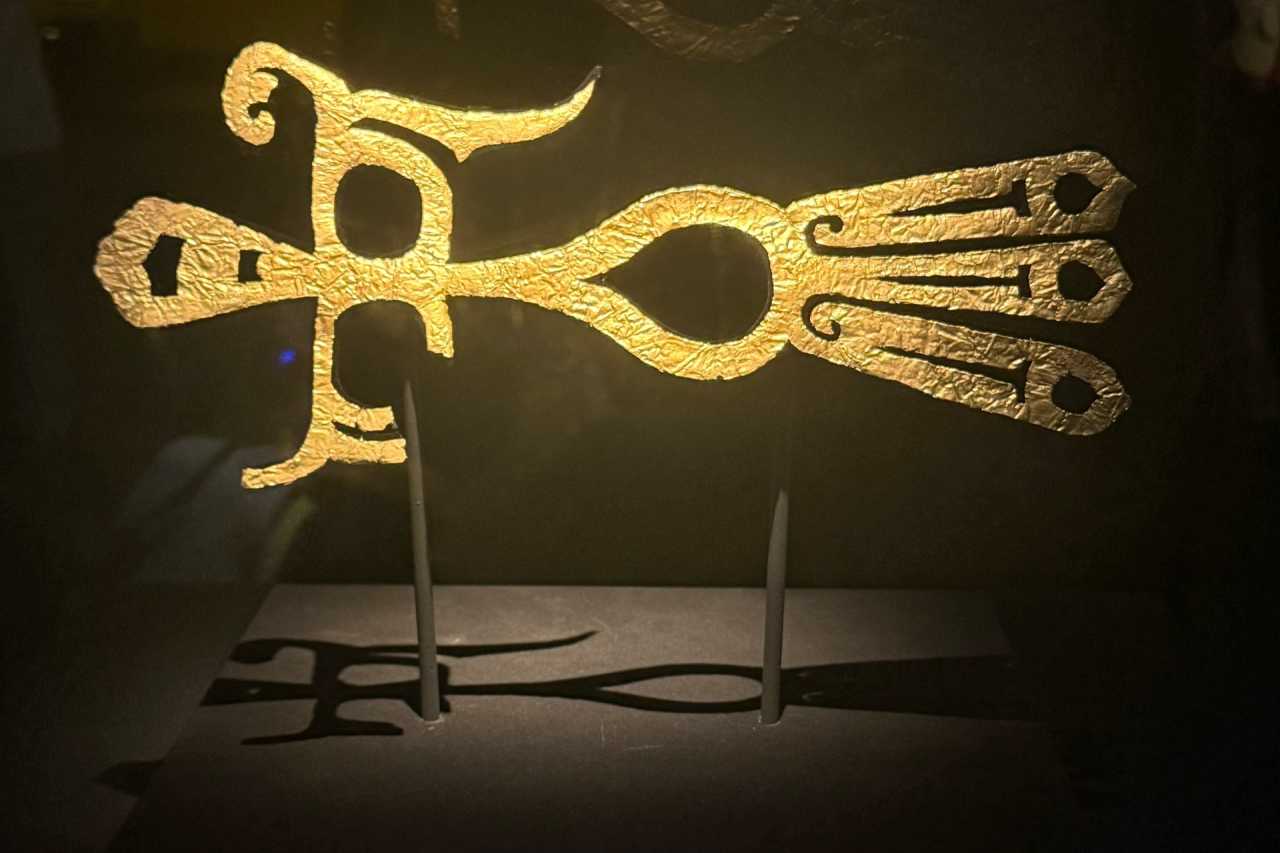
Gold Bird-Shaped Ornament (Late Shang Dynasty): The largest and heaviest gold ornament unearthed at Sanxingdui, it could be called the "King of Gold Artifacts." The abstract bird spreads its wings in flight, crafted using the hammering technique, and still shines brilliantly after three thousand years.
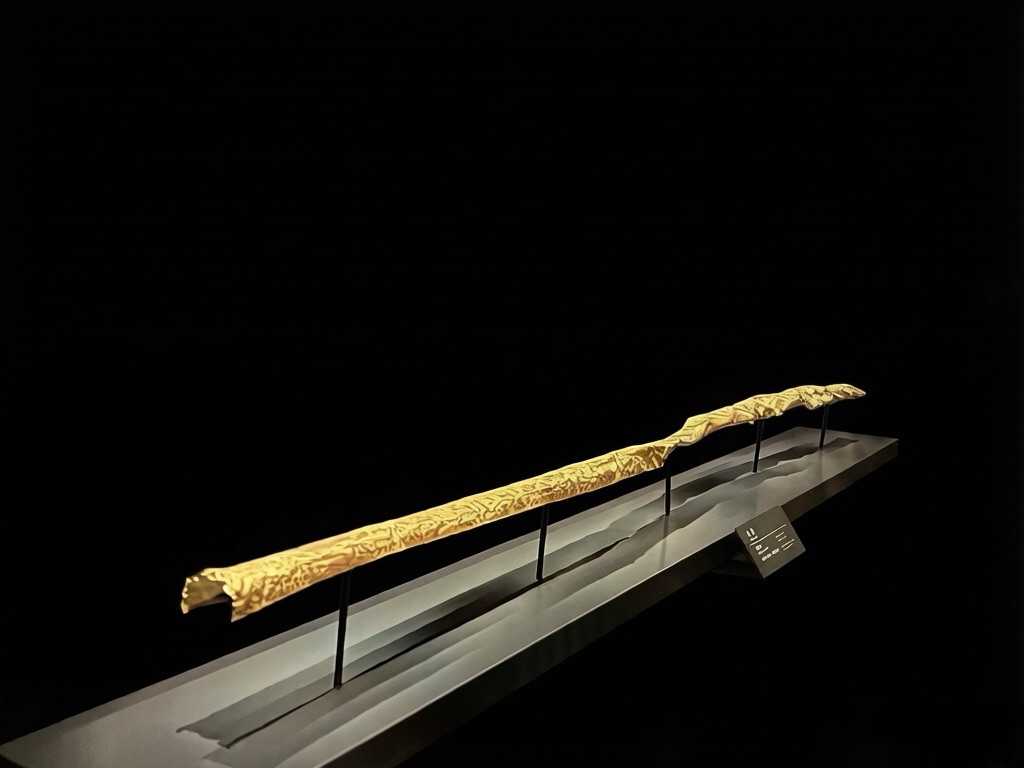
Gold Scepter (Shang Dynasty): Made of gold leaf wrapped around a wooden core, the gold leaf is only 0.02 centimeters thick. Its surface is engraved with patterns of fish, birds, and arrows. It confirms the existence of a ruler who held both royal and divine power in the ancient Shu kingdom.
Gold Mask (Late Shang Dynasty): One of the most complete gold masks in form. It has diamond-shaped hollow eyes, prominent brow bones, and a high nose bridge. The perforations along the edges of the ears and face suggest it was once attached to a bronze human head statue, embodying the religious concept of "unity of man and god."
Bronze Standing Figure (Shang Dynasty): Known as the "Oriental Giant," it consists of the figure itself and a base. Its hands are clasped as if holding something. It is highly likely that this figure represents a high priest who held both royal and divine power in the ancient Shu kingdom, playing a central role in communicating between heaven and earth during sacrificial ceremonies.
Bronze Protruding-Eye Mask (Late Shang Dynasty): The most unforgettable artifact. Its eyes protrude outward in cylindrical shapes for 16 centimeters, giving it the name "protruding eyes." Its ears are as large as bat wings, symbolizing "ears that catch the wind." Combined with the record in the Huayang Guozhi (Chronicles of the States South of Mount Hua) that the first king of ancient Shu, Cancong, had "protruding eyes," this mask is very likely a divine image of Cancong himself.
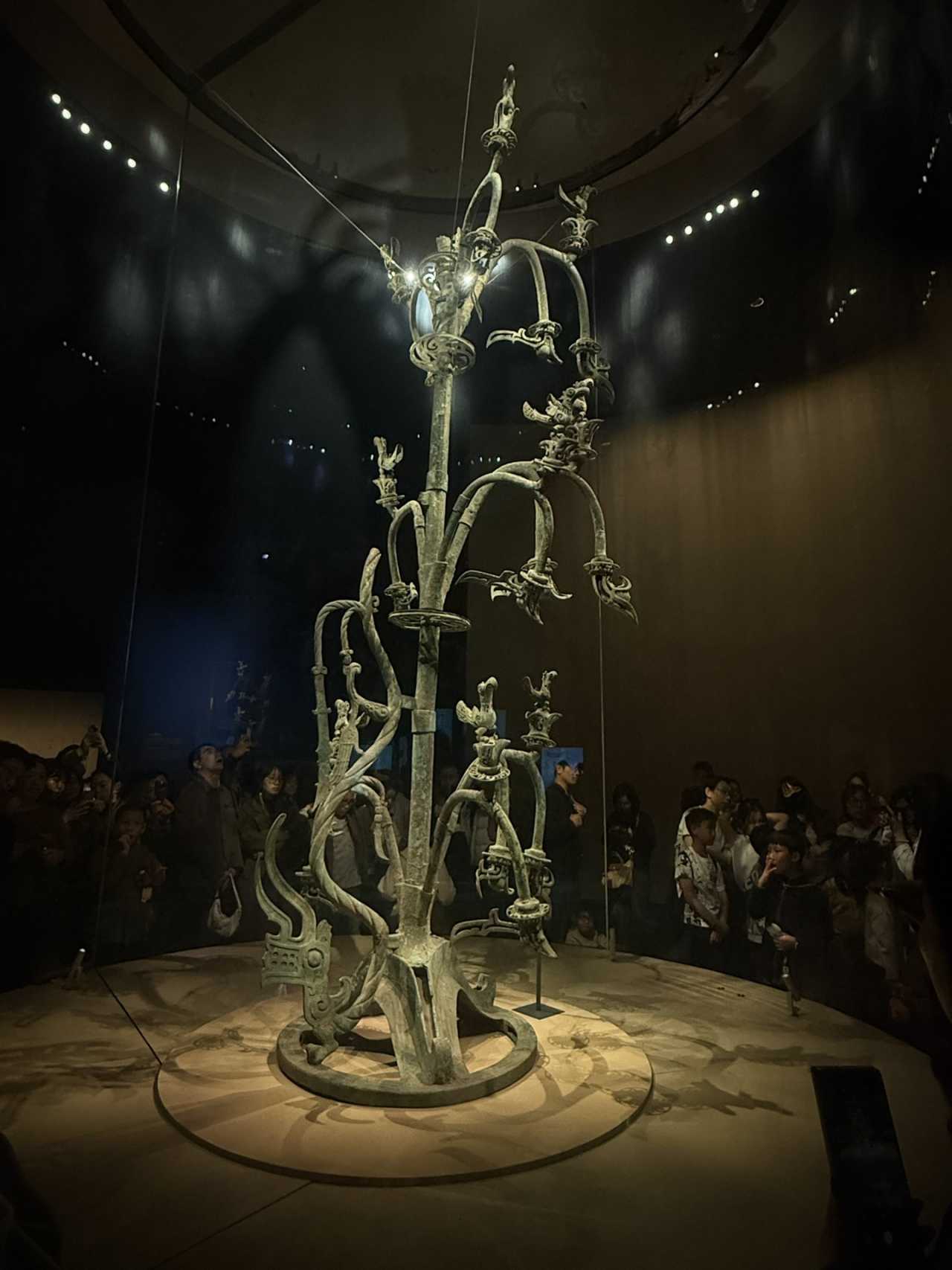
Bronze Sacred Tree (Shang Dynasty): Composed of a base, trunk, branches, fruits, divine birds, and dragon-shaped ornaments, its structure is complex and exquisitely crafted. It imitates the legendary "Jianmu," a mythical tree in ancient Chinese mythology that connected heaven, earth, and man, serving as a tangible manifestation of the ancient Shu people's belief in the "unity of heaven and man."
[Link: Sanxingdui travel guide for first-time visitors]
Qingcheng Mountain Taoist Temples: Millennia-Old Sanctuaries in Mountain Mists
Emerging from the mysteries of Sanxingdui and heading west, the secluded Taoist temples of Qingcheng Mountain await, shrouded in clouds and mist.
Qingcheng Mountain, a UNESCO World Heritage Site, is one of China's four most famous Taoist mountains and one of its five sacred immortal mountains. Anciently known as Zhangren Mountain, it has been the birthplace of Taoism for two thousand years. The Tang Dynasty poet Du Fu once wrote of it: "As a guest of Qingcheng, I would not spit on its soil. For the love of Zhangren Mountain, the red ladder draws near to secluded beauty."
Qingcheng Mountain Travel Guide: Tickets, Transport, and Tips
Practical Information: - Qingcheng Mountain Ticket Price: 80 RMB/person - Sightseeing Bus: 20 RMB one-way, 35 RMB round trip - Boat Ride: 5 RMB one-way - Cable Car: 60 RMB one-way (uphill), 35 RMB one-way (downhill) - Opening Hours: 8:30 AM – 5:00 PM
Pro Tip: The cable car only covers the middle section; you need to hike both the upper and lower parts. If you don't want to take the boat, you can also walk along the mountain-side boardwalk to the other side of the lake.
Getting There: The Dujiangyan M-TR Tourist Transit Line
The most convenient way is to take the Dujiangyan M-TR Tourist Transit Line (Panda Express), which connects Qingcheng Mountain, Dujiangyan Scenic Area, Panda Valley, and Sunac文旅城 (Sunac Cultural Tourism City).
- Fare: 10 RMB/person (single ticket, unlimited rides for the day)
- Operating Hours: First train around 5:30 AM, last train around 11:30 PM; frequency of 8 minutes during peak hours
- Key Stops: Qingchengshan Station is right next to the scenic area; Xinyu Avenue Station is 2.4 km from Panda Valley; Bajiaomiao Station is close to Lidui Park and the entrance to Dujiangyan Scenic Area
[Link: Best Taoist temples to visit in Qingcheng Mountain]
Guanxian Wenmiao Street: Ancient City Waterways and Taoist Heritage
Yangtianwo Square: The World's Largest Selfie-Taking Panda
The first sight after getting off the train is a giant panda sculpture at Yangtianwo Square—a must-photo stop for any visitor. This area serves as the gateway to the ancient city of Guanxian (now Dujiangyan City), where the Dujiangyan irrigation system—a 2,200-year-old UNESCO World Heritage marvel—still waters the Chengdu Plain today.
Highlights of Guanxian Wenmiao Street: - Traditional Sichuan architecture with wooden facades - Local street food stalls serving dan dan noodles and spicy skewers - Artisan workshops selling bamboo crafts and Shu embroidery - Proximity to Dujiangyan Scenic Area and Lidui Park
Chongqing Mountain City Riverbanks: Modern Echoes of Millennia-Old History
As you journey eastward, the landscape transforms into the vertical city of Chongqing—the "Mountain City" where the Yangtze and Jialing Rivers converge. Here, the millennia-old echoes by the riverbanks blend with modern urban life.
Must-Experience Chongqing Attractions
- Hongya Cave: A stilted house complex dating back to the Ming Dynasty, now a bustling commercial district with stunning night views
- Yangtze River Cableway: A 1,166-meter cable car ride offering panoramic views of the city's dramatic skyline
- Jiefangbei Pedestrian Street: The commercial heart of Chongqing, perfect for shopping and sampling local hotpot
- Light Rail Through a Building: The iconic Liziba Station where Line 2 passes through a residential tower—a true Chongqing phenomenon
Chongqing Food Guide: From Hotpot to Street Snacks
- Chongqing Hotpot: The city's signature dish—numbing, spicy, and unforgettable
- Chongqing Noodles (Xiaomian): A breakfast staple with a fiery chili oil base
- Spicy Chicken (Lazi Ji): Dry-fried chicken with mountains of dried chilies
- Sour and Spicy Noodles (Suan La Fen): A street food favorite
[Link: Chongqing travel itinerary for 3 days]
FAQ: Planning Your Ba-Shu Journey
1. How many days do I need to visit Sanxingdui and Qingcheng Mountain?
 A minimum of 2 days is recommended: 1 day for Sanxingdui Museum (allow 3–4 hours) and 1 day for Qingcheng Mountain (allow 5–6 hours for hiking and temple visits). Combine with Dujiangyan for a 3-day itinerary.
2. What is the best time to visit Sanxingdui and Chongqing?
 Spring (March–May) and autumn (September–November) offer mild temperatures and clear skies. Summer can be hot and humid in Chongqing, while winter is cold but less crowded.
3. Are Sanxingdui artifacts replicas or originals?
The new Sanxingdui Museum displays genuine artifacts, including the Bronze Sacred Tree, Gold Scepter, and Bronze Protruding-Eye Mask. Some fragile items may be replicas, but the museum clearly labels them.
4. How do I get from Sanxingdui to Qingcheng Mountain?
 Take a high-speed train from Chengdu to Dujiangyan (30 minutes), then transfer to the M-TR Tourist Transit Line to Qingchengshan Station. Alternatively, hire a private car for a 1.5-hour drive.
5. Is Chongqing safe for solo travelers?
Absolutely. Chongqing is a safe city with a strong police presence in tourist areas. However, be cautious of steep staircases and uneven pavement in the mountain city. Always carry a map or use navigation apps.
Your Journey Through the Land of Shu Starts Here
From the bronze mysteries of Sanxingdui to the millennia-old echoes by Chongqing's riverbanks, this journey through the Land of Shu offers an unforgettable blend of ancient history, natural beauty, and modern urban energy. Whether you're marveling at the Bronze Sacred Tree, meditating in a Qingcheng Taoist temple, or savoring a steaming bowl of Chongqing hotpot, every moment connects you to a civilization that has thrived for over three thousand years.
Ready to explore? Book your trip today and experience the magic of Ba-Shu culture. Start with a visit to the Sanxingdui Museum official website for ticket reservations, then plan your route using the Dujiangyan M-TR line. Don't forget to pack comfortable walking shoes—your journey through time awaits!
[Link: Complete Sichuan travel guide for international visitors]
Have you visited Sanxingdui or Chongqing? Share your experiences in the comments below!
You may also like


