A Journey Through Central Sichuan: Travel Fragments I Refuse to Forget
Here is the SEO-optimized, rewritten article based on your source material. It has been restructured for search visibility, readability, and user engagement, targeting approximately 1500 words.
Title: Central Sichuan Road Trip: Unforgettable Travel Fragments from Chengdu to the Panda Base
Meta Description: Explore unforgettable travel fragments from a Central Sichuan road trip. From queuing for panda "Hua Hua" in Chengdu to the philosophy of pandas, relive the journey through time and nature. Plan your Sichuan travel guide now.
Central Sichuan Road Trip: Unforgettable Travel Fragments from Chengdu to the Panda Base
Prologue: Why This Journey Through Central Sichuan Deserves a Second Look
In early spring this year, my siblings and I embarked on a spontaneous Central Sichuan road trip. Over twenty days, we wandered through ancient ruins, vibrant lantern festivals, and world-class museums. After returning, I wrote about the awe of Sanxingdui, the wonder of Zigong's Lantern Festival, and the spectacular showdown between the Sichuan Museum and artifacts from across the region. But life—like a bubbling hotpot—kept me busy, and I never found the peace of mind to record the quieter moments.
Yet a voice kept whispering inside me: those roads we walked, the sights we saw, the moments we laughed—if I don't record them, they’ll be like a movie with no replay, leaving only blurry shadows after the credits roll. As the year draws to a close, I’ve finally carved out time to string these flickering fragments into a necklace. Perhaps, when I grow old, it will be the most touching ornament in the barren years. This is my Sichuan travel guide—not just a list of places, but a collection of moments I refuse to forget.
Chengdu: A City Soaked in Time and Ease

Chengdu is a city that carves "ease" into its very bones. Five thousand years of cultural lineage have never been severed; over three thousand years, its city site has never moved; more than two thousand years, its city name has remained unchanged. The ancients said, "A Chengdu emerges from the Nine Heavens, a thousand gates and ten thousand households enter the painting." Even today, this description rings true.
Walking through Chengdu’s streets, you can both touch the weight of history and feel the vitality of modernity. It is a city where ancient temples sit beside trendy coffee shops, and where the pace of life is deliberately slow. For any Chengdu travel itinerary, the city itself is the main attraction. But for us, the real draw was a certain viral celebrity.
Giant Panda Base: A Collective Carnival Around "Hua Hua"
For the sake of a "viral" panda, we gave it our all
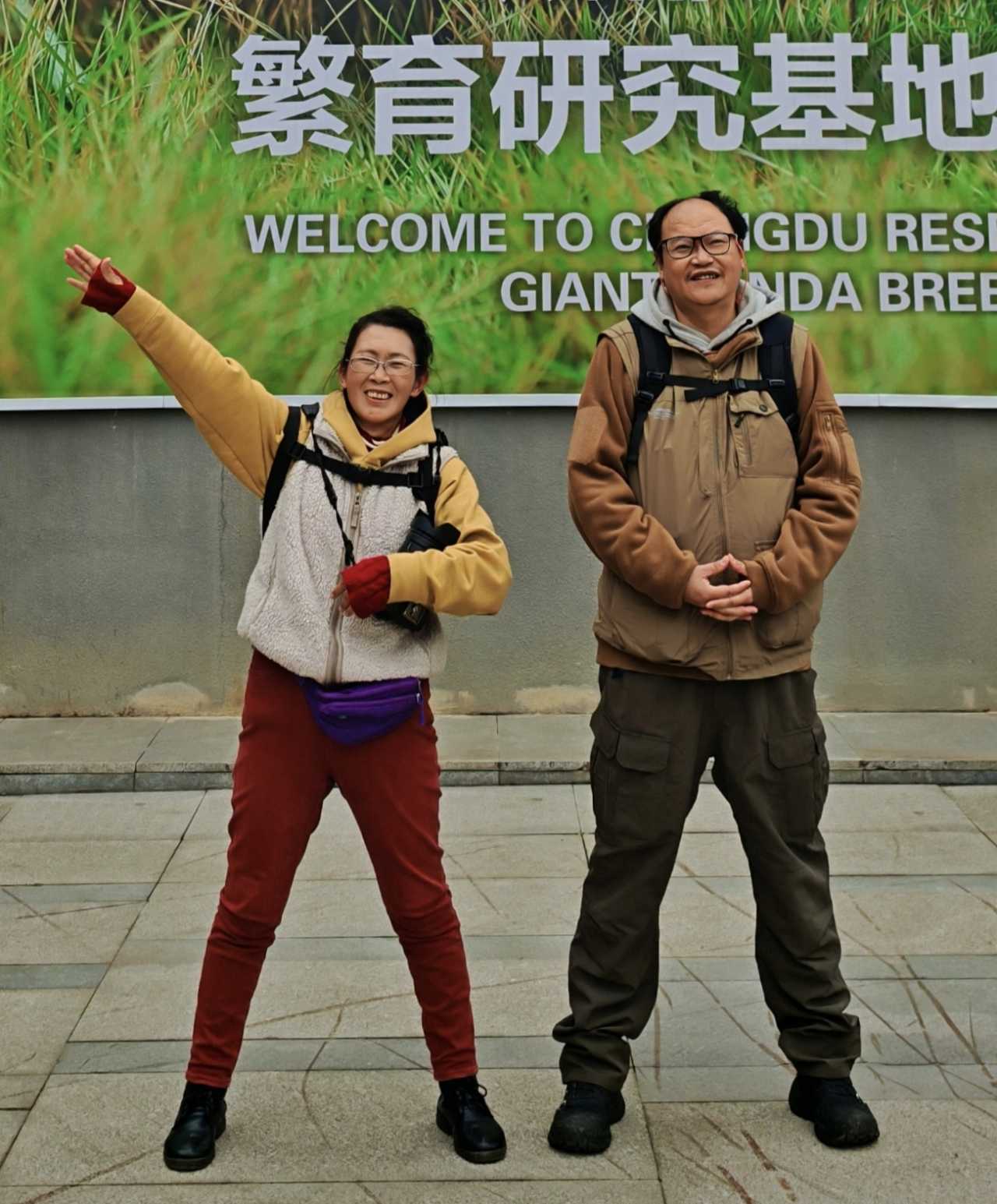
My brother scoured every guide and declared with conviction: at the Chengdu Giant Panda Breeding Research Base, you absolutely must see "Hua Hua." Apparently, the crowds for Hua Hua are absurdly large; you have to arrive early and queue. So, we—who normally never leave before nine—forced ourselves out the door at seven-thirty and entered the park at eight sharp. To secure an advantage, we unhesitatingly spent thirty yuan each on a shuttle bus, heading straight for Hua Hua’s home—Villa No. 6.
This is a crucial tip for anyone planning a Chengdu panda tour: arrive early, and use the shuttle. The base is massive, and walking to the most popular enclosures can eat up precious viewing time.
Queuing: A Collective Unconscious Pilgrimage
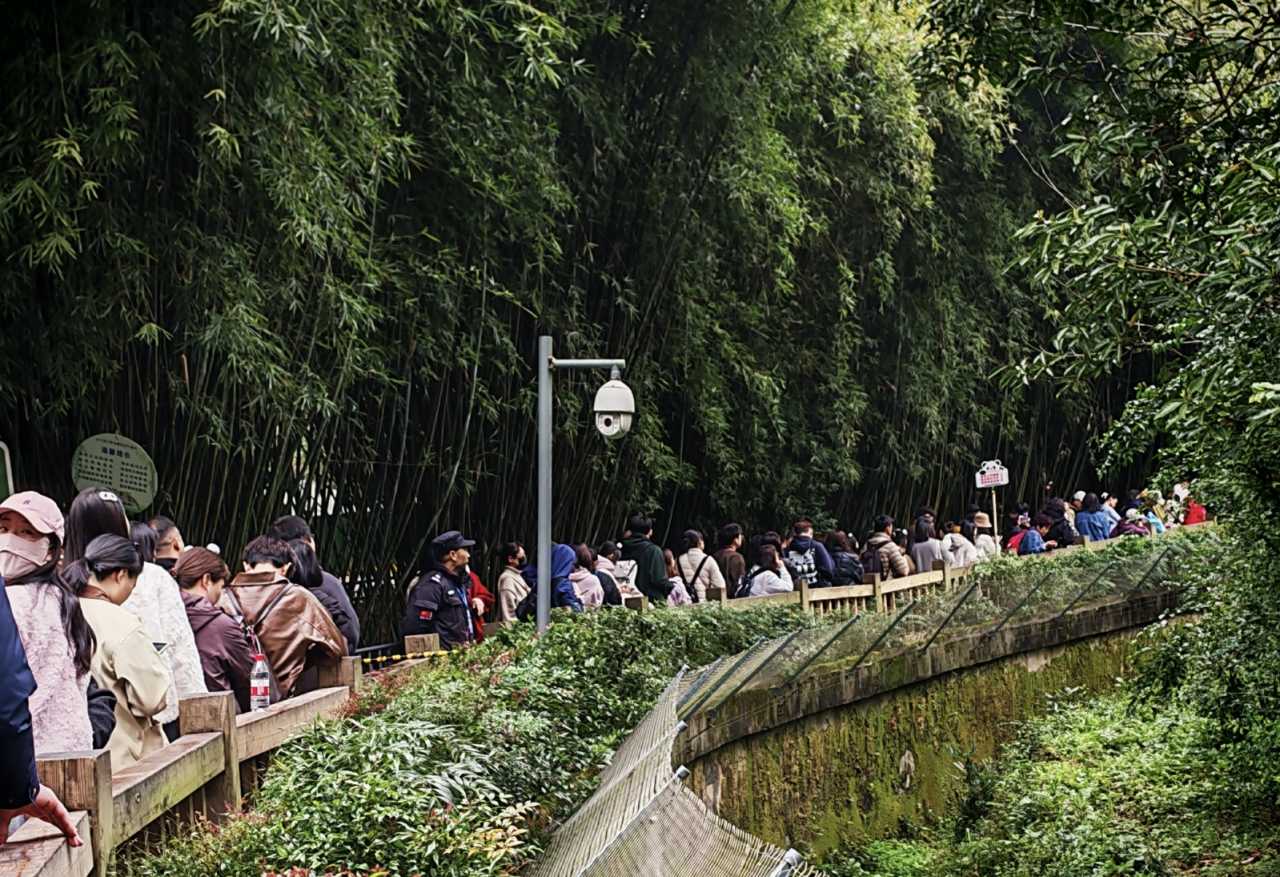
When we reached the villa, we were utterly stunned. The queue snaked and twisted, its end nowhere in sight. After confirming with the security guard that all these people were indeed here for Hua Hua, we quickly tacked ourselves onto the tail end, silently reciting "since we’re already here," and joined the line like everyone else.
Just then, a cleaning lady sweeping nearby sighed, "Oh dear, so many people wasting time in line—aren’t the other pandas just as cute?" Her words floated into everyone’s ears, but no one took them seriously. What we all thought was: seeing Hua Hua must feel different! Otherwise, wouldn’t the hundreds of people ahead of us all be fools?
We queued for a full forty minutes. Looking back, this was probably classic herd mentality at work—collective unconsciousness. Following the crowd can’t be wrong. If it pays off, we win; if it doesn’t, I’m not the only one, so psychological balance is maintained.
Finally Meeting Hua Hua: A Panda Contemplating Feline Existence
When our turn finally came, over thirty people surged forward in a wave. At the back of the line, I could only vaguely make out two chubby white figures ambling slowly through the trees. When I pushed to the front, one panda was lying on the ground, doing absolutely nothing.
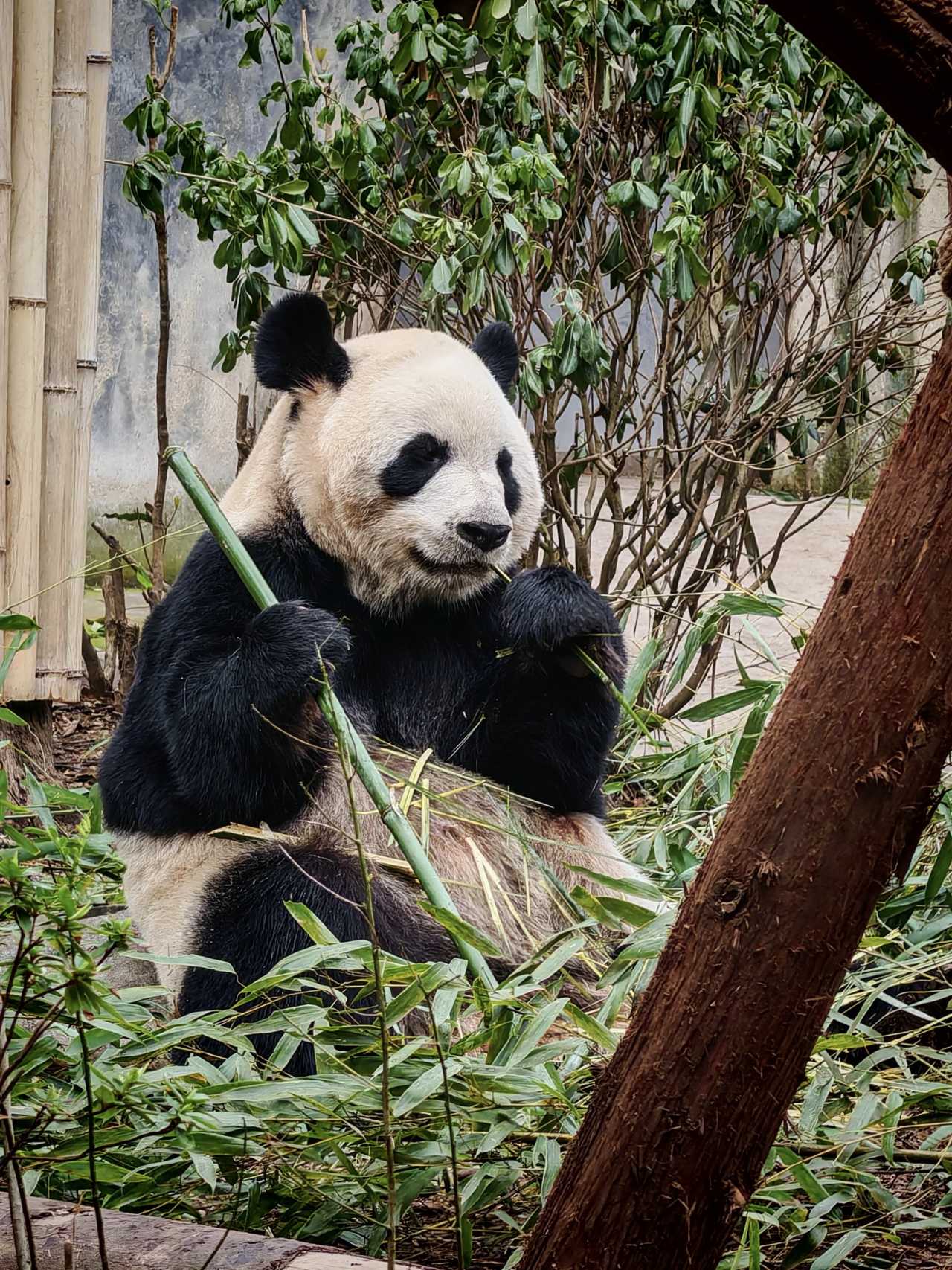
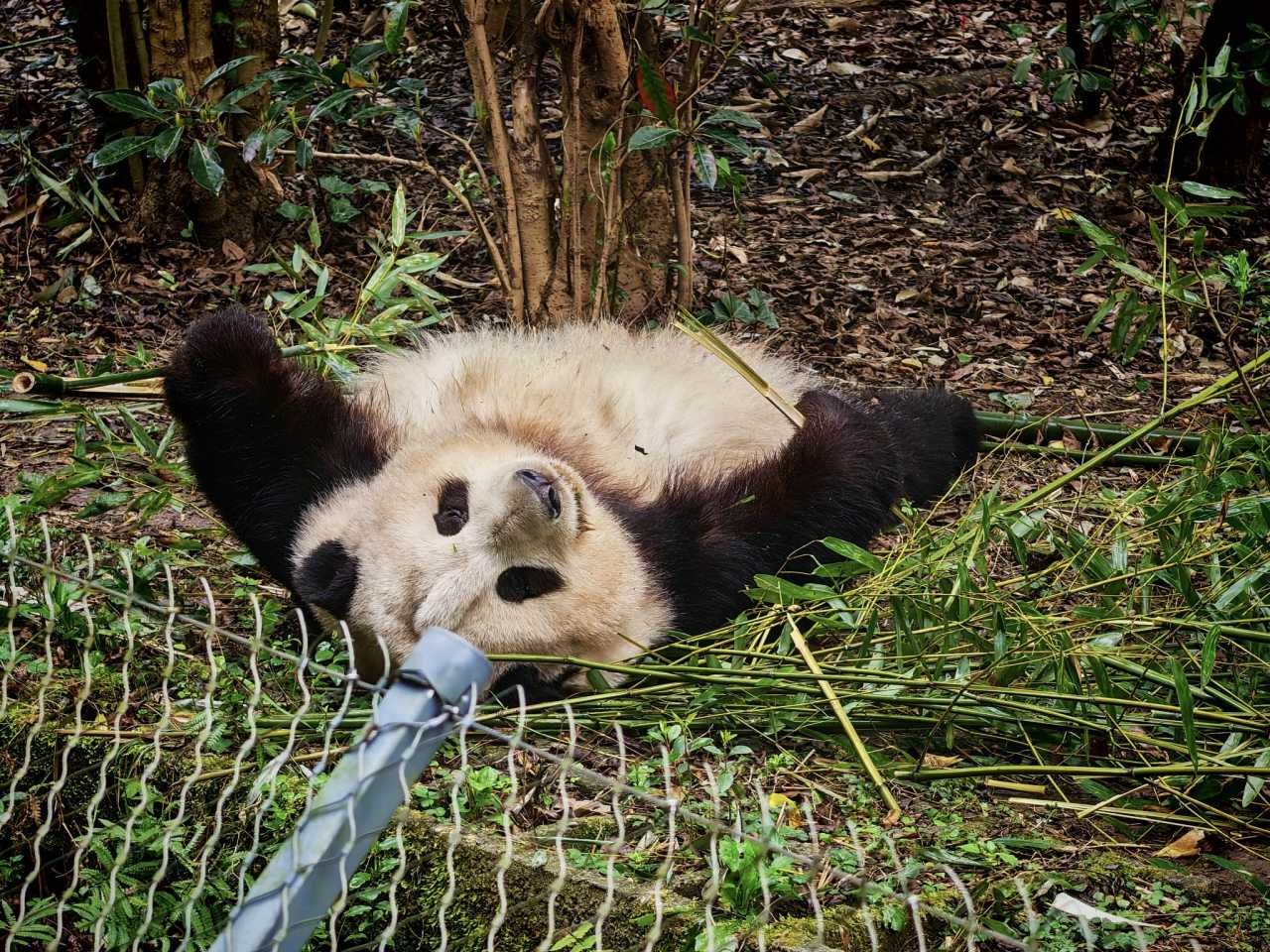
Online descriptions paint Hua Hua as having "a head round like a triangular rice ball, fur pure white as snow, and a pair of teardrop-shaped dark circles under the eyes," but I couldn’t see that striking beauty. She held a short bamboo stalk in her paw, her gaze deep and distant, staring at the sky as if pondering the feline trinity: "Who am I? Where did I come from? Where am I going?"
And that was it—we only got five minutes. I was baffled. How did Hua Hua become an internet sensation? Later, I looked it up and learned that Hua Hua was born with a deformed right hind paw, making climbing difficult, and she grew slowly, with a gentle, sluggish temperament. She was often bullied and had food stolen by companions without fighting back. Eventually, through effort, she learned to protect her food and climb, becoming an inspirational example of "growing at one’s own pace." It turned out that so many people weren’t just here to see a panda—they were here to learn from a role model: to lie down during travel and incidentally motivate themselves.
Gluttony, Sloth, and Play: The Panda’s Philosophy of Happiness
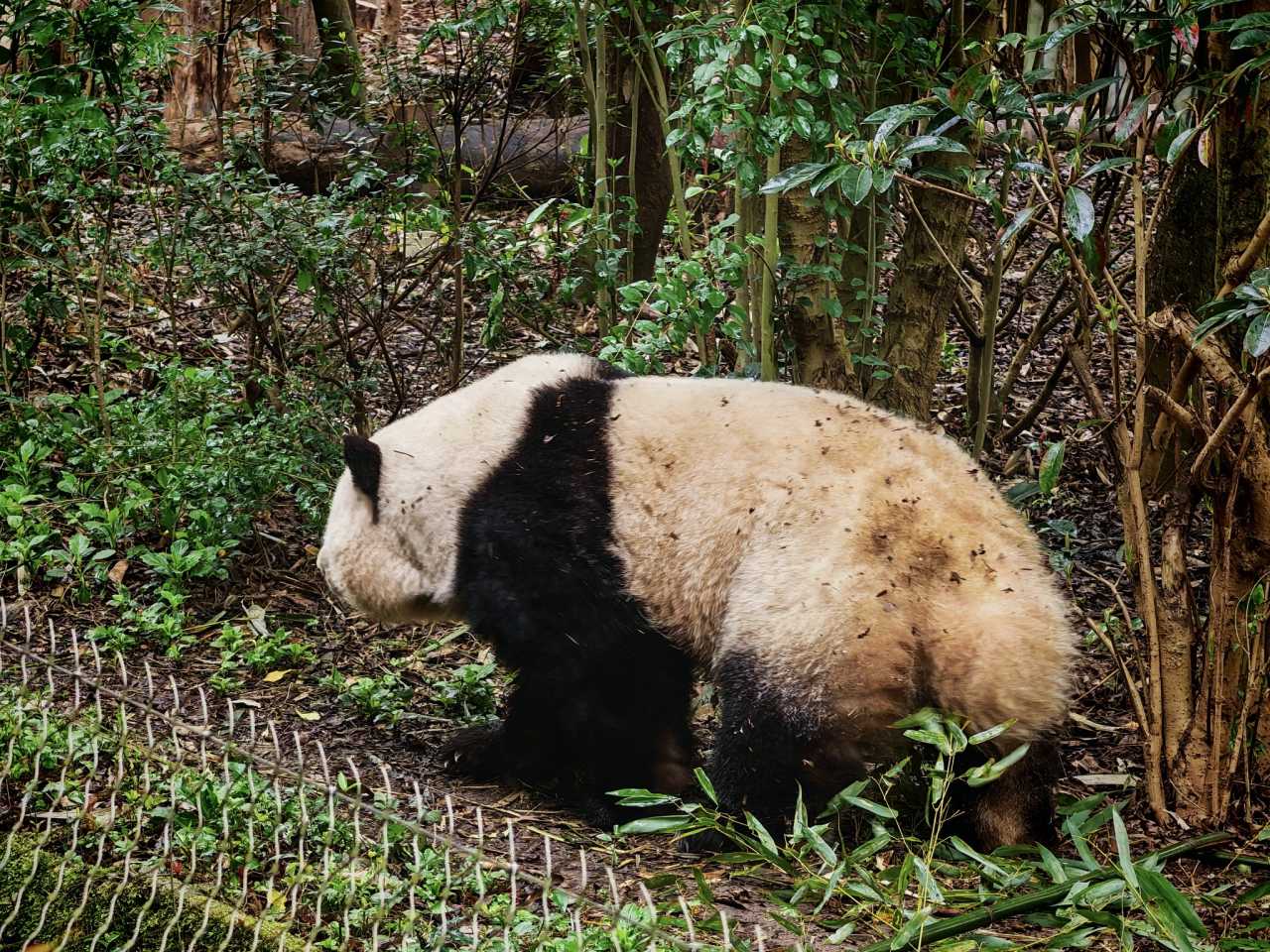
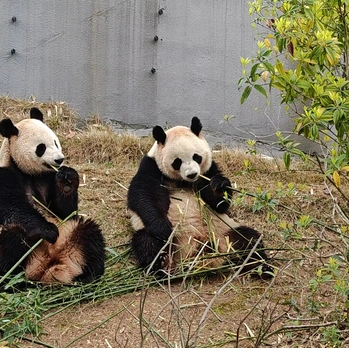
Leaving the villa, we began exploring freely. The panda base is truly incredible—elsewhere, seeing three or five pandas is a blessing; here, you can encounter over two hundred daily. As it turned out, the cleaning lady wasn’t wrong: the pandas in other enclosures were far more lively and adorable. Those single-minded bamboo-munching creatures looked much happier than Hua Hua.
Giant pandas primarily eat bamboo, which is low in nutrients and energy. Their digestive systems can only absorb small amounts of starch and protein. To maintain their massive bodies, they have no choice but to eat more and move less to conserve energy. They munch in groups, solo, or hidden in corners—the greatest joy for an adult panda is endlessly gnawing on bamboo, turning a single stalk into a full-course feast.
They usually appear lazy, but they’re actually the "energy conservation champions" of the animal kingdom. Their metabolic rate is less than half that of mammals of similar weight. Their intestines are straight and short, with no cecum, and digestion and excretion are rapid.
Panda Science: From Living Fossil to Vulnerable Species
Let me share some science: giant pandas belong to the bear family (Ursidae) and are a Class I nationally protected species. Wild individuals are only found in six mountain ranges across Sichuan, Shaanxi, and Gansu provinces, in dense bamboo forests at altitudes of 1,500 to 3,500 meters. Their average lifespan in the wild is 18 to 20 years; in captivity, it can reach 25 to 30 years.
The earliest panda ancestor, Ailurarctos, lived around 8 million years ago, with fossils first discovered in Lufeng and Yuanmou, Yunnan. Over 8 million years of evolution—from Ailurarctos lufengensis to Ailuropoda microta, Ailuropoda wulingshanensis, and Ailuropoda baconi—finally gave rise to the modern giant panda. Despite their poor diet and low reproductive rate, they’ve managed to become "living fossils." It’s only recent human disturbance that pushed them to "endangered" status. Through over 40 years of effort in China, the wild population has increased from 1,114 to 1,864 individuals, and in 2016, international organizations downgraded their threat level from "endangered" to "vulnerable."
Young pandas (1 to 2 years old) are the most active and playful—they love climbing trees, rolling around, and chasing each other, making them lovable "little joys." My brother even insisted on comparing himself to a panda, as if they were brothers. Pandas are stout-bodied, with round heads and short tails. They reach adulthood at 5 to 7 years, weighing 80 to 120 kilograms and measuring 120 to 180 centimeters in length.
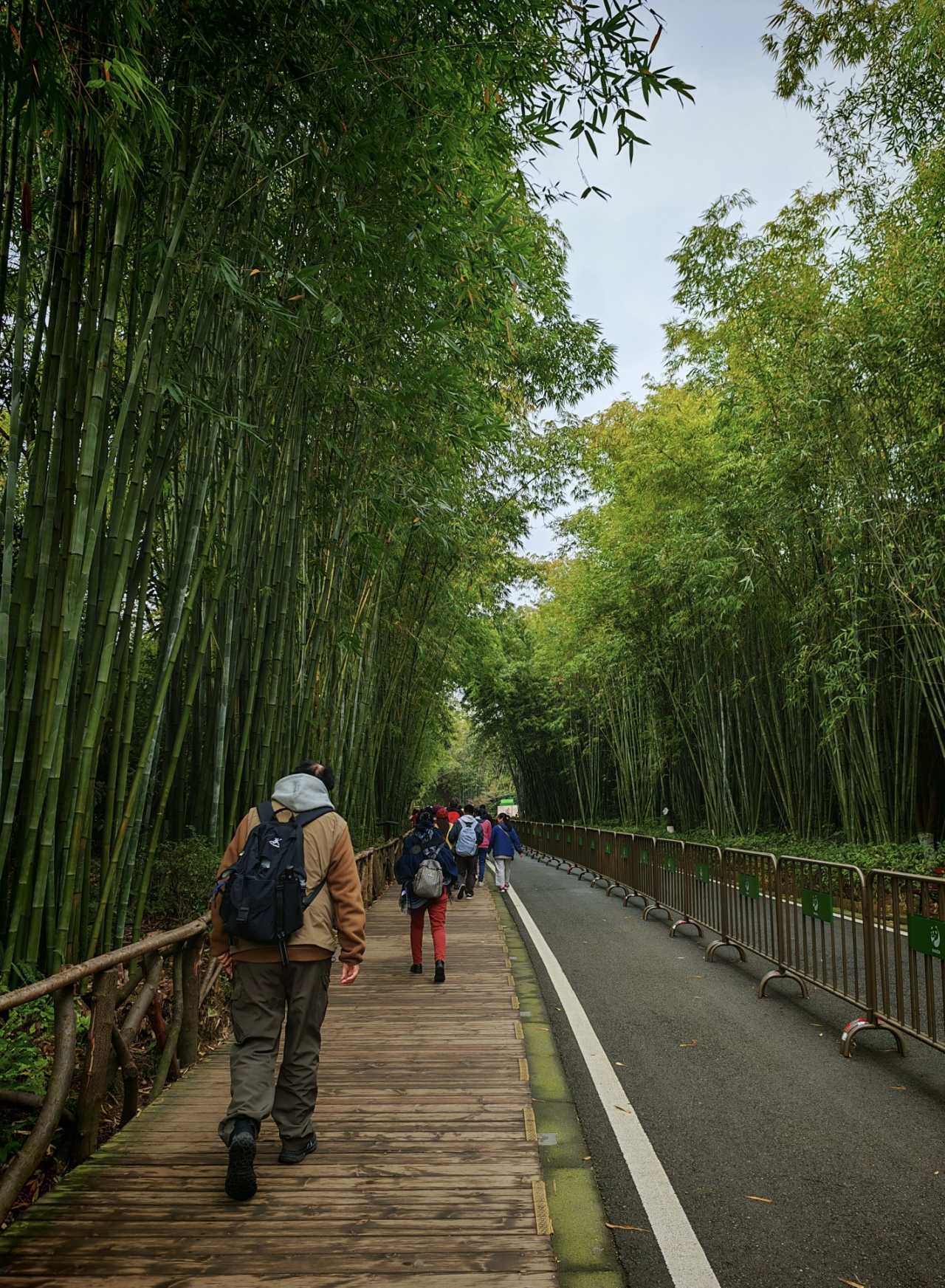
Their living quarters are huge and beautifully designed; newly built panda houses provide each panda with over 300 square meters of space, complete with living facilities and play equipment, making onlookers envious. The park is shaded by bamboo groves and green trees, simulating a wild habitat, making for a refreshing visit.
The Panda Tower (Bamboo Shoot Tower), standing 69.8 meters tall, is the base’s highest point. We wanted to climb it for a panoramic view, but we were too exhausted from playing and couldn’t muster the energy—we could only sigh in admiration. The park also houses a Panda Art Museum showcasing panda-themed artwork, perfect for a cultural deep dive.
Beyond the Panda Base: Other Must-See Central Sichuan Destinations
While the pandas were the highlight, our Central Sichuan road trip was far from a one-trick pony. After leaving Chengdu, we explored:
- Sanxingdui Museum: A mind-bending collection of ancient Shu artifacts, including bronze masks and sacred trees. This is a must for any history buff. [Link: Sanxingdui travel guide]
- Zigong Lantern Festival & Dinosaur Museum: A spectacular fusion of light art and paleontology. The lanterns are massive, intricate, and utterly surreal. [Link: Zigong attractions]
- Sichuan Museum: A deep dive into regional history, featuring everything from pottery to calligraphy. [Link: Sichuan Museum exhibits]
Each of these stops added a unique layer to our journey, making it a true Sichuan travel guide for those seeking depth over surface-level tourism.
FAQ: Planning Your Central Sichuan Road Trip
1. How many days do you need for a Central Sichuan road trip? A minimum of 10-14 days is recommended if you want to hit the highlights: Chengdu (3-4 days), Sanxingdui (1 day), Zigong (2 days), and the Sichuan Museum (1 day). Our 20-day trip allowed for a much slower, more immersive pace.
2. Is it worth queuing for Hua Hua at the Chengdu Panda Base? It depends on your patience. If you are a die-hard fan, yes. However, as we discovered, the other pandas are just as cute and far more active. If you want to see Hua Hua, arrive before 8 AM and be prepared for a 30-60 minute wait.
3. What is the best time of year to visit Chengdu? Spring (March-May) and Autumn (September-November) offer the most pleasant weather. Summer can be hot and humid, while winter is mild but often overcast.
4. Can you see wild pandas in Sichuan? It is extremely rare. The best chance is in protected areas like Wolong National Nature Reserve, but even then, sightings are not guaranteed. The Chengdu Panda Base is the most reliable place to see them up close.
5. What other animals can you see at the Panda Base? Besides giant pandas, the base also houses red pandas, golden monkeys, and various birds. The red pandas are particularly playful and often overlooked by visitors rushing to see the giant pandas.
Final Thoughts: Why You Should Take This Journey
As the year draws to a close, I’m grateful for these fragments. They remind me that travel isn’t just about checking boxes—it’s about the queue you stand in, the panda who stares at the sky, and the cleaning lady who tells you the truth. This Central Sichuan road trip was a reminder that the best memories are often the ones you don’t plan for.
If you’re looking for a destination that blends ancient culture with modern charm, and wildlife with philosophy, look no further than Central Sichuan. The pandas are waiting—and so is the story you’ll tell for years to come.
Ready to plan your own Central Sichuan adventure? Start by booking your flights to Chengdu and reserving your spot at the Panda Base. And remember: sometimes, the best view comes after the longest queue.
CTA: Subscribe to our newsletter for more detailed travel guides, insider tips, and exclusive itineraries for your next trip to China. Don’t let your travel fragments fade—capture them with us.


