A Horse, a Horseman, and My Personal Pilgrimage to Mount Gongga: A Solo Trekker's Journey of Survival and Discovery
Meta Description: Experience the ultimate Mount Gongga trekking adventure through one solo hiker's six-day pilgrimage. Discover survival tips, altitude sickness warnings, and the raw beauty of Sichuan's King of Mountains.
Introduction: The Call of the King of Sichuan Mountains
The meaning of life has never been about the starting point or the finish line, but rather the winding road itself. In the autumn of 2011, I slung my backpack over my shoulders and set out toward the snow-capped mountain that burned like a flame in the hearts of countless trekkers—Mount Gongga (Minya Konka) . This was no simple hike, but a journey of dialogue with myself, with nature, and with fate. What began as a dream inspired by two iconic photographs became a six-day solo traverse that tested my limits, brought me face-to-face with death, and introduced me to the warmth of Tibetan hospitality.
If you're planning a Gongga trekking route or dreaming of a Mount Gongga solo traverse, this account will give you the raw, unfiltered truth—including the dangers of high-altitude trekking in Sichuan and the life-saving power of local guides.
Origins: How a Photograph Sparked a Mount Gongga Pilgrimage
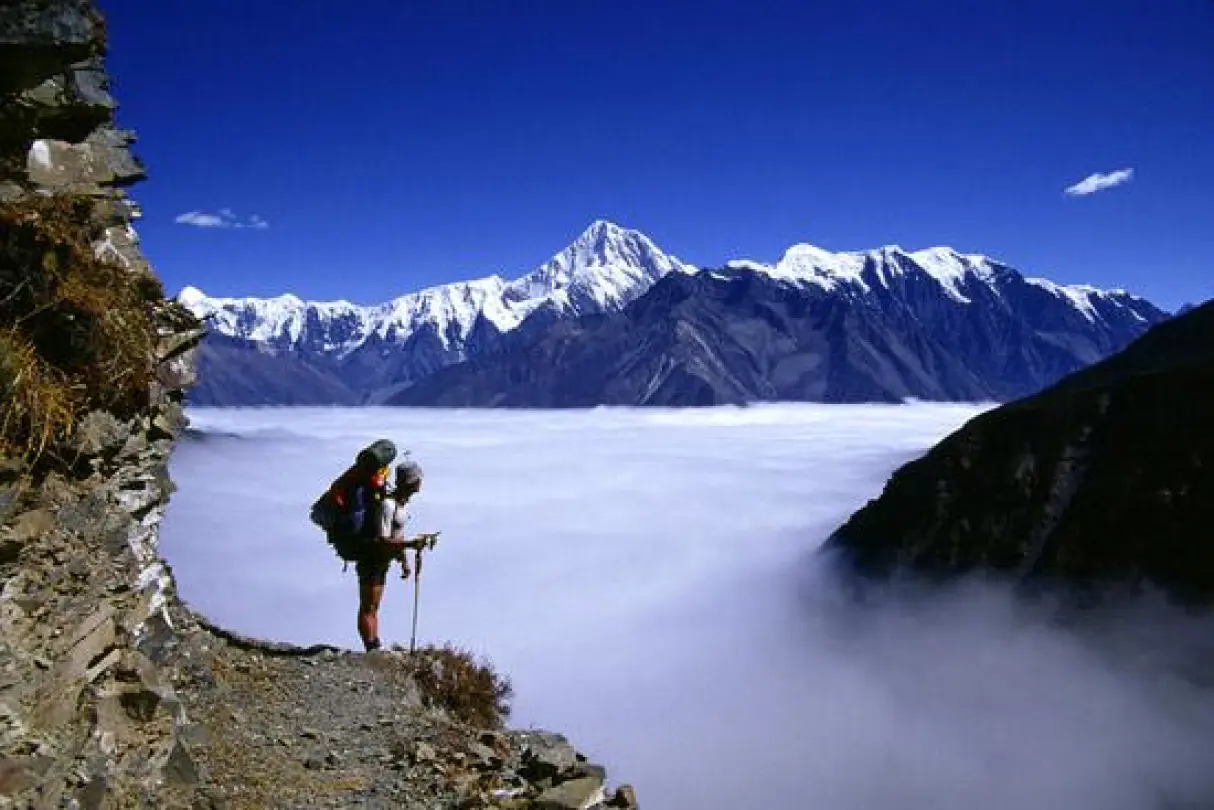
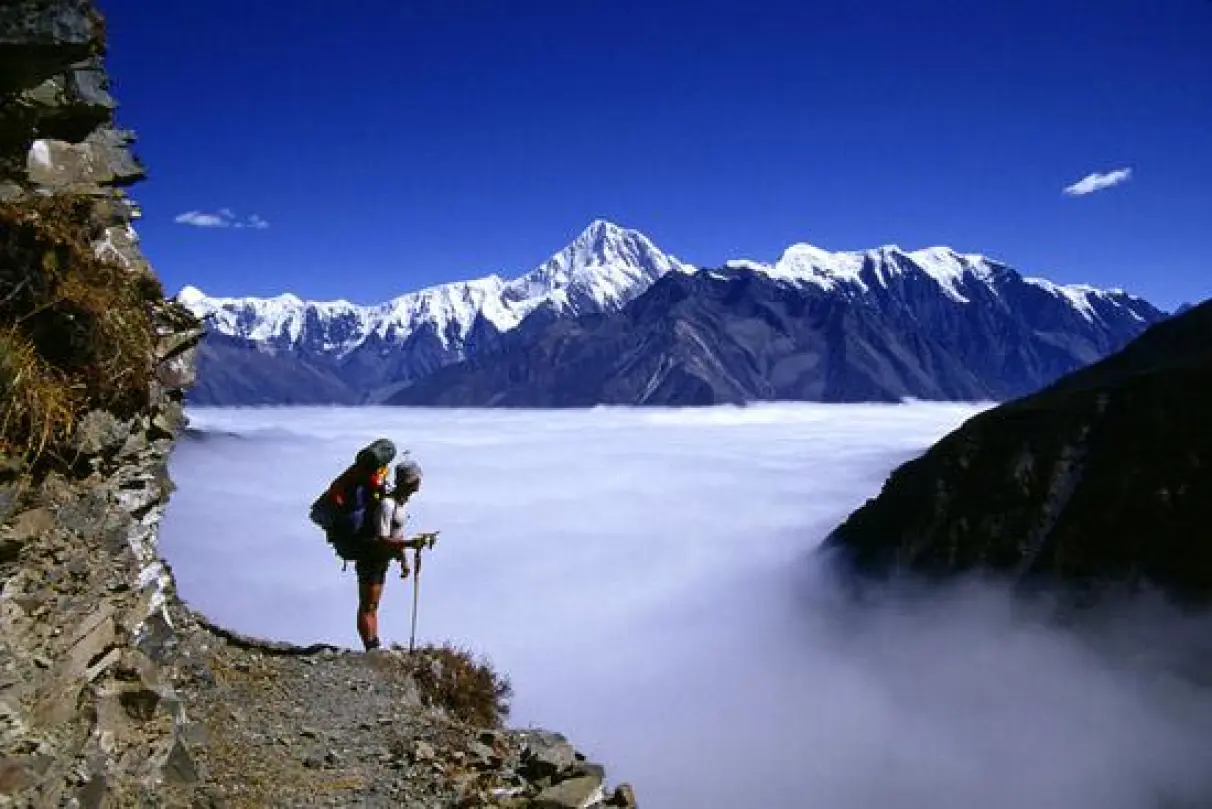
If you've been in the outdoor circle for any length of time, you've surely seen those two classic photographs: the mist-shrouded main peak of Gongga, its summit bathed in golden light as if a deity had descended to earth. It was precisely these two images—the ones that had "poisoned" countless adventurers—that made me resolve: one day, I would measure that magical land with my own two feet.
In August and September of 2011, I began planning this feast in western Sichuan. The plan had three parts: the core was a six-day full traverse of Mount Gongga; second was Daocheng Yading, the place called "the soul of Shangri-La"; and finally, Jiuzhaigou and Huanglong. The entire trip was expected to take 20 days. Considering the National Day holiday crowds and to capture the most beautiful autumn colors, I ultimately booked my flights: from Shanghai to Chengdu on October 5th, returning on October 26th.
[Link: Best time to trek Mount Gongga – autumn season guide]
Departure: From City to Wilderness

Chengdu at Night: The Bustle of Jinli
At 1:45 PM on October 5th, the plane lifted off from Pudong. By 4:30 PM, we landed at Chengdu's Shuangliu Airport. I took the airport bus to Minshan Hotel, walked to Xinnanmen Bus Terminal, and was lucky enough to snag a ticket for the 6:30 AM bus to Kangding the next morning. After settling into my accommodation, I headed straight for Jinli Ancient Street. Under the night sky, Jinli was a sea of people and lights. I wove through the crowd, filling my stomach with various snacks—and filling my heart with anticipation for the journey ahead.
Kangding: Meeting Nima and Yuekang – Your First Local Contact
On the morning of October 6th, I departed from Chengdu. The roads were good, and I arrived in Kangding by 3:30 PM. Without wasting a moment, I rushed to Mugecuo Lake and didn't reach the starting point of the Gongga traverse—Old Yulin Village—until the evening of the 7th. The Tibetan driver Nima, who had taken me to Mugecuo, heard I planned to solo trek across Gongga and warmly introduced me to his friend Yuekang.
Yuekang's family had horses and could serve as a guide. Normally, horse and guide each cost 60 yuan per day, but renting a horse was only worthwhile when crossing with a group. Alone, the price was naturally higher. We eventually settled on 1,800 yuan total for the horse and guide from Old Yulin to Shangmuju. The Chengdu Starting Point Club had also contacted me, saying someone would be trekking Gongga on the 9th, but their route was over Panshan Pass, where the scenery was far inferior. After much deliberation, I chose to go solo.
[Link: How to hire a Tibetan guide for Gongga trekking]
A Night at Yuekang's Home: Butter Tea and an Open-Air Hot Spring
That night, I stayed at Yuekang's place. The warmth of Tibetan hospitality was heart-melting—the moment I stepped through the door, a steaming cup of butter tea was placed in my hands. In Tibetan, butter tea is called "qiasuma," meaning "churned tea." Salty with a hint of fragrance, sweet yet slightly bitter, it warms the body and provides nourishment. Yuekang mentioned there was a hot spring nearby and had his daughter take me to see it. I followed her to a valley at the edge of the village, where two open-air hot spring pools appeared before my eyes—one for men, one for women, less than a hundred meters apart. The river beside the pools gurgled as it flowed, and the starry sky sparkled overhead. I felt as if I had stepped into a fairy tale.
Dinner was the handiwork of Yuekang's wife: a hearty noodle dish made with thick pieces of dough, meat, and potatoes. Though the noodles were on the thick side, they were deeply satisfying. From Yuekang's courtyard, I could see the distant snow-capped mountains—so beautiful it left me speechless.
The Trek: Six Days, One Horse, One Person – A Solo Gongga Traverse
Day One: From Old Yulin to the Autumn Pasture – The Mistake That Almost Cost Me Everything
Early in the morning, after a simple breakfast and packing my gear, Yuekang and I set off on our crossing. Mount Gongga (Minya Konka) sits on the eastern edge of the Qinghai-Tibet Plateau, in the middle section of the Hengduan Mountains. In Tibetan, "gong" means ice and snow, and "ga" means white—"white ice mountain." The main peak stands at 7,556 meters (24,790 feet) , earning it the title "King of the Sichuan Mountains." The mountain range stretches about 60 kilometers from north to south and 30 kilometers from east to west, surrounded by 145 ice peaks ranging from 5,000 to 6,000 meters.
We advanced along the direction of the hydropower station, moving easily. Yuekang said, "I've never guided just one person before. No stopping and waiting, no turning back to pick anyone up—it's really easy." He led the horse ahead while I followed with my backpack, but my eyes couldn't keep up—the babbling streams, the crisp air, the blue sky and white clouds, and a stretch of red rock beach. The organisms living on those red rocks are proof of a clean environment; if there's any air pollution, they disappear.
When we reached the first campsite, Gexi Meadow, I saw only a fence for yaks—but no yaks. It looked nothing like the meadow I had imagined. Yuekang said it was still early and we should keep going. Without thinking much, I followed. Only later did I realize this decision had planted the seed of trouble.
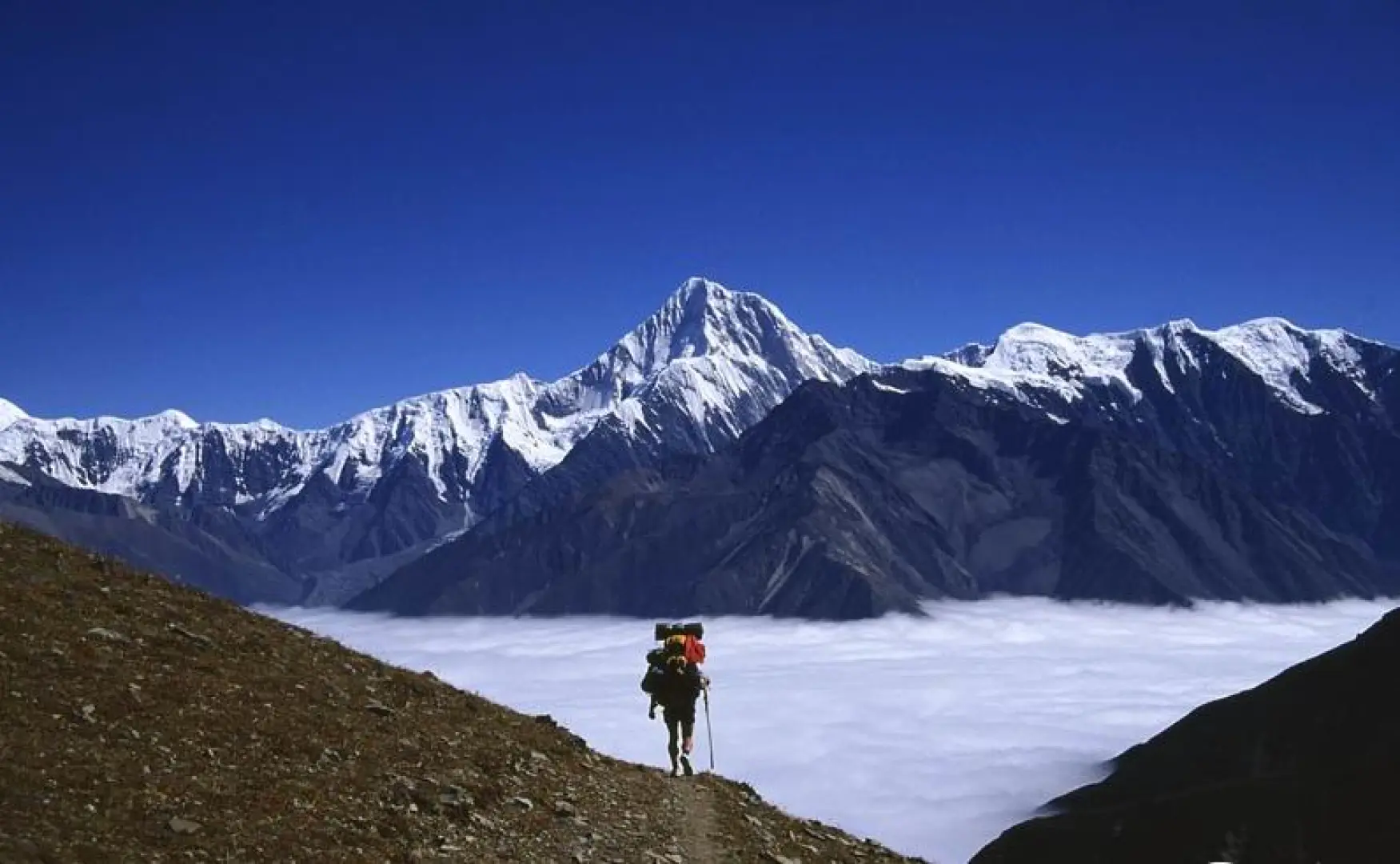
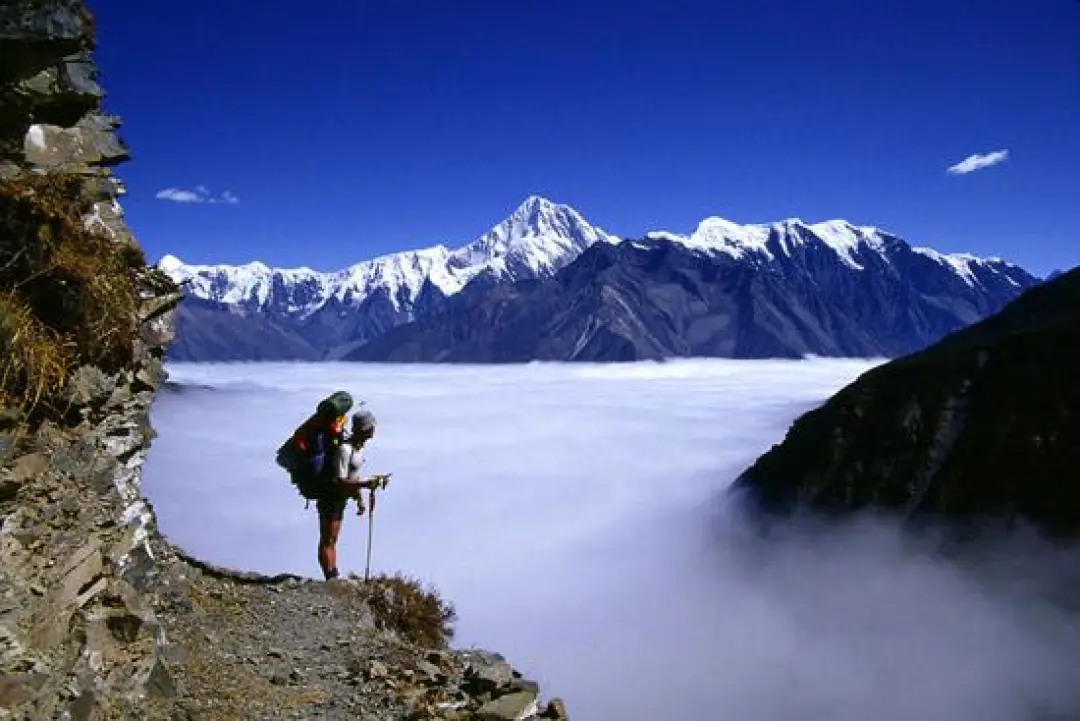
By two or three in the afternoon, I was tired and wanted to set up camp. But Yuekang insisted we push on to an autumn pasture. I hadn't eaten properly at noon, just nibbled on a few small pieces of bread and some crackers. Fortunately, the weather was perfect, and the snow-capped mountains along the way were spectacular—Tianhaizi at 6,070 meters, Baihaizi at 5,924 meters, Shehaizi at 5,778 meters, Bijia Mountain at 5,880 meters... I encountered two returning horse teams, and we all shouted "Tashi Delek" to each other, as warm as family reunited after years apart.
We finally reached the nameless autumn pasture. Because the first day's trek had been too long, and I had sweated and caught a chill on the high-altitude plateau above 4,000 meters, I felt a fever coming on. Luckily, a Tibetan couple had set up a large tent there, with an iron stove burning inside. Beside the stove was a simple bed—a layer of branches about ten centimeters thick on the ground, topped with a mattress and a felt pad. I sat by the stove, warm and drowsy, wanting nothing but sleep. I asked, "Can I lie down?" Receiving permission, I collapsed and fell asleep.
The Night of Fever: Brushing Shoulders with Death at High Altitude
Yuekang helped me set up my tent, unzipped my sleeping bag, and called me to eat. I had no appetite at all. I drank some hot water and crawled back into my sleeping bag. At 8:30 PM, he woke me again, felt my forehead—still feverish. The wife had made rice and tomato scrambled eggs. I forced myself to get up and eat a bowl. I knew that at high altitude, you have to eat to regain strength.
That night, I tossed and turned, unable to sleep. A fever at high altitude is the most dangerous thing—it can trigger cerebral edema or pulmonary edema, and many trekkers have died from it. There was no cell signal here. Three days ahead, two days back—there was simply no rescue. Yuekang came to discuss what to do tomorrow: turn back? stay one more day to observe? or continue? He said, "I'll listen to you. You're the guide. You decide." I said, "Thinking too much won't help. Let's sleep tonight and see how I feel in the morning."
I took a cold medicine and a packet of headache powder (a special remedy for high-altitude headaches; the pharmacy said not to take too much because it's addictive), but I couldn't fall asleep. I lay there, listening to my own heartbeat, wondering if I would see the sunrise.
[Link: Altitude sickness prevention and treatment for Gongga trekking]
Survival and Triumph: Lessons from the Edge
The next morning, I woke to find the fever had broken. The sky was clear, and the snow-capped peaks glittered in the dawn light. Yuekang brought me hot tea and a smile. We decided to continue, but at a slower pace. The remaining days of the traverse unfolded like a dream—crossing high passes, fording icy streams, and sleeping under a canopy of stars so bright they seemed close enough to touch.
By the time we reached Shangmuju on the sixth day, I was exhausted, thinner, and forever changed. The Mount Gongga pilgrimage had given me something no photograph ever could: the knowledge that the human spirit, when paired with local wisdom and a good horse, can overcome even the most harrowing trials.
FAQ: Planning Your Own Mount Gongga Trekking Adventure
1. What is the best time to trek Mount Gongga?
 The ideal season is October to early November for autumn colors and stable weather. Avoid the summer monsoon (June–August) and winter snows (December–March).
2. Do I need a guide for a solo Gongga traverse?
Absolutely. Local guides like Yuekang provide horses, navigation, and critical support. Solo trekking without a guide is extremely dangerous due to altitude, weather, and trail conditions.
3. How much does a Gongga trekking guide and horse cost?
Expect to pay around 1,800–2,500 yuan total for a 6-day traverse with a guide and horse from Old Yulin to Shangmuju. Prices are negotiable and depend on group size.
4. What are the biggest dangers of high-altitude trekking in Sichuan?
 Altitude sickness (cerebral/pulmonary edema), hypothermia, dehydration, and getting lost are the top risks. Always carry a first-aid kit, warm layers, and a satellite phone or beacon.
5. Can I combine Gongga with other Sichuan attractions?
Yes! Many trekkers pair the Gongga traverse with Daocheng Yading, Jiuzhaigou, and Huanglong for a 20-day itinerary. Plan your logistics carefully—distances are vast.
Conclusion: Your Pilgrimage Awaits
A horse, a horseman, and a feverish night under the stars—my Mount Gongga solo traverse was far from perfect, but it was profoundly real. The King of Sichuan Mountains doesn't give up its secrets easily. It demands respect, preparation, and a willingness to surrender to the unknown.
If you feel the call of the Gongga trekking route, don't wait. Book your flight to Chengdu, find a guide in Kangding, and let the mountains teach you what no book ever can.
Your journey starts now. Pack your bag, book your guide, and answer the call of the King of Sichuan Mountains.
Have you trekked Mount Gongga or another high-altitude route in Sichuan? Share your story in the comments below—we'd love to hear from you!
[Link: Essential gear checklist for Gongga trekking] [Link: Best Tibetan homestays near Mount Gongga]
You may also like


