A Family Trip to Chengdu: An Impromptu Journey of Food, Culture, and Togetherness
Meta Description:
Plan your own family adventure with this SEO-optimized guide to Chengdu. Discover panda encounters, Sichuan hotpot, Dujiangyan wonders, and insider tips for multi-generational travel in China's "Land of Abundance."
Introduction: The Call That Changed Our Plans
Some trips are the result of meticulous planning. Others are unexpected gifts from a single phone call.
Two weekends before the May Day holiday, my phone rang. It was my uncle on the other end: "Bring the whole family to Chengdu!" Without much hesitation, we booked our flights and set off on a three-generation adventure.
This was the first time I'd traveled by plane with both my mother and my daughter, Youyou. That alone made it a trip to remember. And Chengdu—a city famous for its laid-back, "安逸" (comfortable and carefree) vibe—left us with countless warm memories through its smoky street-side stalls, unhurried pace, and endless food.
In this Chengdu family travel guide, I'll share our impromptu itinerary, practical tips for traveling with elderly and children, and the hidden gems that made this trip unforgettable.
Pre-Trip Planning: A "Rough" but Practical Chengdu Itinerary

To be honest, our planning was pretty "Zen." Chengdu is known for taking it easy, so our original plan was simple: eat, wander, take photos, and enjoy four days of slow living. Well, we ended up averaging 20,000 steps a day. So much for a "relaxing" trip—it turned into a "special forces style" marathon. Ha!
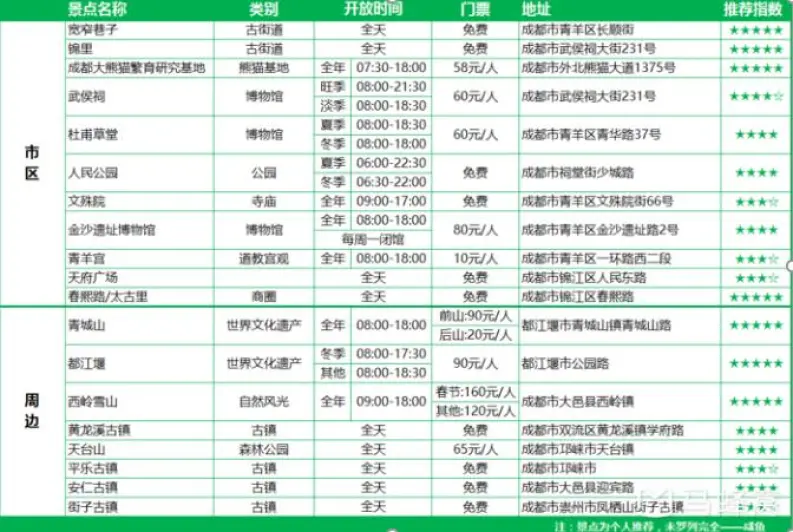
Most of Sichuan's stunning scenery is outside the city—places like Daocheng Yading and Jiuzhaigou, which I've always dreamed of visiting. But with limited time, we focused on downtown Chengdu. Our must-see list included: People's Park (Home of the Crane Teahouse), Kuanzhai Alley, the Panda Base, the Panda Post Office, Wuhou Shrine, Jinli Ancient Street, Du Fu's Thatched Cottage, Wenshu Monastery, Paulownia Tree Street, Nine-Eye Bridge, and Chunxi Road/Taikoo Li. If we had more time, we'd have added Dujiangyan and Qingcheng Mountain.
Before leaving, I found a handy map online that someone had put together showing all the attractions. They're surprisingly close to each other. For example, Wuhou Shrine and Jinli are practically next door. People's Park is only about a kilometer from Kuanzhai Alley, and you pass the Panda Post Office along the way. So route planning is key.
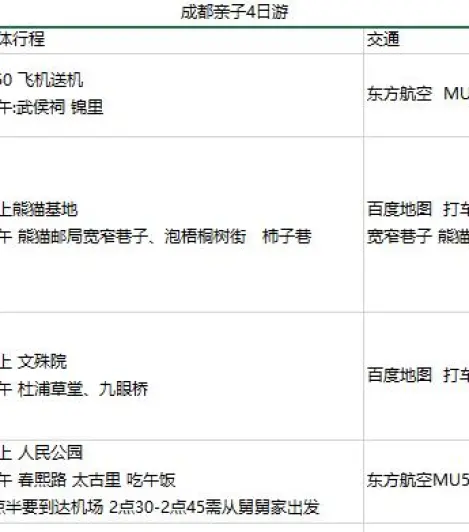
Final Itinerary
- Day 1: Shanghai → Chengdu Shuangliu Airport → Wuhou Shrine → Jinli Ancient Street
- Day 2: Dujiangyan Irrigation System → Kuanzhai Alley
- Day 3: Panda Base → Wenshu Monastery
- Day 4: People's Park → Panda Post Office → Kuanzhai Alley → Paulownia Tree Street → Departure
The Crew: Mom, Youyou, my husband, my uncle, my sister, my brother-in-law—a big, lively family.
[Link: Best family-friendly hotels in Chengdu]
Getting Around Chengdu: Taxis for the Win
Chengdu's metro is excellent, but since we were traveling with elderly and young family members, we took taxis everywhere. The distances between downtown attractions are short, and a Didi or regular cab usually costs less than 20 yuan.
- Panda Base: About 20 kilometers from the city center, a 40-minute taxi ride. There are shuttle buses back to Kuanzhai Alley and Jinli, but since we were heading to Wenshu Monastery, we took a taxi.
- Dujiangyan: About 50 kilometers away. We hired a 7-seater car for 800 yuan round trip. They actually sent a 15-seater van—we felt like we got a bargain.
Pro tip: For multi-generational travel in Chengdu, pre-book a private car through Taobao or Didi Chuxing. It saves time and energy.
[Link: How to use Didi in China for tourists]
Day 1: Arriving in the Land of Abundance
Wuhou Shrine: Memories of the Three Kingdoms Beneath Red Walls
April 29, 2018—the first day of the May Day holiday. We set off at 7:10 a.m. sharp. We'd booked China Eastern Airlines tickets two weeks in advance: 9,400 yuan for three adults and one child, which was reasonable. During the three-hour flight, Youyou ate, drank, and watched cartoons. Time flew.
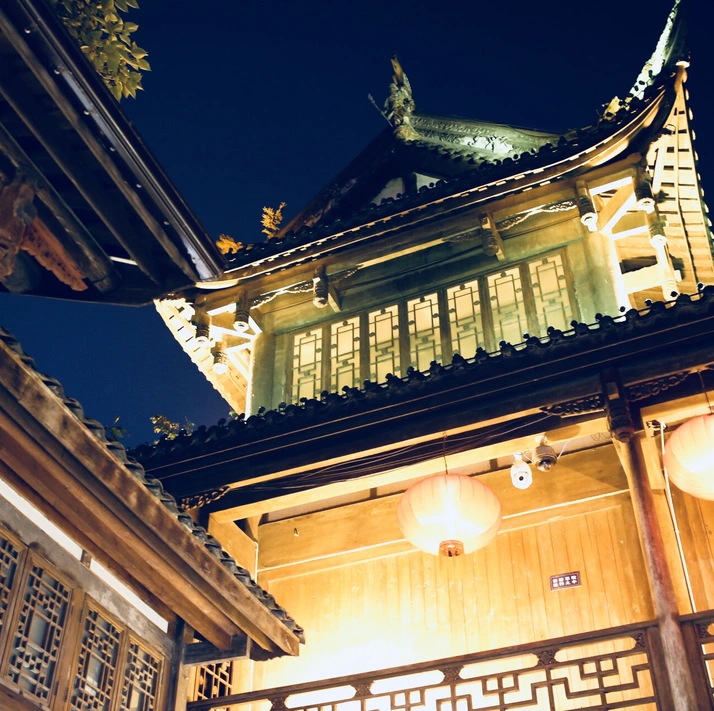
We landed at Chengdu Shuangliu just after noon. A driver picked us up and took us to my uncle's place. The neighborhood was nice—I even spotted bougainvillea, which I'd only seen before in Gulangyu. Who knew it grew in Chengdu too?
After a quick lunch, we headed to our first stop: Wuhou Shrine (also known as Han Zhao Lie Temple). It's the only temple in China dedicated to both a ruler and his subjects, and it's the country's most significant museum of Three Kingdoms history. Tickets were 60 yuan for adults, 30 yuan for half-price (ages 6-18, full-time students, and seniors 60-69), and free for those over 70 and children under 1.3 meters.
The complex covers 150,000 square meters and includes three sections: the historical Three Kingdoms area, the western cultural experience zone, and Jinli Folk Street. We followed the yellow marked route and saw plenty of ginkgo trees—it must be stunning in autumn.
I'd brought a traditional Hanfu outfit for Youyou to take photos, but Chengdu hit 30°C, so we changed after just a few shots. Still, the red walls paired with Hanfu made for amazing pictures. I loved leaning against those walls for photos, but the crowds made it impossible to get a shot without people.
Jinli Ancient Street: A Feast for the Senses
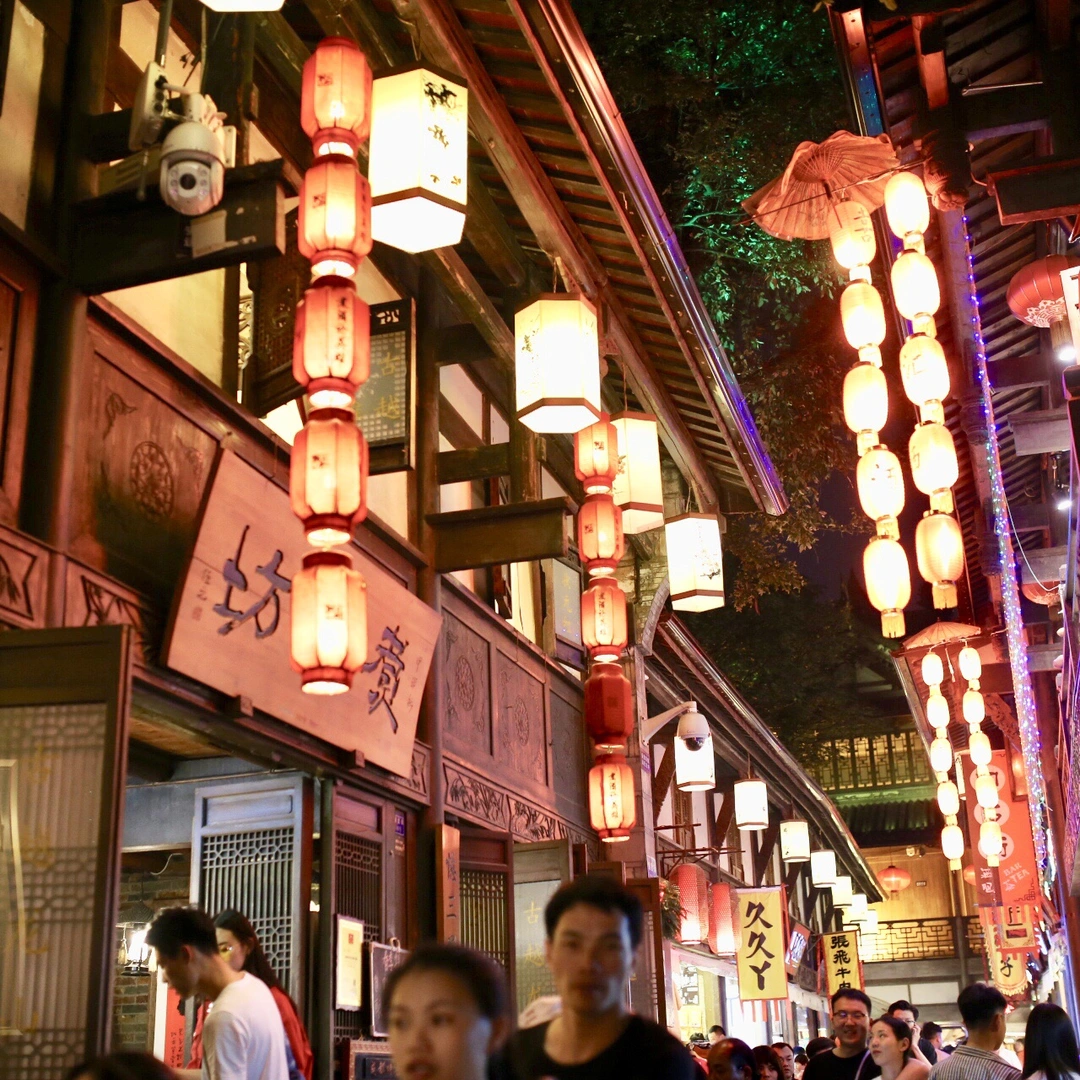
From Wuhou Shrine, you can walk directly into Jinli Ancient Street. This 550-meter-long street is built in the style of late Ming and early Qing dynasty Sichuan residences, blending Three Kingdoms culture with local folk traditions. The food here is overwhelming: "Three Cannons" (a sticky rice dessert), giant squid, Zhang Fei beef, and vermicelli with pork offal—I wanted to try everything.
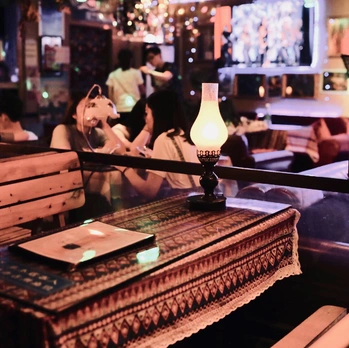
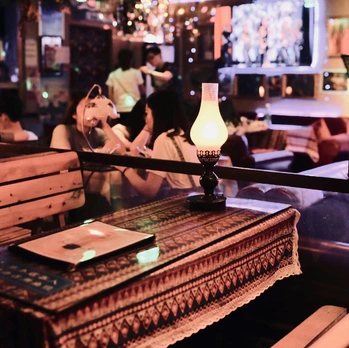
For dinner, we chose Da Miao Hotpot. We ordered a four-compartment pot and enjoyed hotpot while watching a Sichuan opera face-changing performance. The only downside? No satay sauce! People in Chengdu don't use it. The condiment station only had sesame oil, minced garlic, scallions, and cilantro.
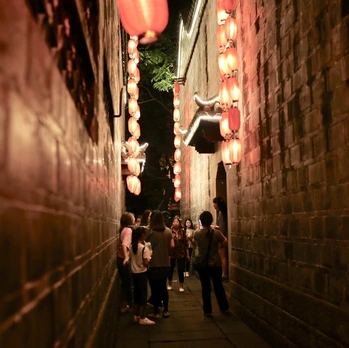
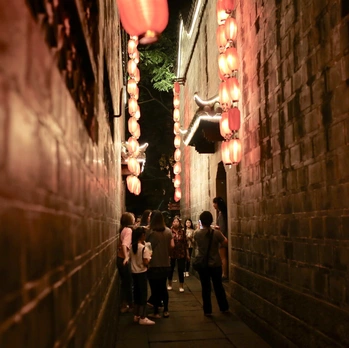
As the festive lanterns lit up, the ancient street took on an even more magical atmosphere. Even at 10 p.m., crowds were still streaming in. Chengdu's nightlife truly lives up to its reputation.
[Link: Best Sichuan hotpot restaurants in Chengdu]
Day 2: Paying Homage to Dujiangyan and Ancient Ingenuity
On the second day, we changed our plans and visited Dujiangyan. We'd booked a car through Taobao. The driver first picked up my sister and brother-in-law, then came for us. The drive normally takes 1.5 hours, but holiday traffic stretched it to 2.5 hours.
Dujiangyan is a UNESCO World Heritage site, built at the end of King Zhao of Qin's reign (around 256 BC) under the direction of Li Bing and his son. The three main structures—the Fish Mouth, the Flying Sand Weir, and the Precious Bottleneck—have controlled flooding and provided irrigation for over 2,000 years, turning the Chengdu Plain into the "Land of Abundance."
The regular ticket price is 90 yuan, but residents of Shanghai only pay 15 yuan with their ID card—a gesture of gratitude for Shanghai's aid after the Wenchuan earthquake. It was a pleasant surprise that also stirred a feeling of warmth.
The site is vast; you can walk or take an electric cart. Since the holiday queue for the carts was impossibly long, we chose to walk. The story of the Precious Bottleneck's construction is astonishing: without gunpowder, Li Bing used a "fire-and-water" method to crack open Mount Yulei, creating a 20-meter-wide, 40-meter-high, and 80-meter-long channel.
Standing at the Fish Mouth, watching the roaring Min River split in two—the inner channel narrow and deep, the outer channel wide and shallow—I finally understood the "40-60 water division" principle. During dry seasons, 60% of the water flows into the inner channel; during floods, most goes into the outer channel. Standing there, I truly grasped what it means to "benefit the people."
[Link: Dujiangyan vs. Qingcheng Mountain: Which to visit first]
Day 3: Panda Base and Wenshu Monastery
Chengdu Panda Base: The Ultimate Cuteness Overload
No Chengdu family trip is complete without visiting the Chengdu Research Base of Giant Panda Breeding. We arrived early to catch the pandas during their most active hours—morning feeding time. The round, chubby creatures climbing trees, munching bamboo, and rolling around had us screaming, "Too cute!"
Tips for visiting the Panda Base with kids: - Arrive by 8:00 a.m. to avoid crowds and see pandas active. - Bring water and snacks—the base is large and walking is required. - Don't miss the red panda enclosure—they're equally adorable. - The Panda Post Office near Kuanzhai Alley is a great place to send postcards home.
Wenshu Monastery: A Moment of Peace
After the panda madness, we headed to Wenshu Monastery, one of Chengdu's most important Buddhist temples. The serene atmosphere, ancient architecture, and vegetarian restaurant inside offered a welcome respite. My mother particularly enjoyed the tea house in the monastery grounds.
[Link: Top 10 things to do in Chengdu with kids]
Day 4: People's Park, Kuanzhai Alley, and Paulownia Tree Street
People's Park: The Heart of Chengdu's "An Yi" Lifestyle
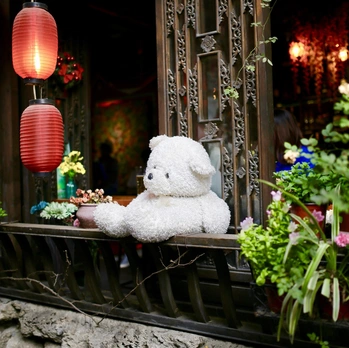
People's Park is where locals come to relax. The Crane Teahouse is iconic—sit under the bamboo trees, sip jasmine tea, and watch the world go by. We spent two hours here, and it was the most relaxing part of our trip. Youyou loved watching the elderly couples dancing and practicing tai chi.
Kuanzhai Alley and Paulownia Tree Street
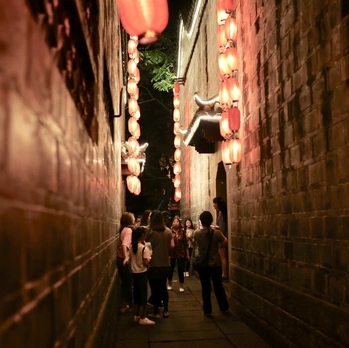
Kuanzhai Alley is a restored historical district with three parallel lanes: Wide Alley, Narrow Alley, and Well Alley. It's touristy but charming, with boutique shops, street food, and traditional architecture. Paulownia Tree Street (Tongzilin) is quieter and known for its café culture and French architecture.
[Link: Best photo spots in Kuanzhai Alley]
FAQ: Planning Your Own Chengdu Family Trip
Q1: Is Chengdu suitable for multi-generational travel?
Absolutely. Chengdu is flat, walkable, and has excellent taxi and metro systems. Attractions like Wuhou Shrine, Jinli, and People's Park are easy to navigate for elderly and children.
Q2: What's the best time to visit Chengdu?
Spring (March-May) and autumn (September-November) offer mild weather and fewer crowds. Avoid Chinese public holidays like May Day and National Day if possible.
Q3: How many days do I need in Chengdu?
4-5 days is ideal for a relaxed trip covering downtown attractions plus Dujiangyan or Qingcheng Mountain.
Q4: What should I eat in Chengdu with kids?
Start with milder dishes like mapo tofu (ask for less spicy), dan dan noodles, and "Three Cannons" dessert. Most hotpot restaurants offer non-spicy broth options.
Q5: Can I see pandas in one day?
Yes, the Panda Base is a half-day trip. Arrive early (before 8 a.m.) to see pandas active during feeding.
Final Thoughts: Why Chengdu Deserves a Spot on Your Family Travel List
Our impromptu Chengdu family vacation became one of our most cherished memories. From the red walls of Wuhou Shrine to the ancient ingenuity of Dujiangyan, from the adorable pandas to the smoky aroma of Sichuan hotpot, every moment was a gift.
Chengdu taught us that the best trips aren't always the most planned—they're the ones where you embrace the unexpected, share meals together, and let the city's "安逸" spirit guide you.
Ready to plan your own family adventure?
Start by booking your flights to Chengdu Shuangliu International Airport. Then, use this guide as your blueprint for a trip that balances culture, food, and togetherness. Your family will thank you.
[Link: Book your Chengdu family tour package] [Link: Subscribe for more China travel guides]
Have you visited Chengdu with your family? Share your tips in the comments below!
You may also like


