A Cool Girl's Summer in Chengdu: Embracing the City of All-Encompassing Diversity

Meta Description: Discover Chengdu's hidden cultural diversity through a cool girl's summer journey. From Taikoo Li's ancient-modern fusion to Ping'an Bridge Church's East-West architecture—explore 6 unique landmarks in 2 days. Your ultimate Chengdu travel guide awaits.
Introduction: Why Chengdu is the Ultimate Summer Destination for Cultural Explorers
If you ask me which Chinese city understands the word "living" best, I'll answer without hesitation: Chengdu. This southwestern gem has been tagged with countless labels—laid-back, trendy, delicious, and bursting with street-life energy. Each descriptor is like a puzzle piece, assembling its complex and captivating face. But this summer, I wanted to set aside the well-worn stereotypes and, from a cool girl's perspective, touch Chengdu's deeper texture: its cultural diversity.

In late August 2018, as the summer heat began to fade, I packed my camera and a curious heart for a two-day urban exploration. There were no standardized guidebook routes—only a carefully curated list of cultural landmarks I had chosen myself. Even more fortunate, I met "Hat," a local Chengdu travel enthusiast, through a travelogue I had read. He became my guide and photographer, leading me into the stories hidden within the city's fabric.
Two days, six landmarks, 58,432 steps, 2,148 shutter clicks. This wasn't a rushed check-in tour—it was an immersive experience of "inclusivity."
Modern Metropolis: Sino-Ocean Taikoo Li – When Ancient Temples Meet Fashion Trends
Address: No. 8 Zhongshamao Street, Jinjiang District, Chengdu
Transportation: Metro Line 2 or Line 3, Chunxi Road Station

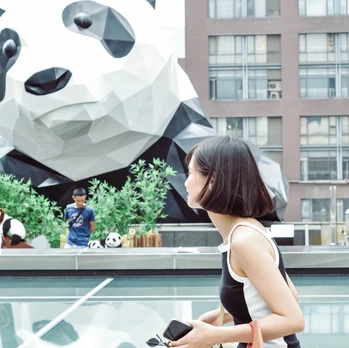
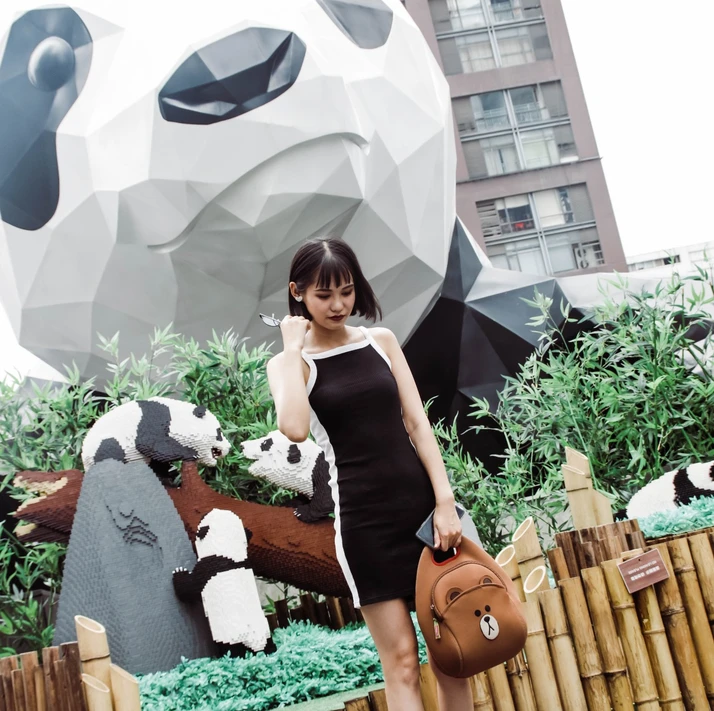
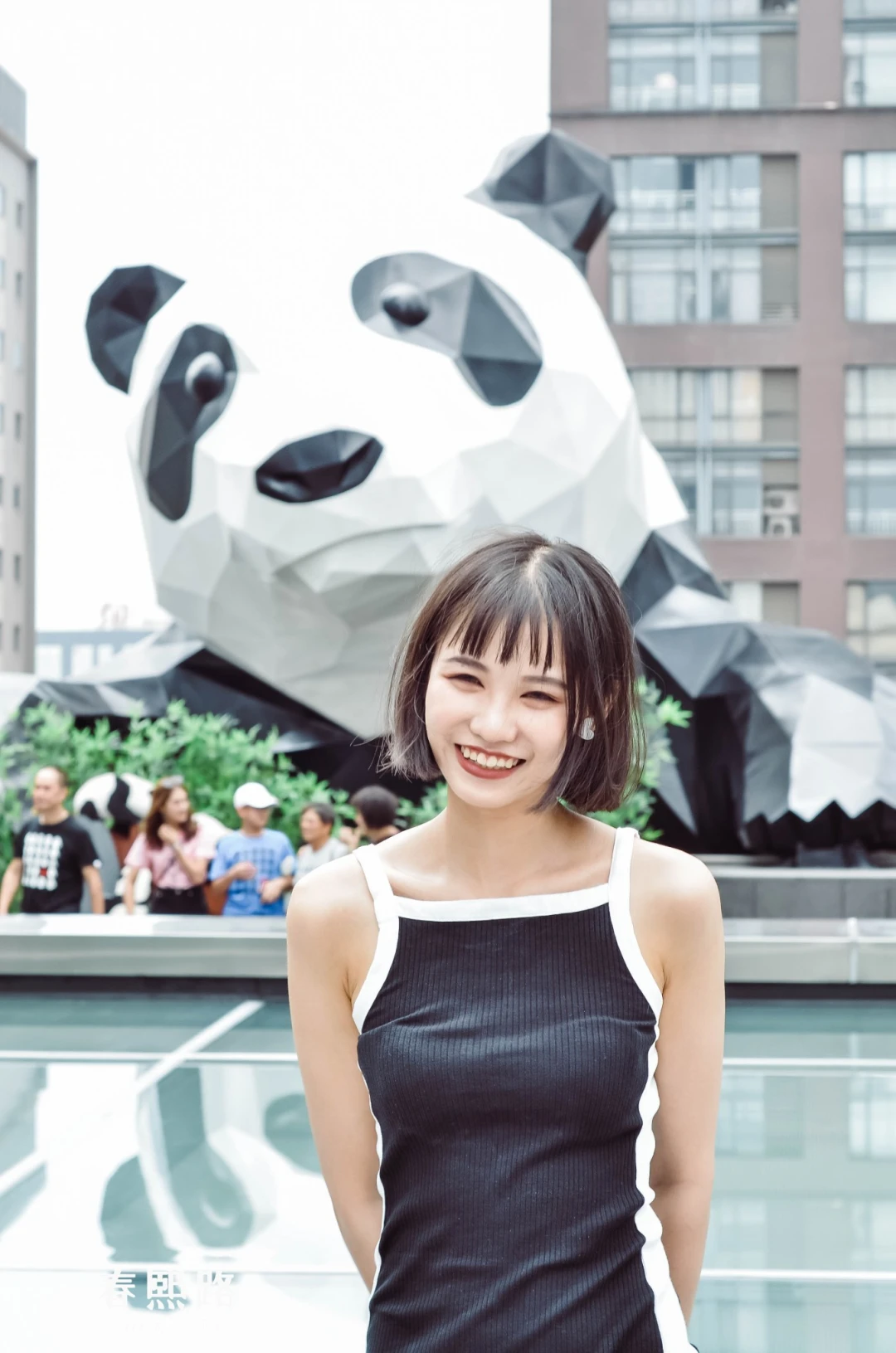
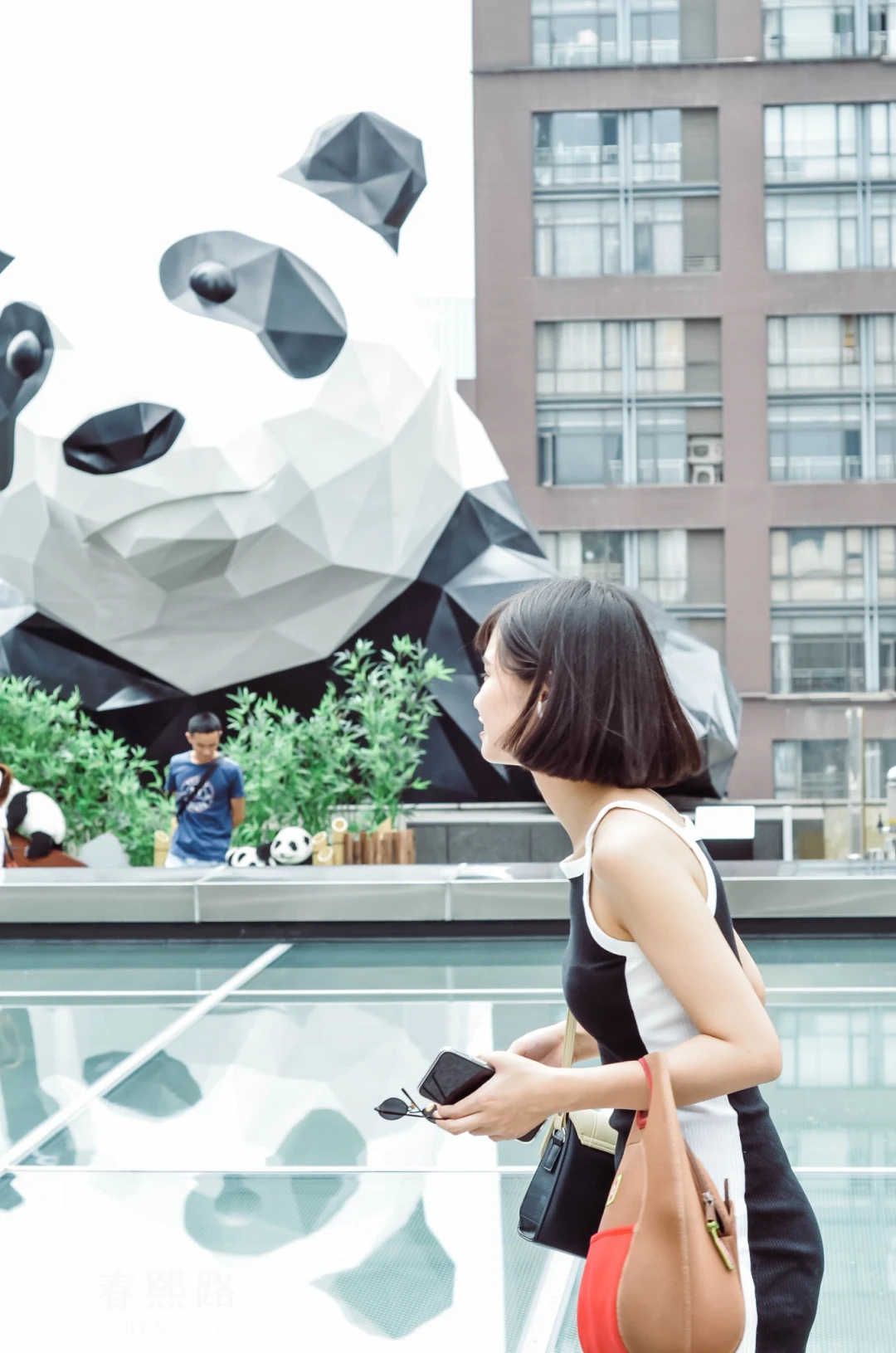
Our first stop started at the famous "climbing panda" on the rooftop of IFS in Chunxi Road. Honestly, I didn't expect it to be so popular that people had to queue for photos. This giant panda, composed of over 3,000 triangular components, was created by artist Lawrence Argent and titled "I Am Here." It's more than just an internet-famous photo spot—it's a gentle reminder: in an era where commercial waves sweep everything, don't forget the precious creatures that share our planet.
Leaving IFS, Hat led me into Sino-Ocean Taikoo Li. My first impression? It doesn't feel like a shopping mall—it's more like a modern garden without walls. Green-tiled sloping roofs interlace with glass curtain walls; the architectural lines of Western Sichuan style blend with the metallic textures of the post-industrial age. The bell of Daci Temple (Great Compassion Temple) rings just a few steps away. Can you imagine? On one side, the morning bells and evening drums of a thousand-year-old temple; on the other, the glittering shop windows of GUCCI and LV. Two completely different eras shake hands and make peace here.
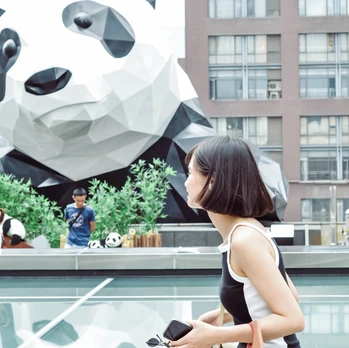
Walking along the stone-paved paths of Taikoo Li, I discovered many interesting details: the giant Brown Bear in front of LINE FRIENDS, always surrounded by tourists taking group photos; the rattan chair sculptures across the way, standing among the bamboo groves as if saying, "Come, sit down, and have some tea"; by the central music fountain, children frolicked and ran, and the moment the water splashed, even the air felt sweet.
What touched me most was that every design here tells a story: old street culture, temple culture, trendy culture, international art exhibitions—they don't exist in isolation. They're like the various ingredients in a Chengdu hotpot—each beautiful in its own way, and together, they create a shared beauty.
[Link: Chengdu shopping guide – top malls and boutiques]
East Meets West: Ping'an Bridge Catholic Church – A Taoist Temple Outside, a Church Inside
Address: No. 29 Ping'anqiao Street, Qingyang District, Chengdu
Transportation: Metro Line 1 or Line 4 to Luomashi Station, Exit D
If your impression of churches is limited to European Gothic spires and stained glass windows, then Ping'an Bridge Catholic Church will completely颠覆 your perception.
Located in the northwest corner of Tianfu Square, this church has a quaint and elegant exterior—grey bricks, black tiles, flying eaves, and upturned corners. At first glance, it looks more like a Taoist temple. If it weren't for the sign at the entrance reading "Jesus Welcomes You," I would have almost thought I was in the wrong place. This "Taoist temple outside, church inside" hybrid style is a vivid portrayal of Chengdu's inclusivity—when Western religion entered China, it wasn't a rigid transplant but a seamless integration with local architectural culture.
Stepping inside, the vast space opens up dramatically. Crystal chandeliers, European-style carvings, and a statue of Jesus engage in a fascinating dialogue with Chinese-style wooden beams, pillars, and carved window lattices. At noon, I thought there wouldn't be a mass, but I saw several elderly people holding crosses, kneeling on the prayer benches in devout prayer. At that moment, I quietly put away my camera, not daring to disturb that peace.
The church's backyard also has a group of Byzantine-style buildings, with time leaving mottled marks on the walls. I heard from a passing resident that this is the largest Catholic church in Southwest China, and all church culture spreads outward from here. I suddenly understood that Chengdu's inclusivity is not just a posture, but a quality ingrained in its bones—it embraces everything without losing its own essence.
[Link: Chengdu religious architecture tour – best churches and temples]
Creative Industrial Style: Wuli Creative Factory – From a Cloth Shoe Factory to "Chengmsterdam"
Address: No. 40 Huapaifang Street, Jinniu District, Chengdu
Transportation: Bus to Huapaifang Street Station (Routes 4, 7, 37)
The name "Wuli" (literally "nothing inside") carries a hint of rebelliousness and mystery. Its predecessor was the state-owned Sanjiang Cloth Shoe Factory, and now it has become the first creative factory in western Chengdu. Hat told me that people who come to Wuli are of two types: one is the hipster who drinks coffee during the day, and the other is the "Chengmsterdam" youth who emerge late at night—this playful nickname perfectly captures the richness and inclusivity of Chengdu's nightlife.
Entering through the side door, the mottled walls, exposed pipes, and rusted iron staircases—traces of the industrial era are deliberately preserved, creating an interesting clash with the入驻 creative shops. At the entrance of a downstairs bar, there was a goose sculpture, and I couldn't help but lean in and "kiss" it; in the corner, a claw machine flashed with colorful lights, like childhood dreams sealed in glass cabinets.

Here, you can read a book and drink coffee quietly alone, or gather with a few friends for a drink. Quiet bars, live performances, handicraft workshops, independent bookstores—every lifestyle can find its place here. Wuli is like a miniature Chengdu—it doesn't judge your choices, it just silently provides a stage.
[Link: Chengdu creative industrial parks – top art and culture hubs]
Bustling Crowds: Kuanzhai Alley – The Warmth of Old Streets and the Tranquility of Jing Alley
Address: West of Changshun Street, Qingyang District, Chengdu
Transportation: Metro Line 4 to Kuanzhai Alley Station, or Line 2 to Tonghuimen Station
Kuanzhai Alley is probably one of Chengdu's most "iconic" landmarks. The imitation ancient courtyard houses with grey bricks and black tiles, the layout of Qing Dynasty streets—it is listed alongside Daci Temple and Wenshu Monastery as one of Chengdu's three major historical and cultural preservation districts. But to be honest, when I walked into Kuan Alley and Zhai Alley, I was almost discouraged by the crowds—the popularity here is no less than Nanluoguxiang in Beijing or Tianzifang in Shanghai.
But since I was there, I wanted to experience it fully. Zhai Alley was filled with a dazzling array of food—sugar paintings, sandawang (three-bang rice balls), boboji (skewered chicken in chili oil)... Every single item tempted my taste buds. Hat bought me a sugar painting, and I held it up in front of the landmark sign reading "Kuan" and "Zhai," laughing like a child. A nearby tourist joked, "Beauty is in the eye of the beholder." I rolled my eyes and thought to myself: My beauty doesn't need anyone's definition.

Interestingly, just a wall away from Kuanzhai Alley lies Jing Alley—a quieter, more serene path. Here, you can find traditional teahouses, calligraphy shops, and even a small museum dedicated to Chengdu's history. It's the perfect escape from the hustle and bustle, offering a glimpse into the city's soul.
[Link: Chengdu historical streets – best preserved neighborhoods to explore]
FAQ: Your Chengdu Cultural Travel Questions Answered
1. What is the best time to visit Chengdu for cultural exploration?
 Answer: Late August to early October is ideal. Summer heat fades, and autumn brings pleasant weather for walking. Avoid Chinese public holidays (especially National Day in October) to escape crowds.
2. How many days are enough to explore Chengdu's cultural diversity?
 Answer: A minimum of 2–3 days is recommended for a focused cultural tour. For a more relaxed experience, extend to 4–5 days to include day trips to nearby attractions like the Giant Panda Breeding Research Base or Leshan Giant Buddha.
3. Is Chengdu suitable for solo female travelers?
 Answer: Absolutely! Chengdu is one of China's safest cities for solo female travelers. Public transportation is reliable, English signage is common in tourist areas, and locals are generally friendly and helpful. Always stay aware of your surroundings, especially at night.
4. What are the must-try local foods in Chengdu?
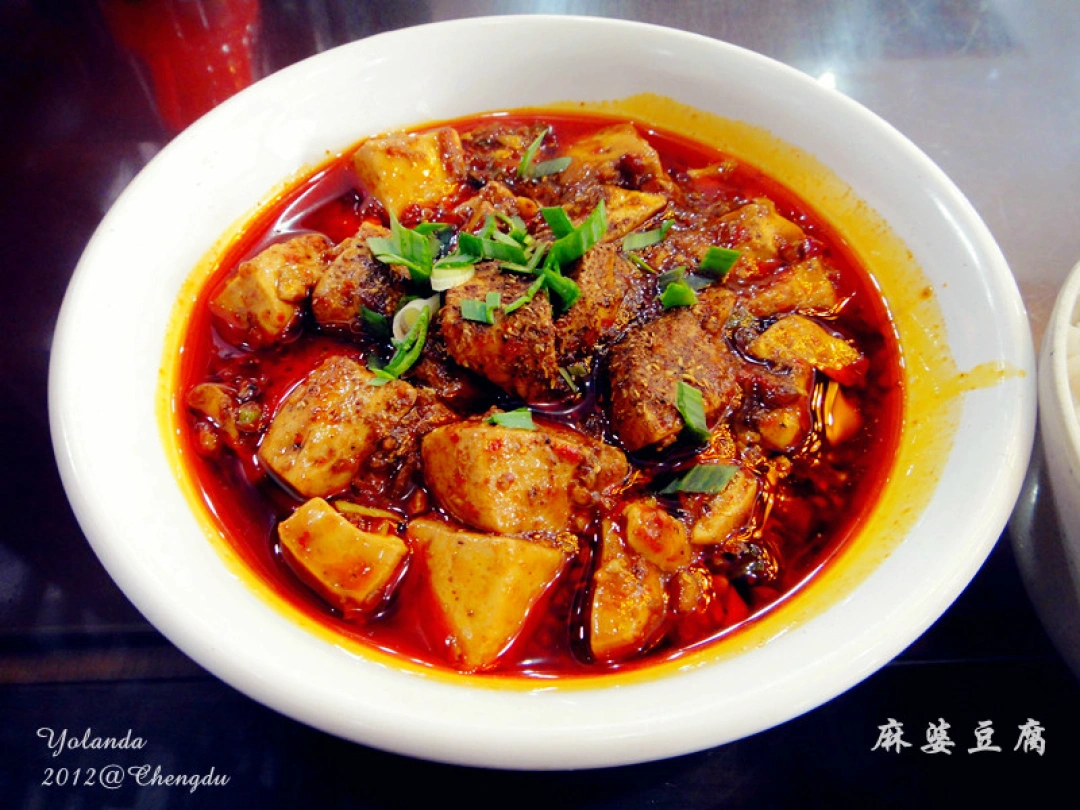
 Answer: Don't miss mapo tofu, kung pao chicken, dan dan noodles, hotpot, and boboji (skewered chicken in chili oil). For a sweet treat, try sugar paintings and sandawang (three-bang rice balls) at Kuanzhai Alley.
5. Can I visit all six landmarks in two days?
Answer: Yes, but plan carefully. Start early (around 8 AM) and use metro and buses to minimize travel time. Prioritize Taikoo Li, Ping'an Bridge Church, and Wuli Creative Factory on Day 1, and Kuanzhai Alley, Daci Temple, and IFS on Day 2. Allow 2–3 hours per landmark.
Conclusion: Your Cool Girl's Summer Awaits in Chengdu
Chengdu isn't just a city—it's a living museum of cultural fusion. From the ancient-modern harmony of Taikoo Li to the East-West dialogue of Ping'an Bridge Church, from the industrial creativity of Wuli to the bustling warmth of Kuanzhai Alley, every corner tells a story of inclusivity and diversity.
This summer, pack your curiosity and your camera. Step off the beaten path. Let Chengdu surprise you—not with its stereotypes, but with its soul.
Ready to plan your Chengdu adventure?
👉 Book your Chengdu cultural tour today and unlock exclusive experiences: private guides, skip-the-line tickets, and hidden gems curated by locals.
Share your own Chengdu story with us! Tag us on Instagram @ChengduCultureExplorer with #CoolGirlsSummerChengdu for a chance to be featured.
Your next journey begins in Chengdu. See you there. 🐼✨