2026 Winter Break Trip to Chengdu, Leshan & Jiuzhaigou: A Healing Journey for a Hardworking Teen
Meta Description: Discover the ultimate 2026 winter break itinerary for Chengdu, Leshan, and Jiuzhaigou. From Sanxingdui's alien-like relics to panda encounters and snowy peaks, this family-friendly guide includes budget tips, ticket booking hacks, and a complete 6-day plan.
When the final exam bell rang, our high school freshman daughter—who had clawed her way from the bottom 20% to the top of her class—finally dropped her backpack and raced toward the city she had been dreaming of: Chengdu. This wasn't just a vacation. It was a family ritual: reward hard work with breathtaking scenery and measure the world with our own footsteps.
After five grueling months, the spark of confidence had returned to her eyes. As parents, the best thing we could do was take her to see the distant horizons she longed for. Here is our complete 2026 winter break trip to Chengdu, Leshan, and Jiuzhaigou—a healing journey designed for families with hardworking teens.
Trip Overview: Budget, Transportation & Accommodation at a Glance
The Crew: One high-achieving high school freshman + two dedicated "logistics ministers" (Mom and Dad)
Transportation: - Flights: Shanghai Pudong ⇄ Chengdu Shuangliu – ¥3,879 for three - Rental Car: AITO M7, two days ¥390 (plus ¥494 for parking, charging, gas, and tolls) - High-Speed Rail: Jiuzhaigou round-trip – ¥899 for three; scenic area buses + taxis ¥560
Accommodation (from budget to comfort): | Hotel | Room Type | Price | Highlight | |-------|-----------|-------|-----------| | Hanglvzhijia Hotel (Shuangliu Airport) | Triple | ¥139 | Perfect transit night, incredible value | | Hejiangting Hanwen Hotel (Taikoo Li) | Twin | ¥298 | Peaceful yet central for evening strolls | | Rushichaowa Hotel (Tianfu Square) | Twin + 3 breakfasts | ¥220 | Prime location | | Lotus Leaf Guesthouse (Jiuzhaigou) | Twin + 3 breakfasts | ¥380 | Steps from scenic area entrance | | Rongyue Xinhao Hotel | Twin + 3 breakfasts | ¥218 | Cozy wrap-up for the last night |
Quick 6-Day Itinerary: - Day 1 (1/23): Shanghai → Chengdu (delayed flight, landed after midnight) - Day 2 (1/24): Sanxingdui → Zhongshuge Bookstore → Panda Valley → Dujiangyan → Chunxi Road night tour - Day 3 (1/25): Mount Emei Golden Summit → Leshan Giant Buddha boat tour - Day 4 (1/26): Kuanzhai Alley → People's Park → Tianfu Square → Huanglong → Jiuzhaigou - Day 5 (1/27): Jiuzhaigou full day → Chengdu SKP Tower of Life → Financial City Twin Towers - Day 6 (1/28): Jinli Ancient Street → Wuhou Shrine → Chengdu Museum → Yulin Road city walk
Ticket Booking and Reservations: Pitfalls We Already Stepped In for You
Sanxingdui Tickets
- Where: Mini-program, 7 days in advance
- Cost: ¥180 for three
- Pro tip: Add the "Echoes of Heaven and Earth" movie ticket. During peak season, buy a guided tour package on Ctrip. If you snag your own tickets, arrive early and join the official guided tour at the site—¥40/person for 90 minutes of solid content.
Panda Valley Tickets
- Where: Mini-program, 7 days in advance
- Cost: ¥137 for three
- Pro tip: Arrive before 8 AM to see active pandas. By noon, they're napping.
Dujiangyan Tickets
- Where: On-site purchase
- Cost: ¥15/person for Shanghai ID holders (thanks to post-Wenchuan earthquake aid program)
- Pro tip: Join the official guided tour—¥50/person, minimum 8 people. Worth every yuan.
Mount Emei Tickets
- Where: Ctrip
- Cost: ¥890 for three (scenic area bus + cable car round trip to Golden Summit)
- Pro tip: Drive to Zero Kilometer parking lot, then take the bus + cable car. Official guided tour ¥200—honestly, not great value.
Leshan Giant Buddha Tickets
 - Where: Ctrip (same-day purchase available) - Cost: ¥200 for three - Pro tip: Book the boat tour (last departure 5:00 PM). No need for the sightseeing bus. Official guided tour ¥100.
Huanglong Tickets
- Where: Ctrip (book in advance)
- Cost: ¥435 for three (ticket + uphill cable car + uphill scenic transport)
Jiuzhaigou Tickets
- Where: Ctrip (book in advance)
- Cost: ¥440 for three
Wuhou Shrine Tickets
- Where: Ctrip
- Cost: ¥125 for three; guided tour ¥68.4 for 1.5 hours
Chengdu Museum Tickets
- Where: Mini-program (reserve 14 days in advance)
- Cost: Free entry; guided tour ¥40/person for 70 minutes
Day 1: Sanxingdui – Brushing Shoulders with an Alien Civilization?
Our flight was delayed by nearly an hour, but vacation moods come with a built-in filter. We landed at 12:40 AM at Shuangliu, picked up our AITO M7—a massive vehicle like a mobile castle, comfortable but with only cruise control and a small battery. When the battery ran low, we found a charging station 100 meters from the hotel, with one empty spot waiting. Electricity was cheap, but parking fees were eye-watering.
The hotel was tucked in a narrow alley, looking like a horror movie set from outside. But inside: clean rooms, wide firm beds, deep sleep. A ¥139 triple room for a transit night? Perfect score.
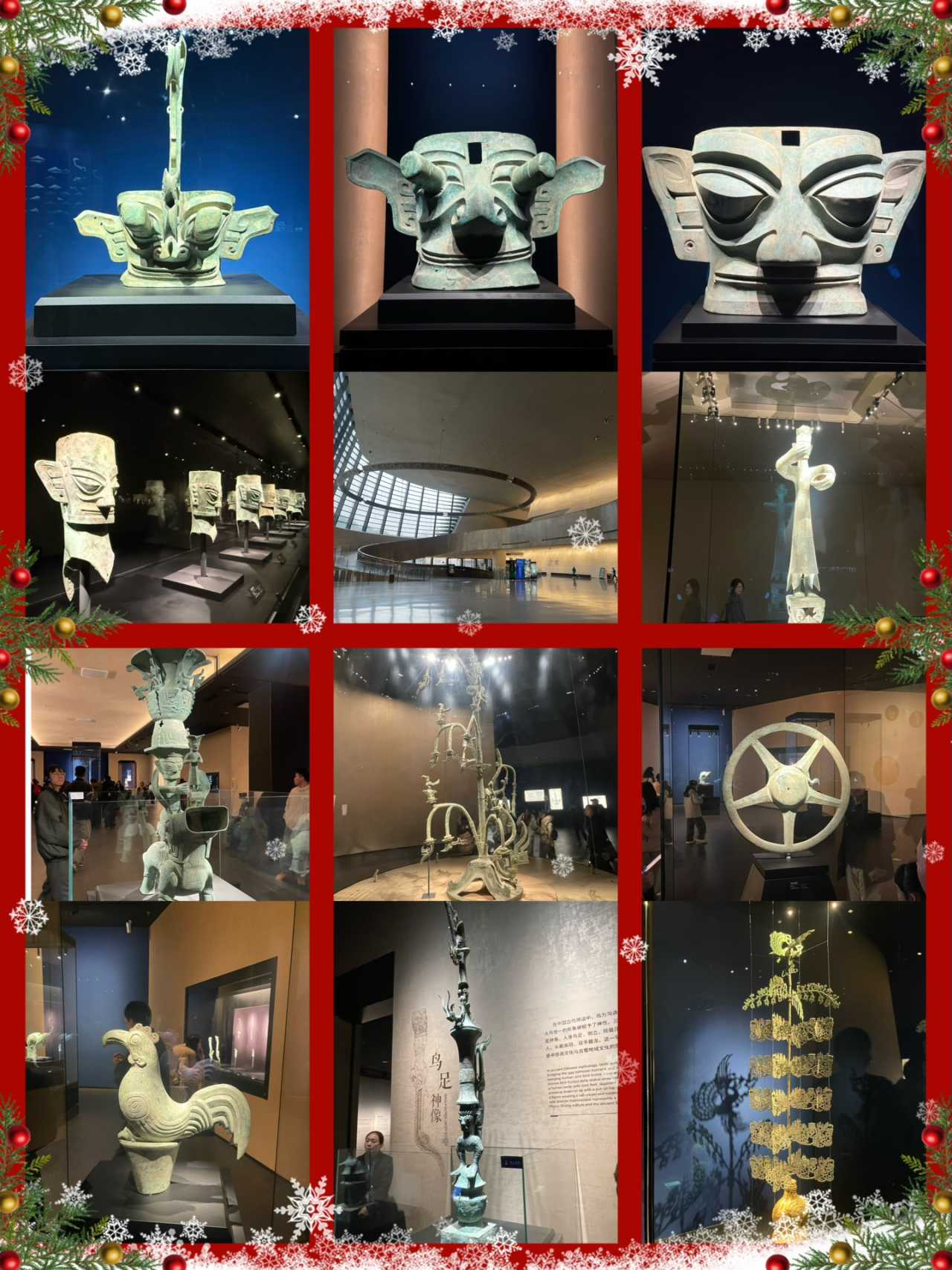
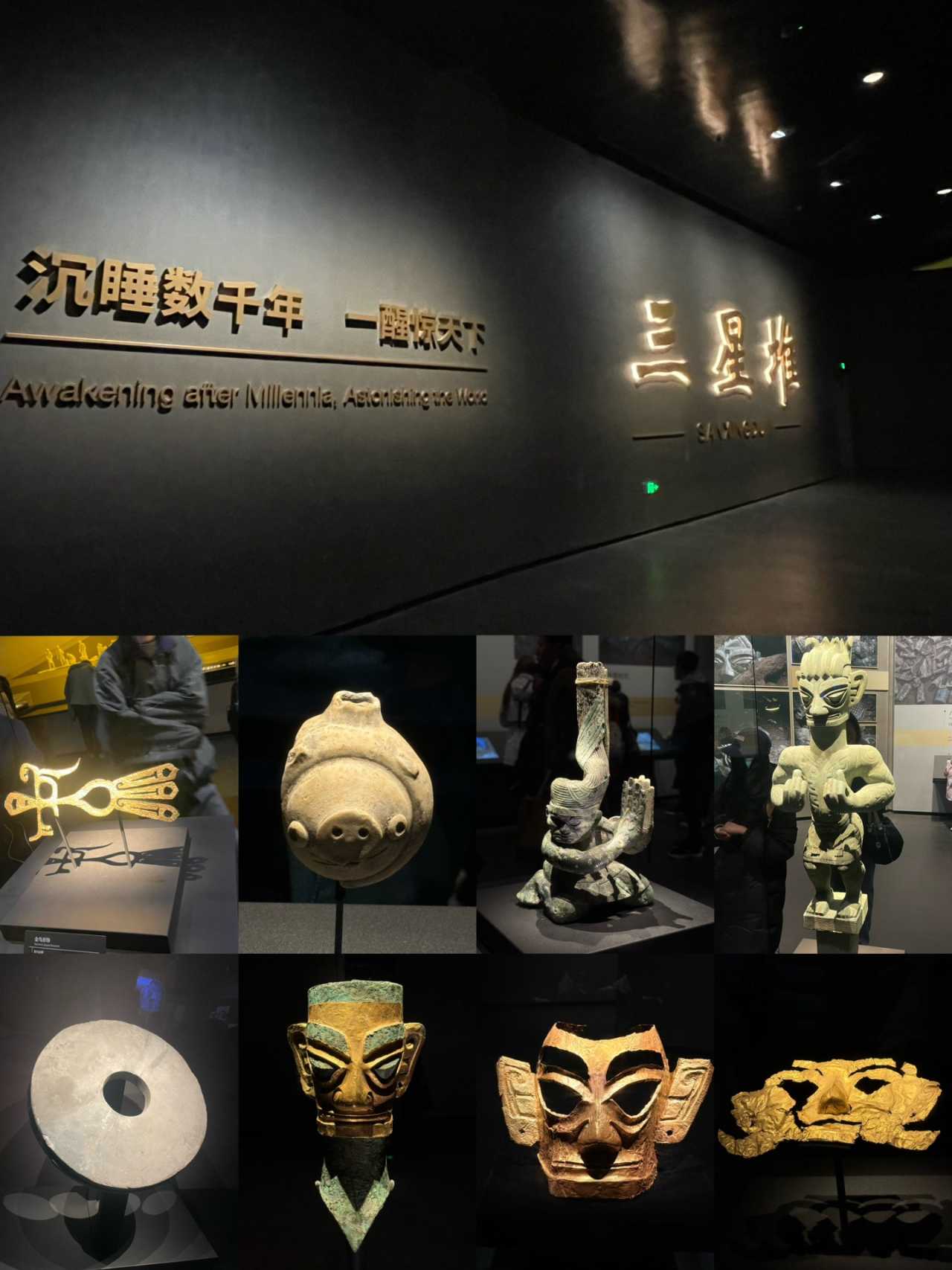
Sanxingdui Museum: Sleeping for Thousands of Years, Waking to Startle the World
At 7 AM, we grabbed noodles and wontons from a street stall (average taste). Hit the road at 7:30 sharp, arrived at Sanxingdui after an hour. We were among the first visitors. As we parked and sprinted in, someone shouted, "Need three more to form a group!" We raised our hands immediately. Joined the group chat, paid, the guide grabbed a number—we started in 10 minutes. Luck so good I wanted to applaud myself.
The History: Sanxingdui's story begins in 1927 when farmer Yan Daocheng struck a pit of jade artifacts while digging an irrigation ditch. In 1934, David Crockett Graham conducted the first scientific excavation—but it lasted only 10 days due to war. In 1986, two large Shang Dynasty sacrificial pits yielded thousands of bronze, gold, and jade objects, catapulting Sanxingdui to global fame. From 2020 onward, six newly discovered pits have opened a new chapter. It's said that only two-thousandths of the site has been excavated.

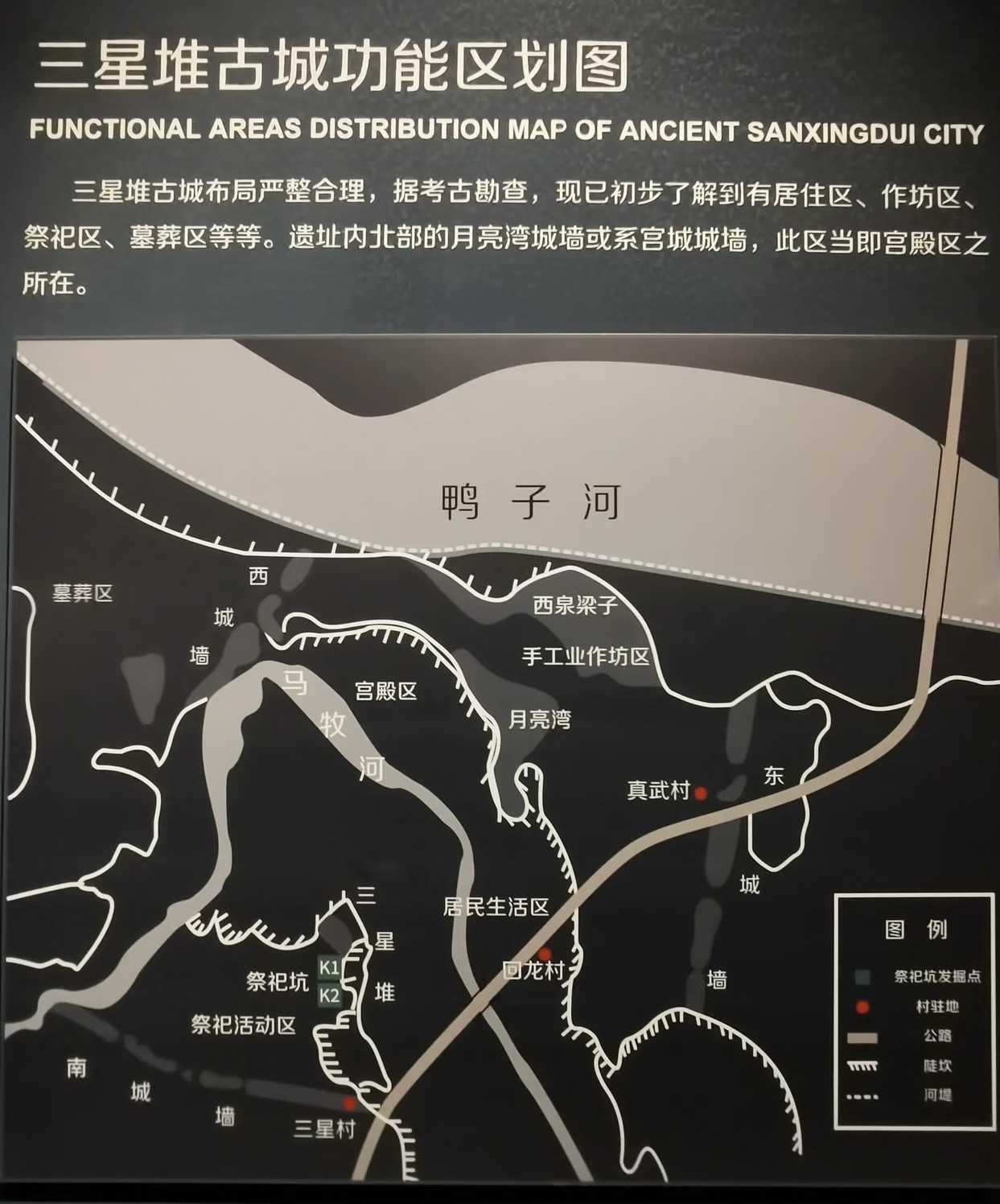
Why It's Called "Sanxingdui": The name comes from the landscape—three connected earthen mounds on the south bank (like three stars) and a crescent-shaped terrace on the north bank called "Moon Bay." Separated by the Muma River, they form a "Three Stars Accompanying the Moon" scene.
Ancient Urban Planning: The ancient Shu people built a main city of 3.6 square kilometers—palace district on top, residential areas in the middle, sacrificial areas below, burial grounds on the left, artisan workshops on the right. Surrounding it all was a trapezoidal rammed-earth wall, 40 meters wide at the base, designed to repel both enemies and floods.
"Liaoji" (Burning Sacrifice): This ancient ritual involved burning, smashing, and burying offerings to communicate with heaven, earth, and spirits. Small items went at the bottom, bronze vessels and masks in the middle, elephant tusks on top. Why such grand ceremonies? Theories include mountain worship, disaster relief, "farewell rituals," or acts of "channeling the divine."
Modern Archaeology: Excavation techniques have evolved from traditional trench methods to modern "cabin archaeology" to protect fragile artifacts.
Day 2: Pandas, Dujiangyan & Chunxi Road Nightlife
Panda Valley: Before 8 AM or Bust
We arrived at Panda Valley by 7:30 AM. The pandas were active—munching bamboo, rolling around, climbing trees. By 10 AM, they were napping in the shade. Key lesson: If you want energetic pandas, you must arrive before 8 AM. [Link: Best time to visit Panda Valley]
Dujiangyan: Ancient Engineering Marvel
The Dujiangyan irrigation system, built in 256 BC, still works today. With our Shanghai ID cards, we paid just ¥15/person. The official guided tour (¥50/person, minimum 8 people) explained how the fish-mouth levee splits the Min River—a masterpiece of ancient hydrology.
Chunxi Road Night Tour
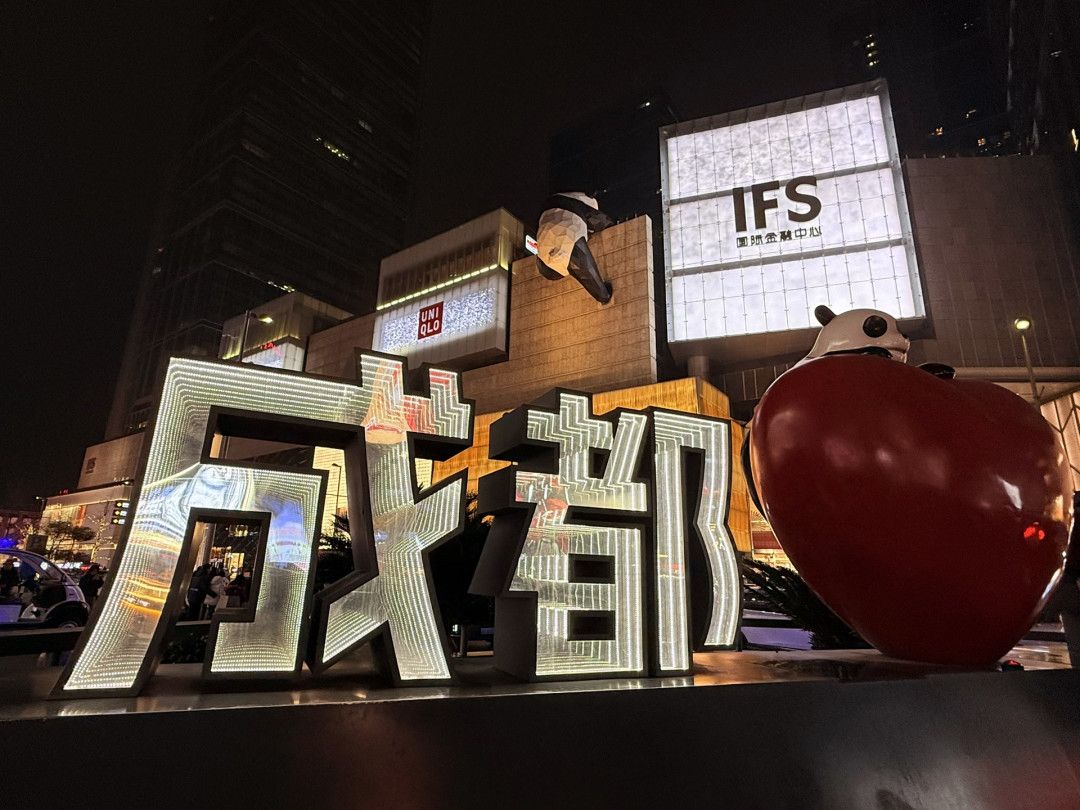
After a full day of history, we strolled Chunxi Road—Chengdu's answer to Times Square. Neon lights, street food stalls selling spicy skewers, and a giant panda sculpture climbing a building. Our daughter's face lit up. This was the reward she had earned.
Day 3: Mount Emei Golden Summit & Leshan Giant Buddha
Mount Emei Golden Summit
We drove to Zero Kilometer parking lot, then took the scenic area bus + cable car to Golden Summit (3,079 meters). The cable car ride offered stunning views of snow-capped peaks. At the summit, the golden statue of Samantabhadra Bodhisattva glowed against the blue sky. [Link: Mount Emei winter travel guide]
Cost: ¥890 for three (bus + cable car round trip). The official guided tour (¥200) was not great value—we recommend renting an audio guide instead.
Leshan Giant Buddha Boat Tour
The boat tour is the best way to see the 71-meter-tall Buddha carved into the cliff. Last departure at 5:00 PM. From the water, you see the entire statue—its serene expression, the massive ears, the hands resting on knees. Pro tip: No need for the sightseeing bus; walk from the entrance to the boat dock in 10 minutes.
Day 4: Huanglong to Jiuzhaigou – Snowy Fairyland
Huanglong Scenic Area
We booked tickets + uphill cable car + uphill scenic transport on Ctrip (¥435 for three). The travertine pools, layered like golden terraces against the snow, were breathtaking. The altitude (3,100-3,600 meters) made walking challenging—take it slow and bring oxygen cans. [Link: Huanglong winter travel tips]
Jiuzhaigou Arrival
After Huanglong, we took the high-speed rail to Jiuzhaigou. The Lotus Leaf Guesthouse (¥380 with breakfast) was a 5-minute walk from the scenic area entrance—perfect for an early start.
Day 5: Jiuzhaigou Full Day – A Fairy Tale in Winter
Jiuzhaigou in winter is a wonderland. The frozen waterfalls, snow-dusted forests, and turquoise lakes (Nuorilang, Five Flower Lake, Long Lake) looked like scenes from a fantasy film. We spent the entire day exploring, taking the scenic bus between stops.
Cost: ¥440 for three (tickets). The scenic bus is included—use it strategically to cover the 50-kilometer-long valley.
Evening: We returned to Chengdu via high-speed rail and visited SKP's Tower of Life and the Financial City Twin Towers—modern Chengdu's glittering skyline.
Day 6: Jinli, Wuhou Shrine & Chengdu Museum
Jinli Ancient Street
A pedestrian street lined with traditional Sichuan architecture, selling everything from silk fans to spicy tofu. Perfect for last-minute souvenirs.
Wuhou Shrine
Dedicated to Zhuge Liang, the legendary strategist of the Three Kingdoms. The guided tour (¥68.4 for three, 1.5 hours) brought the history to life. [Link: Wuhou Shrine guided tour review]
Chengdu Museum
Reserve 14 days in advance on the mini-program. The guided tour (¥40/person, 70 minutes) covers 4,500 years of Chengdu history, from the ancient Shu kingdom to modern times.
Yulin Road City Walk
We ended our trip with a walk through Yulin Road—Chengdu's hipster district, known for street art, boutique cafes, and the famous "Chengdu" song mural.
FAQ: Planning Your Chengdu, Leshan & Jiuzhaigou Winter Trip
1. Is winter a good time to visit Jiuzhaigou?
 Yes. Winter offers fewer crowds, lower prices, and stunning snow-covered landscapes. Some high-altitude trails may close, but the main sights (Nuorilang Falls, Five Flower Lake) are accessible. Temperatures range from -5°C to 5°C—pack thermal layers.
2. How many days do I need for Chengdu, Leshan, and Jiuzhaigou?
6-7 days is ideal. Spend 2 days in Chengdu (including Sanxingdui and pandas), 1 day for Mount Emei + Leshan, 1 day for Huanglong, 1 day for Jiuzhaigou, and 1 day for final sightseeing in Chengdu.
3. What's the best way to get around?
Rental car for Chengdu and surrounding areas (Sanxingdui, Dujiangyan, Panda Valley). High-speed rail for the Jiuzhaigou leg (saves time and avoids mountain driving). Boat tour for Leshan Giant Buddha.
4. How do I get Sanxingdui tickets?
Book 7 days in advance on the official mini-program. During peak season, buy a guided tour package on Ctrip to guarantee entry. Arrive before 8:30 AM to join an on-site guided tour (¥40/person).
5. What should I pack for a winter trip to these destinations?
- Thermal base layers, fleece jacket, waterproof outer shell
- Warm hat, gloves, scarf
- Comfortable hiking boots (snow traction helpful)
- Sunscreen and sunglasses (snow reflection is intense)
- Portable charger (cold drains phone batteries)
- Oxygen cans for Huanglong (available at local pharmacies)
Your Turn: Plan Your Healing Journey
This trip wasn't just about sightseeing—it was about celebrating resilience. Our daughter worked tirelessly to climb from the bottom 20% to the top of her class. The reward? Standing at the Golden Summit, watching pandas play, and marveling at ancient civilizations.
Ready to plan your own family adventure? Start by booking your flights and high-speed rail tickets early—winter is peak season for Jiuzhaigou. Use this itinerary as your blueprint, but adjust based on your family's pace. Remember: the best memories come from shared experiences, not perfect schedules.
Bookmark this guide. Share it with fellow parents. And when you return, tell us about your own healing journey.
Safe travels, and may your family find the same spark of wonder we did.


