1.5 Hours from Chengdu: Baofan Temple – Sichuan's Hidden "Dunhuang" of Ming Dynasty Murals
Meta Description: Discover Baofan Temple, a 1,000-year-old mountain sanctuary 90 minutes from Chengdu. Home to 500-year-old Ming Dynasty murals often called "Sichuan's Dunhuang," this hidden gem rivals the famed grottoes in artistic splendor.
Introduction: The Date I Kept Postponing – and Why You Shouldn't
There are places you know exist, yet you keep putting off visiting. Like someone you've been meaning to meet, but always think, "I'll go next time." For me, that place was Baofan Temple in Pengxi County, Sichuan.
My obsession began with a single photograph. In that image was a section of the Earth Treasury Preaching Sutra mural – the Earth Treasury Bodhisattva, with gentle eyes and brows, expounding Buddhist teachings. But what truly moved me was an inconspicuous detail at the bottom: an arhat, head tilted, biting off a thread with his teeth, as if he had just finished mending his robe. His lively expression made it feel like any second he would look up and wink at you.
From that moment, I was determined to see it in person. But that "someday" stretched into over half a year. It's only a 90-minute drive from Chengdu, yet I found a hundred excuses: bad weather, too much work, weekends too short.
This long-overdue date finally happened on a spring day. Here's why you should make it yours – sooner rather than later.
Baofan Temple History: From "Arhat Courtyard" to Imperial Recognition
Northern Song Dynasty Origins

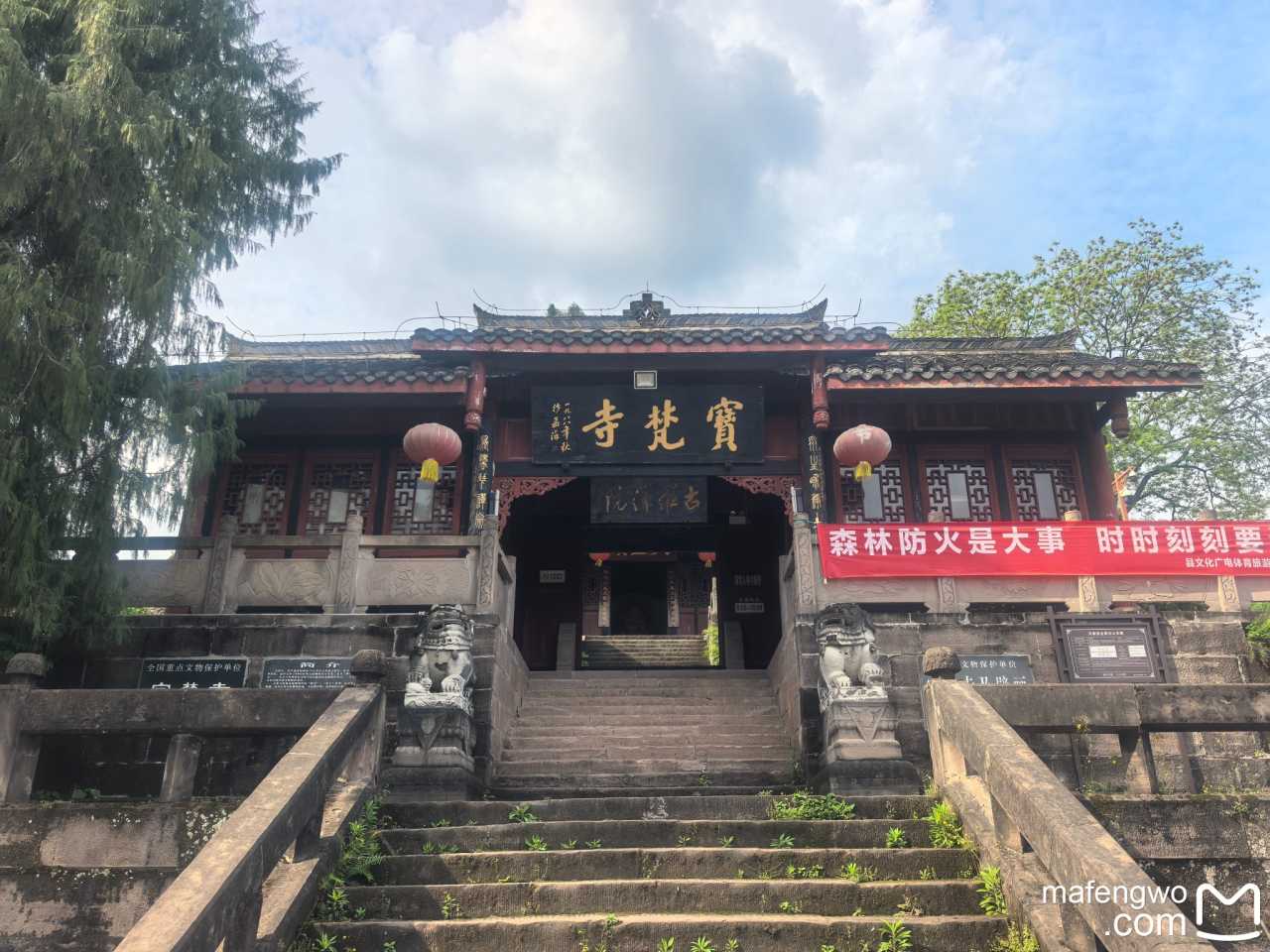
The car left Chengdu, heading south past rapeseed flower fields lining the highway. We turned onto an unassuming mountain path, and there, nestled quietly on the mid-slope of Lion Mountain, stood Baofan Temple.
The temple's history dates back to the Northern Song Dynasty (960–1127 CE). Originally called "Arhat Courtyard," it was modest in scale and attracted few worshippers. It wasn't until the first year of Emperor Yingzong's reign (1064 CE) that the emperor himself bestowed the name "Baofan," meaning "Sacred Among Buddhas, Treasure Among梵 (Sanskrit)," that the temple truly gained its reputation.
Ming Dynasty Reconstruction
But good times didn't last. The wars at the end of the Song and beginning of the Yuan Dynasty swept through, reducing the temple to rubble. It wasn't until the first year of the Jingtai era of the Ming Dynasty (1450 CE) that the eminent monks Haizhou and Qingcheng led a reconstruction, creating the layout we see today.
Architectural Layout
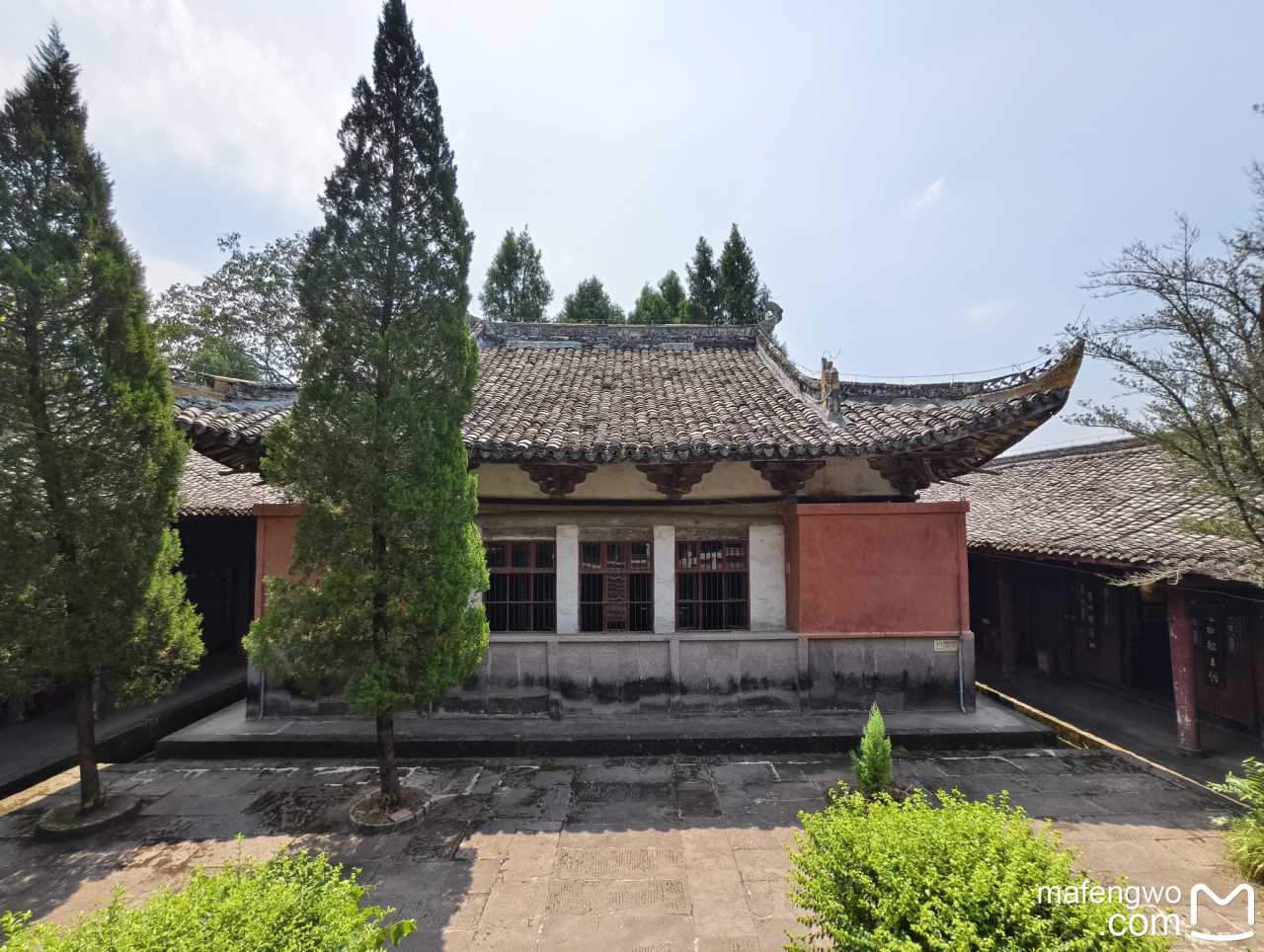
Stepping through the mountain gate, you notice Baofan Temple's orderly design – south-facing, built into the hillside, with a three-courtyard, four-sided compound layout. The central axis runs through the Heavenly King Hall, the Great Hero Hall, and the Guanyin Hall.
The most striking structure is the Ming Dynasty wooden Great Hero Hall. With its square, solid form and single-eave hip-and-gable roof, ancient architecture experts praise it as "finely designed, strictly structured, beautifully shaped, and firmly founded."
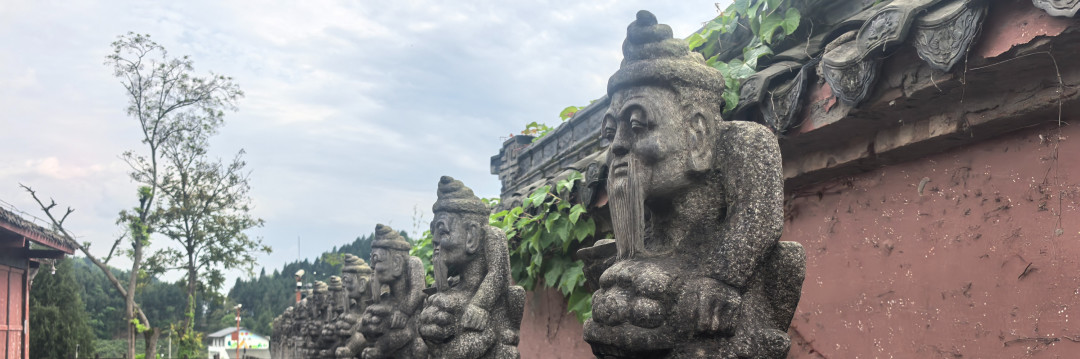
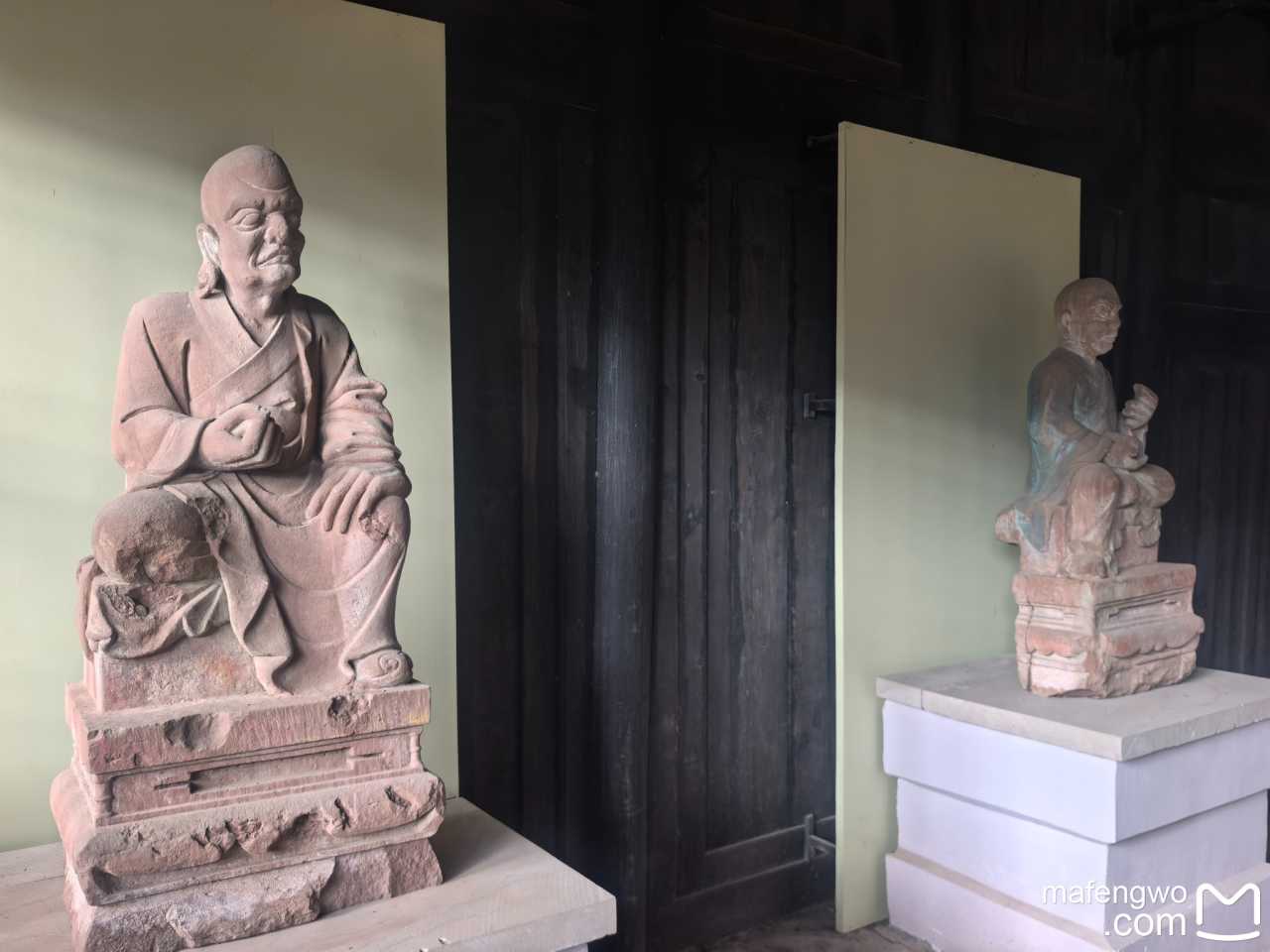
In the side halls, I first saw the Ming Dynasty stone carvings of the Eighteen Arhats. When I came out, I ran into the site caretaker. Warmly, he told me the Great Hero Hall is usually locked, and to see the murals I'd need to buy a ticket and register. If I couldn't find him, just walk to the right inner room and call out – this simple, honest hospitality immediately put me at ease.
Sichuan's Dunhuang: 500-Year-Old Ming Dynasty Murals

Pushing open the wooden door of the Great Hero Hall, the light dimmed. I stood on the threshold, waiting for my eyes to adjust before taking in the scene inside.
On all four walls are murals titled The Western Realm (also known as The Arhat Scrolls), painted in the second year of the Chenghua era of the Ming Dynasty (1466 CE). Monks like Qingcheng and Jingyuan commissioned painters to create 12 panels of murals within the Great Hero Hall, along with 24 Buddha images painted in the architraves above. Today, only 10 panels remain. One missing panel is the opening scroll, destroyed by later generations; another is the closing scroll, legend says it was "discarded by an immortal."
Artistic Style and Historical Significance
These murals draw inspiration from Buddhist scriptures translated by the Tang Dynasty monk Xuanzang, such as The Great Arhat Nandimitra's Discourse on the Duration of the Dharma. They depict the story of various arhats and celestial beings gathering for a Buddhist assembly.
The painters used meticulous brushwork, rich colors, and techniques like gilded relief, with a style reminiscent of the Tang Dynasty's "Sage of Painting," Wu Daozi. Dunhuang expert Duan Wenjie once praised them as "rare national treasures of Chinese painting art." Even a young Zhu De (later a founding leader of the People's Republic of China) once visited and left an eight-character inscription: "Baofan's immortal paintings, fully deserving of praise."
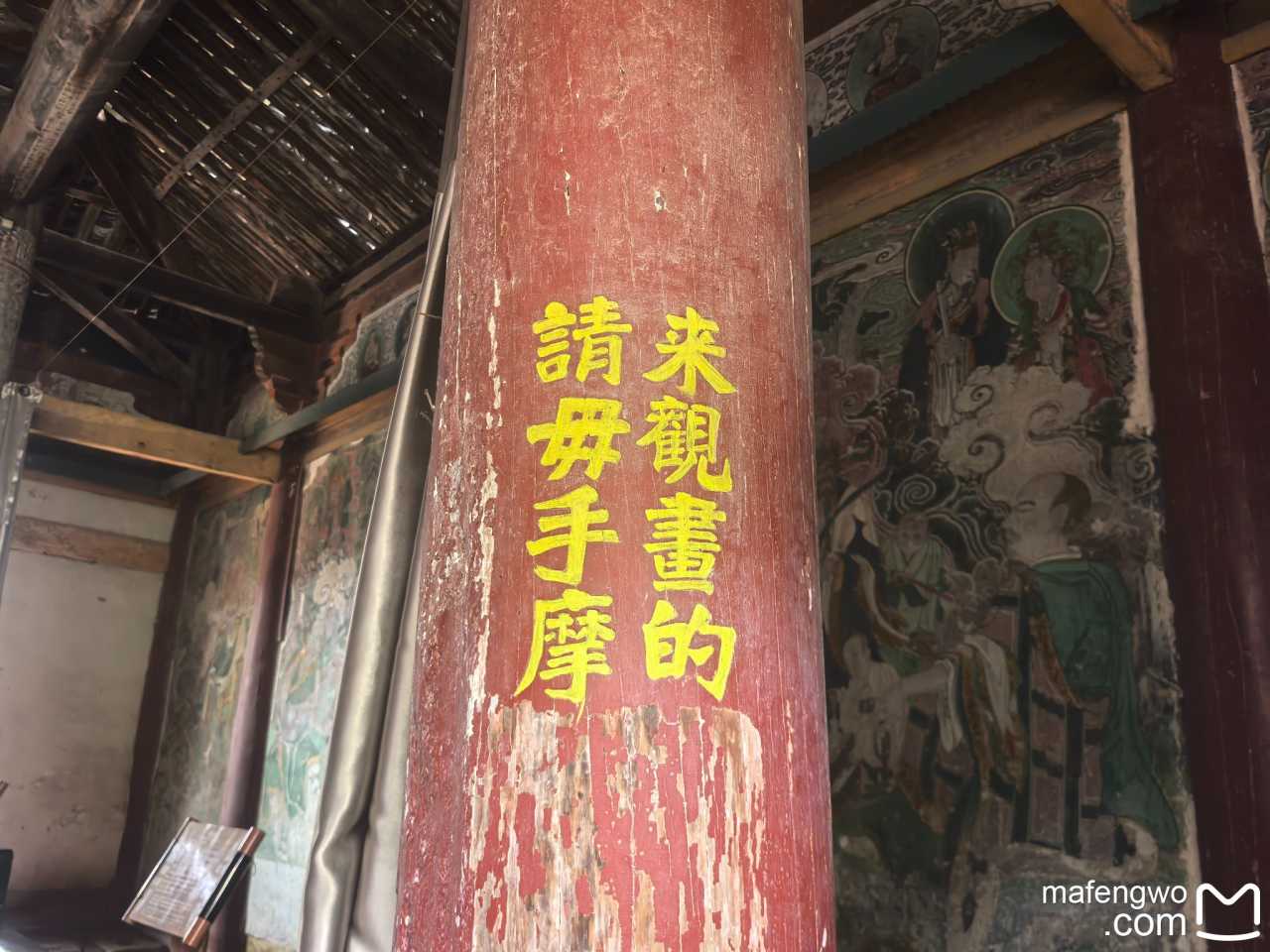
But for me, what touched me most wasn't the experts' accolades, but a simple note next to the murals: "Viewers, please do not touch with hands." Another read: "Those coming to view the paintings, please do not touch." Judging by the Chinese characters, these signs are quite old themselves. For 500 years, generation after generation has stood here, awestruck by these paintings, yet carefully refraining from touching them – this unspoken pact across time felt incredibly warm.
Every Painting Tells a Story: A Detailed Tour

I walked slowly along the hall walls, from east to west, examining each painting one by one. It had been raining in the morning, but by afternoon it cleared. Light filtered through the lattice windows – dim, but after my eyes adjusted, it felt just right.
"Discussing the Buddha Assembly"
Depicts the approaching birthday of the Buddha, with the Sixth Arhat Bhadra and the Tenth Arhat Panthaka discussing offerings for the celebration. Their expressions are focused, as if debating something of cosmic importance.
"Earth Treasury Preaching"
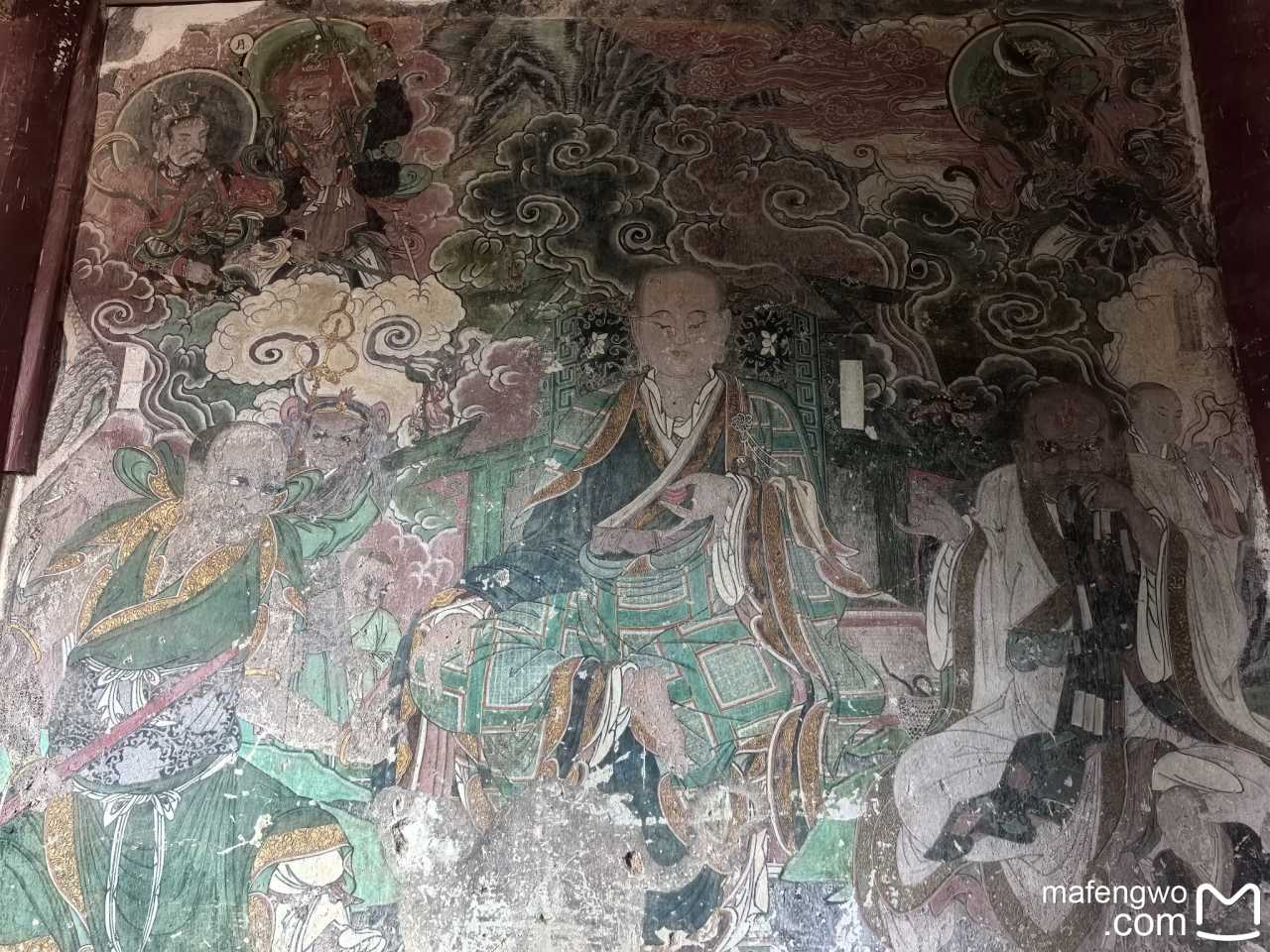
This was the one I most anticipated. The Earth Treasury Bodhisattva holds a wish-fulfilling pearl, expounding the Shurangama Sutra. To his left is the Twelfth Arhat Gaksina; to his right, the Eighth Arhat Vajraputra. The three figures have distinct expressions yet form a harmonious composition.
"Thunder Sound Offering"
 Shows three arhats arriving at Thunder Sound Temple, animatedly discussing the grandeur of the Buddha's longevity. Their gestures and expressions differ – one gesticulates, another smiles – as if truly engaged in an interesting conversation.
"Bodhidharma's Tribute"
Depicts the patriarch Bodhidharma leading a group in respectfully listening to the Tathagata preach. Bodhidharma sits in the center in lotus position, with a solemn demeanor, while disciples around him sit or stand in various poses.
"Cundi's Guidance"
 Shows Amitabha Buddha seated on a lotus throne, holding a jeweled bowl in his right hand and forming a lotus mudra with his left, gesturing to guide and ferry sentient beings.
"Southern Heavenly King's Western Journey"
This is the only mural with a distinctly different style – it depicts the Taoist Northern Dipper Star Lord leading the Thunder Department and attendants on a westward journey to pay homage to the Buddha. Experts have identified this as a Qing Dynasty addition, completely different in style from the Ming originals.
"Long-Browed Arhat Posing Questions"
Shows the Long-Browed Arhat leaning on a bamboo staff, looking aged and querulous as he debates Buddhist lessons with another arhat. His "I must get to the bottom of this" expression is utterly endearing.
"Arhats Listening to Sutras" and "Arhats Listening to Sutras II"
 Both depict arhats respectfully listening to sublime teachings. Some sit sideways, counting prayer beads; others sit upright with chests bared; some concentrate intently on the sermon – each figure's posture is unique.
"Perfect Merit"
Shows the Cloth-Bag Arhat laughing heartily, while all the bodhisattvas, heavenly beings, immortals, and gods chant in unison: "Eternal life without end! Namo Amitabha Buddha!"
These descriptions can only tell you what's depicted. But only standing before the murals can you see the remaining large patches of gold leaf shimmering in the dim light – a testament to the artistry that earned this temple its nickname, "Sichuan's Dunhuang."
How to Visit Baofan Temple: Practical Guide
Getting There from Chengdu
Baofan Temple is located in Pengxi County, Suining City, approximately 1.5 hours by car from Chengdu. The drive takes you through scenic countryside with rapeseed flower fields in spring.

[Link: Chengdu day trips to ancient temples]
Best Time to Visit
- Spring (March-May): Pleasant temperatures, blooming rapeseed flowers
- Autumn (September-November): Clear skies, comfortable weather
- Avoid rainy season (June-August): The mountain road can be slippery
What to Bring
 - Camera (no flash photography inside the hall) - Comfortable walking shoes for the mountain path - Small flashlight – the Great Hero Hall is dimly lit - Cash for tickets and donations
Ticket Information
- The Great Hero Hall requires a separate ticket
- Registration is needed to view the murals
- The caretaker is friendly and helpful – don't hesitate to ask for assistance
Baofan Temple vs. Dunhuang: What Makes It Special?
While Dunhuang's Mogao Caves are world-famous for their Buddhist art, Baofan Temple offers a unique experience:
| Feature | Baofan Temple | Dunhuang Mogao Caves |
|---|---|---|
| Distance from Chengdu | 1.5 hours | 1,500+ km |
| Crowds | Quiet, uncrowded | Often crowded |
| Art Style | Ming Dynasty with Tang influences | Primarily Tang Dynasty |
| Setting | Mountain temple | Desert caves |
| Accessibility | Easy day trip | Multi-day journey |
For travelers based in Chengdu, Baofan Temple offers a taste of world-class Buddhist art without the travel hassle.
Frequently Asked Questions

Q1: Is Baofan Temple really comparable to Dunhuang?
A: While smaller in scale, the artistic quality and historical significance of Baofan Temple's Ming Dynasty murals have earned them the nickname "Sichuan's Dunhuang" from art historians and experts like Duan Wenjie. The gilded relief techniques and meticulous brushwork are truly world-class.
Q2: Can I take photos inside the Great Hero Hall?
 A: Photography is generally allowed, but flash photography is strictly prohibited as it can damage the fragile pigments. The dim lighting actually enhances the viewing experience, allowing your eyes to adjust to the subtle details.
Q3: How long should I spend at Baofan Temple?
A: Plan for 2-3 hours to fully appreciate the murals, explore the temple grounds, and enjoy the peaceful mountain setting. Combined with travel from Chengdu, this makes for a perfect half-day or full-day trip.
Q4: Is the temple accessible for visitors with mobility issues?
A: The temple is built into a hillside, so there are some stairs and uneven paths. The main halls are accessible, but the mountain approach may be challenging for those with serious mobility issues.
Q5: Are there guided tours available?
A: Guided tours are not always available, but the caretaker is knowledgeable and helpful. You can also find information online or hire a private guide from Chengdu.

Why You Should Visit Now – Not "Someday"
As I stood in that dim hall, surrounded by 500-year-old paintings, I realized something important. We always think there's time. "I'll go next month." "After this project." "When the weather is better."
But Baofan Temple taught me that some experiences are too precious to postpone. The murals are fragile. The pigments are fading. The gold leaf is slowly flaking away. One day – perhaps sooner than we think – these treasures may be lost to time.
Don't let "someday" become "never."
Plan Your Visit Today
Baofan Temple is waiting for you – just 90 minutes from Chengdu, hidden on a mountainside in Pengxi. It's a place where art, history, and spirituality converge in a way that few places can match.
Whether you're a history buff, an art lover, a spiritual seeker, or simply someone looking for a meaningful day trip from Chengdu, this ancient mountain temple offers something unforgettable.
[Link: Sichuan off-the-beaten-path destinations] [Link: Buddhist art in China travel guide]
Book your trip this weekend. The murals are waiting.
Have you visited Baofan Temple or another hidden gem near Chengdu? Share your experience in the comments below – and tag someone who needs to see "Sichuan's Dunhuang" before it's too late.
You may also like