15 Days in North India: An Architectural Journey Through Rajasthan's Golden Cities

Meta Description: Discover the real India beyond stereotypes on a 15-day North India itinerary. From Delhi's Mughal tombs to Jaisalmer's golden fortress, experience India travel like never before. Expert tips on scams, budget travel, and hidden gems.
Introduction: Why North India Demands More Than Prejudices
When I told friends I was planning a North India travel itinerary, the response was predictable—furrowed brows, head shakes, and warnings about "dirty, chaotic, dangerous India." Yet my obsession with this country came from architects and photographers who returned not with stories of cow dung and curry, but with breathtaking Mughal architecture and stones that had witnessed a thousand years of light and shadow.
In May 2018, I finally set foot on this land nourished by civilization yet scarred by life. Seventeen days, five cities—from Delhi to the four color-cities of Rajasthan—we followed an architectural photography route. Not a checklist tour, not deep backpacking, but a rhythm that felt just right: every stop had a clear destination, but enough time left for the unexpected.
Before departure, I prepared over a hundred thousand characters of research. I studied the eighty-one varieties of Indian scams and even took Krav Maga classes. I thought thorough preparation would let me face this legendary country with calm composure.
I was far too naive. And that's exactly what made it unforgettable.
Delhi: First Impressions and Lost Luggage Lessons

Landing at Indira Gandhi International Airport
The "Hand Gestures" sculpture at Delhi's airport is a must-photo for every tourist. Those golden palms, open and facing outward, seemed to say both "Welcome" and "Don't panic." We snapped our photo, silently recited "stay alert," and queued for customs.
Online sources all warned the e-visa lane moved at a glacial pace, taking two to three hours. Our actual experience: touched down at 10:40 PM local time, filled out the arrival card, queued through customs—about 20 minutes total. So fast we wondered if we'd walked through the wrong door.
But India travel never lets you feel smug for long. Standing at the baggage carousel for half an hour, my sixth sense started tingling. Another half hour passed, and our luggage didn't arrive. Strangely, I felt remarkably calm. Maybe because I'd mentally prepared so thoroughly, I just thought, "Of course it happened."
What followed was surreal. An Indian staff member had us sign documents and then said they'd compensate us 4,000 rupees each. As Chinese travelers, our first thought was: "The luggage is gone for good." But we pocketed the 8,000 rupees from China Southern Airlines and suddenly felt like we'd come out ahead.
India Scam Survival Guide: Thick Skin Is Your Only Passport
Inside and outside the airport were indeed two different worlds. To avoid falling into legendary scams, we'd pre-booked a taxi. But even so, we encountered India's most unbeatable trick—shameless persistence.
As soon as we exited, a young Indian man volunteered to help drag our luggage. He pulled it about five meters, loaded it into the car, and then demanded payment. This scam has zero technical sophistication—it relies entirely on nerve. The only way to deal with nerve is to have more nerve—pretend you don't understand, play dumb, act innocent.

Here's my India travel tips on common scams:
| Scam Type | How It Works | Solution |
|---|---|---|
| "Place is closed" | Driver claims your destination is closed, suggests another hotel | Use Google Maps to verify hours |
| Vague pricing | Agreed price becomes "per person" at payment time | Repeatedly confirm "all together" |
| Mid-journey hikes | Stranded in remote area, driver demands more money | Raise voice, shout for police, invoke God |
In a country where everyone believes in some deity, invoking God carries surprising weight.
Delhi World Heritage Sites: World-Class Architecture for 50 Yuan

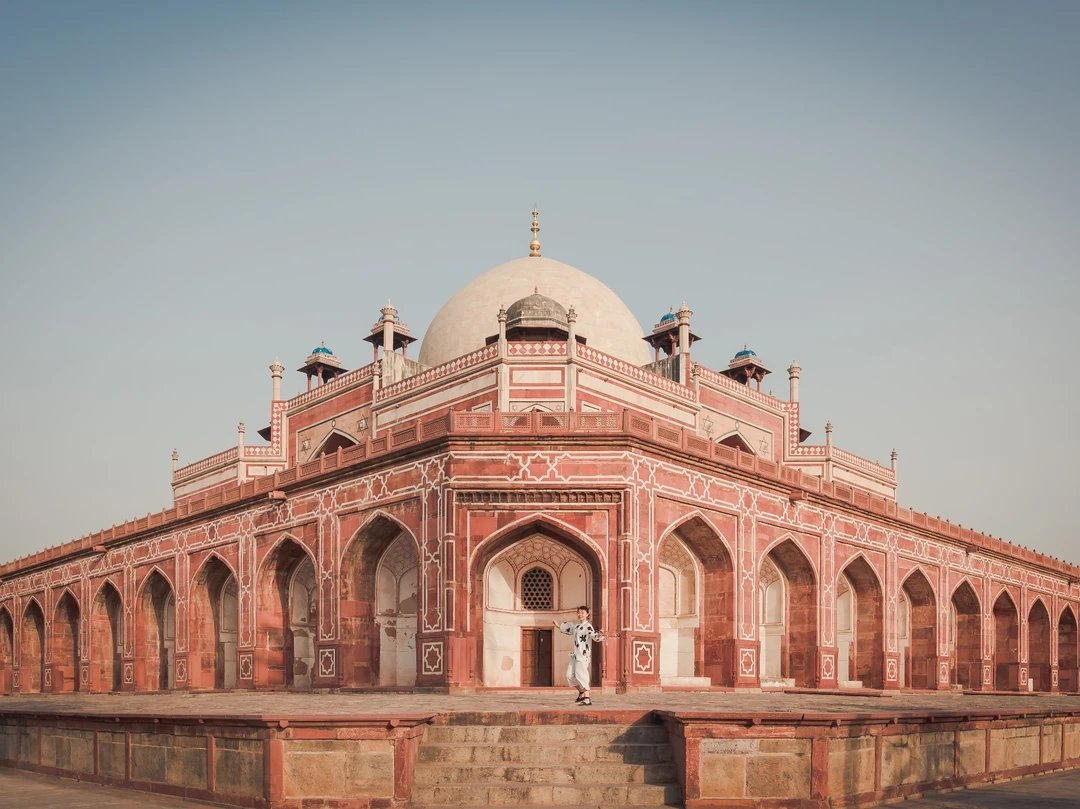
Humayun's Tomb: The Predecessor to the Taj Mahal
Because of the luggage delay, our Delhi itinerary got scrambled. It happened to be Monday, when many places are closed, so our first stop was Humayun's Tomb.

The word "tomb" is straightforward—it's a burial site. We went in with a "grave-visiting" mindset, but found it unexpectedly peaceful. This UNESCO World Heritage site is the predecessor to the Taj Mahal, a stable blend of Persian style and Mughal elements. Not exactly breathtaking, but enough to make you pause and reflect.
India's ticketing policy has always baffled Chinese tourists: Humayun's Tomb costs 30 rupees for locals, 500 rupees for foreigners. A fifteen-fold price difference—blatant, labeled discrimination. But look at it another way: 50 yuan (about $7) for a World Heritage site. Which domestic attraction in China can match that? Not without bundling an 80-yuan shuttle bus ride as a "good deal."
[Link: Best budget travel tips for India]
Qutub Minar: A War Monument and Civilizational Mashup
Delhi's second stop was Qutub Minar, billed as one of the Seven Wonders of India. This tower was a "bragging structure" left by early Muslim invaders after they conquered Hindu kingdoms. It soared into the sky around 1200 AD. No modern equipment, just stacked stone, with intricate carvings. Thinking about that, I genuinely felt the 50-yuan ticket was a steal.

Qutub Minar's very existence is a microcosm of India's cultural fusion. Islam and Hinduism—two religions that historically eroded and influenced each other, from national customs down to clothing styles, all mixed together. This is how culture grows—through conflict.
[Link: Mughal architecture guide for travelers]
Jaisalmer: The Golden City at the Edge of the World

A Taste of Luxury on SpiceJet
We only booked one flight within India, choosing the budget airline SpiceJet. Two tickets cost 550 yuan (about $80). At check-in, the ground staff suggested an upgrade: 600 rupees (about $7) per person for extra legroom. "Since we're here," we thought, "give us a chance to play rich."
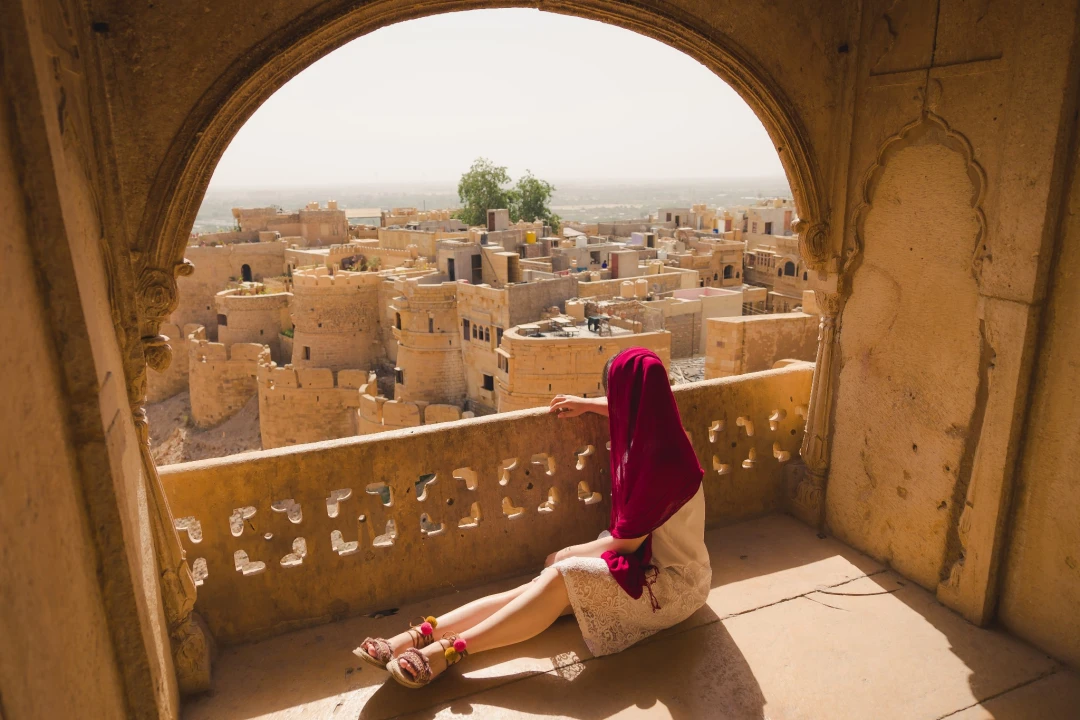
On a 570-kilometer flight, I saw the plane's shadow for the first time—vast, barren desert, swirling yellow sand. The Thar Desert stretches 100 kilometers to Pakistan. The entire city glowed gold. Jaisalmer travel had arrived.
The Prototype of One Thousand and One Nights
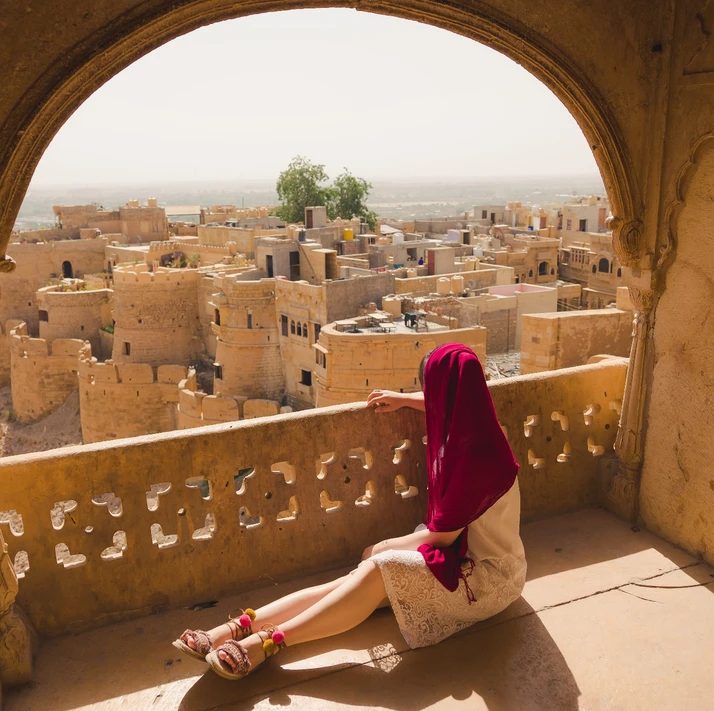
We dropped our bags and plunged into the old city. Two hours of wandering gave me a three-dimensional impression of the fort. You can never truly understand Rajasthan through words and photos. You have to stand at its feet, submit or stay silent, to feel that beauty.
At dusk, we found a rooftop restaurant. An impromptu candlelit dinner caught us off guard. In the distance, someone was dancing on a rooftop, the ancient fort stretching behind them. For the first time, we felt what urban tranquility meant.
Jaisalmer is the prototype of One Thousand and One Nights—forts, palaces, camels, desert, all Arabian Nights flair. The stone doors of Ali Baba and the Forty Thieves leaped from fairy tales into reality. Lucky for us, the city opened an airport, ending the 14-hour train slog and making this golden medieval castle accessible to more people.
Jainism: A Religion Without Gods
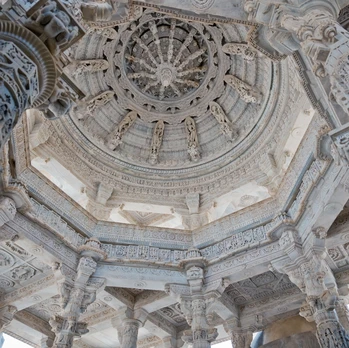
Inside the fort is a Jain temple. Jainism is one of India's oldest sects, predating even Buddhism. Its origin story is fascinating: the founder married, had children, then found life bland and meaningless, so he turned to religion for happiness. In modern terms, he was "finding himself."

Jainism has no Buddha, no god—only its own logic and philosophy. Every practitioner must enter the temple for purification, complete their rituals, and return to a life of non-violence and vegetarianism.
[Link: Rajasthan offbeat temples guide]
FAQ: North India Travel Questions Answered
1. Is North India safe for solo female travelers?

North India requires caution but is not impossible. Stick to well-traveled routes, avoid isolated areas after dark, dress modestly (cover shoulders and knees), and use pre-booked transportation. Many women travel solo successfully, but vigilance is essential. Consider joining group tours for remote areas.
2. What's the best time to visit North India for architecture?
October to March offers the most comfortable weather—cool, dry, and perfect for exploring. Avoid April to June (extreme heat) and July to September (monsoon rains). For photography, early morning and late afternoon light is best for golden-hour shots of forts and tombs.
3. How much does a 15-day North India trip cost?
A mid-range budget (including flights, accommodation, meals, and entry fees) typically ranges from $800 to $1,500 per person. Budget travelers can do it for $500-$800 by using trains, street food, and guesthouses. Luxury travelers might spend $2,000-$3,500.
4. What should I pack for a Rajasthan trip?

Essentials: lightweight cotton clothing (long sleeves for sun protection), comfortable walking shoes, a scarf (for temples and sun), sunscreen, hand sanitizer, a reusable water bottle with filter, and a power bank. Leave valuables at home—flashy items attract unwanted attention.
5. How do I avoid food poisoning in India?
Eat at busy restaurants with high turnover, avoid street food that's been sitting out, drink only bottled or filtered water, and carry rehydration salts. Most travelers experience some digestive upset—it's part of the experience. Start with simple vegetarian meals and gradually expand.
Conclusion: The Real India Is Worth Every Prejudice
Fifteen days in North India taught me something no travel guide could: the real India exists between the architecture and the dust. It's in the golden sandstone of Jaisalmer Fort, the silent patience of Humayun's Tomb, the chaotic kindness of Delhi's streets. It's in the scammer who taught me to stand my ground and the Jain monk who showed me a religion without gods.
If you're planning a North India itinerary, don't let the warnings paralyze you. Prepare, yes. Research, absolutely. But leave room for the unexpected—because that's where India lives.
Ready to experience the real India? Start planning your architectural journey today. Download our free Rajasthan travel checklist and join our community of conscious travelers who seek depth over comfort.
Your turn: Have you visited North India? What surprised you most? Share your story in the comments below—we'd love to hear your version of the real India.
Note: This article was originally published on Mafengwo. Prices and experiences reflect May 2018 travel conditions. Always check current visa requirements, flight schedules, and local guidelines before booking.
You may also like


