Where Are Can Cong and Du Yu Now? A Complete Guide to Western Sichuan Travel in September 2024
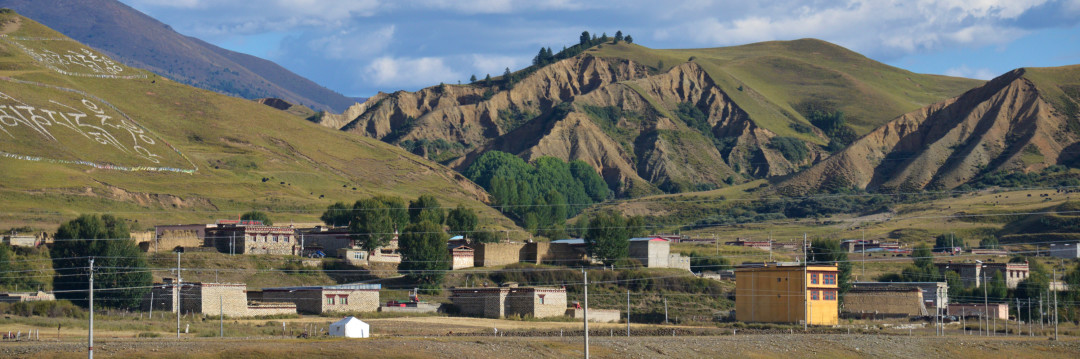
Meta Description: Discover the ancient Shu civilization at Jinsha and Sanxingdui on a September 2024 Western Sichuan journey. Learn travel tips, rental car advice, and must-see artifacts in this comprehensive guide.
Introduction: The Call of Ancient Shu
"What crime did the mountains and rivers commit, to suffer such an end of days?" This poetic line, scribbled while organizing travelogue titles, became the unexpected epitaph for our September 2024 journey to Western Sichuan. For my wife Li and me, this trip represented more than just a vacation—it was a long-awaited reunion with history.
With our son finally starting university after the college entrance exams, we seized this rare window of freedom. The high plateau might not welcome us in a few more years, so while our bodies could still handle the altitude and adventure, we set out to keep a thousand-year appointment with the ancient Shu civilization.
Planning Your Western Sichuan Adventure: Key Considerations
When to Visit Western Sichuan
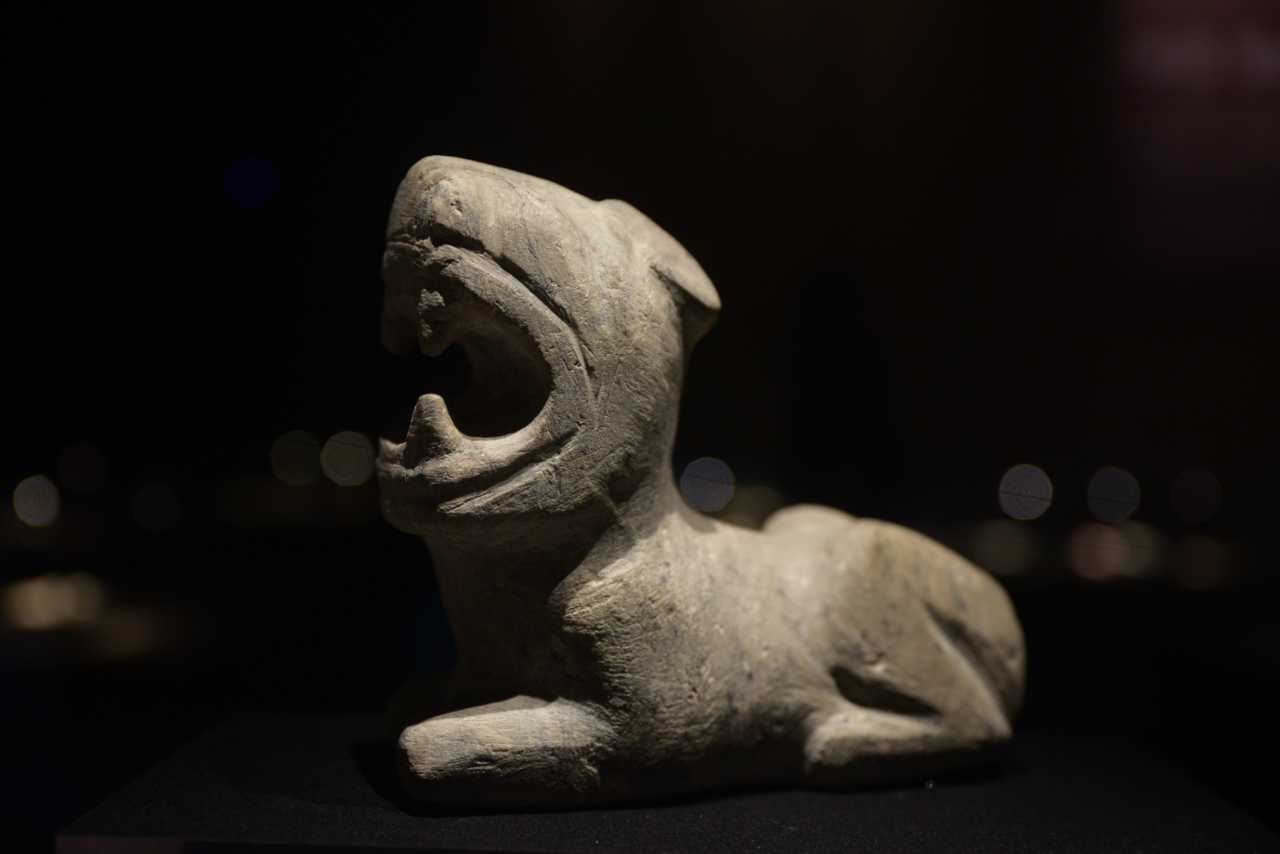
September offers ideal conditions for Western Sichuan travel: - Pleasant temperatures: 15-25°C (59-77°F) in lower elevations - Less rainfall compared to summer monsoon season - Clearer skies for mountain views and photography - Fewer crowds than October Golden Week
Getting to Chengdu: Airport Choices
Chengdu now operates two international airports:
| Airport | Distance to City Center | Best For |
|---|---|---|
| Shuangliu (CTU) | ~15 km | Quick access, domestic flights |
| Tianfu (TFU) | ~50 km | International flights, newer facilities |
Pro tip: Always verify which airport your flight arrives at. I mistakenly assumed "Chengdu only has Shuangliu" and booked into Tianfu—a costly error in time and logistics.
Day 1: From Hangzhou to Chengdu—Navigating Typhoons and License Plate Restrictions
Travel Challenges: Weather and Logistics

Our departure from Hangzhou coincided with Typhoon Bebinca (the 13th of the season). This forced us to cancel our first night's accommodation, creating a domino effect of last-minute changes.
Key lesson: Always book flexible cancellation options when traveling during typhoon season (July-September).
Rental Car Strategy in Chengdu
Chengdu enforces license plate restrictions based on the last digit. Here's what you need to know:
- Check your rental car's plate number before pickup
- Original booking: Volkswagen T-Roc → Switched to: Toyota RAV4 (due to restrictions)
- Rental company comparison:
- Shenzhou: Reliable but expensive one-way drop-off fees
- Ehi: No one-way drop-off fee (our choice this time)
- Both: Allow same-airport pickup and return for best rates
Cost-saving tip: Return your car to the same airport to avoid fees. We returned a day early and were charged by actual days—flexible but still incurred city-switch fees.
Accommodation: What to Avoid
We booked an apartment-style rental near Taikoo Li. While the photos looked stunning, reality was disappointing:
- Cheap materials: Fake ceramic bathtub, leaking drain
- Poor maintenance: Broken curtain hooks, hole in rattan chair
- Hygiene issues: Grime-covered water heater
Recommendation: Stick with reputable hotels or verified serviced apartments. [Link: Best hotels in Chengdu for cultural travelers]
Day 2: Jinsha Site Museum—The Resurrection of a Lost Capital
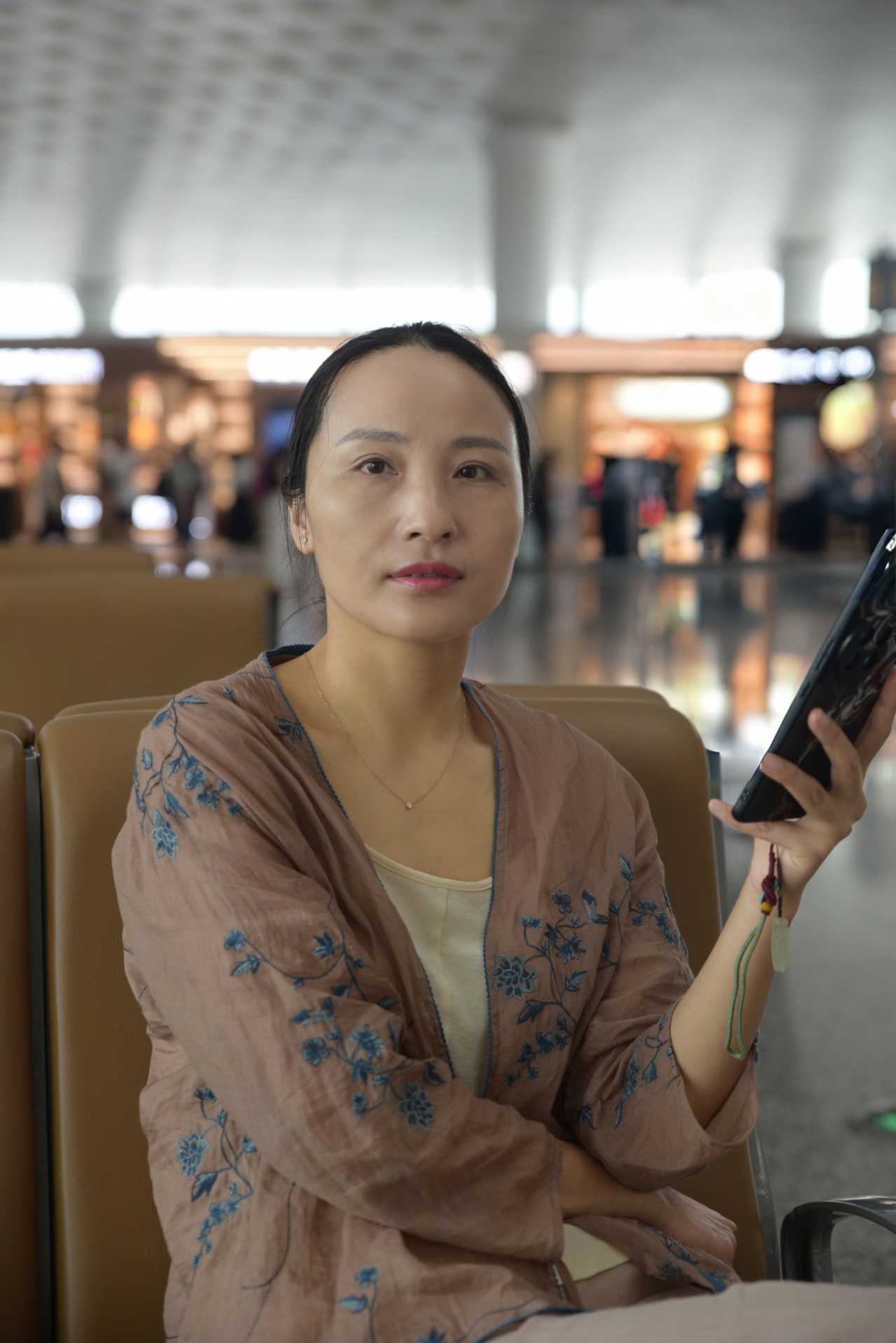
Jinsha Site Museum: Essential Information
| Detail | Information |
|---|---|
| Ticket price | 70 yuan |
| Booking | WeChat mini-program (supports cancellations) |
| Parking | North and south gates both available |
| Best time | Early morning to avoid crowds |
| Opening hours | 9:00 AM - 6:00 PM (open Mondays) |
The Discovery That Rewrote History
Discovered in 2001, the Jinsha Site spans approximately 5 square kilometers and dates back 3,200 to 2,600 years. This was the capital of the ancient Shu kingdom—a civilization that had been lost to history until this remarkable find.
Together with Sanxingdui, Jinsha is now on China's Tentative List for World Cultural Heritage. The site yielded: - Gold, bronze, jade, stone, ivory, and lacquer artifacts - Tens of thousands of pottery shards - Tons of ivory - Thousands of wild boar tusks and deer antlers
Must-See Artifacts at Jinsha
1. Sun and Immortal Birds Gold Ornament
- Dimensions: Outer diameter 12.53 cm, inner diameter 5.29 cm, thickness only 0.02 cm
- Design: Rotating sun (inner layer), four birds flying counterclockwise (outer layer)
- Technique: Hammering, shearing, and polishing
- Significance: The museum's crown jewel—smooth front, rough back
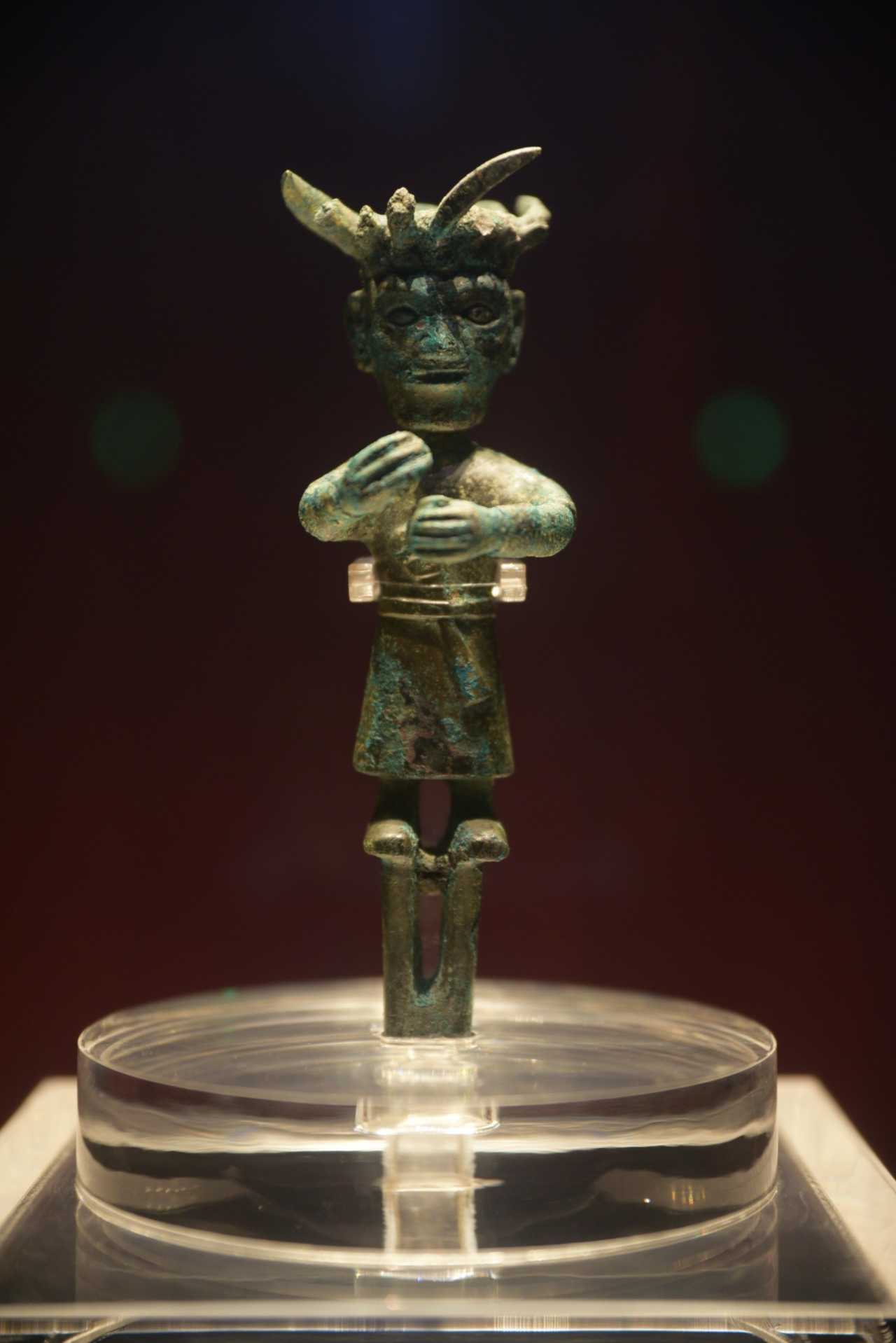
2. Small Bronze Standing Figure
- Height: 19.2 cm
- Features: Sun hat with 13 arc-shaped teeth, three braids, clenched hands, scepter at waist
- Unique aspect: Striking three-dimensional quality
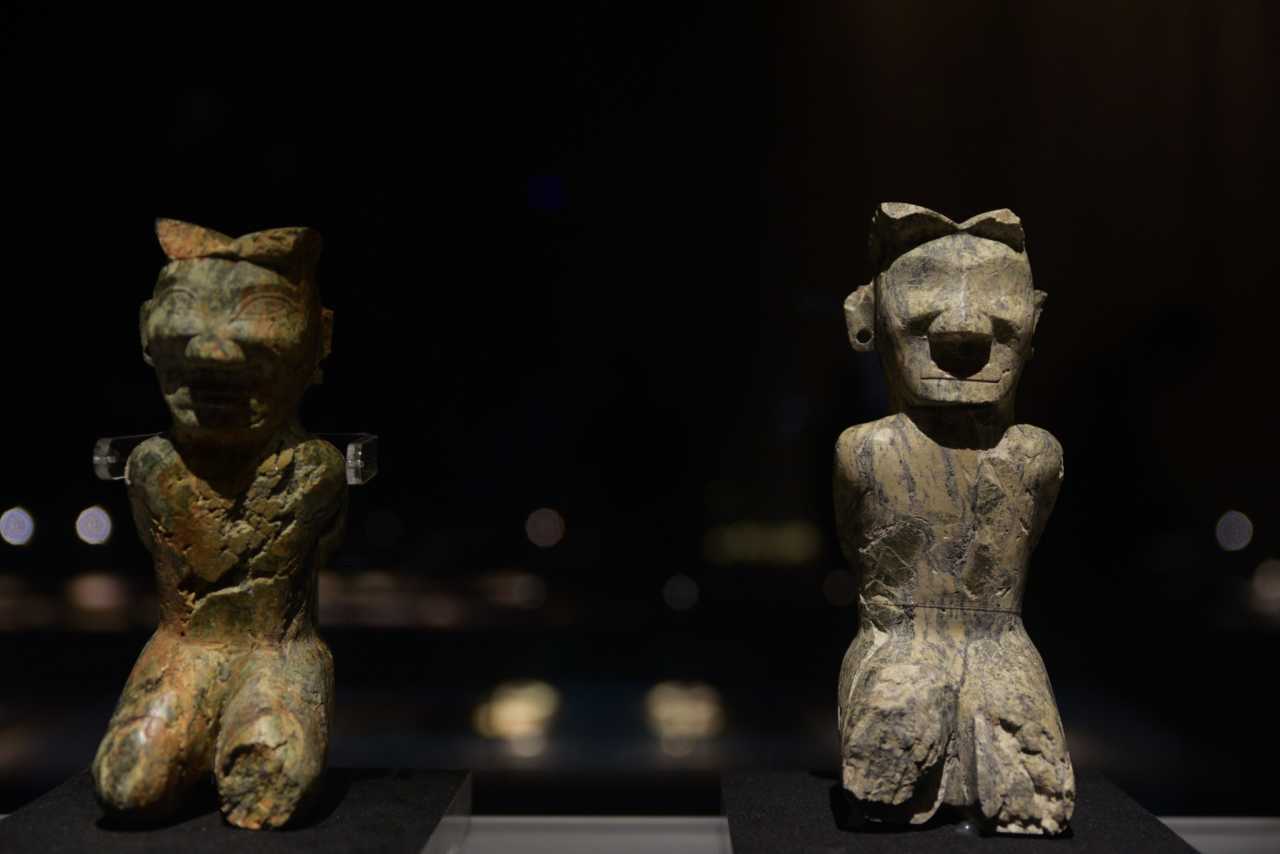
3. Kneeling Stone Figure
- Height: 22.7 cm
- Description: Naked, barefoot, hands tied behind back, bitter expression
- Interpretation: Captive from foreign tribe or slave
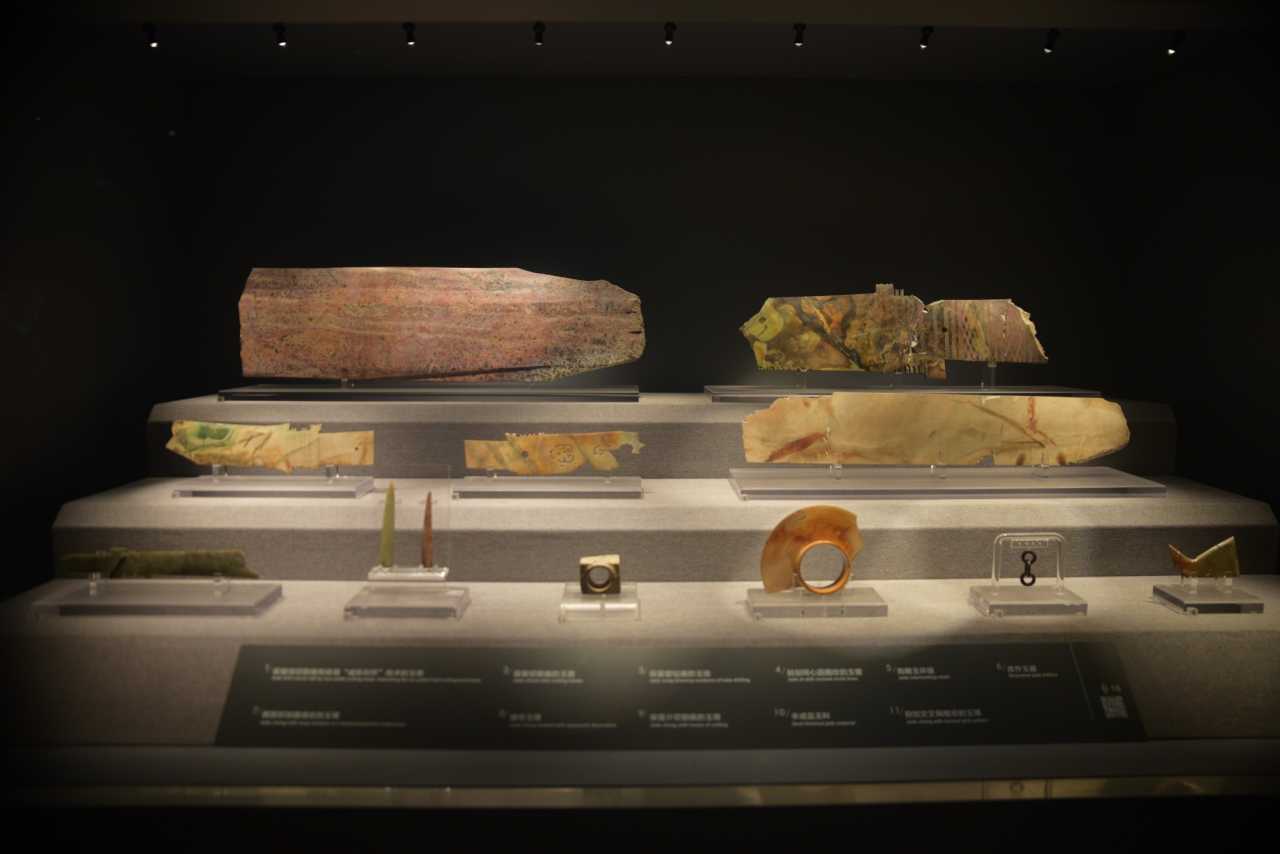
4. Ten-Section Green Jade Cong
- Height: 22.2 cm
- Material: Tremolite jade from Liangzhu culture (Zhejiang)
- Significance: Proof of cultural exchange along the Yangtze River—thousands of kilometers apart
5. Large Gold Mask
- Dimensions: 20.5 cm long, 10.4 cm wide, 10.7 cm high, thickness 0.08 cm
- Appearance: Full face, dignified expression
- Possible use: Attached to bronze mask
Sanxingdui: A Mysterious Civilization That Shook the World
Getting There from Jinsha
The drive from Jinsha to Sanxingdui takes approximately 1.5 hours. The main gate is on Xiangxin Road.
Parking tip: About 200 meters southwest along the road, there's a small village with farmhouse restaurants. Park there for 10 yuan (if you eat) or 20 yuan (if you don't)—no time limit.
Exhibition Areas: Three Galleries
Gallery 1: A Century of Dream-Chasing (First Floor)
- Timeline: 1920s to 1980s
- Key events: Discovery of two sacrificial pits in 1986 ("shook the world upon its awakening")
- Recent developments: Six more pits discovered since 2019
Gallery 2: The Majestic Capital
- Focus: Urban planning and daily life of ancient Shu
- Highlights: Architectural models, ceremonial objects
Gallery 3: The Divine Kingdom
- Focus: Religious and ritual practices
- Must-see: Bronze masks, gold scepter, ivory artifacts
Sanxingdui vs. Jinsha: What's the Difference?
| Aspect | Jinsha | Sanxingdui |
|---|---|---|
| Discovery | 2001 | 1929 (first finds) |
| Time period | 3,200-2,600 years ago | 4,800-2,600 years ago |
| Significance | Capital of ancient Shu | Ritual center of ancient Shu |
| Key artifacts | Gold ornaments, jade | Bronze masks, bronze trees |
| Mystery solved | Linked Sanxingdui to later Shu culture | Sudden disappearance explained |
Practical Tips for Western Sichuan Travel
What to Pack for September
- Layers: Temperature swings from 10°C at night to 25°C daytime
- Rain gear: September still has occasional showers
- Comfortable walking shoes: Museum visits require extensive walking
- Sun protection: High altitude means stronger UV rays
- Camera: Low-light settings for museum photography
Booking Strategy
- Book flights early: September is peak season for Western Sichuan
- Reserve accommodations: Especially during Mid-Autumn Festival
- Pre-book museum tickets: Both Jinsha and Sanxingdui require advance reservations
- Check license plate restrictions: Avoid rental car issues
Cultural Etiquette
- Photography: Check museum rules—some artifacts prohibit flash
- Respect sacred sites: Many areas hold religious significance
- Language: English signage limited; download translation apps
FAQ: Your Western Sichuan Questions Answered
1. Is September a good time to visit Western Sichuan?
Yes. September offers pleasant weather, fewer crowds than October, and clear skies for mountain views. However, be prepared for occasional rain and temperature fluctuations.
2. How many days do I need for Jinsha and Sanxingdui?
 At least 2 full days. Day 1 for Jinsha (half-day) plus travel time; Day 2 for Sanxingdui (full day). Add extra days if you want to explore Chengdu or other Western Sichuan destinations.
3. Can I visit both museums in one day?
Not recommended. Jinsha and Sanxingdui are 1.5 hours apart. Each museum requires 3-4 hours minimum. Rushing diminishes the experience.
4. What's the best way to get around Western Sichuan?
Rental car offers maximum flexibility. However, check license plate restrictions and one-way drop-off fees. Alternatively, join a guided tour or hire a private driver.
5. Are the museums suitable for children?
 Yes, with caveats. Both museums offer educational value, but younger children may find the artifacts less engaging. Focus on interactive exhibits and storytelling.
6. What other Western Sichuan attractions should I consider?
- Mount Siguniang: Stunning mountain scenery
- Danba Tibetan Village: Traditional architecture
- Tagong Grassland: High-altitude prairie
- Hailuogou Glacier: Rare low-altitude glacier [Link: Complete Western Sichuan itinerary]
Conclusion: Why This Journey Matters
Standing before the Sun and Immortal Birds Gold Ornament, Li and I felt the weight of three thousand years. The ancient Shu civilization—once lost, now resurrected—speaks to us across millennia. Their artistry, their beliefs, their connections to distant cultures along the Yangtze River—all preserved in gold, jade, and bronze.
This journey wasn't just about checking off tourist attractions. It was about understanding where we come from, how civilizations rise and fall, and what remains when the dust settles. As the poet asked: "Where are Can Cong and Du Yu now?" The answer lies in the ten-thousand-zhang tall mountains of Shu—and in the museums that guard their legacy.
Your turn: Have you visited Jinsha or Sanxingdui? Share your experience in the comments below. For personalized trip planning, contact our travel specialists at [email protected].
Note: All information accurate as of September 2024. Check official websites for updated hours, prices, and COVID-19 protocols before traveling.
You may also like


