The Poetic Splendor of China: Chengdu – A Millennium-Old City Steeped in Poetry
Meta Description: Discover Chengdu's poetic soul through Du Fu's verses, Wuhou Temple's history, and spring rain's timeless beauty. Explore China's millennium-old city where poetry lives in every blossom and breeze.
Introduction: Where Poetry Meets the Land of Abundance
After the Beginning of Spring, I set out from my hometown of Chengdu, following the Yangtze River eastward on a journey guided by poetry. Crossing five provinces and municipalities, I returned to my homeland at the Spring Equinox. Along the way, I carried both a deep longing for the Land of Abundance and a yearning for the poetic tapestry of China. But it was only upon returning to Chengdu that I truly understood—the poetry of this city has long been woven into every drop of spring rain, every petal of blossom, and every wisp of tea fragrance.
Chengdu, the capital of Sichuan province, is not merely a modern metropolis. It is a millennium-old city steeped in poetry, where the verses of Du Fu, the Sage of Poetry, echo through ancient temples and flowing streams. In this article, we explore how Chengdu's spring rain, historic sites, and cultural heritage create a living poem that has inspired generations.
Spring Rain Bathes the Brocade City: The Tenderness in Du Fu's Brush

"Happy Rain on a Spring Night" – One Rain, One City
"Good rain knows its time right; It will fall when comes spring. With wind it steals in night; Mute, it moistens each thing."
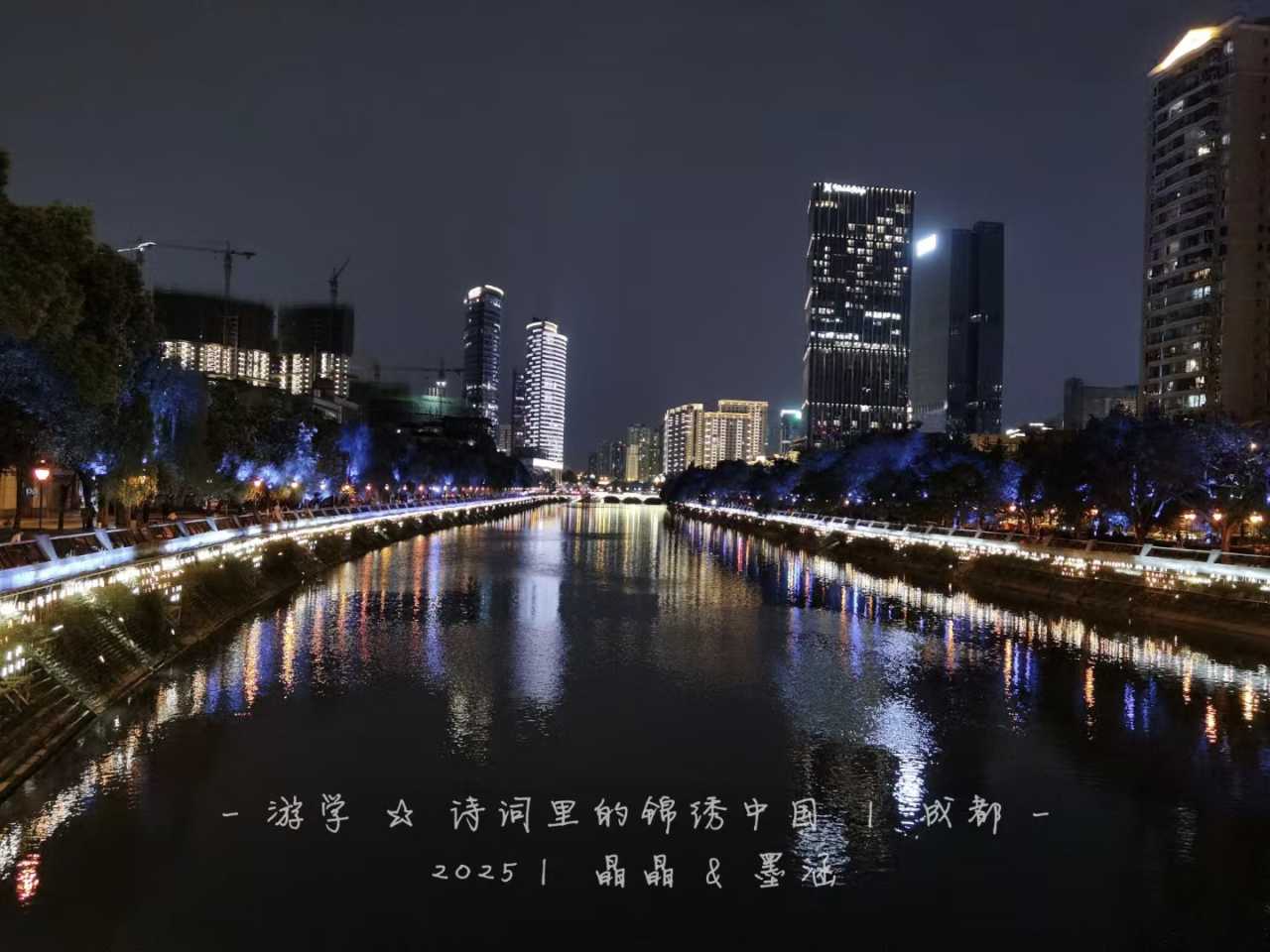
In Chengdu after the Beginning of Spring, the night rain falls like silk threads, arriving quietly as the city lights begin to glow. This rain is neither hurried nor impatient, carrying a unique gentleness—like a reserved poet softly humming verses in the darkness.
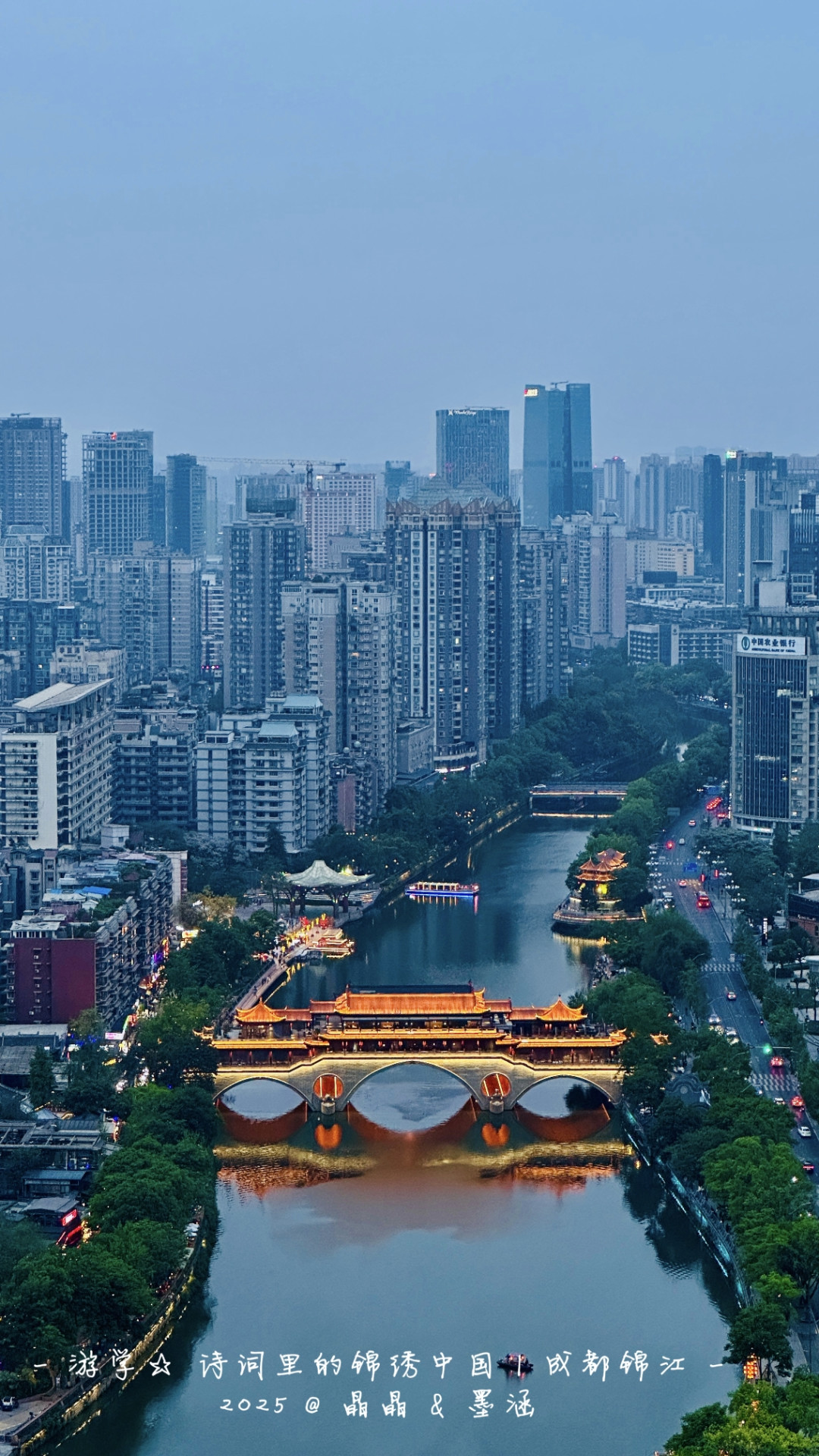
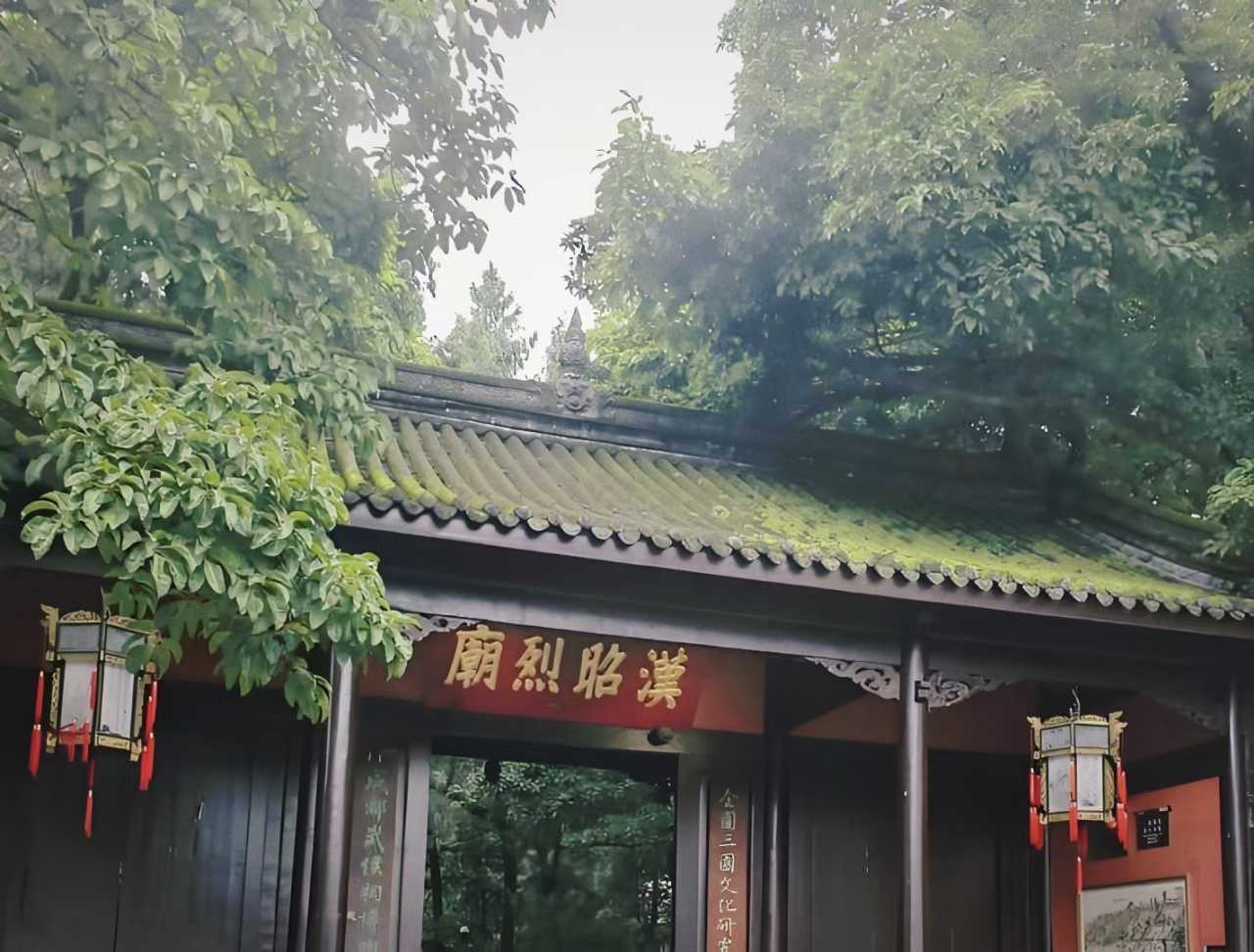
The fine raindrops gently caress the green tiles and red walls of the Temple of Marquis Wu (Wuhou Temple), adding an air of antiquity and tranquility to this sanctuary dedicated to Zhuge Liang. The rain creates ripples on the surface of the Huanhua Stream (Flower-Washing Creek), and in the hazy mist, the scenery along the bank appears and disappears, blending into an elegant ink-wash painting.
At Du Fu's former residence, a faint mist lingers among the bamboo groves. After a night of spring rain nourishment, the flower petals, swollen with sweet dew, weigh down the branches. This is the Chengdu described by the Sage of Poetry—a city made more enchanting by the spring rain. Carrying a thousand years of history and culture, it continuously radiates new vitality and energy under the rain's nourishment.
"The Premier of Shu" – Tracing Zhuge Liang's Footsteps
"Where is the famous premier's temple to be found? Outside the Town of Brocade, with cypresses around."
Many first-time visitors to Wuhou Temple are puzzled: the plaque clearly reads "Temple of the Han Zhaolie Emperor," yet there's no sign of "Wuhou Temple" anywhere. Behind this lies an interesting piece of history.
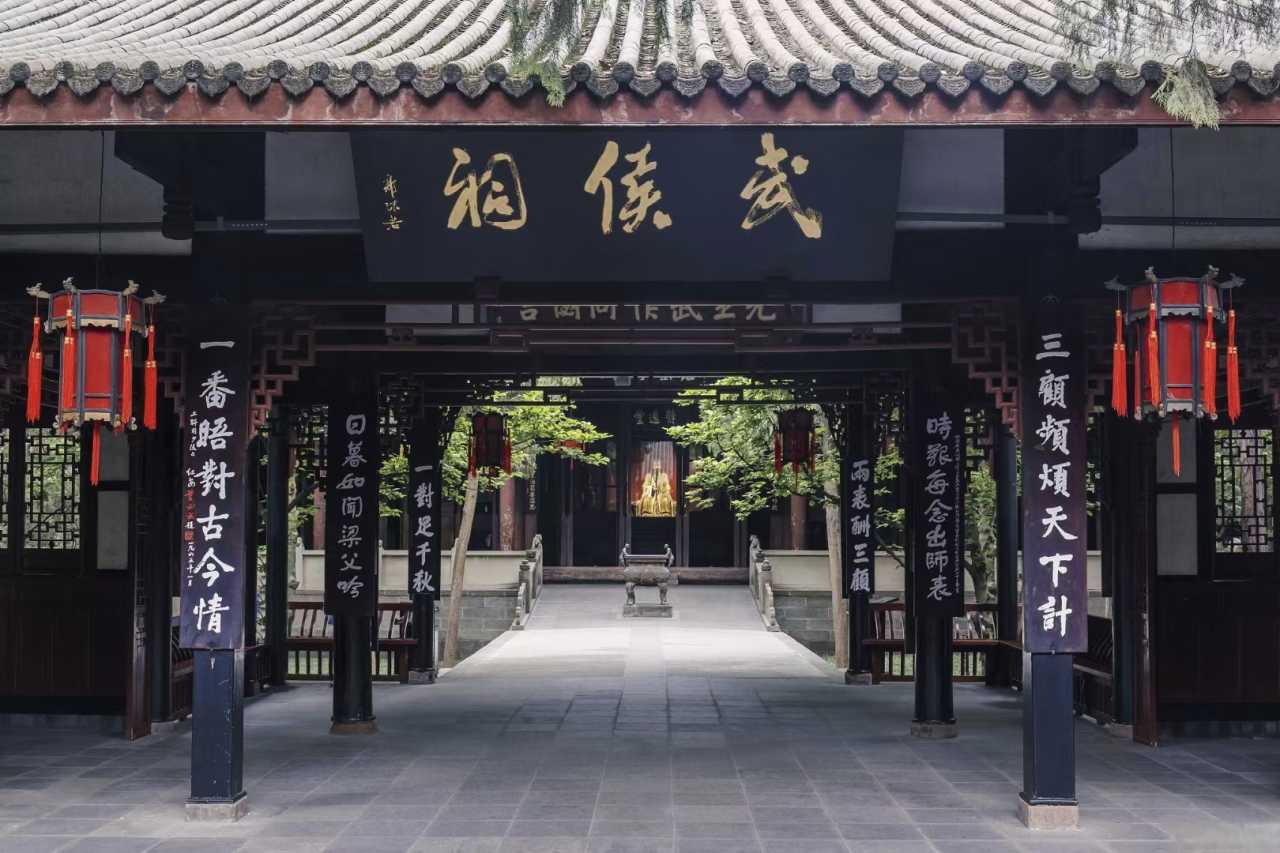
Originally, this site housed Emperor Liu Bei's mausoleum, known as Huiling. According to Han Dynasty customs, a mausoleum required a temple, so the Temple of Liu Bei was built and named "Temple of the Han Zhaolie Emperor." During the Northern and Southern Dynasties, people built Wuhou Temple next to it in memory of Zhuge Liang. By the Ming Dynasty, Zhu Chun, the son of Emperor Zhu Yuanzhang, abolished Wuhou Temple to emphasize imperial authority and moved Zhuge Liang's statue into Liu Bei's temple. During the Qing Dynasty, large-scale reconstruction created today's "front temple, rear shrine" layout—Liu Bei's temple in front, Wuhou Temple behind.
"Thrice the king visited him for the State's gains and pains; He served heart and soul the kingdom during two reigns." These fourteen words encapsulate Zhuge Liang's tumultuous life. "I will work my heart out until I die" became a timeless tale of devotion. His wisdom shines like a torch through the ages, his loyalty as steadfast as a mountain. It is this ancient temple that witnessed the rise and fall of the Shu Han Kingdom and the legendary life of Zhuge Kongming.
"Strolling Alone Along the Riverside in Search of Flowers" – The Healing Power of Spring
"Along the path to Mrs. Huang's house, flowers run; Thousands of blooms weigh branches down and make them bend."
On a spring morning back in my hometown, when the first rays of sunlight pierced through the curtains and cast an orange glow across the room, I knew—Chengdu's most precious spring had arrived.
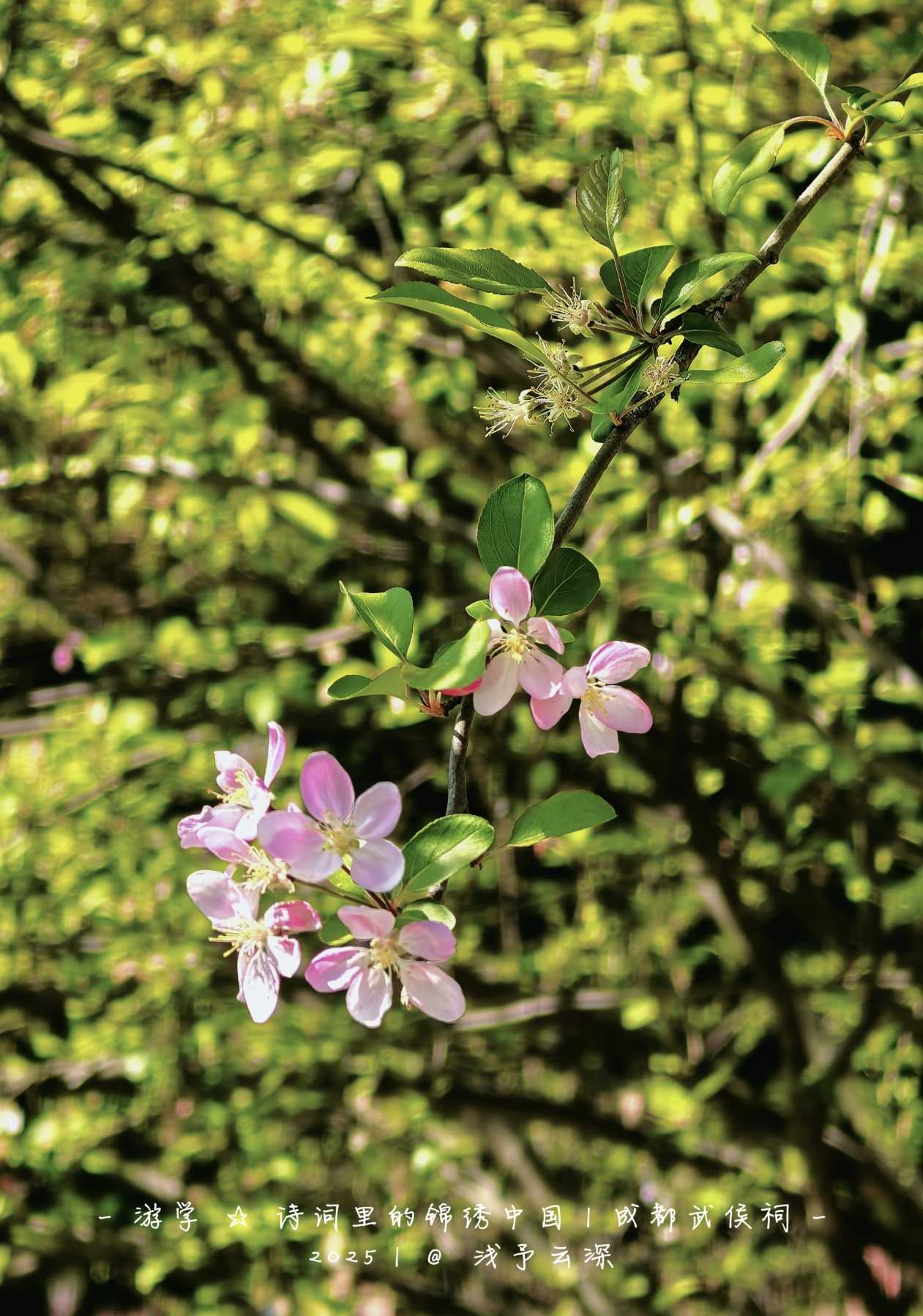
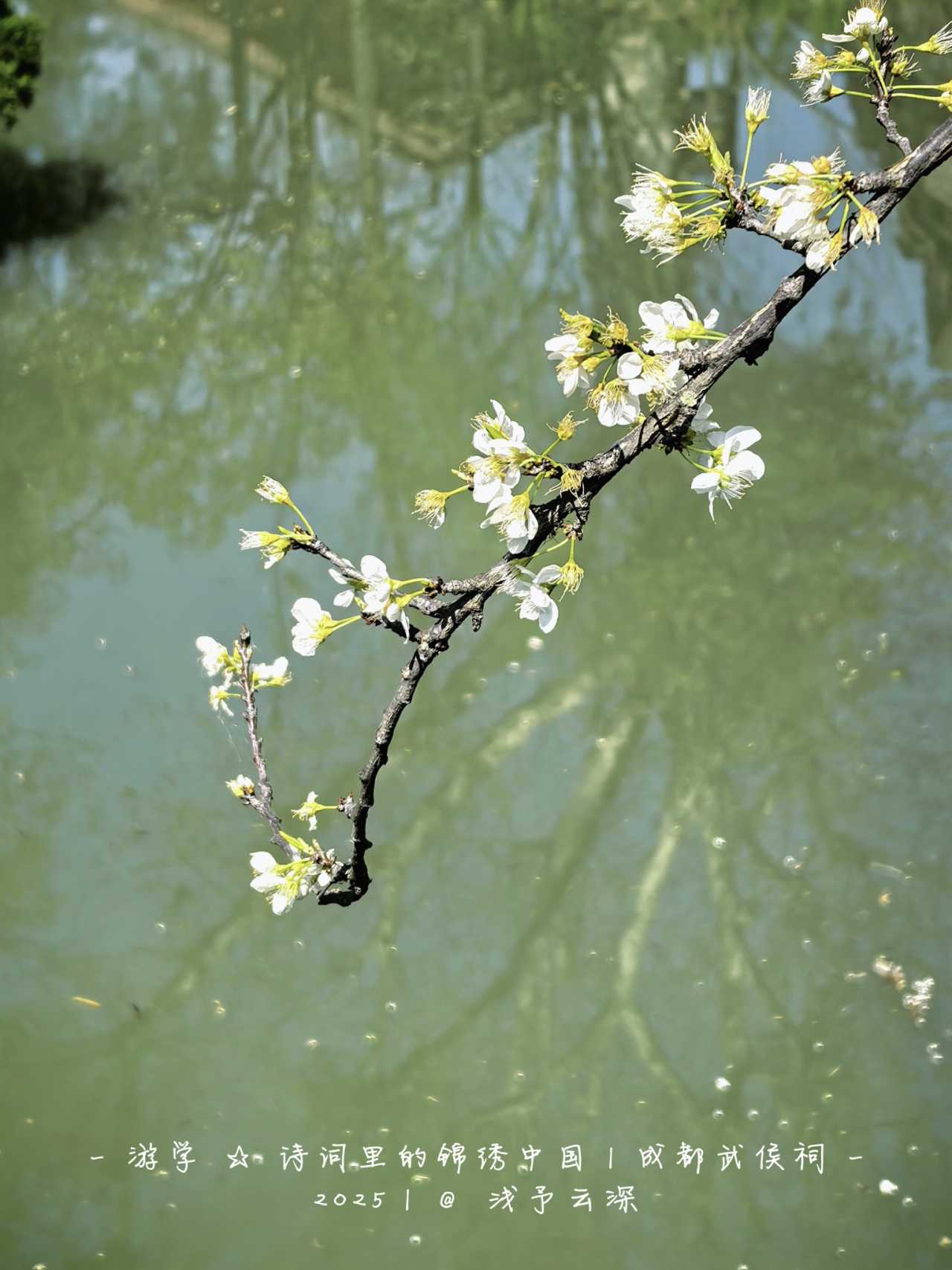
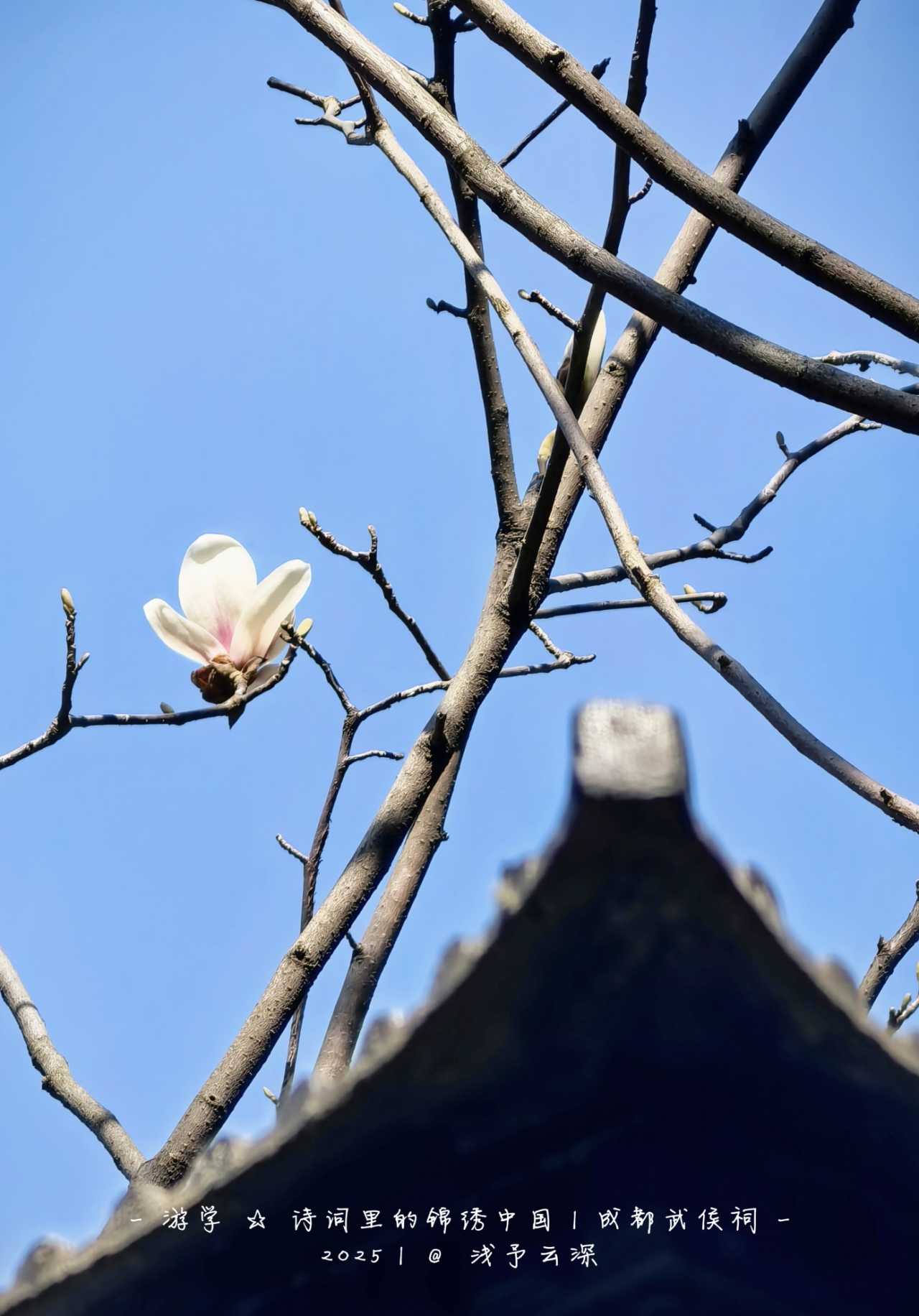
Even the Sage of Poetry, known for his somber and profound style, was once healed by the spring of the Brocade City a thousand years ago. I searched for flowers in the garden area of Wuhou Temple: camellias blooming in brilliant red, wild winter jasmine shining in bright yellow, magnolias with petals of white tinged with pink. Some flowers I couldn't name, but that didn't matter—what mattered was their beauty in full bloom.
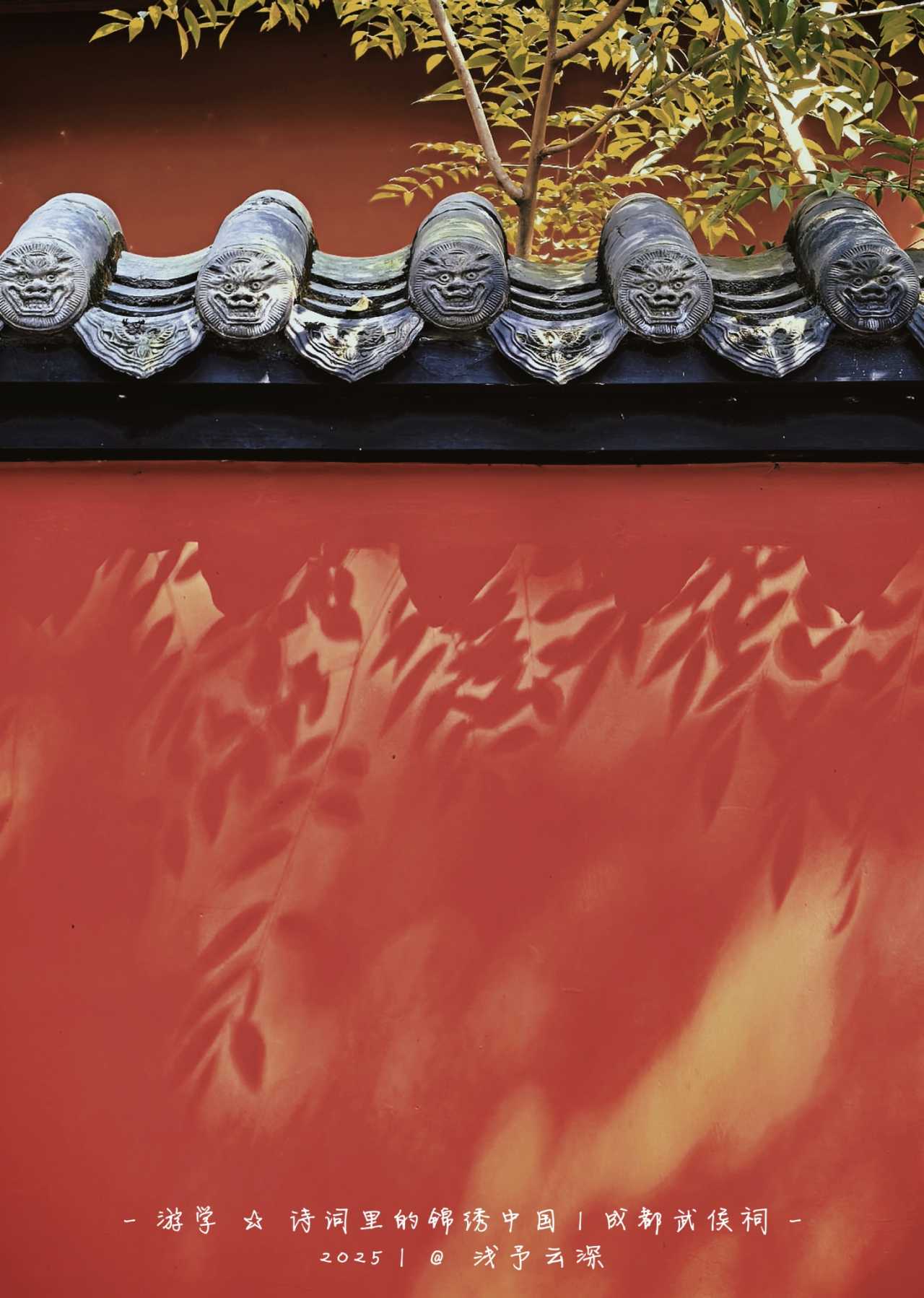
While gathering a few sprigs of spring color, I also found bamboo shadows swaying on the red walls. As the wind rustled through the bamboo grove, I could almost hear the poet from a thousand years ago murmuring among the flowers: "Along the path to Mrs. Huang's house, flowers run; Thousands of blooms weigh branches down and make them bend." This spring scenery along the Jinjiang River, after a thousand years, still haunts the heart.
The Sage of Poetry's Footprints: From Thatched Cottage to Immortality
"The Cottage Completed" – Getting Close to Du Fu's Life
"Back from the town, my thatched hut is newly made; By riverside I'm used to looking down the glade."
The late-spring cold snap struck fiercely, and I was shivering when I arrived at the Huanhua Stream. But amid the swaying bamboo shadows, I saw the thatched cottage where the Sage of Poetry once lived.
When Du Fu's thatched cottage was completed, he wrote this poem. Later, Su Dongpo transcribed it and added a long postscript, and today this stone engraving stands at the beginning of the stele corridor.
I remember in my school days, the Du Fu poems in our Chinese textbooks mostly described scenery, giving me a one-sided impression of him. As I grew older and read more of his poems, I thought he was a man of great suffering—deeply concerned for the people, his poetry solemn and profound. It wasn't until two years ago, when I watched the film "Chang'an: 30,000 Miles," that the image of a spirited young Du Fu overturned my long-held perception.
At the thatched cottage, I rediscovered his life: the once-vibrant youth, trapped in Chang'an clinging to his ambitions, living in poverty while beginning to understand the struggles of the common people; enduring the chaos of war and displacement; finding a period of relative stability in Chengdu; then wandering again, yearning to return home, ultimately dying on the road.
The Sage of Poetry is called a "sage" because his poetry is grounded—like the lower half of the Chinese character "sage" (圣), his feet were deeply planted in the soil. More importantly, unlike many poets who wrote about the lives of ordinary people as bystanders recording from the outside, Du Fu truly lived that life himself, his heart tied to the people, his emotions genuine and real.
As I left, I looked back at the thatched cottage. The Huanhua Stream still flows, carrying away a thousand years of wind and rain, yet etching the poet's soul forever into this land. As the couplet at the cottage reads: "You claimed the spring breeze by the Brocade River; I return on Renri Day to your cottage." Every visitor comes in search of that eternal light the Sage of Poetry left for the world.
"The Memorial to the Throne on the Expedition" – A Symbol of Loyalty and Ideals
"Your Majesty started your great enterprise before your time was cut short. Now the empire is divided into three, and Yizhou is weakened—this is truly a critical moment of survival or peril."
Under the spring sunlight, the red wall shone brilliantly. As my fingertips touched the mottled bamboo shadows on the wall, I recalled the earnest advice to "befriend virtuous ministers and distance petty men." It felt as if the fragrance of ink from a thousand years ago was dripping down the roof tiles like raindrops, shaking the tree shadows on the ground.
As mentioned earlier, many out-of-town visitors come seeking Wuhou Temple but find no sign of it at the entrance. A primary school exam question might offer some insight—on the fourth-grade Chinese final exam paper from Wuhou District, Chengdu, in 2024, one question asked: "Which two historical figures are jointly honored in Wuhou Temple?" The answer—Liu Bei and Zhuge Liang—reveals the temple's unique dual legacy.
[Link: Wuhou Temple history and architecture]
Why Chengdu's Poetry Still Resonates Today
Chengdu's poetic splendor is not confined to museums or textbooks. It lives in the daily rhythms of the city:
- Tea houses along Jinjiang River, where locals sip bamboo-leaf-green tea while reciting Tang dynasty verses
- Spring festivals that celebrate Du Fu's poems with lantern displays and calligraphy workshops
- Educational tours that bring students to the thatched cottage to experience poetry in its natural setting
The city's UNESCO-recognized status as a "City of Gastronomy" also intertwines with its literary heritage. Many local dishes—like Mapo Tofu and Dan Dan Noodles—are named in poems or associated with poets who found solace in Chengdu's culinary warmth.
[Link: Chengdu food culture and poetry]
FAQ: Exploring Chengdu's Poetic Heritage
1. What is the best time to visit Chengdu for a poetry-themed tour?
 Spring (March to May) is ideal. The "Happy Rain on a Spring Night" season brings mild weather, blooming flowers, and cultural events like the Du Fu Poetry Festival held annually at the thatched cottage.
2. Can I visit both Wuhou Temple and Du Fu's Thatched Cottage in one day?
Yes. They are located about 4 km apart in the same district. A full day allows you to explore both sites, enjoy a tea break by Huanhua Stream, and sample local snacks.
3. Are there English translations of Du Fu's poems at the sites?
 Yes. Both Wuhou Temple and Du Fu's Thatched Cottage provide bilingual signage and audio guides. Many popular poems, like "Happy Rain on a Spring Night," are available in English translations by Xu Yuanchong and others.
4. What other poetry-related attractions are in Chengdu?
- Jinli Ancient Street (poetry-themed lanterns)
- Kuanzhai Alley (traditional teahouses with poetry recitals)
- Sichuan University's Poetry Garden (free public readings)
5. How can I experience Chengdu's poetry culture without visiting historical sites?
Attend a poetry slam at a local teahouse, join a calligraphy workshop in Jinli, or download the "Chengdu Poetry Walk" app for self-guided audio tours of the city's literary landmarks.
Conclusion: Your Journey into Chengdu's Poetic Soul
Chengdu is more than a city—it is a poem written across centuries, with verses in every raindrop, every blossom, and every sip of tea. Whether you walk the same paths as Du Fu, stand before Zhuge Liang's temple, or simply sit by the Jinjiang River at dusk, you become part of this living literary tapestry.
Ready to experience the poetic splendor of China? Plan your Chengdu poetry tour today. Book a guided walk through the thatched cottage, taste the spring rain at Wuhou Temple, and let the verses of a thousand years wash over you.
Share your favorite Chengdu poem or memory in the comments below—we'd love to hear how this city inspired your own poetic journey.
Article originally adapted from Mafengwo travelogue. All classical Chinese poems translated by Xu Yuanchong unless otherwise noted.
You may also like