The Gongga Grand Loop Trek: A Complete 5-Day, 70km Guide to Sichuan’s King of Mountains
Meta Description: Planning the Gongga Grand Loop trek? This complete 5-day, 70km guide covers route planning, gear checklist, altitude tips, and everything you need to hike around Sichuan’s highest peak. Includes FAQ and essential safety advice.
Introduction: Why the Gongga Grand Loop Should Be Your Next Trek
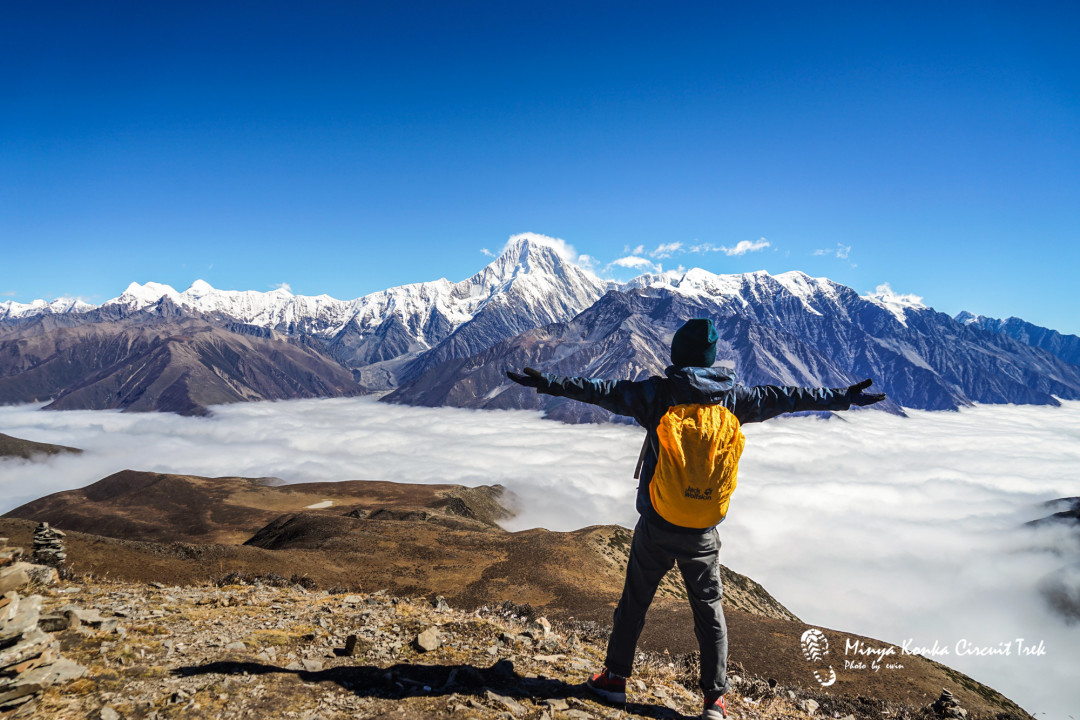
Standing at 7,556 meters, Mount Gongga (Minya Konka) is the undisputed king of the Hengduan Mountains and the easternmost 7,000-meter peak on Earth. For seasoned trekkers and high-altitude enthusiasts, the Gongga Grand Loop trek represents one of China’s most rewarding multi-day hiking experiences—a 70-kilometer circuit that circles this colossal peak through alpine forests, glacial valleys, and high mountain passes.
This 5-day, 4-night itinerary (with an optional 6th day) offers a complete record of the trek, from essential gear to daily stage breakdowns. Whether you’re planning a self-supported Gongga trek or joining a guided group, this guide covers everything you need to know.
Route Overview: The Gongga Grand Loop Trek at a Glance
Total Distance: Approximately 70 kilometers
Duration: 5–6 days
Highest Altitude: 4,920 meters (Riwuqie Pass)
Starting Point: Kangding, Sichuan
Difficulty: Moderate to challenging (high-altitude experience recommended)
Daily Itinerary Breakdown
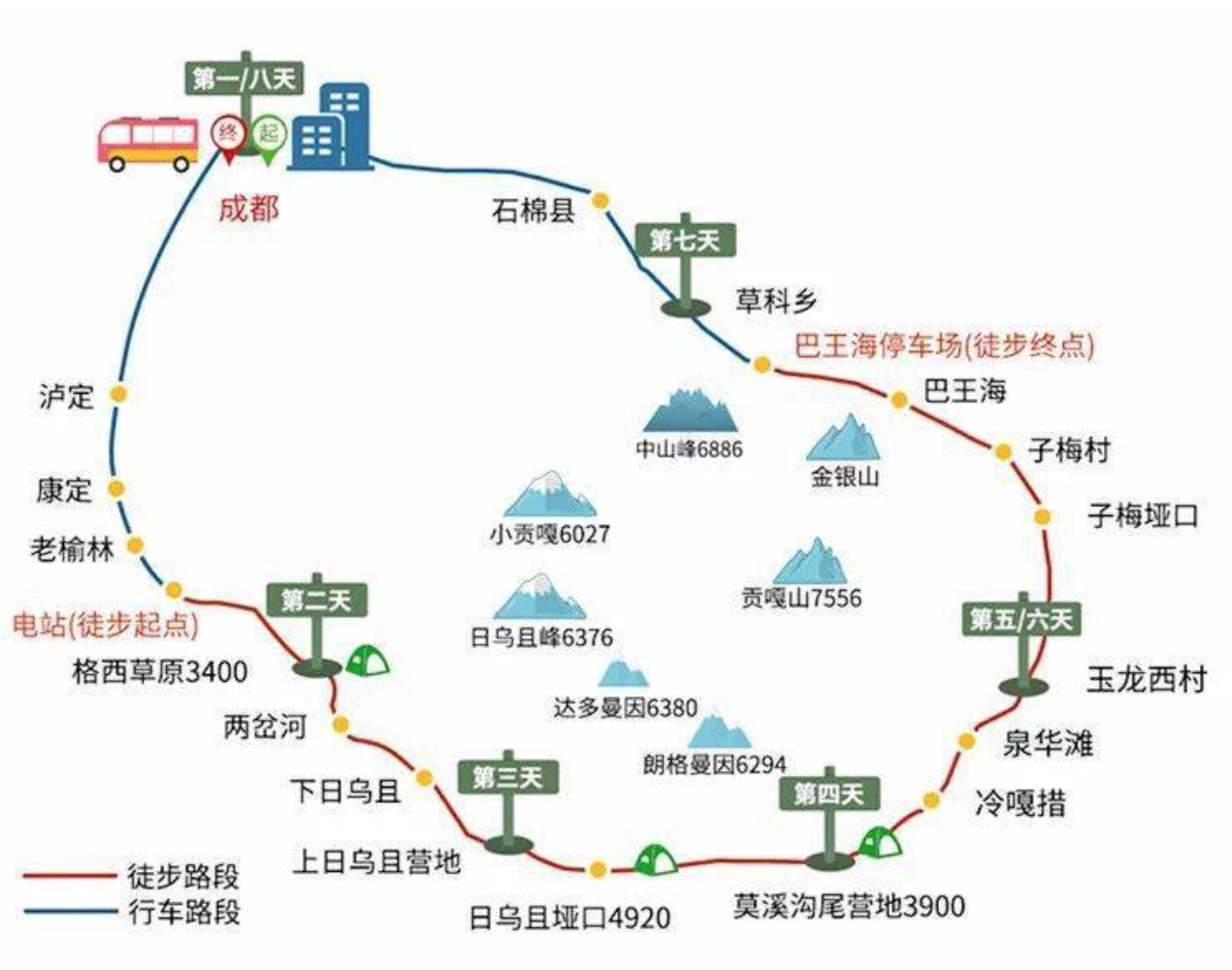
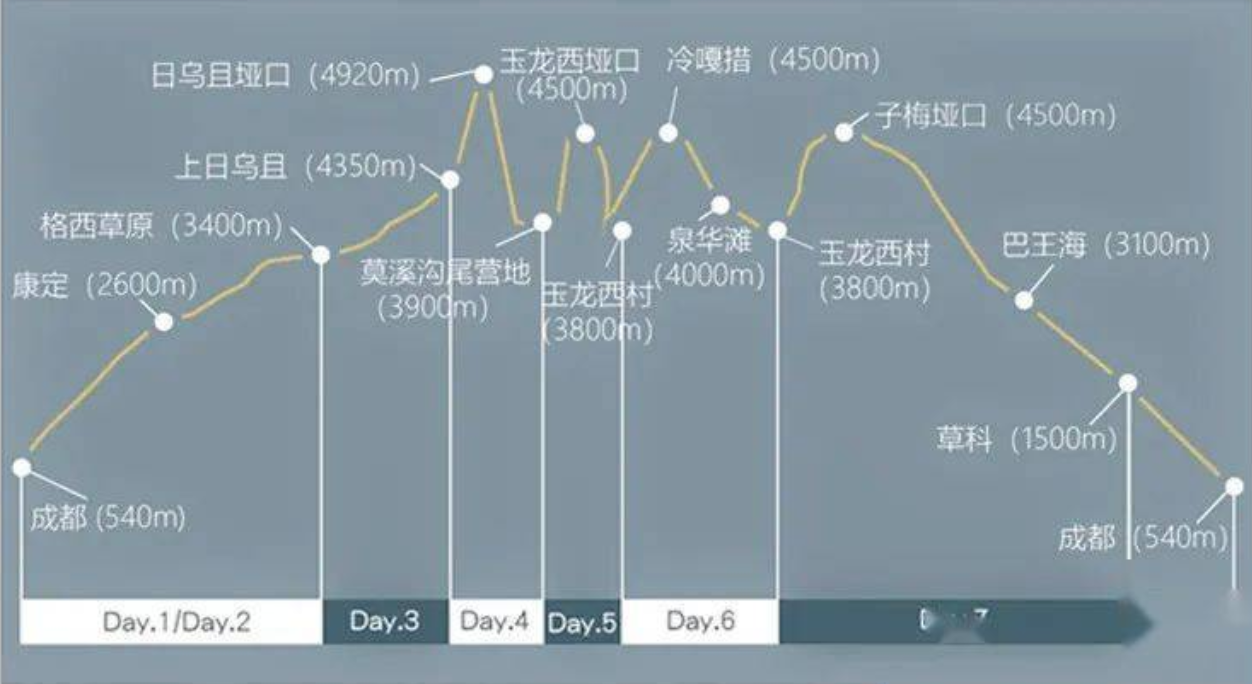
Day 1: Chengdu → Old Yulin (3,200m) → Gexi Grassland (3,400m) → Liangchahe Camp (3,900m)
Day 2: Liangchahe Camp (3,900m) → Lower Riwuqie (4,100m) → Upper Riwuqie Camp (4,300m)
Day 3: Upper Riwuqie Camp (4,300m) → Riwuqie Pass (4,920m) → Moxigou Tail Camp (3,950m)
Day 4: Moxigou Tail Camp (3,950m) → Yulongxi Pass (4,500m) → Yulongxi Village (3,800m)
Day 5: Yulongxi Village (3,800m) → Zimei Pass (4,500m) → Lenggacuo Lake (4,500m) → Yulongxi Village (3,800m)
Optional Day 6: Yulongxi Village → Zimei Pass → Zimei Village → Bawang Sea → Caoke → Chengdu
Pro Tip: Road improvements now allow direct access to Liangchahe, saving a full day compared to the traditional route that required camping at Gexi Grassland on night one.
Essential Gear Checklist for the Gongga Grand Loop
Self-Supported Trekkers
Your pack weight matters. Here’s what you absolutely need for a fully loaded Gongga trek:
- Backpack: 55L+ capacity
- Shelter: Three or four-season tent
- Sleep System: Sleeping bag rated to -10°C or lower (800g+ down fill), sleeping pad
- Clothing: Gore-Tex rain jacket, fleece jacket and pants, down jacket, waterproof hiking boots
- Navigation: Trekking poles (dual poles recommended for stability)
- Cooking: Stove, fuel canisters, utensils, water filter
- Supplies: Medications, sufficient food for 5+ days
- Accessories: Hat, gloves, buff/scarf, headlamp
Where to Buy: Kangding has multiple outdoor gear shops. Fuel canisters and other consumables are available locally.
Group Tour Trekkers
If you’re joining a guided Gongga Grand Loop tour, you can travel lighter:
- Bring your own sleeping bag (800g down for spring/autumn, 1,000g+ for winter)
- Carry a 20–35L daypack with food, water, and personal items
- Let pack horses handle tents, cooking gear, and heavy equipment
- If arranging your own horse support, remember cooking equipment
Key Safety and Practical Considerations
Altitude and Acclimatization

The Gongga Grand Loop trek reaches nearly 5,000 meters at Riwuqie Pass. While the overall difficulty is moderate, altitude sickness is a real risk. If you lack high-altitude trekking experience, consider:
- Spending 1–2 days acclimatizing in Kangding (2,600m) before starting
- Ascending gradually—avoid gaining more than 500m per day above 3,000m
- Carrying acetazolamide (Diamox) as a preventative measure [Link: high-altitude trekking tips]
Wildlife and Solo Trekking
Wolves have been sighted near Riwuqie. Solo trekking is strongly discouraged on this route. Always travel with a group or hire a local guide.
Water Sources
- Days 1–3: Rivers run alongside the trail—water is plentiful
- Day 4 onward: After leaving Moxigou Tail Camp, you’ll traverse a mountainside with only seasonal streams. Carry a full day’s water supply
Campsites and Regulations
- Camping is permitted along the entire route
- Liangchahe and Upper Riwuqie camps are near herders’ houses (small fees may apply)
- Both camps have small shops (Upper Riwuqie’s may not be staffed daily)
- Lenggacuo Lake: Camping is prohibited—only local wooden cabins are available
- Seasonal Closure: Fire prevention periods typically begin mid-to-late November. Check local announcements before departure
Day-by-Day Trekking Log: What to Expect
Day 1: Into the Wilderness at “Low Altitude” (3,500m)
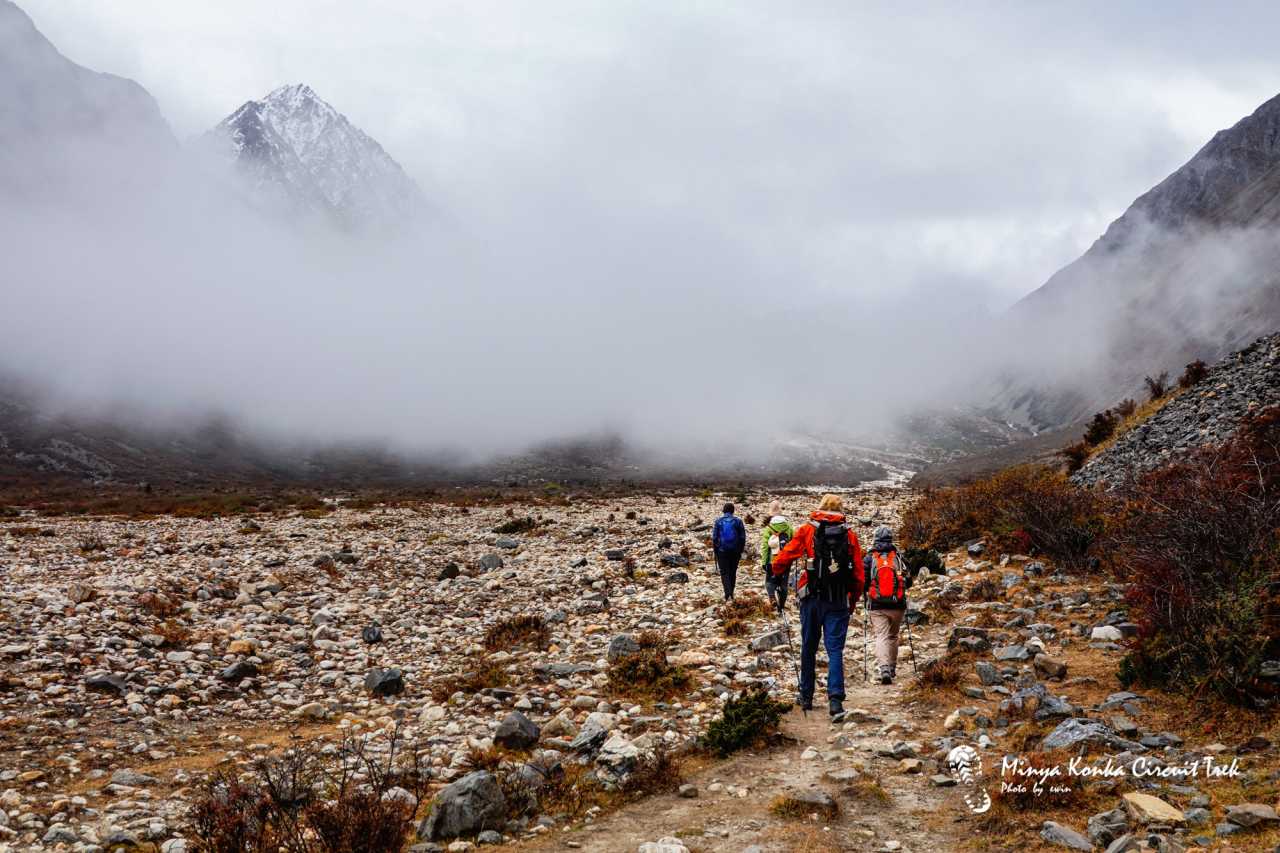
The journey begins in Kangding. After meeting your team, a gravel road leads into the mountains. Thanks to recent road extensions, you’ll drive past Old Yulin power station directly to Gexi Grassland—saving an entire day of hiking.
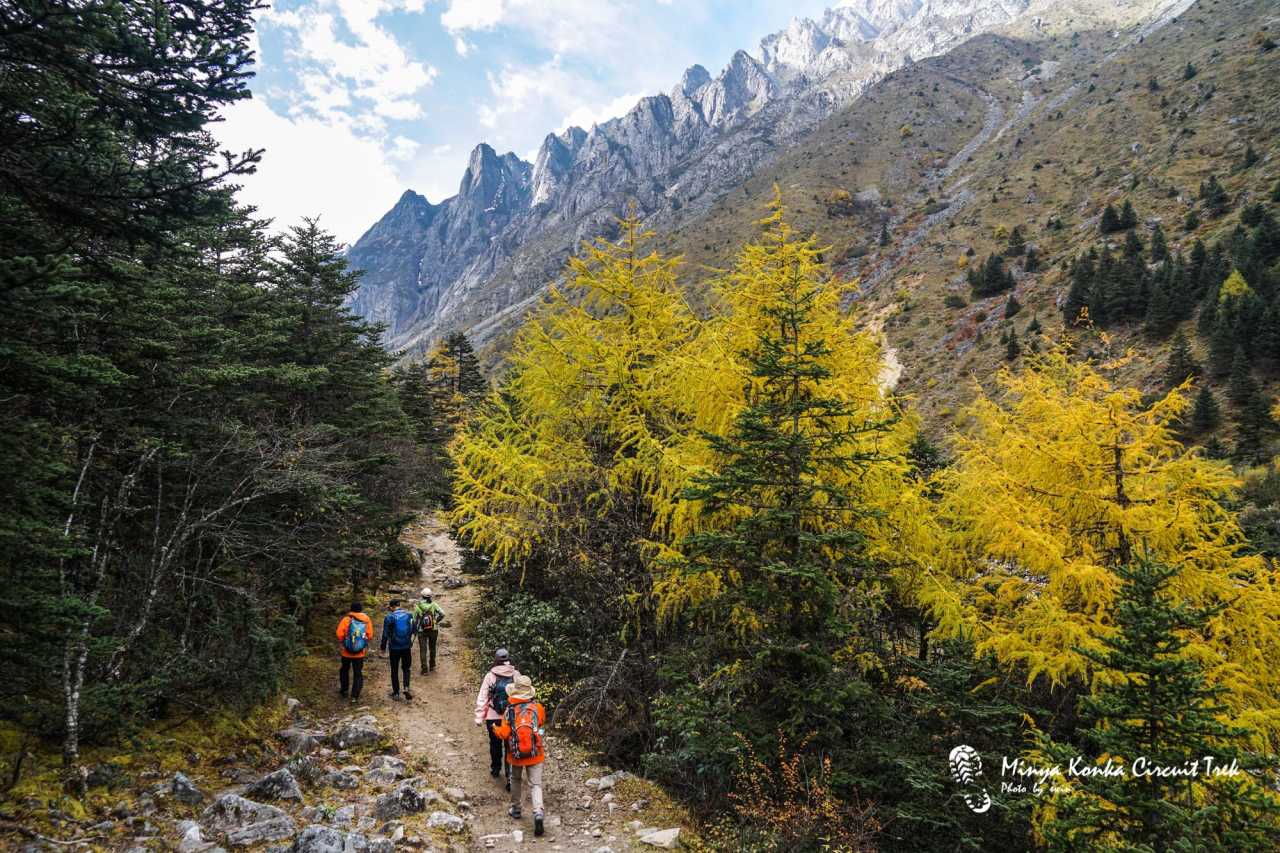
The trail enters coniferous forest where spruce trees glow golden in autumn. Hanging moss (Usnea lichen) catches the sunlight. At under 3,500 meters, this section feels like a picnic compared to what lies ahead. Mid-October offers prime leaf-peeping conditions.
Highlight: The Wuse Haizi (Five-Colored Lakes) mountain range appears at the valley’s end—a preview of the grandeur to come.
Day 2: Climbing Toward Upper Riwuqie
From Liangchahe Camp (3,900m), the trail follows the river upstream through increasingly open terrain. Lower Riwuqie (4,100m) appears as a grassy plateau before the final push to Upper Riwuqie Camp (4,300m).
Note: This is where altitude begins to matter. Pace yourself. The herders’ huts at Upper Riwuqie offer shelter and sometimes basic supplies.
Day 3: Crossing Riwuqie Pass (4,920m)
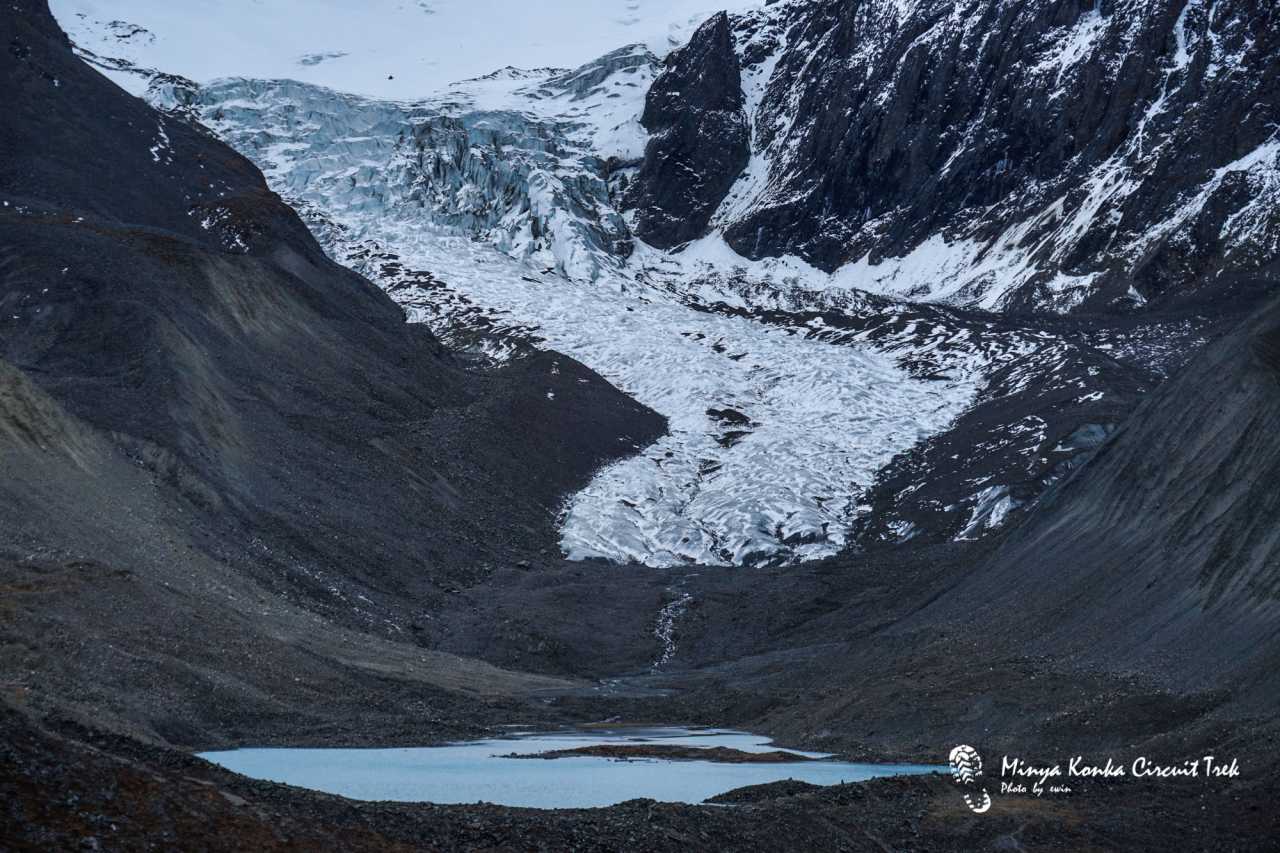
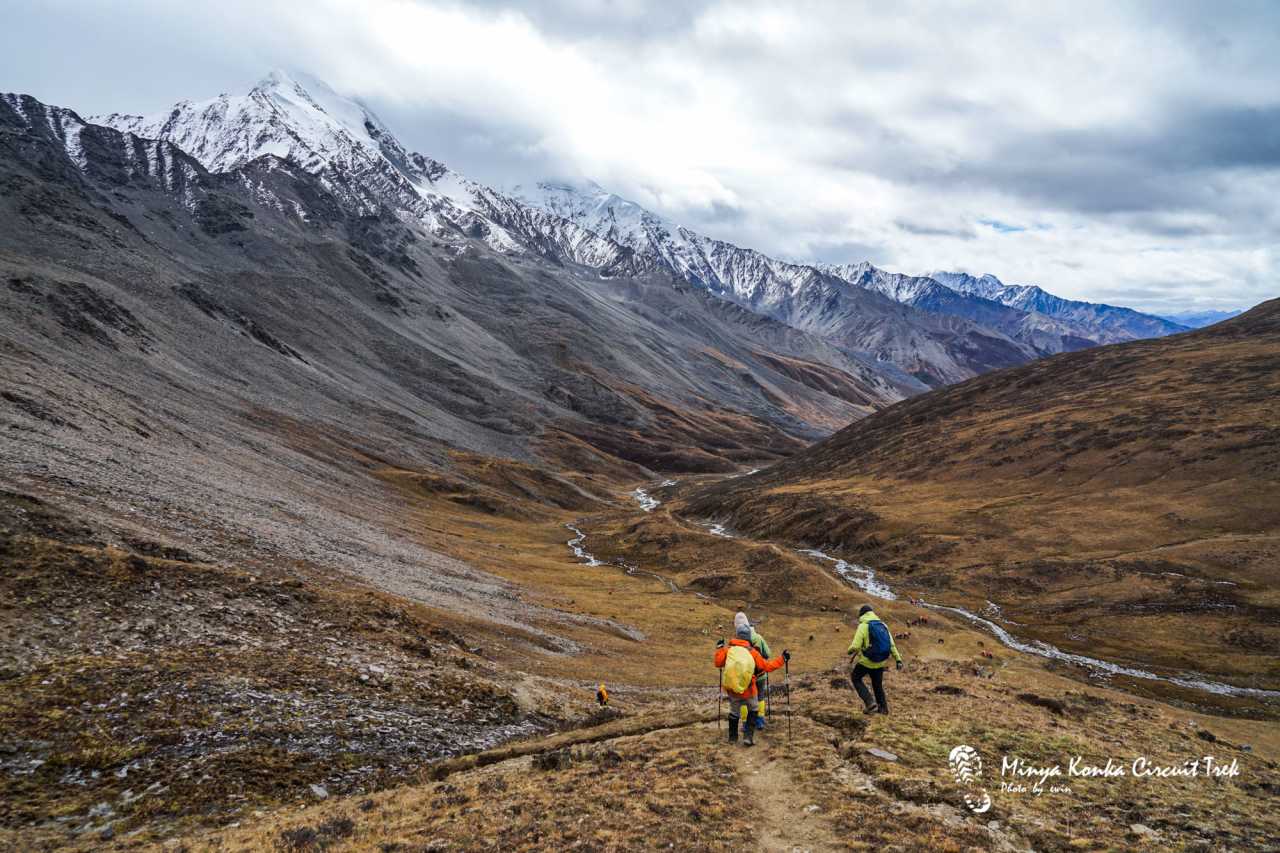
The most challenging day. From Upper Riwuqie Camp, a steady climb leads to Riwuqie Pass—the trek’s highest point at 4,920 meters. The view from the pass is a reward that justifies every step: the full sweep of the Gongga massif, glaciers glinting in the distance.
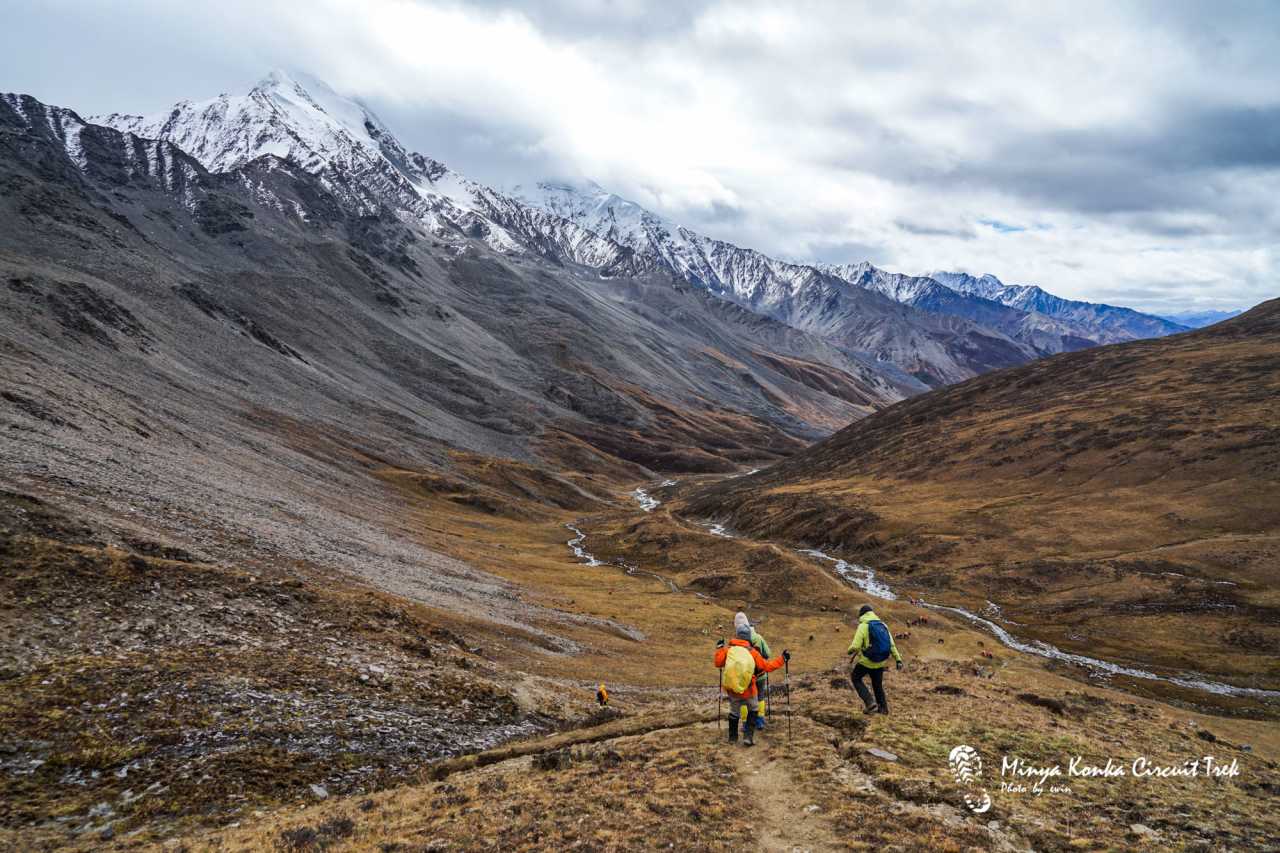
The descent to Moxigou Tail Camp (3,950m) is steep and rocky. Trekking poles are essential here.
Safety Note: If weather turns bad, turn back. The pass is exposed and conditions can change rapidly.
Day 4: Yulongxi Pass and Village
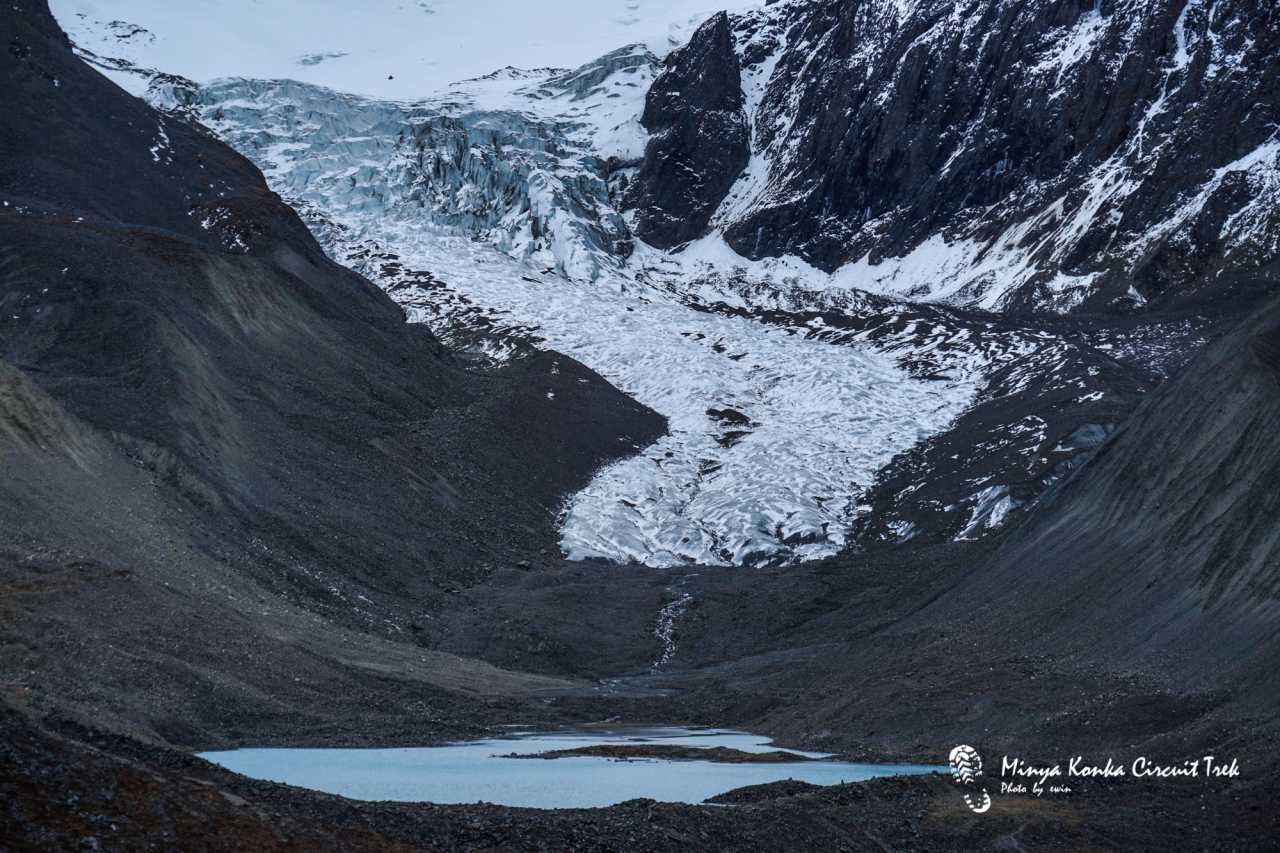
A long day traversing mountainsides with seasonal streams. From Moxigou Tail Camp (3,950m), you’ll climb to Yulongxi Pass (4,500m) before descending to Yulongxi Village (3,800m).
Water Alert: This is the critical day for carrying extra water. Fill up at Moxigou before departing.
Day 5: Zimei Pass and Lenggacuo Lake
A loop day from Yulongxi Village. Climb to Zimei Pass (4,500m), then descend to Lenggacuo Lake (4,500m)—a turquoise gem that reflects the surrounding peaks. The reflection is absolutely worth the detour.
Alternative: If you’re short on time, skip Lenggacuo and hike straight through the valley to Zimei Village. But most trekkers agree: don’t miss this lake.
Bonus Option: With extra time, consider Lisuo Sea on the south side of Zimei Pass—even more off the beaten path, with wild camping opportunities.
FAQ: Gongga Grand Loop Trek
Q1: Is the Gongga Grand Loop suitable for beginners?
The trek is moderate in technical difficulty, but the altitude (up to 4,920m) makes it challenging. Beginners with no high-altitude experience should train beforehand and consider joining a guided group. Acclimatization days are strongly recommended.
Q2: When is the best time to hike the Gongga Grand Loop?
Mid-October offers prime conditions—stable weather, autumn colors, and fewer crowds. The fire prevention period typically begins mid-to-late November, closing the route. Spring (April–May) is possible but snowier.
Q3: Can I hike the Gongga Grand Loop solo?
Solo trekking is strongly discouraged due to wolf sightings near Riwuqie. If you must go solo, hire a local guide and carry a satellite communication device.
Q4: How much does a guided Gongga Grand Loop tour cost?
Prices vary, but expect to pay ¥2,000–¥4,000 for a 5-day guided trek including meals, tent, and horse support. Self-supported trekking is cheaper but requires more gear and planning.
Q5: What should I do if I get altitude sickness?
Descend immediately. The most effective treatment is losing elevation. Carry acetazolamide (Diamox) and know the symptoms: headache, nausea, dizziness, shortness of breath. If symptoms worsen, seek medical help in Kangding.
Internal Linking Suggestions
- [Link: Best high-altitude trekking gear for beginners]
- [Link: How to acclimatize properly for 5,000m treks]
- [Link: Kangding travel guide – where to stay and eat]
- [Link: Sichuan trekking routes for experienced hikers]
- [Link: Solo trekking safety tips and satellite devices]
Final Thoughts: Your Pact with the King of Sichuan
The Gongga Grand Loop trek isn’t just a hike—it’s a pilgrimage around one of Earth’s most magnificent peaks. From the golden forests of Gexi Grassland to the windswept heights of Riwuqie Pass, every kilometer brings you closer to the heart of the Hengduan Mountains.
Whether you’re fulfilling a long-held promise like the author of this record, or discovering Gongga for the first time, the journey rewards those who prepare properly. Respect the altitude, pack wisely, and never trek alone.
Ready to answer the call of the King of Sichuan? Start planning your Gongga Grand Loop trek today. Book your gear, check the fire season dates, and set your sights on 70 kilometers of pure mountain magic.
Article optimized for search. Primary keyword: Gongga Grand Loop trek. Long-tail variations: Gongga Grand Loop itinerary, Gongga trek gear checklist, Gongga Grand Loop difficulty, Gongga trekking guide, Gongga Grand Loop 5 days.
You may also like


