The Buddha Has No Form: Discovering Anxiang's Ancient Stone Carvings – A Complete Travel Guide
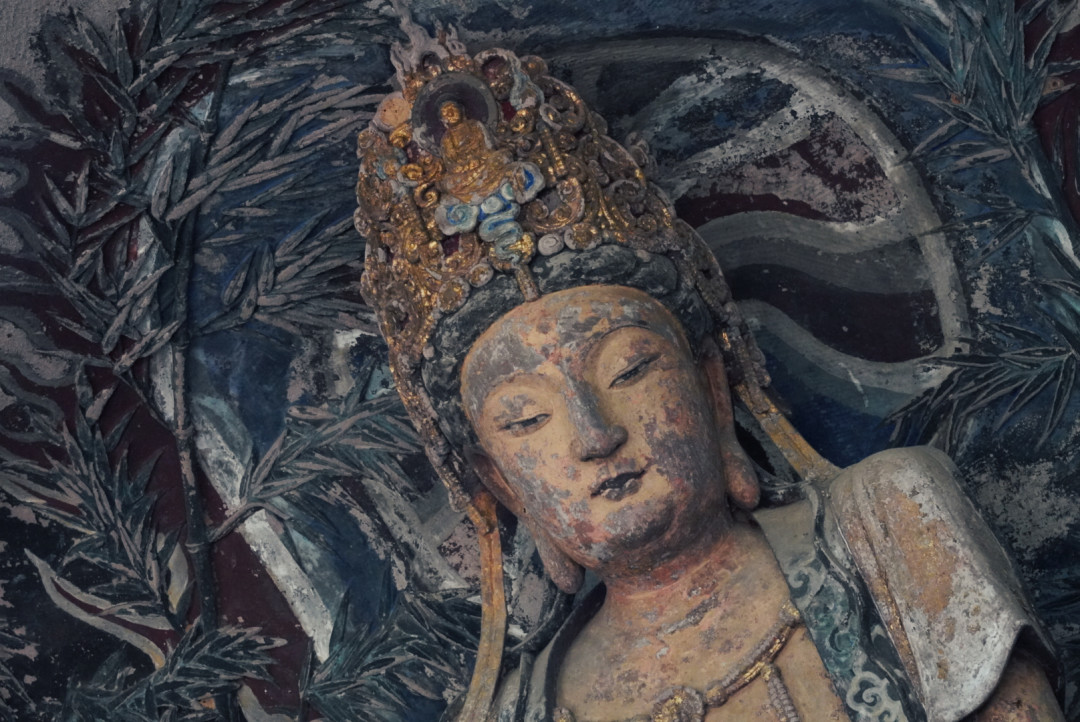
Meta Description: Explore Anxiang's hidden stone carvings in Sichuan – over 100,000 Tang and Song dynasty sculptures. Three-day itinerary, travel tips, and ancient Buddhist art insights. Your ultimate guide to China's forgotten grottoes.
Introduction: Unveiling the Stone Epic of Anxiang
In the rolling hills of southeastern Sichuan Basin, Anxiang County lies like a pearl forgotten by time, hidden among fields and villages. Scattered across this land are over one hundred thousand stone carvings, which inherit the grandeur of Yungang and Longmen and foreshadow the delicacy of Dazu, yet remained obscure for centuries. Today, these stones that have slumbered for a thousand years are gradually being rediscovered by the world.
Anxiang, a land famed for its exquisite stone, possesses an inexhaustible supply of massive boulders. Since the Tang and Song dynasties, generations of artisans used their chisels to engrave faith and art into the very grain of the rock. The baptism of centuries of wind and rain has not erased their vitality but instead has endowed these statues with a life force that transcends time. This is an epic of stone, each chisel mark bearing the devotion and wisdom of its craftsman.
[Link: Best Buddhist grottoes in China]
Anxiang Stone Carvings: A Three-Day Itinerary for Ancient Art Lovers
Day 1: Anxiang Northern Route – Reclining Buddha and Early Tang Masterpieces
Wolfo Temple (Reclining Buddha Temple) – The centerpiece here is the second largest stone-carved Nirvana Buddha in China, after Dazu's Baoding Mountain. Carved during the Kaiyuan reign of the High Tang Dynasty, this reclining Buddha faces south with its back to the north, head east and feet west, lying on its left side – a unique adaptation by Anxiang's master craftsmen.
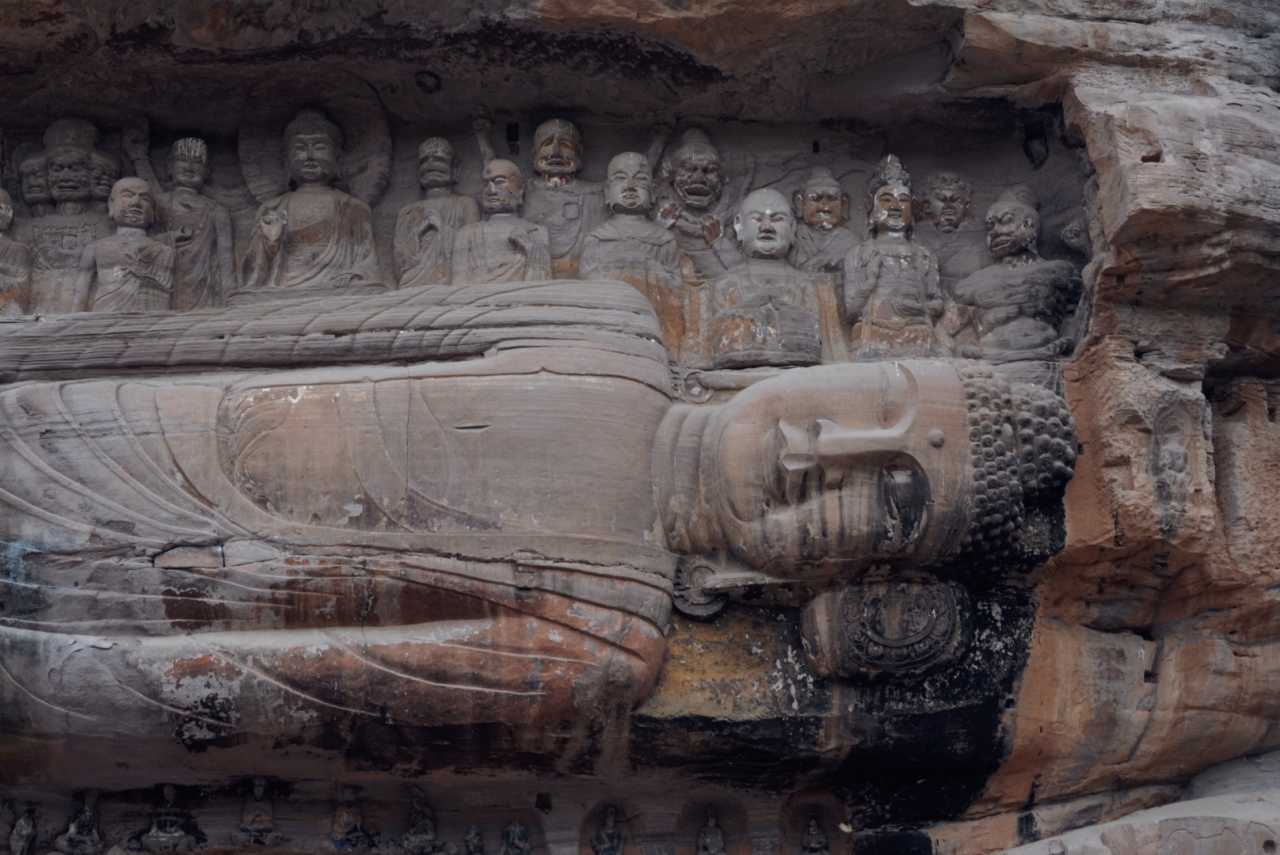
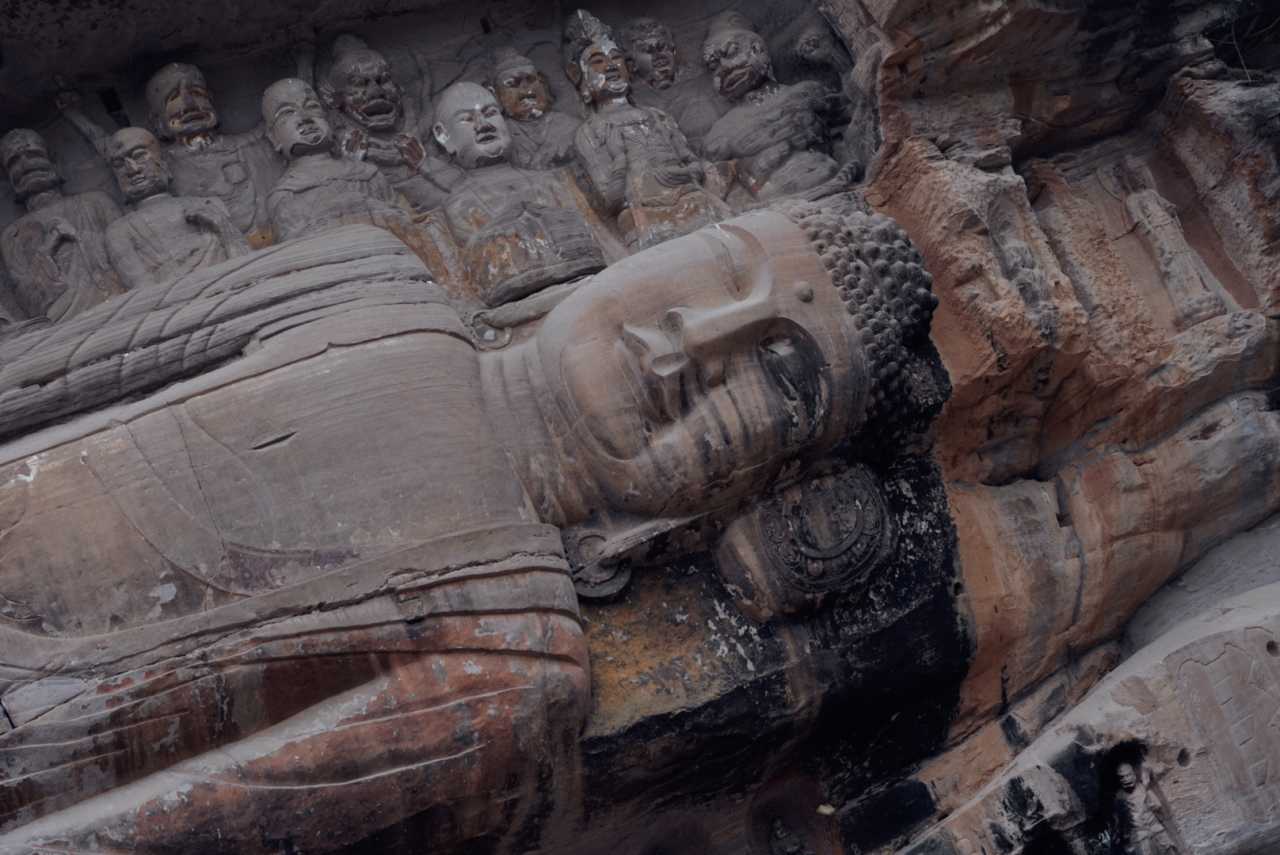
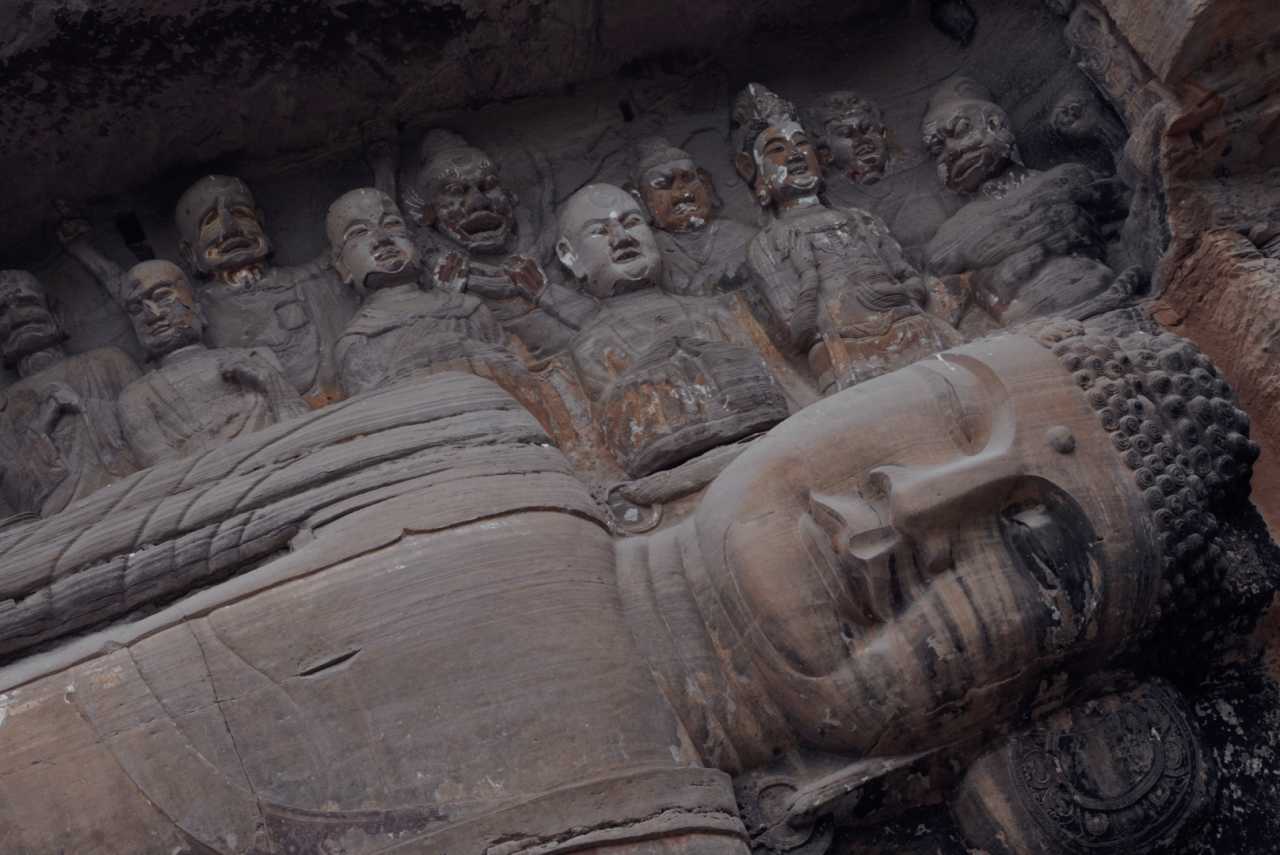
The Buddha's head features spiral hair, a high ushnisha (cranial protuberance), a prominent white tuft between the brows, and eyes slightly closed with the corners of the mouth gently upturned. The neck has three lines like silkworm segments, and the robe's folds are simple yet flowing.
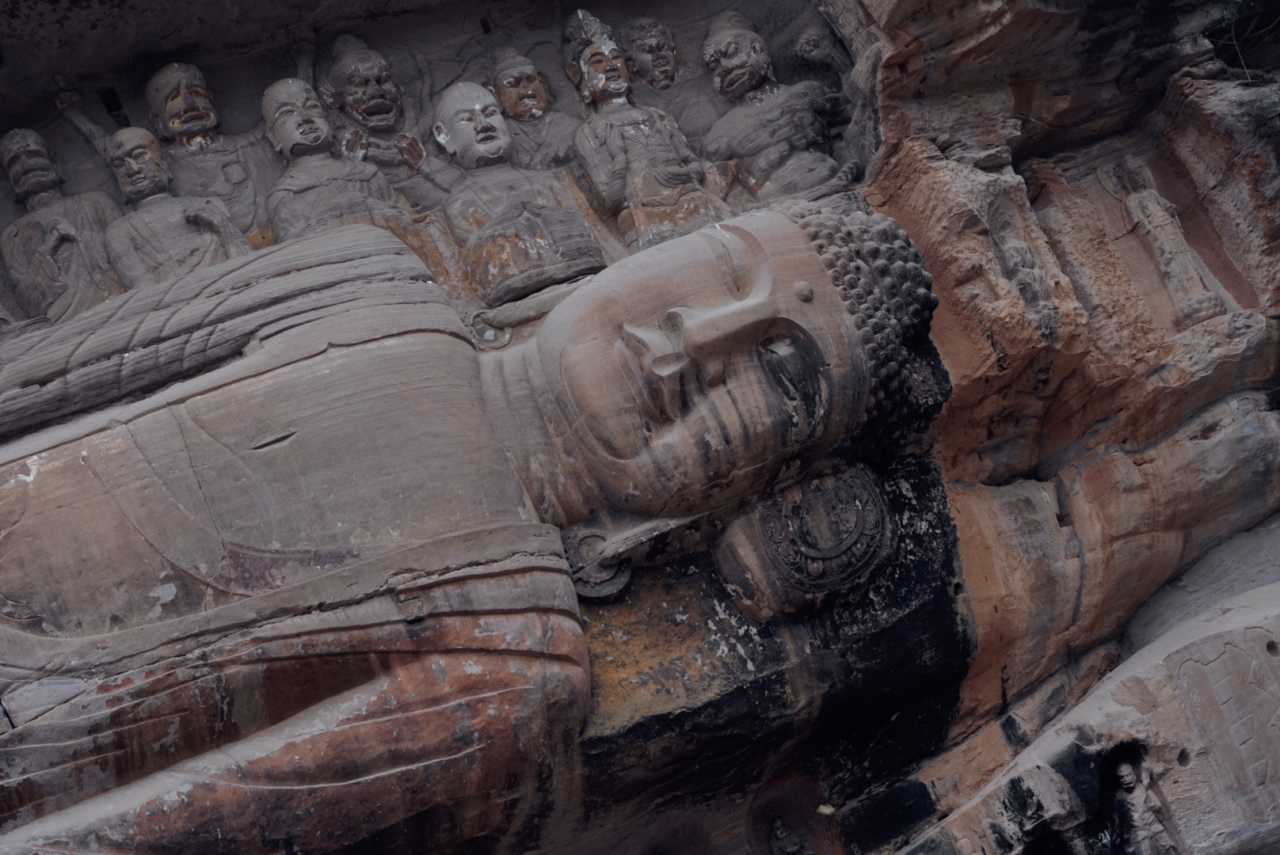
Key details to observe: - A disciple (Subhadra) pressing fingers on the Buddha's wrist - Two vajra warriors guarding the Buddha's feet and head - Ten disciples, two bodhisattvas, and seven heavenly guardians behind the reclining Buddha - Mahoraga with a giant python coiled around its neck - Asura with three heads and multiple arms holding sun, moon, and set square
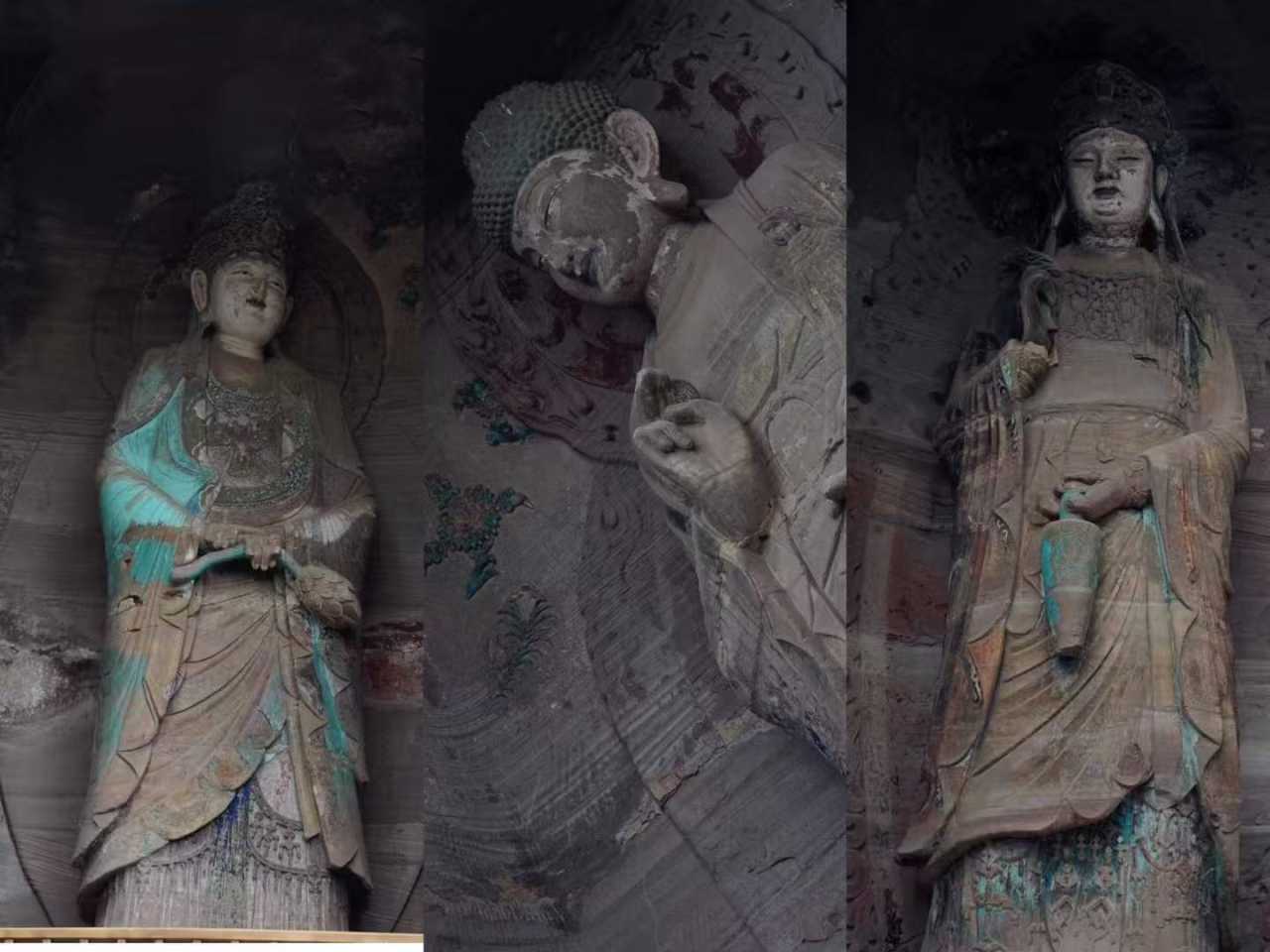
Yuanjue Cave – Located on Yunjun Mountain, three kilometers southeast of Anxiang County. The northern side features Song Dynasty niches and large statues, while the southern side excels in medium and small-sized Tang and Five Dynasties carvings. Subject matter includes Shakyamuni, Guanyin (Avalokiteshvara), the Three Buddhas, the Western Triad, Kshitigarbha (Earth Treasury) Bodhisattva, and combined Buddhist and Daoist niches.
Thousand Buddha Stockade – Overnight in Anxiang County.
[Link: Tang Dynasty Buddhist art guide]
Day 2: Anxiang Central Route – Cliff Carvings and Hidden Gems
Gaosheng Grand Buddha Temple – Begin your day with this impressive site before heading to Linfeng Town for lunch.
Tapo Cliff Carvings – This complex includes Houjiawan and Datong Temple, which can only be viewed through windows. While you cannot get close, the carvings remain clearly visible.
Antang Temple – A lesser-known site offering intimate viewing experiences.
Overnight: Linfeng Town
Day 3: Anxiang Southern Route – Caves and Temples
Mingshan Temple – Start your exploration of the southern route here.
Peacock Cave – A stunning example of later Buddhist art.

Piyu Cave – Professional on-site guides are available here, offering deep insights into the carvings' history and symbolism.
Half-Side Temple – End your journey at this unique site.
Note: Huayan Cave on the Southern Route is closed for renovations from May 27 to December 26, 2025.
[Link: Sichuan off-the-beaten-path destinations]
Practical Travel Tips for Anxiang Grottoes
Transportation Options
While a three-day visit is ideal, many travelers join weekend day-trip hiking groups. Cost is approximately 150 RMB per day, including round-trip transport from Chengdu to Anxiang, a guide, and commentary. Self-driving is almost essential for the Central and Southern Routes due to scattered locations.
Group tour advantages: - Some grottoes are locked and require a cultural relic guardian to open them - Guides coordinate access in advance - Road conditions on some routes are treacherous
Dining Recommendations
- Anxiang County restaurants: 11 hearty dishes including garlic vermicelli shrimp, braised pork belly, twice-cooked pork
- Linfeng Town: Steamed pork ribs with rice flour, slippery pork vegetable soup, salted white pork, braised fish
- Shiyang Town: More developed dining options; try local Mixue Bingcheng lemonade
Cost: Approximately 35 RMB per person when splitting with a group.
Value of Commentary
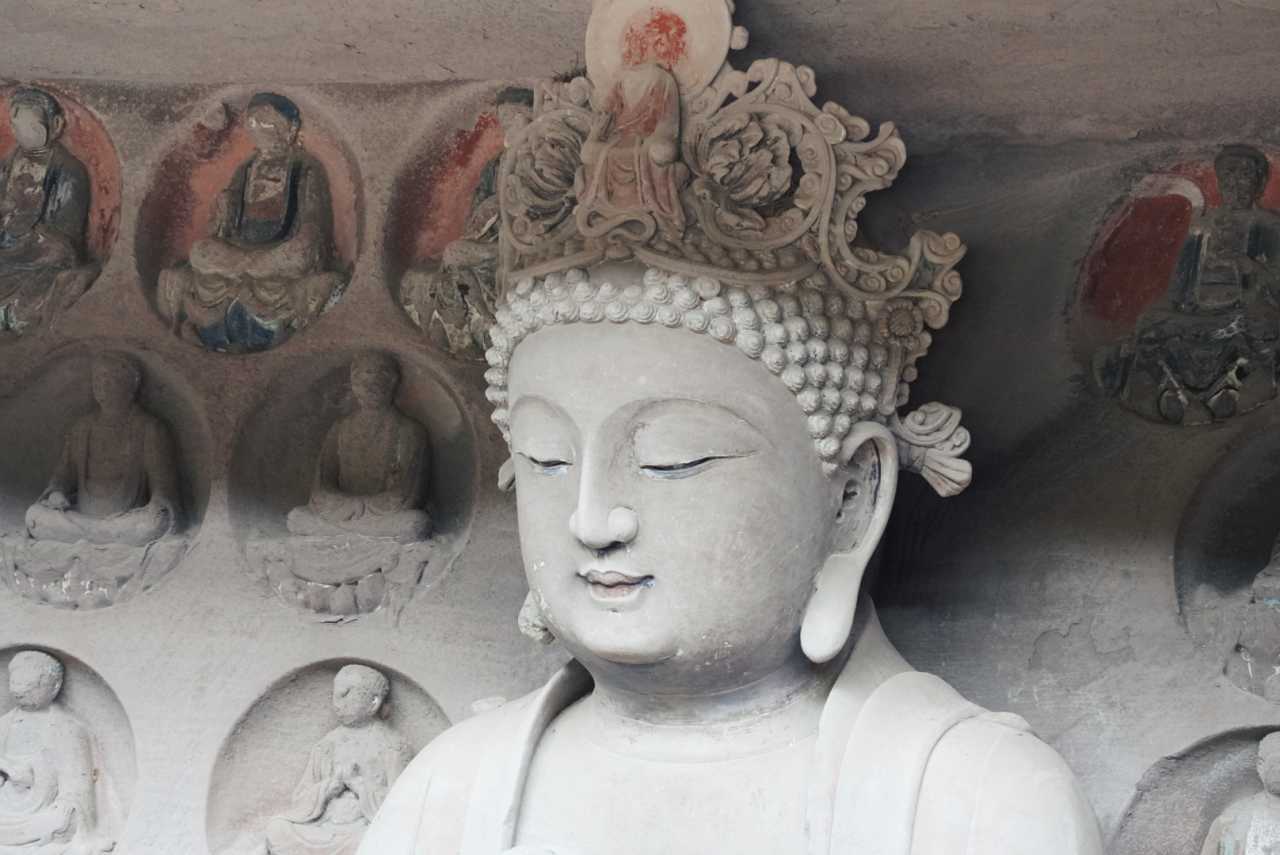
Hiking group leaders are professional and provide their own commentary. For Yuanjue Cave and Piyu Cave, professional on-site guides are hired with costs split among the group – an excellent value.
[Link: Budget travel in Sichuan]
The Art and Symbolism of Anxiang Stone Carvings
Nirvana Buddha: A Unique Artistic Expression
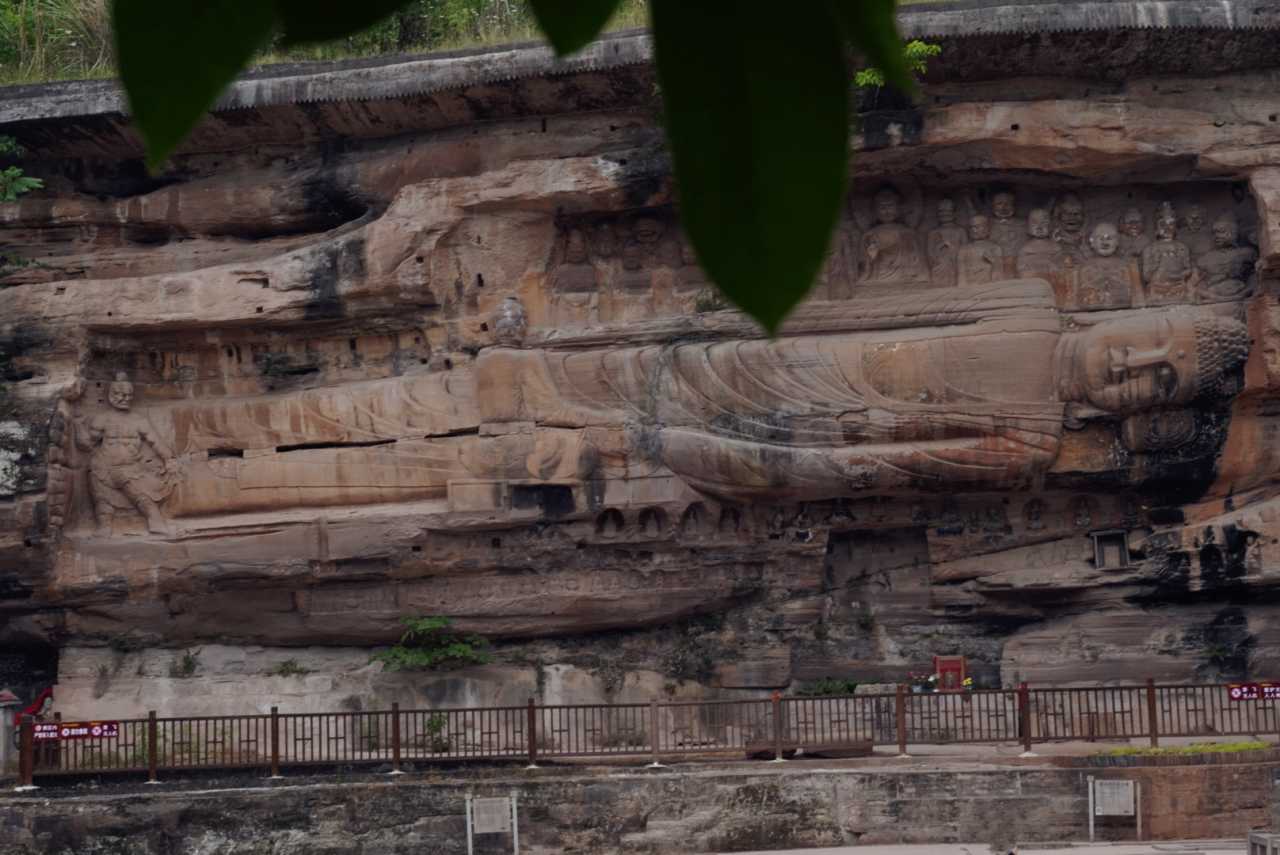
What makes Anxiang's reclining Buddha remarkable is its left-side reclining posture – the complete opposite of the standard right-side posture of most Nirvana Buddhas. This adaptation demonstrates the wisdom of Anxiang's stone carvers in adjusting the form based on the rock face and surrounding environment.
The vajra warriors on either side of the reclining Buddha echo each other, integrated into the scene of the final sermon. One spreads five fingers to protect the Buddha's feet, while the other raises a hand above its head, turning to gaze at the reclining Buddha.
Flying Apsaras: Celestial Grace in Stone
On the central part of the southern cliff face at Wolfo Temple, flying apsaras and auspicious clouds are vividly depicted. These celestial beings have light, graceful postures – some holding flowers and looking back, others raising arms to scatter blossoms. Their sashes flutter in the wind, capturing the marvelous rhythm of "Wu's Belt in the Wind" style. Stone-carved apsaras are truly rare.
[Link: Chinese Buddhist iconography explained]
FAQ: Anxiang Stone Carvings Travel Guide
1. When is the best time to visit Anxiang stone carvings?
Spring (March-May) and autumn (September-November) offer the most comfortable temperatures for outdoor exploration. Summer can be hot and humid, while winter brings cold weather. Weekdays are less crowded than weekends.
2. Are Anxiang stone carvings accessible for solo travelers?
Solo travel is possible but challenging due to scattered locations. Most grottoes require a vehicle, and some are locked with access only through cultural relic guardians. Joining a group tour is recommended for first-time visitors.
3. How do Anxiang carvings compare to Dazu Rock Carvings?
Anxiang carvings predate Dazu and show earlier Tang and Song dynasty styles. While Dazu is more famous and better preserved, Anxiang offers a more intimate, less crowded experience with over 100,000 carvings spread across the county.
4. What photography equipment is recommended?
A camera with good low-light performance is essential, as many carvings are in dim caves. A tripod may be useful for interior shots. Some locations may restrict photography, so check with guides.
5. Is there accommodation near the grottoes?
Anxiang County, Linfeng Town, and Shiyang Town offer basic accommodation. For a more comfortable stay, consider basing yourself in Anxiang County and using day trips to explore the routes.
[Link: Sichuan travel FAQ]
Conclusion: Your Journey into Ancient Stone Awaits
Anxiang's stone carvings represent one of China's most significant yet underappreciated cultural treasures. From the unique left-side reclining Buddha at Wolfo Temple to the intricate flying apsaras at Yuanjue Cave, each chisel mark tells a story of faith, artistry, and human devotion spanning over a millennium.
Whether you are a Buddhist art enthusiast, a history buff, or simply seeking an off-the-beaten-path adventure, Anxiang offers an unforgettable journey into China's stone-carved heritage. The silence of these ancient grottoes speaks volumes – a dialogue with millennia-old stone carvings waiting for you to discover.
Ready to explore? Book your Anxiang stone carving tour today. Join a guided group or plan your self-drive adventure. The stones are waiting – and they have stories to tell.
[Link: Book Sichuan cultural tours] [Link: Plan your Anxiang itinerary]
Note: This article is based on firsthand travel experience. Check local conditions and opening hours before your visit. Huayan Cave is closed for renovations until December 26, 2025.
You may also like


