Northwest Sichuan 6-Day Loop: A Complete Guide to Aba's Lakes, Grasslands, and Mountains
Meta Description: Plan your perfect Northwest Sichuan 6-day loop through Aba Prefecture. Discover Jiuzhaigou, Huanglong, Zoige grasslands, Lianbao Yeze, and Dagu Glacier with expert tips, itineraries, and insider advice.
Introduction: Your Ultimate Escape to Western Sichuan
When the March winds swept through Chengdu, I knew the May Day holiday demanded adventure. Without pandemic restrictions, my wanderlust pulled me back to Sichuan—a province I had explored via the 318 Sichuan-Tibet Highway yet still yearned for more. In 2021, I experienced western Sichuan's grandeur, but this time, I ventured deeper into Northwest Sichuan's Aba Tibetan and Qiang Autonomous Prefecture.
Over six days, I connected Huanglong, Jiuzhaigou, Zoige (Ruoergai), Lianbao Yeze, and Dagu Glacier in a counterclockwise loop. As a meticulous planner, I know this: a perfect trip is 30% luck and 70% preparation. This guide shares everything I learned—including mistakes to avoid.
Why Choose the Northwest Sichuan 6-Day Loop?
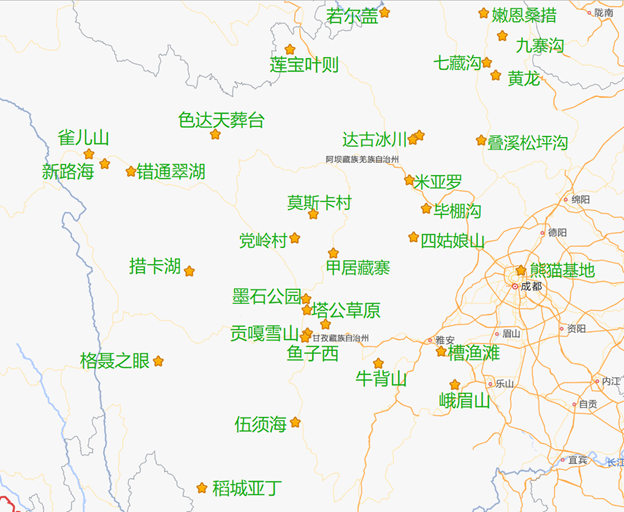
Open a map of Sichuan, and you'll notice a pattern: stunning attractions cluster west of Chengdu. The Aba Prefecture direction boasts Jiuzhaigou, Zoige, Huanglong, Dagu Glacier, Mount Siguniang, and Bipeng Valley. The Garze direction offers Yading, Hailuogou, Kangding, and Sertar.
For this trip, I chose Aba and designed a counterclockwise loop:
Chengdu → Huanglong → Jiuzhaigou → Zoige → Lianbao Yeze → Dagu Glacier → Chengdu
Why counterclockwise? Heading straight to Huanglong on Day 1 avoids peak crowds, and returning from Dagu Glacier to Chengdu on the final day allows a relaxed schedule. As it turned out, this was the right call—despite unexpected hiccups.
Day 1: Chengdu to Huanglong and Jiuzhaigou – Best-Laid Plans
Original Plan: Depart at 6:00 AM, arrive at Huanglong by 2:00 PM, explore 3-4 hours, reach Jiuzhaigou by 8:00 PM.
Reality: My alarm didn't go off—I woke past 7:00 AM. My travel companion had last-minute work obligations. Worse, we took a wrong turn and hit road construction with one-way traffic controls. We had to scrap Huanglong and drive straight to Jiuzhaigou.
Although I missed Huanglong, here's what I learned:
Huanglong Practical Information
- Hours: 9:00 AM – 4:30 PM
- Ticket: 60 RMB/person (scan ID card)
- Cable Car: 80 RMB/person (uphill)
- Sightseeing Cart: 20 RMB/person
- Recommended Visit Time: 4 hours
- Average Elevation: 3,300 meters
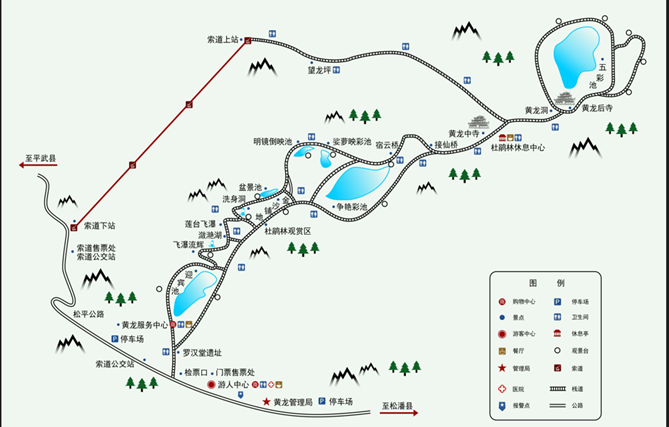
Recommended Route: - Uphill: Visitor Center → Cable Car → Primeval Forest → Wanglongping Viewing Platform → Calcified Travertine Terraces → Huanglong Ancient Temple → Five-Color Pond - Downhill: Zhengyan Colorful Ponds → Suoluo Yingcai Ponds → Mingjing Daoying Pool → Bonsai Pool → Golden Sand Spread Ground → Xishen Cave → Liantai Waterfall → Feipu Liuhui Waterfall → Yingbin Pool
Pro Tip: If time permits, hike both up and down for completely different scenery. After the cable car, you can take the sightseeing cart to the Five-Color Pond stop.
A Small Regret: Even after visiting Baishuitai in Shangri-La, not witnessing Huanglong's Five-Color Pond firsthand left a slight emptiness.
By 6:30 PM, we arrived in Jiuzhaigou, checked into our hotel, and saw the "Jiuzhai Eternal Love" show. Honestly, it was the least impressive performance I've seen—but if you're visiting Jiuzhaigou, you'll probably check it out anyway.
[Link: Best hotels near Jiuzhaigou entrance]
Day 2: Jiuzhaigou Day Trip – Wandering Through a Painting
At 8:00 AM, we walked ten minutes from our hotel to the park entrance. Our hotel was only a kilometer away—more convenient than driving.
Jiuzhaigou Practical Information
- Hours: 8:00 AM – 5:00 PM
- Ticket: 190 RMB/person
- Shuttle Bus: 90 RMB/person (scan ID card)
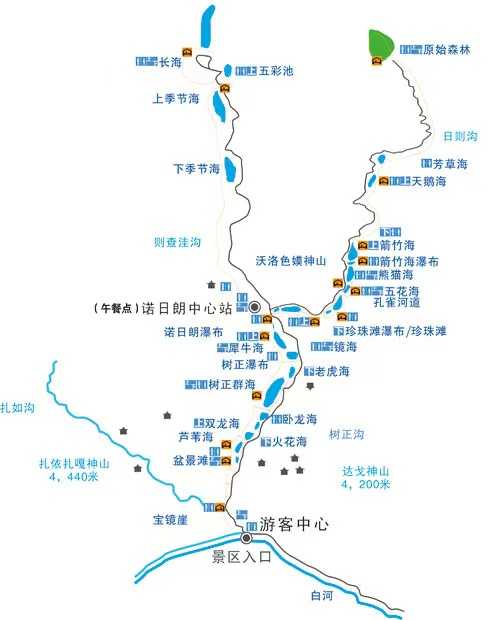
Jiuzhaigou's layout is shaped like a "Y," divided into three main valleys: - Shuzheng Valley: Reed Lake, Bonsai Beach, Shuzheng Lakes, Spark Lake - Rize Valley: Five-Flower Lake, Pearl Shoal Waterfall, Mirror Lake, Nuorilang Waterfall - Zechawa Valley: Five-Color Pond, Long Lake, Upper Seasonal Lake, Lower Seasonal Lake
Based on visitor volume, the park directed us to Route 1: Zechawa Valley → Rize Valley → Shuzheng Valley.
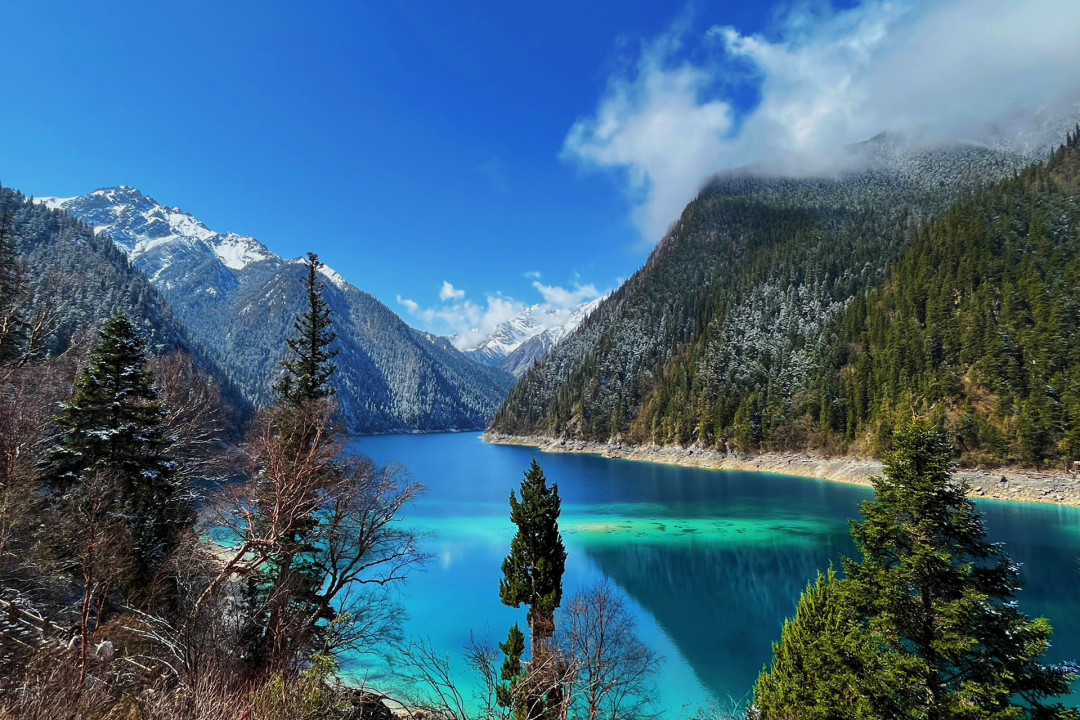
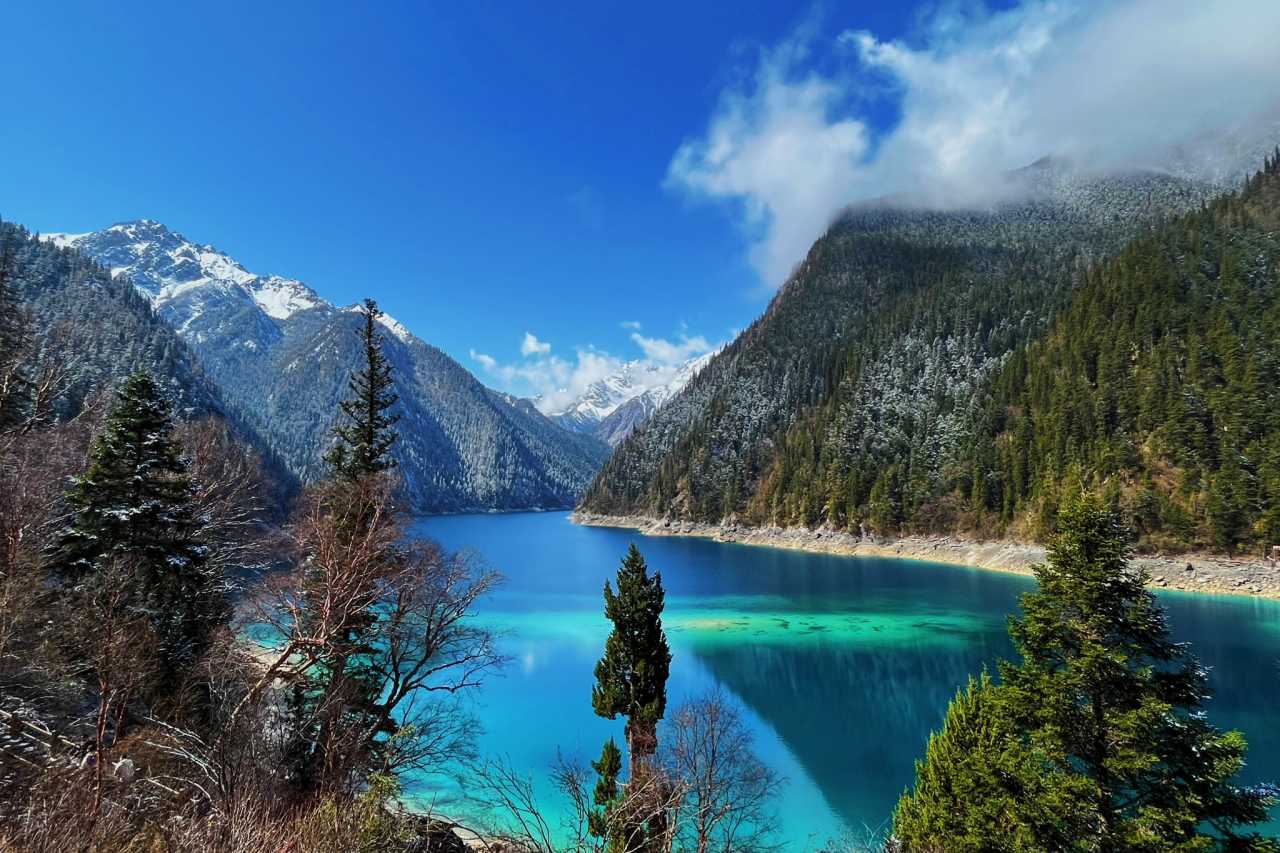
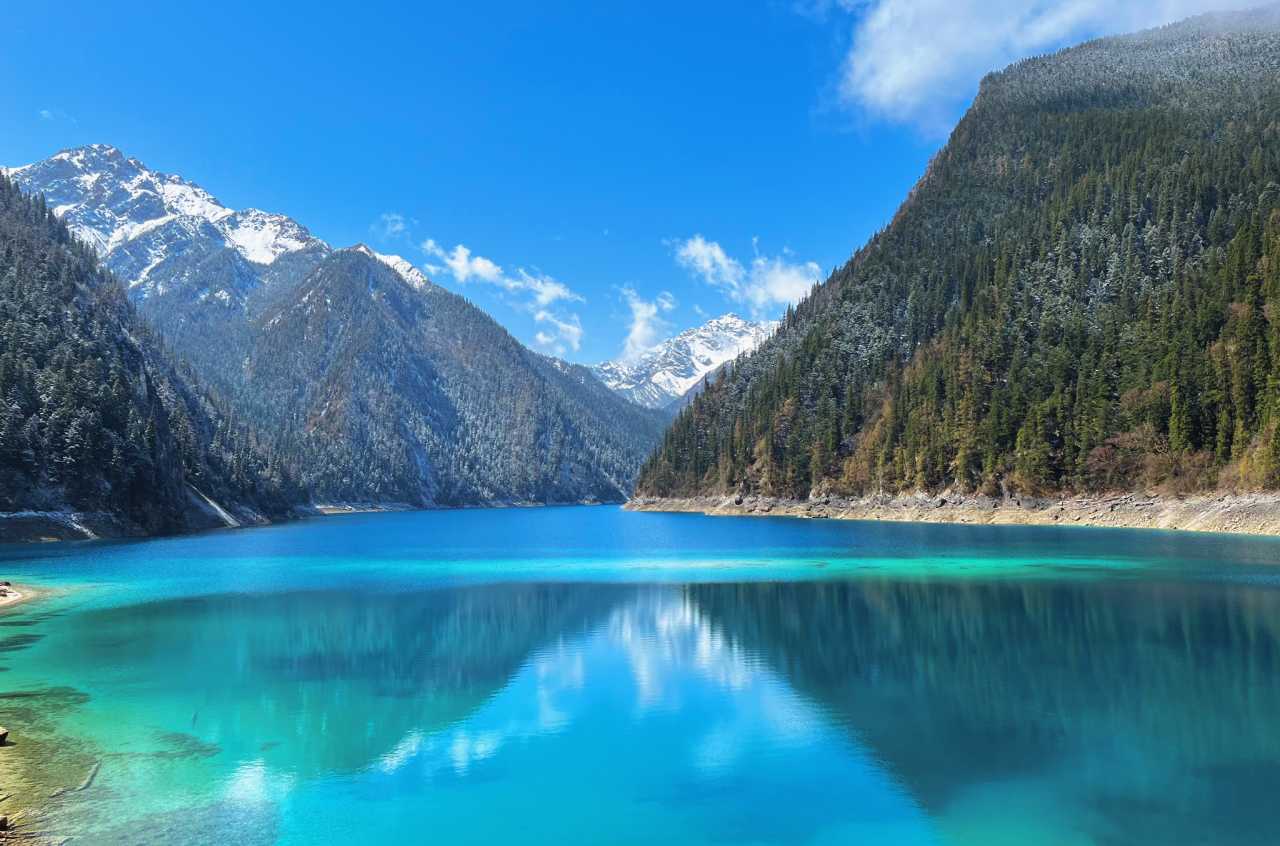
Long Lake: The "Soul" of Jiuzhaigou
We stood on the sightseeing bus for forty minutes before reaching Long Lake—too crowded for seats. But the moment we stepped off, all fatigue vanished.
"Long Lake" is what Tibetans call these bodies of water. Living in high-altitude mountain regions, they yearn for the sea, so they name these lakes "Haizi"—children of the sea.
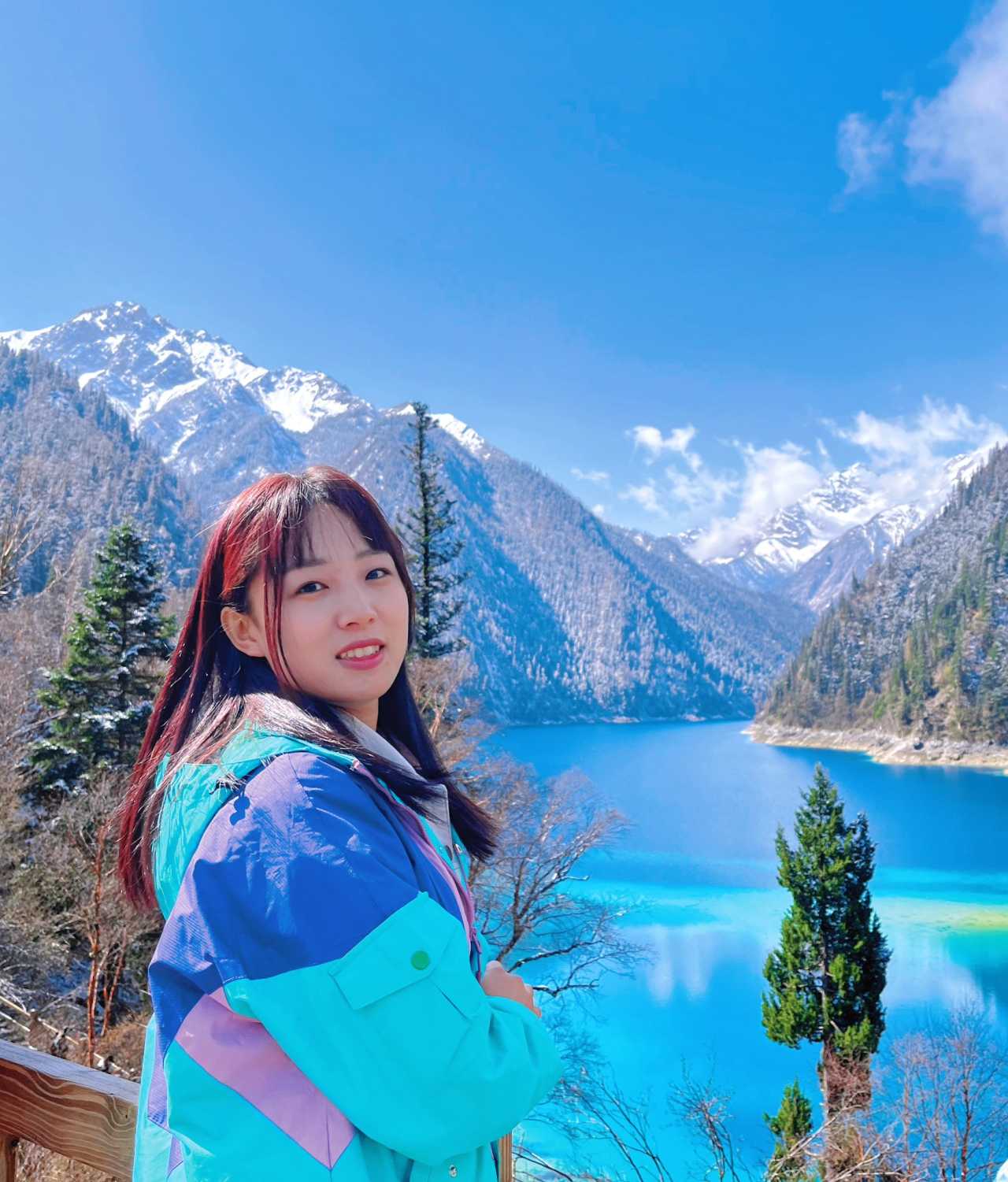
Snow-capped mountains, forests, lakes, blue skies, white clouds—all elements unfolded before us. I wore my soft-shell jacket, its color blending so closely with the sky and lake that I nearly "disappeared" in photos.
As the morning sun rose, frost and snow on the ground began to melt, and mist slowly rose. Walking along the wooden boardwalk, you can experience Long Lake up close. It's a travertine lake—like all of Jiuzhaigou's waterscapes.
Five-Color Pond: The Eye of Jiuzhaigou
A ten-minute walk from Long Lake brought us to Five-Color Pond—the smallest lake in Jiuzhaigou, known as the "Eye of Jiuzhaigou."
In early May, during the dry season, the water level was low, but it was still breathtakingly beautiful. Unlike Long Lake's deep, profound blue, Five-Color Pond had a seductive, almost enchanting quality.
Zechawa Valley also has Upper and Lower Seasonal Lakes—their water levels fluctuate dramatically with the seasons. At this time of year, they were completely dry.
Rize Valley: A Feast of Water
From Nuorilang Center, we headed to Rize Valley. We skipped the hike to Primeval Forest—Jiuzhaigou is simply too vast to cover everything in one day.
Fragrant Grass Lake: Following the boardwalk down, we found ourselves alone. A casual glance back revealed snow-capped mountains standing silently behind us. Fragrant Grass Lake stretches long, with patches of green grass growing on the water's surface, where ducks and water birds frolicked. This is the only lake without travertine formations—perhaps why it sustains such lush grass growth.
Panda Lake: Legend has it that Jiuzhaigou's pandas once came here to play and forage. But with so many tourists now, pandas probably no longer visit. Tree trunks snapped during earthquakes lie submerged in the lake, looking different depending on the angle of light.
Five-Flower Lake: Locals say Five-Flower Lake is a divine pool—wherever its water spills, flowers bloom and forests thrive. Sitting on a wooden bridge, feeling the gentle breeze and warm sun, everything felt perfect. If you have time, circling the lake takes an hour—but Five-Flower Lake is worth every minute.
Shuzheng Valley: A Surprise Finish
Mirror Lake: True to its name, it reflects the scenery above with perfect fidelity. Unfortunately, the afternoon light angle wasn't ideal, so its full beauty wasn't on display.
Crouching Dragon Lake: Through the mirror-smooth surface, a milky-white travertine dike lies across the lake's center, like a dragon lurking beneath the water.
Spark Lake: The most vivid sapphire blue I've ever seen. Even in the afternoon light, it sparkled like a gem.
[Link: Jiuzhaigou photography tips for best light]
Day 3: Jiuzhaigou to Zoige – Grasslands and Tibetan Culture
After two days in Jiuzhaigou, we drove northwest toward the Zoige Grasslands. The journey itself was spectacular—rolling green hills, grazing yaks, and prayer flags fluttering in the wind.
Zoige Grasslands Highlights
- Zoige Wetland: One of the largest peat bogs in the world, a UNESCO-listed wetland
- Flower Lake: Best visited in July-August when wildflowers bloom
- Tibetan Villages: Experience authentic nomadic culture
Driving Time: Jiuzhaigou to Zoige takes approximately 4-5 hours via the S301 highway.
Accommodation Tip: Stay in a Tibetan guesthouse for an authentic experience. Many offer warm butter tea and traditional meals.
[Link: Zoige Grasslands travel guide]
Day 4: Zoige to Lianbao Yeze – Remote Beauty
Lianbao Yeze (also known as Nianbao Yuze) is a sacred mountain range in the eastern Tibetan Plateau. It's less visited than other attractions, making it perfect for those seeking solitude.
Lianbao Yeze Practical Information
- Elevation: 4,000-5,300 meters
- Best Time: June-September
- Entry Fee: Approximately 120 RMB
- Recommended Visit Time: Half day to full day
What to Expect: Glaciers, alpine lakes, and dramatic peaks. The area is considered sacred in Tibetan Buddhism, and you'll find prayer flags and mani stones throughout.

Acclimatization Note: At this altitude, take it slow. Carry oxygen canisters if needed.
[Link: Altitude sickness prevention tips]
Day 5: Lianbao Yeze to Dagu Glacier – Ice and Fire
Dagu Glacier is one of the most accessible glaciers in China, with a cable car taking visitors to nearly 5,000 meters.
Dagu Glacier Practical Information
- Hours: 8:00 AM – 5:00 PM
- Ticket: 120 RMB/person
- Cable Car: 180 RMB/person (round trip)
- Elevation: 3,800-5,000 meters
Highlights: - Glacier Viewing Platform: Spectacular views of the glacier tongue - Alpine Lakes: Several turquoise lakes at the base - Wildlife: Keep an eye out for blue sheep and snow leopards (rare)
Warning: The cable car ride can be intense—dress warmly and bring oxygen.
[Link: Dagu Glacier vs. Hailuogou Glacier comparison]
Day 6: Dagu Glacier to Chengdu – The Return

The final day involves a 5-6 hour drive back to Chengdu. The route passes through lush valleys and small towns, offering a gentle transition from high-altitude wilderness to urban life.
Stop Suggestions: - Bipeng Valley (if time permits) - Maoxian County for local cuisine - Dujiangyan for a scenic break
Frequently Asked Questions
1. What is the best time for the Northwest Sichuan 6-Day Loop?
The best time is May to October. May offers spring blooms and fewer crowds, while September-October provides autumn colors. July-August is peak season with higher prices.
2. Do I need altitude sickness medication?
 Yes, especially for Lianbao Yeze and Dagu Glacier. Start taking Diamox (acetazolamide) 24 hours before reaching high elevations. Carry portable oxygen cans.
3. Can I drive this loop myself?
Yes, but a 4WD vehicle is recommended for some unpaved sections. Alternatively, hire a local driver who knows the roads. [Link: Self-driving tips for Sichuan]
4. What should I pack?
- Warm layers (temperatures drop significantly at night)
- Sunscreen and sunglasses (UV is intense at altitude)
- Rain gear (sudden showers are common)
- Comfortable hiking boots
- Power bank (charging options are limited in remote areas)
5. How much does this trip cost?
Budget approximately 3,000-5,000 RMB per person (excluding flights to Chengdu), including accommodation, entry fees, meals, and transportation.
Final Tips for Your Northwest Sichuan Adventure
- Book accommodation in advance during peak seasons.
- Download offline maps—cell service is unreliable in remote areas.
- Respect local customs—dress modestly in Tibetan villages.
- Bring cash—many small vendors don't accept cards.
- Start early each day to maximize daylight hours.
Ready to Explore Aba's Hidden Gems?
The Northwest Sichuan 6-Day Loop offers an unforgettable journey through some of China's most spectacular landscapes. From the turquoise waters of Jiuzhaigou to the sacred peaks of Lianbao Yeze, every day brings new wonders.
Start planning today. Check flight deals to Chengdu, book your accommodations, and prepare for an adventure that will stay with you forever.
[Link: Book your Sichuan tour package] [Link: Download our packing checklist]
Have questions about this itinerary? Leave a comment below, and we'll help you plan your perfect trip!
You may also like


